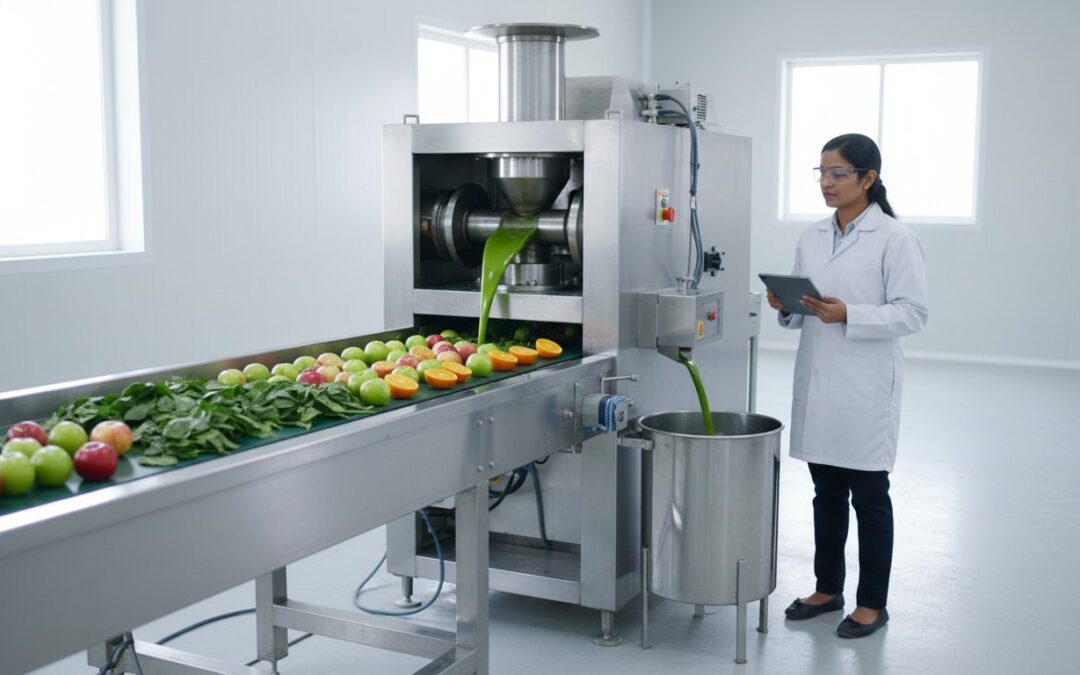
The demand for high-quality, nutrient-dense beverages has driven significant innovation in the food processing sector. Masticated juice, often known as cold-pressed juice, stands at the forefront of this trend, prized for its superior flavor and nutritional profile. While many are familiar with this concept from a consumer perspective, scaling production to an industrial level requires specialized engineering and technology. This guide explains the core principles of masticating juice production and outlines the machinery and processes necessary for high-yield commercial manufacturing.
What is Masticated Juice? The Science of Cold Press Technology
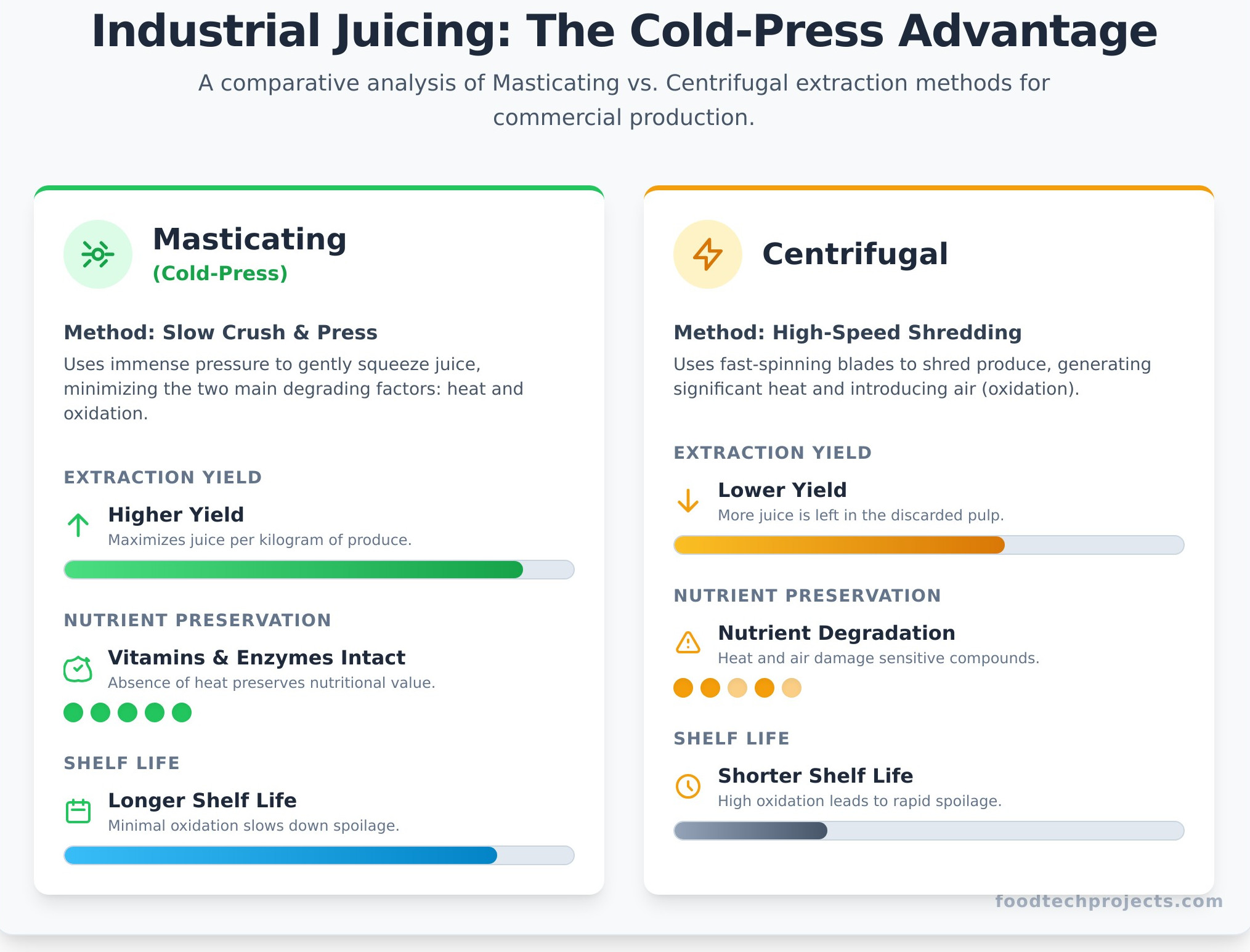
At its core, mastication is a method of juice extraction that uses a slow, high-pressure process to crush and press produce, rather than shredding it at high speeds. This technique, executed by an industrial auger or hydraulic press, minimizes the two primary factors that degrade juice quality: oxidation and heat. By slowly squeezing the raw material, the process preserves the integrity of sensitive vitamins, enzymes, and pigments. In contrast to high-speed centrifugal juicing, which introduces significant heat and air, the cold-press method results in a product with superior nutrient retention, more vibrant color, and a richer, more authentic flavor.
Key Advantages of the Masticating Process
- Higher yield: The immense pressure applied during the masticating process extracts significantly more juice per kilogram of raw fruit or vegetable, maximizing output and reducing material waste.
- Longer shelf life: By minimizing exposure to oxygen during extraction, the rate of oxidation is dramatically reduced, which naturally slows down spoilage and preserves freshness.
- Preserves enzymes and vitamins: The absence of heat generated by high-speed blades ensures that heat-sensitive vitamins (like Vitamin C) and beneficial enzymes remain intact, delivering a more nutritionally valuable final product.
Scaling Up: The Industrial Process for Commercial Masticated Juice
Transitioning the cold-press concept from a small-scale kitchen operation to a full-fledged industrial plant requires a systematic approach and robust machinery. Commercial production focuses on creating a seamless, automated line that ensures hygiene, consistency, and high throughput. A modern industrial process for masticated juice involves several integrated stages, each designed to handle large volumes of produce efficiently while upholding the quality principles of the cold-press method.
Core Machinery in a Turnkey Juice Plant
- Stage 1: Fruit washing, sorting, and preparation systems. This initial stage involves automated washing tunnels and sorting conveyors to clean the raw material and remove any substandard items before processing.
- Stage 2: Industrial grinders or pulverizers. Once prepared, the fruits or vegetables are fed into an industrial-grade grinder to create a consistent pulp, which is essential for efficient juice extraction.
- Stage 3: High-capacity hydraulic or belt press. This is the heart of the operation. The pulp is transferred to a powerful hydraulic or belt press that applies immense pressure to separate the juice from the solid fiber.
- Stage 4: Filtration, pasteurization (HPP), and bottling machinery. The extracted juice is filtered for clarity and then often undergoes High-Pressure Processing (HPP) for preservation before being sent to an automated bottling and capping line.
Key Performance Indicators for Industrial Juicers
When selecting equipment for a commercial plant, performance is measured by specific, quantifiable metrics that directly impact profitability and product quality.
- Throughput: This is the volume of raw material the machine can process per hour, typically measured in tons. It dictates the overall production capacity of the plant.
- Extraction Yield: Expressed as a percentage, this metric indicates how much juice is successfully recovered from the pulp. A higher yield means less waste and greater revenue.
- Operational Durability: Industrial machinery must be engineered for continuous, 24/7 production cycles with minimal downtime, using high-grade materials like stainless steel.
Understanding these metrics is crucial for designing an efficient and profitable operation. Explore our advanced industrial fruit processing solutions.
Designing Your Turnkey Cold Press Juice Production Facility
Establishing a complete industrial juice plant is a complex undertaking that requires expertise in process engineering, food safety, and equipment integration. A turnkey solution provides a “single window” approach, where an experienced partner manages the entire project from initial concept and layout design to the final installation and commissioning of the plant. This method ensures that all components work together seamlessly and that the facility complies with international food safety standards, such as HACCP (Hazard Analysis and Critical Control Points).
Critical Considerations for Plant Design
- Calculating capacity: The entire production line must be designed based on realistic projections of market demand and the availability of raw materials.
- Optimizing plant layout: A logical and efficient layout is crucial for minimizing transfer times, preventing cross-contamination, and ensuring a smooth workflow from raw material intake to finished product dispatch.
- Integrating cold chain logistics: To maintain the freshness of the final product, the plant design must include provisions for refrigerated storage and an integrated cold chain for distribution.
Why a Turnkey Solution is the Optimal Investment
- Reduces project complexity: A single point of responsibility eliminates the challenges of coordinating multiple vendors and contractors, streamlining the entire process.
- Ensures seamless integration: All machinery and systems are selected and designed to work together flawlessly, preventing bottlenecks and maximizing overall efficiency.
- Accelerates time-to-market: A proven, systematic approach to plant design and commissioning significantly shortens the project timeline and guarantees performance metrics from day one.
Investing in a professionally engineered facility is the most reliable path to success in the competitive beverage market. Request a consultation for your turnkey juice plant project.
Frequently Asked Questions
What is the difference between industrial masticating and centrifugal juicers?
The primary difference is the mechanism. Industrial masticating (cold-press) systems use slow, immense pressure to squeeze juice, preserving nutrients and maximizing yield. Industrial centrifugal juicers use high-speed blades to shred produce, which is faster but generates heat and oxidation that can degrade juice quality.
What is the typical shelf life of commercially produced cold-pressed juice?
Without further processing, the shelf life is only a few days. However, when combined with a preservation method like High-Pressure Processing (HPP), the shelf life can be extended to several weeks while maintaining its “raw” and “fresh” qualities.
Can a single production line process different types of fruits and vegetables?
Yes. A well-designed industrial juice line is versatile and can process a wide variety of produce, from leafy greens to hard root vegetables and soft fruits. The key is implementing proper clean-in-place (CIP) systems to prevent flavor transfer between batches.
What is High-Pressure Processing (HPP) and is it necessary for my juice?
HPP is a non-thermal pasteurization method that uses extreme pressure to inactivate spoilage-causing microbes. It is highly recommended for commercial juices intended for retail distribution, as it extends shelf life significantly without compromising the nutritional and sensory qualities of cold-pressed juice.
How much space is required for a small-scale industrial juice plant?
The required space varies greatly depending on the desired production capacity. A small-scale industrial line requires significant room not just for the processing machinery but also for raw material receiving, cold storage, packaging, and dispatch areas.
What is the average return on investment for a turnkey juice processing line?
The ROI depends on factors like production scale, raw material costs, market pricing, and operational efficiency. A turnkey solution is specifically designed to maximize this return by ensuring high yields, minimizing waste, and engineering a reliable, low-maintenance production line.
Embarking on a commercial juice production venture requires a partner with deep engineering expertise and a proven track record. With over 35 years of experience delivering turnkey solutions across 5 continents, our team specializes in high-yield processing technology designed for maximum efficiency and reliability. We provide end-to-end services, from plant design to commissioning, ensuring your facility is built to the highest standards of quality and performance. Partner with us to engineer your complete food processing plant.