Last updated: 24 November 2026. By the GTI Group editorial team, Genex Tech Industries LLP (Food Tech Projects), Kolkata, India.
Direct answer: Extruded kibble usually leaves the extruder at about 23-28% moisture and must be dried to below 10%, with water activity under 0.6 to prevent mould. A multi-zone conveyor (belt or band) dryer followed by a cooler does this. Cool kibble before packing and protect it from recontamination, because drying should not be assumed to be a kill step.
Request a Quotation: Planning a kibble dryer and cooler for a new or expanding pet food line? Email mktg@foodtechprojects.com or call/WhatsApp +91-93300-77417 | +91-87774-75596. Include kibble output in kg/h, moisture at dryer inlet and target outlet, kibble size and fat coating level, available fuel or steam, site location and timeline.
Key takeaways
- A published extrusion review gives extrudate moisture of 23-28% before the die and a final moisture target below 10% for dry expanded products.
- The same review states water activity below 0.65 avoids bacterial problems and below 0.6 prevents mould.
- Market dry cat and dog foods tested in one study averaged 5.89% and 6.44% moisture, with water activity of 0.41 and 0.44.
- Kibble must be cooled before packing. Warm kibble packed in bulk can condense moisture on container walls and grow mould.
- Recontamination after the thermal kill step, for example during coating, is a recognised hazard.
Where do drying and cooling sit in a dry pet food line?
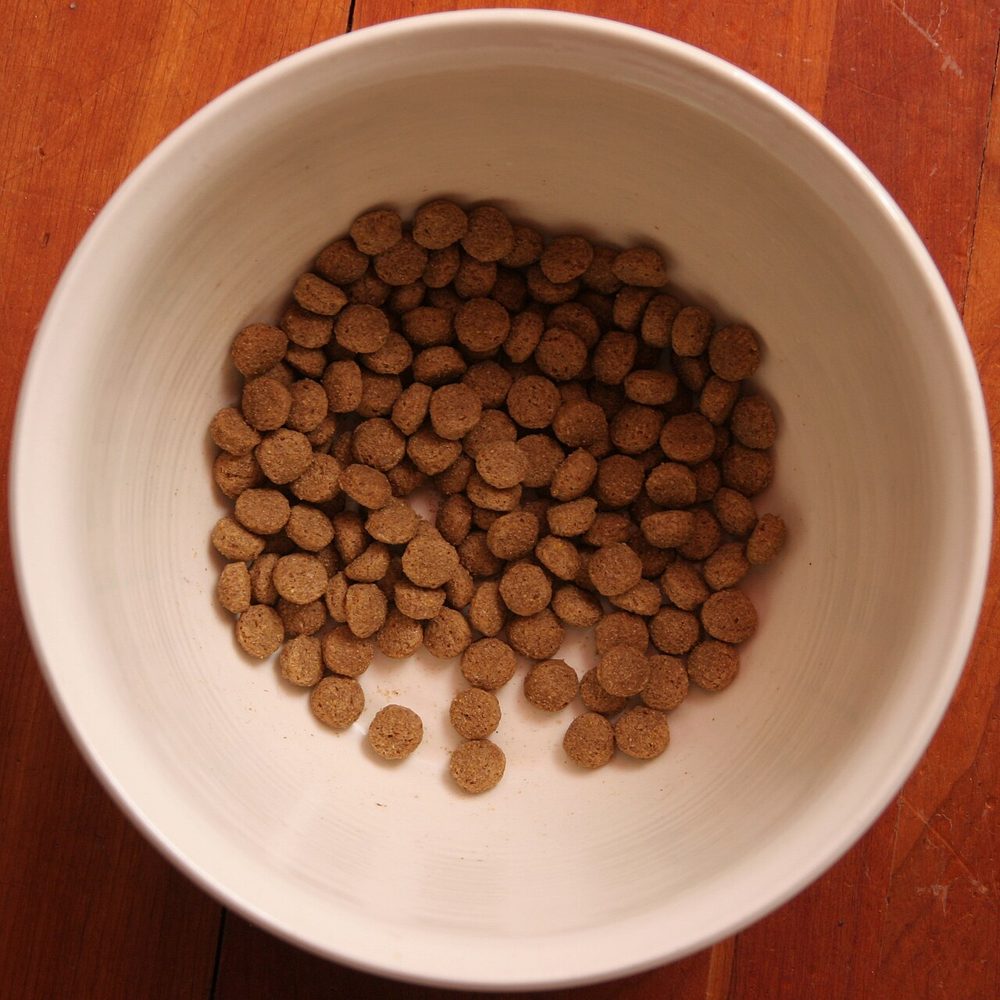
Drying and cooling come straight after extrusion and before coating, screening and packing. The European pet food industry federation (FEDIAF) describes the sequence as mixing, preconditioning, extrusion and cutting, then air drying, cooling and coating in a revolving drum.
- Dry ingredients are ground, sieved and mixed.
- Water and steam are added in a preconditioner to form a dough.
- The extruder cooks the dough under pressure; a die and rotary cutter form the kibble.
- The kibble is dried in hot air, then cooled.
- Fats, flavours and preservatives are applied in a coating drum.
- Fines are screened out and the product is packed.
A review of feed extrusion notes that when more than about 5-8% fat is coated on, the kibble is often dried, coated warm and then cooled. That choice changes the cooler type, so decide the coating plan before you size equipment.
What moisture and water activity should the dryer hit?
Aim for final moisture below 10% and water activity below 0.6. The published review says 12% is the maximum moisture for dry expanded foods. Most products are made well below that. Your exact target depends on recipe, kibble size and the water activity your quality team sets.
| Point in the process | Published value | Source type |
|---|---|---|
| Extrudate before the die | 23-28% moisture, 125-150 °C | Extrusion review (2010) |
| Loss during pneumatic conveying to the dryer | 1-2 percentage points | Extrusion review (2010) |
| Final moisture, dry expanded product | Below 10%; 12% maximum | Extrusion review (2010) |
| Water activity limits | <0.65 for bacteria; <0.6 for mould | Extrusion review (2010) |
| Market dry cat / dog food | 5.89% / 6.44% moisture; aw 0.41 / 0.44 | Survey of 72 retail samples (2017) |
| Uncoated research kibble | 5.6% moisture; aw 0.50 | University challenge study (2023) |
Moisture and water activity are related but not the same. Build a moisture sorption isotherm for each recipe so you know which moisture gives your target water activity. Then control the dryer to that moisture.
Why is a conveyor dryer the usual choice for kibble?
A horizontal conveyor dryer spreads kibble on a moving belt and passes heated air through the bed. The extrusion review calls it the most common drying equipment for extruded products, because it gives good control of residence time and uniform drying.
The same review gives typical through-bed air velocity of 40-60 metres per minute and air temperature of 90-180 °C. Part of the air is exhausted to remove water and the rest is recirculated and reheated. Dryers can be single-pass or multi-pass to suit the floor space.
Uniform bed depth matters as much as temperature. Thick spots under-dry and can grow mould in the bag; thin spots over-dry, waste energy and can create fines.
How should dryer zones and the cooler be set up?
Use separate zones so you can dry hard while the kibble is wet and gently near the end. Finish with a cooling section or separate cooler. GTI describes multi-zone band dryers in which a final zone can be used for cooling or conditioning, with the exact layout set by the product.
- Zone 1 (wet end): highest airflow and temperature to remove surface water fast.
- Middle zones: lower temperature as the drying rate slows, to limit case hardening (a dry crust that traps moisture inside).
- Final drying zone: trim moisture to target; use exhaust humidity or an on-line moisture meter as feedback.
- Cooler: ambient air brings kibble close to room temperature before coating or packing. A vertical counter-flow cooler is used in the review when heavy fat coating is applied before cooling.
The review also describes slaving dryer temperature, airflow and retention time to on-line moisture readings, or using exhaust relative humidity as a control variable.
How much water does the dryer remove? A worked example
Illustrative assumptions only. Use your own measured values for design.
- Kibble entering the dryer: 2,000 kg/h at 24% moisture, wet basis (assumed; within the published 23-28% extrusion range less some conveying loss).
- Dry solids = 2,000 × (1 − 0.24) = 1,520 kg/h.
- Target leaving the dryer: 8% moisture, wet basis (assumed). Product = 1,520 ÷ 0.92 = about 1,652 kg/h.
- Water evaporated = 2,000 − 1,652 = about 348 kg/h.
- Minimum heat just to evaporate this water, at roughly 2,400 kJ/kg: 348 × 2,400 = about 835,000 kJ/h, or about 232 kW.
Real thermal demand is higher. Add heat to warm the kibble and air, exhaust losses and casing losses. Electrical load for fans and conveyors is separate and must be counted on its own.
Is the dryer a kill step for Salmonella?
Do not assume so. Extrusion cooking is normally treated as the thermal kill step. Research on pet food kibble notes that cross-contamination with Salmonella and E. coli can happen after that step, for example during coating with fats and flavours.
In the USA, 21 CFR Part 507 requires animal food facilities covered by the rule to carry out a hazard analysis and use preventive controls. These include process controls and sanitation controls, and the rule names environmental pathogens as a hazard to consider. Other markets have their own rules, so check the law where you sell.
Design points to discuss with your food safety team and with GTI engineering:
- Separate raw ingredient areas from post-dryer areas, and control air and people flow.
- Use cleanable, drainable surfaces at the dryer discharge, cooler and coating drum.
- Filter cooler air, because it touches finished product.
- Avoid condensation points in ducts and covers over cooled product.
- If you want the dryer to count as a kill step, it must be validated for your product. Do not rely on design temperatures alone.
What causes mould, fines and uneven moisture?
| Problem | Likely dryer-side causes | First checks |
|---|---|---|
| Mould in bags | High or uneven moisture; warm packing; condensation | Moisture across belt width; product temperature at packing |
| Wet centres, dry crust | First zone too hot; too short a residence time | Zone temperatures; belt speed; cut-test kibble |
| Excess fines | Over-drying; rough transfers; brittle recipe | Drop heights; final moisture; screen fines rate |
| Uneven colour | Uneven bed depth; hot spots | Spreader; airflow balance; damper settings |
The extrusion review reports that a well-run line averages only 3-5% fines, which can be recycled into the raw mix.
Which GTI dryers suit pet food kibble?
GTI manufactures the Band Dryer / Apron Dryer, a continuous multi-zone dryer whose listed applications include snacks, pellets and extruded products. GTI’s band dryer page for the US market covers pet food drying and lists the factors pet food makers manage: final moisture, product temperature, residence time, texture, bulk density and shelf stability. See also GTI’s industrial band dryer overview.
For wider feed applications, read our guide to animal feed and insect protein dryers. If you also make aquafeed, GTI’s guide on choosing a dryer for extruded fish and shrimp feed covers the differences. Zone layout, cooler type, materials and hygiene design for your plant must be confirmed with GTI engineering. We do not claim any certification for pet food unless GTI confirms it in writing.
See the machine type in operation
GTI Group video on its own channel showing a band (apron) dryer. It is a general machine overview, not a pet food trial:
FAQ
What moisture should dry dog food kibble have after drying?
Below 10% is the published target for dry expanded products, with 12% as a maximum. Retail samples in one study averaged about 6-6.5%.
What water activity is safe for kibble?
Below 0.6 prevents mould growth according to a published extrusion review; below 0.65 avoids bacterial problems. Set your own limit from a sorption isotherm.
Why must kibble be cooled before packing?
Warm kibble releases moisture that condenses on cooler pack and bin walls. Damp spots then allow mould and bacteria to grow.
Should coating happen before or after cooling?
Many lines coat after cooling. With heavy fat coatings (above about 5-8%), kibble is often coated warm and then cooled, usually in a counter-flow cooler.
Request a Quotation from GTI
Planning a pet food kibble drying and cooling system? Contact Genex Tech Industries LLP (GTI Group) to discuss your material, production capacity, product specifications and utility requirements. To help us respond usefully, please share your product or recipe type, required capacity in kg/h, moisture at dryer inlet and outlet (state wet or dry basis), target water activity, kibble size and coating level, available utilities (gas, diesel, steam, electricity), installation location and project timeline.
Email: mktg@foodtechprojects.com
Call or WhatsApp: +91-93300-77417 | +91-87774-75596 (WhatsApp)
Website: https://foodtechprojects.com/
For Industrial Dryers: https://gtidryers.com
This article gives general technical guidance. Figures marked as illustrative are examples, not plant guarantees. Equipment selection and performance for your product should be confirmed through trials and engineering assessment.
References
- FEDIAF (European pet food industry federation). How dry pet food is made (fact sheet). europeanpetfood.org
- Rokey G.J., Plattner B., Souza E.M. (2010). Feed extrusion process description. Revista Brasileira de Zootecnia 39 (supl. especial): 510-518. rbz.org.br
- Başer Ö., Yalçın S. (2017). Determination of some quality characteristics in pet foods. Ankara Üniversitesi Veteriner Fakültesi Dergisi 64: 21-24. dergipark.org.tr
- Deliephan A., Dhakal J., Subramanyam B., Aldrich C.G. (2023). Use of organic acid mixtures containing HMTBa to mitigate Salmonella enterica, STEC and Aspergillus flavus in pet food kibbles. Animals 13(5): 877. pmc.ncbi.nlm.nih.gov
- US Code of Federal Regulations, 21 CFR Part 507: Current good manufacturing practice, hazard analysis, and risk-based preventive controls for food for animals. ecfr.gov