
Last updated: 24 November 2026. By the GTI Group editorial team, Genex Tech Industries LLP (Food Tech Projects), Kolkata, India.
Direct answer: An egg yolk powder plant needs clean yolk separation, yolk-specific pasteurisation and a spray dryer run to protect emulsifying quality. Plain yolk was historically pasteurised at 61.1 °C for 3.5 minutes, salted or sugared yolk at 63.3 °C. In the dryer, outlet temperature and time in hot zones matter more for functionality than inlet temperature.
Request a Quotation: Planning an egg yolk powder line, or adding yolk to a whole-egg plant? Email mktg@foodtechprojects.com or call/WhatsApp +91-93300-77417 | +91-87774-75596. Include eggs or liquid yolk per day, plain, salted or sugared product, target moisture, location and timeline.
Key takeaways
- US standards define liquid egg yolk as containing at least 43% total egg solids, so separation quality directly affects solids, yield and dryer load.
- Added salt or sugar raises the heat needed for pasteurisation: the former US minimum was 142 °F (61.1 °C) for plain yolk and 146 °F (63.3 °C) for sugar or salt yolk, both for 3.5 minutes.
- Dried egg yolk must contain at least 95% total egg solids under the US standard of identity, so final moisture must stay at or below about 5%.
- Research shows yolk protein denaturation speeds up above a temperature threshold, and residence time in the atomiser, chamber, ducts and collector matters.
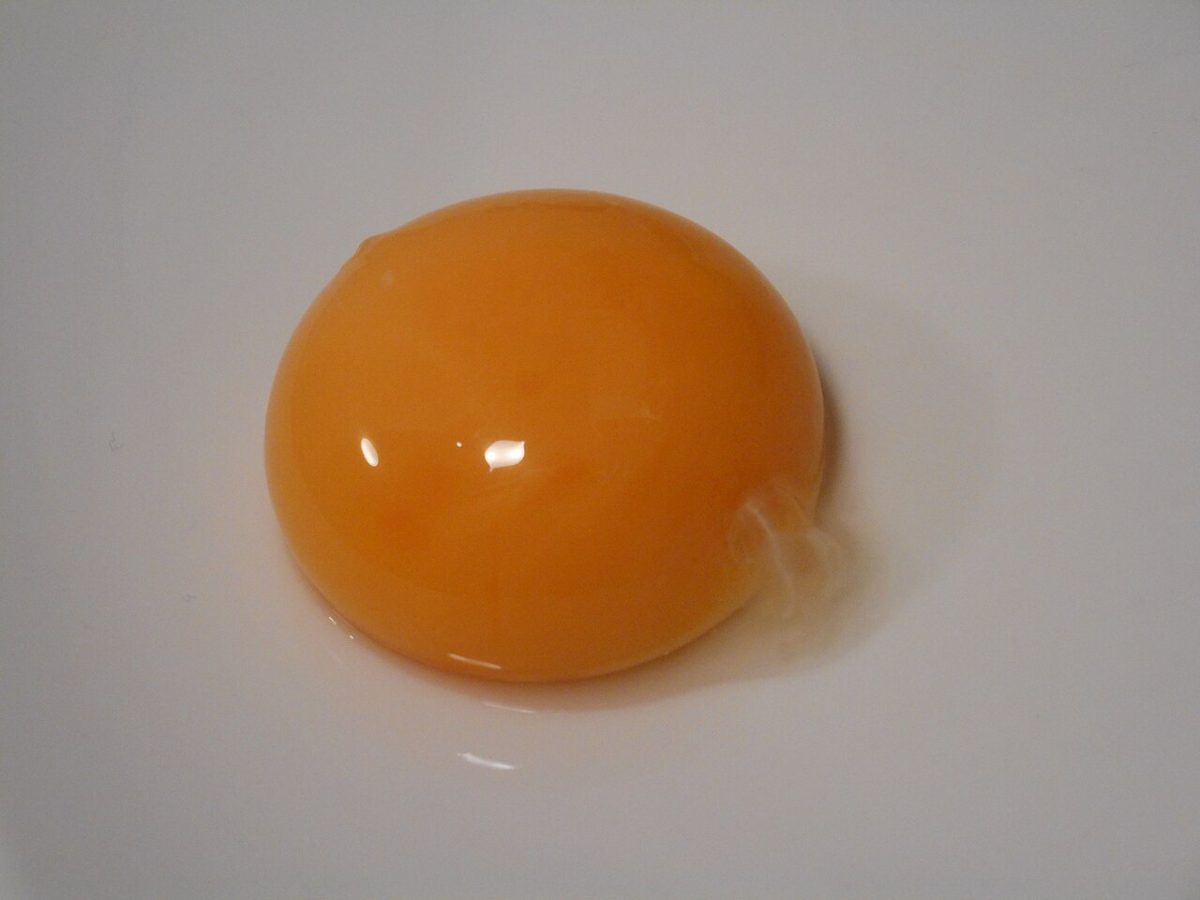
What does a yolk powder line need beyond a whole-egg line?
Three things: a breaker that separates yolk from white cleanly, a pasteuriser set for yolk (and for any salt or sugar), and dryer settings chosen for fat-rich, emulsifying yolk rather than whole egg. Most other units, such as filtration, chilled storage, homogenisation and CIP, are shared with whole-egg lines.
GTI’s egg processing plant and machinery page lists egg yolk powder and liquid egg yolk among its products. It covers automatic egg breaking and separation, filtration, storage and blending tanks, pasteurisers, homogenisers, spray drying, powder handling and CIP.
Why does separation quality matter so much?
White carried over into the yolk stream dilutes yolk solids and changes the product. The US standard (21 CFR 160.180) requires separated liquid yolk to contain at least 43% total egg solids. Low solids mean more water to evaporate per kg of powder and a product that may not meet the yolk specification.
- Check yolk solids by an agreed laboratory method on each shift, not only colour.
- Keep the white stream clean too, because yolk fat in egg white harms its whipping performance.
- Chill the separated yolk promptly and keep holding times short before pasteurisation.
What pasteurisation temperatures apply to egg yolk?
Yolk needs more heat than whole egg, and salted or sugared yolk needs more again, because salt and sugar protect bacteria. The minimum times and temperatures below were set out in the US regulation 9 CFR 590.570 until it was revised in 2020.
| Liquid product | Minimum temperature | Minimum holding time |
|---|---|---|
| Whole egg | 140 °F (60.0 °C) | 3.5 min |
| Plain yolk | 142 °F (61.1 °C) or 140 °F (60.0 °C) | 3.5 min or 6.2 min |
| Sugar yolk (2% or more sugar) | 146 °F (63.3 °C) or 144 °F (62.2 °C) | 3.5 min or 6.2 min |
| Salt yolk (2-12% salt) | 146 °F (63.3 °C) or 144 °F (62.2 °C) | 3.5 min or 6.2 min |
Source: 9 CFR 590.570, Table I (1 January 2020 edition). Celsius values converted by us.
The current rule is performance-based: pasteurised egg products must be safe to eat without further cooking. Use the table as a planning reference. Confirm the validated process with the food-safety authority in your target market, because rules differ between countries.
The same table required a holding tube, automatic flow diversion valve, thermal controls and recording devices. Specify these on the pasteuriser even where local law is less detailed, because export buyers often audit them.
How do spray-dryer temperatures affect yolk powder quality?
Set the outlet temperature for the target moisture, then keep hot-zone residence time as short as possible. In a pilot study on whole egg powder, outlet temperature and atomisation pressure affected emulsion stability, gel texture and colour more than inlet temperature. A yolk-specific study found denaturation accelerates above a temperature threshold.
The yolk study (Nakagawa, Adachi and Handa, 2017) measured denaturation by colour, slurry viscosity and agglomerated particle size. It concluded that time spent in the atomiser, chamber, transport pipes and collector can have critical effects on quality. In practice, that points to:
- Avoiding an outlet temperature higher than needed to reach the moisture target.
- Removing powder from the chamber cone and collectors promptly, without long hot holds.
- Cooling the powder before packing, for example on a fluid bed after the spray dryer.
- Recording outlet temperature and powder moisture together, batch by batch.
For reference, GTI’s egg powder dehydration machine page gives customisable design ranges of 150-220 °C inlet, 70-90 °C outlet and 2-4% final moisture. It also lists an optional fluid bed for final moisture control and cooling. Final yolk settings are set by trial for each product and capacity. Background on protein damage is in our guide to preventing protein denaturation in egg drying.
Laboratory results do not transfer directly to plant settings. One small-scale study optimised yolk powder for antibody (IgY) content at 140 °C inlet and 600 mL/h feed. That is lab equipment and a special target, not a production recipe.
How much water does a yolk powder dryer remove?
About 530 kg per tonne of liquid yolk in the example below. Yolk’s high solids mean far less water per kg of powder than whole egg, so the same dryer makes more yolk powder per hour. The figures are illustrative assumptions, not GTI performance data.
- Liquid yolk: 1,000 kg at an assumed 45% solids (above the 43% minimum), so solids = 450 kg.
- Powder at an assumed 4% moisture (96% solids): 450 / 0.96 = about 469 kg.
- Water to evaporate: 1,000 – 469 = about 531 kg.
- Feeding 1,000 kg/h of yolk therefore needs about 530 kg/h of evaporation, plus a design margin.
If you add 10% salt or sugar, recalculate with the new solids and remember that salt also raises the required pasteurisation temperature.
Video: GTI overview of liquid egg to egg powder processing machinery with spray dryers.
What else does the dried yolk standard allow?
The US standard for dried egg yolks (21 CFR 160.185) allows optional glucose removal before drying and limited anticaking agents. Silicon dioxide may be used at not more than 1%, or sodium silicoaluminate at less than 2% of finished weight. The finished food must be free of viable Salmonella.
Glucose removal is better known for egg white. Our article on desugaring egg white before spray drying explains the methods.
What should a yolk powder plant enquiry include?
- Eggs broken per hour, or liquid yolk in kg/h, and operating hours per day.
- Products: plain, salted or sugared yolk powder, and whether white and whole-egg powder share the line.
- Target moisture, particle size and packing format.
- Utilities: steam, gas or electric heating, chilled water and compressed air. See our egg powder plant utilities guide.
- Export markets, so that pasteurisation records and hygiene design can be planned to suit.
FAQ
What temperature is used to pasteurise egg yolk?
The former US minimum for plain yolk was 61.1 °C (142 °F) for 3.5 minutes, or 60.0 °C for 6.2 minutes. Salted or sugared yolk needed 63.3 °C for 3.5 minutes.
What moisture should egg yolk powder have?
The US standard requires at least 95% egg solids, so no more than about 5% moisture. GTI’s egg powder dryer page gives a 2-4% design range.
Can one spray dryer make whole egg, yolk and white powder?
Often yes, with cleaning between products and separate settings for each. Confirm capacity for each product with GTI engineering.
Why is my yolk powder losing emulsifying power?
Check outlet temperature, hot residence time in collectors and ducts, and powder cooling before packing. Research links these to yolk denaturation.
Request a Quotation from GTI
Planning an egg yolk powder plant or upgrading an egg breaking and drying line? Contact Genex Tech Industries LLP (GTI Group) to discuss your material, production capacity, product specifications and utility requirements. To help us respond usefully, please share your product (plain, salted or sugared yolk), required capacity in kg/h of liquid feed or powder, feed solids and final moisture, finished-product specification, available utilities, installation location and project timeline.
Email: mktg@foodtechprojects.com
Call or WhatsApp: +91-93300-77417 | +91-87774-75596 (WhatsApp)
Website: https://foodtechprojects.com/
For Industrial Dryers: https://gtidryers.com
This article gives general technical guidance, not legal or food-safety approval. Figures marked as illustrative are examples, not plant guarantees. Equipment selection and performance for your material should be confirmed through trials and engineering assessment.
References
- US Code of Federal Regulations, 9 CFR 590.570, Pasteurization of liquid eggs, Table I (1 January 2020 edition). govinfo.gov (PDF)
- 9 CFR 590.570, Control of pathogens in pasteurized egg products (current text). ecfr.gov
- 21 CFR 160.180 Egg yolks and 160.185 Dried egg yolks. ecfr.gov
- Nakagawa K., Adachi S., Handa A. (2017). Denaturation of spray-dried egg yolk during processing and storage. Japan Journal of Food Engineering 18. doi.org/10.11301/jsfe.17486
- Koç M. et al. Functional and physicochemical properties of whole egg powder: effect of spray drying conditions. Journal of Food Science and Technology 48(2):141 (published online 2010). pmc.ncbi.nlm.nih.gov
- Ang Y. et al. (2022). Effect of spray drying on the functional properties of egg yolk powder. Food and Machinery 38(11). ifoodmm.cn