Section 1: Executive Summary & The Next Era of Global Feed Processing
Consequently, the global livestock, aquaculture, and pet nutrition sectors are currently undergoing an unprecedented structural transformation.
Furthermore, rapid urbanisation and shifting dietary patterns across emerging economies have massively accelerated the global demand for high-grade animal protein.
Therefore, commercial feed compounders are continuously seeking advanced thermal processing technologies to improve overall feed conversion ratios.
Additionally, rising environmental concerns and land constraints have compelled the industry to embrace sustainable alternative proteins.
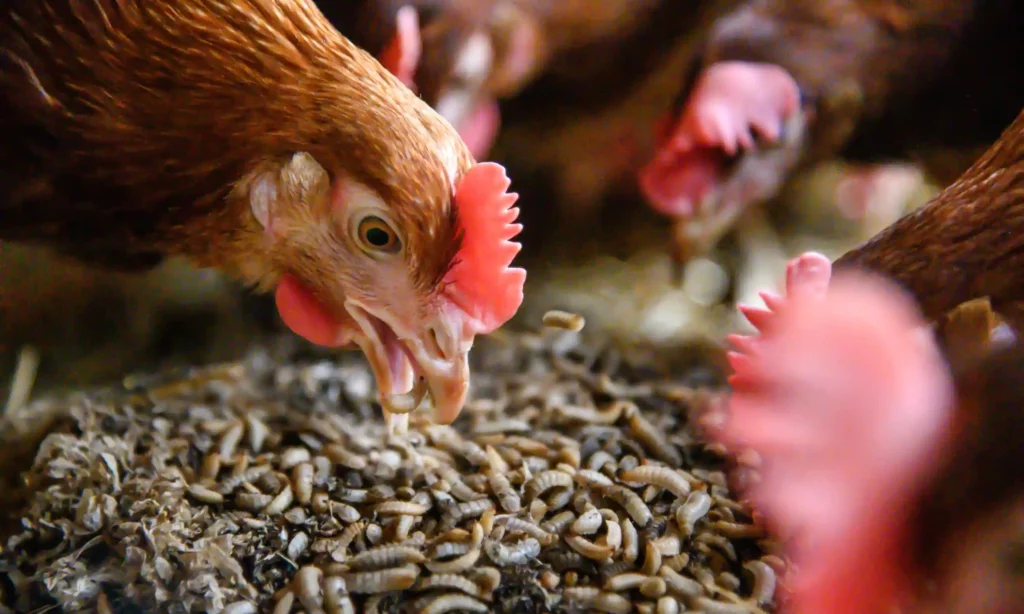
Specifically, Black Soldier Fly Larvae and mealworm proteins have rapidly emerged as highly viable alternatives to traditional soy and fishmeal.
As a result, industrial drying has transitioned from a basic moisture removal step into a core determinant of protein digestibility and product shelf-life.
In practice, thermal drying directly influences starch gelatinisation, lipid stability, and microbial safety in finished feed formulations.
Subsequently, improper drying temperatures can denature essential amino acids like lysine and methionine, thereby degrading the overall nutritional value of the feed.
Indeed, precise temperature control and uniform airflow distribution are vital for achieving optimal product stability.
Thus, manufacturers must deploy state-of-the-art industrial dryers tailored specifically to the rheological and thermal properties of each feed matrix.
For instance, delicate extruded aquafeeds require gentle horizontal belt drying to prevent structural cracking and sink-rate variation.
In contrast, sticky distillers grains and spent brewers grains require robust rotary drum or flash drying systems to handle high initial moisture contents efficiently.
Eventually, equipment selection dictates operational profitability by balancing energy consumption, throughput speed, and final moisture precision.
Similarly, Indian machinery manufacturers like GENEX Tech Industries LLP are leading this technological shift by delivering custom thermal drying systems.
Importantly, GTI’s advanced drying portfolio incorporates heat recovery loops and automated climate controls to meet stringent global quality standards.
Industrial Animal Feed Drying Parameters
| Feed Product Category | Initial Moisture Range | Target Final Moisture | Recommended Drying System |
| Extruded Aqua & Shrimp Feed | 25.0% – 32.0% | 8.0% – 10.0% | Multi-Pass Mesh Belt Dryer |
| Poultry & Cattle Pellets | 16.0% – 18.0% | 11.0% – 12.5% | Vibratory Fluid Bed Dryer |
| Premium Pet Kibble | 25.0% – 30.0% | 8.0% – 9.5% | Multi-Zone Heavy Band Dryer |
| DDGS & Spent Brewers Grains | 65.0% – 75.0% | 10.0% – 12.0% | Rotary Drum / Flash Dryer |
| Whole BSFL Larvae | 68.0% – 72.0% | 4.0% – 6.0% | Low-Temp Mesh Belt Dryer |
| Defatted Insect Protein Meal | 50.0% – 60.0% | 5.0% – 7.0% | Combination Fluid Bed Dryer |
Section 2: Comprehensive Coverage of Animal Feed & Co-Product Applications
2.1 Poultry Feed
First, poultry feed production relies heavily on steam conditioning and pelleted processing to ensure uniform nutrient distribution.
Afterwards, the hot pellets exit the pellet mill die at elevated temperatures between 75°C and 85°C.
Consequently, the pellets carry an initial moisture content ranging from 16.0% to 18.0%, which must be rapidly reduced.
Furthermore, if this internal moisture is not reduced below 12.0% within a precise time window, mold growth will rapidly deteriorate the feed.
Therefore, continuous horizontal drying systems are deployed to lower moisture down to a stable target between 11.0% and 12.0%.
As a result, the structural hardness of the pellet increases, which effectively minimizes fine dust creation during bulk transport.
Additionally, controlled cooling prevents moisture migration to the pellet surface, thereby protecting delicate vitamins from thermal degradation.
Specifically, utilizing gentle cross-draft air recirculation maintains high thermal efficiency while preserving feed quality.
Overall, effective poultry feed drying directly translates into higher feed intake and superior bird growth performance.
2.2 Aqua Feed & Fish Feed
Similarly, commercial fish feeds present unique drying challenges due to their delicate buoyancy requirements and high lipid contents.
Initially, extruded floating and sinking fish pellets exit the extruder die with moisture levels reaching up to 30.0%.
Consequently, aggressive drying or sudden thermal shocks can cause physical swelling, internal fracturing, or pellet collapsing.
Therefore, gentle multi-zone drying is essential to preserve exact pellet density and uniform sink rates.
Furthermore, maintaining a low drying temperature between 80°C and 95°C prevents the oxidation of sensitive fatty acids.
As a result, the physical integrity of the water-stable pellet remains fully intact during underwater feeding.
Specifically, reducing final moisture content to 8.0% or 9.0% prevents fungal contamination without making the pellet brittle.
Afterwards, coating enzymes and fats can be applied smoothly onto the cool, dry pellet surface.
Overall, custom-engineered belt dryers provide the precise thermal profile required for premium commercial fish diets.
2.3 Shrimp Feed
In contrast, shrimp feeds require even stricter quality controls due to their small pellet diameters and long underwater stability demands.
For instance, starter and grower shrimp feeds typically range in size from 0.8 mm to 2.2 mm.
Consequently, high air velocities in standard dryers can easily blow these lightweight pellets off conveyances.
Furthermore, shrimp pellets possess a dense, low-porosity matrix that slows down internal moisture diffusion during thermal processing.
Therefore, multi-stage belt dryers with adjustable bed depths and controlled low-velocity airflows are strictly required.
As a result, moisture drops steadily from 28.0% down to a final 9.0% without fracturing the fine pellet surface.
Additionally, keeping temperatures strictly below 90°C preserves critical water-soluble attractants and crystalline amino acids.
Afterwards, the dried shrimp pellets undergo controlled counterflow cooling to stabilize their physical hardness.
Thus, specialized industrial drying systems are crucial for achieving high feed conversion efficiency in shrimp aquaculture.
2.4 Premium Pet Food
Meanwhile, the global pet food industry demands ultra-consistent kibble appearance, texture, and nutritional retention.
Typically, premium dog and cat kibbles are processed through high-shear extruders at high moisture levels between 25.0% and 30.0%.
Consequently, uniform drying is paramount to prevent internal soft spots and exterior skin hardening.
Furthermore, uneven moisture distribution within pet kibble leads to localized mold formation and shortened retail shelf life.
Therefore, heavy-duty multi-pass band dryers with multi-zone heating controls are utilized for continuous processing.
As a result, the internal moisture drops uniformly to a target of 8.0% to 9.5% across all kibble sizes.
Additionally, gentle handling minimizes kibble breakage and surface abrasion before the digest and fat application stages.
Specifically, precise airflow reversal between upper and lower drying decks guarantees uniform thermal exposure.
Overall, high-performance pet food drying preserves product palatability and visual appeal for discerning pet owners.
2.5 Cattle Feed & Ruminant Nutrition
In addition, cattle feed formulations encompass a wide array of high-fiber range cubes, protein blocks, and pelleted concentrate feeds.
Initially, high-fiber cattle feeds retain substantial amounts of bound moisture within their dense plant cell walls.
Consequently, higher drying temperatures between 100°C and 120°C are frequently required to achieve economical throughputs.
Furthermore, the initial moisture content of pelleted cattle feed typically varies between 17.0% and 20.0% depending on molasses inclusion.
Therefore, robust vibratory fluid bed dryers or heavy-duty single-pass belt dryers are ideal for processing high-volume cattle feeds.
As a result, moisture levels are economically reduced to 12.0% for safe bulk storage in silos.
Specifically, proper drying prevents self-heating and spontaneous combustion caused by localized microbial activity in bulk storage.
Afterwards, the structural integrity of the pellets prevents crumbling during long-distance rail and truck transportation.
Overall, efficient cattle feed drying safeguards valuable ruminant nutrients against environmental degradation.
2.6 Distillers Dried Grains with Solubles (DDGS)
Furthermore, DDGS is a major high-protein co-product derived from industrial ethanol fermentation facilities.
Initially, wet distillers grain exits centrifuges and press filtration units with an extremely high moisture content between 65.0% and 70.0%.
Consequently, processing this sticky, viscous slurry into a free-flowing granular feed requires aggressive thermal evaporation.
Therefore, heavy-duty rotary drum dryers or multi-stage pneumatic flash dryers are deployed for continuous DDGS processing.
As a result, water is rapidly driven off, reducing final moisture levels down to 10.0% to 12.0%.
Additionally, careful thermal management prevents lysine scorching and maintains an attractive light-golden product color.
Specifically, recycling a portion of the exhaust gas significantly reduces overall thermal energy consumption per ton of evaporated water.
Afterwards, cooled DDGS granules can be directly blended into poultry, swine, and cattle feed rations.
Thus, optimized DDGS drying converts ethanol plant waste into a highly profitable, shelf-stable protein ingredient.
2.7 Spent Brewers Grain (BSG)
Similarly, spent brewers grain represents a massive organic co-product generated during the mashing process in commercial breweries.
Initially, wet spent brewers grain contains up to 75.0% to 80.0% water, making it extremely prone to rapid bacterial spoilage within 24 hours.
Consequently, immediate thermal drying is mandatory to stabilize this rich source of protein and dietary fiber.
Therefore, combining mechanical dewatering screw presses with high-capacity rotary or fluid bed dryers provides the most energy-efficient solution.
As a result, initial moisture is mechanically dropped to 60.0% before thermal drying reduces it down to 10.0%.
Furthermore, gentle thermal processing preserves natural vitamins and digestible fiber components.
Specifically, dried brewers grain serves as an exceptional feed component for dairy cattle and monogastric animal diets.
Afterwards, the shelf-stable dried grain can be stored for months or exported in bulk without quality loss.
Overall, converting wet spent brewers grain into high-value dry feed enhances brewery sustainability and profitability.
2.8 Corn Gluten Feed (CGF)
In contrast, corn gluten feed is a valuable feed ingredient derived from the wet-milling process of corn kernel processing.
Initially, wet corn gluten feed consists of corn bran combined with steepwater solids, carrying a heavy initial moisture content around 60.0%.
Consequently, high-capacity industrial dryers are required to handle this cohesive, sticky feed product continuously.
Therefore, triple-pass rotary drum dryers or specialized multi-zone band dryers are engineered specifically for CGF applications.
As a result, moisture drops steadily down to 11.0% to 12.0%, transforming sticky corn bran into a stable granular meal.
Furthermore, controlled inlet air temperatures prevent caramelisation of soluble corn sugars.
Additionally, maintaining uniform heat application prevents hot spots that cause product degradation and dark discoloration.
Afterwards, dried corn gluten feed provides a high-protein, medium-energy feed ingredient suitable for ruminant and poultry nutrition.
Overall, advanced drying solutions optimize the commercial value of corn wet-milling co-products.
Section 3: The Alternative Protein Revolution — Insect Protein & BSFL Processing
Insect Protein Processing Parameters
| Insect Processing Stage | Raw Input Moisture | Dried Output Moisture | Thermal Process Window |
| Whole Harvested BSFL Larvae | 68.0% – 72.0% | 4.0% – 6.0% | 75°C – 85°C (Low Temp Zone) |
| Mechanical Defatted Presscake | 50.0% – 58.0% | 5.0% – 7.0% | 80°C – 90°C (Fluid Bed Zone) |
| Purified Insect Protein Meal | 55.0% – 62.0% | 4.0% – 6.0% | 85°C – 95°C (Flash/Belt Zone) |
| Mealworm Whole Larvae | 62.0% – 66.0% | 3.5% – 5.0% | 70°C – 80°C (Gentle Belt Zone) |
3.1 Black Soldier Fly Larvae Whole Larvae
Initially, Black Soldier Fly Larvae represent the absolute vanguard of sustainable alternative protein production.
Specifically, harvested BSFL carry an extremely high internal water content ranging from 68.0% to 72.0%, along with high fat levels.
Consequently, traditional high-temperature drying methods cause severe lipid melting, scorching, and terrible product darkening.
Therefore, low-temperature multi-pass mesh belt dryers utilizing high-volume air dehumidification are strictly required.
As a result, whole BSFL are gently dried at temperatures between 75°C and 85°C down to a low 4.0% to 6.0% moisture target.
Furthermore, this controlled approach preserves natural larvicide proteins, antimicrobial peptides, and natural golden color.
Additionally, gentle bed movement prevents physical crushing of whole larvae, ensuring high visual quality for wild bird and pet markets.
Afterwards, the dried whole larvae can be directly packaged or routed to mechanical oil extraction systems.
Overall, precise BSFL drying underpins the economic viability of commercial insect farming facilities.
3.2 Defatted Insect Protein Meal
Conversely, when whole BSFL undergo mechanical pressing to extract insect lipid oil, a dense defatted presscake is produced.
Initially, this defatted insect protein presscake retains a moisture content between 50.0% and 58.0% alongside high protein concentration.
Consequently, the material exhibits a cohesive, sticky consistency that tends to agglomerate during thermal processing.
Therefore, combination fluid bed dryers equipped with mechanical lump breakers are deployed for continuous defatted meal processing.
As a result, internal moisture is rapidly evaporated down to a super-stable 5.0% to 7.0% final range.
Furthermore, keeping thermal exposure uniform prevents thermal damage to essential amino acid profiles like lysine and threonine.
Specifically, the resulting defatted insect meal achieves protein concentrations exceeding 55.0% to 65.0% on a dry matter basis.
Afterwards, this premium insect protein meal directly replaces expensive fishmeal in high-performance aquafeeds and pet foods.
Thus, specialized drying technology transforms raw insect presscake into a world-class feed ingredient.
Section 4: Detailed Breakdown of Industrial Dryer Types
4.1 Industrial Mesh Belt Dryers
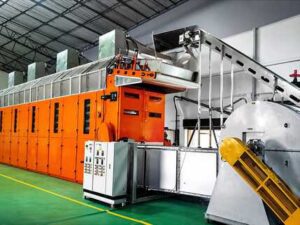
First, industrial mesh belt dryers represent the gold standard for processing delicate, extruded, or temperature-sensitive feed materials.
Specifically, wet material is continuously fed onto a stainless steel woven wire mesh belt moving through isolated drying zones.
Consequently, heated air is forced vertically upward or downward through the porous product bed for maximum thermal contact.
Furthermore, independent temperature and humidity controls across separate drying zones allow precise customization of the drying curve.
Therefore, initial zones apply higher temperatures to evaporate surface moisture rapidly without heating the product core.
As a result, subsequent zones lower the air temperature to promote slow, internal moisture diffusion without cracking.
Additionally, adjustable belt speeds provide exact residence time control ranging from 15 to 90 minutes depending on pellet size.
Overall, mesh belt dryers deliver unparalleled drying uniformity and gentle physical handling for high-value feeds.
Technical Performance — Mesh Belt Dryer
| Parameter | Operational Specification |
| Temperature Range | 60°C – 140°C (Multi-Zone Control) |
| Retention Time Range | 15 Minutes – 90 Minutes (Variable Frequency Drive) |
| Infeed Moisture Capacity | Up to 35.0% Initial Moisture |
| Target Final Moisture Precision | ±0.5% Uniformity Across Bed Width |
| Ideal Product Applications | Aquafeed, Shrimp Feed, Premium Pet Kibble, Whole BSFL Larvae |
4.2 Heavy-Duty Multi-Pass Band Dryers
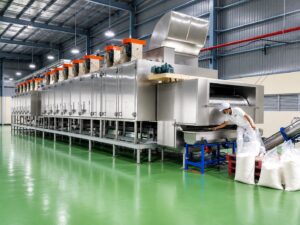
Similarly, heavy-duty multi-pass band dryers are engineered for continuous high-capacity production where floor space footprint is severely restricted.
Specifically, these systems stack multiple conveyor belts vertically within a single heavily insulated drying enclosure.
Consequently, wet material travels along the upper belt before dropping gently onto lower reversing belts.
Furthermore, this product flipping action naturally breaks up surface clumps and exposes unexposed pellet surfaces to hot airflow.
Therefore, thermal drying efficiency is dramatically increased while ensuring highly uniform moisture profiles throughout the bed.
As a result, a three-pass or five-pass band dryer reduces total equipment footprint by up to 60.0% compared to single-pass units.
Additionally, heavy-duty stainless steel conveyor slats support dense, heavy bed loads like cattle feed pellets and high-moisture agricultural co-products.
Specifically, integrated air recirculation dampers optimize thermal energy usage per kilogram of evaporated water.
Overall, multi-pass band dryers combine massive production capacity with exceptional energy efficiency.
4.3 Combination Fluid Bed Dryers
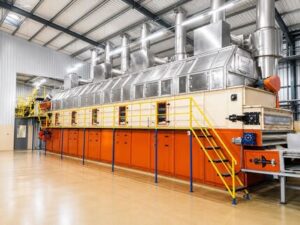
In contrast, combination fluid bed dryers utilize a hybrid design that merges mechanical agitating paddles with upward hot air velocity.
Specifically, wet or sticky materials like defatted insect meals and sticky grain meals are continuously introduced into the fluidization chamber.
Consequently, high-velocity hot air passes upward through a perforated distributor plate, lifting and suspending product particles.
Furthermore, internal mechanical agitator shafts prevent sticky feed particles from agglomerating or sticking to internal walls.
Therefore, every individual particle is completely surrounded by hot air, achieving near-instantaneous heat and mass transfer rates.
As a result, surface moisture evaporates within seconds while maintaining low overall product body temperatures.
Additionally, adjustable overflow weirs control total particle retention times inside the fluidizing chamber with high precision.
Afterwards, integrated cyclone separators collect fine protein dust from the exhaust stream to maximize total yield.
Overall, combination fluid bed dryers represent the ultimate choice for sticky, heat-sensitive powder matrices.
4.4 Vibratory Fluid Bed Dryers
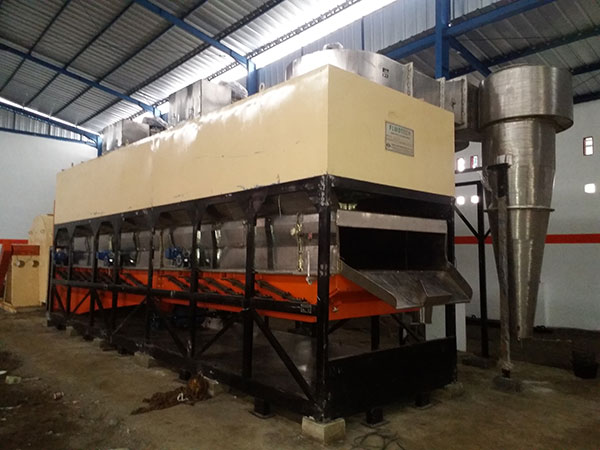
Meanwhile, Vibratory Fluid Bed Dryers combine vertical fluidizing airflow with controlled mechanical vibration motors attached to the dryer body.
Specifically, dual eccentric motors impart a directional harmonic vibration along the length of the perforated drying deck.
Consequently, fragile feed pellets like poultry and cattle feeds travel smoothly along the deck at low air velocities.
Furthermore, the mechanical vibration reduces the minimum air velocity needed to achieve full bed fluidization by up to 40.0%.
Therefore, electrical power consumption for heavy air blowers is significantly reduced while preventing pellet surface degradation.
As a result, fragile extruded pellets float gently across the drying deck without creating excessive fine dust.
Additionally, vibratory fluid bed systems feature dedicated cooling zones built directly into the rear section of the continuous drying deck.
Specifically, ambient or chilled air cools the dried pellets down to 5°C above room temperature before discharge.
Overall, vibratory fluid bed dryers offer ultra-gentle material transport alongside superior energy efficiency.
4.5 Rotary Drum Dryers
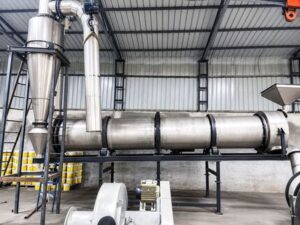
Furthermore, rotary drum dryers are the traditional powerhouses for processing high-volume, high-moisture bulk co-products like DDGS and spent grains.
Specifically, wet material enters a large rotating cylindrical shell fitted with customized internal flighting lifters.
Consequently, as the drum rotates, internal flights lift the wet material and shower it vertically through a high-temperature hot air stream.
Furthermore, direct contact between hot furnace air and cascading wet feed produces rapid thermal evaporation rates.
Therefore, initial moisture levels as high as 70.0% are efficiently driven down to safe storage levels in a continuous single pass.
As a result, rotary drum dryers can process massive throughputs ranging from 5 to 50 metric tons per hour continuously.
Additionally, triple-pass rotary drum configurations pass hot air through three concentric cylinders to triple thermal residence times.
Specifically, robust mechanical construction withstands abrasive wear from agricultural minerals and heavy grain hulls.
Overall, rotary drum dryers deliver rugged, unbeatable reliability for heavy-duty grain processing plants.
4.6 Pneumatic Flash Dryers
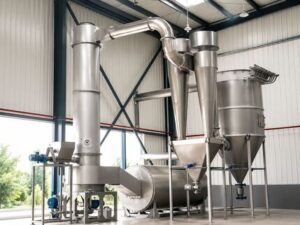
Finally, pneumatic flash dryers provide instant, continuous drying for lightweight, finely divided powders, meals, and starch by-products.
Specifically, wet material is fed into a high-velocity stream of hot air traveling upward through a vertical drying duct.
Consequently, extreme turbulence and high air velocities create instant surface moisture evaporation within 1 to 3 seconds.
Furthermore, short thermal residence times prevent internal heating of sensitive protein molecules, preserving essential amino acid profiles.
Therefore, flash drying is ideal for fine corn gluten meal, wheat gluten, and finely milled insect protein isolates.
As a result, thermal energy efficiency is optimized while delivering ultra-fast product throughputs.
Additionally, high-efficiency cyclone separators and exhaust bag houses capture fine dried powders without product loss.
Specifically, flash dryers feature zero moving internal parts, drastically reducing annual mechanical maintenance costs.
Overall, pneumatic flash dryers provide ultra-rapid, highly efficient thermal processing for fine feed powders.
Section 5: Matrix — Which Dryer is Best for Which Product?
| Feed Application | Primary Dryer Type | Key Thermal Metric | Moisture Profile | Core Technical Benefit |
| Aqua & Fish Feed | Multi-Zone Mesh Belt Dryer | 80°C – 95°C | 30.0% -> 8.5% | Preserves sink/float rate & density |
| Shrimp Feed | Multi-Pass Mesh Belt Dryer | 75°C – 90°C | 28.0% -> 9.0% | Prevents fines & surface cracking |
| Premium Pet Food | Heavy-Duty Band Dryer | 85°C – 105°C | 28.0% -> 8.5% | Uniform cross-bed moisture removal |
| Poultry Feed | Vibratory Fluid Bed Dryer | 70°C – 85°C | 17.0% -> 11.5% | Low dusting & fast integrated cooling |
| Cattle Feed Pellets | Single-Pass Belt Dryer | 100°C – 120°C | 18.0% -> 12.0% | High volume continuous throughput |
| DDGS Co-Products | Rotary Drum Dryer | 150°C – 220°C | 68.0% -> 11.0% | Handles sticky solubles & moisture |
| Spent Brewers Grain | Triple-Pass Rotary Dryer | 140°C – 200°C | 75.0% -> 10.0% | Heavy fibrous moisture removal |
| Corn Gluten Feed | Multi-Pass Band Dryer | 110°C – 130°C | 60.0% -> 11.5% | Prevents sugar caramelisation |
| Whole BSFL Larvae | Low-Temp Mesh Belt Dryer | 75°C – 85°C | 70.0% -> 5.0% | Prevents lipid melting & darkening |
| Defatted Insect Meal | Combination Fluid Bed | 80°C – 95°C | 55.0% -> 6.0% | Agitates sticky presscake meal |
Section 6: Engineering Precision & Why Industrial Feed Processors Choose GENEX Tech Industries LLP
Consequently, choosing the right industrial dryer manufacturer is the single most critical decision for modern feed plant engineering.
Furthermore, GENEX Tech Industries LLP has established itself as a premier engineering leader across India and global markets.
Therefore, GTI custom-builds advanced thermal drying systems designed specifically for complex agricultural and insect protein applications.
In practice, GTI’s engineering positioning fully encompasses poultry feed, aqua feed, fish feed, shrimp feed, pet food, and cattle feed.
Additionally, GTI offers high-capacity drying systems specifically engineered for distillers co-products including DDGS, spent brewers grain, and corn gluten feed.
Specifically, GTI has pioneered dedicated low-temperature belt and combination fluid bed dryers tailored for whole BSFL and defatted insect meals.
Indeed, GTI dryers incorporate heavy-duty stainless steel sanitary construction, automated PLC climate controls, and high-efficiency heat recovery systems.
As a result, feed producers achieve up to 30.0% savings in thermal energy consumption while guaranteeing exact target moisture precision.
Overall, GTI combines deep process knowledge with world-class manufacturing excellence to deliver maximum operating profitability.
Section 7: Conclusion & Strategic Industry Call-to-Action
In conclusion, the future of global animal nutrition depends on thermal processing technologies that balance nutritional preservation with high energy efficiency.
Furthermore, whether processing extruded aquafeeds, high-volume grain co-products, or sustainable insect protein meals, precise moisture control remains paramount.
Therefore, investing in custom-engineered industrial drying equipment directly elevates product quality and operational margins.
Consequently, feed manufacturers and alternative protein producers must partner with proven machinery specialists who understand complex thermal mechanics.
Specifically, GENEX Tech Industries LLP provides end-to-end technical support, from initial moisture testing to complete turnkey plant commissioning.
Thus, upgrading your thermal drying infrastructure today ensures long-term competitiveness in tomorrow’s evolving feed market.
Connect directly with GTI’s senior thermal engineering team today to optimize your feed drying process, arrange pilot testing, or request custom equipment proposals.