Last updated: 22 November 2026. By the GTI Group editorial team, Genex Tech Industries LLP (Food Tech Projects), Kolkata, India.
Direct answer: Virgin coconut oil can be made by a dry route (drying fresh grated kernel and pressing it) or by wet routes that break coconut milk with centrifugation, chilling and thawing, fermentation or enzymes. Dry pressing and chilling-thawing gave the highest recoveries in published trials. The best route depends on scale, labour, utilities and the flavour profile your buyers want.
Key takeaways
- All routes can meet the Asian and Pacific Coconut Community (APCC) VCO limits when run well: moisture max 0.1%, free fatty acid max 0.2% and peroxide value max 3 meq/kg.
- Wet routes produce a large aqueous by-product; the dry route produces a pressed cake.
- Fermentation is low in capital but slow and harder to standardise.
- Every route needs a final moisture-removal and filtration step.
What makes an oil “virgin” coconut oil?
VCO is oil from fresh, mature coconut kernel obtained by mechanical or natural means, with or without heat that does not change the oil’s nature. It is not refined, bleached or deodorised. That definition comes from the APCC quality standard.
The definition rules out copra oil that needs refining. It also means process control matters more than in refined oil, because there is no later refining step to remove off-flavours, free fatty acids or moisture.
What are the main VCO extraction routes?
There are five routes in common use: fresh-dry pressing, centrifugation of milk or cream, chilling and thawing followed by centrifugation, natural or yeast fermentation, and enzyme-assisted separation. They differ mainly in how the coconut milk emulsion is broken.
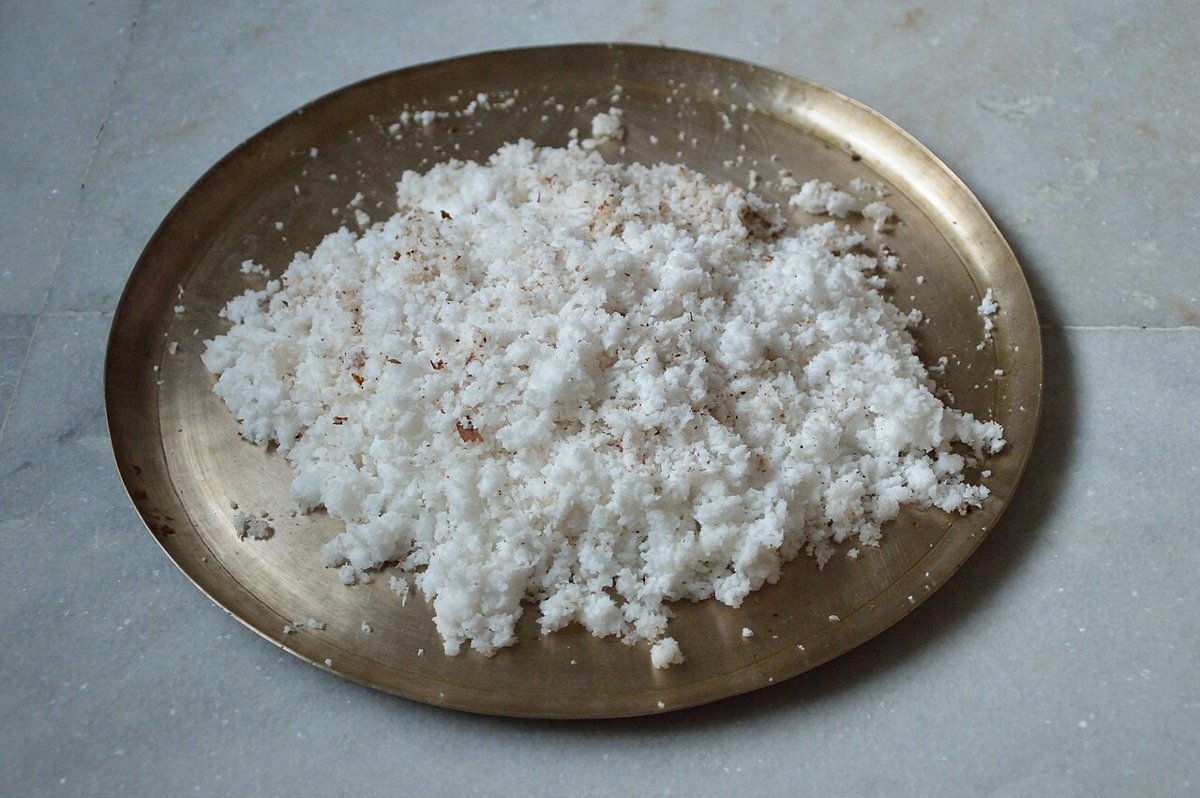
- Fresh-dry (dry route): fresh kernel is grated, dried at controlled temperature to low moisture and pressed in an expeller. The oil is then settled or filtered.
- Centrifugation: coconut milk is separated into cream and skim, and the cream is centrifuged again to release oil.
- Chilling and thawing: cream is chilled so fat crystallises and droplets coalesce on thawing, then centrifuged.
- Fermentation: milk, sometimes diluted and inoculated, is left to stand until oil separates and is decanted.
- Enzymatic: proteases such as papain weaken the protein film around oil droplets before centrifugation.
How do the routes compare on recovery and quality?
In a direct laboratory comparison, the fresh-dry route recovered the most oil (about 88%), followed by chilling and thawing (about 87%). All the oils met APCC and Codex physicochemical limits. Fermented oil had the lowest free fatty acid in that study.
| Route | Published recovery (lab conditions) | Typical process features | Practical notes |
|---|---|---|---|
| Fresh-dry pressing | About 88% (Mansor et al., 2012) | Grating, low-temperature drying, expeller pressing | Needs a hygienic dryer and expeller; produces a pressed cake |
| Chilling and thawing + centrifuge | About 87% (Mansor et al., 2012); 92% when milk was chilled at 5 °C (Raghavendra and Raghavarao, 2010) | Cream separation, chilling, thawing, centrifugation | Refrigeration and hold time add operating cost at scale |
| Enzyme + chilling and thawing | 94.5% (Raghavendra and Raghavarao, 2010) | Protease at 37 °C, then chilling and thawing | Enzyme cost and control; food-grade enzyme approval needed |
| Heat treatment of milk | Up to 86% at 90 °C for 20 min (Raghavendra and Raghavarao, 2010) | Heating destabilises proteins | Heat can change flavour and colour; check it suits your VCO claim |
| Fermentation | Lower than fresh-dry in the 2012 comparison | Long standing time (36 h in the 2012 study) | Low capital; batch-to-batch variation and hygiene risk |
Recoveries are from laboratory studies and are percentages of the oil present in the feed. Industrial results depend on kernel quality, extraction water, separator performance and operator control.
Which route suits which plant?
Small and village-scale units often start with fermentation or simple pressing because capital is low. Medium and large plants usually choose a controlled route, either fresh-dry pressing or centrifugal separation, because it is faster, more repeatable and easier to validate.
| Situation | Route often considered | Why |
|---|---|---|
| Low capital, limited power | Fermentation | Few machines; long hold time instead of energy |
| Steady nut supply, wants a cake by-product | Fresh-dry pressing | High recovery; cake can go to feed or further use |
| Also selling coconut milk or cream | Centrifugal (with or without chilling) | Shares extraction and separation equipment with the milk line |
| Export buyers with tight specifications | Controlled centrifugal or fresh-dry route | Easier to standardise moisture, FFA and sensory profile |
What steps are common to every VCO line?
Whatever the extraction route, the line starts with clean, mature nuts and ends with moisture removal, filtration and hygienic filling. Most quality failures happen in these shared steps rather than in the separation itself.
- Nut selection: mature nuts, processed quickly after opening.
- Preparation: dehusking, deshelling, paring and washing.
- Size reduction: grating or grinding the white kernel.
- Extraction: milk pressing (wet routes) or drying and pressing (dry route).
- Separation: by the chosen route.
- Moisture removal: gentle vacuum or low-temperature drying to reach the 0.1% moisture limit.
- Filtration and filling: polishing filtration, then filling in clean, dry containers.
GTI’s published virgin coconut oil machinery line covers dehusker, deshelling and paring machines, washing, grinder, milk extractor, milk filter, cream separator, optional fermentation tanks, oil separation, vacuum or low-temperature dryer, oil filtration, storage and filling. For the press-based dry route, see GTI oil expellers and the filter press.
What by-products does each route leave?
Wet routes leave a protein- and sugar-bearing aqueous phase (coconut skim milk or coconut whey) and a milk residue. The dry route leaves pressed cake. Both can be products rather than waste if they are handled hygienically and quickly.
The aqueous phase is the harder one, because it spoils fast. Our guide to coconut skim milk and coconut whey explains the options. The milk residue can be dried and milled; see the coconutprojects.com guide to coconut flour from coconut milk residue.
What are the main quality risks in each route?
Each route has its own typical failure. Knowing it tells you where to put checks and which equipment matters most.
| Route | Typical quality risk | Control |
|---|---|---|
| Fresh-dry pressing | Scorched or browned kernel from uneven drying; dust and foreign matter | Even, controlled drying temperature; clean grating and dryer surfaces; check kernel colour before pressing |
| Centrifugation | Incomplete separation leaving water and protein in the oil | Correct separator feed rate and temperature; follow with vacuum or low-temperature drying |
| Chilling and thawing | Microbial growth if cream is held warm before chilling | Chill quickly; keep hold times defined; clean tanks between batches |
| Fermentation | Sour or off-flavours; high FFA if water stays in the oil; batch variation | Clean vessels, defined standing time and temperature, careful decanting, final drying |
| Enzymatic | Residual enzyme activity or off-notes; cost drift | Food-grade enzyme, defined dose and time, validated inactivation where needed |
In all routes, test moisture, free fatty acid and peroxide value against the APCC limits on every batch. Sensory checks (odour and taste) catch problems that numbers alone miss.
How do you choose a route in practice?
Start from the product mix and the market, then test the short-listed routes on your own nuts. A simple sequence works:
- Define the products: VCO only, or VCO plus coconut milk, cream, flour or cake.
- Define buyer specifications: APCC or buyer limits, flavour expectations and packaging.
- Check utilities: power, refrigeration, steam or hot water, and water supply and effluent handling.
- Run trials: measure recovery, moisture, FFA and sensory profile for each short-listed route.
- Cost each route: capital, labour, energy, losses and by-product value.
Frequently asked questions
Which VCO method gives the highest yield?
In published laboratory work, enzyme treatment followed by chilling and thawing reached 94.5% recovery, and fresh-dry pressing about 88%. Plant yields depend on kernel quality and control, so confirm with trials on your own nuts.
Does heating destroy the “virgin” status?
No, if the heat does not alter the nature of the oil. The APCC definition allows heat within that limit. High temperatures that change colour or flavour can push the oil outside buyer expectations.
Why is final moisture so important?
Water supports hydrolysis, which raises free fatty acid and causes rancid notes. The APCC limit is 0.1% moisture. See the coconutprojects.com guide to VCO moisture, FFA and peroxide control.
Can one plant run more than one route?
Yes. A plant with a cream separator can make coconut cream and VCO, and a dryer and expeller can be added for a dry route. The layout must keep wet and dry areas hygienically separate.
Talk to GTI about your project
Choosing an extraction route for a virgin coconut oil plant? Contact Genex Tech Industries LLP (GTI Group) to discuss your material, production capacity, product specifications and utility requirements. To help us respond usefully, please share your product or raw material, required capacity, feed and final moisture (state wet or dry basis), finished-product specification, available utilities, installation location and project timeline.
Email: mktg@foodtechprojects.com
Call or WhatsApp: +91-93300-77417 | +91-87774-75596 (WhatsApp)
Website: https://foodtechprojects.com/
For Industrial Dryers: https://gtidryers.com
This article gives general technical guidance. Figures marked as illustrative are examples, not plant guarantees. Equipment selection and performance for your material should be confirmed through trials and engineering assessment.
References
- Mansor T.S.T., Che Man Y.B., Shuhaimi M., Abdul Afiq M.J., Ku Nurul F.K.M. (2012). Physicochemical properties of virgin coconut oil extracted from different processing methods. Int Food Res J 19(3):837-845.
- Raghavendra S.N., Raghavarao K.S.M.S. (2010). Effect of different treatments for the destabilization of coconut milk emulsion. J Food Eng 97:341-347. doi.org
- Asian and Pacific Coconut Community. Quality Standard for Virgin Coconut Oil. coconutcommunity.org