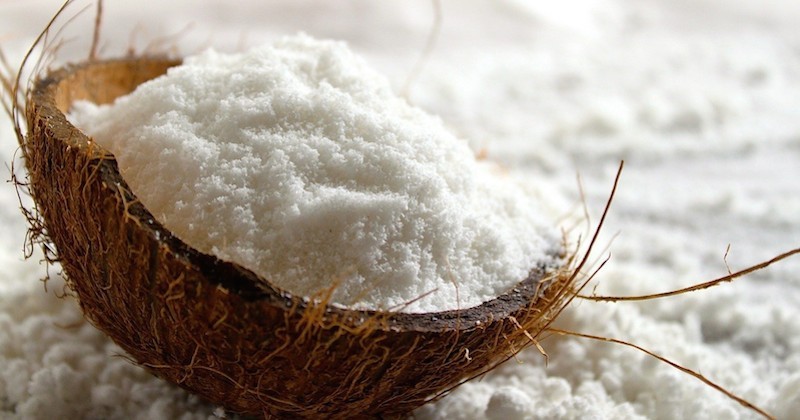
The global demand for coconut-based ingredients has skyrocketed. From premium vegan chocolate bars to mass-market biscuits and gluten-free baking mixes, desiccated coconut has cemented its place as a staple in food manufacturing.
However, setting up a processing plant is no longer a one-size-fits-all venture. Today’s market is split into two distinct product profiles: High Fat Desiccated Coconut (HFDC) and Low Fat Desiccated Coconut (LFDC). For processors, understanding the technical differences between these two products—and choosing the exact industrial drying machinery required for each—is the difference between export-grade success and costly operational failures. Therefore, proper machinery selection directly dictates your bottom line. Furthermore, a well-optimized plant drastically slashes overhead expenses over time.
The Core Battle: High Fat vs. Low Fat Processing
While both products start as fresh, mature coconut kernels, their processing paths diverge dramatically after the washing and grating stages. Consequently, processors must deploy entirely different mechanical workflows to achieve the desired final quality. In turn, your choice of initial handling determines the efficiency of downstream steps.
[Raw Coconut] ➔ [Dehusking/Deshelling] ➔ [Paring & Washing] ➔ [Grinding]
                                                                │
                 ┌──────────────────────────────────────────────┴──────────────────────────────┐
                 ▼                                                                             ▼
       [HIGH FAT LINE (HFDC)]                                                        [LOW FAT LINE (LFDC)]
    Retains all natural oils (~60-68%)                                           Mechanical oil extraction (~20-35%)
                 │                                                                             │
                 ▼                                                                             ▼
   Requires gentle, continuous drying                                            Requires rapid, uniform moisture removal
 (Prevents oil bleeding & yellowing)                                           (Handles lighter, high-moisture particles)
High Fat Desiccated Coconut (HFDC)
-
The Profile: This product contains 60% to 68% natural coconut oil. Ultimately, it retains the deep, rich aroma, soft texture, and premium mouthfeel that high-end confectioners and chocolatiers demand.
-
The Processing Challenge: Because the oil remains fully intact, high-fat gratings are highly sensitive to temperature. If you expose them to intense, uncalibrated heat, the oil will “bleed.” As a result, the coconut clumps, burns, turns yellow, or goes rancid. Accordingly, maintaining strict thermal boundaries is absolutely essential.
Low Fat Desiccated Coconut (LFDC)
-
The Profile: This variety contains a reduced fat content of 20% to 35%. To create this, operators route the shredded wet coconut through a mechanical screw press or expeller to extract valuable Virgin Coconut Oil (VCO) first. Afterward, workers break up the remaining coconut “cake” and dry it.
-
The Processing Challenge: In comparison, LFDC is much lighter and fluffier. Furthermore, it carries a higher relative ratio of moisture to fat. Thus, it needs a drying system that can handle fast evaporation without letting the lightweight particles fly out into the factory exhaust. In short, weight differences radically alter the handling dynamics.
Matching the Product to the Perfect Industrial Dryer
The drying stage is the single most critical phase of a desiccated coconut machinery processing plant. It dictates the final moisture level (which operators must keep strictly between 2% and 3% for export), color preservation, and microbiological safety.
Fortunately, leading engineering manufacturers like Genex Tech Industries LLP design specialized drying systems tailored to these contrasting material behaviors. Let’s break down the three primary industrial drying technologies:
1. Continuous Band (Apron Type) Dryers
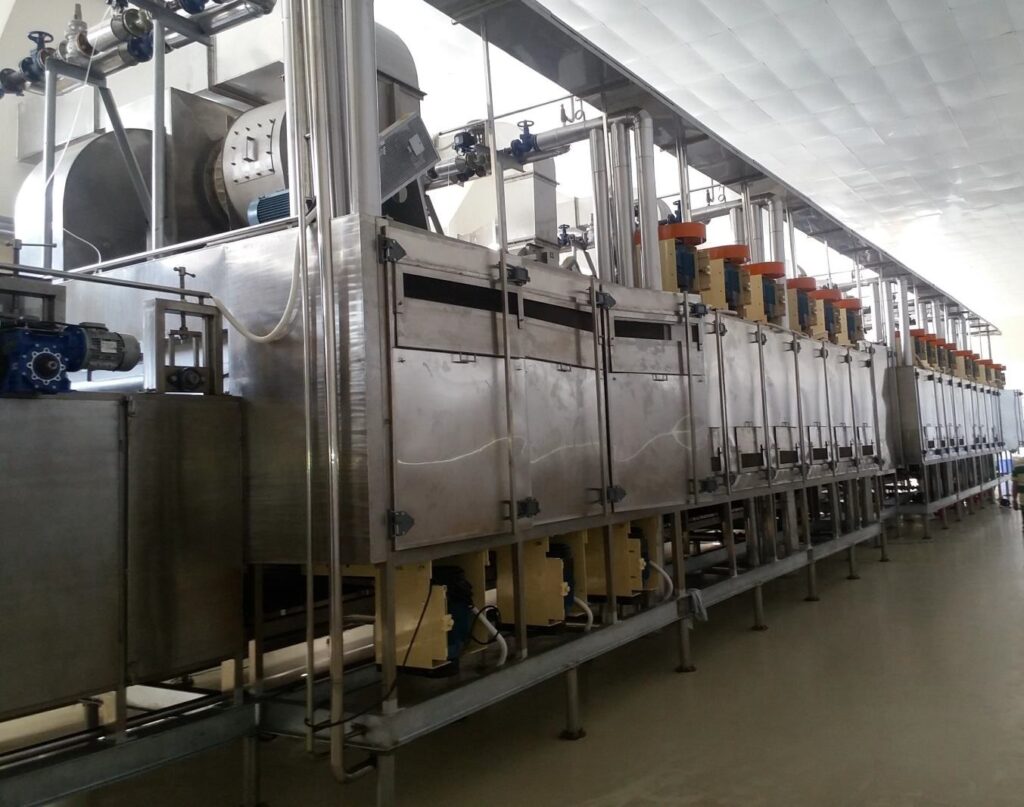
Best Suited For: High Fat Desiccated Coconut (HFDC), Threads, Flakes, and Chips.
How it works: A spreading mechanism distributes wet coconut gratings evenly across a moving, multi-pass stainless steel perforated mesh belt (apron). The product travels through independent heating zones where fans circulate hot air vertically through the product bed.
-
Why it rules for High Fat: The product remains completely stationary on the belt as it moves. Because the machine avoids aggressive friction or agitation, it minimizes oil expression and prevents the coconut from bruising or discoloring. Additionally, multi-zone temperature control allows processors to apply higher heat at the wet entry point. Then, you can drop temperatures at the dry exit zone to avoid scorching the delicate oils. Learn more about structural variations on the GTI Band Dryer or CoconutProjects Band Dryer technical specifications.
-
Capacity Range: This setup supports high-volume continuous operation, scaling up to 1,500 – 2,000 kg/hr. Hence, it represents the ideal choice for large-scale enterprise production.
2. Vibratory Fluid Bed Dryers (VFBD)
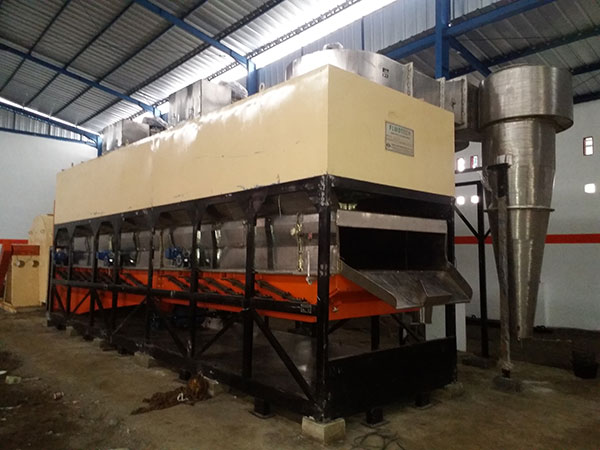
Best Suited For: Low Fat Desiccated Coconut (LFDC) and Fine-Grade Powders.
How it works: This dryer utilizes the dynamic principle of fluidization. Powerful blowers force hot air upward through a perforated bed plate while a mechanical vibrating motor shakes the machine. This action lifts and suspends the coconut particles in mid-air, making them behave like a boiling liquid.
-
Why it rules for Low Fat: Because LFDC particles are light and uniform, fluidization ensures that hot air hits 100% of each particle’s surface area instantly. Consequently, this leads to incredibly rapid, uniform moisture removal. Meanwhile, the consistent movement prevents the sticky, starchy properties of low-fat coconut from clumping together. For granular configurations, read more on the GTI Vibratory Fluidised Bed Dryer and the specialized FoodTechProjects Vibratory Fluid Bed Dryer engineering profiles.
-
Capacity Scaling: Engineers scale these units via a modular design, ranging from Junior units (250–300 kg/hr) up to Super Jumbo installations (850–1,000 kg/hr), as seen in the CoconutProjects Vibratory Fluid Bed Dryer for Coconut Processing. As a result, factories can easily adjust layout scales as demand fluctuates.
3. Combination Fluid Bed Dryers
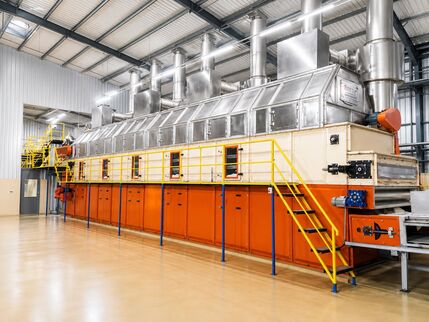
Best Suited For: Flexible Multipurpose Plants (Both HFDC & LFDC).
How it works: This system integrates a multi-stage process. Specifically, it combines specialized internal tray environments with advanced air-recirculation setups and integrated cooling zones.
-
The Ultimate Hybrid: For modern factories that shift production based on seasonal market orders, the combination dryer offers maximum versatility. For example, it features duplex cyclone dust collection systems to catch lightweight low-fat dust. On the other hand, it also includes precise variable frequency drives (VFD) so you can adjust residence times and airflow velocity when switching back to heavy, oil-rich high-fat varieties. Review detailed system designs via the GTI Combination Dryer page, the FoodTechProjects Combination Fluid Bed Dryer, or the CoconutProjects Combination Fluid Bed Dryer.
-
Capacity Range: This technology is highly scalable across modular blocks, delivering outputs from 300 kg/hr to 1,200 kg/hr of dried powder.
What to Look For in a Turnkey Machinery Manufacturer
If you are expanding an existing food processing facility or investing in a new turnkey coconut plant, your machinery provider must deliver on more than just steel fabrication. Indeed, high-efficiency systems must feature:
-
Food-Grade Metallurgy: Manufacturers must construct all contact parts using polished SS304 or SS316 stainless steel to prevent contamination and withstand heavy washdown cycles.
-
Microbial Kill Steps: Integrated steam blanching units equipped with rotary steam-lock valves are mandatory because they completely eliminate pathogens (like Salmonella) before the product hits the dryer.
-
Energy Optimization: Drying is an energy-intensive process. Therefore, premium manufacturers build units with insulated drying chambers, heat recovery loops, and optimized air circulation to minimize fuel and electrical consumption per kilogram of output. Plainly speaking, cutting down on utility spikes significantly shortens your payback period.
-
Global Compliance Design: Finally, ensure the equipment layout matches international food safety architectures like HACCP, ISO 9001:2015, US FDA, and CE standards. This guarantees your product can seamlessly pass export customs worldwide.
Final Thoughts: Engineering Your Competitive Edge
In conclusion, choosing between a Band Dryer, a Vibratory Fluid Bed Dryer, or a Combination system isn’t just a matter of budget. Instead, your choice depends entirely on whether you process the rich, delicate oils of High Fat DC or the high-evaporation, lightweight profiles of Low Fat DC.
The global coconut market leaves very little room for error. Ultimately, a single batch of scorched or unevenly dried coconut can lead to rejected export shipments and severe financial losses. However, partnering with an experienced engineering manufacturer ensures your plant maximizes yields, slashes utility bills, and consistently outputs a snow-white, perfectly free-flowing product. This protects your brand reputation and satisfies strict international food safety standards every single shift. In summary, custom thermal design forms the bedrock of modern agro-processing profitability.
🚀 Scale Your Processing Capacity Today
Whether you are setting up a greenfield project or optimizing an existing thermal drying line, our engineering team provides customized, turnkey solutions designed for maximum efficiency. Contact us today to discuss your production goals!
-
📧 Technical Inquiries: mktg@foodtechprojects.com
-
📞 Phone / WhatsApp Support: +91 93300 77417
-
🌐 Engineering Portals: www.foodtechprojects.com | www.gtidryers.com