Executive Summary & Engineering Overview
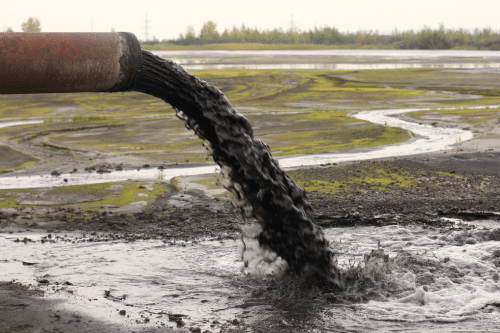
Industrial wastewater treatment plants (WWTPs) and Effluent Treatment Plants (ETPs) face a growing operational challenge. Specifically, facilities must safely stabilize, thoroughly process, and sustainably dispose of industrial and municipal sludge. As a matter of fact, this heavy waste stream originates directly from municipal sewage facilities, pulp mills, chemical manufacturing plants, and pharmaceutical synthesis sites. Ultimately, unprocessed sludge forms a dense, highly unstable semi-solid matrix. In particular, it holds bound moisture, complex organic residues, inorganic salts, microplastics, and toxic heavy metals.
To begin with, dewatered sludge cake exits mechanical filtration equipment with exceptionally high moisture levels. Typically, moisture ranges between 75% and 85% (which corresponds to 15% to 25% Dry Solids). Consequently, transporting, land-filling, or incinerating waste that remains four-fifths water imposes a heavy financial burden. In addition, facilities continually face escalating haulage costs, rapidly rising landfill tipping fees, and increasingly strict environmental penalties.
Simultaneously, environmental regulatory bodies worldwide actively enforce far more rigorous compliance policies. For example, premier international agencies like the US EPA, the European Union Environmental Directorate, and the Central Pollution Control Board (CPCB) in India strictly enforce Zero Liquid Discharge (ZLD) norms, odor boundary controls, and mandatory pathogen reduction protocols.
The Thermal Waste-to-Value Workflow
-
Raw Industrial ETP / Municipal WWTP Waste: Initially, high-moisture, untreated wastewater sludge enters the processing infrastructure.
-
Mechanical Dewatering Phase: Next, mechanical filter presses, centrifuges, or decanters extract free liquid. As a direct result, this mechanical separation step raises solid concentration to 15%–25% Dry Solids.
-
Thermal Sludge Drying Phase: Subsequently, specialized thermal dryers—such as Heat Pump, Mesh Belt, Paddle, or Fluidized Bed systems—evaporate tightly held bound moisture. Therefore, thermal processing successfully raises solids concentration to 85%–92% Dry Solids.
-
High-Value Circular Outputs: Finally, operators transform fully processed material into stabilized, highly valuable, and market-ready resources. For instance, useful outputs include Refuse-Derived Fuel (RDF), agricultural bio-fertilizers, or supplemental raw materials for eco-cement manufacturing.
In short, thermal sludge drying creates a continuous, reliable bridge between waste generation and total resource recovery. By using controlled thermal dehydration, modern industrial sludge dryers elevate dry solids content from 20% to well over 90%. Consequently, this unit operation completely eliminates bound moisture, thoroughly sanitizes end-products, permanently halts biological decay, and effectively converts hazardous sludge into valuable commercial commodities. As a result, modern industrial plants yield high-value RDF, soil-enriching agricultural conditioners, and raw construction feedstocks.
Above all, GTI Dryers (Genex Tech Industries LLP) brings decades of specialized thermal processing expertise to global industrial markets. Specifically, we engineer and manufacture custom thermal dehydration machinery. Furthermore, our systems optimize total evaporation loads, significantly reduce daily operational expenditure (OPEX), and reliably deliver turnkey environmental compliance.
1. The Physics and Thermodynamics of Sludge Dehydration
In order to correctly specify an industrial sludge dryer, plant engineers must look far beyond basic heat exchange principles. In other words, understanding the exact thermodynamic phases of water binding within complex sludge matrices ensures proper machine sizing. Furthermore, this precise analysis effectively prevents costly operational downtime.
Water Distribution Fractions in Sludge
To clarify, total sludge moisture separates neatly into two major physical categories: Free/Unbound Water and Bound Water.
-
Free / Unbound Water (70% – 80% of total mass): Generally speaking, surface forces do not trap this water fraction. As a result, standard mechanical equipment—such as gravity thickeners, belt filter presses, decanter centrifuges, or membrane filter presses—can easily separate free water without applying thermal heat.
-
Bound Water: Conversely, removing bound moisture strictly requires applied thermal energy. For detailed engineering analysis, specialists divide bound water into three distinct physical sub-types:
-
Capillary / Interstitial Water (10% – 20% of total mass): In this case, water remains trapped inside micro-floc spaces or tight capillary pores. Thus, mechanical shearing combined with light thermal disruption is required to release this moisture layer.
-
Vicinal / Surface Adsorbed Water (5% – 10% of total mass): Here, water molecules bond tightly to sludge particle surfaces via hydrogen bonds and dipolar forces. Consequently, mechanical separation cannot remove this stubborn fraction. Instead, direct or indirect thermal energy must be applied to sever these molecular bonds.
-
Intracellular / Chemically Bound Water (2% – 5% of total mass): In biological sludges, rigid cell membranes encapsulate this water. Meanwhile, chemical sludges bind it within crystalline structures. Therefore, intense thermal evaporation is required to disrupt cell walls and fully vaporize this internal liquid layer.
-
Non-Linear Mass & Volume Reduction
Regrettably, utility planners often mistakenly assume that mass reduction correlates linearly with moisture loss percentage. However, because moisture percentage is calculated relative to total wet mass, the mathematical relationship is actually hyperbolic. Consequently, even small increases in dry solids concentration produce remarkably massive drops in total waste tonnage.
Processing Benchmark: 100 Tons/Day Throughput
-
Initial Sludge Cake: To begin with, the system receives 100 Tons/Day at 20% Dry Solids (consisting of 20 tons of dry solids and 80 tons of water).
-
Thermal Evaporation Phase: Subsequently, continuous thermal action evaporates 77.8 tons of clean water vapor.
-
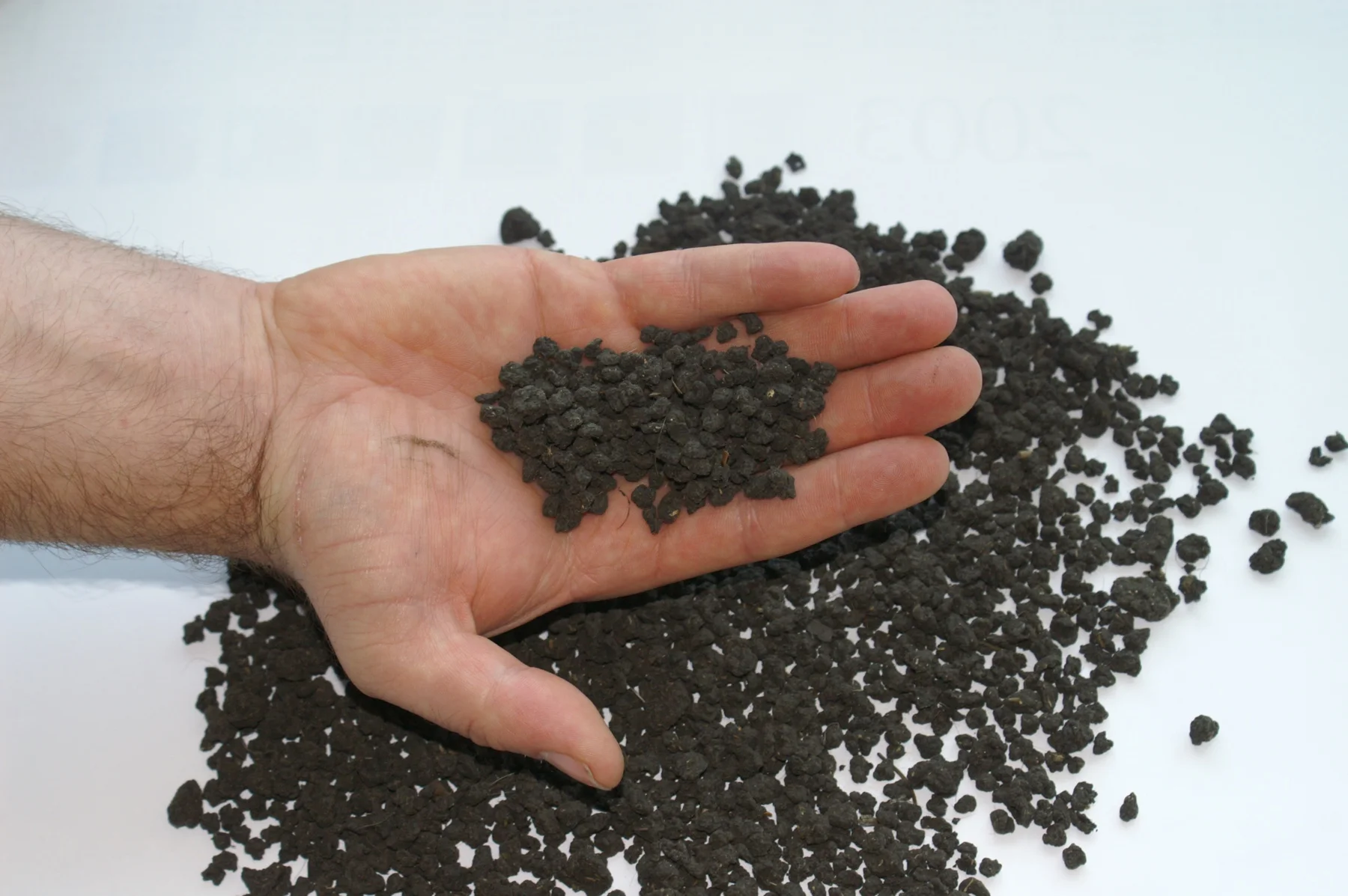
Final Dried Biosolids: As a direct result, the plant yields 22.2 Tons/Day at 90% Dry Solids (comprising 20 tons of dry solids and 2.2 tons of residual moisture).
-
Result: Overall, thermal processing achieves a total mass reduction of nearly 78%. Thus, it successfully shrinks overall waste volume almost fourfold.
Practical Operational Example: For example, consider a typical effluent treatment plant producing 100 tons per day of wet biological sludge cake at 20% dry solids (80% moisture).
By processing this output through an industrial sludge dryer to achieve 90% dry solids (10% moisture), the operator secures tremendous economic benefits:
-
First, total daily disposal weight drops dramatically from 100 tons down to just 22.2 tons.
-
Second, the thermal system continuously drives off over 77.8 tons of water every single day.
-
Economic Impact: Furthermore, the facility slashes outgoing haulage weight by nearly 78%. Assuming an average transport and tipping fee of $60 per ton, the plant instantly saves over $4,600 daily. Consequently, this translates to over $1.7 million in annual operational savings.
2. The Mechanics of the “Sticky Phase” in Sludge Drying
Undoubtedly, managing the infamous “Sticky Phase” (frequently referred to as the plastic phase) presents the single greatest mechanical challenge in thermal sludge processing.
The Sludge Transition Phases
-
Liquid/Mud Phase (80% Moisture / 20% Dry Solids): Initially, free-flowing semi-solid mud moves relatively easily through industrial pumps, piping, and feed hoppers.
-
Sticky Phase Range (60% down to 40% Moisture / 40% to 60% Dry Solids): However, as water evaporates, material becomes extremely viscous and rubbery. Consequently, this heavy paste exerts extreme shear torque on drive motors. Furthermore, it rapidly bakes onto interior heating surfaces.
-
Granular/Solid Phase (Below 10% to 20% Moisture / >80% Dry Solids): Eventually, material transitions into a free-flowing granular state. Thus, it discharges cleanly, requiring only standard dust controls.
In short, sludge entering the critical 60% to 40% moisture range can severely jam, overheat, or mechanically break unoptimized drying equipment.
Engineering Solutions for the Sticky Phase
Fortunately, modern sludge dryers deploy three proven mechanical design strategies to bypass or manage the sticky phase entirely:
-
Wet Back-Mixing Systems: In this design, the feed arrangement continuously blends dry output granules (90% dry solids) with incoming wet cake (20% dry solids) inside a dual-shaft pug mill. As a result, this step instantly elevates feed solids concentration past the 60% threshold. Therefore, it bypasses the sticky phase before material ever enters the main chamber.
-
Dual-Shaft Intermeshing Agitators: Alternatively, high-torque wedge shafts continuously scrape and clean one another during rotation. Consequently, this mechanical scraping action prevents sticky sludge from building up on heat-transfer surfaces or outer trough walls.
-
Extrusion and Granulation Pre-Forming: On the other hand, specialized extruders press wet sludge through multi-orifice die plates prior to loading continuous mesh belts. By forming uniform strands (5mm to 10mm diameter), the system achieves rapid surface flash-drying. Indeed, this outer skin successfully prevents individual strands from sticking together or adhering to the conveyor belt.
3. Deep-Dive Analysis: Industrial Sludge Dryer Technologies
Naturally, different industrial sludge streams require specific thermal machine configurations. This selection depends on chemical composition, initial moisture levels, available plant heat sources, and strict local emission standards. To that end, GTI Dryers manufactures a comprehensive portfolio of thermal processing machinery designed to satisfy these exact operational requirements:
3.1 Closed-Loop Low-Temperature Heat Pump Dehumidification Dryers
Above all, heat pump dryers deliver outstanding energy efficiency alongside complete environmental containment. Operating on a fully closed refrigeration cycle, these advanced units dry sludge gently at low temperatures between 40°C and 65°C.
The Closed-Loop Heat Pump Cycle
-
Evaporator Stage: First, warm, moisture-laden air leaves the drying chamber and flows into the evaporator coil. There, the system chills the air below its dew point. Consequently, this step condenses water vapor out into a continuous drain line.
-
Condenser Stage: Next, cold, dry air passes directly over the heat pump condenser coil. As a result, the system recovers sensible heat. Furthermore, it re-heats the air stream to target operating temperatures (55°C–65°C).
-
Recirculation: Finally, hot, dry air flows back through the sludge bed to absorb moisture continuously before cycling back to the evaporator once again.
Key Advantages
-
Ultra-Low Operating Energy: Because the refrigeration loop recycles latent heat, the unit consumes vastly less power per kilogram of evaporated water than direct thermal units.
-
Zero Air Emission: Furthermore, because the fully closed system operates without exhaust stacks, it releases zero off-gases, volatile organic compounds (VOCs), or foul odors into the surrounding neighborhood.
-
Safety: In addition, low internal operating temperatures completely eliminate dust explosion hazards.
-
Target Applications: Municipal STPs located near residential neighborhoods, biological ETP sludge, pharmaceutical facilities, and urban plants operating under strict odor controls.
3.2 Continuous Mesh Belt Dryer & Band Dryer Solutions
Continuous conveyor systems—most notably the heavy-duty Mesh Belt Dryer and the industrial Band Dryer—handle high-capacity sludge processing with exceptional reliability. In these systems, specialized extruders deposit pre-formed sludge onto porous stainless steel conveyor belts. Subsequently, these belts travel continuously through multi-zone thermal chambers.
Continuous Multi-Zone Conveyance
-
Pre-Forming: To start with, a dedicated extruder shapes wet sludge cake into thin noodles. In doing so, it deposits them uniformly onto the top belt deck.
-
Zone 1 (High-Temperature Flash Stage – 120°C): Subsequently, the upper conveyor belt carries material forward. As a result, it rapidly flash-dries the outer surface of each strand.
-
Zone 2 (Main Evaporation Stage – 90°C): Next, material tumbles gently onto the middle belt deck traveling in the opposite direction. Therefore, this movement exposes fresh surface area for deep moisture extraction.
-
Zone 3 (Final Stabilization Stage – 70°C): Finally, sludge tumbles down to the bottom belt deck for final moisture balancing. Ultimately, it discharges as uniform, stable pellets at 90% Dry Solids.
Key Advantages
-
In particular, gentle convective airflow creates zero mechanical attrition. Likewise, it minimizes internal dust creation.
-
In addition, continuous conveying designs provide massive throughput capacities. Thus, they scale easily for large industrial operations.
-
Heat Source Integration: Moreover, these systems connect seamlessly to natural gas burners, plant steam loops, or waste heat recovery systems (such as hot water or exhaust gas from CHP engines).
-
Target Applications: High-volume municipal sewage sludge, paper mill sludges, textile plant effluents, and large chemical complexes.
3.3 Indirect Hollow Paddle Dryer Systems
Indirect conductive dryers—such as the high-efficiency Paddle Dryer—excel at processing thick, pasty, highly viscous, or chemically hazardous sludges.
Trough and Paddle Mechanics
Technically speaking, the dryer features a jacketed trough housing twin or quadruple hollow shafts fitted with intermeshing, wedge-shaped hollow paddles. Saturated steam, thermal oil, or pressurized hot water circulates continuously inside the hollow shafts, paddles, and outer trough jacket. As wet sludge moves through the feed inlet, rotating paddles continuously knead, scrape, and convey the material forward. Consequently, heat transfers directly into the sludge through metal surface contact without requiring high air volumes.
Key Advantages
-
Compact Footprint: Because the machine offers a high thermal surface area relative to its overall size, it drastically minimizes required plant floor space.
-
High Thermal Efficiency: Furthermore, direct conductive contact delivers outstanding thermal efficiency (between 85% and 90%) while keeping exhaust gas volumes exceptionally low.
-
Target Applications: Oily sludges, heavy chemical synthesis residues, pharmaceutical wastes, toxic industrial sludges, and dense paper mill fibers.
3.4 Vibratory Fluid Bed Dryer & Combination Fluid Bed Dryer Technologies
Fluidized bed drying systems—including the advanced Vibratory Fluid Bed Dryer and the multi-zone Combination Fluid Bed Dryer—provide extraordinarily rapid heat and mass transfer. Specifically, they suspend sludge particles in a dynamic, fluid-like air stream.
Bed Suspension Mechanics
Initially, pre-heated process air blows upward through a perforated distributor plate directly into the sludge bed. This upward airflow balances particle weight. As a result, it fluidizes pre-conditioned sludge granules. In a Vibratory Fluid Bed Dryer, directional mechanical vibration assists this fluidization process. Consequently, it prevents air channeling while conveying dry solids smoothly toward the discharge outlet. Meanwhile, for complex feeds with variable moisture levels, a Combination Fluid Bed Dryer merges static and vibratory fluidization zones. Therefore, it guarantees perfectly uniform final moisture content.
Key Advantages
-
First, remarkably high heat transfer rates ensure exceptionally short overall residence times.
-
Second, the system produces highly uniform, dust-free, pathogen-free granules ready for immediate bulk storage or bagging.
-
Target Applications: High-volume municipal biosolids pelletization plants and standardized chemical sludge processing facilities.
3.5 Heavy-Duty Rotary Drum Dryer Systems
For bulk industrial waste processing and heavy mineral sludge handling, the traditional Rotary Drum Dryer combines robust continuous mechanical tumbling with direct or indirect thermal heat application.
Process Dynamics
-
To begin with, an inclined rotating steel drum continuously tumbles incoming sludge cake using specialized internal lifters.
-
Simultaneously, hot process air or direct flue gas sweeps through the cascading material.
-
As a result, this action rapidly breaks down large clumps while accelerating moisture vapor release.
-
Target Applications: Heavy chemical sludges, mining effluent residues, paper mill primary solids, and large-scale agricultural sludge streams.
3.6 High-Speed Flash Dryer Technology
When handling sludges with high surface moisture or pre-conditioned filter cakes, the pneumatic Flash Dryer provides virtually instantaneous moisture evaporation within a remarkably compact vertical profile.
Process Dynamics
-
First, high-shear mechanical dispersers feed wet sludge cake directly into a high-velocity stream of hot process gas.
-
Immediately, intense thermal action vaporizes surface moisture within milliseconds.
-
Meanwhile, the gas stream conveys the dried solids vertically up the drying column.
-
Finally, high-efficiency cyclone collectors and secondary bag filters continuously separate the dried particulate product from the exhaust gas stream.
-
Target Applications: Fine chemical sludges, crystalline mineral wastes, starch processing residues, and inorganic industrial solids.
4. Cross-Industry Applications & Material-Specific Engineering
Sludge characteristics vary significantly across different industrial sectors. Therefore, equipment manufacturers must custom-engineer thermal processing systems to match specific chemical, physical, and thermal profiles.
Key Industry Solutions
-
Paper Mill Sludge: High concentrations of cellulose fibers, clays, and carbonates create extremely sticky, highly viscous waste. Recommended Engineering: Indirect Paddle Dryer or Multi-Pass Mesh Belt Dryer systems equipped with heavy-duty sludge shredding feed hoppers.
-
Chemical & Petrochemical Sludge: High volatile organic content, abrasive solid residues, and chemical corrosiveness demand explosion-proof containment. Recommended Engineering: Fully enclosed Paddle Dryer or Rotary Drum Dryer systems operating under inert nitrogen gas blankets.
-
Municipal Sewage Sludge: High organic biological content and strong odor potential require certified pathogen destruction. Recommended Engineering: Closed-Loop Low-Temp Heat Pump Dryers, continuous Band Dryer units, or Vibratory Fluid Bed Dryer installations.
-
Food & Agro-Processing Sludge: High fat, oil, grease, and protein levels cause rapid surface scorching during traditional hot air drying. Recommended Engineering: Continuous Mesh Belt Dryer or pneumatic Flash Dryer systems built with automated Clean-In-Place (CIP) washdown systems.
5. Technology Selection & Comparison Matrix
Ultimately, selecting the proper industrial sludge dryer requires carefully evaluating plant processing capacity, available waste heat sources, physical floor space, energy costs, and safety requirements.
| Selection Metric | Closed-Loop Heat Pump | Mesh Belt Dryer / Band Dryer PDF | Paddle Dryer PDF | Vibratory Fluid Bed Dryer / Combination Fluid Bed Dryer PDF | Rotary Drum Dryer PDF | Flash Dryer PDF |
| Operating Temp Range | 40°C – 65°C | 70°C – 140°C | 120°C – 180°C | 80°C – 130°C | 120°C – 350°C | 150°C – 400°C |
| Final Moisture Output | 10% – 20% | 10% – 20% | 5% – 15% | 5% – 10% | 5% – 15% | 5% – 10% |
| Air Discharge / Emissions | Zero Air Discharge | Low (Scrubbed Exhaust) | Very Low Carrier Gas | High Volume (Scrubber) | High Volume Exhaust | High Volume Cyclone |
| Energy Efficiency | Extremely High | High (with Waste Heat) | Very High (Direct Contact) | Moderate – High | Moderate | High Thermal Flash |
| Waste Heat Compatibility | Low | Very High | High (Steam/Oil) | Moderate | High (Flue Gas) | High (Direct Gas) |
| Sticky Phase Handling | Extrusion pre-forming | Extrusion pre-forming | Self-cleaning intermesh | Requires Wet Back-mixing | Internal Lifters | Dispersion Agitator |
| Explosion Risk Level | Negligible | Low to Moderate | Low (Inertable Trough) | Moderate | Low – Moderate | Moderate |
| Maintenance Profile | Low | Low – Medium | Medium | Low | Low – Medium | Low (Few moving parts) |
6. Safety Engineering, Emission Controls & Automation
Because sludge drying involves fine dust formation, volatile compounds, and process gases, modern plants must incorporate multi-layered safety engineering and automated process control systems.
Safety & Emission Control Architecture
-
Dust Explosion Protection: For example, systems incorporate inert nitrogen gas purging and certified explosion venting panels. As a result, this eliminates ignition risks entirely.
-
Odor & VOC Abatement: In addition, negative-pressure drying enclosures route process exhaust directly into biofilters and multi-stage chemical wet scrubbers. Consequently, this guarantees clean stack emissions.
-
Thermal Safety Monitoring: Furthermore, continuous oxygen sensors, gas detectors, and thermal infrared cameras monitor internal temperatures. Thus, they catch potential hotspots immediately.
-
Automation Architecture: Above all, industrial PLC-SCADA hardware manages all thermal process loops automatically. Therefore, it operates smoothly without requiring manual intervention.
Automation & Control Loop Dynamics
Operational parameters adjust automatically through continuous closed PID control loops:
-
System Inputs: First, real-time moisture sensors, temperature probes, pressure transmitters, and motor torque meters transmit operational data to the central PLC.
-
System Actuators: Next, the PLC automatically modulates feed pump speeds via Variable Frequency Drives (VFDs). Simultaneously, it adjusts steam control valves and regulates conveyor belt speeds.
-
Operator Interface: Finally, SCADA touchscreens display key process metrics. Meanwhile, secure cloud interfaces allow remote engineering diagnostic tracking.
7. Turnkey Engineering & Global Execution Capabilities
Successfully deploying an industrial sludge drying facility requires far more than basic equipment fabrication. Specifically, it demands comprehensive process design, custom equipment manufacturing, seamless integration, and full lifecycle support.
The Five-Phase Turnkey Project Lifecycle
-
1: Feasibility & Testing: Initially, technical teams conduct detailed laboratory sludge analyses. For example, tests cover moisture binding studies, sticky phase profiling, corrosion testing, and calorific value testing.
-
2: System Design: Subsequently, process engineers calculate precise heat and mass balances. Furthermore, they design energy recovery loops and draft complete 3D plant layouts.
-
3: Precision Fabrication: Next, experienced technicians manufacture machinery using high-grade stainless steel (such as SS304, SS316L, and Duplex alloys) under strict international standards.
-
4: Site Installation: Furthermore, specialized installation teams execute mechanical erection, control wiring, ductwork assembly, and complete PLC-SCADA system commissioning on site.
-
5: Global Support: Finally, engineers provide comprehensive operator training, preventive maintenance programs, and original spare parts delivery worldwide.
8. Conclusion: Strategic Investment in Sustainable Infrastructure
In conclusion, investing in optimized industrial sludge drying equipment transforms ongoing waste management liabilities into highly sustainable operational assets. By converting high-moisture semi-solid sludge cake into dry, stabilized biosolids, plant operators can:
-
Slash ongoing logistics and landfill disposal costs by up to 80%.
-
Ensure full compliance with strict ZLD mandates, regional landfill restrictions, and environmental air quality standards.
-
Recover valuable energy and organic materials, thereby producing high-value RDF or eco-fertilizer products that contribute directly to a circular economy.
Partner with GTI Dryers (Genex Tech Industries LLP)
With over 40 years of specialized thermal engineering expertise, GTI Dryers designs, manufactures, and commissions custom industrial drying solutions worldwide. Our complete turnkey product line includes Heat Pump Dryers, Continuous Mesh Belt Dryer and Band Dryer systems, Indirect Paddle Dryer units, Vibratory Fluid Bed Dryer solutions, Combination Fluid Bed Dryer installations, heavy-duty Rotary Drum Dryer machinery, and high-speed Flash Dryer systems tailored specifically to your facility’s operational requirements.
Contact our technical application engineering team today to schedule a sludge characterization test, request a plant energy audit, or receive a comprehensive technical proposal.
Contact & Consultation Details
-
Email: mktg@foodtechprojects.com | sales@foodtechprojects.com
-
Phone / WhatsApp: +91-97489 06968 | +91-93300 77417
-
Websites: www.foodtechprojects.com | www.gtidryers.com
-
Head Office: 10C, Sir William Jones Sarani (Middleton Row), Park Street, Kolkata – 700071, India