
Last updated: 25 November 2026. By the GTI Group editorial team, Genex Tech Industries LLP (Food Tech Projects), Kolkata, India.
Direct answer: A coffee dryer machine should take washed parchment or natural cherry down to about 11-12% moisture (wet basis) with gentle, controlled air. The Codex code of practice sets 12.5% as the maximum to prevent ochratoxin A. Peer-reviewed trials found parchment dried at 40 °C kept its cell structure, while 60 °C damaged it and lowered quality.
Request a Quotation: Planning mechanical drying for a coffee estate, curing works or cooperative? Email mktg@foodtechprojects.com or call/WhatsApp +91-93300-77417 | +91-87774-75596. Please include parchment or cherry, peak-day intake (kg/day), moisture in and out, available heat source (biomass, steam, diesel, electric), and your location.
Key takeaways
- Target 11-12% moisture (wet basis). The Codex code of practice uses 12.5% as the upper limit, and ICO Resolution 420 sets a target range of 8-12.5% for exported green coffee, measured by ISO 6673.
- Ochratoxin A (OTA) moulds grow in a water activity range of about 0.80-0.95. Move coffee through this middle stage of drying quickly.
- Keep air gentle. Parchment dried at 40 °C stayed intact under the microscope. At 50 °C the cell membranes started to break down, and at 60 °C cells ruptured.
- Over-drying wastes saleable weight. Too much inlet heat on immature beans can cause black beans.
- Size the dryer for peak-day intake and the full drying cycle, not for the season average.
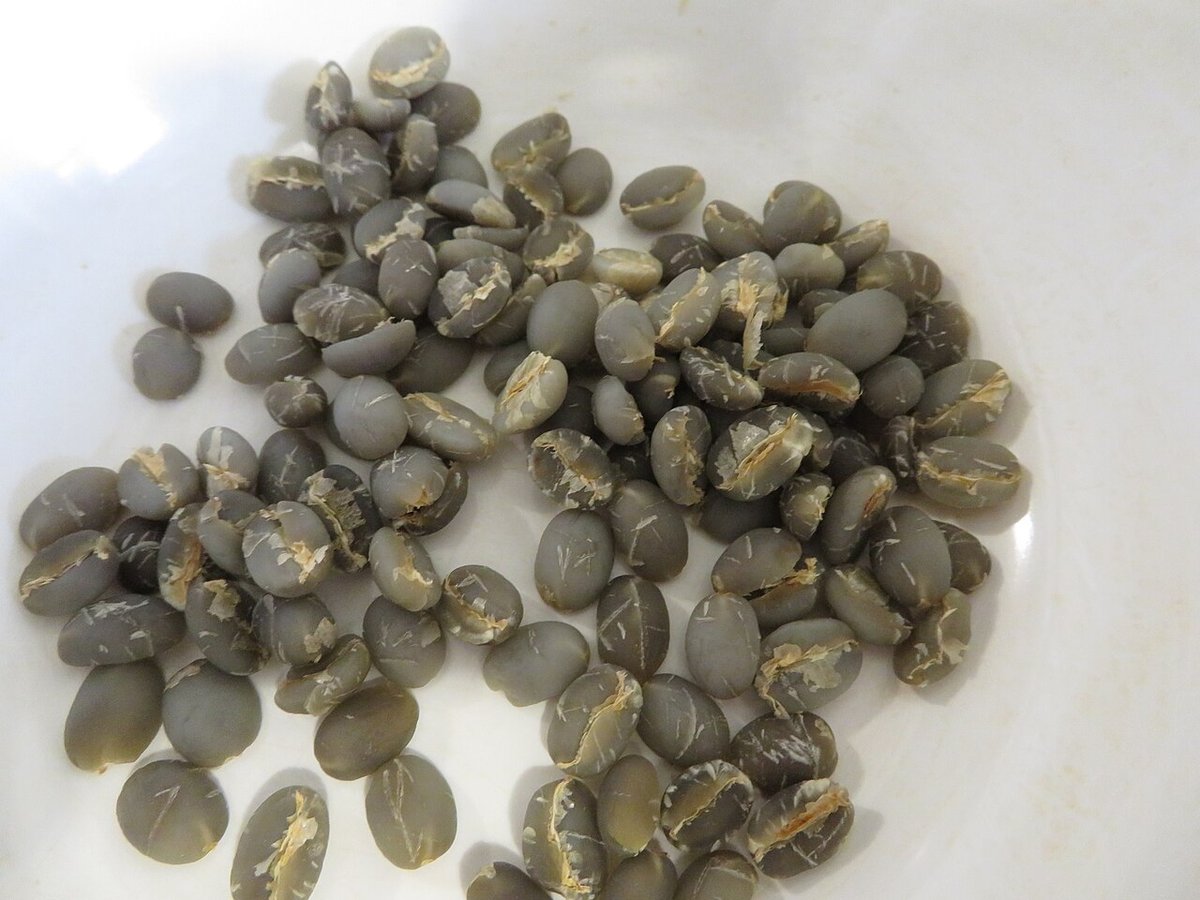
What moisture should coffee be dried to?
Dry parchment and cherry coffee to about 11-12% moisture, wet basis. Never leave it above 12.5%. The International Trade Centre (ITC) coffee handbook gives 11-12% as the final moisture for natural, washed and honey coffee. The Codex code of practice says moisture is reduced to a maximum of 12.5% to prevent OTA.
| Reference point | Value | Source |
|---|---|---|
| Ripe cherry at harvest | About 65% moisture | ITC handbook |
| Final moisture (all processing methods) | 11-12% | ITC handbook |
| Maximum to prevent OTA | 12.5% (wet basis) | Codex CXC 69-2009 |
| Safe storage water activity, parchment | Maximum 0.67-0.70, with moisture below 12.5% | Codex CXC 69-2009 |
| Export target, green coffee | Not below 8% and not above 12.5% (ISO 6673 method) | ICO Resolution 420 |
ICO Resolution 420 allows exceptions for speciality coffees that are traditionally high in moisture, such as Indian Monsooned coffee. Check your buyer’s contract as well.
Why does drying speed matter for ochratoxin A?
OTA-producing moulds need a certain water activity and time. The Codex code describes three drying stages. Very wet coffee (water activity above 0.95) favours fast-growing yeasts and other fungi first. Dry coffee (below about 0.78-0.76) stops OTA moulds growing. The risk lies in between.
- Stage 1: a small moisture drop. This takes 1-3 days for cherry and 1 day or less for parchment on a drying yard.
- Stage 2: the largest moisture loss. Conditions now favour OTA moulds, so this stage needs the most control.
- Stage 3: slow final drying. Conditions no longer favour OTA moulds.
The code states that, in experiments, 5 days or less in the drying yard was enough to prevent OTA build-up. A mechanical dryer helps most by shortening stage 2 when rain or humidity slows sun drying. It also says to avoid rewetting, and not to mix coffee from different days of harvest.
What air temperature is safe for parchment and cherry?
Keep drying air moderate, around 40 °C, for quality coffee. The ITC handbook describes mechanical drying of parchment “at around 40 °C”. Two peer-reviewed studies show why higher temperatures harm quality:
- Cell damage: Borém and co-workers dried parchment Arabica at 40, 50 and 60 °C. At 40 °C, membranes and cell contents stayed intact. At 50 °C, the membranes began to disorganise. At 60 °C, oil bodies fused and cells ruptured (Biosystems Engineering, 2008).
- Quality tests: a 2008 study in Ciência e Agrotecnologia compared yard drying with heated air at 40 and 60 °C for natural and pulped coffee. Electrical conductivity, potassium leaching and acidity rose with temperature, while sugars and sensory scores fell. Drying at 60 °C clearly harmed quality.
The Codex code adds two practical warnings. Over-drying causes weight loss and lost income. Too much inlet heat on immature beans can cause black beans. So control both the inlet temperature and the drying time, and stop at the target moisture.
Request a Quotation: Tell us your peak-day intake, parchment or cherry, and your heat source. GTI will propose a dryer type and size for your harvest. Email mktg@foodtechprojects.com.
Which types of coffee dryer machine are used?
Common mechanical coffee dryers are rotary drums, fixed-bed (static) box dryers and continuous conveyor dryers. Each passes warm air through the beans. They differ in how they turn the coffee, how evenly they dry and how much labour they need.
| Dryer type | How it works | Fit for coffee | Watch-outs |
|---|---|---|---|
| Rotary drum (batch or continuous) | Drum turns and tumbles the beans through warm air | Even drying of parchment and cherry; mixing evens out moisture | Control air temperature; check beans for scuffing; clean between lots |
| Fixed-bed (static) box dryer | Warm air blown up through a deep layer of coffee | Simple, low cost; often used after pre-drying on yards | Moisture gradient through the layer; air reversal or turning is needed |
| Continuous mesh belt or conveyor dryer | Coffee travels on a perforated belt through air zones | Large, steady intake; zoned temperatures | Higher cost; needs a steady feed rate during harvest |
Whatever the dryer, the Codex code notes mechanical dryers are often used to finish coffee after sun pre-drying. In some regions they do the whole job.
What does GTI supply for coffee drying?
Genex Tech Industries LLP manufactures industrial dryers in Kolkata, India. GTI’s Rotary Drum Dryer page lists coffee beans among its food processing applications, with hot-air generator, burner, steam or thermic fluid heating and PLC control options. The GTI Dryers rotary drum dryer page also lists coffee beans. The GTI Dryers page on food ingredient dryers lists tea and coffee materials among mesh belt dryer applications.
The air temperature, drum speed and cycle for your coffee should be set through trials with GTI engineering. GTI does not publish coffee-specific capacity figures, so ask for a proposal based on your own intake. For soluble coffee powders, see the GTI Dryers note on spray-dried instant coffee and tea powder. That is a different process from drying beans.
How do you size a coffee dryer for peak harvest? A worked example
This example uses illustrative assumptions. Replace them with your own measured moisture and intake figures.
- Find dry solids. Dry solids = intake × (1 − moisture in).
- Find product weight. Product = dry solids ÷ (1 − moisture out).
- Find water to remove. Water = intake − product.
- Find holding capacity. For batch dryers, multiply daily intake by the drying cycle in days.
| Step | Natural cherry | Washed parchment |
|---|---|---|
| Peak-day intake (illustrative) | 10,000 kg/day | 10,000 kg/day |
| Moisture in | 65% (ITC typical for ripe cherry) | 52% (assumed for drained wet parchment; measure yours) |
| Dry solids | 3,500 kg | 4,800 kg |
| Moisture out | 11.5% | 11.5% |
| Dried product | about 3,955 kg | about 5,424 kg |
| Water to remove | about 6,045 kg/day | about 4,576 kg/day |
| Batch holding capacity at an assumed 36 h cycle | about 15,000 kg wet coffee | about 15,000 kg wet coffee |
Two lessons follow. First, the dryer is sized on water removed and on the wet coffee it must hold, not on the dried output. Second, if sun pre-drying lowers the moisture before the dryer, the water load and cycle time both fall. Your cycle time must come from trials at your chosen air temperature.
What should a buyer check before ordering?
- Peak intake and lot size: kg per day at peak, and whether lots must stay separate by day or by grade.
- Feed condition: wet parchment, pre-dried parchment or cherry, with measured moisture.
- Temperature control: air temperature control and recording, plus a high-temperature cut-out.
- Moisture measurement: meters calibrated against ISO 6673, as the Codex code advises.
- Heat source: biomass (for example coffee husk), steam, diesel or electric. Make sure combustion gases do not touch the coffee unless the design allows it.
- Resting: the ITC handbook describes resting in silos for 15-60 days to even out moisture. Plan storage for this step.
- Storage climate: the Codex code notes coffee keeps drying below 60% relative humidity but starts to absorb water above 80%.
For grain-style drying principles that also apply to beans, see our guide to choosing an industrial grain dryer.
FAQ
What is the best moisture for dried coffee beans?
About 11-12% wet basis, and never above 12.5%. ICO Resolution 420 sets 8-12.5% for exported green coffee.
What temperature should a coffee dryer use?
Around 40 °C air is the usual quality target for parchment. Studies found damage starting at 50 °C and clear quality loss at 60 °C.
Can a rotary drum dryer dry coffee cherry as well as parchment?
Yes, rotary drums are used for both. Cherry holds more water (about 65% at harvest), so it needs a longer cycle.
Does mechanical drying prevent ochratoxin A?
It helps by shortening the risky middle stage of drying. Good picking, sorting, no rewetting and dry storage are still needed.
Why rest coffee after drying?
Resting evens out moisture between and within beans before hulling and export. The ITC handbook describes 15-60 days in silos.
Request a Quotation from GTI
Planning a coffee drying line or upgrading your estate dryers? Contact Genex Tech Industries LLP (GTI Group) to discuss your material, production capacity, product specifications and utility requirements. To help us respond usefully, please share your product (washed parchment, honey or natural cherry), peak-day intake in kg, feed and final moisture (wet basis), lot separation needs, available heat source and utilities, installation location and project timeline.
Email: mktg@foodtechprojects.com
Call or WhatsApp: +91-93300-77417 | +91-87774-75596 (WhatsApp)
Website: https://foodtechprojects.com/
For Industrial Dryers: https://gtidryers.com
This article gives general technical guidance. Figures marked as illustrative are examples, not plant guarantees. Equipment selection and performance for your coffee should be confirmed through trials and engineering assessment.
References
- Codex Alimentarius. Code of Practice for the Prevention and Reduction of Ochratoxin A Contamination in Coffee (CAC/RCP 69-2009). www.fao.org
- International Coffee Council. Resolution number 420 (2004): coffee quality-improvement programme, moisture and defect targets. ico.org
- International Trade Centre. Nyumuah R.O., Kongor J.E. Harvesting, Post-Harvest Management, and Processing of Coffee: a handbook for MSMEs in West Africa (2023). www.intracen.org
- Borém F.M., Marques E.R., Alves E. Ultrastructural analysis of drying damage in parchment Arabica coffee endosperm cells. Biosystems Engineering (2008). doi.org
- Borém F.M., Coradi P.C., Saath R., Oliveira J.A. Qualidade do café natural e despolpado após secagem em terreiro e com altas temperaturas. Ciência e Agrotecnologia 32 (2008). www.scielo.br