
Last updated: 25 November 2026. By the GTI Group editorial team, Genex Tech Industries LLP (Food Tech Projects), Kolkata, India.
Direct answer: A millet processing plant cleans, destones and grades the grain, then dehulls it. It separates husk, brokens and stones, and dries the grain if needed before milling flour or making value-added products. Dehuller choice sets most of the yield. In a published trial, a centrifugal dehuller recovered 64-75.5 kg of kernel per 100 kg of minor millet.
Request a Quotation: Planning a millet cleaning, flour or value-added line? Email mktg@foodtechprojects.com or call/WhatsApp +91-93300-77417 | +91-87774-75596. Please include millet types, raw grain input (kg/h or t/day), products (dehulled grain, flour, mixes), grain moisture, packing format and your location.
Key takeaways
- Codex standards set 13% maximum moisture for pearl millet grain and pearl millet flour. Lower limits may apply for hot, humid routes or long storage.
- In a published trial, a double-chamber centrifugal dehuller recovered 72-75.5 kg of kernel per 100 kg of foxtail, little and proso millet. An abrasive dehuller recovered 64-66 kg.
- A second dehulling pass raises hull removal but can raise brokens sharply. Test single and double passes on your own grain.
- Pearl millet flour goes rancid fast because of its fat and lipase. Treating the grain before milling can extend shelf life.
- Minor millets differ in size and hardness, so plan for grading and adjustable machines.
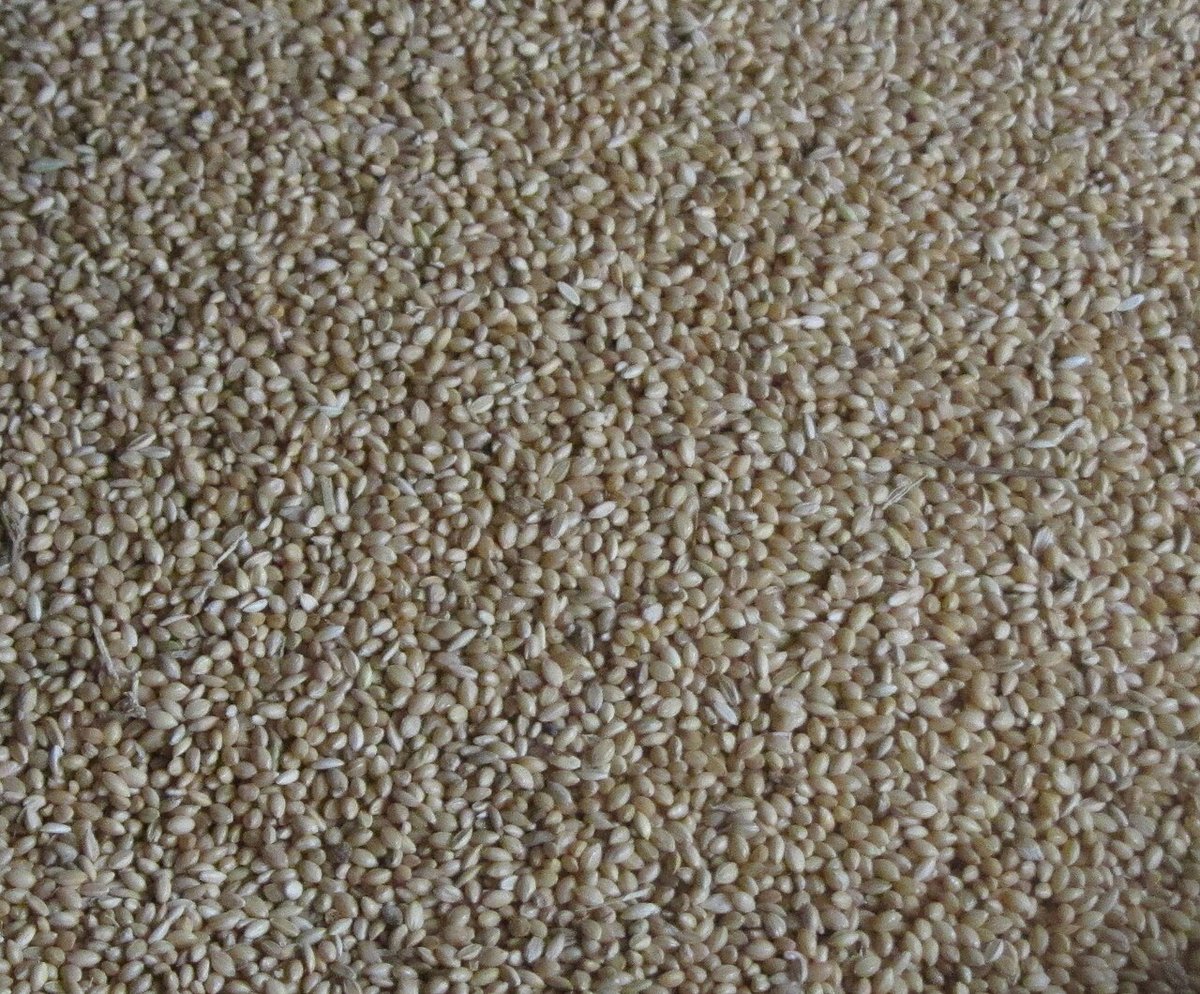
What is the process flow in a millet processing plant?
The core flow is cleaning, destoning, grading, dehulling, separation, then milling or value addition and packing. A study of small millet machinery by Tamil Nadu Agricultural University (TNAU) assessed the grader, huller and destoner as the key machines. It noted the need to separate fine stones and mud balls of similar size and weight to the grain.
- Intake and pre-cleaning: remove straw, dust, chaff and light impurities.
- Destoning: remove stones and mud balls by density.
- Grading: split the grain into size fractions so each fraction dehulls evenly.
- Dehulling: remove the inedible husk while keeping as much bran and kernel as possible.
- Aspiration and separation: remove husk, then separate unhulled grain for return, plus brokens and grits.
- Optional sorting: remove off-colour or defective grains.
- Conditioning or drying: bring moisture to the level needed for milling, flaking or storage.
- Milling and sifting: grind to flour or semolina and sift to the target particle size.
- Value addition and packing: mixes, ready-to-cook products or flakes, then packing with moisture and oxygen protection.
How much dehulled millet do you get from 100 kg of grain?
Plan for about 55-75 kg of kernel per 100 kg of minor millet, depending on species and dehuller. The TNAU study (Durairaj and co-workers, 2019) measured kernel recovery per 100 kg of grain:
| Millet | Kernel available (with bran), kg | Abrasive dehuller, kg | Double-chamber centrifugal dehuller, kg | Breakage, % |
|---|---|---|---|---|
| Little millet | 78 | 65 | 75 | 4.5 |
| Proso millet | 79 | 66 | 75.5 | 4 |
| Foxtail millet | 75 | 64 | 72 | 4.5 |
| Barnyard millet | 68 | 56 | 65 | 4.5 |
| Kodo millet | 67 | 55 | 64 | 5 |
The study reported that abrasive dehullers also removed bran and some endosperm and left about 20% brokens. The centrifugal unit was built in sizes of 50-500 kg/h. For pearl millet, the Codex grain standard defines decorticated grain as grain from which the outer parts, about 20-22% of the whole grain weight, have been removed.
Single pass or double pass?
A second pass removes more husk, but it can multiply brokens. In a 2022 ICAR-AICRP evaluation (Andhra Agricultural Journal), a single-chamber centrifugal dehuller reached 91.14% dehulling efficiency on foxtail millet in one pass and 98.86% in two passes. Brokens rose from 6.25% to 15.17%. Results varied widely between millet types and machines. Grain moisture in that trial was about 10.7-12.2% (wet basis).
Request a Quotation: Share your millet types, daily tonnage and product list, and GTI will propose cleaning, grading, milling, drying and packing equipment for your plant. Email mktg@foodtechprojects.com.
What quality limits apply to millet grain and flour?
The Codex standards for pearl millet are a useful reference for any millet line. Check your national food law and your buyers’ specifications too.
| Parameter | Codex limit | Standard |
|---|---|---|
| Moisture, pearl millet grain | 13% m/m max | CXS 169-1989 |
| Extraneous matter, whole grain | Not more than 2.0% | CXS 169-1989 |
| Extraneous matter, decorticated grain | Not more than 0.5% | CXS 169-1989 |
| Moisture, pearl millet flour | 13.0% m/m max | CXS 170-1989 |
| Ash, flour | 0.8-1.0% (dry basis) | CXS 170-1989 |
| Fat, flour | 5.0% max (dry basis) | CXS 170-1989 |
Both standards say lower moisture limits may be needed for some destinations, depending on climate, transport time and storage.
Why does millet flour go rancid, and how do plants extend shelf life?
Pearl millet has more fat than most cereals, and lipase in the outer layers and germ starts breaking down that fat once the grain is milled. A 2012 study in Agricultural Research reported 7.0-7.9% fat in pearl millet grain. Untreated flour had an unpleasant odour and bitter taste by day 10 of storage.
- Grain heat treatment before milling: in that study, microwave treatment of grain at 18% moisture for 80 seconds cut lipase activity, and the flour stayed acceptable for 30 days at ambient conditions.
- Hydrothermal treatment: the same paper cites earlier work extending pearl millet flour shelf life to 50 days.
- Packing: limit oxygen and moisture pick-up. Pack soon after milling.
Any heat treatment must be validated for your millet, product and target shelf life. If grain is wetted for treatment, it must be dried back before milling or storage.
Which GTI machines fit a millet plant?
Genex Tech Industries LLP manufactures processing machinery in Kolkata, India. GTI pages list these machines with grain or flour applications:
| Stage | GTI machine | What the GTI page lists |
|---|---|---|
| Pre-cleaning and destoning | Spices processing machinery | Vibro cleaner/separator, destoner and gravity separator (listed for spice lines; confirm grain suitability with GTI) |
| Grading | Grading Machine | Spices and grains classification |
| Sorting | Sorting Machine | Spices and grains processing |
| Milling | Hammer Mills Machine | Grain milling and flour production; capacity 100-10,000 kg/h (customisable) |
| Sifting | Gyratory Sifter | Flour and grain processing |
| Drying | Mesh Belt Dryer | Grains and cereals among food applications |
| Packing | Packaging Machinery | Flour and powders |
Not listed by GTI: GTI product pages do not list a dedicated millet dehuller (huller) or a flaking mill. Source these separately, or ask GTI to integrate them into a complete line. To choose between impact mills for flour, see hammer mill vs pin mill. For optical sorting, see our colour sorter selection guide.
How do you size a millet plant? A worked example
This example uses illustrative assumptions, with recovery figures from the TNAU table above.
| Step | Value |
|---|---|
| Raw foxtail millet intake | 10,000 kg/day (illustrative) |
| Cleaning and destoning loss | 2% (assumed; measure your grain) |
| Cleaned grain to dehuller | 9,800 kg/day |
| Kernel recovery (centrifugal, 72 per 100) | about 7,056 kg/day dehulled kernel |
| Husk and other fractions | about 2,744 kg/day |
| Dehuller rate on a 16 h working day | about 613 kg/h of cleaned grain |
The dehuller, aspirator and husk handling are sized on cleaned grain. The mill and packer are sized on kernel output. If you sell both dehulled grain and flour, split the kernel stream before milling. Husk volume is large, so plan storage, conveying and a use for it, such as boiler fuel.
FAQ
What machines are needed for a millet processing plant?
A pre-cleaner, destoner, grader, dehuller with aspirator, separator, mill, sifter and packing machine. Add a dryer or conditioner, sorter or flaking line as your products need.
What is the yield of dehulled foxtail millet?
The TNAU trial recovered 72 kg of kernel per 100 kg of foxtail millet with a centrifugal dehuller, and 64 kg with an abrasive one.
What moisture should millet grain have?
Codex sets 13% maximum for pearl millet grain and flour. Lower limits may be needed for humid climates or long storage.
How can millet flour shelf life be improved?
Heat-treat the grain before milling to reduce lipase activity, pack soon after milling and limit oxygen and moisture. Validate shelf life for your product.
Request a Quotation from GTI
Planning a millet processing plant or adding millet products to an existing line? Contact Genex Tech Industries LLP (GTI Group) to discuss your material, production capacity, product specifications and utility requirements. To help us respond usefully, please share your millet types, raw grain input in kg/h or t/day, grain moisture and target product moisture, finished products and pack sizes, available utilities, installation location and project timeline.
Email: mktg@foodtechprojects.com
Call or WhatsApp: +91-93300-77417 | +91-87774-75596 (WhatsApp)
Website: https://foodtechprojects.com/
For Industrial Dryers: https://gtidryers.com
This article gives general technical guidance. Figures marked as illustrative are examples, not plant guarantees. Yields, machine selection and shelf life for your millets should be confirmed through trials and engineering assessment.
References
- Durairaj M., Gurumurthy G. et al. Dehulled small millets: the promising nutricereals for improving the nutrition of children. Maternal & Child Nutrition 15(S3) (2019) e12791. pmc.ncbi.nlm.nih.gov
- Vasudeva Rao V., Prasad B.V.S., Vishnu Vardhan S., John Wesley B. Performance evaluation of different millet dehullers. The Andhra Agricultural Journal 69(4) (2022) 580-584. aaj.net.in
- Codex Alimentarius. Standard for Whole and Decorticated Pearl Millet Grains (CXS 169-1989). www.fao.org
- Codex Alimentarius. Standard for Pearl Millet Flour (CXS 170-1989). www.fao.org
- Yadav D.N., Anand T., Kaur J., Singh A.K. Improved storage stability of pearl millet flour through microwave treatment. Agricultural Research (2012). link.springer.com