Last updated: 24 November 2026. By the GTI Group editorial team, Genex Tech Industries LLP (Food Tech Projects), Kolkata, India.
Direct answer: Yes. A drum (roller) dryer is a recognised way to make instant cereal flakes and pregelatinised flours. A cooked cereal slurry is spread as a thin film on a steam-heated drum, dried within one turn and scraped off as flakes. Slurry solids, film thickness, drum speed and steam pressure set moisture and gelatinisation, so plan pilot trials.
Request a Quotation: Planning an instant cereal, porridge or pregelatinised flour line? Email mktg@foodtechprojects.com or call/WhatsApp +91-93300-77417 | +91-87774-75596. Please include the cereal and recipe, output in kg/h, slurry solids if known, final moisture target, steam available and plant location.
Key takeaways
- Drum drying cooks and dries in one step, so the starch leaves the dryer pregelatinised and the flakes reconstitute quickly in water or milk.
- Published drum-drying studies varied slurry solids, steam pressure, drum speed, pool level and film thickness, and each changed product moisture or throughput.
- The World Food Programme (WFP) specification for one fortified blended food lists drum drying among preferred heat treatments and sets moisture at not more than 7.0%.
- Codex leaves moisture of cereal-based infant foods to good manufacturing practice, so your buyer or regulator sets the number.
Why use a drum dryer for instant cereal flakes?
A drum dryer turns a pumpable cooked slurry into dry flakes in one continuous step. GTI’s drum dryer pages describe steam-heated rotating drums, a thin feed film applied by dip pan, nip, spray or applicator rolls, and doctor blades that scrape the dried sheet off before the drum completes a turn.
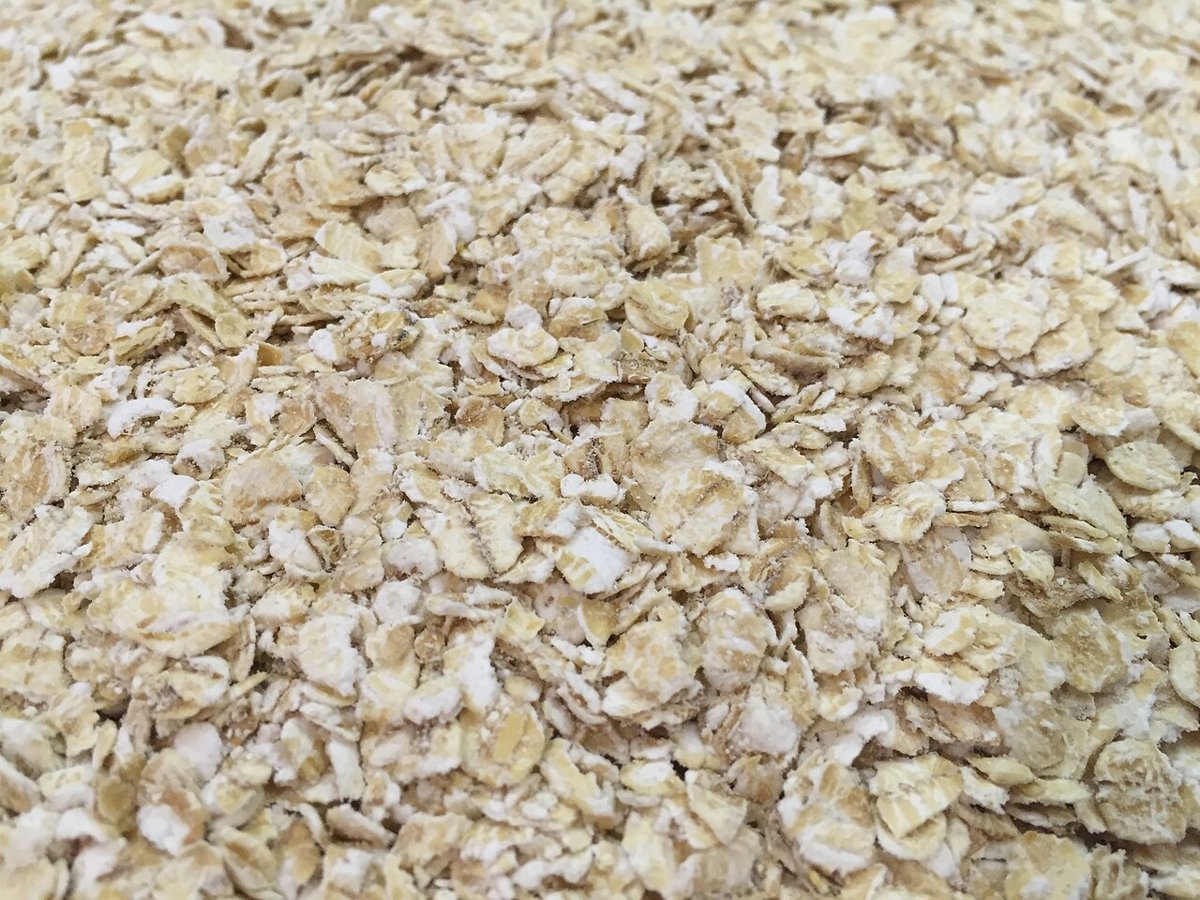
For cereals, the main benefit is that cooking and drying happen together. The heat on the drum gelatinises starch, so the flakes absorb water quickly. That is the property needed for instant porridge, weaning cereals and pregelatinised flours used as thickeners.
The WFP specification for SuperCereal Plus (a wheat-soya blend for young children) requires a pre-cooked product that improves starch pregelatinisation and protein digestibility. It names wet extrusion, dry extrusion and drum drying as preferred heat treatments.
What does the process line look like?
- Raw material preparation: clean, grade and mill the cereal (and pulse or soya, where used).
- Slurry making: mix flour with water to a set solids content. Optional enzyme treatment can reduce viscosity.
- Cooking: pre-cook the slurry, or rely on the drum surface to finish gelatinisation.
- Drum drying: single or double drum; film applied, dried and scraped off as a sheet.
- Flaking or milling and sifting: break the sheet to flake or powder size.
- Blending: add heat-sensitive ingredients, such as vitamin-mineral premix, milk powder or sugar, after the drum, as WFP does for its blend.
- Cooling and packing: pack in moisture-barrier packs.
The same logic applies to potato flakes; see our guide to planning a potato flakes plant and drum dryer integration.
Which drum dryer settings control moisture and gelatinisation?
Four levers matter most: slurry solids, film thickness, drum speed and steam pressure (drum surface temperature). The table shows ranges that researchers tested. They are study conditions, not recommended settings.
| Study | Material | Parameters tested | Reported finding |
|---|---|---|---|
| Al-Mukhtar, 2007 | Maize starch, double drum | Solids 7, 10, 13 g/100 g; steam 2-4 bar; pool level 4-10 cm; 3-6 rpm | Measured drum surface temperature, product moisture and mass flow rate |
| Billah et al., 2024 | Wheat flour slurry, lab-scale double drum (design and model) | 120-140 °C; film 0.3-0.6 mm | Optimum: 0.3 mm film, 40% total soluble solids, 120 °C, 4.47 rpm, giving 3.00% water content |
| Srisorn et al., 2020 | Rice flour, double drum | Flour:water 50:90 to 50:125 (w/v); six drying conditions | Best ratio 50:100; best flour properties at 130 °C and 12 rpm |
| Yu et al., 2020 | Whole wheat flakes | Enzyme pre-treatment (alpha-amylase, cellulase) before drum drying | Higher solubility and degree of gelatinisation; lower agglomeration and viscosity |
How the levers interact, in general terms:
- Higher steam pressure raises drum surface temperature and drying rate, but can scorch or darken thin films.
- Faster drum speed raises throughput but shortens contact time, so the sheet can leave wetter.
- Thicker film or higher solids carries more product per turn but needs more heat per square metre.
- Enzyme treatment lowers slurry viscosity. In the whole wheat study it improved solubility up to about five times compared with the untreated drum-dried control.
GTI’s drum dryer page lists VFD control of drum speed, micrometer-adjustable doctor blades and a choice of nip, dip pan, spray or multi-roll applicators, which are the hardware behind these levers.
Request a Quotation: Tell us your cereal, recipe, slurry solids and target output, and GTI will advise on single or double drum and drum area. Email mktg@foodtechprojects.com.
How much water and steam does it take? A worked example
This example uses illustrative assumptions. Replace them with your recipe and pilot data.
- Target output: 500 kg/h of flakes at 4% moisture (wet basis). Dry solids = 500 × 0.96 = 480 kg/h.
- Slurry at 40% solids: 480 ÷ 0.40 = 1,200 kg/h of slurry.
- Water to evaporate = 1,200 − 500 = 700 kg/h.
- Heat to evaporate at about 2.26 MJ/kg = about 1,580 MJ/h. Heating the slurry from an assumed 60 °C to 100 °C (specific heat assumed 3.0 kJ/kg·K) adds about 144 MJ/h. Total about 1,720 MJ/h, roughly 480 kW.
- Saturated steam at 5 bar absolute releases about 2.1 MJ/kg on condensing, so the minimum steam is about 820 kg/h, before heat losses.
Now drop the slurry to 25% solids. Slurry becomes 1,920 kg/h and water to evaporate becomes 1,420 kg/h, about double. Slurry solids are the biggest single lever on drum size and steam demand, so fix the recipe before sizing the dryer.
How do you check the degree of gelatinisation?
Measure it, because “instant” performance depends on it. Laboratories commonly use enzyme-based methods, which measure how much starch is easily digested, or thermal analysis. A peer-reviewed enzymatic method for starch gelatinisation in dry products is published in the Journal of Agricultural and Food Chemistry. For product-level checks, WFP specifies a Bostwick flow consistency of at least 100 mm in 30 s for a 17% dry-matter porridge of its blend.
Track gelatinisation with moisture, colour and rehydration on every trial, so you can link drum settings to finished-product behaviour.
What extra rules apply to infant and weaning cereals?
Infant foods carry stricter rules than general breakfast cereals. Codex CXS 74-1981 (processed cereal-based foods for infants and young children) states that processing and drying should minimise loss of nutritive value, particularly protein quality. It leaves moisture to good manufacturing practice, at a level where nutritive loss is minimal and microorganisms cannot multiply.
Buyer specifications then add numbers. The WFP SuperCereal Plus specification sets moisture at not more than 7.0%, a urease index of not more than 0.20 pH units for soya inactivation, particle size of 95% through 600 microns, and limits for aflatoxin and other contaminants. Hygienic design, registration and product testing for infant foods should be confirmed with your regulator and with GTI engineering at the design stage.
Single or double drum: which suits cereal?
Both are used, and the choice is product-specific. GTI manufactures single, double and twin drum dryers. All three studies above on starch and flour slurries used double drum dryers, where the film is formed in the nip between two drums. GTI’s drum dryer guide positions single drums with applicator rolls or a dip pan for heavy pastes and gelatinised starches, with film thickness set by applicator roll speed and clearance, and double drums for low-to-medium viscosity slurries fed into the nip. Pilot trials on your slurry are the reliable way to decide.
For more background, read GTI’s guide to high-efficiency industrial drum dryers and the comparison of drum dryers and agitated thin-film dryers.
FAQ
Can a drum dryer make baby cereal flakes?
Yes. GTI’s drum dryer pages list baby food and cereal flakes and instant oats among drum dryer applications. Infant products also need regulatory and hygiene checks.
What moisture should instant cereal flakes have?
Codex leaves it to good manufacturing practice. One WFP fortified blended food specification sets not more than 7.0%. Your buyer specification decides.
Do I need to cook the slurry before drum drying?
Not always. The drum surface can complete gelatinisation, but many lines pre-cook. Test both on pilot scale.
What is the main cost driver?
Water to evaporate. Higher slurry solids sharply cut steam demand and drum area, as the worked example shows.
Request a Quotation from GTI
Planning an instant cereal, weaning food or pregelatinised flour plant? Contact Genex Tech Industries LLP (GTI Group) to discuss your material, production capacity, product specifications and utility requirements. To help us respond usefully, please share your product or raw material, required capacity in kg/h, slurry solids and final moisture (wet basis), finished-product specification (flake size, gelatinisation, bulk density), available steam and utilities, installation location and project timeline.
Email: mktg@foodtechprojects.com
Call or WhatsApp: +91-93300-77417 | +91-87774-75596 (WhatsApp)
Website: https://foodtechprojects.com/
For Industrial Dryers: https://gtidryers.com
This article gives general technical guidance. Figures marked as illustrative are examples, not plant guarantees. Equipment selection, settings and performance for your recipe should be confirmed through pilot trials and engineering assessment.
References
- Codex Alimentarius. Standard for Processed Cereal-Based Foods for Infants and Young Children, CXS 74-1981 (Rev. 2006). www.fao.org
- World Food Programme. Technical Specifications for the manufacture of SuperCereal Plus Wheat Soya Blend (2020). docs.wfp.org
- Al-Mukhtar R.S. Effect of Feed Concentration on the Production of Pregelatinized Starch in a Double Drum Dryer. Iraqi Journal of Chemical and Petroleum Engineering 8(4) (2007). doi.org
- Billah et al. Integrated design and optimization of a conceptual double drum dryer for drying of wheat flour slurry. Journal of Food Process Engineering (2024). doi.org
- Srisorn P. et al. The optimum condition of pre-gelatinized Hom Nil rice flour production by using double drum dryer. RMUTSB Academic Journal 8(2) (2020). li01.tci-thaijo.org
- Yu K. et al. Effect of Pre-Enzymatic-Drum Drying Treatment on the Quality Characteristics of Whole Wheat Groats. Scientia Agricultura Sinica 53(6) (2020). www.chinaagrisci.com
- Liu and Han. Enzymatic Method for Measuring Starch Gelatinization in Dry Products in Situ. Journal of Agricultural and Food Chemistry (2012). doi.org