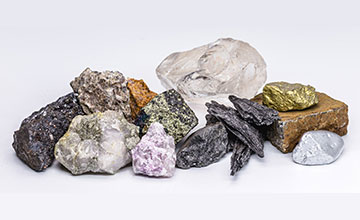
In modern high-tonnage material processing, thermal dehydration represents a critical stage. This step ultimately determines downstream efficiency, product grade quality, and baseline profitability. For instance, saturated ores easily block milling circuits. Similarly, wet clays form unmanageable sticky masses. Furthermore, excessive surface moisture in industrial sand or gypsum turns bulk transport into an expensive, inefficient logistical bottleneck. Therefore, specialized commodities like high-purity metal powders require advanced moisture control. This strict management successfully prevents devastating surface oxidation and simultaneously preserves vital metallurgical activity.
As a leading heavy-duty industrial drying system manufacturer, GTI delivers highly customized, thermally optimized systems. Consequently, these systems are engineered to transition raw materials from variable, wet feed configurations into highly predictable, free-flowing, and uniformly dry commercial products. By combining heavy-mineral mechanical engineering with advanced thermodynamic airflow concepts, this comprehensive technical guide subsequently analyzes the mechanics, selection matrices, and specific system configurations essential for industrial bulk materials.
1. The Primary Material Challenges: Processing Dynamics Explained
Understanding Material Behaviors
Every bulk solid presents unique thermodynamic and physical behaviors during moisture removal. Consequently, selecting a drying framework depends entirely on analyzing these properties:
-
Clay (Kaolin, Bentonite): First, this material is well known for extreme plasticity and water-retention capability. Moreover, clays present severe sticky handling zones when wet. Eventually, they convert into ultra-fine, abrasive, dust-prone particles upon total dehydration. Learn more about clay handling constraints on our GTI Clay Drying Page.
-
Gypsum (Natural and FGD Chemical Gypsum): In comparison, this resource typically arrives as a highly cohesive, sticky filter cake containing 10% to 25% surface water. Because of this, the core engineering objective is eliminating free surface moisture. Meanwhile, operators must strictly avoid thermal zones that trigger unwanted calcination. Read more details about this balance on the GTI Gypsum Dryers Page.
Heavy Commodities and Fine Aggregates
-
Metal Powders (Iron, Copper, Alloys): On the other hand, these powders feature massive surface-area-to-volume ratios. As a result, they are highly prone to instant oxidation or pyrophoric behavior if exposed to atmospheric oxygen at elevated operational temperatures. Review specialized solutions on the GTI Metal Powder Drying Page.
-
Raw Mined Ores and Concentrates: In contrast, these are high-density, highly abrasive materials processed at massive volumes. For this reason, these systems demand rugged physical construction and highly reliable wear protection components to withstand continuous impact. See industrial setups on the GTI Ore Drying Systems Page.
-
Industrial Sands (Silica, M-Sand): Meanwhile, this sector demands continuous, high-efficiency, large-scale surface moisture removal. In addition, this processing ensures sharp, accurate screening into specific, un-clogged grain sizes. These exact grades are required for glassmaking, foundries, and chemical blending. Explore these systems on the GTI Sand Drying Systems Page.
Engineering Core Principle: Thermal efficiency depends on matching the mechanical movement of the dryer to the transformation profile of the material as it sheds water. Thus, no single dryer architecture can effectively process all materials safely and efficiently. For a broader overview of these setups, visit the GTI Mineral Industrial Drying Systems Page.
2. Advanced Drying Technologies & Industrial Applications
A. Rotary Drum Dryers: High-Tonnage Heavy Workhorses
Rotary drum systems stand as the premier choice for heavy bulk minerals, raw mined ores, and high-volume silica sand processing. Structurally, the system consists of a large, robust cylindrical shell inclined slightly from the horizontal. As the drum rotates, custom-engineered internal flights mechanically scoop the material. Then, they shower it continuously through a high-velocity stream of co-current or counter-current heated air.
Consequently, this systematic cascading creates a dense, uniform curtain of material. Indeed, this dynamic ensures maximum convective heat transfer across every particle surface. Additionally, it easily handles wide variations in feed moisture and particle size distribution. Furthermore, to safeguard long-term mechanical reliability against highly abrasive materials like iron ore or quartz sand, these systems are fabricated with heavy-gauge carbon steel. Alternatively, they can be fitted with easily replaceable, impact-resistant internal wear liners. For deep technical specifications on this machinery, review the external FoodTech Projects Rotary Drum Dryer Guide.
B. Flash Dryers (Pneumatic Systems): Instant Surface Dehydration
When processing fine mineral powders, surface clays, or lightweight industrial particulates, flash drying technology provides an exceptionally compact and efficient footprint. Specifically, the operating dynamic is completely pneumatic. Wet material, filter cakes, or pre-crushed lumps are directly fed and dispersed into a vertical duct filled with high-temperature, high-velocity process air.
Because the particles are immediately suspended in the air stream, the available surface area for heat exchange scales exponentially. Therefore, moisture flash-evaporates almost instantaneously, typically within 1 to 5 seconds. Clearly, this ultra-short residence time makes flash dryers perfect for thermally sensitive materials. Indeed, the core internal temperature of the product never reaches the wet-bulb temperature of the air. As a result, this successfully prevents thermal degradation or chemical structure changes while ensuring a highly energetic, uniform powder transformation. You can explore deeper pneumatic concepts via the FoodTech Projects Flash Dryer Guide.
C. Combination Fluidised Bed Dryers: Precision Dynamic Fluidization
For processing processed sand grades, manufactured sand (M-Sand), granulated gypsum, or uniform mineral aggregates, fluidised bed systems offer unmatched moisture consistency. First, heated process air is precisely forced upward through an engineered gas distribution plate situated beneath the material bed. When the upward velocity of the air counterbalances the gravitational force on the solid particles, the bed transforms into a fluidised state. At this point, it behaves visually and physically like a boiling, turbulent liquid.
Importantly, this fluidization ensures intimate, highly efficient gas-to-solid contact with exceptional convective heat transfer rates. GTI combination fluid bed systems incorporate precise multi-zone temperature controls. In particular, this setup enables high-temperature drying sections to quickly strip moisture. Afterward, low-temperature stabilizing or ambient cooling zones follow within a single continuous machine footprint. Accordingly, this gentle handling ensures zero mechanical degradation or particle attrition during transport. Check out further engineering insights on the FoodTech Projects Combination Fluid Bed Dryer Guide.
D. Industrial Mesh Belt Dryers: Gentle, Static-Bed Layering
For highly cohesive, sticky material intermediates, structural filter cakes, or chemical gypsum blocks, mechanical agitation might cause structural damage or unmanageable powder dusting. For these applications, industrial belt dryers provide an elegant engineering solution. Wet material is evenly layered onto a continuously moving, perforated stainless steel mesh conveyer belt.
During this process, the material remains static on the belt. Thus, this method completely eliminates structural attrition and dust formation. Dehydration is achieved by forcing or drawing heated air vertically down through the material bed as it moves continuously through independent temperature-controlled zones. This multi-stage zoning allows operators to fine-tune the thermal profile. For example, you can utilize high temperatures initially to drive off surface moisture. Subsequently, this is followed by gentle, low-temperature treatment to ensure complete core dryness without scorching or inducing premature calcination in sensitive materials like FGD gypsum. Read more on this configuration at the FoodTech Projects Mesh Belt Dryer Guide.
E. Spray Dryers: Direct Slurry-to-Powder Engineering
In advanced mineral refining, ceramic slip preparation, and specialty metallurgy, materials are frequently processed or recovered as liquid slurries, solutions, or fine chemical suspensions. Spray drying successfully bypasses multiple handling stages. Specifically, it directly converts these pumpable liquid feeds into a dry, free-flowing finished powder in a single automated step.
To achieve this, the liquid slurry is pumped under high pressure into a centrifugal atomizer or precision spray nozzle at the top of a large drying chamber. This step creates a fine mist of micro-droplets. Next, these droplets instantly meet a swirling vortex of high-temperature process air. Moisture evaporates within milliseconds. Finally, the solids instantly solidify into uniform, perfectly spherical powder granules that safely collect at the lower discharge cone. Hence, this provides exceptional control over finished particle size distribution and bulk powder density. Examine full operational diagrams on the FoodTech Projects Spray Dryer Guide.
3. Comprehensive Technology Selection Matrix
To assist plant engineers in determining the ideal thermal configuration, the following matrix pairs material types with their optimal drying technologies and key operational parameters:
| Target Material | Recommended Technology | Primary Heat Transfer Mode | Critical Engineering Objective |
| Raw Mined Ores & Concentrates |
Rotary Drum Dryer |
Convective (Cascading Curtain) |
High-tonnage throughput, heavy impact wear resistance. |
| Industrial Sand & M-Sand |
Fluidised Bed / Rotary Drum |
Fluidised Gas-Solid Contact |
High thermal efficiency, precise particle sizing without clogging. |
| Clay Fines & Bentonite Powders |
Pneumatic Flash Dryer |
Pneumatic Transport Co-Current |
Instantaneous evaporation, handling of sticky-to-dust phase change. |
| FGD & Natural Gypsum Cakes |
Mesh Belt / Multi-Zone Rotary |
Through-Bed / Controlled Convection |
Precise temperature control to strictly avoid premature calcination. |
| Specialty Metal Powders |
Vacuum / Closed-Loop Spray |
Inert Gas Convection / Radiant |
Absolute prevention of oxidation, precise control over particle sphericity. |
4. Modern Turnkey System Integration & Environmental Control
A modern industrial drying line is an interconnected ecosystem requiring meticulous integration of upstream and downstream components. GTI engineers entire turnkey processing lines that optimize every stage of the material lifecycle:
A. Exhaust Gas and Fines Management
High-velocity industrial airflow naturally entrains ultra-fine particulates and mineral dust. To maintain strict environmental compliance and maximize material recovery, modern setups integrate high-efficiency cyclone separators as a primary collection stage. These units successfully capture the bulk of airborne fines. Afterwards, downstream air passes through heavy-duty pulse-jet baghouses or wet scrubbers to capture 99.9% of residual particles, ensuring clean, compliant stack emissions.
B. Dynamic Thermal Optimization
Energy consumption represents the largest single operational expense in industrial thermal drying. Consequently, GTI systems utilize integrated heat recovery loops that capture thermal energy from exhaust air to preheat incoming combustion air. Coupled with fully automated PLC loops that dynamically modulate fuel and air inputs based on real-time exhaust humidity and material inlet moisture, these systems ensure maximum thermal performance and minimized fuel costs per ton of evaporated water.
Conclusion: Partnering for Engineered Processing Success
Navigating Systems for Plant Profitability
Optimizing a mineral, ore, or powder processing facility requires an experienced balance of robust mechanical design and precision thermodynamics. Therefore, from the extreme mechanical demands of high-tonnage ore rotary drums to the precise, multi-zone thermal sensitivity required for chemical gypsum and metal powders, system configuration dictates long-term plant profitability.
Custom Heavy-Duty Manufacturing Solutions
By blending heavy-duty industrial manufacturing with advanced drying technologies, GTI delivers tailored engineering solutions. As a result, these setups cut energy overhead, eliminate operational bottlenecks, and maintain exceptional product quality. Alternately, our systems provide reliable operations for your processing plant.
Connect With Our Application Engineering Team
Ready to optimize your production line? Get in touch with our technical experts today to review your raw material testing profiles, run pilot simulations, and design a custom, turnkey thermal drying system built explicitly for your facility’s production goals.
-
📧 Email: mktg@foodtechprojects.com
-
📞 Call / WhatsApp: +91 93300 77417