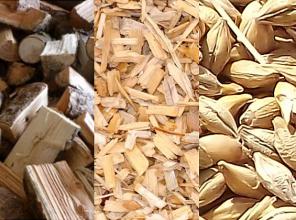
The transition to green, sustainable energy turns biomass from basic agricultural and forestry waste into a highly valuable commodity. Consequently, fresh biomass materials harvested from forestry or agricultural sources often contain high moisture levels ranging from 30% to 60%. Therefore, burning or pelletizing wet biomass dramatically destroys thermal efficiency, damages boilers, and yields weak, easily crumbled pellets.
To solve this problem, industrial biomass drying systems reduce moisture content to optimal levels. This means the process makes biomass suitable for fuel pellets, briquettes, gasification processes, and power generation. For this reason, global processing plants look to specialized industrial drying setups to handle wet feedstocks. Specifically, GTI Industrial Dryers has established itself as a frontrunner in custom engineering high-efficiency biomass drying plants.
Indeed, with over 40 years of engineering expertise out of their West Bengal manufacturing hub, they design custom configurations tailored to the precise structural traits of different waste products. Ultimately, proper biomass drying improves fuel combustion efficiency, increases calorific value, and reduces smoke emissions. In this deep dive, we break down the mechanics, core systems, and engineering science behind GTI’s heavy-duty industrial drying configurations.
1. Rotary Drum Dryers: The Large-Scale Bulk Hardworkers
First and foremost, for raw, heavy bulk solids like wood chips, large agricultural residues, and coarse wood shavings, the direct-fired industrial Rotary Drum Dryer is the industry go-to for high-throughput, continuous 24/7 duty cycles.
How It Works:
Initially, wet biomass enters a slightly inclined, robust rotating cylindrical drum through a specialized feed chute. Subsequently, as the heavy drum continuously rotates, internal lifting flights scoop up the wet biomass and systematically shower it downwards across the interior space.
As a result, this repeated lifting and cascading action ensures uniform heat transfer, stable moisture removal, and a continuous drying output. Simultaneously, exhaust systems continuously remove evaporated moisture while the outlet discharges the dried product.
-
Best Suited For: Wood chips, sawdust, agricultural residue drying, and biomass fuel preparation.
-
Key Advantage: High drying capacity, efficient moisture removal, robust industrial design, and continuous operation.
2. Mesh Belt Dryers: Uniformity for Delicate and Sized Biomass
Alternatively, when processing materials that require controlled drying conditions or gentle material handling to avoid product degradation, conveyor systems like the continuous Mesh Belt Dryer take center stage.
How It Works:
In this system, instead of tumbling or cascading the material mechanically, the system spreads the biomass evenly across a high-grade, food-grade mesh conveyor belt. Next, the belt moves steadily through multiple drying zones where controlled hot air passes through the product bed to remove moisture.
Because of this, plants can carefully dry heat-sensitive and fragile products without risking thermal scorching or fines creation. Furthermore, this configuration provides lower labor requirements, easy operation, and energy-efficient drying within fully insulated chambers.
-
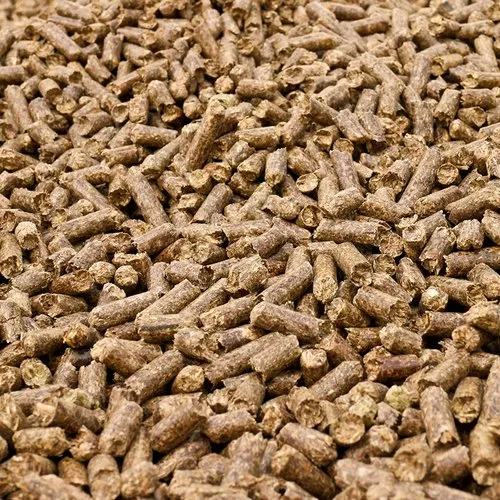
Best Suited For: Biomass fuel pellets, sawdust pellet processing, and delicate agro waste materials.
-
Key Advantage: Continuous drying with high throughput, uniform moisture removal, and multi-zone temperature control.
3. Pneumatic Flash Dryers: Instantaneous Moisture Removal for Fines
On the other hand, for fine materials, agricultural powders, or fine biomass residues, spending minutes inside a large rotary drum is highly inefficient. Instead, the ultra-fast pneumatic Flash Dryer provides instant moisture removal.
How It Works:
Essentially, a flash dryer operates on rapid speed. To begin with, a high-velocity stream of hot air disperses and suspends the biomass particles. Due to extremely high heat and mass transfer, moisture evaporates instantly within just 1 to 3 seconds as the material travels through a drying duct.
Immediately afterward, primary and secondary high-efficiency cyclone separators and automated bag filters separate the dried, free-flowing powder from the humid air stream. Importantly, this short exposure protects product integrity, texture, color, and nutritional value.
-
Best Suited For: Fine biomass particles, sawdust, rice husk, and fine agricultural powders.
-
Key Advantage: Very rapid drying, low energy consumption, compact space-saving design, and no moving parts inside the drying chamber.
4. Advanced Energy Optimization and Environmental Control
In addition, modern industrial operations cannot afford to vent expensive thermal energy into the sky. Hence, GTI systems integrate dynamic engineering to drastically slash operating costs:
-
Directional Airflow Engineering: Specifically, GTI utilizes custom Split Type Drying Systems, Top Blowing Drying Systems, and Side Blowing Drying Systems to guarantee optimized airflow and uniform heat transfer through the biomass bed.
-
Advanced Dehumidification & Heat Recovery: Moreover, integrating an Energy Saving Drying Machine coupled with a Double High Efficiency Dehumidifier allows plants to recycle latent heat from humid exhaust air, dramatically reducing energy consumption.
-
Emission Control Packages: Finally, industrial-duty operations include complete dust and pollution control equipment—such as cyclone separators, bag filters, and wet scrubbers—to ensure clean, environmentally friendly operations.
Summary Matrix: Selecting Your Drying Technology
| Dryer Type | Primary Mechanism | Best Biomass Feedstocks | Output Profile |
| Rotary Drum | Mechanical tumbling & lifter cascading | Coarse wood chips, heavy sawdust, bagasse | Robust, bulk continuous volume |
| Mesh Belt | Multi-zone conveyor hot air penetration | Biomass fuel pellets, uniform wood shavings | Highly consistent, zero product breakage |
| Flash Dryer | High-velocity gas suspension flash evaporation | Fine sawdust, agricultural powders, fine starches | Ultra-dry free-flowing powder (2-8% moisture) |
In short, selecting a system built on robust heat transfer physics is paramount. This applies whether you want to build a high-capacity wood pellet manufacturing line, prep boiler fuel for a dedicated biomass power plant, or convert complex agro-industrial waste into market-ready briquettes.
Ready to Optimize Your Biomass Processing Plant?
🚀 Get a Free Technical Consultation & Price Quote
Don’t let high moisture levels drain your process efficiency and bottom line. Therefore, whether you need a custom-engineered rotary drum, an energy-saving mesh belt system, or a high-velocity flash dryer, our engineering team is here to design your complete turnkey drying solution.
📧 Technical Inquiries: mktg@foodtechprojects.com
📞 Phone / WhatsApp Support: +91 93300 77417
🌐 Engineering Portals: Food Tech Projects | GTI Dryers
Let’s build a high-efficiency, sustainable waste-to-value system together.