
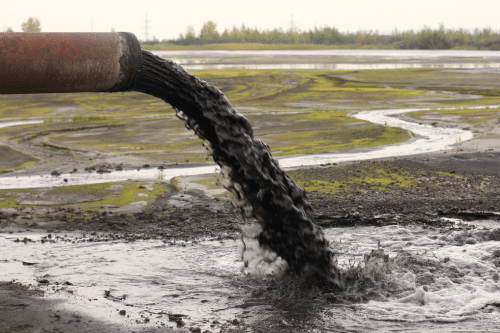
To begin with, industrial sludge is a major headache for modern processing facilities. Specifically, wastewater plants, chemical refineries, and food factories all face this continuous operational bottleneck.
Furthermore, strict compliance codes, Zero Liquid Discharge (ZLD) norms, and soaring logistics costs create massive challenges. As a result, plant operators regularly pay premium transportation rates just to haul water to landfills.
However, a profound paradigm shift is now underway across global industrial sectors. In fact, advanced thermal sludge drying technology is completely redefining waste management. Ultimately, this innovation turns an expensive, wet liability into a highly valuable, dry, resource-grade asset.
1. The Macro-Economics of Sludge Realignment
First, wastewater treatment plants (WWTPs) and effluent treatment plants (ETPs) yield highly problematic residues. For instance, unprocessed biological sludge exits mechanical dewatering stages at 75% to 85% moisture content.
Consequently, for every 10 tons of sludge hauled off-site, up to 8.5 tons is nothing but water.
[Raw Wet Sludge: 80% Water / 20% Solids]
                 │
                 ▼ (Advanced Dewatering + Thermal Drying)
[Dry Resource: 10% Water / 90% Solids] ➔ Up to 80% Total Volume Reduction!
In addition, recent market intelligence from Future Market Insights highlights a major trend. According to their data, the global industrial sludge dryer market is projected to reach USD 6.5 billion by 2036. Simultaneously, it is expanding at a robust 7.2% CAGR.
Therefore, facilities are actively buying these systems to cut on-site waste volume. Chiefly, they want to avoid soaring logistics expenses.
Overall, advanced thermal dehydration slashes total waste volume by 70% to 90%. Accordingly, this contraction delivers two major economic benefits:
-
Reduced Expenses: On one hand, it slashes monthly haulage, tipping fees, and disposal logistics costs.
-
Material Stability: On the other hand, it changes a volatile, sticky paste into a stable, pathogen-free granule. Thus, these solids easily meet strict pollution control board standards.
Importantly, proper pre-treatment is essential before starting the thermal process. For this reason, read our in-depth guide on Optimizing Mechanical Sludge Dewatering Pre-Treatments.
2. Technical Roadmap: Selecting the Optimal Sludge Dryer Architecture
Next, it is vital to note that no single drying setup fits every sludge profile. Clearly, the texture, stickiness, and flow characteristics of biological sludge differ drastically from chemical waste.
Hence, operators must match specific material properties to the right thermal mechanism.
Hollow Paddle Sludge Dryers (Indirect Heating)
-
Primary Mechanism: Initially, wet sludge is mechanically agitated inside a heated jacketed trough. Meanwhile, heated wedge-shaped paddles stir the material while steam or thermal oil circulates inside the paddles and jacket to transfer heat through conduction.
-
Best Suited For: Highly viscous, sticky sludge streams. Particularly, it works well for Chemical, ETP, Pharmaceutical, and Petrochemical sludge.
-
Key Benefit: Crucially, the heating medium is completely isolated from the sludge. thereby, this layout prevents contamination and minimizes exhaust air volume. Moreover, intermeshing wedge paddles feature a self-cleaning action. Consequently, this prevents the material from baking onto hot surfaces during its sticky phase. Explore specific engineering tolerances directly in our breakdown of the Hollow Paddle Dryer.
Continuous Mesh Belt Dryers
-
Primary Mechanism: First, a porous, continuous conveyor belt receives the dewatered sludge cake. Subsequently, the system distributes the cake evenly across the surface while hot air circulates vertically through the moving bed across distinct temperature zones.
-
Best Suited For: High-volume operations, biological municipal sewage sludge, and heat-sensitive organic residues.
-
Key Benefit: Notably, low-temperature convective drying preserves organic components. At the same time, it keeps dust emissions incredibly low. Furthermore, the multi-zone layout is perfectly suited for utilizing low-grade facility waste heat. Review custom airflow configurations on our dedicated product pages for the heavy-duty Band Dryer and modular Mesh Belt Dryer.
Rotary Drum Sludge Dryers
-
Primary Mechanism: First, a robust, rotating cylindrical drum receives the wet sludge. Then, the system introduces a high-velocity stream of hot air alongside it, while internal lifters continuously shower the material through the hot gas stream.
-
Best Suited For: Large-scale municipal sewage sludge plants and heavy industrial bulk sludge processing.
-
Key Benefit: Undeniably, these systems offer high thermal capacity and continuous 24/7 reliability. In addition, the tumbling action creates a mechanical polishing effect. As a result, this naturally turns the drying sludge into round, uniform, free-flowing granules. Discover total throughput metrics for the industrial Rotary Drum Dryer.
Fluid Bed Sludge Dryers
-
Primary Mechanism: Mainly, high-velocity hot gas blows upward through a perforated distributor plate. Consequently, this flow lifts and suspends fine sludge particles in a fluid-like state.
-
Best Suited For: Fine sludge particles, pre-dried cakes, and municipal plants requiring high moisture uniformity.
-
Key Benefit: Because complete fluidization creates an exceptionally high heat-and-mass transfer rate, it results in short residence times. Simultaneously, it ensures an extremely consistent final moisture profile. Check out the structural layout of the dynamic Vibratory Fluid Bed Dryer.
Vacuum Sludge Dryers
-
Primary Mechanism: In this case, sludge is processed inside a completely sealed chamber held under negative pressure. Thereafter, lowering the ambient pressure drops the boiling point of water far below 100°C.
-
Best Suited For: Solvent-containing, volatile, or highly hazardous chemical waste streams.
-
Key Benefit: Indeed, low-temperature evaporation prevents the release of volatile organic compounds (VOCs). Following this, it eliminates oxidation risks and offers safe, enclosed operation when managing hazardous materials.
3. The Real Cost of Drying Sludge
Undoubtedly, traditional thermal drying requires significant energy. However, you can easily find opportunities to save money by looking inside the machine.
Specifically, the dryer performs two distinct jobs:
-
Heater Action: First, it raises the temperature of incoming cold sludge until it can release trapped moisture.
-
Evaporation Work: Second, it uses massive amounts of heat energy to turn bound liquid water into vapor. Then, the system safely draws this vapor out.
Importantly, evaporating water requires vastly more energy than simply warming it up. Therefore, fuel consumption depends entirely on initial moisture levels when sludge enters the chamber.
Because of this, mechanical pre-dewatering is completely vital. In fact, pushing your sludge cake through screw presses or centrifuges before the thermal zone cuts final energy bills in half.
By doing so, you are using cheap mechanical force to remove bulk weight. Subsequently, this leaves only the final polishing work for the thermal dryer.
For context, upstream separation utilizes highly efficient equipment. To learn more, you can read about these systems in our industry overview of Industrial Sludge Dewatering Equipment Markets. Indeed, these machines drive raw cakes past 25% dry solids.
Furthermore, data published in the US Environmental Protection Agency (EPA) Biosolids Technology Fact Sheet provides clear metrics. Specifically, conventional thermal drying systems typically require between 1,400 to 1,700 BTUs per pound of water evaporated. Thus, maximizing the pre-dewatering phase is vital for overall facility efficiency.
4. Unlocking Sludge Alternative Value Streams
Finally, once dried down to a predictable 10% to 30% moisture level, wastewater sludge leaves the waste category entirely. Instead, it enters the circular economy as a raw asset.
                      ┌──► Co-Processing Fuel (Cement Kilns / Power Plant Co-Firing)
                      │
[Processed Sludge] ───┼──► Refuse-Derived Fuel (RDF) & Biofuels
                      │
                      └──► Nutrient-Rich Soil Conditioners & Stabilized Bio-Fertilizers
Alternative Fuel Sources (Co-Processing)
To begin with, dried pulp sludge, paper mill residue, and textile waste hold high biomass content.
Consequently, when fully dried, this material exhibits a net calorific value often exceeding 15 to 20 MJ/kg. Clearly, this performance closely rivals traditional low-grade coal.
As a result, cement kilns and power utilities increasingly source this dry, granular byproduct. Mainly, they use it as a carbon-neutral alternative fuel. Ultimately, this saves on fuel procurement while helping facilities achieve zero-waste-to-landfill status.
Bio-Fertilizers & Nutrient Upcycling
Alternatively, sludge from biological treatment, agricultural processing, and municipal sewage contains concentrated nutrients. For example, it is rich in nitrogen, phosphorus, and potassium.
Thankfully, thermal drying effectively sanitizes these elements. Not only does it destroy harmful pathogens, but it also eliminates foul odors while preserving the raw nutrient structure.
Hence, the resulting granular material can be applied safely as a stabilized bio-fertilizer. For a practical roadmap on this topic, check out our execution plan on Converting Industrial Effluent Sludge into Nutrient-Rich Bio-Fertilizers.
Ready to Optimize Your Facility’s Sludge Management Strategy?
In conclusion, paying to haul moisture away is an unnecessary drain on your operational bottom line.
Whether you are dealing with highly viscous chemical cakes or high-volume municipal bio-solids, choosing the right combination of dewatering and thermal drying technology will radically reduce your disposal costs. Simultaneously, it unlocks new circular value streams.
Therefore, stop paying premium logistics rates for water. Instead, talk to our application engineers today. Together, we will evaluate your sludge rheology, analyze your waste heat potential, and design a custom thermal drying system for your facility.
👉 Request a Free Technical Consultation & Sludge ROI Analysis