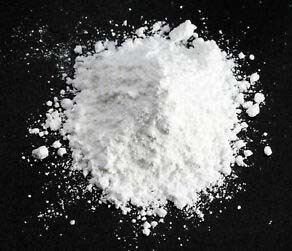
In high-stakes chemical manufacturing, thermal dehydration is more than simple moisture reduction. Indeed, the drying phase directly dictates critical physical and chemical parameters. These include particle size distribution, crystal lattice integrity, color saturation, and surface reactivity. Consequently, achieving optimal quality targets requires matching the material’s structural state with the ideal thermodynamic configuration. This includes states like liquid slurries, pastes, cakes, or solid granulates.
Therefore, selecting the appropriate industrial dryer is paramount. The system must match the raw feed’s unique characteristics. This balance integrates advanced thermodynamics with robust material handling. To guide your engineering path, this comprehensive review breaks down five key industrial drying technologies. Furthermore, it maps them directly to the production demands of sensitive material sectors.
1. Industrial Dryers: The Core Engineering Layouts
Combination Fluid Bed Dryers
Fluidized bed systems rely heavily on fluidization physics. This method maximizes convective heat transfer. Specifically, the system forces hot process gas upward through a custom-perforated distributor plate. As a result, the solid granular mass enters a dynamic, fluid-like state. However, standard fluidization can fail when handling materials with high initial moisture. It also struggles with surface stickiness or unstable particle size distributions. Consequently, this failure leads to localized channeling, bypassing, or complete defluidization.
To bypass this operational bottleneck, a Combination Fluid Bed Dryer incorporates mechanical upgrades. These include an external mechanical vibration assembly or heavy-duty internal mechanical agitation. Furthermore, this secondary physical input breaks adhesive bonds. It mechanically fluidizes sticky clusters. It also ensures continuous, uniform thermal exposure. Ultimately, this layout is ideal for free-flowing crystals, polymers, and granular catalyst supports. These materials require strict temperature controls without localized hot spots.
-
For instance, learn more about this fluidization process via the Combination Fluid Bed Dryer Technical Specification.
Industrial Paddle Dryers (Indirect Agitated Dryers)
On the other hand, paddle dryers are highly efficient systems. They are designed specifically for continuous, indirect contact thermal processing. To achieve this, the machine features a horizontal jacketed trough. This trough houses single or twin counter-rotating shafts. These shafts are lined with specialized, intermeshing hollow wedge-shaped paddles. Meanwhile, the heating medium circulates inside the hollow paddles and the outer jacket shell. This medium is typically high-pressure steam or hot thermal oil.
As the raw feed enters the trough, the rotating paddles provide intense mechanical agitation. This action continuously renews the wet boundary layer against the heated surfaces. Because heat transfer occurs via conduction, gas velocities remain remarkably low. Direct hot gas sweeping is not used. As a consequence, this minimizes fine dust entrainment. It also significantly reduces downstream baghouse or cyclone sizing. Therefore, it remains the preferred layout for heavy filter cakes, viscous chemical pastes, and hazardous solvent-laden pigments or resins.
-
For a closer look, explore the mechanical layout of this system via the Industrial Paddle Dryer Engineering Overview.
Industrial Spray Dryers
Alternatively, the raw feed material may begin as a pumpable liquid solution, fine emulsion, or low-viscosity slurry. In these cases, a spray dryer provides a direct, single-step transformation into dry, uniform particles. For this purpose, the liquid feed is pressurized. It is then pumped to an atomization system situated at the apex of a large vertical drying tower. This system uses either a high-speed centrifugal rotary disk atomizer or a dual-fluid pressure nozzle. Thus, it atomizes the liquid into a fine mist of droplets, maximizing the total surface area ($A$).
Subsequently, these droplets immediately mix with a flow of high-temperature process air. This flow can be co-current or counter-current. Evaporation occurs almost instantaneously. This action rapidly cools the surrounding air. Simultaneously, it protects heat-sensitive compounds from thermal degradation. In conclusion, spray drying is highly valued for producing catalysts, fine chemicals, and specialty polymer emulsions. It is vital where precise control over particle morphology, bulk density, and narrow particle size distribution is critical.
-
Accordingly, you can review design calculations on the Industrial Spray Dryer Atomization Guide.
Rotary Drum Dryers
In contrast, the rotary drum dryer remains an industry standard for high-capacity, heavy-duty processing. It easily handles robust bulk materials. Structurally, the unit consists of a large, slightly inclined horizontal rotating cylinder. In addition, internal lifting flights are welded along the length of the shell’s interior. As the drum rotates, these flights scoop up the wet material. They continuously shower it downward through a stream of hot flue gas or air. This air can be co-current or counter-current.
As a result of this cascading action, direct and continuous exposure to the thermal stream is ensured. Rotary drum dryers are engineered for rugged reliability. They also offer high mechanical uptime. Consequently, they are the preferred choice for bulk polymers, synthetic fertilizer bases, and minerals. They are also ideal for heavy chemical intermediates requiring reliable moisture removal.
-
To evaluate this further, see system capacities at the Rotary Drum Dryer Operational Directory.
Vacuum Tray Dryers
Finally, vacuum tray dryers operate on the principle of reduced pressure thermodynamics. This makes them essential for high-purity, oxygen-sensitive, or highly heat-sensitive compounds. Inside a heavy, sealed, reinforced rectangular chamber, wet materials are distributed across shallow metal trays. These trays sit directly on heated shelf plates. Once sealed, a high-vacuum pump evacuates the air within the chamber. This step quickly reduces the internal pressure.
By lowering the atmospheric pressure inside the chamber, the boiling point of the liquid drops significantly. This process is governed by the Clapeyron equation:

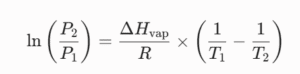
Consequently, this allows rapid moisture vaporization to occur at low operating temperatures. This prevents thermal breakdown, active site collapse, or chemical oxidation. For this reason, this static batch configuration is excellent for high-value fine chemicals. It also suits potent pharmaceutical intermediates and specialized catalyst powders that cannot withstand mechanical agitation.
2. Technical Performance Matrix
In short, choosing the correct equipment requires balancing the physical state of your feed material against processing goals:
| Dryer Type | Primary Heat Transfer | Feed Material State | Key Process Advantage |
| Combination Fluid Bed |
Direct (Convection) |
Free-flowing granules, crystals, damp pellets |
Excellent thermal efficiency, uniform product moisture, gentle product handling. |
| Industrial Paddle Dryer |
Indirect (Conduction) |
Viscous pastes, filter cakes, sludge, sludge-like materials |
Minimal sweep gas velocity, low dust generation, excellent solvent recovery efficiency. |
| Industrial Spray Dryer |
Direct (Convection) |
Liquid slurries, pumpable solutions, emulsions |
Instantaneous drying, precise particle size control, uniform spherical morphology. |
| Rotary Drum Dryer |
Direct / Indirect Combo |
Robust bulk solids, heavy minerals, coarse granules |
High processing capacity, tolerant of feed variations, durable construction. |
| Vacuum Tray Dryer |
Indirect (Conduction) |
High-value powders, crystals, heat-sensitive cakes |
Low-temperature vaporization, zero mechanical stress, complete oxygen exclusion. |
3. Material Application Blueprints
Catalyst Drying Systems
Industrial catalysts require careful thermal processing. This protects their high internal surface area and active site densities. For example, rough mechanical movement can break down delicate structures. Meanwhile, thermal shocks can collapse porous frameworks. Thus, for liquid catalyst slurries, Spray Drying yields consistent, spherical catalyst supports. These supports feature tightly controlled particle distributions. Conversely, for formed catalyst extrudates or delicate structures, other systems are better. A Combination Fluid Bed Dryer or a static Vacuum Tray Dryer protects the active surfaces. This ensures optimal chemical performance in downstream reactions.
-
In addition, read more about specialized process lines on the GTI Catalyst Drying Systems Page.
Fine Chemical Drying
Fine chemicals demand high purity, trace moisture control, and flexible batch capabilities. In these environments, cross-contamination must be strictly prevented. For this reason, Vacuum Tray Dryers are widely used here. Their static design produces zero mechanical dust. Furthermore, their sealed chambers completely isolate hazardous materials or organic solvents. However, the material may allow continuous processing. In that case, a closed-loop Combination Fluid Bed Dryer is ideal. Equipped with an automated CIP (Clean-In-Place) system, it provides fast, uniform drying under an inert nitrogen blanket.
-
In addition, read more about specialized process lines on the GTI Fine Chemical Drying Page.
Pigment Dryers
In pigment manufacturing, the drying system must handle a high-moisture filter cake. This cake often contains 20% to 60% water. The system must remove it completely without causing particle agglomeration. If the pigments overheat or clump together, their color strength drops. Their dispersibility also suffers. Meanwhile, Indirect Paddle Dryers break down wet cakes into uniform powders. They do this without creating massive dust management issues. For bulk production, such as Titanium Dioxide ($TiO_2$), Industrial Spray Dryers excel. They continuously atomize pigment slurries into fine, free-flowing powders. These powders easily disperse into paints, inks, and plastics.
-
In addition, read more about specialized process lines on the GTI Pigment Dryers Page.
Polymer Drying Systems
Residual moisture in raw polymer pellets or powders can cause structural bubbling. It also leads to brittleness and cosmetic defects during extrusion or molding. Therefore, Combination Fluid Bed Dryers excel at handling bulk polymer pellets. They continuously remove moisture down to parts-per-million (ppm) levels using precise temperature controls. On the other hand, polymer emulsions or specialty sticky resins need a different approach. Paddle Dryers successfully break up viscous phases, maintaining consistent material flow throughout the drying cycle.
-
In addition, read more about specialized process lines on the GTI Polymer Drying Systems Page.
Resin Drying Systems
Synthetic resins present dual challenges. Examples include epoxies, polyesters, and phenolics. They are often thermally sensitive. Additionally, they contain flammable organic solvents or Volatile Organic Compounds (VOCs). Consequently, operating a dryer in these environments requires strict explosion prevention. The equipment must maintain ATEX compliance. To address this safely, Agitated Paddle Dryers and closed-loop Vacuum Tray Dryers excel here. They use inert gas blanketing and integrated vapor condensation loops. These systems safely capture and reclaim solvents while operating safely below explosive thresholds.
-
In addition, read more about specialized process lines on the GTI Resin Drying Systems Page.
Conclusion: Engineering the Future of Thermal Dehydration
In final analysis, thermal processing engineering dictates your line’s success. It creates the boundary between a high-yield production line and costly downstream defects. This is true across high-capacity chemical and materials manufacturing. A standard, off-the-shelf dryer configuration is rarely sufficient. This applies whether managing the extreme structural sensitivity of industrial catalysts, eliminating VOCs within synthetic resins, or preventing particle agglomeration in high-purity pigments.
Therefore, optimizing your operation demands an intelligent synthesis of processing factors. You must balance material states, thermodynamics, and mechanical handling. Partner with advanced machinery designers who understand these specific mechanics. They must know direct convective fluidization, high-velocity atomization, and indirect vacuum conduction. Consequently, you will turn complex chemical processing bottlenecks into high-efficiency, predictable, and automated continuous production lines.
Contact Us: Partner with Industrial Drying Experts
Are you looking to scale up production or improve thermal efficiency? Do you need to upgrade your facility’s safety configurations for hazardous compounds? Our engineering and technical sales teams specialize in custom-built industrial drying systems. We tailor these layouts strictly to your material specifications and space constraints.
Indeed, we provide full support from initial material profiling and pilot-scale system testing to turnkey manufacturing. We also handle PLC automation and onsite field installation. Thus, we deliver rugged, high-uptime equipment engineered to lower your total utility overhead. Our layouts always optimize final product quality.
Please get in touch with our engineering specialists today. We can discuss your project requirements, request a technical quote, or schedule an engineering consultation:
-
📧 Email Inquiries: mktg@foodtechprojects.com
-
📞 Direct Phone / WhatsApp: +91 93300 77417
-
🌐 Official Web Portals: www.foodtechprojects.com | www.gtidryers.com
Foodtech Projects & Genex Tech Industries LLP
Turning Complex Chemical Processing Challenges Into Reliable Production Assets.