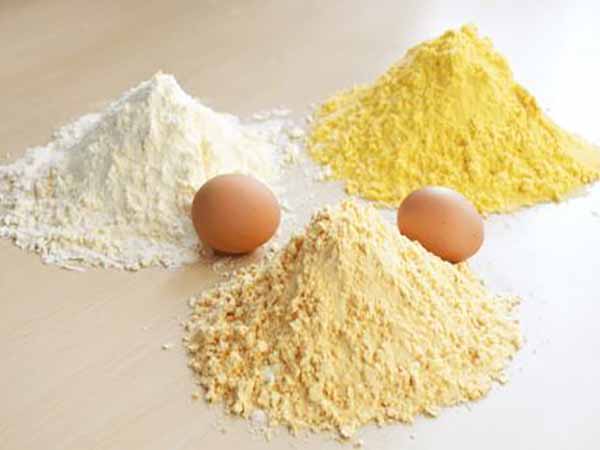
The global food processing industry is experiencing a massive shift toward high-quality, shelf-ready ingredients. Among these, processed egg products have become indispensable. Industrial bakeries, confectionery giants, nutraceutical manufacturers, and ready-to-eat meal suppliers all rely heavily on them. These products range from pasteurized liquid eggs to specialized egg powders.
For poultry integrators and food processors looking to capture this market, investing in a complete turnkey processing line is the key to unlocking maximum ROI. Consequently, as a premier global engineering partner, Genex Tech Industries LLP (Food Tech Projects) designs and manufactures end-to-end, export-grade Egg Powder, Egg Shell, and Liquid Egg Processing Plants.
This comprehensive guide explores the sequential engineering steps and core machinery required for this process. We will also cover the thermal drying technologies needed to convert raw shell eggs into highly profitable, commercial-grade commodities.
The Architecture of a Modern Egg Processing Plant
Processing raw eggs into functional industrial ingredients requires an unbroken chain of hygienic, automated operations. Eggs are highly vulnerable to bacterial contamination like Salmonella. They are also prone to structural damage. Therefore, the plant layout must feature precise food-grade construction (SS304/SS316) alongside smart process automation.
Phase 1: Automated Egg Breaking and Separation
The process begins with raw shell eggs being fed into an Automatic Egg Breaking & Separation Machine. This critical high-capacity unit cracks the eggshells cleanly. Thereby, it minimizes the risk of shell fragments getting into the product stream.
-
Precision Separation: The machine carefully isolates the egg white (albumen) from the yolk using hygienic separation cups.
-
Purity Control: Maintaining absolute purity during this stage is vital. Even a minor trace of yolk oil leaking into the egg white stream can severely degrade the whipping and foaming functionality of the final albumen powder.
Phase 2: Filtration and Standardization
Once broken, the liquid egg material subsequently passes through advanced Filtration Systems to catch any residual micro-fragments of shell. Following filtration, the liquid enters specialized Storage & Blending Tanks.
-
Consistency: Raw eggs naturally vary in moisture and solid composition. To counter this, these food-grade tanks precisely blend the batches. This helps achieve target dry matter contents using calculated ratios of whole egg or albumen. For example, it standardizes egg yolk at approximately 44% solids.
-
Additives & Adjustments: In addition to consistency matching, this phase allows for the uniform incorporation of ingredients like salt, sugar, or stabilizers. These are added depending on final client specifications. It is also where critical pH adjustments take place.
-
Desugaring (Glucose Removal): For premium egg white powder production, glucose must be biochemically removed from the liquid albumen prior to drying. Desugaring successfully prevents the Maillard browning reaction during thermal processing. As a result, it ensures a clean, bright white powder with excellent shelf stability.
Phase 3: Yield Optimization via Product Recuperating
Furthermore, to drive maximum plant efficiency, leading setups integrate a Product Recuperating System. This system captures the egg-water mixture generated during clean-downs or transitions using advanced membrane ultrafiltration technology. By recovering this dry matter, processors drastically reduce effluent wastewater loads. At the same time, they boost overall product yield and ROI.
Critical Food Safety: Precision Pasteurization and Homogenization
Before any liquid egg product can be packaged or dried, it must undergo strict pathogen reduction.
Gentle Pasteurization
Liquid egg proteins are highly sensitive to heat. They can easily denature or cook if exposed to improper temperatures. Therefore, Genex Egg Pasteurization Systems utilize precise temperature controls and accurate holding times. This eliminates harmful pathogens completely. Meanwhile, it fully preserves the structural, binding, and emulsifying properties of the liquid whole egg, yolk, or albumen.
High-Pressure Homogenization
Immediately following pasteurization, the liquid passes through an Industrial Homogenizer. This machine stabilizes fat distribution, which is particularly important in lipid-rich yolk blends. It also maintains a uniform composition and controls viscosity. Accordingly, homogenization ensures that every batch behaves identically. This guarantees consistent results when used by end-stage industrial food manufacturers.
Advanced Spray Drying Technology for Superior Egg Powders
The crown jewel of an export-oriented egg processing plant is its thermal dehydration system. Converting pasteurized liquid egg into a stable, highly soluble powder requires specialized industrial spray dryers.
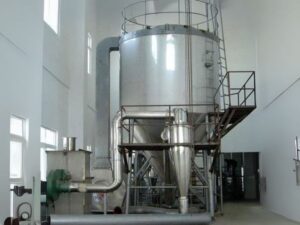
An advanced Genex Spray Dryer System works by atomizing the pasteurized liquid egg into a fine mist inside a highly controlled drying chamber. As these micro-droplets come into contact with a co-current stream of filtered hot air, the moisture evaporates instantly.
Key engineering advantages of utilizing a specialized Egg Powder Dehydration Machine include:
-
Controlled Thermal Profiles: Precise manipulation of inlet and outlet temperatures ensures that moisture is rapidly removed. This prevents overheating the delicate proteins.
-
Retained Nutritional & Functional Value: Moreover, the rapid evaporation prevents thermal degradation. This retains the original nutritional profile, flavor, solubility, and excellent flowability of the egg powder.
-
Targeted Particle Size: Optimized atomization creates uniform particle sizes. This allows for instant reconstitution when the end-user adds water.
Whether processing Whole Egg Powder, high-gel Egg White Powder (Albumen), or fat-stable Egg Yolk Powder, custom-engineered thermal systems provide excellent results. They deliver the high efficiency needed to run continuous, large-scale operations.
Complete Circular Economy: Egg Shell Processing and Valuation
A truly sustainable, zero-waste processing plant does not treat eggshells as factory waste. Instead, modern lines integrate an Egg Shell Processing System. This turns byproduct shells into a valuable secondary revenue stream.
-
Centrifugal Drying & Crushing: Spent shells from the breaking line are centrifuged to recover any remaining liquid residue. They are subsequently routed to industrial crushers or hammer mills.
-
Sterilization & Fine Pulverization: The crushed shells are thermally sterilized to eliminate bio-hazards. They are then pulverized into a fine, calcium-rich mineral powder.
-
Commercial Outlets: Ultimately, this high-purity eggshell powder is widely sought after. It serves as a premium bio-calcium additive for animal feed, organic soil fertilizers, and specialized pharmaceutical applications.
Engineering Your Success with Turnkey Solutions
Setting up a high-yield egg processing plant requires a strategic balance of custom capacity planning, energy-efficient engineering, and robust automation. Genex Tech Industries LLP brings over 40 years of engineering expertise to the field, delivering complete, customized turnkey solutions.
We manage everything from initial plant layout design and utility calculations to PLC-SCADA automated control integration, installation, and commissioning. As a result, we ensure your facility meets global food safety mandates, including CE and US FDA certification standards.
Optimize your poultry integration or food manufacturing value chain today. Contact our expert engineering team for a detailed technical proposal, layout consultation, and machinery pricing.
-
Email: mktg@foodtechprojects.com / sales@foodtechprojects.com
- Phone / WhatsApp Support: +91 93300 77417
-
Websites: www.foodtechprojects.com / www.gtidryers.com