When processing high-viscosity slurries, sticky pastes, or highly heat-sensitive materials, conventional drying methods often fall short. Tray dryers operate too slowly, fluid bed systems struggle with cohesive cakes, and spray dryers require heavily diluted feeds. Consequently, modern processing plants increasingly choose specialized Continuous Thin Film Dryer (TFD) manufacturers to bridge the gap.
In this comprehensive guide, we will explore how thin film drying technology works, analyze its core industrial benefits, and detail what you should look for when selecting a turnkey manufacturing partner.
What is a Continuous Thin Film Dryer?
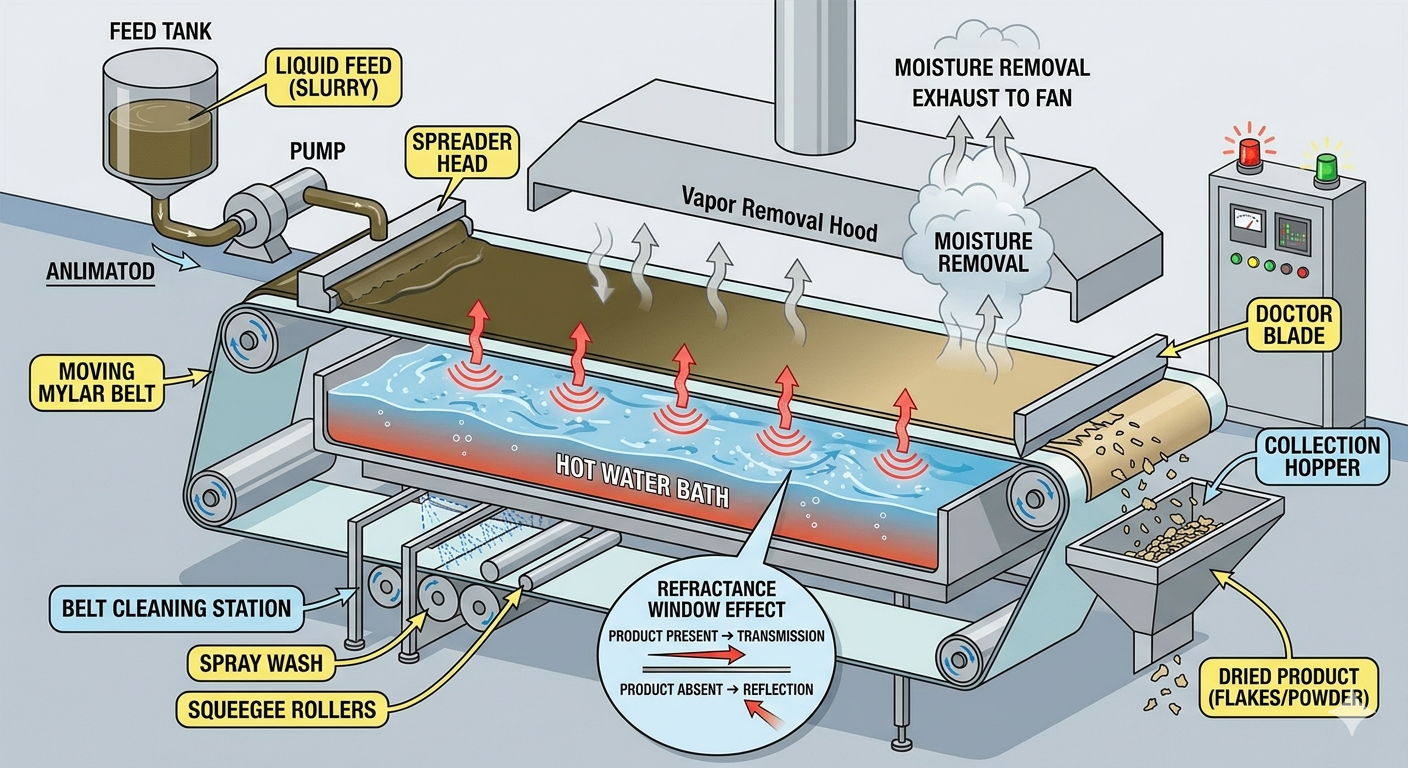
A Continuous Thin Film Dryer is an advanced, agitated thermal processing system that converts challenging liquid feeds directly into uniform powders, flakes, or semi-solids in a single, uninterrupted pass.
The Working Principle
Unlike standard dryers that heat large batches of material over extended periods, a TFD operates on the principle of rapid, thin-layer evaporation:
-
Controlled Feeding: To begin the process, a feed pump continuously introduces the wet material (slurry, paste, or viscous liquid) into the cylindrical drying chamber.
-
Mechanical Thin Film Formation: Immediately after entry, high-speed internal rotor blades mechanically agitate and spread the feed into an extremely uniform film—typically between 0.1 mm and 2 mm thick—across the inner jacketed wall.
-
Instantaneous Evaporation: Because the surface-area-to-volume ratio of this thin layer remains extraordinarily high, heat from the jacket (filled with steam, thermic fluid, or hot oil) transfers instantly to the product. As a result, moisture or solvents flash off within seconds.
-
Continuous Discharge: Meanwhile, the precisely engineered clearance of the rotor blades prevents sticky materials from baking onto the walls. Finally, gravity and mechanical action push the dried product downward for continuous discharge from the bottom, reducing moisture content by up to 95% or more.
Key Advantages of High-Efficiency Thin Film Drying
Implementing a thin film drying system offers distinct operational advantages over traditional drying configurations:
-
Excellent Heat Sensitivity Control: Because the product spends mere seconds inside the heated chamber, it suffers virtually no thermal degradation. Therefore, it provides an ideal solution for delicate pharmaceutical compounds and food proteins.
-
Unmatched Viscosity Handling: Standard dryers often fail when processing materials exceeding certain viscosity thresholds. Conversely, an agitated TFD easily handles thick materials with viscosities scaling up to 10,000+ cP.
-
Significant Energy and Cost Savings: Due to superior heat transfer coefficients (ranging from 300 to 1000 W/m²K), thin film systems require 30% to 50% less energy per kilogram of dried product compared to conventional alternatives.
-
Compact Footprint: Space remains at a premium in modern production facilities. Fortunately, a TFD features a highly compact layout; for example, a standard 200 kg/hr capacity system can comfortably fit within a tight 2×3 meter floor space.
Critical Industrial Applications
Because thin film technology bridges the gap between liquid processing and solid handling, multiple global sectors utilize it:
1. Food & Nutraceutical Processing
In the food industry, maintaining flavor, color, and nutritional integrity is paramount. Food processors rely on specialized equipment layouts from Food Tech Projects to handle sensitive fruit pulps, purees, dairy concentrates, starch derivatives, and delicate herbal extracts without burning them.
2. Pharmaceuticals & Fine Chemicals
For Active Pharmaceutical Ingredients (APIs) and specialty polymers, precise temperature control prevents crystallization errors or structural degradation. Industrial operations deploy specialized machinery from GTI Dryers to maintain the sterile, continuous environment that these high-value materials require.
3. Environmental Waste-to-Value
Beyond standard manufacturing, industrial and municipal wastewater plants increasingly deploy thin film dryers. They effectively dehydrate sticky sewage sludge and chemical digestates, reducing waste volume drastically for eco-friendly disposal or bio-fertilizer conversion.
What to Look For in a TFD Manufacturing Partner
Selecting a machinery manufacturer involves evaluating more than just price. To ensure long-term operational success, look for a partner that offers the following capabilities:
Robust Technical Customization
Industrial feeds vary significantly in density, stickiness, and acidity. Therefore, your manufacturer must provide tailored metallurgy options—such as high-grade Stainless Steel (SS304, SS316) or corrosion-resistant alloys like Hastelloy—alongside customizable rotor blade configurations.
Compliance and Hygienic Layouts
If you operate within the food or pharmaceutical space, the machinery must align with stringent regulatory demands. Ensure the manufacturer delivers systems featuring fully automated PLC/SCADA control networks, Clean-In-Place (CIP) engineering, and strict compliance with GMP, HACCP, or US FDA guidelines.
End-to-End Turnkey Execution
The most reliable manufacturers do not simply drop off equipment at your facility. Instead, prioritize partners that manage the entire lifecycle of the installation, including:
-
Initial process engineering and pilot plant validation testing.
-
Custom structural fabrication and automation layout integration.
-
On-site mechanical installation, system commissioning, and operator training.
-
Comprehensive after-sales support, including preventative Annual Maintenance Contracts (AMC).
Conclusion
Investing in a Continuous Thin Film Dryer can fundamentally transform your plant’s throughput, energy efficiency, and product quality. By partnering with an experienced manufacturer that understands your specific material characteristics, you can replace erratic batch operations with a streamlined, highly profitable, and continuous thermal process.
Get in Touch with Engineering Experts
For tailored layouts, pilot trials, and official quotes, reach out directly through the following official channels:
📧 Technical Inquiries: mktg@foodtechprojects.com
📞 Phone / WhatsApp Support: +91 93300 77417
🌐 Engineering Portals: Food Tech Projects | GTI Dryers