1. Executive Summary & Introduction
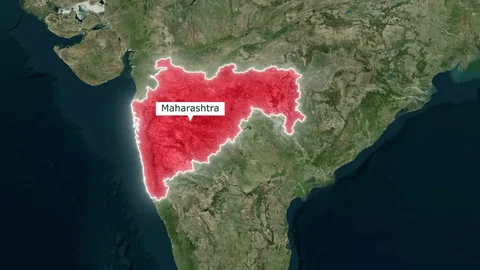
Currently, Maharashtra stands firmly as India’s largest state economy and premier industrial engine. Consequently, the Mumbai Metropolitan Region (MMR) functions as a vital hub for continuous manufacturing. Key industrial nodes include Thane-Belapur, Taloja, Tarapur, Ambernath, Dombivli, and Patalganga. Meanwhile, the region drives nationwide output across APIs, specialty chemicals, food processing, and bulk material synthesis. Because of this high output, thermal engineering has steadily emerged as an essential operational pillar within these high-volume sectors. Above all, continuous industrial drying technology plays a crucial role across several key fields. Therefore, it directly supports active drugs, fine chemicals, export-grade foodstuffs, and municipal waste treatment solutions.
Crucially, moisture removal within industrial processing is far more than simple weight reduction. On the contrary, it represents a precise biological, physical, and chemical transformation. In fact, by controlling moisture through heavy-duty engineered hardware, plant operators directly maintain active compound stability. Furthermore, this process prevents microbial decay and preserves strict product purity. As a result, uniform drying noticeably enhances powder flowability while drastically reducing long-distance bulk transport costs. Thus, specifying custom, heavy-duty thermal hardware is imperative for forward-thinking manufacturing leaders operating across Maharashtra’s industrial corridors.
To meet these demanding operational standards, GTI supplies custom-engineered industrial drying systems tailored specifically for Western India. Built with robust metallurgy and advanced air-handling systems, these units operate reliably even under coastal humidity. Accordingly, this article provides an in-depth technical breakdown of industrial drying applications across nine major sectors in Mumbai and Maharashtra. In addition, it details equipment mechanics, marine-climate engineering adaptations, and total cost of ownership (TCO) benchmarks.
2. Market Context & Regional Economic Drivers
To begin with, Maharashtra accounts for a dominant share of India’s chemical, pharmaceutical, and engineering equipment manufacturing. In addition, industrial operations across MIDC zones handle immense daily volumes of dry powders, wet filter cakes, and concentrated slurries. As a result, as industrial clusters expand across the Mumbai-Thane-Raigad manufacturing belt, heavy investment continues to flow into local capital equipment. Specifically, funds target turnkey processing infrastructure and environmental waste management facilities.
Economic Drivers of Maharashtra’s Industrial Drying Sector
-
Pharma & Chemical Dominance: First and foremost, cGMP-compliant API laboratories and specialty chemical plants operate heavily in Thane, Dombivli, and Tarapur. Therefore, these facilities require highly specialized thermal processing hardware.
-
Export-Oriented Processing: Secondly, proximity to Jawaharlal Nehru Port Authority (JNPA) drives manufacturers to invest heavily in reliable dehydration systems. Consequently, these units convert liquid extracts and bulk products into stable, export-ready powders.
-
Strict ZLD Compliance: Finally, the Maharashtra Pollution Control Board (MPCB) actively enforces Zero Liquid Discharge (ZLD) norms across MIDC belts. Therefore, this enforcement steadily expands the demand for continuous industrial sludge drying, effluent recovery evaporators, and crystallizer drying units.
Simultaneously, the industrial machinery market across Western India is growing rapidly. Owing to this growth, regional manufacturing hubs are driving consistent demand for custom-engineered equipment. Key hubs include Navi Mumbai, Pune, Nashik, and Chhatrapati Sambhaji Nagar. Consequently, specialized OEMs like GTI are exceptionally well-positioned to serve Maharashtra’s expanding manufacturing ecosystem moving forward. In particular, GTI manufactures certified alloy systems (such as SS316L and Hastelloy) featuring automated PLC controls.
3. Sector-by-Sector Technical Applications
Because material characteristics vary, drying requirements differ significantly across various industrial sectors. In fact, specific factors ultimately govern equipment selection. These factors include initial material state, heat sensitivity, and moisture binding mechanisms. Therefore, provided below is a detailed technical analysis across nine key industries across Mumbai and Maharashtra.
Overview of Maharashtra’s Industrial Drying Sectors
-
Pharmaceuticals & APIs: cGMP-compliant thermal processing designed for heat-sensitive active ingredients, bulk powders, and granulations.
-
Specialty Chemicals: Heavy-duty, solvent-safe drying engineered for dyes, pigments, polymers, and synthetic resins.
-
Food & Agribusiness: Sanitary dehydration systems tailored for spice blends, nutraceutical extracts, starch, and fruit pulps.
-
Nutraceuticals & Herbal Extracts: Gentle atomization and low-temperature drying specifically protecting active bio-compounds.
-
Dyes, Pigments & Fine Chemicals: High-shear mechanical agitating dryers engineered to break sticky cakes into uniform particles.
-
Effluent Sludge & ZLD Systems: Heavy-duty indirect thermal drying designed to safely evaporate water from toxic industrial sludge.
-
Biomass & Bio-Fertilizers: Waste-to-value drying systems engineered for organic manure granules and agricultural waste pellets.
-
Mineral & Bulk Chemicals: Abrasion-resistant continuous thermal processing designed for industrial sand, minerals, and aggregates.
-
Sea Salt & Marine Chemicals: High-durability corrosion-resistant drying tailored for coastal salt refineries and marine derivative processing.
3.1 Pharmaceuticals & Active Pharmaceutical Ingredients (APIs)
To start with, Navi Mumbai, Thane, Ambernath, and Tarapur represent one of India’s most intensive API production zones. However, processing sensitive active compounds, granulations, and powders requires exceptionally precise thermal boundaries. Thus, operators must strictly control thermal exposure. This control prevents thermal degradation, polymorph conversion, or loss of chemical potency.
Generally speaking, pharmaceutical drying reduces wet granules or crystallization cakes from 25% initial moisture down to 0.5%–1.5% residual moisture. As a matter of fact, achieving this low threshold ensures long-term active ingredient stability. Furthermore, it allows smooth tablet compression and ensures compliance with stringent pharmacopeial standards.
To satisfy rigorous cGMP requirements, GTI manufactures specialized pharmaceutical drying systems using ultra-polished SS316L stainless steel ($Ra < 0.4\ \mu\text{m}$). Standard engineering features include automated Clean-In-Place (CIP) spray assemblies, crevice-free continuous internal welds, and HEPA air filtration. Moreover, GTI Vibratory Fluid Bed Dryers maintain precise multi-zone thermal profiles. Thus, they ensure rapid, gentle moisture removal without compromising compound integrity.
3.2 Specialty & Fine Chemicals
Meanwhile, chemical synthesis plants across Dombivli, Taloja, and Roha process complex materials through dedicated chemical drying systems. Materials include synthetic polymers, industrial catalysts, fine dyes, and organic intermediates. However, specialty chemical drying applications involve navigating severe operational safety challenges. Specifically, processors routinely handle flammable organic solvents, toxic intermediates, or potentially explosive dust atmospheres.
Accordingly, chemical drying hardware must deliver tight moisture reduction while ensuring total atmospheric containment. For example, residual solvent levels must frequently drop below 0.1% total concentration. This applies across polymer drying systems, resin drying systems, and catalyst drying setups. To guarantee safe processing, key design parameters include complete inert atmosphere purging, continuous closed-loop nitrogen circulation, and integrated solvent condensation.
To meet these strict plant conditions, GTI supplies fully sealed, explosion-proof Paddle Dryers and closed-loop Flash Dryers specifically engineered for fine chemical drying. Notably, these units feature heavy-gauge alloy construction alongside integrated flameproof drives and dust explosion relief venting. Common alloys include SS316Ti, Hastelloy C-276, or Monel. Furthermore, internal condenser loops safely recover valuable solvent vapors. Hence, they maximize operational efficiency while reducing environmental emissions.
3.3 Food Processing & Spices
Additionally, Maharashtra serves as a primary hub for secondary food processing, spice milling, date derivative processing, and agricultural export manufacturing. In particular, plants process food ingredients with advanced food drying systems. Examples include fruit drying systems, spice drying systems, starch drying systems, vegetable dehydration systems, dairy powder drying, casein drying systems, lactose drying, whey powder drying, and turnkey date syrup, date paste, and date powder processing plants. These applications require strict thermal management to prevent caramelization or volatile oil loss.
Generally, processing via targeted food ingredient dryers and dairy ingredient drying setups reduces raw material moisture from 75%–85% down to a stable 3%–5%. Reaching this low moisture point stops microbial growth completely. Therefore, it extends product shelf life naturally without relying on artificial synthetic preservatives.
To address these sanitary requirements, GTI constructs food-grade continuous drying systems utilizing hygienic SS304/SS316L stainless steel. For instance, GTI Mesh Belt Dryers and continuous Band Dryers utilize multi-zone temperature controls (typically ranging from +55°C to +85°C). As a result, they gently dry delicate onion flakes, garlic granules, and processed grain products. At the same time, they consistently preserve original natural color, aroma, and rehydration characteristics.
Video Demonstration: GTI Industrial Band Dryer
To see a high-efficiency continuous band drying system in motion, watch the operational overview below:
3.4 Nutraceuticals & Herbal Extracts
Driven by growing global demand for botanical wellness products, Maharashtra hosts numerous extraction facilities. These plants process ayurvedic herbs, plant extracts, and functional proteins via specialized protein powder drying systems and dairy protein drying setups. However, bio-active botanical compounds break down rapidly when exposed to prolonged thermal stress.
Consequently, plants must convert liquid botanical feeds into free-flowing, soluble powders using rapid, low-temperature evaporation. Liquid feeds typically contain 80%–90% liquid volume. For this reason, operators must keep particle residence time within the hot air zone to fractions of a second. Doing so effectively protects active ingredients.
To resolve these processing challenges, GTI supplies specialized Spray Dryer systems engineered specifically for botanical extracts and specialty solutions. High-speed rotary atomizers split liquid feeds into microscopic droplets. This action creates a vast surface area for instant water evaporation. Consequently, actual particle temperatures remain exceptionally low throughout the cycle. Additionally, for sticky botanical extracts, GTI Combination Fluid Bed Dryers and Vibratory Fluid Bed Dryers supply vital secondary cooling alongside gentle agglomeration to prevent caking.
3.5 Dyes, Pigments & Synthetic Colorants
Furthermore, dye and pigment manufacturing units process high-density filter cakes that exhibit high mechanical viscosity and stickiness. These plants operate across MIDC chemical zones. In this context, dedicated pigment dryers process filter cakes exiting recessed plate filter presses. These wet cakes typically retain 40% to 65% initial moisture content.
In addition, pigment drying involves managing high physical shear resistance as the material moves through different phases. Specifically, it transitions from a wet cake to a sticky paste, and finally to a dry powder. Consequently, drying equipment must deliver high mechanical drive torque alongside continuous surface agitation.
To address these heavy physical demands, GTI provides high-torque Flash Dryers and indirect Paddle Dryers. Equipped with dynamic agitator blades and disintegrator rotors, these machines rapidly break down wet filter cakes into fine particles. That is to say, continuous mechanical dispersion ensures ultra-fast thermal evaporation. Thus, the system yields dry, finely divided pigment powders without requiring separate coarse milling stages.
| Equipment Type | Primary Heat Transfer Mode | Target Applications |
| Spray Dryer | Direct Convection (Instantaneous) | APIs, Dairy, Herbal Extracts |
| Agitated Paddle Dryer | Indirect Conduction (High Shear) | Chemical Sludge, Wet Cakes |
| Vibratory Fluid Bed (VFB) | Direct Convection (Fluidized Deck) | Pharma Granules, Fine Salts |
| Continuous Mesh Belt | Direct Convection (Zoned Airflow) | Vegetables, Spices, Pellets |
| Spin Flash Dryer | Direct Convection (High Shear Milling) | Pigments, Dyes, Filter Cakes |
| Rotary Drum Dryer | Direct Convection / Conduction | Minerals, Fertilizer, Biomass |
3.6 Effluent Sludge & Zero Liquid Discharge (ZLD) Systems
Under strict environmental oversight by the MPCB, industrial processing units must manage wastewater sludge effectively. Plants across MIDC clusters achieve this using specialized waste & environmental drying solutions. Examples include municipal sludge dryers, sewage sludge drying, and paper mill sludge dryers. Indeed, dewatered sludge cakes exiting centrifuges or belt filter presses routinely retain 75% to 85% moisture content. Consequently, this high water content creates large disposal costs and environmental compliance challenges.
However, industrial sludge enters a notorious “sticky phase” when its moisture level drops between 40% and 60%. During this phase, sludge becomes extremely adhesive. Therefore, it severely clogs unagitated conventional heating surfaces. Overcoming this sticky regime requires high continuous mechanical agitation coupled with indirect thermal energy.
To solve this operational issue, GTI supplies specialized indirect Paddle Dryers tailored specifically for industrial sludge drying. Counter-rotating dual shafts fitted with intermeshing wedge-shaped paddles continuously agitate the sludge cake. Consequently, the self-cleaning paddles shear cleanly through the sticky phase without fouling the drying trough. Ultimately, intensive thermal processing (+130°C to +160°C) pasteurizes pathogens completely. As a result, the unit converts raw sludge into stable, dry biosolid granules containing under 10% final moisture.
3.7 Biomass & Bio-Fertilizer Manufacturing
In alignment with national sustainability goals, local sectors are actively expanding organic waste recycling. Specifically, Maharashtra’s agricultural and municipal sectors build dedicated biomass & renewable energy drying plants. In particular, these projects implement biomass fuel drying, pellet drying, sawdust drying, wood chip dryers, organic waste drying, and biomass drying techniques. Furthermore, agricultural sectors rely on specialized animal feed & agro drying, grain dryers, poultry feed drying, fish feed drying, and comprehensive feed drying systems.
Nevertheless, processing fibrous or organic biomass introduces severe material handling challenges. These issues stem from high moisture variability and low material bulk density. Consequently, achieving consistent drying demands highly controllable air volume handling combined with uniform thermal exposure.
To support these sustainable processing projects, GTI supplies heavy-duty Rotary Drum Dryers alongside multi-pass Mesh Belt Dryers. These systems feature customized internal lifters and variable speed controls. Thus, operators can easily adjust material residence times. Furthermore, these units can utilize low-temperature hot water or recovered industrial waste heat (+80°C to +130°C). This capability significantly lowers operating costs per ton of processed feed or bio-fertilizer.
3.8 Mineral Processing & Construction Aggregates
Extending toward the broader Western India region, industrial processing of mineral & industrial drying systems covers a wide array of raw materials. In detail, key setups include clay drying, gypsum dryers, metal powder drying, mineral powder drying, ore drying systems, sand drying systems, and advanced rare earth & mineral thermal processing systems. Typically, wet mineral washing processes generate mineral slurries and wet aggregates containing 12% to 25% initial moisture.
Furthermore, mineral drying involves processing large hourly tonnages. Therefore, equipment must withstand continuous abrasive wear alongside severe mechanical stress. At the same time, it must maintain high thermal efficiency to manage overall operational fuel consumption.
To handle these heavy physical conditions, GTI builds high-capacity Rotary Drum Dryers specifically engineered for mineral processing. These drum dryers feature high-tensile steel shells alongside replaceable internal liner plates made from abrasion-resistant alloys like Hardox. Consequently, they deliver continuous durability. Direct-fired burners generate process air temperatures up to +700°C. Meanwhile, integrated multi-cyclone dust collectors capture fine airborne minerals to keep plant emissions within environmental limits.
3.9 Sea Salt & Coastal Marine Chemicals
Sea salt refineries operating along Maharashtra’s extensive coastline utilize specialized salt drying systems. These refineries and nearby marine chemical plants operate under harsh environmental conditions. Crude solar sea salt and marine chemical derivatives enter refining facilities with high surface moisture and residual bitterns.
However, handling sodium chloride and concentrated marine chemicals presents an extreme physical challenge. Specifically, processors face severe electrochemical corrosion. Standard carbon steel and basic stainless alloys rapidly pit, corrode, and fail when exposed to hot, moist salt environments.
To overcome severe coastal corrosion, GTI manufactures specialized marine-grade salt dryers using advanced metallurgy. Materials include Titanium, Duplex Stainless UNS S31803, and SS316L. GTI integrates these materials across advanced Spray Dryer and Vibratory Fluid Bed Dryer platforms. Featuring specialized fluid bed deck designs and corrosion-proof external coatings, these units deliver long-term durability. Ultimately, they produce free-flowing, high-purity industrial and edible refined salt.
Video Demonstration: GTI Spray Dryer for Minerals & Salts
Watch how GTI advanced spray drying systems process demanding mineral and inorganic salt solutions:
4. GTI Drying Technologies Deep Dive
Selecting the right drying equipment requires precise alignment between heat transfer modes and raw material physical properties. To assist plant engineering teams, provided below is an engineering overview covering seven core GTI drying technologies.
-
Spray Dryer: Low-viscosity liquids, solutions, and APIs.
-
Agitated Paddle Dryer: High-viscosity pastes, filter cakes, and industrial sludge.
-
Vibratory Fluid Bed (VFB) Dryer: Free-flowing granular products, refined sea salt, and powders.
4.1 Spray Dryer
First of all, the GTI Spray Dryer converts pumpable liquid feeds, solution feeds, and slurries directly into fine powders. It achieves this in a single continuous operational step.
-
Operating Principle: High-speed rotary atomizers or high-pressure nozzles transform incoming liquid feeds into millions of microscopic droplets. This process occurs inside a tall drying chamber. Upon contact with co-current hot air, surface moisture evaporates instantly. Consequently, the dried powder drops gently to the bottom cone for automated pneumatic collection.
-
Technical Specifications: Water evaporation capacities range from 10 kg/hr up to 5,000 kg/hr. Meanwhile, hot air inlet temperatures operate between +150°C and +350°C. Additionally, operators can precisely control atomized droplet sizes between 15 and 150 microns.
-
Target Applications: Active Pharmaceutical Ingredients (APIs), herbal extracts, food starches, milk powders, and fine chemical catalysts.
4.2 Agitated Paddle Dryer

Secondly, the GTI Paddle Dryer utilizes efficient indirect conductive heat transfer. Thus, it safely processes difficult wet pastes, industrial sludges, and sticky filter cakes.
-
Operating Principle: Dual or quad parallel shafts fitted with intermeshing wedge-shaped paddles rotate inside a steam-jacketed trough. Subsequently, steam or thermal heating oil circulates continuously through both the hollow shafts and the paddles. As a result, heat transfers entirely through direct metal contact. This mechanism drives off water vapor without requiring high air velocities.
-
Technical Specifications: Thermal efficiency routinely exceeds 85%. In addition, operating temperatures can reach up to +300°C under internal jacket pressures up to 10 bar. Operators also have an option for full vacuum processing.
-
Target Applications: Industrial wastewater sludge, chemical filter cakes, hazardous effluent solids, and solvent recovery slurries.
4.3 Vibrating Fluid Bed Dryer (VFBD)
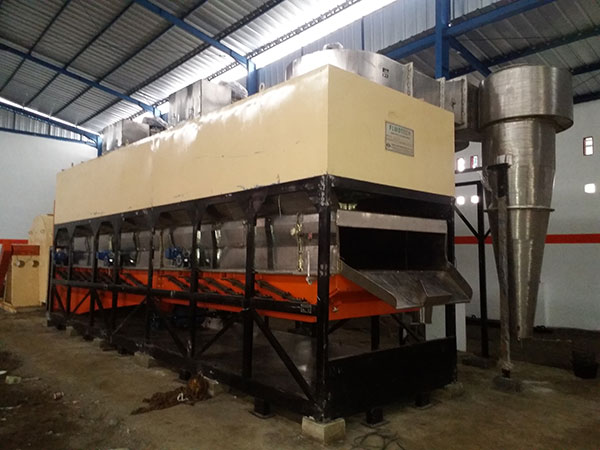
Thirdly, the GTI Vibratory Fluid Bed Dryer combines gentle mechanical vibration with upward process airflow. Thus, it delivers uniform thermal processing for delicate granular products.
-
Operating Principle: Wet material feeds continuously onto a perforated fluidization deck. Simultaneously, heated process air passes upward through the deck perforations, gently fluidizing the material layer. In addition, twin eccentric vibration motors agitate the deck assembly. This action conveys the bed smoothly forward without particle degradation.
-
Technical Specifications: Air inlet temperatures range from +40°C to +220°C. Furthermore, operators can adjust air velocity between 0.5 and 2.5 m/s. Besides this, integrated downstream cooling sections are standard for product packaging prep.
-
Target Applications: Fine pharmaceutical granulations, refined sea salt, crystalline sugar, citric acid, and agricultural seeds.
4.4 Band Dryer / Mesh Belt Dryer
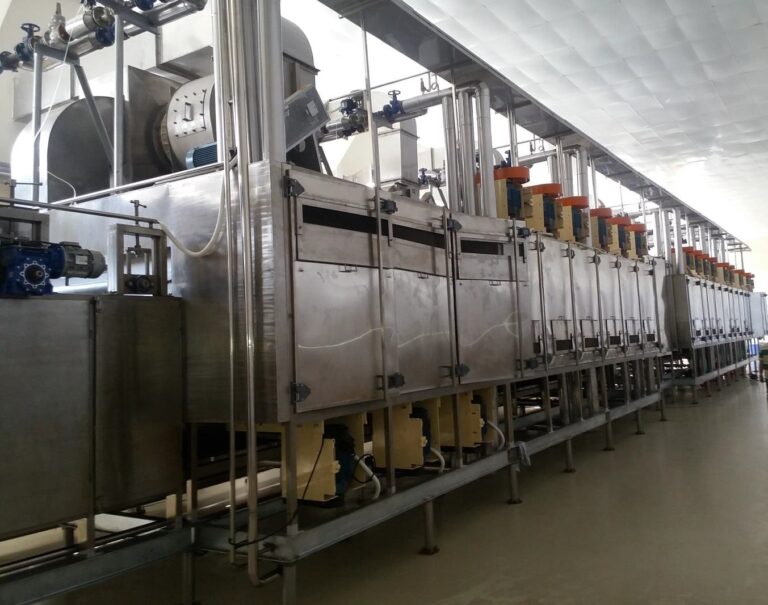
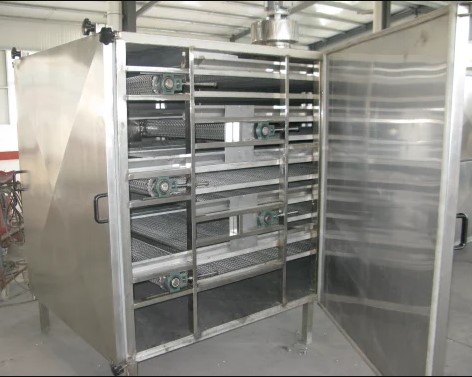
Fourthly, the GTI Band Dryer and high-efficiency Mesh Belt Dryer are continuous conveyor drying systems. Engineers designed them for gentle, highly uniform material handling across multiple heating zones.
-
Operating Principle: Heavy-duty stainless steel wire mesh belts convey wet product through enclosed processing chambers. Meanwhile, internal circulation fans force heated air through the moving product layer. Furthermore, variable-speed drives allow operators to adjust drying retention times precisely.
-
Technical Specifications: Units are available in single-pass or multi-tier (3-tier or 5-tier) layouts. Standard belt widths range from 1.0 m to 3.2 m, while operating temperatures sit between +40°C and +160°C.
-
Target Applications: Dehydrated vegetable flakes, extruded food products, catalyst carriers, and bio-fertilizer granules.
4.5 Spin Flash Dryer
Fifthly, the GTI Flash Dryer (Spin Flash series) is a compact, high-throughput pneumatic drying system. It is engineered specifically for cohesive, sticky filter cakes and high-viscosity pastes.
-
Operating Principle: Wet material feeds directly into a vertical drying chamber equipped with a high-speed bottom agitator rotor. There, the rotating blades disintegrate large wet lumps into tiny particles. Simultaneously, hot air enters tangentially, creating a swirling vortex. This vortex rapidly dries and lifts fine particles into a top cyclone separator.
-
Technical Specifications: Evaporation capacities range from 50 kg/hr to 3,000 kg/hr. In comparison, inlet temperatures operate between +180°C and +450°C. Thus, the system transforms heavy filter cakes into dry powder in seconds.
-
Target Applications: Dyes, pigments, inorganic chemical cakes, insoluble metallic stearates, and pesticide cakes.
4.6 Rotary Drum Dryer
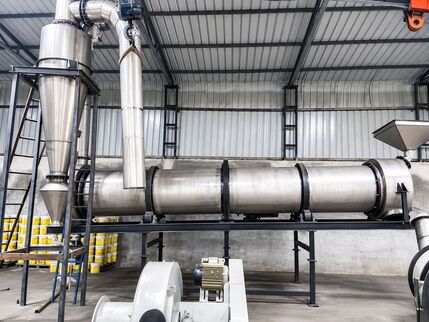
Sixthly, the GTI Rotary Drum Dryer is heavily engineered for high-tonnage continuous thermal operations. It effectively handles heavy bulk solids.
-
Operating Principle: A trunnion roller and girth gear assembly smoothly drives a heavy steel drum inclined at a slight angle. Internal flights continuously shower material through a stream of hot gas as the drum rotates. As a result, this tumbling action drives heat directly into the wet product.
-
Technical Specifications: Production throughputs range from 1 ton/hr to over 40 tons/hr. Operating air temperatures span from +120°C to +700°C. Drum slope and speed directly govern material residence time.
-
Target Applications: Construction sand, bulk minerals, chemical fertilizers, agricultural grain, and high-volume organic waste.
4.7 Agitated Thin Film Dryer (ATFD)
Finally, the GTI Agitated Thin Film Dryer is built for high-efficiency, continuous evaporation of liquid feeds under vacuum. It handles heat-sensitive or highly viscous feeds exceptionally well.
-
Operating Principle: A vertical jacketed body houses a high-speed internal rotor fitted with precision wiper blades. Liquid feed entering the top spreads instantly into an ultra-thin, highly turbulent liquid film along the heated inner wall. As a result, rapid conductive evaporation converts the liquid into dry powder before it reaches the bottom outlet.
-
Technical Specifications: The system is ideal for vacuum operations down to 1 mbar. Above all, thermal contact time stays limited to a few seconds. This prevents thermal degradation of delicate compounds.
-
Target Applications: High-boiling pharmaceutical intermediates, zero liquid discharge (ZLD) concentrate drying, viscous resins, and heat-sensitive organic extracts.
5. Comparative Technology Selection Guide
To assist plant engineering teams in selecting equipment, choosing the correct drying hardware requires matching specific feed properties with exact thermal mechanics. Consequently, the detailed matrix below serves as a direct reference guide.
| Physical Feed Form | Initial Moisture (%) | Heat Sensitivity Limit | Target Final Moisture (%) | Recommended GTI Equipment | Primary Heat Transfer Mode |
| Low-Viscosity Liquid / Slurry | 60% – 92% | High (< +70°C Product) | 2.0% – 4.0% | Spray Dryer | Direct Convection (Instantaneous) |
| High-Viscosity Paste / Sludge | 50% – 85% | Moderate (< +140°C Product) | 5.0% – 10.0% | Agitated Paddle Dryer | Indirect Conduction (High Shear) |
| Cohesive Filter Cake / Paste | 40% – 65% | Moderate (< +150°C Air) | 1.0% – 3.0% | Spin Flash Dryer | Direct Convection (High Shear Milling) |
| Free-Flowing Granules / Powder | 10% – 30% | High to Moderate | 0.1% – 1.5% | Vibratory Fluid Bed (VFB) | Direct Convection (Fluidized Deck) |
| Extrusions / Flakes / Vegetables | 20% – 75% | High (< +80°C Air) | 3.0% – 8.0% | Mesh Belt Dryer / Band Dryer | Direct Convection (Zoned Cross-Flow) |
| Bulk Minerals / Sand / Ore | 10% – 25% | Thermally Stable | 0.1% – 0.5% | Rotary Drum Dryer | Direct Convection / Conduction |
| Concentrated Viscous Liquid | 50% – 80% | High (< +60°C Vacuum) | 1.0% – 3.0% | Agitated Thin Film Dryer | Indirect Conduction (Thin Film) |
6. Operational Considerations in Maharashtra’s Coastal Climate
Operating industrial thermal machinery across Mumbai and the broader coastal belt of Maharashtra presents unique environmental conditions. Therefore, processing plants must be engineered to withstand challenging local factors. These include heavy tropical monsoons, high ambient relative humidity, saline atmospheric air, and fluctuating municipal power quality.
Maharashtra Coastal Challenges & Technical Solutions
-
High Ambient Relative Humidity (Up to 90%+ during Monsoon): Demands advanced inlet air dehumidification and moisture-compensation control loops to prevent evaporation capacity drops.
-
Saline Coastal Atmosphere (Salt-laden ambient air): Requires marine-grade alloys (such as SS316L and Duplex Stainless Steel) along with multi-layer protective epoxy coatings on structural frames.
-
Environmental MPCB Compliance (Strict regional emissions): Integrates multi-stage wet scrubbers, pulse-jet baghouses, and closed condensate recovery loops.
6.1 High Relative Humidity & Dehumidification Integration
During the extended southwest monsoon (June through September), ambient relative humidity in Mumbai routinely exceeds 85% to 90%. Drawing moisture-laden ambient air directly into a drying system severely reduces total thermal evaporation capacity. Furthermore, it can cause hygroscopic powders to re-absorb ambient moisture during pneumatic conveying and packaging.
To ensure consistent year-round drying capacity, GTI integrates specialized air-pretreatment systems into its air intake loops. By utilizing chilled-water condensing coils or desiccant dehumidification wheels, technicians pre-condition incoming process air to a low, stable dew point before it enters the main heater. Consequently, process thermal efficiency and drying times remain constant regardless of external weather conditions.
6.2 Corrosion Resistance & Marine Environment Protection
In contrast, plants located near coastal industrial corridors face constant exposure to salt-laden marine air. Key locations include JNPA, Navi Mumbai, and Tarapur. As a result, standard mild steel structural frames and basic paint coatings suffer accelerated oxidation, rust pitting, and structural degradation.
To ensure long equipment operational lifespans, GTI constructs coastal-bound drying equipment using marine-grade alloys and protective surface treatments. All external support frameworks are hot-dip galvanized or coated with multi-layer marine epoxy systems. Furthermore, critical air ducting, electrical junction boxes, and fastener hardware are upgraded to SS316 stainless steel. This upgrade resists salt-air corrosion completely.
6.3 Environmental Compliance & Emission Controls
Under MPCB regulations, industrial stack emissions across Maharashtra face strict particulate matter (PM) and volatile organic compound (VOC) limits. Therefore, unfiltered exhaust air from drying equipment can violate regional clean-air standards. This risk applies to spray dryers, spin flash units, and rotary drum dryers alike.
To maintain strict environmental compliance, GTI equips all thermal drying plants with advanced multi-stage exhaust gas scrubbing systems. Specifically, process exhaust air flows sequentially through high-efficiency cyclone separators, pulse-jet fabric baghouses, and chemical wet scrubbers. The baghouses guarantee particulate emissions below $10\ \text{mg/Nm}^3$. In short, this multi-stage setup cleans process exhaust air thoroughly before stack discharge, ensuring total compliance with regional MPCB norms.
7. Regulatory Standards & Quality Compliance
To operate legally, industrial facilities across Maharashtra must satisfy comprehensive regulations. Therefore, GTI drying equipment is designed, built, and tested to meet relevant regional and global standards:
-
cGMP & US-FDA Compliance: Pharmaceutical, nutraceutical, and food drying machinery features ultra-polished product-contact surfaces ($Ra < 0.4\ \mu\text{m}$). Units also include crevice-free continuous welding, fully drainable CIP assemblies, and complete materials traceability documentation (DQ/IQ/OQ validation protocols).
-
MPCB Environmental Norms: Integrated exhaust systems utilize high-efficiency baghouses, wet scrubbers, and closed condensate loops. Thus, they ensure full compliance with regional clean air and zero-liquid discharge guidelines.
-
PESO & Explosive Atmosphere Safety: Chemical and fine powder processing systems handling flammable solvents or combustible dusts feature flameproof motors (Class I, Div 1/2). They also include integrated nitrogen purging loops, double-block-and-bleed gas safety trains, and ATEX-certified explosion relief panels.
-
ISO Quality Management: All manufacturing facilities and quality control protocols adhere strictly to ISO 9001:2015 quality assurance frameworks. This adherence guarantees precise fabrication tolerances and reliable structural engineering.
8. Total Cost of Ownership (TCO) & Economic Analysis
When evaluating capital machinery, operating expenses (OPEX) routinely represent 70% to 85% of an industrial dryer’s lifecycle cost over 20 years. Above all, thermal energy consumption represents the single largest ongoing operational cost. This heat energy may derive from natural gas, steam, electricity, or thermic fluid.
8.1 Energy Consumption Benchmarks (Per Ton of $\text{H}_2\text{O}$ Evaporated)
-
Direct Convective Spray Dryer: 900 to 1,200 kWh thermal energy equivalent. (This reduces to 800–900 kWh when equipped with GTI waste-heat recovery exchangers).
-
Indirect Agitated Paddle Dryer: 680 to 780 kWh equivalent steam thermal input.
-
Vibratory Fluid Bed Dryer: 700 to 850 kWh thermal energy equivalent.
-
Spin Flash Dryer: 750 to 900 kWh thermal energy equivalent.
-
Direct Convective Mesh Belt Dryer: 800 to 950 kWh thermal energy equivalent.
8.2 Operational Lifespan & Preventive Maintenance
With structured preventive care, GTI industrial thermal equipment routinely delivers a continuous service life spanning 15 to 25+ years. In order to ensure peak performance, engineering teams should adhere to a disciplined maintenance schedule:
-
Daily / Weekly Protocols: Continuously monitor main drive motor vibration. In addition, record baghouse differential pressure drops, verify gas burner flame stability, and check mechanical agitator shaft seals.
-
Monthly Procedures: Lubricate high-temperature trunnion bearings and check drive chain tension. Also, inspect doctor blade and wiper tolerances while cleaning atomizing spray nozzles.
-
Annual Overhaul: Perform ultrasonic shell thickness testing and recalibrate digital RTD temperature sensors. Finally, replace internal elastomeric seals and inspect burner refractory linings.
9. Strategic Engineering & Long-Term Partner
In conclusion, GTI brings world-class drying solutions directly to Western India’s industrial markets. We combine four decades of specialized thermal engineering expertise with international ISO, CE, and FDA quality standards. Our extensive portfolio is explicitly engineered to operate with total reliability, even within demanding humid and coastal environments. Key equipment options include:
-
Agitated Thin Film Dryers
From initial project conception through to long-term plant operations, GTI engineers support client projects through every development stage. Specifically, our comprehensive services include raw material pilot testing, custom engineering design, precision manufacturing, complete site installation, and ongoing maintenance support.
Engage GTI for Your Maharashtra Industrial Drying Projects
To sum up, take the next step in optimizing your industrial thermal processing operations. Contact GTI’s thermal engineering team today to request a technical consultation, schedule pilot testing for your raw materials, or receive a customized project proposal:
GENEX TECH INDUSTRIES LLP / FOOD TECH PROJECTS
-
Email: mktg@foodtechprojects.com | sales@foodtechprojects.com
-
Phone / WhatsApp: +91-97489 06968 | +91-93300 77417
-
Websites: www.foodtechprojects.com | www.gtidryers.com
-
Head Office: 10C, Sir William Jones Sarani (Middleton Row), Park Street, Kolkata – 700071, India