In modern process engineering, continuous moisture removal represents one of the most energy-intensive yet mission-critical unit operations. Consequently, selecting and optimizing thermal drying machinery directly impacts operational expenditure (OpEx), product stability, and plant throughput. Furthermore, as industrial processes evolve toward higher efficiency and stringent safety standards, precise engineering of thermal separation systems becomes imperative. Consequently, this technical article provides a deep dive into underlying transport phenomena, boundary layer mechanics, and equipment designs across three core industrial sectors: Fertilizer Manufacturing, Chemical Process Engineering, and Oil & Gas Dehydration.
1. Fundamentals of Thermal Dehydration & Mass Transfer
Initially, understanding industrial drying requires examining heat transfer and vapor diffusion mechanisms simultaneously. During continuous operation, burner systems supply thermal energy via convection, conduction, or radiation, while bound or unbound moisture evaporates into a moving gas carrier. Specifically, molecular diffusion gradients and boundary layer dynamics across the product surface drive mass transfer from a wet solid or gas stream.
Furthermore, process engineers evaluate energy balance across a continuous dryer by equating total thermal energy input with the enthalpy required to raise dry product temperature and evaporate latent water moisture. Thus, optimizing airflow rates, thermal gradients, and residence time ensures high thermal efficiency while maintaining structural product integrity.
2. Fertilizer Dryer Technologies: Granulation & Digestate Dehydration
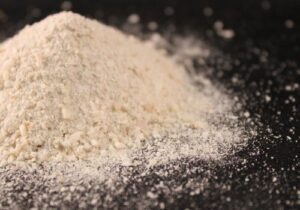
First and foremost, fertilizer manufacturing relies heavily on controlled thermal processing to establish exact granule hardness, prevent caking, and achieve uniform moisture levels ($< 1.0\% \text{ w/w}$). Consequently, improper drying causes severe product degradation, dust generation, and storage instability.
A. Rotary Drum Dryers for NPK & Organo-Mineral Fertilizers (PROM / LFOM)
Normally, heavy-duty Rotary Drum Dryers serve as the benchmark for large-scale compound fertilizer production. Because fertilizer granules exhibit varied density and thermal sensitivity, process engineers strategically design lifter flights inside the rotating drum to create a uniform falling curtain of material.
Technical Mechanism: Co-Current vs. Counter-Current Flow
In co-current rotary drying, hot combustion gas enters alongside wet fertilizer feed. Therefore, high initial thermal driving forces rapidly evaporate surface moisture without thermally degrading heat-sensitive nitrogen compounds. Conversely, plant operators prefer counter-current flow for low-moisture inorganic salts to achieve maximum energy efficiency.
Furthermore, in Liquid/Solid Fermented Organic Manure (LFOM) and Phosphate Rich Organic Manure (PROM) processing, input feeds contain high initial moisture levels ($45\text{–}65\%$). Consequently, Genex equips rotary dryers with internal chains and lifters to prevent agglomeration and ensure continuous, non-clogging operation.
B. Vibratory Fluidised Bed Dryers (VFBD) for Crystalline Fertilizers
Alternatively, for delicate crystalline fertilizers such as Ammonium Sulfate, Potassium Chloride, and specialized bio-fertilizers, Vibratory Fluidised Bed Dryers (VFBD) provide gentle, uniform heat transfer. Because mechanical vibration assists gas fluidization, operators experience significantly reduced pressure drops across the bed. As a result, attrition rates drop dramatically while moisture removal remains highly uniform.
3. Chemical Process Dryers: High-Purity & Hazardous Processing
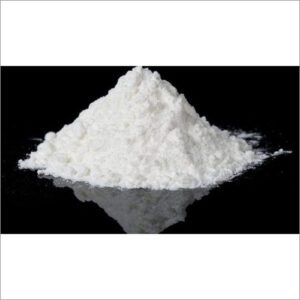
Unlike bulk agricultural fertilizers, chemical process drying often involves toxic solvents, highly reactive compounds, fine powders, and strict explosive safety margins. Consequently, proper equipment selection requires closed-loop inert gas systems, exact thermal profiles, and specialized metallurgy.
| Dryer Technology | Heat Transfer Mode | Primary Chemical Applications | Key Operational Advantage |
| Paddle Dryer | Indirect Conduction | Chemical Sludges, Pigments, Solvents | Zero gas contamination; solvent recovery via vacuum |
| Flash Dryer | Direct Convective | Filter Cakes, Polymers, Starch | Ultra-fast residence time (seconds); continuous flow |
| Spray Dryer | Direct Atomization | APIs, Fine Chemicals, Catalyst Support | Spherical powder control; rapid thermal drying |
| Refractance Window (RWD) | Radiative / Conductive | Heat-Sensitive Fine Chemicals & Extracts | Low temperature ($<70^\circ\text{C}$); preserves active properties |
In fine chemical manufacturing, Indirect Paddle Dryers utilize dual counter-rotating shafts with intermeshing wedge-shaped paddles. Because steam or thermal fluid within the hollow paddles transfers thermal energy indirectly, the system minimizes carrier gas volumes. Consequently, chemical plants can condense and recover volatile organic compounds (VOCs) and valuable solvents efficiently without atmospheric emissions.
4. Oil & Gas Dehydration Systems: Hydrocarbon & Petrochemical Drying
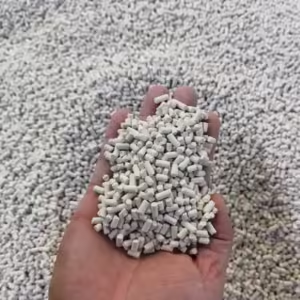
Moving toward energy sector operations, moisture management in the Oil & Gas sector focuses on natural gas, liquid hydrocarbons, and refining streams. Because water in gas pipelines forms solid methane hydrates at elevated pressures and accelerates equipment corrosion, dehydration remains non-negotiable.
A. Absorption Dehydration (Triethylene Glycol – TEG Units)
In natural gas processing, gas plants widely utilize continuous liquid absorption with Triethylene Glycol (TEG). Specifically, wet natural gas flows upward through a contactor tower while lean (concentrated) TEG flows downward. Because TEG exhibits high hygroscopic affinity, the chemical solution absorbs moisture continuously. Subsequently, operators route rich TEG to a reboiler where heating boils off water at elevated temperatures, regenerating lean glycol for continuous recirculation.
B. Solid Bed Adsorption (Molecular Sieve Dryers)
However, when cryogenic gas processing (e.g., LNG production) demands ultra-low dew points below $-100^\circ\text{C}$, liquid absorption cannot meet specifications. Therefore, gas processing facilities deploy synthetic zeolites (molecular sieves) in multi-bed configurations. As wet gas passes through the adsorption bed, microporous crystalline structures trap water molecules. Meanwhile, parallel beds undergo thermal regeneration using heated dry gas.
C. Petrochemical & Downstream By-Product Drying
Additionally, downstream petrochemical plants, including Palm Oil and Oleochemical processing units, utilize heavy-duty Continuous Thin Film Dryers and Rotary Dehydrators to dry spent bleaching earth, catalyst residues, and industrial sludge, thus closing the loop on circular waste-to-value pathways.
5. Sector-By-Sector Comparative Summary
| Sector Application | Dominant Moisture Type | Typical Moisture Removal Range | Primary Engineering Challenge |
| Fertilizer Processing | Surface & Interstitial Water | $15\% \rightarrow <0.8\%$ | Granule attrition & high-volume dust handling |
| Chemical Processing | Bound Solvents & Hydrates | $50\% \rightarrow <0.1\%$ | Thermal degradation, toxicity & explosive hazards |
| Oil & Gas Dehydration | Vapor-Phase Water in Gas | Saturation $\rightarrow <0.1\text{ ppm}$ | High system pressure, hydrate formation & corrosion |
Conclusion & Next Steps
In summary, achieving optimum performance in industrial drying requires precise matching between material characteristics, heat transfer modes, and operational safety constraints. Whether handling heavy bulk fertilizers, delicate fine chemicals, or high-pressure hydrocarbon streams, engineered dehydration solutions drive process efficiency and long-term operating profitability.
At Genex Tech Industries LLP, our 40+ years of global manufacturing and process design expertise enable us to deliver fully customized, ISO 9001:2015 and CE-certified industrial drying systems tailored to your exact plant requirements.
Contact & Engineering Support
-
📧 Technical Inquiries: mktg@foodtechprojects.com
-
📞 Phone / WhatsApp Support: +91 93300 77417
-
🌐 Engineering Portals: Food Tech Projects | GTI Dryer