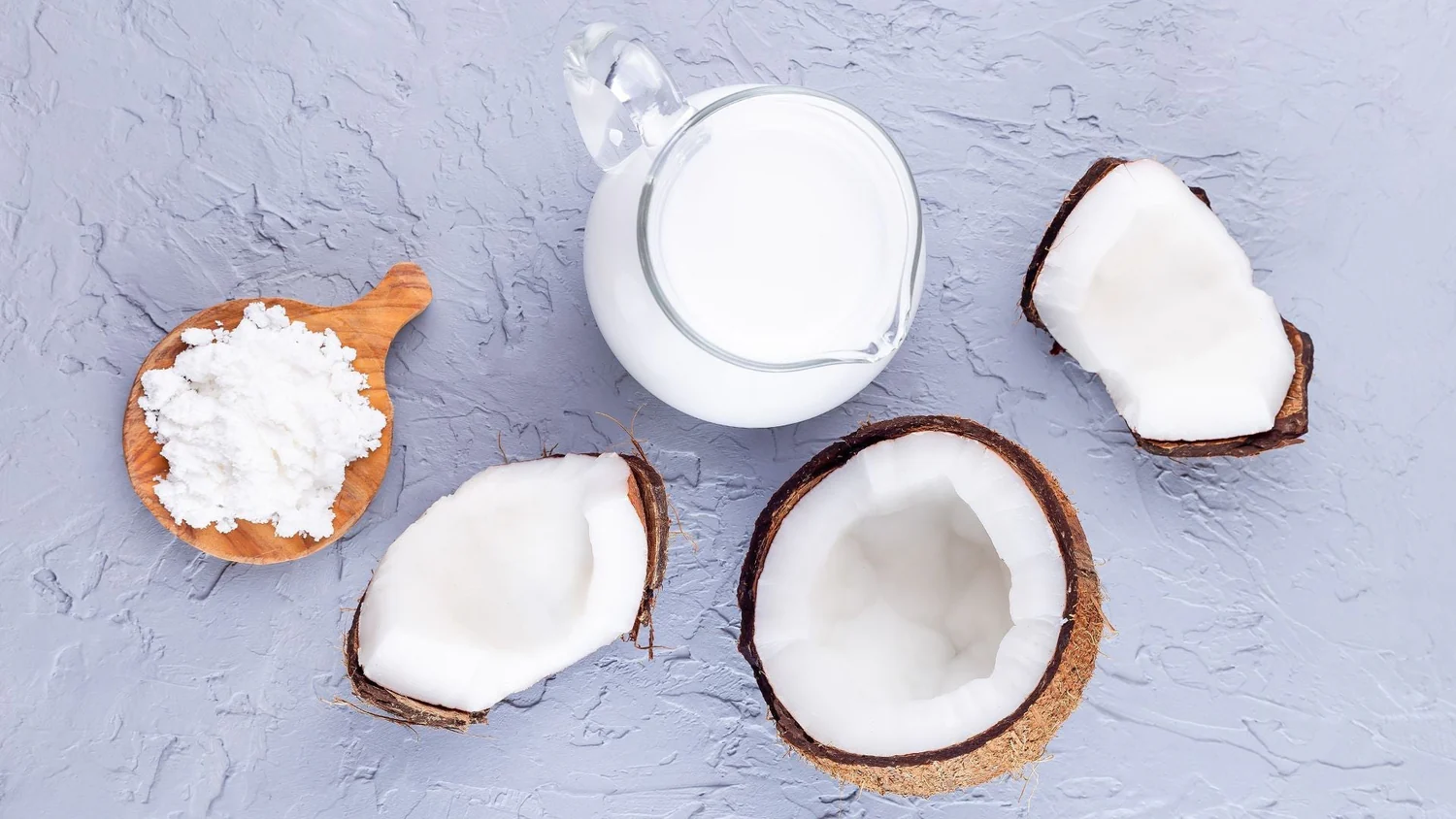
The industrial processing of coconut milk—from fresh kernel extraction to spray-dried powder conversion—presents unique thermodynamic, fluid dynamic, and microbiological challenges. Fresh coconut endosperm typically contains 50% water, 35% oil, 10% carbohydrates, and 3% protein. Preserving this delicate fat-in-water emulsion while simultaneously achieving high operational yield and extended shelf life requires precise mechanical separation and strict thermal control.
Consequently, as a certified equipment manufacturer recognized by the Coconut Development Board (Ministry of Agriculture, Government of India), GTI (Genex Tech Industries LLP) engineers industrial-scale coconut milk processing machinery and spray drying systems engineered specifically to meet international US FDA and CE standards.
1. Dehusking, Paring, and Kernel Preparation
Processing begins immediately with raw mature coconut preparation. First and foremost, the outer brown testa (skin) contains high levels of tannins, which can cause unwanted enzymatic browning and off-flavors if extracted alongside the white meat.
-
Automated Paring Systems: Specifically, automated paring machines systematically shave off the brown testa. As a result, processors yield clean, white kernel meat ready for extraction.
-
Washing & Sanitization: Subsequently, the kernels pass through multi-stage rotary washer drums using sanitized ozonated or chlorinated water streams. Ultimately, this step minimizes initial microbial loads prior to size reduction.
2. Mechanical Extraction & Yield Optimization
In order to maximize fat and total solids recovery, GTI integrates a continuous two-stage comminution and mechanical pressing line.
3. Emulsion Stabilization & Thermal Processing
Undoubtedly, coconut milk is an inherently unstable emulsion. Therefore, the fat globules (primarily medium-chain triglycerides such as lauric acid) naturally coalesce and undergo phase separation if they are not properly homogenized.
High-Pressure Homogenization
To solve this issue, filtered milk is directed immediately to a two-stage high-pressure homogenizer:
-
First Stage (150 to 200 bar): First, this stage shears large fat globules down to sub-micron sizes (less than 1 micron). Consequently, it significantly increases the total interfacial surface area.
-
Second Stage (30 to 50 bar): Subsequently, the second stage prevents globule re-agglomeration. As a result, the milk achieves a smooth, uniform texture and long-term shelf stability.
Continuous Pasteurization & Chilling
-
Plate / Tubular Heat Exchangers: Meanwhile, homogenized milk is rapidly heated to 85°C to 95°C for 15 to 30 seconds. In doing so, it deactivates native lipases and peroxidases while eliminating vegetative pathogens.
-
Rapid Chilling: Immediately thereafter, the processed milk is chilled via PHE units down to 4°C. Consequently, this halts thermal degradation and maintains chemical stability prior to packaging or spray drying.
4. Converting Liquid Milk to Instant Powder via Spray Drying
Furthermore, for export markets requiring low shipping mass and multi-year shelf stability, liquid coconut milk can be converted into free-flowing, instantly soluble coconut milk powder.
See the GTI Industrial Spray Dryer in Action
Watch our industrial spray drying technology processing fine coconut powders in real time:
Carrier Addition & Feed Preparation
However, directly spray drying raw coconut milk can cause chamber wall-sticking due to its low glass transition temperature ($T_g$) and high fat content. Therefore, GTI systems incorporate inline feed formulation tanks to blend food-grade carriers (such as maltodextrin or sodium caseinate) at controlled ratios. In effect, this raises the overall glass transition temperature and greatly improves powder flowability.
Spray Dryer System Architecture
-
Atomization System: To begin with, high-speed rotary atomizers (15,000 to 25,000 RPM) or high-pressure multi-fluid nozzles are used to generate uniform droplet distributions (30 to 80 microns).
-
Co-Current Drying Chamber: Next, hot air enters through a top-mounted air disperser in a co-current flow pattern. Because instantaneous moisture evaporation occurs at lower droplet temperatures, the heat-sensitive lipids and volatile aromatics remain fully protected.
-
Separation & Collection: Finally, high-efficiency cyclones coupled with secondary sanitary bag filters recover up to 99.5% of fine particulates. As a result, the line discharges powder at a low 2% to 4% final moisture content.
Technical Specifications: GTI Processing Systems
| Process Parameter | Liquid Milk Processing Line | Spray Drying Line |
| Processing Capacity | 500 to 10,000+ LPH | 100 to 2,000+ kg/hr (powder) |
| Material of Construction | Contact parts: SS304 / SS316 | Contact parts: SS316 (Mirror Polish Ra less than 0.4 microns) |
| Inlet Air Temp (Drying) | N/A | 160°C to 200°C (Adjustable) |
| Outlet Air Temp (Drying) | N/A | 75°C to 90°C (Controlled) |
| Automation Level | Semi-Auto / Full PLC-SCADA | Fully Automated PLC-SCADA with CIP |
| Compliance | US FDA, CE, ISO 9001:2015 | US FDA, CE, ISO 9001:2015 |
Conclusion
Ultimately, industrial coconut processing is an exacting balance of biochemical protection and mechanical precision. Successfully commercializing coconut milk, cream, and spray-dried powder demands processing equipment engineered specifically to mitigate fat separation, prevent browning, and withstand rigorous, continuous sanitation protocols.
By integrating high-efficiency twin-screw extraction, two-stage homogenization, and continuous spray drying technology, GTI (Genex Tech Industries LLP) delivers custom-engineered turnkey plants optimized for maximum yield, low energy consumption, and international compliance. Consequently, whether you are expanding an existing food manufacturing line or building a brand-new facility, GTI’s 40+ years of process engineering expertise ensures top tier quality from raw kernel to packaged powder.
Partner with GTI for Your Turnkey Coconut Processing Plant
Are you ready to design, scale, or optimize your coconut milk or powder production line? Contact our process engineering team today for custom plant layouts, capacity calculations, and competitive pricing.
-
Call Us: +91 93300 77417 / +91 87774 75596
-
Email: commercial@foodtechprojects.com / mktg@coconutprojects.com
-
Explore Our Web Portals: