In modern industrial processing, dehydration is far more than just a simple method to extend shelf life. Consequently, it has become a critical phase that directly dictates final product quality, operational costs, and overall plant throughput. When it comes to continuous, uniform, and gentle large-scale drying, Mesh Belt Dryers (also known as Conveyor Dryers or Industrial Band Dryers) have safely emerged as the gold standard across sectors like food processing, nutraceuticals, chemicals, pharmaceuticals, and biomass.
Presently, leading manufacturers like Genex Tech Industries LLP (GTI Dryers) and specialized consultants at Food Tech Projects are driving rapid innovation in this space. In particular, they are engineering custom-built, highly efficient thermal systems. Accordingly, this comprehensive guide breaks down the core mechanics, efficiency variables, and essential manufacturing criteria to look for when selecting an industrial mesh belt dryer.
1. What is a Mesh Belt Dryer?
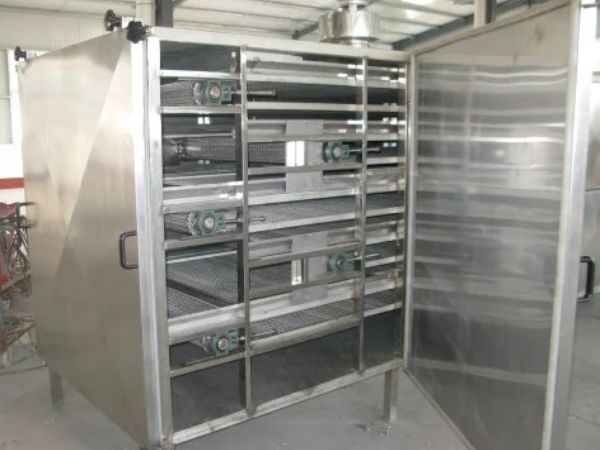
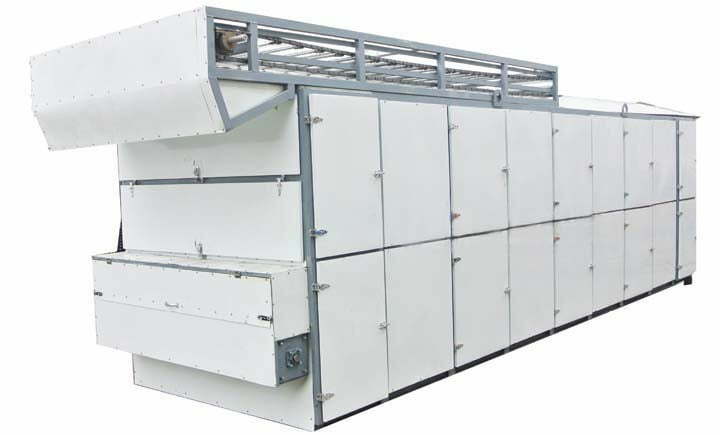
To begin with, a Mesh Belt Dryer is a highly efficient, continuous convective drying system. Unlike batch operations where products remain completely stagnant and processed in intervals, a mesh belt system systematically spreads the wet material evenly onto a porous, moving conveyor belt (typically constructed from high-grade stainless steel like SS304 or SS316).
As a result of this design, as the conveyor mechanically transports the material through a sealed, insulated drying tunnel, heated air is precisely circulated vertically—either upward or downward—directly through the product bed. Furthermore, this continuous interaction between the controlled air stream and the stationary material layer ensures gradual, uniform moisture evaporation without mechanical agitation. For deeper insight, learn more about custom configurations on the Food Tech Projects Mesh Belt Dryer page.
2. Core Working Principle & System Components
The entire process relies heavily on structured, multi-zone convective heat transfer. Hence, a high-performing system consists of several specialized components working in perfect sync:
-
Uniform Feeding System: Proper drying begins at the inlet. Specifically, oscillating spreaders or rotary feeders distribute the raw material uniformly across the entire width of the belt. Otherwise, an uneven product bed creates channels of least resistance for airflow, leading directly to inconsistent drying.
-
The Mesh Conveyor & Driving Mechanism: Driven by Variable Frequency Drives (VFDs), the belt speed is closely managed to regulate “residence time”—that is, the precise duration the product spends inside the drying chambers. In addition, you can discover engineered industrial conveyor setups directly at the GTI Dryers Mesh Belt Dryer page.
-
Multi-Zone Chambers: Subsequently, the long drying tunnel is partitioned into independent thermal zones. For instance, the initial zone usually applies higher temperatures to quickly flash off surface moisture, while subsequent zones lower the heat to gently extract deep-core moisture without scorching or degrading the material.
-
Air Circulation & Exhaust System: Simultaneously, high-efficiency fans force hot air uniformly through the perforated belt and product bed. At the same time, an exhaust system continuously releases moisture-laden, humid air while maintaining a strict internal air-pressure balance.
-
Advanced Control Automation: Ultimately, modern units are outfitted with PLC and SCADA control panels, enabling operators to monitor and adjust temperatures, airflow distribution, and belt speed in real time.
3. Industrial Applications: Versatility Across Sectors
Because products remain stationary relative to the conveyor belt, mesh belt dryers are ideal for fragile, heat-sensitive, or granular materials. For example, key industries include:
-
Food Processing & Agro: Fruit and vegetable pieces (slices, dices, or shreds like onions, garlic, ginger, and mangoes), snack foods, nuts, and specialized ingredients like desiccated coconut.
-
Herbs, Spices & Nutraceuticals: Delicate botanicals, moringa leaves, herbal extracts, and protein powders where maintaining color retention, aroma, and active nutritional profiles is vital.
-
Black Soldier Fly Larvae (BSFL): Moreover, the emerging insect protein market heavily relies on industrial band dryers to process massive, uninterrupted volumes of larvae while safeguarding delicate natural lipids and proteins.
-
Chemical & Pharmaceutical: Similarly, specialty chemical granules, resins, salts, and pharma intermediates requiring strict, non-contaminating, and controlled drying environments use this setup.
-
Biomass & Bioenergy: In the same way, dehydrating wood chips, sawdust, agricultural residues, and biomass pellets down to optimal moisture thresholds (typically 8% to 15%) boosts calorific value before combustion.
4. Key Factors Governing Dryer Efficiency
Maximizing efficiency in a mesh belt dryer requires a careful balancing act of key physical and thermal variables. Therefore, when evaluating efficiency, manufacturers focus heavily on five primary pillars:
A. Airflow Distribution & Direction
The uniformity of the finished product depends entirely on how air interacts with the bed. To achieve this, advanced designs use a strategic mix of downdraft and updraft airflow patterns across different zones. Consequently, this alternating circulation prevents the top or bottom of the material layer from over-drying or forming a “crust” (case hardening).
B. Multi-Zone Temperature Management
On the other hand, energy efficiency drops drastically if a single high temperature is used throughout the entire tunnel. Instead, staged temperature control ensures that high heat energy is only injected when the product has high moisture content. Then, as the product dries and becomes more sensitive to thermal damage, the temperature is lowered, preserving product integrity and saving fuel.
C. Bed Depth Optimization
In addition to temperature, the thickness of the product layer on the belt dictates both throughput and drying speed. Clearly, if the bed is too thick, the air cannot penetrate efficiently, stalling the process and driving up energy costs. Conversely, if it is too thin, energy is wasted as heated air blows past without hitting enough surface area. Thus, custom-tailored feeding adjustments find the “sweet spot” for each specific material type.
D. Heat Recovery Mechanisms
Industrial drying is inherently energy-intensive. In order to combat this, top-tier manufacturers integrate heat recovery loops that capture thermal energy from the low-humidity exhaust stream and recycle it to preheat the incoming fresh air. As a result, this single modification can cut overall fuel consumption by up to 15–20%.
E. Chamber Insulation
Finally, to prevent thermal losses to the surrounding factory floor, drying chambers must feature heavy, high-density insulation. By doing so, fully insulated walls preserve consistent internal temperatures, easing the load on the heating medium (whether powered by steam, thermic fluids, gas, or electricity).
5. What to Look for in a Mesh Belt Dryer Manufacturer
Investing in an industrial drying system is a major, long-term capital commitment. As a consequence, choosing the right engineering partner is essential to ensure a reliable return on investment. Specifically, here are the core benchmarks to look for in a manufacturer:
-
Decades of Engineering Experience: Look for companies with deep expertise in thermal dynamics. For example, Genex Tech Industries LLP (GTI Dryers) brings over 40 years of manufacturing experience to the table, ensuring robust structural designs and reliable long-term service life.
-
Customization and Pilot Testing Capabilities: Notably, no two products dry exactly the same way. Therefore, a reliable manufacturer does not sell “one-size-fits-all” machinery; instead, they design systems around your product’s initial moisture, target final moisture, and specific heat sensitivity.
-
International Standards & Hygienic Certifications: For food, nutraceutical, and pharmaceutical operations, the machinery must comply with strict sanitary standards. Accordingly, ensure the manufacturer holds credentials such as ISO 9001:2015 accreditation, CE certifications, and US FDA compliance for food-grade contact surfaces.
-
Turnkey Engineering and Support: In conclusion, a complete setup involves upstream feeding systems, integrated cooling conveyors at the exit, and downstream packaging linkages. Hence, partner with a manufacturer capable of delivering full turnkey plant integration alongside a steady supply of spare parts and dependable after-sales technical support.
Ready to Optimize Your Dehydration Setup? Contact Us
Whether you are designing a brand-new processing line or upgrading your existing machinery for better energy efficiency, our engineering and consulting teams are here to help. Please reach out directly to discuss your project requirements, request a quote, or schedule a technical consultation.
-
📧 Email: mktg@foodtechprojects.com
-
📞 Call/WhatsApp: +91 93300 77417
-
🌐 Web Consulting: www.foodtechprojects.com
-
🌐 Manufacturing Plant & Machinery: www.gtidryers.com