
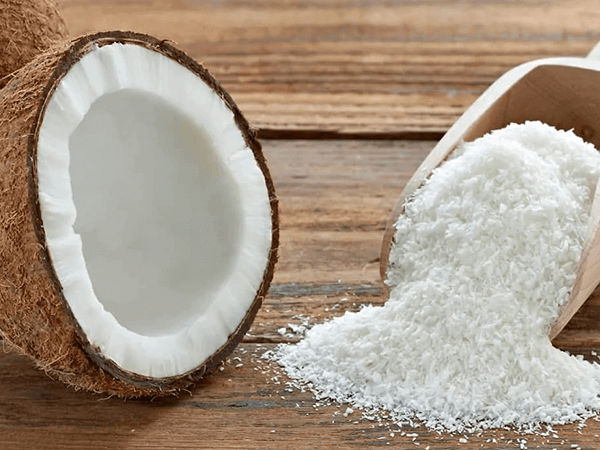
The global food, candy, bakery, and dairy fields demand premium, free-flowing, and clean desiccated coconut powder. However, fulfilling this high commercial standard requires more than basic tools. It demands precision automation, strict clean handling, and advanced heat engineering. Genex Tech Industries (GTI Dryers) leads the global market in designing, making, and installing complete, end-to-end Desiccated Coconut Processing Machine configurations. In addition, we build high-efficiency industrial dryer units.
Whether you run a small line at 100 kg/hr or a massive export plant reaching 2500 kg/hr output, an automated Desiccated Coconut Processing Machine ensures you maintain strict control over volatile moisture metrics. Furthermore, preserving natural oil profiles is exactly what separates premium sellable products from bad yields.
▶ Plant Overview Video: Watch our complete processing line in action here: Desiccated Coconut Powder Processing Machine Video
What is Desiccated Coconut Powder?
Desiccated coconut powder is the dry, shredded, and unsweetened meat from fresh, ripe coconut kernels (Cocos nucifera). In contrast to copra plants that mill oil for industrial use, a modern food-grade Desiccated Coconut Processing Machine creates a direct food ingredient. Consequently, the final premium product offers great features:
-
Ultra-Low Moisture Content: Advanced tools keep moisture strictly between 2% to 3%. As a result, this low level completely stops germ growth and mold.
-
Flexible Gradation: Plant operators can easily slice output into fine-grain powder, medium granules, coarse shreds, fancy threads, or big chips.
-
High Chemical Stability: Our process protects the final oil-rich product against going rancid. Therefore, it preserves its natural fat mix, pure white color, and standard sweet smell.
Step-by-Step Desiccated Coconut Processing Machine Flow
A professional food plant relies on a clean, highly systematic sequence to turn fresh raw nuts into safely packed, market-ready, bulk powder bags:
1. Raw Intake & Sizing Optimization
First, automated counters and tough conveyors sort the raw ripe nuts. This step helps to keep factory volumes steady.
-
Nut Counter: This unit handles up to 300 nuts per machine. Additionally, it features integrated holding buckets, strong lifting conveyors, damage check zones, and under-belt fiber trays.
-
Deshelling Machine: Operators mechanically strip the hard outer wood shell at a speed of 350 to 425 nuts/hr (6–7 nuts/min). Furthermore, the build includes highly rigid cutting tool bits, easy drive parts, and full safety shields.
-
Paring & Washing: Next, workers carefully shave away the thin, outer brown skin (testa). This step ensures that only the pure white inner meat moves forward. Subsequently, bubble washers and stainless steel washing lines instantly clean the white meat to remove organic waste.
-
Pre-Cutter / Decapping Machine: Heavy-duty stainless steel knives quickly chop whole meats into two identical halves. For convenience, this system includes big input and output collection hoppers.
2. Grinding, Microbial Sanitization & Thermal Conditioning
Next, the clean white pieces must undergo fast size reduction and heat treatment inside the Desiccated Coconut Processing Machine line. This stops bugs or browning before it can ruin a batch.
-
Desiccated Coconut Cutter / Grinder: This system processes up to 1000 kg/hr of wet coconut meat. Specifically, it utilizes a strong auto-feed screw press to crush, mill, and grind raw meat into tight particle sizes.
-
Steam Blancher: This unit applies direct steam to the wet milled meat. It features tight feed and discharge rotary steam locks to kill any bad germ growth. Meanwhile, operators can safely change run times using a smooth VFD drive.
▶ Blanching Demonstration: Review our advanced thermal sterilization technology: Steam Blancher Unit Video
Advanced Desiccated Coconut Dryer Technologies
The core of product quality rests inside the heavy-duty Desiccated Coconut Processing Machine drying section. GTI designs custom setups optimized to address the distinct heat traits of both High-Fat (traditional full-cream meat preserving >60% natural oils) and Low-Fat (partially defatted cake residue) products.
1. Vibratory Fluid Bed Dryer (VFBD)
This machine is ideal for granular powder production. The system blows hot, clean air upward through a fine perforated plate while fast vibration moves the coconut forward. Therefore, this action forces every single particle to float within a uniform hot air bed. Because of this structural setup, the system maximizes heat exchange rates and stops local burning. Consequently, it guarantees a matchless, even white color across the whole batch.
▶ Fluid Bed Fluidization: Watch our continuous vibratory system operate: Vibratory Fluid Bed Dryer Video
2. Combination Fluid Bed Dryer
This setup incorporates custom tray-based fluid structures engineered for plants managing many distinct product types. For instance, it can process up to 1000 kg/hr seamlessly. In addition, this system incorporates highly sophisticated duplex cyclone collectors for total fine dust capture. Because of this smart design, it significantly minimizes overall power use. Thus, for detailed structural specifications on this model, read our full guide on the Combination Fluid Bed Dryer Setup.
▶ Tray Fluidization System: Observe multi-product processing capabilities: Combination Fluid Bed Dryer Video
3. Multi-Stage Apron Band Dryer
This design is the definitive answer for big industrial jobs reaching capacities of 1500 to 1600 kg/hr. For example, the feed system spreads wet coconut meat over a long, moving perforated belt. This belt travels through separate heating zones where big fans blow hot air through the product layer. Because this gentle transport avoids friction and breaking, it perfectly protects the shape of fragile coconut flakes, long threads, and chips. In addition, for deeper insight into continuous belt sizing layouts, explore our Industrial Band Dryer Framework.
▶ Continuous Band Drying: Watch large-scale continuous dehydration: Apron Band Dryer Video
Dryer Scaling & Technical Parameters
To ensure proper integration with your primary utility infrastructure, examine our standard factory configurations below:
| Dryer Model / Technology | Output Throughput Capacity | Primary Material Profile | Key Technical Advantage |
| Junior VFBD 250 | 250 – 300 kgs / hour | Fine / Medium Granular Powder | Compact layout, fast product changeover |
| Standard VFBD 500 | 500 – 550 kgs / hour | Fine / Medium Export Grades | Balanced thermodynamic efficiency |
| Jumbo VFBD 700 | 700 – 800 kgs / hour | High-Volume Industrial Powder | Continuous heavy-duty process cycling |
| Super Jumbo VFBD 850 | 850 – 1000 kgs / hour | Large Industrial Operations | Maximised internal fluidisation bed area |
| Combination Fluid Bed | Up to 1000 kgs / hour | Powder, Chips, Threads, Copra | Duplex cyclones, ultra-low power consumption |
| Apron Band Dryer | 1500 – 1600 kgs / hour | Massive Scale Chips / Flakes / Powder | Multi-zone airflow, zero product friction |
⚠ Important Case-Hardening Prevention: Because coconut features a high concentration of sensitive natural fats, drying must follow structured temperature staging. Exposing wet high-fat meat to excessive temperatures early in the process causes “case-hardening”. This is a condition where the outer shell seals up, trapping moisture inside the core. Consequently, this leads to rapid rancidity, structural yellowing, and failed export compliance checks. GTI dryers avoid this issue entirely because they utilize multi-zone temperature steps.
Post-Drying Stabilization, Classification & Safety
After exiting the hot drying zones at a safe 2% to 3% moisture level, the hot product requires immediate work to prepare it for final packaging:
-
Vibratory Cooling Table / Perforated Mesh Conveyor: This tool rapidly brings product heat down to room levels. Therefore, it stops internal sweating inside bulk bags, which would otherwise lead to moisture reabsorption and mold.
-
Grading & Classification Machinery: High-capacity 5-layer screen meshes sort the dry output into 6 distinct exit streams. As a result, this process accurately separates fine powder from medium grains and large flakes.
-
Safety Integration: Finally, the product passes through high-sensitivity inline metal detectors and auto bag-flattening tools to create perfect, export-ready shipments.
Why B2B Global Processors Choose Our Desiccated Coconut Processing Machine Lines
With more than 40 years of solid engineering experience and over 100 big installations worldwide, GTI delivers total end-to-end support for your food plant:
-
Hygienic Material Execution: Full food-grade Stainless Steel 304 (SS304) builds ensure simple, quick washdowns. Furthermore, it guarantees total compliance with FSSAI, HACCP, and strict EU/US export laws.
-
Advanced PLC Automation: Centralized touchscreen panels control key processing metrics, including multi-zone heat steps, belt speeds, and internal air velocities.
-
True Turnkey Execution: Our team provides full layout work across all stages. This includes initial blueprint designs, factory building, plant setup, on-site runs, and total technical training for your crew.
Request Technical Consultation & Factory Pricing
Partner with GTI engineers to design a high-efficiency processing line tailored to your specific plant footprint, capacity requirements, and target budget parameters.
-
Genex Tech Industries LLP
-
Technical Infrastructure & Dryer Manufacturing Division
-
Direct WhatsApp/Mobile: +91 – 87 77 47 55 96
-
Engineering Queries: mktg@gtidryers.com
-
Marketing Desk: mktg@coconutprojects.com
-