
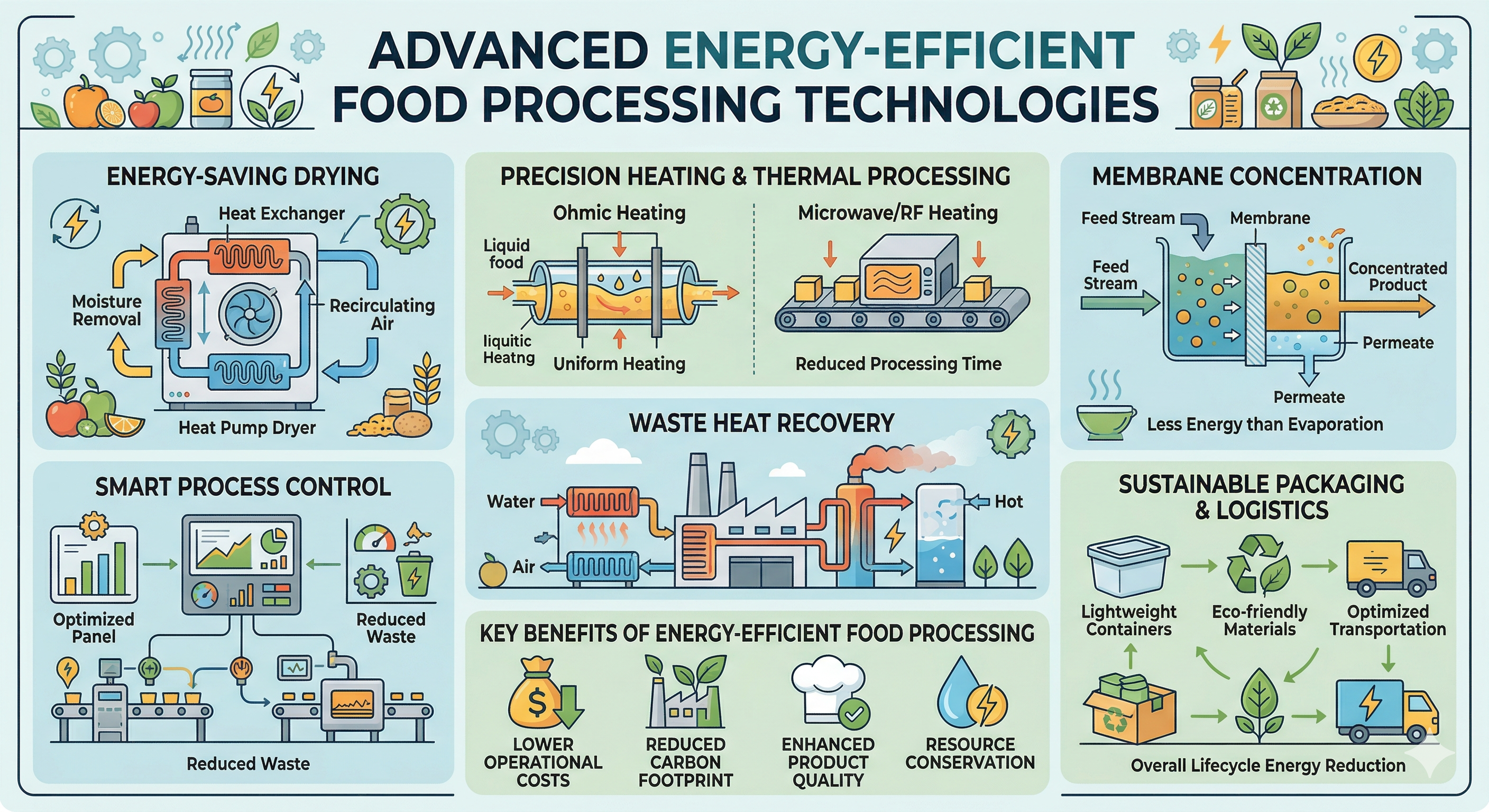
The food processing industry is at a turning point. With rising energy costs and increasing environmental regulations, manufacturers must adopt smarter, more efficient systems to stay competitive.
Energy-efficient food processing is no longer just an option—it is a necessity. Facilities that embrace energy optimization not only reduce operational costs but also improve sustainability, comply with global standards, and enhance overall productivity.
This guide explores how you can transform your plant into a cost-efficient, sustainable, and high-performance operation.
Why Energy Efficiency Matters in Food Processing
The food processing industry consumes nearly 30% of total manufacturing energy worldwide, making it one of the most energy-intensive sectors. On average, 10–15% of production costs are directly linked to energy usage.
At the same time, regulatory bodies across North America, Europe, and Asia are tightening emissions norms, pushing industries toward sustainable operations.
Adopting energy-efficient practices helps businesses:
- Reduce operational costs
- Improve process efficiency
- Ensure regulatory compliance
- Strengthen brand reputation
Ignoring energy efficiency, on the other hand, can result in rising costs and reduced competitiveness.
Key Areas of Energy Consumption in Food Processing
Understanding where energy is used is the first step toward optimization.
🔥 Heating and Thermal Processing
❄️ Refrigeration and Cooling
🌬️ Drying and Dehydration
⚙️ Machinery and Equipment Operation
For complete food processing machinery and turnkey plant solutions, you can explore foodtechprojects at https://foodtechprojects.com/.
Actionable Strategies to Improve Energy Efficiency
1. Upgrade to High-Efficiency Equipment
Modern machinery can reduce energy consumption by 20–40% through better design, insulation, and automation.
2. Implement Heat Recovery Systems
Recover waste heat from dryers, boilers, and exhaust systems to reuse in other processes, improving overall efficiency.
3. Optimize Production Scheduling
Smart scheduling ensures machines run efficiently with minimal idle time, reducing unnecessary energy consumption.
4. Adopt Renewable Energy Sources
Solar, biomass, and other renewable systems can reduce dependency on conventional energy sources.
5. Use Smart Monitoring Systems
AI-based monitoring systems help detect inefficiencies and optimize operations in real time.
For specialized applications like coconut processing, you can explore energy-efficient turnkey solutions at Coconut Projects via https://coconutprojects.com/, which offers optimized systems for high-efficiency production.
Global Standards and Best Practices
To align with global energy efficiency benchmarks, manufacturers can refer to organizations such as the International Energy Agency (https://www.iea.org/) and the United Nations Industrial Development Organization (https://www.unido.org/).
These organizations provide valuable insights into:
- Industrial energy benchmarks
- Sustainability frameworks
- Best practices for energy management
Conclusion: The Future of Food Processing is Energy Efficient
Energy-efficient food processing is not just about reducing electricity bills—it is about building a sustainable, competitive, and future-ready business.
By focusing on key energy-consuming areas such as heating, cooling, drying, and machinery, manufacturers can achieve significant cost savings while improving operational efficiency.
Investing in modern technologies, optimizing processes, and leveraging expert solutions from platforms like GTI Dryers, Coconut Projects, and FoodTech Projects can accelerate your transition toward a more efficient and sustainable operation.
The shift toward energy efficiency is no longer optional—it is a strategic move that defines industry leaders.
Start today with an energy audit, implement phased improvements, and position your business at the forefront of the modern food processing industry.