
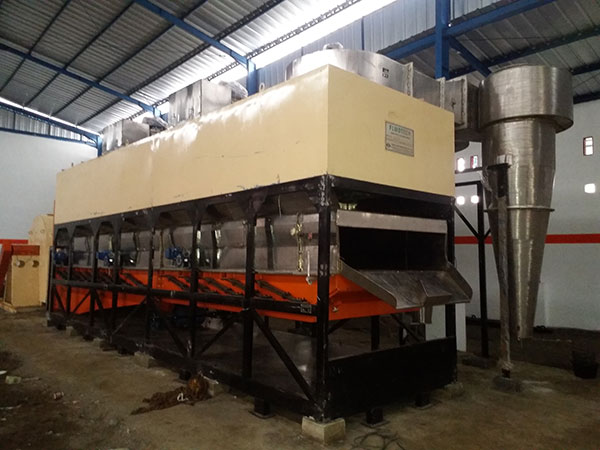
1. The Evolution of Drying Technology in Coconut Processing
Drying is fundamentally the single most critical unit operation in the production of high-grade coconut derivatives. Naturally, raw coconut meat, after workers extract, comminute, or blanch it, contains substantial surface and bound moisture. If processors perform moisture removal too slowly, microbial spoilage, enzymatic degradation, and rancidity will inevitably ruin the entire batch. Conversely, if operators set drying temperatures too high or if air distribution remains uneven, sensitive coconut oils overheat quickly. This overheat causes severe discoloration, scorching, or unwanted oil oozing that ruins the free-flowing texture of desiccated coconut.
Historically, coconut processors relied heavily on traditional tray dryers, rotary dryers, or static cabinet systems. While these older systems served early industrial applications adequately, processors suffered from significant operational bottlenecks:
-
First, uneven moisture distribution consistently occurred across product beds.
-
Second, high thermal energy consumption resulted in steep fuel bills.
-
Third, excessive mechanical handling inevitably caused particle breakage and fine dust generation.
-
Fourth, sticky high-fat contents continuously caused lump formation and product agglomeration.
To overcome these limitations permanently, Genex Tech Industries LLP engineered a specialized range of Vibratory Fluid Bed Dryers specifically optimized for the unique physical properties of coconut meat and powder. By harmonizing mechanical vibration with precisely controlled fluidization dynamics, these advanced systems deliver uniform heat transfer, gentle particle conveyance, and exceptional overall energy efficiency.
2. Fundamental Working Principle of the Vibratory Fluid Bed Dryer
Understanding exactly how a Vibratory Fluid Bed Dryer operates requires examining the precise synergy between fluid mechanics and mechanical engineering.
Fluidization Dynamics
At its core, a fluid bed dryer forces heated air upward through a perforated bed plate upon which the wet product rests. As the air velocity increases past the minimum fluidization point, the upward-flowing gas stream instantly suspends the solid particles. In this state, the bulk solid behaves remarkably like a boiling liquid. Consequently, the drying medium completely surrounds every individual particle, which ultimately yields instantaneous heat and mass transfer.
The Role of Controlled Mechanical Vibration
While standard fluid bed dryers rely entirely on high airflow to move products forward, sticky or high-fat materials—such as freshly shredded or powdered coconut—tend to channel, form dead zones, or clump together tightly.
The Genex Tech Industries Vibratory Fluid Bed Dryer solves this challenge completely because engineers mounted the entire drying deck on heavy-duty isolation springs driven by precision vibration motors. This mechanical oscillation continuously imparts a directional upward and forward throw to the coconut particles. As a result:
-
The machine smoothly lifts and propels particles forward without relying solely on high air velocities.
-
The system entirely prevents agglomeration and lump formation throughout the cycle.
-
Even damp, highly cohesive high-fat coconut particles maintain smooth, plug-flow conveyance from the inlet directly to the discharge port.
-
Operators tightly regulate residence times; therefore, every single particle achieves the exact target moisture content consistently.
3. Comprehensive Model Lineup and Technical Capacity Breakdown
Different coconut processing facilities have vastly different capacity requirements, ranging from medium-scale regional producers to massive, continuous 24/7 export-oriented turnkey plants. Therefore, Genex Tech Industries provides a robust, scalable lineup of VFBD models tailored to exact output targets.
GTI Junior VFBD
-
Processing Capacity: 250 to 300 kgs per hour.
-
Target Application: Ideal for medium-scale coconut processing lines, startup facilities, or specialized virgin coconut byproduct processing lines where plant managers require agile control over limited floor space and batch variability.
-
Operational Profile: Features a compact footprint, rapid startup and shutdown cycles, and low thermal consumption while maintaining rigorous food-grade sanitation standards throughout operation.
GTI Standard VFBD
-
Processing Capacity: 450 to 550 kgs per hour.
-
Target Application: Perfectly suited for established commercial coconut processing units producing medium-to-large daily quantities of desiccated coconut powder.
-
Operational Profile: Offers an optimal balance between capital expenditure and high-volume output. Additionally, it incorporates dual-zone temperature management for simultaneous drying and gentle cooling.
GTI Jumbo VFBD
-
Processing Capacity: 650 to 750 kgs per hour.
-
Target Application: Designed specifically for industrial-scale operations supplying wholesale bakeries, confectioneries, and international food ingredient distributors.
-
Operational Profile: Built for continuous, multi-shift operation. Furthermore, it features reinforced stainless-steel construction, advanced dust collection systems, and automated PLC monitoring to maintain flawless product consistency under heavy workloads.
GTI Super Jumbo VFBD
-
Processing Capacity: 850 to 1,000 kgs per hour.
-
Target Application: Engineered specifically for massive turnkey coconut complexes and high-capacity export manufacturing plants operating around the clock.
-
Operational Profile: Represents the ultimate pinnacle of industrial drying technology. It delivers massive thermal efficiency, integrated heat exchangers, zero fly-off emission control, and maximum long-term energy savings for large-scale industrial setups.
4. Matching the Right VFBD Model to Specific Coconut Products
Not all coconut products behave identically in a thermal environment. Because fat content, particle size, sugar composition, and moisture retention vary significantly across different processing streams, selecting the correct dryer model and operational parameters is essential for superior product quality.
High Fat Desiccated Coconut Powder (HFDC)
-
Product Characteristics: Contains approximately 60% to 68% natural coconut oil. High fat content makes the product extremely sensitive to heat; therefore, excessive temperatures can melt the fats, causing surface oil pooling, stickiness, and discoloration.
-
Best Dryer Match: GTI Standard VFBD or GTI Jumbo VFBD equipped with precise multi-stage temperature zoning.
-
Drying Strategy: Requires lower inlet air temperatures (typically maintained between 70°C and 90°C) combined with higher vibration amplitudes to ensure gentle tumbling without local overheating. Additionally, the integrated cooling zone plays a critical role to solidify internal fats before packaging, thereby preventing caking in storage.
Low Fat Desiccated Coconut Powder (LFDC)
-
Product Characteristics: Contains reduced fat (often below 45% or down to 10-15% depending on expeller extraction rates). Although it shows less sensitivity to fat melting, it requires rigorous moisture control to achieve a final target moisture level of under 2.5%.
-
Best Dryer Match: GTI Junior VFBD or GTI Super Jumbo VFBD depending on plant scale.
-
Drying Strategy: Handles slightly higher drying air temperatures due to lower fat sensitivity. Furthermore, the intense fluidization action ensures that fine, powdery particles do not agglomerate into hard pellets.
Coconut Flakes, Chips, and Shreds
-
Product Characteristics: Larger particle sizes and varied geometrical shapes. Uneven drying can leave the interior of thick flakes moist while overdrying the outer edges.
-
Best Dryer Match: GTI Jumbo VFBD or GTI Super Jumbo VFBD.
-
Drying Strategy: Requires adjustable bed depths and tuned vibration frequencies to allow larger flakes sufficient residence time to transfer heat evenly from core to surface without breaking delicate structural edges.
5. Salient Design Features and Engineering Advantages
The engineering philosophy behind Genex Tech Industries’ Vibratory Fluid Bed Dryers centers firmly on hygiene, durability, energy conservation, and operational reliability.
Perfect Fluidization and Zero Dead Zones
Laser-machined perforated bed plates feature specialized hole geometries that direct airflow precisely at an angle, thereby assisting forward particle motion while maintaining an even air cushion. Consequently, this design eliminates dead spots where product stagnation could cause scorching or microbial growth.
Robust Sanitary Construction
Because consumers globally use coconut products in sensitive food applications, manufacturers treat hygiene as non-negotiable. Craftsmen fabricate all contact parts—including the drying tray, housing, product ducts, cyclones, and discharge chutes—from premium-grade Stainless Steel (SS 304 or SS 316 upon request). Furthermore, technicians grind smooth and polish all interior welds meticulously to prevent product buildup or bacterial colonization.
High Thermal Efficiency and Fuel Savings
Conventional dryers vent massive amounts of hot air directly into the atmosphere, wasting valuable thermal energy. In contrast, the GTI VFBD incorporates advanced heat recovery principles, closed-loop air recirculation options, and high-efficiency heat exchangers. As a direct result, this system reduces overall fuel and electricity costs by up to 30% compared to traditional rotary or tray dryers.
Prevention of Oil Oozing and Preservation of Natural Aroma
By maintaining exact temperature control and avoiding harsh mechanical shearing, the VFBD preserves the delicate natural flavor compounds and pristine white color of fresh coconut meat. Similarly, the gentle vibration prevents cellular breakdown, thereby ensuring that natural coconut oils remain locked inside the cellular matrix rather than oozing onto the surface.
Environmentally Sustainable “No Fly-Off” Design
Fine coconut particles and dust present common operational challenges in drying plants. However, the VFBD system integrates high-efficiency cyclone separators and bag filter dust collection systems. Thus, this setup ensures zero product loss, clean working environments, and complete compliance with stringent environmental emission norms.
6. Detailed Analysis of Operational Workflows and Process Optimization
To maximize the efficiency of a Vibratory Fluid Bed Dryer within a commercial coconut plant, operators must systematically structure daily workflows. Because continuous processing relies on precise thermal equilibrium, technicians must execute every stage seamlessly from pre-heating to final discharge.
Step 1: Thermal Pre-Conditioning and System Calibration
Before workers introduce wet coconut material into the processing chamber, operators must first pre-heat the dryer system. The blowers circulate heated air continuously through the perforated bed plate until the interior chamber reaches a stable operating temperature. Meanwhile, sensors verify that airflow velocity and vibration parameters match exact calibration settings. Therefore, when wet product enters the tray, instant moisture flash-off occurs without cold-wall condensation.
Step 2: Controlled Material Infeed and Fluid Bed Distribution
Next, sanitary screw conveyors or rotary airlocks feed the comminuted or shredded coconut into the feed hopper. Because uneven feeding can disrupt fluidization dynamics, automated metering devices regulate the exact feed rate. As the material meets the upward-flowing air stream and mechanical vibration, it spreads instantly across the bed width. Consequently, the system completely prevents local accumulation and starts continuous fluidization immediately.
Step 3: Dual-Zone Moisture Evaporation and Temperature Management
During the primary drying phase, moisture evaporates rapidly from particle surfaces. As the coconut moves forward, it transitions into the secondary drying zone, where the process draws out internal bound moisture gently. Because automated feedback loops monitor inlet air temperatures, the control system dynamically adjusts thermal energy to match changing moisture loads. Thus, operators systematically avoid over-drying and thermal degradation.
Step 4: Rapid Cooling and Stabilization
Finally, before the dried coconut exits the system, it passes through an integrated cooling zone. Here, ambient or chilled dehumidified air passes through the fluid bed to reduce product temperature to safe packaging levels. Consequently, natural coconut fats solidify rapidly, preventing post-packaging moisture migration, clump formation, or rancidity during long-term storage.
7. Extended Maintenance, Hygiene, and Sanitation Guidelines
Maintaining food-grade standards remains essential for industrial coconut processors exporting to international markets. Therefore, implementing structured cleaning routines ensures long equipment lifespans and total hygiene compliance.
Routine Sanitation Protocols
Because high-fat coconut residue can accumulate in hidden crevices over time, operators must execute daily sanitation routines strictly:
-
First, operators must perform dry cleaning via pneumatic blow-down systems to clear fine dust from the bed plates.
-
Second, specialized inspection doors allow quick visual checks of interior surfaces without requiring extensive equipment disassembly.
-
Third, optional clean-in-place (CIP) spray nozzles flush internal chambers with approved food-grade cleaning solutions automatically.
Mechanical Maintenance and Inspection Schedules
Similarly, long-term operational stability relies on regular preventive maintenance:
-
Inspect drive springs and vibration motor mountings weekly to ensure structural alignment and prevent harmonic imbalance.
-
Check seals and flexible duct connections monthly to ensure zero air leakage or pressure loss across the system.
-
Monitor cyclone dust collectors periodically to clear accumulated fines, thereby maintaining peak airflow efficiency across the exhaust system.
8. Comparative Advantage: VFBD vs. Alternative Industrial Dryers
To understand why Vibratory Fluid Bed Dryers perform best for coconut processing, plant managers often compare them directly with alternative thermal systems in industrial plants.
VFBD vs. Rotary Drum Dryers
While rotary drum dryers handle bulk materials effectively, their tumbling action generates high mechanical friction. Consequently, delicate coconut shreds suffer severe breakage and dust generation. Furthermore, direct contact with hot drum walls frequently causes localized scorching and oil leaching. In contrast, the air cushion and gentle vibration of a VFBD protect particle integrity completely.
VFBD vs. Static Tray Dryers
Static tray dryers require manual loading, labor-intensive tray shifting, and long cycle times. Moreover, air distribution across stacked trays remains inherently uneven, leading to inconsistent moisture levels within the same batch. Conversely, the continuous flow of a VFBD eliminates manual labor, accelerates drying times, and guarantees identical moisture levels across every kilogram produced.
VFBD vs. Standard Non-Vibratory Fluid Bed Dryers
Standard fluid bed dryers rely entirely on high-velocity air to suspend materials. However, sticky high-fat coconut particles frequently form air channels or agglomerate into large clumps that sink to the bottom. By adding mechanical vibration, the VFBD breaks surface tension and moves heavy or damp particles effortlessly, regardless of fat content or moisture variations.
9. Critical Operational Parameters and Process Control
Operating a Vibratory Fluid Bed Dryer successfully requires careful monitoring and control of several interdependent variables:
-
Inlet and Outlet Air Temperatures: PID controllers connected to steam, thermal oil, or electric air heaters regulate temperatures automatically. The system modulates inlet temperatures based on product moisture feedback, while outlet temperatures confirm that evaporation proceeds efficiently.
-
Vibration Frequency and Amplitude: Inverter-driven heavy-duty eccentric motors control vibration parameters directly. Operators utilize higher amplitudes for high-fat sticky powders to maintain smooth conveyance, while they apply lower amplitudes for fragile coconut flakes.
-
Bed Depth and Residence Time: Adjustable weir gates at the discharge end regulate bed parameters efficiently. Maintaining a consistent bed depth ensures uniform heat exposure across every kilogram of product processed.
-
Airflow Velocity: Operators balance airflow precisely to ensure complete particle suspension without causing excessive pneumatic entrainment or dusting.
10. Visualizing the Technology in Action
To truly appreciate the smooth, continuous operation and robust build quality of these industrial drying systems, observing them in an active processing plant setting provides invaluable insight.
You can watch an in-depth operational overview and visual demonstration of these systems here: Watch the Vibratory Fluid Bed Dryer in Action.
This video highlights the seamless feeding mechanism, uniform bed fluidization, vibration dynamics, and clean discharge of finished coconut powder without dust emission or product degradation.
11. Conclusion
As the global market for coconut-derived food products continues to expand rapidly, manufacturers cannot afford the operational inefficiencies, high energy costs, and inconsistent product quality associated with outdated drying equipment. The Vibratory Fluid Bed Dryer (VFBD) by Genex Tech Industries represents a transformative investment for any serious coconut processing facility.
By combining mechanical vibration with advanced fluidization principles, these dryers deliver unmatched thermal efficiency, preserve natural product color and aroma, prevent oil oozing, and guarantee food-grade hygiene across all models—from the nimble GTI Junior (250-300 kgs/hr) to the powerhouse GTI Super Jumbo (850-1,000 kgs/hr). Ultimately, investing in a modern VFBD ensures long-term operational profitability, product superiority, and a decisive competitive edge in the global marketplace.
12. Contact and Corporate Information
For technical consultations, custom plant layouts, capacity planning, pricing inquiries, or turnkey project execution, reach out directly to our engineering experts using the official corporate channels below:
-
Head Office Address:
GENEX Tech Industries LLP
10C, Sir William Jones Sarani (Middleton Row), Park Street,
Kolkata – 700071, West Bengal, India
-
Direct Phone / WhatsApp Contact:
+91-97489 06968 | +91-93300 77417
-
Official Business Email:
mktg@foodtechprojects.com | sales@foodtechprojects.com
-
Official Company Websites: