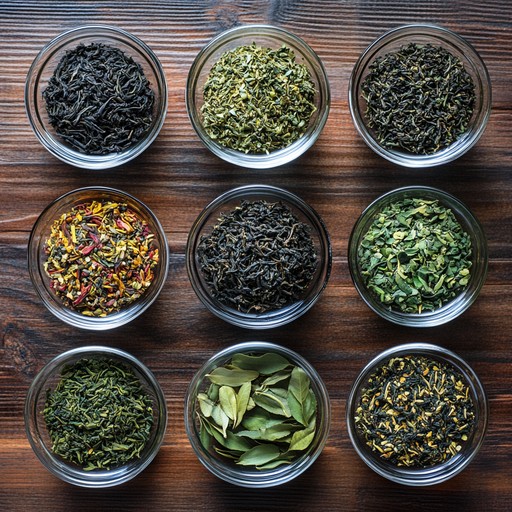
The modern tea industry has indeed evolved into a highly specialized sector where precise moisture removal directly dictates final product quality, shelf life, and overall market value. Furthermore, converting freshly harvested tea leaves or liquid extracts into premium commercial products naturally requires state-of-the-art thermal processing systems. Therefore, from traditional CTC and Orthodox black tea leaves to advanced instant iced tea powders and high-purity botanical extracts, selecting the optimal industrial dryer ultimately determines both operational efficiency and final product characteristics.
In fact, industrial drying for tea processing fundamentally serves two primary functions: first, preserving critical sensory attributes—such as color, aroma, and flavor—and second, stabilizing key bioactive compounds like polyphenols, catechins, and antioxidants. Because different tea inputs vary significantly in moisture content, physical structure, and thermal sensitivity, a single drying method cannot possibly fulfill every processing requirement. Consequently, engineering precise drying systems requires carefully balancing airflow velocity, operating temperatures, exposure duration, and mechanical handling.

1. Overview of Industrial Tea Drying Technology
The primary objective during tea drying is systematically reducing internal and surface moisture from raw harvest levels down to safe commercial storage limits. As a result, freshly harvested tea leaves typically enter processing facilities with extremely high moisture levels, which are subsequently lowered during multi-stage processing. Similarly, liquid tea extracts produced during instant tea manufacturing start as high-moisture slurries before eventually being converted into free-flowing powders.
Furthermore, controlling moisture removal rates effectively prevents thermal damage, flavor degradation, and unwanted biochemical reactions. Meanwhile, modern thermal dryers generally employ convection, conduction, radiation, or atomization techniques to match specific raw material profiles. Additionally, integrating smart control systems ensures consistent output quality across variable batch inputs. Hence, process optimization becomes straightforward for industrial operations.
2. Comprehensive Breakdown of Tea Processing Dryers
Spray Dryer
-
Primary Applications: Instant tea powder, instant iced tea powder, green tea extract powder, tea polyphenol powder, soluble tea concentrate.
-
Operating Principle: First, it atomizes liquid tea concentrate into micro-droplets inside a heated chamber. Meanwhile, rapid moisture evaporation creates dry, spherical powder particles almost instantly.
-
Key Features & Data:
-
Inflow liquid solids concentration: 25% to 45%.
-
Chamber air inlet temperature: 160°C to 220°C.
-
Exhaust temperature: 80°C to 100°C.
-
Residence time: 5 to 30 seconds.
-
Final powder moisture content: 2.5% to 4%.
-
Energy consumption reduction: Up to 30% to 50% with thermal heat recovery units integrated into exhaust streams.
-
-
Best Suitable Product: Instant Iced Tea Powders & Soluble Extract Powders. As a result, spray drying ensures rapid cold-water solubility, uniform particle size distribution, and high retention of natural volatile aromas. Furthermore, this advanced method prevents agglomeration during large-scale packaging. Therefore, beverage manufacturers favor this equipment worldwide.
Vibratory Fluidised Bed Dryer (VFBD)
-
Primary Applications: CTC black tea, Orthodox black tea, green tea leaves, oolong tea primary processing.
-
Operating Principle: In order to achieve even drying, it combines mechanical vibration with upward hot airflow through a perforated bed. Thus, it keeps wet tea leaves suspended-fluidized to ensure uniform thermal transfer throughout the process.
-
Key Features & Data:
-
Thermal efficiency improvement: 20% to 35% compared to static bed dryers.
-
Inlet air temperature: 95°C to 135°C.
-
Drying duration: 15 to 25 minutes.
-
Moisture reduction performance: From 50%–60% wet basis down to 3%–4% final moisture.
-
Leaf breakage rate: Under 1.5% due to gentle vibratory transportation.
-
-
Best Suitable Product: CTC & Orthodox Black Tea Leaves. Consequently, it preserves leaf structure while ensuring homogenous moisture removal without scorching. Additionally, fluidization prevents localized thermal hotspots. As a consequence, tea grade consistency improves significantly.
Mesh Belt Dryer / Multi-Tier Band Dryer
-
Primary Applications: Primary green tea leaf drying, herbal tea leaves, flower-based teas, industrial tea biomass.
-
Operating Principle: First, it conveys wet material along multiple stacked stainless steel mesh belts. Simultaneously, conditioned hot air passes vertically through the moving bed.
-
Key Features & Data:
-
Operating bed thickness: 50 mm to 150 mm.
-
Temperature range across zones: 60°C to 120°C.
-
Processing footprint efficiency: Saves up to 40% floor space using vertical multi-tier arrangements.
-
Moisture reduction: From 70% initial content to under 5% final moisture.
-
-
Best Suitable Product: Herbal Tea Leaves & Whole-Leaf Botanicals. Therefore, gentle mechanical handling avoids friction damage to delicate floral and leaf structures. Moreover, multi-stage temperature zoning protects delicate essential oils. In addition, operators can adjust speed settings effortlessly.
Continuous Thin Film Dryer
-
Primary Applications: Viscous tea extracts, high-brix liquid concentrates, tea sludge, waste-to-value by-products.
-
Operating Principle: Specifically, it mechanically spreads high-viscosity liquid or concentrate into a thin film against an internally heated cylindrical wall using rotating wiper blades.
-
Key Features & Data:
-
Film thickness: 0.5 mm to 2.0 mm.
-
Thermal contact efficiency: Over 85% heat transfer rate.
-
Residence time: 10 to 60 seconds.
-
Evaporation capacity: High water evaporation rate per square meter of heating surface.
-
-
Best Suitable Product: High-Brix Viscous Tea Extracts & Concentrates. For this reason, it is ideal for processing heat-sensitive, sticky feeds that tend to foul conventional surfaces. Besides, continuous scraping maintains high heat flux without surface burning. Thus, cleaning downtime is drastically reduced.
Refractance Window Dryer
-
Primary Applications: Premium nutraceutical tea extracts, functional green tea powders, high-purity polyphenol isolates.
-
Operating Principle: Essentially, it utilizes hot water circulating under a plastic conveyor belt to transfer thermal energy through conduction and infrared radiation directly into liquid tea films.
-
Key Features & Data:
-
Product operating temperature: Kept under 70°C to prevent thermal degradation.
-
Retention of heat-sensitive nutrients: Over 90% retention of active catechins and vitamins.
-
Energy efficiency: 50% to 70% thermal transfer efficiency.
-
Drying cycle: 3 to 10 minutes.
-
-
Best Suitable Product: Nutraceutical Tea Polyphenols & Heat-Sensitive Botanical Extracts. In effect, it preserves bioactivity without exposure to harsh temperatures. Consequently, final powder color and active antioxidant yields remain exceptionally high. Likewise, product quality stays uncompromised.
Heat Pump Dryer
-
Primary Applications: Specialty white teas, delicate herbal teas, high-end green teas, edible flower teas.
-
Operating Principle: Specifically, it operates a closed-loop refrigeration cycle to dehumidify air. Meanwhile, it utilizes heat recovery to dry sensitive botanical products at lower operating temperatures.
-
Key Features & Data:
-
Operating temperature range: 30°C to 60°C.
-
Energy savings: Reduces electricity consumption by 40% to 65% compared to electric direct heating systems.
-
Dehumidification efficiency: High moisture extraction rate per kilowatt-hour.
-
Product quality retention: 95% color and essential oil retention.
-
-
Best Suitable Product: Specialty White Teas & Delicate Floral Blends. As a result, low-temperature processing preserves natural pigmentation and aroma compounds. Thus, high-value specialty teas retain premium market value. On the whole, energy costs remain remarkably low.
Rotary Drum Dryer & Flash Dryer
-
Primary Applications: Industrial tea waste, tea dust, byproduct processing, biomass fuel conversion.
-
Operating Principle: In the first place, rotary drums tumble wet by-products inside a rotating shell. Alternatively, flash dryers pneumatically transport particles through hot ductwork for instantaneous surface moisture evaporation.
-
Key Features & Data:
-
High-capacity throughput: Up to 10 tons per hour.
-
Thermal efficiency: 60% to 75%.
-
Initial moisture processing: Handles waste with up to 80% moisture.
-
Final target moisture: 10% to 12% for pelletizing or fuel use.
-
-
Best Suitable Product: Industrial Tea Waste & Biomass By-products. Because of this, high-throughput capacity processes large volumes of low-value tea industry waste cost-effectively. Furthermore, converting tea sludge into fuel pellets creates sustainable revenue streams. Hence, waste management becomes highly profitable.
3. Comparative Matrix: Selecting the Right Industrial Tea Dryer
| Dryer Type | Best Suitable Product | Operating Temp. Range | Typical Moisture Input/Output | Primary Benefit |
| Spray Dryer | Instant Tea & Soluble Concentrates | 160°C – 220°C (Inlet) | 60%–75% liquid feed $\rightarrow$ 2.5%–4% powder | Instant solubility, uniform particle size |
| Vibratory Fluidised Bed Dryer | CTC & Orthodox Black Tea Leaves | 95°C – 135°C | 50%–60% wet leaf $\rightarrow$ 3%–4% final | Minimal leaf breakage, uniform drying |
| Mesh Belt / Band Dryer | Green Tea, Herbal & Whole Botanicals | 60°C – 120°C | 70% initial leaf $\rightarrow$ <5% dry leaf | High footprint efficiency, gentle handling |
| Continuous Thin Film Dryer | Viscous Concentrates & High-Brix Slurries | 100°C – 160°C | 50%–80% feed $\rightarrow$ Concentrated paste/powder | Handles sticky/viscous feeds efficiently |
| Refractance Window Dryer | Nutraceutical Polyphenols & Extracts | Product Temp <70°C | 70%–90% liquid extract $\rightarrow$ <4% powder | >90% bioactive nutrient preservation |
| Heat Pump Dryer | White Tea & Delicate Edible Flowers | 30°C – 60°C | 65%–75% fresh leaf $\rightarrow$ 4%–6% dry product | Exceptional color, aroma, & energy savings |
| Rotary Drum / Flash Dryer | Industrial Tea Waste & Biomass Fuel | 150°C – 300°C | Up to 80% wet waste $\rightarrow$ 10%–12% fuel/pellet | Massive volume handling capacity |
4. Operational & Energy Optimization Strategies
Maximizing thermal efficiency in industrial tea processing naturally minimizes operational expenses and carbon footprints. Specifically, incorporating heat recovery systems captures thermal energy from exhaust streams, reheating incoming ambient air and thereby reducing fuel consumption by up to 30% to 50%.
Additionally, automated PLC and SCADA integration provides continuous monitoring of humidity, inlet air temperatures, feed rates, and internal pressures. Consequently, precise control successfully prevents over-drying—which burns essential aromas—and under-drying, which exposes stored tea products to mold risk. Ultimately, selecting food-grade stainless steel construction (SS304/SS316) ensures global hygienic compliance while extending equipment lifespan. Thus, long-term ROI is maximized.
5. Summary & Conclusion
In summary, choosing the appropriate industrial drying technology directly impacts tea quality, process speed, and overall profitability. Whether processing CTC leaf teas, high-solubility instant iced tea powders, or high-purity bioactive extracts, tailoring thermal drying parameters ensures optimal sensory and structural results. Indeed, modern advancements in heat recovery, automated PLC controls, and specialized atomization have ultimately enabled processors to achieve high product consistency while lowering overall energy consumption. Therefore, upgrading processing infrastructure remains a critical strategic decision.
Technical Consultation & Contact Information
For technical guidance, system customization, or machinery inquiries regarding high-efficiency industrial tea dryers, contact Genex Tech Industries LLP (GTI Industrial Dryers):
-
Head Office Address:
GENEX Tech Industries LLP
10C, Sir William Jones Sarani (Middleton Row), Park Street,
Kolkata – 700071, West Bengal, India
-
Direct Phone / WhatsApp Contact:
+91-97489 06968 | +91-93300 77417
-
Official Business Email:
mktg@foodtechprojects.com | sales@foodtechprojects.com
-
Official Company Websites: