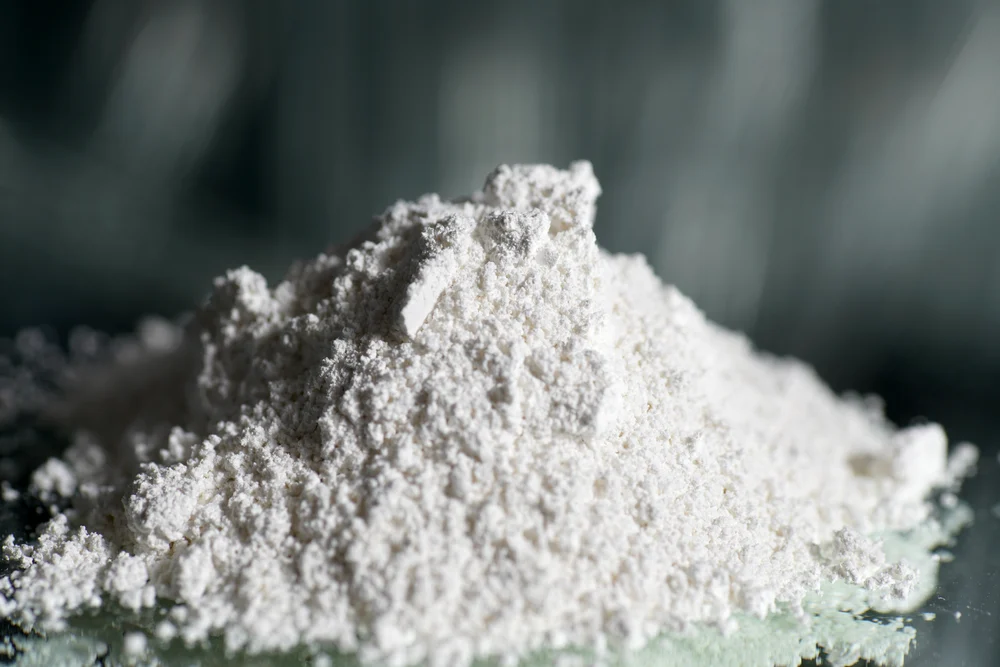
The global chemical and manufacturing landscape is undergoing a massive structural transformation. Consequently, high-volume commodity manufacturing is no longer the sole driver of long-term profitability. Instead, real market growth, high profit margins, and lasting operational stability reside in producing high-value specialty powders, functional additives, and fine chemicals.
Unlike basic bulk raw materials, these specialty formulations are explicitly engineered to perform exact physical, chemical, or biological functions in downstream applications. As a result, industries widely utilize them across food formulation, advanced manufacturing, plastics compounding, textile processing, paper treatment, water purification, and industrial synthesis.
However, processing these delicate, high-value substances introduces complex engineering challenges. Furthermore, handling delicate protein structures, thermo-sensitive enzymes, shear-sensitive polymers, hygroscopic salts, and fine particulate minerals requires exceptionally precise processing conditions. For instance, even a minor fluctuation in thermal exposure, residence time, or mechanical impact can destroy functional activity. Additionally, it can cause severe thermal degradation, ruin particle size distribution, or induce heavy lump formation.
Therefore, selecting the correct thermal dehydration technology represents one of the most critical decisions for plant managers, process engineers, and technical directors today.
At the same time, at Genex Tech Industries LLP (GTI Dryers), we have spent over four decades engineering advanced, custom-built industrial drying systems that solve these complex dehydration challenges. In this comprehensive technical guide, we thoroughly examine the physical dynamics, thermal requirements, and equipment selection criteria for drying specialty powders, functional additives, and fine chemicals beyond core active pharmaceutical ingredients. Additionally, we explore how core drying technologies can be custom-designed to optimize production yield, protect functional integrity, and maximize overall thermal efficiency. Specifically, these core technologies include:
-
Vacuum Dryers
Section 1: Understanding the Landscape of Specialty Powders & Fine Chemicals
In order to select the ideal drying system, process engineers must first classify the specific material groups that constitute the specialty powder and fine chemical market. Although these products sit outside the tightly regulated, sterile domain of human active pharmaceutical ingredients, nevertheless they demand an equivalent level of process control, hygienic construction, and operating precision.
Product Classification Overview
Bio-Functional & Bio-Active Additives
-
Examples: Industrial enzymes, microbial cultures, probiotics, specialized protein isolates, and bio-catalysts.
-
Primary Processing Challenges: First, extreme thermal sensitivity creates rapid biological inactivation at elevated temperatures. Next, shear degradation occurs alongside high hygroscopicity. Finally, stringent hygiene requirements must be strictly maintained.
-
Key Thermal Goals: In short, goals include instantaneous moisture evaporation at low product temperatures, gentle particle transport, precise moisture control down to 2% to 4%, and zero microbial contamination.
Functional Food Additives & Fortification Powders
-
Examples: Vitamin powders (when produced as food-grade additives), nutritional minerals, flavor encapsulations, emulsifiers, and plant-based protein concentrates.
-
Primary Processing Challenges: To begin with, high risks of oxidation arise during heat exposure. Furthermore, thermal discoloration occurs alongside surface hardening during moisture loss. In addition, loss of volatile aromatics leads to inconsistent flowability.
-
Key Thermal Goals: Overall, these focus on controlled multi-zone heating, nitrogen purging capabilities, dust-free agglomeration, and precise residence time control.
Fine Inorganic Salts & Specialty Compounds
-
Examples: High-purity aluminum hydroxide, specialized phosphate salts (dicalcium phosphate, sodium tripolyphosphate, monoammonium phosphate), specialty silicates, high-grade calcium carbonate, and mineral oxides.
-
Primary Processing Challenges: On one hand, high feed moisture content creates a sticky filter cake consistency. Consequently, a strong tendency to form heavy lumps develops. Moreover, high abrasive wear on machinery occurs due to heavy thermal energy demands.
-
Key Thermal Goals: To address this, key targets include rapid surface moisture flash-off, high mechanical strength to handle heavy solid beds, controlled particle de-agglomeration, and energy-efficient heat transfer.
Performance Chemicals & Organic Additives
-
Examples: Optical brighteners (fluorescent whitening agents), specialty pigments, dye intermediates, flame retardants, polymer cross-linkers, and antioxidant additives.
-
Primary Processing Challenges: First of all, explosion risks are associated with organic dust. Additionally, narrow degradation thresholds exist alongside sticky synthetic paste phases. Furthermore, high dust carryover leads to corrosive condensate formation.
-
Key Thermal Goals: Accordingly, systems require ATEX-compliant explosion containment, gentle pneumatic handling, integrated multi-stage dust collection, and uniform final moisture distribution.
Section 2: Critical Drying Parameters and Moisture Dynamics
Clearly, industrial thermal dehydration is by no means merely applying heat to evaporate water. On the contrary, it is a complex phenomenon of simultaneous heat and mass transfer. Therefore, it must be balanced with the physical geometry, thermal sensitivity, and fluidization dynamics of the product bed.
When evaluating specialty powders and fine chemicals, process engineers must carefully analyze three core parameters:
1. Unbound vs. Bound Moisture Content
Unbound moisture sits on the external surface of particles or inside large inter-particle voids. Because it behaves like free surface water, it evaporates readily at constant rates when hot air continuously passes over the material surface.
In sharp contrast, bound moisture is trapped deep inside capillary networks, crystalline lattice structures, or molecular hydration spheres. Consequently, removing bound moisture requires significantly longer residence times, gradual heat transfer, and controlled relative humidity gradients. Otherwise, operators risk surface crusting or internal thermal damage.
2. Constant Rate vs. Falling Rate Drying Phases
-
The Constant Rate Drying Phase: During the initial stage of moisture removal, water evaporates from the wet surface at a constant speed. Meanwhile, the surface temperature of the product remains relatively low, near the wet-bulb temperature of the air. This occurs because incoming heat energy is continually absorbed by water evaporation.
-
The Falling Rate Drying Phase: However, once surface moisture drops below a critical threshold, the rate of water diffusion from the inner particle core to the surface becomes the primary bottleneck. As a direct result, moisture removal slows down dramatically. Furthermore, the internal product temperature rises toward the inlet air temperature. Thus, this phase poses the highest operational risk for heat-sensitive enzymes, vitamins, and organic brighteners.
3. Heat Transfer Efficiency & Thermal Energy Utilization
Energy costs account for roughly 40% to 60% of total operating expenses in industrial dehydration facilities. Consequently, modern drying machinery must maximize heat utilization while simultaneously minimizing thermal losses.
Ultimately, engineers determine thermal efficiency by evaluating the ratio of heat energy used directly for water vaporization against the total thermal energy supplied by the heat source. For this reason, advanced industrial dryers utilize:
-
Insulated double-walled chambers
-
Closed-loop hot air recirculation systems
-
Integrated heat exchangers
-
Multi-stage exhaust heat recovery systems
Together, these engineering features reduce fuel consumption by 15% to 35% compared to conventional open-loop drying units.
Section 3: In-Depth Engineering Analysis of Core Industrial Drying Technologies
Selecting the ideal industrial dryer requires matching the physical state of incoming raw materials (such as slurries, pastes, filter cakes, granular wet solids, or coarse powders) with the optimal mechanical and thermal drying mechanism.
Below, we present a detailed breakdown of core drying technologies manufactured by Genex Tech Industries LLP.
1. Mesh Belt Dryer (Continuous Conveyor Dehydration)
Working Principle & Thermal Mechanics
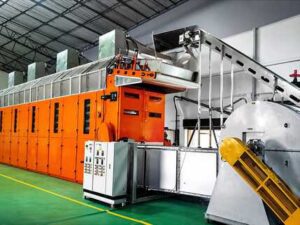
The Mesh Belt Dryer (or Continuous Conveyor Belt Dryer) provides an ideal engineering solution for continuous, large-scale, gentle thermal processing. Initially, the system distributes the wet product as a uniform bed onto a woven stainless steel mesh belt. Subsequently, this belt moves at a controlled speed through insulated, multi-zone drying chambers.
Meanwhile, heated air blows through the moving material bed in an upward or downward direction. Because the product rests undisturbed on the moving mesh surface throughout the entire cycle, there is zero friction, mechanical impact, or inter-particle abrasion. Furthermore, multi-zone airflow control allows engineers to adjust temperature profiles, air velocities, and moisture exhaustion rates along the processing tunnel.
Key Engineering Features
-
Multi-Zone Independent Temperature Control: For example, it enables high heat input at the inlet zone during the constant-rate drying phase, followed by lower, gentle temperatures in later zones to prevent product scorching.
-
Variable Speed Belt Drives: Specifically, this allows precise residence time adjustments ranging from 15 minutes to over 4 hours, accommodating various bed thicknesses and moisture levels.
-
Hygienic Mesh Construction: In addition, it is built using food-grade SS304 or SS316 stainless steel mesh belts, fitted with automatic belt-cleaning systems and internal scrapers.
-
Energy-Efficient Recirculation: As a result, it recirculates up to 70% of hot process air through high-efficiency heat exchangers, dramatically lowering thermal energy costs.
Ideal Applications
-
Encapsulated Vitamin Granules & Food Additives: Particularly, excellent for drying extruded vitamin pellets or fragile matrix granules that easily crumble under mechanical agitation.
-
Specialty Phosphate Granules & Coarse Chemical Salts: Likewise, handles high-volume inorganic compounds that require extended residence times to remove internal crystalline water.
-
Bio-Polymer Flakes & Synthetic Additives: Similarly, ideal for delicate organic resins, specialty flake additives, and coarse polymer intermediates requiring low air velocity and zero dust loss.
2. Combination Dryer (Tray + Fluidised Bed Technology)
Working Principle & Thermal Mechanics
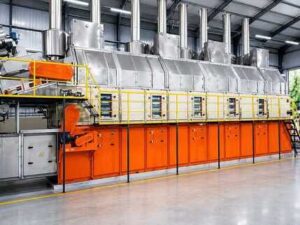
The Combination Dryer represents a major advancement in hybrid thermal technology. Specifically, it integrates gentle, multi-layer continuous tray drying with a final fluidised bed stage inside a single machinery unit.
In the initial stage, operators load wet product onto moving trays where gentle, multi-directional hot air removes surface water without causing surface hardening or thermal shock. Later, once moisture content drops to a critical threshold, the product transitions into the fluidised bed finishing zone. In this second stage, high-velocity upward air suspends the particles, thereby ensuring complete moisture equalization, high bulk density, and exceptional final powder flowability.
Key Engineering Features
-
Staged Thermal Processing: Thus, it effectively prevents sticky, high-moisture specialty compounds from blinding fluidization plates during early drying stages.
-
Superior Color and Structural Retention: In fact, it consistently preserves delicate chemical pigments, nutritional vitamin complexes, and functional additives that discolor under harsh thermal processing.
-
Integrated Airflow Plenum & Distribution Plates: Additionally, fitted with precision-drilled SS316 airflow plates that ensure uniform fluidization without dead spots.
-
Custom Control Automation: Furthermore, fully integrated PLC/SCADA systems monitor temperature gradients, air velocities, tray circulation speed, and exhaust air dew points in real time.
Ideal Applications
-
High-Value Vitamin Powders & Fortification Blends: Specifically, protects complex vitamin structures from thermal degradation while delivering a non-caking, free-flowing final powder.
-
Specialty Food & Nutraceutical Additives: For instance, ideal for drying plant-derived functional extracts, natural antioxidants, and protein isolates that tend to form surface crusts when dried rapidly.
-
Fine Chemical Formulations with High Sticky Phases: Moreover, perfect for chemical salt blends that transition through a sticky gel phase before drying into a stable crystalline solid.
3. Vibratory Fluidised Bed Dryer (VFBD)
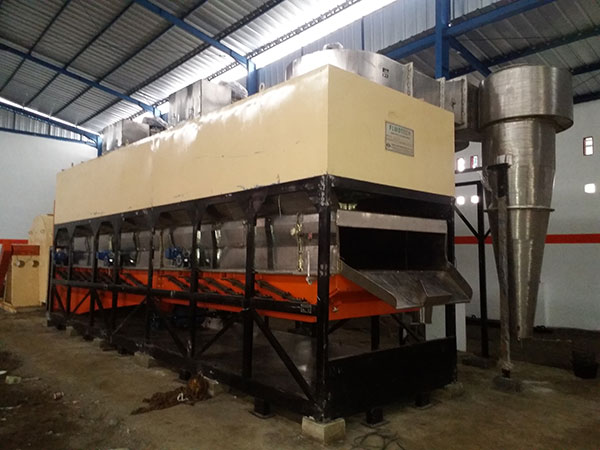
Working Principle & Thermal Mechanics
The Vibratory Fluidised Bed Dryer (VFBD) is a high-performance system designed specifically for drying, cooling, and conditioning delicate powders, crystalline granules, and fine particles.
In a traditional fluid bed dryer, fluidization depends entirely on high-velocity air passing upward through a perforated deck. However, for sticky, fragile, or broad-particle-size materials, high air velocities often cause severe dust blow-out, particle breakage, or channel formation.
To overcome this limitation, the VFBD combines mechanical vibration with upward thermal airflow. Specifically, two counter-rotating unbalance vibration motors transmit controlled directional vibrations to the entire dryer deck. As a result, this vibration moves the material forward smoothly, breaks up particle agglomerates, and ensures complete fluidization at air velocities 30% to 50% lower than non-vibrating systems.
Key Engineering Features
-
Controlled Mechanical Vibration: For example, adjustable stroke length and vibration frequency ensure uniform material transport regardless of particle size distribution.
-
Lower Fluidization Velocity: Consequently, it significantly reduces dust carryover into exhaust ducts, making it ideal for high-value fine powders and toxic specialty chemicals.
-
Gentle Material Handling: In addition, it prevents attrition and particle breakdown in delicate crystals, spray-agglomerated granules, and hollow-sphere additives.
-
Multi-Zone Heat Management: Finally, it features separate heating and cooling zones on the same deck, allowing hot-dried powders to be cooled instantly before packaging to prevent moisture re-absorption.
Ideal Applications
-
Enzyme Powders & Biological Catalysts: Thus, it allows low-temperature fluidization, preventing thermal denaturation of enzymes while drying powders to precise moisture targets.
-
Optical Brighteners & Fluorescent Whitening Agents: Likewise, ensures ultra-uniform drying of organic whitening crystals without generating fine dust or causing thermal yellowing.
-
Specialty Phosphate Salts & Fine Inorganic Crystals: Furthermore, provides excellent fluidization for fine phosphate compounds, preventing caking and preserving pristine crystal structure.
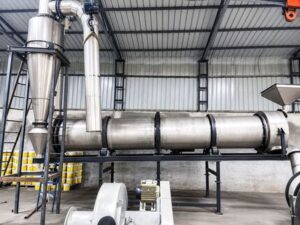
4. Rotary Drum Dryer (Heavy Industrial Processing)
Working Principle & Thermal Mechanics
The Industrial Rotary Drum Dryer is a heavy-duty workhorse engineered for continuous, high-volume processing of bulk minerals, wet filter cakes, coarse inorganic salts, and heavy specialty materials.
Mechanical construction consists of a large, inclined rotating cylindrical drum mounted on heavy-duty trunnion rollers. Wet feed enters at the elevated end of the drum. Subsequently, as the cylinder rotates, specially engineered internal lifting flights capture the material and cascade it through a continuous hot air stream passing through the cylinder interior.
Consequently, this continuous lifting and showering action maximizes direct contact between hot gas and material surfaces, thereby enabling rapid water vaporization from dense, heavy solids.
Key Engineering Features
-
Heavy-Duty Mechanical Design: Specifically, built with high-tensile carbon steel or stainless steel shells, forged steel riding rings, and precision gear-drive mechanisms for reliable 24/7 industrial duty cycles.
-
Custom Flight Geometry: In addition, internal lifting flights are customized for specific materials (e.g., spiraled, radial, or offset flights) so as to prevent wall buildup and optimize cascading.
-
Direct and Indirect Heating Capabilities: Furthermore, configurable for direct hot air contact or indirect heating (steam tube drum design) for materials sensitive to direct combustion gases.
-
High Throughput Capacity: As a result, capable of processing from 1,000 kg/hour to over 20,000 kg/hour of wet material in a single continuous unit.
Ideal Applications
-
Aluminum Hydroxide & Inorganic Mineral Gels: For instance, handles heavy, sticky aluminum hydroxide precipitates and mineral hydroxides, breaking down wet cakes into uniform coarse powders.
-
Industrial Phosphate Salts & Agricultural Additives: Similarly, ideal for continuous, high-tonnage drying of crude or technical-grade phosphate salts, fertilizer additives, and mineral complexes.
-
Specialty Silica, Gypsum, & Mineral Fillers: In the same way, provides rugged, long-lasting performance when drying highly abrasive mineral powders and fine industrial fillers.
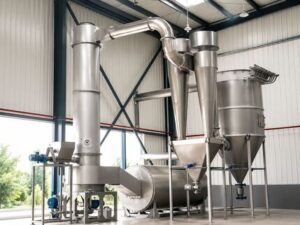
5. Pneumatic Flash Dryer (High-Speed Dispersion System)
Working Principle & Thermal Mechanics
The Pneumatic Flash Dryer is explicitly engineered for instantaneous moisture removal from wet filter cakes, pastes, slurries, dewatered centrifuges, and fine powders.
In a flash drying system, thermal processing takes place within 1 to 3 seconds. First, a high-speed mechanical disperser or feed screw introduces wet feed into a high-velocity hot air stream (15 m/s to 30 m/s). Immediately following injection, the disperser breaks wet lumps into ultra-fine particles, instantly exposing maximum surface area to the hot air stream.
Because moisture evaporates almost instantly, thermal energy converts directly into latent heat of vaporization. As a direct consequence, dry product temperatures remain low, even when using inlet air temperatures above 200°C to 300°C. Finally, dried powder carries pneumatically into high-efficiency cyclones and bag filter dust collectors for complete separation.
Key Engineering Features
-
Instantaneous Flash Evaporation (1 to 3 Seconds): Due to this, thermal exposure is extremely brief, making it safe to dry heat-sensitive compounds at high inlet air temperatures.
-
No Internal Moving Parts in the Drying Duct: Consequently, it minimizes mechanical maintenance, reduces cleaning downtime, and prevents product contamination.
-
Integrated Disperser Technology: Moreover, mechanical disintegration breaks sticky filter cakes into fine particles instantly, thus eliminating the need for pre-drying or separate milling steps.
-
Compact Equipment Footprint: In addition, it delivers exceptionally high water evaporation rates in a vertical column, saving up to 60% floor space compared to horizontal tunnel dryers.
Ideal Applications
-
Fine Aluminum Hydroxide Powders: Specifically, instantly converts dewatered aluminum hydroxide filter cake into a dry, micronized, high-purity powder with precise particle size distribution.
-
Enzyme Powders & Protein Isolates: Likewise, provides safe, ultra-fast drying for bio-functional proteins and fermentation cakes, thereby protecting catalytic activity through rapid thermal evaporation.
-
Optical Brighteners, Pigments, & Dye Fine Chemicals: Furthermore, ideal for flash-drying organic white dye cakes and pigment pastes, yielding fine, agglomerate-free specialty powders ready for packaging.
Section 4: Technical Performance Comparison Matrix
The table below provides a comprehensive side-by-side engineering comparison of core drying technologies manufactured by Genex Tech Industries LLP:
| Drying Technology | Primary Material Feed State | Thermal Exposure / Residence Time | Thermal Efficiency Range | Mechanical Attrition / Shear | Ideal Specialty Application |
| Mesh Belt Dryer | Extrusions, granules, wet solids, flakes | 15 minutes to 4 hours | 65% – 82% | Virtually Zero (Gentle) | Encapsulated vitamins, specialty phosphate granules, coarse bio-polymers |
| Combination Dryer | Sticky pastes, extruded pellets, moist granules | 10 minutes to 60 minutes | 70% – 85% | Very Low | High-value vitamin powders, sensitive food additives, sticky fine chemicals |
| Vibratory Fluid Bed | Free-flowing granules, wet crystals, fine powders | 2 minutes to 20 minutes | 75% – 88% | Minimal (Gentle Vibration) | Industrial enzyme powders, optical brighteners, crystalline phosphate salts |
| Rotary Drum Dryer | Heavy cakes, bulk minerals, coarse salts, sludges | 10 minutes to 45 minutes | 55% – 75% | Moderate (Cascading Action) | Heavy aluminum hydroxide precipitates, crude phosphate salts, mineral powders |
| Pneumatic Flash Dryer | Dewatered filter cakes, slurries, sticky pastes | 1 to 3 seconds (Instantaneous) | 78% – 90% | High Dispersion (Air Jet) | Fine aluminum hydroxide, organic optical brighteners, fast-dry enzyme cakes |
Section 5: Equipment Selection Criteria and Product Matching
In general, selecting the appropriate drying machinery requires matching the physical and chemical properties of raw feed materials to the optimal processing technology.
1. Industrial Enzyme Powders & Bio-Catalysts
-
Recommended Dryer: Vibratory Fluidised Bed Dryer (VFBD) or Pneumatic Flash Dryer.
-
Selection Rationale: Because enzymes denature rapidly if exposed to elevated temperatures during the falling-rate drying phase, selection is critical. Consequently, a Pneumatic Flash Dryer removes surface moisture instantaneously (in 1 to 3 seconds), keeping product temperatures low. Alternatively, for pre-agglomerated enzyme granules, a VFBD provides low-temperature, gentle fluidization without breaking delicate granule structures.
2. High-Value Vitamin Powders & Food Additives
-
Recommended Dryer: Combination Dryer (Tray + Fluid Bed) or Mesh Belt Dryer.
-
Selection Rationale: Since vitamin complexes and functional food fortifiers are highly vulnerable to thermal degradation and oxidation, proper drying is crucial. Therefore, the Combination Dryer uses staged drying to remove moisture gradually on trays before finishing in a fluid bed. As a result, this approach protects chemical potency, color, and particle morphology.
3. Optical Brighteners & Performance Dye Intermediates
-
Recommended Dryer: Pneumatic Flash Dryer or Vibratory Fluidised Bed Dryer (VFBD).
-
Selection Rationale: In many cases, filtration presses discharge organic brighteners as moist, sticky filter cakes. Thus, a Pneumatic Flash Dryer disintegrates the cake instantly into fine, dry particles. Meanwhile, for crystalline whitening agents, a VFBD provides smooth, low-dust drying while preserving pristine particle brightness.
4. Fine Phosphate Salts (Food Grade & Technical Grade)
-
Recommended Dryer: Vibratory Fluidised Bed Dryer (VFBD) or Mesh Belt Dryer.
-
Selection Rationale: Above all, phosphate salts require uniform, controlled drying to prevent lump formation and retain precise hydration levels. For this reason, a VFBD ensures continuous particle movement and uniform airflow distribution, thereby delivering consistent, non-caking powders.
5. High-Purity Aluminum Hydroxide & Mineral Hydroxides
-
Recommended Dryer: Pneumatic Flash Dryer or Rotary Drum Dryer.
-
Selection Rationale: Because aluminum hydroxide filter cakes contain high surface moisture, they require significant heat input to dry cleanly. As a result, a Pneumatic Flash Dryer offers ultra-fast moisture evaporation and fine powder output. On the other hand, for continuous, high-tonnage processing plants, a Rotary Drum Dryer provides the rugged reliability needed to process heavy solid beds 24/7.
Section 6: Engineering Customization, Hygienic Design, and Safety Standards
Without a doubt, high-value specialty powders and fine chemicals demand advanced mechanical customization, stringent safety compliance, and robust hygienic construction. At the same time, at Genex Tech Industries LLP, every drying system is custom-engineered to meet demanding technical standards.
1. Metallurgy & Surface Finishing
-
Construction Materials: For instance, contact surfaces are fabricated using high-grade stainless steel (SS304, SS316, SS316L) or specialized anti-corrosion alloys.
-
Sanitary Surface Polishing: In addition, internal weld seams are ground smooth and polished to mirror finishes (Ra less than 0.4 µm). Consequently, this eliminates product entrapment, prevents cross-contamination, and facilitates thorough cleaning.
-
Clean-In-Place (C.I.P.) Systems: Furthermore, integrated C.I.P. spray balls, wash-down manifolds, and automated drainage systems allow fast, hassle-free product changeovers.
2. Explosion Protection & Hazardous Environment Compliance
-
Combustible Dust Protection: Importantly, many fine organic chemical powders, brighteners, and biological additives form explosive dust-air mixtures.
-
ATEX Engineering: To prevent hazards, GTI Dryers installs ATEX-rated explosion relief panels, flameless venting systems, spark detection alarms, and explosion suppression systems.
-
Closed-Loop Inert Gas Systems: Similarly, for solvent-laden chemicals or highly reactive powders, our systems operate in a closed-loop configuration using nitrogen gas purging so that safe oxygen levels are maintained.
3. Advanced Process Automation & Digital Control
-
PLC / SCADA Integration: In particular, automated control architectures (Siemens / Allen-Bradley) provide real-time monitoring of inlet/outlet air temperatures, bed pressure drops, air velocities, and exhaust relative humidity.
-
Precision Recipe Management: As a result, automated recipe storage ensures consistent operation across different production batches, reducing human error and optimizing fuel efficiency.
-
Data Logging & Regulatory Auditing: Finally, continuous data collection capabilities simplify quality assurance, batch traceability, and process auditing.
Section 7: Energy Optimization & Sustainable Heat Recovery
With global energy prices rising and industrial sustainability targets becoming increasingly strict, optimizing thermal efficiency is a top engineering priority.
To minimize energy costs, Genex Tech Industries LLP incorporates multiple energy-saving technologies into its industrial drying machinery:
-
Exhaust Gas Heat Exchangers: For example, plate or heat-pipe exchangers capture waste thermal energy from hot exhaust air, preheating incoming fresh air and cutting primary fuel consumption by 15% to 25%.
-
Variable Frequency Drives (VFDs): Likewise, air handling fans and mechanical motors feature VFDs, allowing energy draw to scale dynamically with production throughput.
-
High-Performance Thermal Insulation: Furthermore, drying chambers feature double-walled insulated panels packed with high-density mineral wool or ceramic fiber, thereby keeping outer shell temperatures under 45°C.
-
Advanced Recirculation Loops: In addition, air circulation systems return clean, dry thermal air back into the drying zone, thus reducing the energy needed to heat incoming air.
Section 8: Strategic Advantages of Partnering with Genex Tech Industries LLP
Ultimately, developing an efficient industrial dehydration system requires deep process expertise, robust machinery, and reliable long-term technical support.
1. Over 40 Years of Manufacturing Expertise
Genex Tech Industries LLP brings over four decades of thermal engineering experience to every project. To date, we have successfully engineered and installed over 500 industrial drying systems across India and international markets.
2. Pilot Testing & Process Evaluation
Furthermore, we offer advanced pilot testing capabilities to evaluate your specific material under real-world drying conditions. Specifically, our engineers analyze feed behavior, drying rates, energy usage, and final powder characteristics in order to design a system tailored precisely to your production goals.
3. Comprehensive Turnkey Capability
In addition, we manage every stage of your project in-house. For instance, this includes initial process engineering, CAD design, fabrication, automation, factory acceptance testing (FAT), site commissioning, and operator training.
4. Certified Quality & Global Compliance
Finally, our manufacturing facilities operate under strict quality management systems (ISO 9001:2015 certified). Consequently, our systems comply fully with global safety standards, including CE marking and US FDA guidelines for food and pharmaceutical contact surfaces.
Conclusion & Next Steps
In conclusion, in the competitive market for specialty powders, functional additives, and fine chemicals, your choice of drying technology directly impacts product yield, functional quality, energy efficiency, and overall profitability.
-
Mesh Belt Dryer: In short, best for continuous, gentle dehydration of extruded matrices, bio-polymers, and food additives.
-
Combination Dryer: Likewise, best for heat-sensitive, high-value powders requiring superior color and structural retention.
-
Vibratory Fluidised Bed Dryer: Similarly, best for delicate granules, crystalline salts, and enzyme powders requiring low-dust, highly efficient fluidization.
-
Rotary Drum Dryer: On the other hand, best for high-tonnage, heavy bulk solids like aluminum hydroxide and crude phosphates.
-
Pneumatic Flash Dryer: Finally, best for instantaneous moisture flash-off from filter cakes, pigments, and fine chemical pastes.
By partnering with an experienced manufacturer like Genex Tech Industries LLP, you ensure your plant is equipped with custom-built, highly efficient drying machinery engineered for decades of reliable performance.
Contact Our Technical Engineering Team
Are you planning a new thermal dehydration plant or upgrading an existing drying line for specialty powders, functional additives, or fine chemicals? If so, contact our senior engineering team today for technical consultations, pilot trial scheduling, equipment sizing, or customized price quotations.
-
Company Name: GENEX Tech Industries LLP
-
Head Office Address: 10C, Sir William Jones Sarani (Middleton Row), Park Street, Kolkata – 700071, West Bengal, India
-
Direct Phone / WhatsApp Contact: +91-97489 06968 | +91-93300 77417
-
Official Business Email: mktg@foodtechprojects.com | sales@foodtechprojects.com
-
Official Company Websites: www.foodtechprojects.com | www.gtidryers.com