Executive Summary & Market Dynamics
Currently, the North American marine biomass, spirulina, microalgae, and hydrocolloid processing industry is expanding rapidly across both the United States and Canada. As a result, market demand is accelerating for natural hydrocolloids, organic plant biostimulants, plant-based proteins, cosmetics, and bio-based polymers.
Consequently, core processing infrastructure must evolve fast to meet these expanding market requirements.
Moisture Challenges in Marine Biomass
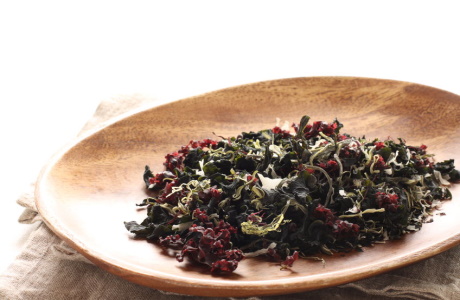
Specifically, raw marine vegetation contains extremely high moisture levels. For instance, wild-harvested kelp (Laminaria, Macrocystis) and cultivated red algae (Kappaphycus, Eucheuma) hold between 70% and 85% water content. Meanwhile, microalgal slurries carry up to 92% to 95% moisture content.
Therefore, effective commercial dehydration stands out as the most critical thermodynamic step in modern plants. Ultimately, this crucial phase converts wet biomass into stable, export-ready products with target moisture levels of 8% to 12%.
Scope of this Engineering Report
In addition, this industrial report comprehensively analyzes premier thermal drying technologies used by top manufacturers across the USA and Canada. Furthermore, it highlights global turnkey engineering leaders like GENEX Tech Industries LLP.
Above all, we provide practical operational data, precise temperature parameters in degrees Celsius (°C), and accurate moisture percentage metrics (%). In like manner, we cover throughput capacities, overall energy balances, and direct matrix matching. In turn, this approach helps plant operators determine the optimal dryer machine for specific raw materials, ranging from whole kelp fronds to highly purified carrageenan extracts.
-
Key Processing Metric: To begin with, freshly harvested seaweed typically possesses 75% to 85% water weight. For this reason, processing plants must remove approximately 3.0 to 5.0 kg of water for every 1 kg of dried biomass produced. For example, precision airflow engineering is vital to prevent the thermal degradation of sensitive proteins and hydrocolloids.
Fundamental Dehydration Requirements for Marine Biomass
Understanding Biological Structure
First and foremost, understanding the physiological structure of algae, seaweed fronds, and polysaccharide gums is essential for plant designers. Correspondingly, proper equipment selection directly depends on this specialized knowledge.
However, problems arise when moisture is removed too aggressively at excessive temperatures.
Preventing Thermal Damage & Case Hardening
In particular, if heat exceeds 100°C to 120°C without controlled humidity, a severe phenomenon called “case hardening” occurs. As a direct result, the exterior cell wall forms an impermeable crust, trapping residual water inside. Because of this, the product suffers internal enzymatic decay and inevitably fails export quality checks.
Moreover, marine algae contain delicate, high-value bioactive compounds. These compounds notably include fucoidan, alginates, phycocyanin, beta-carotene, and carrageenan polymers. Importantly, these essential bioactives are exceptionally heat-sensitive.
In fact, exposing carrageenan or spirulina to temperatures over 70°C to 80°C for long periods degrades molecular weight chains. Likewise, this thermal exposure reduces overall gel strength by 35% to 50%. Hence, modern industrial dryers must deliver highly precise temperature profiles. Above all, they require controlled relative humidity, uniform air distribution, and flexible residence times.
Comprehensive Technical Analysis of Marine Biomass Dryer Technologies
Below, we examine major continuous and batch industrial drying machines used in North American and global facilities. Undoubtedly, each equipment design offers distinct thermodynamic advantages. On the whole, performance depends directly on whether the feed material is solid fronds, granules, pastes, or liquid extracts.
1. Industrial Band Dryer (Continuous Conveyor Belt / Apron Dryer)
Overview & Mechanical Function
To start, the Continuous Band Dryer is recognized as the gold standard for medium- to large-scale primary seaweed and kelp processing. Broadly speaking, it is also called a Multi-Tier Mesh Belt or Apron Conveyor Dryer.
During operation, wet material spreads uniformly onto a perforated stainless steel mesh belt (SS304 or SS316). Afterwards, the belt continuously moves through multiple independently controlled heating zones.
Watch demo video: Click here
Thermodynamics & Residence Control
Simultaneously, heated air maintained between 55°C and 85°C forces through the product bed via up-draft or down-draft configurations. As a consequence, moisture evaporates at a predictable, uniform rate.
In addition, variable frequency drives (VFDs) adjust belt speed to set exact residence times ranging from 45 to 180 minutes.
-
Typical Operating Temperatures: 50°C to 85°C (For instance, Zone 1: 80°C–85°C for rapid surface drying; Zone 2/3: 55°C–65°C for gentle moisture polishing).
-
Inlet vs. Outlet Moisture: Specifically, reduces raw moisture from 80%–85% down to a stable target of 10%–12%.
-
Production Capacity: Highly scalable custom designs from 200 kg/hr up to 10 Metric Tons per Hour (10 TPH) wet input.
-
Energy Efficiency: Provides high efficiency with heat recovery recirculation systems using steam, thermic fluid, or indirect hot air generators.
-
Best Suited Products: Particularly whole kelp (Laminaria / Macrocystis), raw brown seaweeds, red algae fronds (Kappaphycus, Eucheuma), bladderwrack, rockweed (Ascophyllum nodosum), and chopped seaweed ribbons.
2. Vibratory Fluidised Bed Dryer (VFBD)
Fluidization Engineering
Secondly, the Vibratory Fluidised Bed Dryer (VFBD) offers exceptional thermal efficiency for granulated marine materials. Indeed, it works remarkably well for chopped algae flakes and semi-dried carrageenan precipitates.
Technically, the machine combines mechanical vibration with upward forced thermal air passed through a custom-perforated bed plate.
Particle Handling & Anti-Clumping
Owing to this mechanical force, individual biomass particles suspend fully in the air stream, behaving like a dynamic fluid. In comparison to static bed dryers, the contact area between hot air and wet particle surfaces increases by over 300% to 500%.
Furthermore, mechanical vibration actively prevents particle clumping. In turn, this ensures smooth, continuous conveyance along the bed.
-
Typical Operating Temperatures: Generally 60°C to 110°C, depending on heat sensitivity.
-
Moisture Target: Efficiently reduces moisture from 35%–45% pre-conditioned granules down to 6%–10% fine finished moisture.
-
Residence Time: Extremely fast thermal exchange requiring only 10 to 35 minutes.
-
Best Suited Products: Suitable for granulated carrageenan cake, coarse spirulina granules, algae meal pellets, pre-milled kelp granules, and crystalline marine minerals.
3. Industrial Rotary Drum Dryer
Heavy Industrial Duty Cycle
Next, the Rotary Drum Dryer offers extreme mechanical ruggedness for massive tonnages of wild marine biomass. In particular, it handles wet sludge and coarse algal residues with high reliability.
Structurally, the dryer consists of a heavy-gauge rotating cylindrical shell equipped with internal lifting flights.
Watch demo video: Click here
Cascading Thermal Transfer
As the drum rotates at 3 to 12 RPM, internal flights lift the wet seaweed and cascade it continuously through an axial stream of heated air.
Depending on the process setup, systems utilize co-current or counter-current airflow configurations. Thereafter, moisture evaporates rapidly as the product advances along the drum slope.
-
Operating Temperatures: Typically 110°C to 220°C for direct-fired systems; conversely, 70°C to 130°C for indirect steam-jacketed drums.
-
Moisture Reduction: Successfully handles raw biomass with 75%–85% moisture down to 12%–15%.
-
Capacity Range: Provides high throughput capability ranging from 1 TPH to over 25 TPH wet feed.
-
Best Suited Products: Designed for bulk industrial seaweeds, raw kelp biomass for fertilizer/biostimulant manufacturing, post-extraction alginate residues, and coarse animal feed seaweed meals.
4. Industrial Flash Dryer (Pneumatic Dryer)
Pneumatic Disintegration
By contrast, Flash Dryers deliver near-instantaneous thermal evaporation for wet algae cakes and microalgal powders. For instance, they are ideal for fine fiber particles with surface moisture.
In this operation, wet material disintegrates into a high-velocity hot air stream moving at 15 to 30 meters per second.
Instantaneous Evaporation Dynamics
Consequently, complete drying occurs within a mere 1 to 5 seconds. Air temperatures frequently range from 140°C to 180°C.
Even so, the actual product temperature rarely exceeds 50°C to 60°C. In fact, rapid latent heat absorption during water evaporation keeps product temperatures low throughout the process.
-
Drying Time: Remarkably fast at 1 to 5 seconds.
-
Inlet/Outlet Moisture: Effectively reduces filter-cake moisture from 50%–60% to under 5%–8%.
-
Best Suited Products: Specifically dewatered microalgae meal, spirulina filter cake, fine kelp powders, and insoluble cellulosic marine fibers.
5. Industrial Spray Dryer
High-Pressure Atomization
Furthermore, Spray Drying serves as the undisputed industry standard for liquid extracts, hydrocolloid solutions, and refined carrageenan slurries.
In this system, liquid feed containing 10% to 30% total solids pumps into an atomization chamber under high pressure. Generally, systems use rotary disk atomizers or high-pressure nozzles operating at 10,000 to 25,000 RPM.
Watch demo video: Click here
Instant Powder Formation
As a result, the liquid forms millions of microscopic droplets (20 to 150 microns) inside a heated drying tower. Instantly, moisture flashes off completely.
Subsequently, this process leaves spherical, free-flowing, soluble powders that collect at the bottom cyclone separator.
-
Inlet Air Temperatures: High range of 150°C to 220°C.
-
Outlet Air Temperatures: Controlled range of 75°C to 95°C.
-
Finished Moisture Content: Extremely low, typically 3% to 6%.
-
Best Suited Products: Refined and semi-refined Kappa and Iota Carrageenan liquid extracts, soluble seaweed extract powders (fertilizers), phycocyanin extracts, and liquid microalgae protein hydrolysates.
6. Heat Pump Dryer (Dehumidification Dryer)
Closed-Loop Refrigeration Drying
In comparison, Heat Pump Dehumidification Dryers offer unmatched preservation for ultra-sensitive marine algae. In particular, they protect food-grade spirulina and pharmaceutical-grade bioactive compounds.
Mechanically, the system operates in a closed loop using refrigeration cycles. Thus, it extracts moisture from circulating air without venting hot air outdoors.
Low-Temperature Bioactive Preservation
Owing to this closed loop, drying occurs at low temperatures between 35°C and 55°C with relative humidity down to 15%–20%. Accordingly, this gentle process retains 100% of heat-sensitive bioactives, natural pigments, enzymatic activity, and aroma compounds.
In addition, energy consumption drops by 40% to 60% compared to standard electrical resistance heating.
-
Operating Temperatures: Low range of 35°C to 55°C (Ultra-gentle low-temperature dehydration).
-
Energy Efficiency: Excellent COP (Coefficient of Performance) of 3.5 to 5.0, consuming significantly less kWh per liter of water evaporated.
-
Best Suited Products: Premium edible seaweeds (Nori, Wakame, Dulse), artisan kelp chips, pharmaceutical-grade microalgae, high-value spirulina flakes, and delicate cosmetic botanical extracts.
7. Refractance Window Dryer (Thin-Film Dehydration)
Infrared Thermal Transfer
Finally, Refractance Window Drying is a specialized thin-film dehydration technology. Specifically, it uses hot water circulating at 90°C to 98°C beneath a heat-transparent polyester belt.
During processing, operators spread wet algae purees or carrageenan slurries as a thin film (1 to 3 mm thick) onto the moving belt.
Watch Demo video: Click Here
Rapid Evaporative Cooling
Thereupon, thermal energy transfers rapidly through refractive infrared properties into the wet film without scorching. For this reason, drying takes only 3 to 10 minutes.
In the end, the system produces delicate dried sheets or flakes with superior color and nutrient retention.
-
Product Contact Temperature: Consistently maintained below 65°C to 70°C due to rapid evaporative cooling.
-
Best Suited Products: Algae purees, liquid kelp concentrates, high-pigment microalgae films, and gourmet edible seaweed sheets.
Master Dryer Matrix: Best Equipment per Marine Product
| Marine Biomass Product | Primary Raw State | Initial Moisture % | Target Moisture % | Recommended Dryer Machine | Primary Process Advantage |
| Whole Kelp & Rockweed (Laminaria, Ascophyllum) | Harvested Fronds / Ribbons | 78% – 85% | 10% – 12% | Continuous Band Dryer | Gentle continuous drying, high throughput, zero scorching. |
| Carrageenan Granules & Cake (Kappaphycus, Eucheuma) | Pre-treated Granular Precipitate | 40% – 55% | 8% – 10% | Vibratory Fluid Bed Dryer | Prevents particle clumping, fast uniform moisture removal. |
| Liquid Carrageenan Extract | Dissolved Slurry / Solution | 80% – 90% | 3% – 5% | Industrial Spray Dryer | Instantaneous atomization, highly soluble instant powder. |
| Industrial Seaweed & Fertilizer | Bulk Wet Biomass / Residues | 75% – 82% | 12% – 15% | Rotary Drum Dryer | Heavy industrial duty cycle, massive TPH capacity. |
| Spirulina & Microalgae Meal | Dewatered Filter Cake | 55% – 65% | 5% – 7% | Flash Dryer / Pneumatic | Rapid 2-second flash drying, preserves nutritional profile. |
| Gourmet Seaweeds & Wakame | Edible Fresh Whole Sheets | 80% – 88% | 8% – 10% | Heat Pump Dehumidifier | Ultra-low temperature (40°C), retains color, pigments & taste. |
| Algae Purees & Hydrolysates | Viscous Liquid / Slurry Film | 70% – 85% | 4% – 6% | Refractance Window Dryer | Thin-film infrared transfer, low heat damage, excellent color. |
Regional Market Focus: USA & Canada Infrastructure Requirements
Regulatory & Sanitary Standards
Presently, marine biomass processing plants operate in several key coastal regions. Namely, these include Maine, Massachusetts, Oregon, Washington, California, Alaska, British Columbia, Nova Scotia, and New Brunswick.
Above all, these facilities face strict environmental, electrical, and sanitary standards. Accordingly, machinery installed in North America must comply strictly with regional regulations. For example, equipment needs US FDA, USDA Organic, cGMP, Canadian Food Inspection Agency (CFIA), and UL/CSA electrical certifications.
Engineering for Coastal Environments
Simultaneously, coastal plants suffer severe salt-air corrosion. As a consequence, standard mild steel construction rusts within months of operation.
Therefore, premium manufacturers like GENEX Tech Industries LLP build specialized marine-grade dryers:
-
SS304 / SS316L Stainless Steel Contact Components: In detail, eliminates rust contamination and withstands harsh sea salt environments.
-
CIP (Clean-in-Place) Sanitation Piping: For instance, automated high-pressure spray balls ensure 100% hygienic cleaning between production runs.
-
Advanced PLC / SCADA Automation: In particular, provides fully automated controls featuring Allen-Bradley or Siemens PLCs with NEMA 4X / IP66 waterproof enclosures.
-
Energy Recovery Systems: Chiefly, condensing heat exchangers recover up to 30% to 45% of exhaust heat. In turn, this drastically reduces operational fuel and boiler costs.
Comprehensive Conclusion & Procurement Guidance
Balancing Efficiency and Quality
In conclusion, selecting the appropriate seaweed, kelp, carrageenan, or algae dryer machine is essential for long-term operational success. To sum up, it requires balancing material physical form, thermal sensitivity, target output capacity, and overall energy efficiency.
Ultimately, your North American production facility may need a continuous Band Dryer for wild-harvested kelp. Alternatively, you may require a Vibratory Fluidised Bed Dryer for carrageenan granules, a Spray Dryer for hydrocolloid powders, or a Heat Pump Dryer for spirulina. Thus, partnering with an experienced global OEM is paramount.
OEM Partnership & Capabilities
To that end, GENEX Tech Industries LLP brings over 40 years of specialized thermal engineering expertise. Indeed, we provide turnkey plant installations and certified marine equipment manufacturing for processors across the United States, Canada, and globally.
Call to Action & Official Contact Details
Are you currently planning to construct a new marine biomass processing plant? Similarly, do you need to expand your seaweed dehydration facility or upgrade your carrageenan extraction lines in the USA, Canada, or internationally? In any case, contact our engineering team today for technical consultation, pilot testing, and custom equipment sizing.
-
Company Name: GENEX Tech Industries LLP (ISO 9001:2015 | CE | US FDA Certified)
-
Head Office Address: 10C, Sir William Jones Sarani (Middleton Row), Park Street, Kolkata – 700071, West Bengal, India
-
Direct Phone / WhatsApp Contact: +91-97489 06968 | +91-93300 77417
-
Official Business Email: mktg@foodtechprojects.com | sales@foodtechprojects.com
-
Official Company Websites: www.foodtechprojects.com | www.gtidryers.com