The global shift toward sustainable protein sources represents a fundamental transformation in food security and industrial manufacturing. Furthermore, consumer demand for plant-based alternatives is accelerating worldwide. Consequently, food manufacturers must scale up production efficiently. Meanwhile, they must maintain strict product quality, texture, protein solubility, and cost controls.
At the same time, advanced processing and thermal dehydration technology sit at the center of this transition. Indeed, producing high-purity protein isolates (over 90% concentration), textured vegetable protein (TVP), and realistic meat analogues requires precise process engineering. Specifically, every stage—from seed cleaning and wet extraction to twin-screw extrusion and thermal moisture reduction—demands exact temperature control, residence time management, and energy recovery.
Therefore, this technical guide explores the end-to-end design, operational parameters, extrusion mechanics, and industrial drying technologies used in modern Soy, Pea, TVP, and Meat Alternative production lines. In addition, we provide a detailed comparison of key drying technologies: Spray Dryers, Fluid Bed Dryers, Mesh Belt / Band Dryers, Flash Dryers, and Vacuum Dryers. Ultimately, this analysis clarifies which system yields optimal performance for specific plant-protein applications.
1. The Global Landscape of Plant-Based Proteins
To understand alternative protein manufacturing thoroughly, we must first examine raw material dynamics, processing requirements, and market specifications.
Initially, raw seeds and pulses like soybeans and yellow peas enter the processing facility. Subsequently, specialized machinery cleans, dehulls, and mechanically mills these seeds. After that, processing branches into two main pathways: dry fractionation and wet processing. On one hand, dry fractionation yields protein concentrates with 60% to 75% purity. On the other hand, wet processing yields high-purity protein isolates above 90% protein concentration. Eventually, these isolates and concentrates move into dehydration and extrusion stages. There, operators process them into TVP, high-moisture meat analogues, or highly soluble powders.
Raw Material Dynamics: Soybeans vs. Yellow Peas
Currently, soybeans and yellow peas remain the primary feedstocks for plant-based meat substitutes and functional protein ingredients. Consequently, they offer high protein contents, favorable amino acid profiles, and robust functional characteristics.
| Parameter | Soybean Processing | Yellow Pea Processing |
| Raw Seed Protein Content | 36% to 42% (dry basis) | 20% to 25% (dry basis) |
| Raw Seed Fat Content | 18% to 22% (requires defatting) | 1.2% to 2.0% (low fat naturally) |
| Starch Content | Very low (3% to 6%) | High (45% to 50% pea starch) |
| Isolate Purity Target | 90% to 92% protein | 85% to 90% protein |
| Primary Extraction Pathway | Alkaline extraction / Isoelectric precipitation | Mild wet fractionation / Membrane filtration |
| Allergen Status | Major allergen (Big 9 compliance required) | Hypoallergenic / Clean-label friendly |
| Gelling & Texturization | High gel strength; excellent water-binding | Moderate gel strength; clean flavor profile |
Historically, soy continues to dominate the high-yield textured protein market. However, yellow pea protein has grown rapidly due to its allergen-free profile and clean-label appeal. As a result, processing yellow peas requires handling high volumes of starch co-products (45% to 50% of seed mass). Therefore, modern plants need integrated side-stream drying and utilization strategies.
2. End-to-End Processing Architecture: From Raw Grain to Isolate
In practice, producing functional protein isolates demands a carefully orchestrated sequence of mechanical, chemical, and thermal operations. Below is a detailed technical walkthrough of both Soy Protein Isolate (SPI) and Pea Protein Isolate (PPI) production plants.
First, workers feed raw soybeans or peas into mechanical cleaning and dehulling systems. Next, aspirators remove hulls, which represent 8% to 10% of total seed mass. Then, the dehulled seeds move to flaking and solvent or mechanical defatting equipment. Consequently, this step extracts crude oil (18% to 20%) and yields white flakes or defatted meal with 52% to 55% protein content. Afterwards, operators mix this meal with water for alkaline solubilization at pH 8.5 to 9.0 at 50°C to 55°C. Subsequently, decanters separate insoluble fiber from the liquid extract.
Following this step, operators adjust the liquid to pH 4.5 using food-grade acid for isoelectric precipitation. Immediately after, high-speed disc-stack centrifuges separate the protein curd from the whey permeate stream. Later, workers wash the curd and neutralize it back to pH 6.8 to 7.2. Meanwhile, the neutralized slurry undergoes pasteurization and thermal conditioning at 85°C to 105°C for microbial safety. Finally, a spray dryer or fluid bed system dehydrates the slurry into a finished isolate powder with over 90% purity and under 5% moisture.
Stage 1: Seed Preparation, Cleaning, and Dehulling
To begin with, raw seeds entering the plant pass through screen sifters, air classifiers, and magnetic separators. Thus, these systems eliminate stones, dust, foreign seeds, and tramp metal. Next, thermal conditioning units heat the seeds to 60°C–70°C to loosen the outer hulls efficiently.
Afterward, specialized impact dehullers crack the seeds. Simultaneously, multi-stage aspirators separate low-density hulls from dense cotyledons. Indeed, removing hulls is vital because hulls carry bitter polyphenols, increase fiber content, and reduce final protein purity.
Stage 2: Defatting and Meal Preparation
For soybeans specifically, smooth rolls flake dehulled cotyledons to a thickness of 0.25 mm to 0.30 mm. In doing so, flaking breaks cell walls and maximizes surface area. Next, the flakes undergo counter-current solvent extraction (typically using food-grade n-hexane) or mechanical cold-pressing.
As a result, this process reduces residual fat content from 20% down to less than 1.0%. Furthermore, gentle flash desolventizers process the resulting defatted meal—often called “white flakes”—under 70°C. Ultimately, keeping temperatures low prevents thermal protein denaturation and maintains a Nitrogen Solubility Index (NSI) above 80% to 85%.
Stage 3: Solubilization, Clarification, and Isoelectric Precipitation
-
Alkaline Extraction: First, mixers combine defatted meal with warm, purified water at an 8:1 to 10:1 water-to-solid ratio. Then, operators adjust the pH to 8.5–9.0 using dilute sodium hydroxide (NaOH) or potassium hydroxide (KOH) at 50°C to 55°C. Because of these alkaline conditions, globulin proteins dissolve rapidly.
-
Fiber Separation: Second, high-G industrial decanter centrifuges process the slurry. In this manner, they separate the insoluble fiber fraction (spent flake residue or okara) from the protein-rich liquid extract.
-
Isoelectric Precipitation: Third, pumps transfer clarified liquid extract to precipitation tanks. Meanwhile, operators add food-grade hydrochloric acid (HCl) or phosphoric acid ($H_3PO_4$) to drop the pH to the isoelectric point (pH 4.5 for soy and pea globulins). At this specific pH, net electrical charges on protein molecules drop to zero, causing them to aggregate and precipitate quickly.
-
Curd Washing and Neutralization: Fourth, high-speed disc-stack centrifuges separate precipitated protein curd from the liquid whey stream. Next, the curd undergoes multiple counter-current wash stages with purified water. Consequently, washing removes residual soluble sugars (stachyose and raffinose), salts, and off-flavor compounds. Finally, workers re-suspend the washed curd in water and neutralize it back to pH 6.8–7.2 using food-grade alkali, thereby fully restoring protein solubility and emulsification capacity.
Stage 4: Thermal Processing and Spray Drying
Prior to dehydration, the neutralized protein slurry (containing 15% to 22% total solids) enters thermal conditioning or Ultra-High Temperature (UHT) units. By heating the slurry to 105°C–125°C for 5 to 15 seconds, the system inactivates trypsin inhibitors, eliminates microbial contaminants, and standardizes viscosity.
In addition, heavy-duty pumps deliver the hot slurry directly into an industrial Spray Dryer. Eventually, the dryer yields a fine, free-flowing isolate powder with over 90% protein content and under 5.0% residual moisture.
3. Extrusion and Texturization: Creating TVP and HMMA
Although protein isolates serve as functional ingredients, creating realistic meat substitutes—such as patties, sausages, and plant-based chicken strips—requires transforming globular proteins into fibrous, linear structures through Twin-Screw Extrusion Technology.
Low-Moisture Extrusion (LME) vs. High-Moisture Meat Analogue (HMMA) Processing
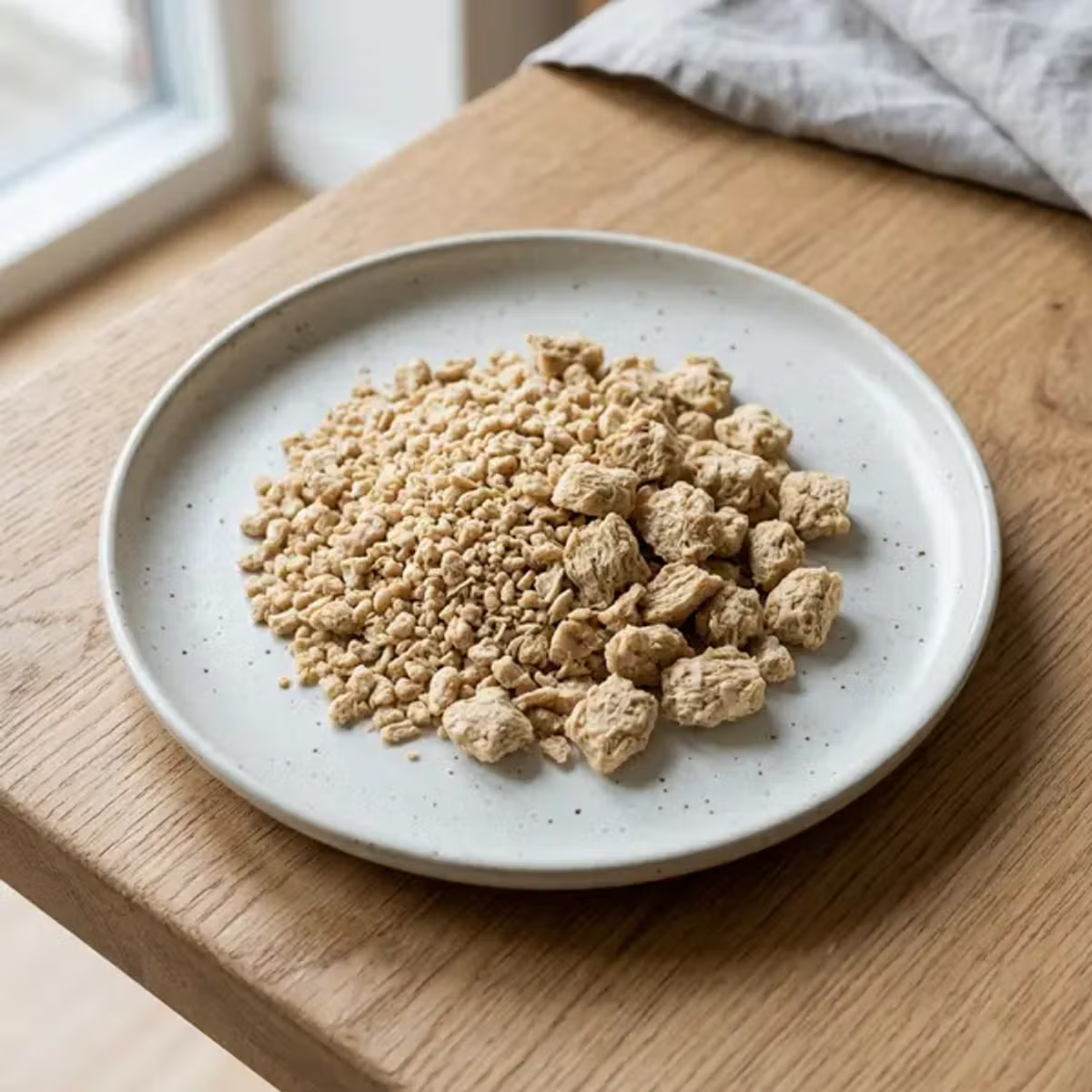
In practice, extrusion processes divide into two primary pathways based on moisture injection. On one hand, Low-Moisture Extrusion (LME) operates at 20% to 35% injected moisture at barrel temperatures of 140°C to 170°C. Using a high-pressure face cutter die mechanism, LME produces dry TVP in the form of minces, chunks, and flakes. Subsequently, these products require post-processing in a belt or band dryer.
On the other hand, High-Moisture Extrusion (HMMA) operates at 55% to 75% injected moisture at barrel temperatures of 130°C to 160°C. Using a long liquid-cooled die mechanism, HMMA yields fresh wet meat analogues such as plant-based chicken or fish. Ultimately, these wet products require chilling or freezing rather than thermal drying.
1. Low-Moisture Extrusion (LME) for TVP Production
-
Moisture Range: Typically 20% to 35% total mix moisture inside the extruder barrel.
-
Mechanism: First, co-rotating twin screws mix protein concentrates or isolates with small amounts of water and salts. Meanwhile, high thermal energy (140°C to 170°C) and high mechanical shear process the mass inside the barrel. As the molten protein mass exits the constrained die into atmospheric pressure, superheated water instantly flashes off into steam. Consequently, this sudden expansion creates a porous, sponge-like structure.
-
Output: Dry Textured Vegetable Protein (TVP) in the form of granules, flakes, or large chunks.
-
Moisture Reduction Requirement: Exiting TVP has an initial moisture content of 18% to 25%. Therefore, a Mesh Belt Dryer / Band Dryer must dry the product down to under 8% to 10% to achieve a shelf life of 12 to 24 months.
2. High-Moisture Meat Analogue (HMMA) Processing
-
Moisture Range: Generally 55% to 75% total mix moisture.
-
Mechanism: In contrast, HMMA processing utilizes high moisture levels that prevent flash evaporation at the die. Instead, the extruder forces the molten protein-water-lipid matrix through a specialized long, liquid-cooled cooling die (often 1.5 to 3.0 meters long). Within this cooled die channel, laminar flow aligns protein polymer chains into continuous, parallel muscle fibers.
-
Output: Fresh, wet meat analogues that closely mirror the texture, mouthfeel, and fiber alignment of animal meat (such as chicken breast or pork loin).
-
Moisture Reduction Requirement: Notably, facilities do not thermally dry HMMA products. Instead, workers chill, cut, marinate, and package them for chilled or frozen distribution.
4. Deep-Dive: Industrial Drying Technologies in Alternative Protein Plants
Undoubtedly, drying is often the most energy-intensive process in an alternative protein manufacturing facility. Hence, choosing the correct thermal drying system directly governs product solubility, bulk density, rehydration speed, color, flavor profile, and operational costs.
Below, we detail operational principles, engineering parameters, performance metrics, and application profiles for all major industrial drying systems.
A. Industrial Spray Dryers
In a spray drying system, heavy-duty pumps feed liquid protein slurry (15% to 22% total solids) into a rotary atomizer or spray nozzles. Consequently, this atomization creates micro-droplets ranging from 20 to 150 micrometers. Next, contact with hot air between 170°C and 220°C triggers a rapid evaporative flash inside the chamber. Meanwhile, droplet temperatures remain low at approximately 50°C to 60°C. Afterwards, cyclone separators and bag filters collect the dried particles, yielding fine protein isolate powder with under 5.0% moisture and over 90% protein purity.
Watch the demo: Click here
Working Principle
Essentially, spray drying transforms pumpable liquid protein suspensions, curds, or hydrolyzed solutions into fine dry powders in a single continuous step. First, high-pressure pumps or high-speed centrifugal rotary atomizers (spinning at 10,000 to 25,000 RPM) spray liquid feed into micro-droplets (20 to 150 micrometers) inside a drying chamber.
Simultaneously, hot, filtered air enters co-currently at temperatures between 170°C and 220°C. Because atomized droplets provide a massive surface area, rapid water evaporation occurs within 1 to 3 seconds. Furthermore, the latent heat of vaporization cools the surrounding air rapidly, keeping droplet temperatures low (typically 50°C to 60°C). Ultimately, this rapid, low-temperature drying prevents thermal denaturation of sensitive protein functional groups.
Key Engineering & Operational Parameters
-
Inlet Air Temperature: 175°C to 215°C
-
Outlet Air Temperature: 75°C to 90°C
-
Feed Atomization Pressure: 120 bar to 250 bar (for pressure nozzle systems)
-
Feed Slurry Concentration: 15% to 24% total solids
-
Evaporation Efficiency: 1.2 to 1.6 kg steam per kg of water evaporated
-
Final Product Moisture: 3.5% to 5.0%
Product Suitability & Practical Recommendations
-
Best Used For: High-purity Soy Protein Isolate (SPI), Pea Protein Isolate (PPI), Hydrolyzed Plant Proteins (HPP), and Soluble Protein Concentrates.
-
Why It Is Best: Spray drying produces highly soluble, spherical powder particles with excellent dispersibility, uniform bulk density, and minimal thermal degradation.
B. Fluid Bed Dryers (Vibratory & Static Systems)
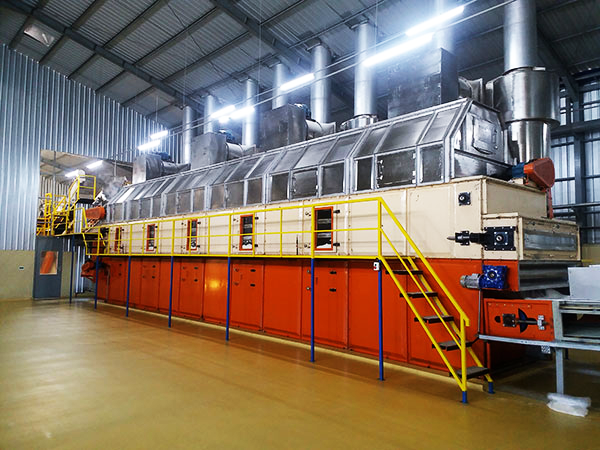
In a fluid bed dryer, wet granules or agglomerates rest on a perforated distribution deck. Hot air blowing upward at 1.5 to 3.5 meters per second elevates the bed into a fluidized state, where it behaves like a boiling liquid. As a result, this motion enables uniform heat and moisture exchange throughout the particle bed, producing dry, agglomerated powder or granules.
Working Principle
In a Fluid Bed Dryer, a perforated steel distribution plate supports moist protein powders, wet extruded granules, or wet agglomerates inside a drying chamber. Meanwhile, fans blow heated air upward through the plate at a precise velocity (typically 1.5 to 3.5 meters per second) that counteracts gravity on the particles.
When upward aerodynamic drag equals particle weight, the solid bed fluidizes. Consequently, this state provides exceptional surface area contact between hot drying gas and individual protein particles, enabling rapid heat and mass transfer. Additionally, Vibratory Fluid Bed Dryers (VFBD) add mechanical vibration to the deck. Thus, vibration keeps sticky, cohesive, or irregularly sized protein particles moving smoothly without clumping into stagnant zones.
Key Engineering & Operational Parameters
-
Inlet Air Temperature: 80°C to 140°C
-
Bed Air Velocity: 1.2 m/s to 3.0 m/s
-
Residence Time: 10 to 45 minutes (continuous operation)
-
Initial Feed Moisture: 15% to 35%
-
Final Product Moisture: 2.0% to 6.0%
-
Thermal Efficiency: High energy recovery through partial exhaust re-circulation (up to 40% re-use)
Product Suitability & Practical Recommendations
-
Best Used For: Secondary drying and instantization/agglomeration of spray-dried protein powders, drying of fine TVP granules, and conditioning of pea protein concentrates.
-
Why It Is Best: Fluid bed systems excel at low-temperature, gentle handling of heat-sensitive materials. Thus, they prevent particle degradation while agglomerating dust-free, instantized protein powders that dissolve rapidly in water.
C. Mesh Belt Dryers / Multi-Pass Band Dryers
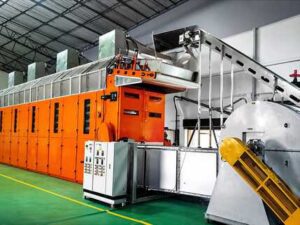
In a multi-pass mesh belt dryer, an oscillating spreader feeds wet extruded TVP or meat analogue chunks onto a moving belt. In doing so, the spreader creates a uniform bed depth of 50 mm to 150 mm. Next, the product moves along Belt Pass 1 (Top Zone at 120°C to 150°C), cascades by gravity to Belt Pass 2 (Middle Zone at 100°C to 120°C), and drops to Belt Pass 3 (Cooling Zone with ambient air). Consequently, this multi-pass process yields uniformly dried TVP chunks with residual moisture of 8.0% or less.
Working Principle
Mesh Belt Dryers (or Continuous Band Dryers) are heavy-duty industrial drying systems engineered for high-throughput, continuous drying of extruded food products. Initially, an oscillating spreader distributes wet product—such as freshly extruded TVP chunks, flakes, or meat analogue strips—evenly onto a perforated stainless steel conveyor belt.
Then, the belt carries the product through multiple independent drying zones. Meanwhile, heating units force air vertically through the product bed in alternating up-draft and down-draft patterns. In multi-pass configurations, the product drops from the top belt onto a lower belt moving in the opposite direction. As a result, this tumbling motion breaks up clumps, turns the product over, and ensures uniform moisture removal across the entire bed thickness.
Key Engineering & Operational Parameters
-
Number of Drying Zones: 3 to 7 independent temperature/humidity zones
-
Inlet Air Temperature: Zone 1: 130°C to 150°C; Zone 2: 100°C to 120°C; Zone 3 (Cooling): 25°C to 35°C
-
Bed Depth: 50 mm to 150 mm
-
Conveyor Belt Speed: Variable frequency drive (VFD) controlled; residence times from 20 to 90 minutes
-
Initial Product Moisture: 20% to 35%
-
Final Product Moisture: 5.0% to 8.0%
Product Suitability & Practical Recommendations
-
Best Used For: Dry Textured Vegetable Protein (TVP) mince, soy nuggets, textured pea chunks, plant-based bacon bits, and high-volume extruded shapes.
-
Why It Is Best: Mesh Belt Dryers handle heavy product loads continuously, maintain particle structure without mechanical shear, and feature multi-zone temperature profiling to optimize drying speed and energy efficiency.
D. Industrial Flash Dryers (Pneumatic Dryers)
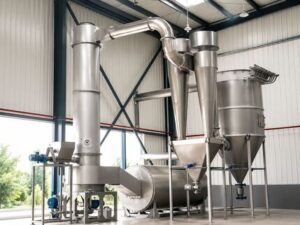
Flash drying processes high-moisture wet cake or starch press cake by feeding material into a high-speed disintegrator or feed screw. Next, disintegrated particles enter a high-velocity hot air duct moving at 20 to 30 meters per second at 180°C to 250°C. Consequently, an instantaneous moisture flash occurs within 0.5 to 2.0 seconds. Afterwards, high-efficiency cyclones and bag house collectors gather the fine, dry starch or fiber powder.
Working Principle
Flash Dryers (or Pneumatic Dryers) are ultra-rapid, direct heat transfer systems used for drying damp, free-flowing press-cakes, starches, and fibrous co-product streams. First, a feed system introduces wet cake material into a high-velocity hot gas stream running through a vertical drying duct at 20 to 30 meters per second.
Simultaneously, a high-speed mechanical disintegrator breaks up wet cake feed into tiny dispersed particles upon entry. Due to high air velocity and fine particle dispersion, water flashes off almost instantly. In fact, residence times take only 0.5 to 2.0 seconds. Finally, the pneumatic air stream carries dried powder up the duct into high-efficiency cyclones and downstream pulse-jet bag filters for collection.
Key Engineering & Operational Parameters
-
Inlet Air Temperature: 180°C to 260°C
-
Duct Air Velocity: 18 m/s to 32 m/s
-
Retention / Residence Time: 0.5 to 2.5 seconds
-
Feed Moisture Range: 35% to 55%
-
Final Product Moisture: 8.0% to 12.0%
-
Footprint: Small horizontal footprint with high vertical space utilization
Product Suitability & Practical Recommendations
-
Best Used For: Co-product streams such as Pea Starch residue, Soy Okara / Insoluble Fiber cake, and insoluble pulse protein flours.
-
Why It Is Best: Flash dryers provide cost-effective drying for bulk co-products. Moreover, their split-second exposure to heat removes surface moisture rapidly without burning organic compounds, using a small physical footprint and minimal moving parts.
E. Industrial Vacuum Dryers (Shelf & Vacuum Band Systems)
In vacuum drying, operators load heat-sensitive or high-viscosity protein mass into a sealed vacuum chamber operating under negative pressures of -0.08 to -0.098 MPa. Under these low-pressure conditions, the boiling point of water drops to 35°C–50°C. Consequently, low-temperature indirect heating via hot water or steam plates causes gentle evaporation with zero oxidation, producing premium, non-denatured protein extracts.
Working Principle
Vacuum drying relies on a simple thermodynamic principle: lowering ambient pressure lowers the boiling point of water. Inside a sealed vacuum chamber operating at deep vacuum levels (-0.08 MPa to -0.098 MPa), water boils and evaporates at 35°C to 50°C.
Meanwhile, internal hot water or low-pressure steam plates transfer heat indirectly to the product. Alternatively, continuous vacuum band dryers use moving vacuum-rated stainless steel belts instead of stationary plates. Because the chamber remains vacuum-sealed, the product dries in an oxygen-free atmosphere. Therefore, this environment eliminates thermal oxidation, enzymatic browning, and heat-induced protein cross-linking completely.
Key Engineering & Operational Parameters
-
Operating Vacuum Pressure: -0.085 MPa to -0.098 MPa (50 mbar to 5 mbar absolute)
-
Heating Medium Temperature: 45°C to 85°C
-
Drying Temperature of Product: 35°C to 55°C
-
Residence Time: 1 to 6 hours (batch shelf systems) or 30 to 120 minutes (continuous vacuum band dryers)
-
Final Product Moisture: Less than 2.0% to 4.0%
Product Suitability & Practical Recommendations
-
Best Used For: Premium bioactive protein hydrolysates, high-value enzyme-treated plant proteins, heat-sensitive specialty isolates, and specialty nutritional extracts.
-
Why It Is Best: Vacuum drying preserves 100% of native protein functionality, solubility, natural color, and bioactivity without thermal degradation.
5. Technology Selection Matrix: Matching Dryers to Applications
Choosing the right dryer depends on raw material physical state, incoming moisture, heat sensitivity, and target product characteristics. Accordingly, the matrix below summarizes optimal dryer selections across the plant protein processing line:
| Product / Processing Stream | Primary Recommended Dryer | Secondary / Alternative Dryer | Key Selection Parameters & Reasons |
| Soy Protein Isolate (SPI Powder) | Spray Dryer | Vacuum Band Dryer | Requires ultra-fast evaporation, high solubility (>85%), controlled particle size, and high hourly capacity. |
| Pea Protein Isolate (PPI Powder) | Spray Dryer | Fluid Bed Dryer | Handles viscous feed slurries efficiently, yielding smooth, non-gritty, highly dispersible isolate powders. |
| Instantized / Agglomerated Protein Powder | Fluid Bed Dryer | Integrated Spray Fluid Bed | Converts fine, dusty spray-dried powders into dust-free, highly soluble instant beverage mixes. |
| Extruded TVP Mince & Granules | Mesh Belt / Band Dryer | Vibratory Fluid Bed Dryer | High-throughput continuous drying, multi-zone temperature profiling, gentle bed handling without shear. |
| Large TVP Chunks, Chops & Strips | Multi-Pass Mesh Belt Dryer | Cabinet / Tray Dryer (Pilot) | Deep bed penetration, uniform moisture equalization through thick sections, cascading turnover. |
| Pea Starch Co-Product Cake | Flash Dryer (Pneumatic) | Rotary Drum Dryer | Low operating cost per ton, instant surface moisture removal, compact footprint for high-moisture cake. |
| Soy Okara / Insoluble Fiber | Flash Dryer | Mesh Belt Dryer | Rapidly handles high-moisture fibrous residues (60% to 70% water) down to shelf-stable storage levels. |
| Bioactive Protein Hydrolysates | Vacuum Dryer | Low-Temp Spray Dryer | Eliminates thermal denaturation, preserves bioactive peptides, prevents oxidation and browning. |
6. Mass Balance and Utilities Consumption Data
Operating an industrial alternative protein plant requires careful utility planning. Consequently, the following engineering mass balance models a typical 10 Metric Tons Per Day (10 TPD) Soy Protein Isolate (SPI) & TVP Integrated Facility:
Initially, the mass balance begins with 20,000 kg per day of raw defatted soy flakes (52% protein). Next, solubilization and decantation separate insoluble fiber dry residue (~6,500 kg/day). Subsequently, the liquid stream undergoes isoelectric precipitation. Thus, this step separates whey soluble solids (~3,500 kg/day) from recovered protein curd slurry (18% total solids, 82% water). Finally, thermal spray drying evaporates approximately 36,000 kg per day of water, outputting 8,000 kg per day of finished SPI dry powder with 91% protein concentration and 4.5% moisture.
Utility Consumption Specifications (Per Metric Ton of Finished Protein Isolate)
-
Thermal Energy (Steam): Typically 3.2 to 4.5 Metric Tons of saturated steam (at 6 to 10 bar pressure) per ton of dry isolate.
-
Electrical Power: Usually 450 kWh to 650 kWh per ton (powering centrifuges, high-pressure pumps, spray atomizers, twin-screw extruders, and blower fans).
-
Process Water: Generally 12 to 18 cubic meters ($m^3$) of RO-purified water per ton (multi-stage membrane water recovery reduces fresh water draw by up to 60%).
-
Compressed Air: Approximately 1.5 to 2.5 $Nm^3$/min at 6 bar clean, dry, oil-free air for pneumatic instrumentation, valve control, and pulse-jet filter cleaning.
7. Clean-Label, Sustainability, and Circular Economy Integration
Currently, modern processing plants must balance productivity with strict ESG (Environmental, Social, and Governance) standards, resource efficiency, and clean-label trends.
In practice, processing facilities fractionate seed inputs into three streams: the protein fraction for meat alternatives, the starch fraction for clean fillers, and fiber residues for upcycled bakery applications. As a result, reconnecting all three side streams forms a zero-waste processing loop.
Key Sustainability Strategies
-
Water Recycling and Recovery: First, membrane filtration technologies—such as Reverse Osmosis (RO) and Ultrafiltration (UF)—recover up to 60% to 75% of process water from the soy/pea whey stream. Afterward, purification systems clean this water and recycle it back into initial washing and extraction stages, thereby minimizing liquid discharge.
-
Co-Product Upcycling: Second, modern plants no longer discard starch and fiber side-streams. Instead, operators process pea starch into high-purity industrial starches or biodegradable packaging materials. Meanwhile, flash dryers process soy okara and insoluble fibers into fiber-rich ingredients for bakery products, pet nutrition, and dietary supplements.
-
Thermal Energy Recovery (Heat Exchangers & Condensers): Third, exhaust air exiting large Spray Dryers and Mesh Belt Dryers carries substantial thermal energy. Therefore, air-to-air heat exchangers preheat incoming ambient drying air using hot exhaust air, cutting boiler fuel consumption by 15% to 25%.
-
Clean-Label Chemical-Free Processing: Fourth, transitioning from chemical extraction to physical membrane fractionations and thermal-mechanical processing eliminates chemical salts. Consequently, this switch helps manufacturers meet clean-label ingredient standards globally.
8. Why Partner with Genex Tech Industries LLP?
Setting up a commercial plant-based protein processing plant demands deep process knowledge, custom equipment design, precise thermal engineering, and reliable technical execution. Specifically, Genex Tech Industries LLP (operating globally via Food Tech Projects) brings over 40 years of industrial processing leadership to the alternative protein sector.
Our Core Manufacturing Capabilities
-
Complete Turnkey Execution: We handle projects from preliminary feasibility studies and custom process flow diagrams to site installation, commissioning, and operator training.
-
Advanced Extrusion Engineering: We build high-durability co-rotating Twin-Screw Extruders designed specifically for Low-Moisture TVP and High-Moisture Meat Analogue (HMMA) texturization.
-
World-Class Dehydration Systems: We engineer custom Spray Dryers, Vibratory Fluid Bed Dryers, Multi-Pass Mesh Belt Dryers, Industrial Flash Dryers, and Vacuum Drying chambers for maximal thermal efficiency and nutrient retention.
-
Global Quality Compliance: We use 100% food-grade stainless steel (SS304, SS316L) to manufacture equipment compliant with ISO 9001:2015 standards, CE certification guidelines, and US FDA food contact regulations.
9. Comprehensive Turnkey Execution & Project Lifecycle
When you partner with Genex Tech Industries LLP, your project follows a structured engineering workflow designed to ensure operational reliability, efficiency, and scale:
10. Conclusion & Call to Action
In conclusion, the plant-based protein industry is evolving rapidly. Therefore, success in this competitive landscape requires reliable processing systems that balance operational efficiency with product quality, functional solubility, and texture. Whether you are building a pilot facility for pea protein isolate or scaling up a multi-ton TVP and plant-based meat processing line, selecting the right process engineering partner is crucial.
Ultimately, Genex Tech Industries LLP provides the technical expertise, thermal engineering, and turnkey execution needed to bring your plant-protein vision to reality.
Get In Touch with Our Process Engineering Experts
Are you ready to design, expand, or optimize your alternative protein production facility? Contact our technical sales and process design engineering team today for custom technical consultations, equipment quotations, and feasibility evaluations.
Head Office Address:
GENEX Tech Industries LLP
10C, Sir William Jones Sarani (Middleton Row), Park Street,
Kolkata – 700071, West Bengal, India
Direct Phone / WhatsApp Contact:
-
Mobile / WhatsApp: +91-97489 06968 | +91-93300 77417
Official Business Email:
-
Marketing: mktg@foodtechprojects.com
-
Sales: sales@foodtechprojects.com