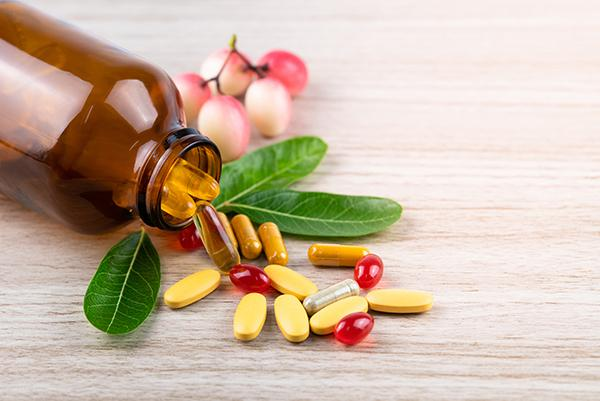
In the nutraceutical, pharmaceutical, and functional ingredient industries, preserving active bio-compounds is critical. Above all, dehydration processes must protect these fragile molecules. Historically, traditional high-temperature hot-air drying operates at $120^\circ\text{C}$ to $200^\circ\text{C}$. Undoubtedly, these harsh process conditions subject delicate phytochemicals, active enzymes, and volatile oils to severe thermal stress. Consequently, thermal degradation leads to compound denaturation, rapid oxidation, and unwanted thermal browning. As a direct result, this lowers bio-solubility and damages the final market value.
In order to solve these problems, modern Low-Temperature Industrial Drying Technologies operate under gentle thermal profiles. Specifically, these systems usually operate between $35^\circ\text{C}$ and $70^\circ\text{C}$ or under controlled vacuum conditions. By systematically decoupling moisture evaporation rates from extreme thermal exposure, these platforms protect delicate compounds. Thus, these specialized drying platforms ensure maximum bioactive retention while simultaneously optimizing total plant utility costs.
Fundamental Mechanics of Low-Temperature Thermal Dehydration
To begin with, moisture removal from biological and botanical matrices fundamentally involves two concurrent transport phenomena that must be carefully managed:
-
Internal Mass Transfer: First, bound and unbound water diffuses continuously from the core to the material surface.
-
External Mass Transfer: Subsequently, phase change and vapor transport occur rapidly at the exposed surface.
In sharp contrast to advanced methods, standard hot-air drying relies heavily on high surface temperatures specifically to drive water molecules outward. However, this aggressive approach frequently causes a highly problematic phenomenon known as case hardening. Specifically, when case hardening occurs, the outer surface skin dries far too quickly. As a result, it seals moisture inside and consequently traps heat that continuously degrades core bioactive compounds.
Fortunately, low-temperature drying technologies effectively overcome this thermodynamic limit by implementing three core engineering strategies:
-
Reduced Boiling Point via Vacuum: First of all, lowering operating pressure drops the phase-change boiling temperature of water. For instance, under a vacuum of $20\text{ mbar}$, water boils at just $17.5^\circ\text{C}$. Therefore, thermal damage is virtually eliminated.
-
Radiant & Hydro-Thermal Energy Transfer: Secondly, technologies like Refractance Window drying use infrared or water-borne conductive transfer. Accordingly, energy targets water molecules directly. As a result, rapid evaporation occurs without ever overheating the solid product matrix.
-
Dehumidified Air Loop Circulation: Thirdly, closed-loop heat pump refrigeration cycles drop inlet air dew points well below $-10^\circ\text{C}$. Consequently, this maintains a sharp moisture-vapor pressure gradient at substantially lower process temperatures.
Engineering Deep-Dive into Low-Temperature Drying Technologies
1. Refractance Window (RW) Drying
Primarily, Refractance Window technology uses circulating hot water heated between $90^\circ\text{C}$ and $95^\circ\text{C}$. In fact, this water flows directly beneath a heat-transparent polymer belt carrying liquid slurries or purees. As the material moves continuously, the liquid film absorbs thermal energy via both radiation and conduction. Meanwhile, product temperatures stay safely below $60^\circ\text{C}$–$70^\circ\text{C}$ owing to continuous and rapid evaporative cooling.
-
Key Advantages: Above all, RW drying offers remarkably fast drying times of 3 to 10 minutes. Furthermore, it operates continuously within an exceptionally minimal footprint. In addition, its bioactive retention rates directly compete with freeze drying.
-
Best Suited For: In particular, water-soluble herbal extracts, fruit purees, sensitive algae suspensions, and high-value liquid nutraceutical formulations.
2. Low-Temperature Spray Drying
Whereas traditional spray dryers expose atomized droplets to harsh air temperatures exceeding $160^\circ\text{C}$, low-temperature spray drying uses a much gentler principle. Specifically, it integrates high-capacity desiccant air dehumidifiers in order to lower inlet air dew points. Thus, this enables highly efficient processing at air temperatures as low as $50^\circ\text{C}$ to $65^\circ\text{C}$.
-
Key Advantages: Besides preventing heat damage, it produces uniform, highly dispersible spherical powders in a single step without thermal scorching.
-
Best Suited For: Mainly, water-soluble botanical extracts, marine collagen peptides, and highly heat-sensitive hydrolyzed proteins.
3. Vacuum Tray Drying (VTD)
In the case of Vacuum Tray Drying, operators carefully load wet cakes, pastes, or sticky extracts onto heated shelves. In turn, these shelves sit inside an airtight steel chamber connected to a specialized vacuum skid. By operating at absolute pressures between $10\text{ mbar}$ and $50\text{ mbar}$, evaporation occurs spontaneously at low thermal thresholds.
-
Key Advantages: Most importantly, operating in a completely oxygen-free environment thoroughly prevents the oxidative degradation of sensitive polyphenols, lipids, and active enzymes.
-
Best Suited For: Especially, high-value sticky extract cakes, wet pharmaceutical pastes, and delicate active ingredients susceptible to oxidation.
4. Industrial Freeze Drying (Lyophilization)
Distinctly, freeze drying operates entirely via sublimation. That is to say, it converts frozen ice directly into water vapor without ever passing through the liquid phase. Initially, the product is deep-frozen down to $-40^\circ\text{C}$. Thereafter, an ultra-high vacuum ($0.05\text{ mbar}$ to $0.5\text{ mbar}$) and gentle radiant heat drive primary and secondary drying.
-
Key Advantages: Without a doubt, it delivers near-perfect retention of cellular structures, living microorganisms, enzymes, and natural aromas ($98\%$ to $99.5\%$ retention).
-
Best Suited For: Above all, probiotic cultures, live functional enzymes, therapeutic peptides, and ultra-pure biological preparations.
5. Heat Pump Dehumidification Drying
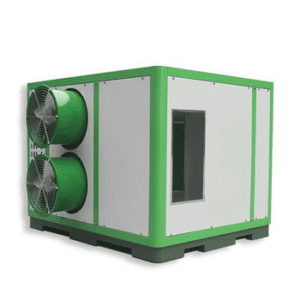
Generally, heat pump dryers utilize a highly efficient closed-loop refrigeration system. First, cold evaporator coils condense water vapor out of circulating air. Next, condenser coils reheat the dry air. Thereafter, the system recirculates this dry air through the drying tunnel at gentle temperatures between $35^\circ\text{C}$ and $50^\circ\text{C}$.
-
Key Advantages: Not only does it provide exceptional energy efficiency by recovering latent heat, but it also isolates the drying process from fluctuating atmospheric humidity.
-
Best Suited For: In particular, whole agricultural roots, botanical slices, medicinal leaves, and sensitive floral raw materials.
6. Continuous Thin-Film Vacuum Drying
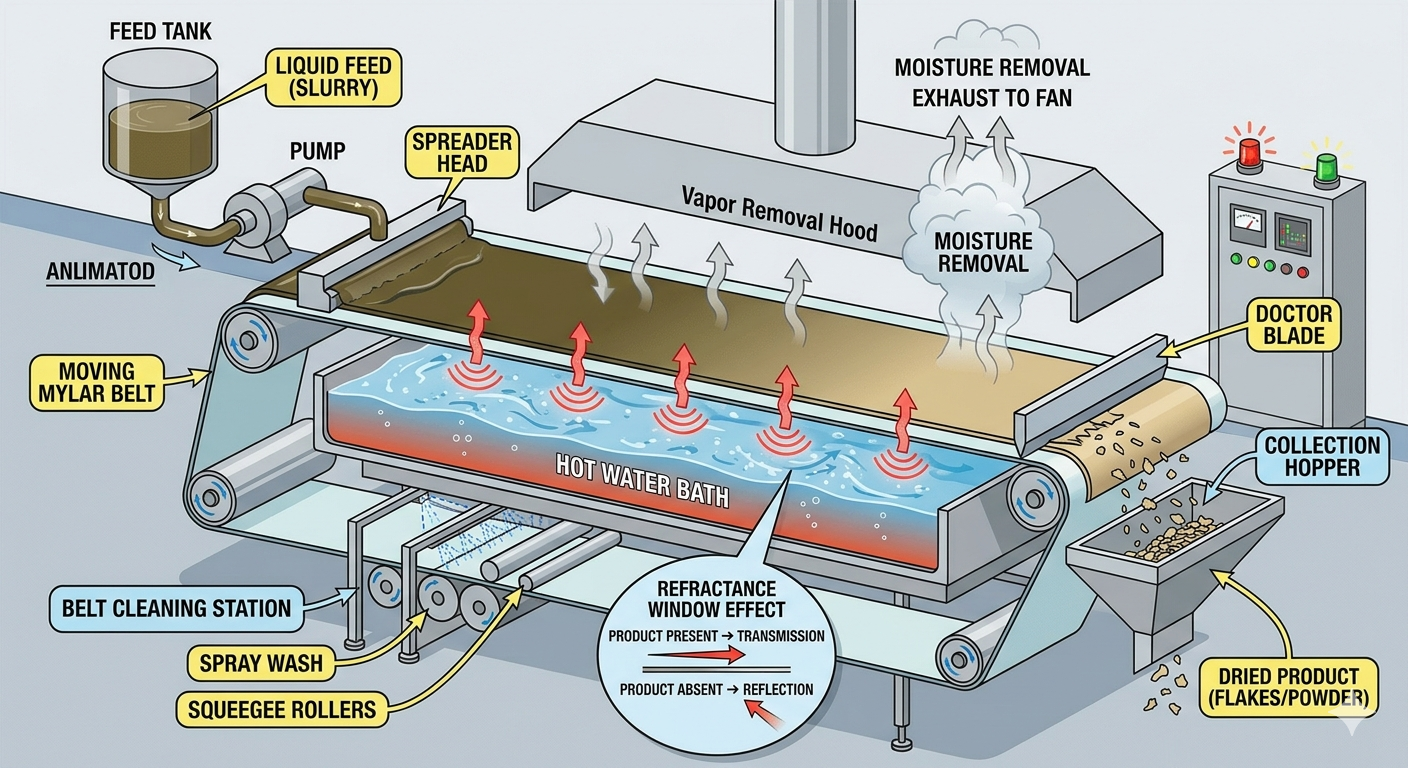
Specifically, this system is designed for highly viscous liquids and concentrated extracts. In operation, it spreads raw material into an extremely thin layer ($0.5\text{ mm}$ to $2\text{ mm}$) across a heated cylindrical surface under vacuum. Simultaneously, mechanical agitator blades continuously refresh the film so as to drive rapid evaporation.
-
Key Advantages: Indeed, it guarantees continuous high-throughput processing for viscous feeds that simply cannot be atomized in standard spray dryers.
-
Best Suited For: For example, high-viscosity botanical concentrates, heavy herbal molasses, and dense plant syrups.
7. Vibratory Fluid Bed Drying
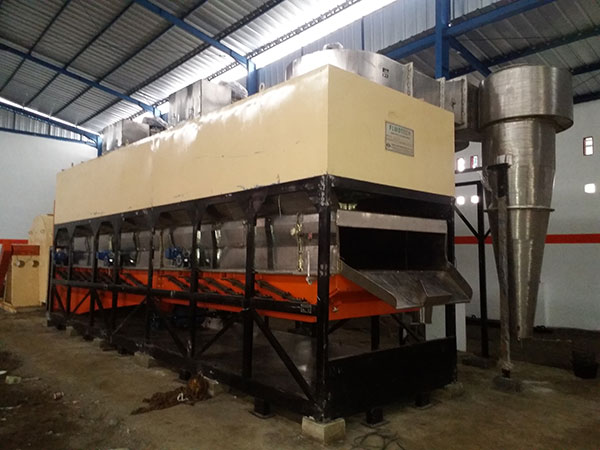
Finally, Vibratory Fluid Bed Dryers gently suspend wet granules or pellets in an upward stream of conditioned low-temperature air. At the same time, mechanical vibration actively assists fluidization. Consequently, this keeps particles separated and ensures uniform heat and mass transfer across the entire bed.
-
Key Advantages: Besides providing precise moisture control, gentle fluidization effectively prevents particle attrition and dusting.
-
Best Suited For: Principally, wet pharmaceutical granules, extruded nutritional pellets, and agglomerated botanical powders.
Technical Comparison Matrix
To further illustrate these differences, the table below provides a comprehensive, side-by-side engineering comparison of these seven low-temperature drying technologies:
| Drying Technology | Primary Physical Form | Processing Mode | Operating Temp. Range (°C) | Operating Pressure Level | Retention of Bioactives (%) | Typical Energy Use (kWh/kg water) |
| Refractance Window (RW) | Liquid, Slurry, Puree | Continuous | 60°C – 70°C | Atmospheric | 92% – 98% | 1.2 – 1.5 |
| Low-Temp Spray Dryer | Liquid, Low Viscosity | Continuous | 50°C – 65°C | Atmospheric / Micro-Vac | 85% – 92% | 1.8 – 2.4 |
| Vacuum Tray Dryer (VTD) | Wet Cake, Paste, Granule | Batch | 35°C – 55°C | 10 – 50 mbar | 90% – 95% | 1.5 – 2.0 |
| Freeze Dryer (Lyophilizer) | Liquid, Solid, Slices | Batch | -20°C – +30°C | 0.05 – 0.5 mbar | 98% – 99.5% | 4.0 – 6.0 |
| Heat Pump Dehumidification | Whole, Slices, Solid | Batch / Semi-Cont. | 35°C – 50°C | Atmospheric | 90% – 96% | 0.3 – 0.5 |
| Continuous Thin-Film | High Viscosity Liquid | Continuous | 40°C – 65°C | Vacuum / Atmospheric | 88% – 94% | 1.3 – 1.7 |
| Vibratory Fluid Bed | Wet Granules, Pellets | Continuous | 40°C – 60°C | Atmospheric | 92% – 96% | 1.4 – 1.8 |
Specific Application Profiles: Selecting the Best Dryer by Product Category
In order to ensure optimal product quality and, equally important, economic viability, equipment selection must match the physical and chemical requirements of your raw material.
Recommended Drying Selection Overview:
-
Liquid Botanical Extracts: Ideally, Refractance Window / Low-Temp Spray Dryer
-
Probiotics & Enzymes: Invariably, Freeze Dryer (Lyophilizer)
-
Protein & Collagen: Preferably, Low-Temp Spray Dryer
-
Herbal Slices & Roots: Most effectively, Heat Pump Dehumidifier
-
Sticky Extract Cakes: Typically, Vacuum Tray Dryer
-
Wet Pharma Granules: Usually, Vibratory Fluid Bed Dryer
Category A: Water-Soluble Botanical Extracts (Ashwagandha, Green Tea, Curcumin)
In general, botanical extracts contain complex mixtures of polyphenols, alkaloids, and glycosides. Crucially, these active compounds are exceptionally sensitive to thermal breakdown.
-
Primary Choice: Refractance Window Dryer
-
Secondary Choice: Low-Temp Spray Dryer
Processing Performance Data:
-
Retention Yield: For instance, Refractance Window drying retains up to 96% of active withanolides in Ashwagandha. In contrast, traditional high-temperature spray drying retains only 78%.
-
Solubility Index: Furthermore, it consistently yields instantly dispersible powders. Specifically, solubility rates exceed 98.5%.
-
Color Preservation: In addition, it perfectly preserves natural botanical pigments without ever triggering thermal browning or darkening.
Category B: Heat-Sensitive Probiotics, Enzymes, & Live Cultures
On the other hand, probiotics and functional enzymes are extremely sensitive to heat and moisture. In fact, processing temperatures above 45°C rapidly denature protein structures. Consequently, high heat kills live microorganisms.
-
Primary Choice: Freeze Dryer (Lyophilizer)
-
Secondary Choice: Vacuum Tray Dryer (Ultra-Low Temp)
Processing Performance Data:
-
Cell Viability Rates: Specifically, lyophilization maintains active probiotic survival rates between 92% and 97%. However, this requires combining the culture with suitable cryoprotectants like trehalose.
-
Enzyme Activity Retention: Moreover, it retains over 95% of initial enzymatic activity, as measured in standard USP units.
-
Residual Moisture: Ultimately, it consistently reduces final moisture below 1.5%. Thus, this low moisture content prevents premature degradation during storage.
Category C: Marine Collagen & Hydrolyzed Proteins
Similarly, collagen peptides and whey protein isolates are highly prone to scorching and Maillard browning. Furthermore, high surface temperatures during dehydration also cause a severe loss of solubility.
-
Primary Choice: Low-Temp Spray Dryer
-
Secondary Choice: Refractance Window Dryer
Processing Performance Data:
-
Bulk Density Control: As a result, it reliably produces uniform powders. Specifically, bulk densities range between 0.35 g/ml and 0.52 g/ml.
-
Organoleptic Quality: Because low-temperature processing prevents protein scorching, it effectively eliminates bitter off-flavors and undesirable fishy odors in marine collagen.
-
Dissolution Profile: Consequently, the final powder achieves complete solubility in cold water in under 15 seconds.
Category D: Whole Botanical Roots, Slices, & Leaves
Likewise, agricultural raw materials require exceptionally gentle drying. Specifically, raw materials like Ginseng roots, Turmeric slices, and Neem leaves need protection so as to preserve essential volatile oils and natural color.
-
Primary Choice: Heat Pump Dryer
-
Secondary Choice: Vacuum Tray Dryer
Processing Performance Data:
-
Volatile Oil Retention: For example, it preserves over 94% of native essential oils. By comparison, conventional hot-air drying preserves only 65%.
-
Energy Savings: In addition, it cuts electrical power consumption by 60% to 70% when compared with traditional thermal drying rooms.
-
Product Appearance: Furthermore, it completely eliminates surface shriveling. As a result, it retains vivid natural green and yellow colors.
Turnkey Plant Integration, GMP Compliance, & Quality Control
Undoubtedly, scaling a low-temperature drying process requires careful engineering. In practice, commercial manufacturing requires strict regulatory compliance and seamless system integration.
Turnkey Plant Integration Flow
-
Raw Material Pre-Treatment: First, Washing, Slicing, and Extraction
-
Concentration Step: Next, Falling Film / Thin-Film Evaporation
-
Primary Dehydration: Then, Low-Temp Dryer (RW / Spray / VTD)
-
Powder Conditioning: Subsequently, Milling, Sifting, and Blending
-
Packaging Integration: Finally, Cleanroom Sachet / Drum Filling
1. Sanitary Machine Construction Standards
Above all, drying equipment used in pharmaceutical production must comply with strict hygienic design standards:
-
Material Selection: Specifically, product contact surfaces must be constructed from SS316L stainless steel. Furthermore, surfaces are polished to a mirror finish ($Ra < 0.4 \ \mu\text{m}$) in order to prevent bacterial attachment. Meanwhile, non-contact components utilize SS304 stainless steel.
-
CIP / SIP Integration: In addition, built-in Clean-In-Place (CIP) spray balls and Sterilization-In-Place (SIP) steam channels ensure automated cleaning cycles. Importantly, these validated cycles run between production batches without requiring manual disassembly.
-
Gasket & Seal Materials: Furthermore, all elastomers and seal materials must strictly meet US FDA 21 CFR 177.2600 standards. Specifically, equipment utilizes USP Class VI PTFE, EPDM, or Silicone.
2. Process Automation & Data Integrity
Nowadays, modern industrial dryers utilize advanced Programmable Logic Controllers (PLCs) with human-machine interface (HMI) touchscreens. Thus, this setup guarantees precise control over operating parameters.
Automated Control Architecture Flow:
Sensors (Temp, Vacuum, Humidity, Flow) ===> PLC Main Controller ===> Automated Actuators (VFD Fans, Valves) & HMI Interface with 21 CFR Part 11 Data Logging
-
Closed-Loop Feedback Control: Continuously, real-time feedback loops automatically adjust process conditions. Specifically, systems adjust heat input, vacuum levels, pump feed rates, and airflows based directly on sensor readings.
-
21 CFR Part 11 Compliance: Meanwhile, automated data logging continuously records historical processing parameters, system alarms, operator actions, and batch records. To sum up, this process ensures full regulatory traceability.
3. Utility Requirements & Energy Recovery
Finally, efficient plant layouts actively integrate heat recovery systems. Specifically, these systems capture waste energy from condensers and exhaust air streams. By utilizing continuous water loops and vacuum recovery skids, plants can significantly lower total utility operating costs. Moreover, it actively supports sustainable manufacturing practices.
Conclusion & Comprehensive Engineering Call to Action
In conclusion, selecting the ideal low-temperature drying system is a critical engineering decision. Undeniably, this choice directly influences product bioactivity, powder quality, operational efficiency, and overall manufacturing profitability. Therefore, equipment must be engineered specifically for your product’s thermal and physical characteristics.
At GENEX Tech Industries LLP (GTI Industrial Dryers), we bring over 40 years of specialized process engineering experience. Specifically, we manufacture, install, and commission complete turnkey processing lines. Indeed, our herbal extraction, nutraceutical processing, and advanced drying systems strictly meet global GMP, US FDA, and ISO standards.
In summary, our engineering team provides comprehensive support across every stage of development:
-
First, Process Feasibility Studies & Material Testing
-
Next, Customized Dryer Selection & Thermal Modeling
-
Then, Hygienic Cleanroom-Compatible Plant Layout & System Engineering
-
Subsequently, Complete Equipment Manufacturing (SS304 / SS316L)
-
Finally, On-Site Installation, Commissioning, Validation, & Technical Support
Reach Out to Our Process Engineering Team Today
With over 40 years of specialized thermal engineering expertise, GTI Dryers designs, manufactures, and commissions custom industrial drying solutions worldwide. Our complete turnkey product line includes Refractance Window Dryers, Low-Temp Spray Dryer and Vacuum Tray Dryer (VTD), Freeze Dryer (Lyophilizer), Heat Pump Dehumidification ,Continuous Thin-Film installations, Vibratory Fluid Bed Drying systems tailored specifically to your facility’s operational requirements.
Contact our technical application engineering team today to schedule a sludge characterization test, request a plant energy audit, or receive a comprehensive technical proposal.
Contact & Consultation Details
-
Email: mktg@foodtechprojects.com | sales@foodtechprojects.com
-
Phone / WhatsApp: +91-97489 06968 | +91-93300 77417
-
Websites: www.foodtechprojects.com | www.gtidryers.com
-
Head Office: 10C, Sir William Jones Sarani (Middleton Row), Park Street, Kolkata – 700071, India