Introduction to Industrial Instant Noodle Dehydration
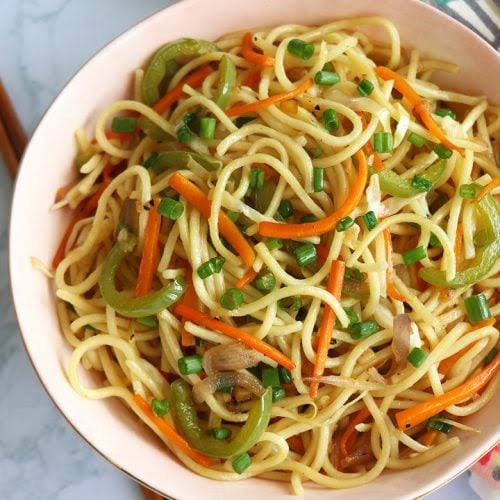
Global consumer demand for convenient, nutritious, and shelf-stable meals grows rapidly across every major food market. Specifically, non-fried instant noodles, air-dried ramen blocks, cup noodles, and extruded noodle cakes lead this commercial expansion. Historically, manufacturers used deep-fat palm oil frying to remove moisture from steamed noodle waves. However, strict health regulations, rising edible oil costs, and consumer preference for low-fat foods have transformed production standards. Consequently, modern processors choose hot-air dehydration over traditional oil frying. Therefore, leading instant noodle factories rely exclusively on industrial continuous apron band dryers, multi-tier mesh-belt dryers, and multi-zone hot-air drying tunnels.
The Role of Genex Tech Industries LLP in Instant Noodle Processing
As a leading instant noodle dryer manufacturer, Genex Tech Industries LLP operates through its specialized engineering divisions. Specifically, these divisions are GENEX Industrial Dryers and Food Tech Projects. Moreover, the company designs, fabricates, and commissions high-capacity continuous drying lines for global instant noodle factories. Engineers build these thermal systems to dehydrate steamed, wavy noodle blocks rapidly without oil absorption. Simultaneously, the machines preserve the porous internal structure needed for fast boiling-water rehydration. Additionally, this engineering manual covers moisture migration dynamics, apron band dryer architecture, instant noodle equipment selection, sanitation protocols, and line integration benchmarks. As a result, plant operators maximize line throughput, achieve strict shelf-life stability, and eliminate oil rancidity defects.
Thermal Dynamics and Rehydration Science in Instant Noodle Drying
Drying pre-steamed instant noodles differs fundamentally from drying ungelatinized raw dough. During instant noodle production, dough sheets pass through slitting rollers and wavy forming guides before entering a continuous steam tunnel. Inside the steamer, saturated steam operates between 95 degrees Celsius and 100 degrees Celsius. This thermal energy gelatinizes wheat or rice starch granules and sets the gluten protein network. Consequently, noodle strands exit the steamer with a fixed internal wave structure. At this stage, their wet-basis moisture content ranges between 35 percent and 42 percent.
Porous Structure Formation and Moisture Targets
Accordingly, an industrial instant noodle dryer must reduce this post-steaming moisture down to 8 percent to 10 percent. For specialized ultra-dry export ramen cakes, target moisture drops even lower to 3 percent to 5 percent. Simultaneously, the thermal system creates microscopic internal pores inside every steamed noodle strand. These tiny pores allow boiling water to penetrate rapidly during consumer preparation. Therefore, achieving a three-minute rehydration time requires precise control over two distinct thermal phases:
-
High-Velocity Surface Setting and Puffing Phase: First, steamed noodle cakes enter Zone 1 of the drying tunnel. Here, high-velocity hot air at 80 degrees Celsius to 95 degrees Celsius strikes the wavy strands. Rapidly, surface moisture flashes off into vapor. This quick flash locks the porous starch-gluten matrix in place before strands collapse or fuse together.
-
Controlled Core Moisture Diffusion Phase: Next, noodle blocks advance into intermediate thermal zones. Here, air temperature and relative humidity balance out carefully. Consequently, bound moisture inside each strand migrates outward through capillary channels without scorching the exterior surface.
Preventing Block Warping and Case Hardening
However, uneven airflow or excessive early heat seals the outer skin of the noodle cake prematurely. As a result, trapped internal steam expands violently inside the strands. This internal pressure causes blistered surfaces, warped cake shapes, and brittle breakage during downstream wrapping. Furthermore, incomplete core drying leaves residual water activity above safe thresholds. High water activity leads to mold growth during warehouse storage. Therefore, modern instant noodle dryers use multi-zone temperature profiling and balanced vertical air circulation. This engineering design guarantees uniform moisture removal across every single noodle wave.
Dryers Required in Instant Noodle Manufacturing
An automated, non-fried instant noodle manufacturing plant relies on specialized drying machinery for both the primary noodle cakes and the accompanying seasoning and garnish sachets. Plant engineers must deploy specific dryer architectures matched to each component of the instant noodle line. Below, we examine the exact industrial dryers required in instant noodle manufacturing:
1. Multi-Tier Mesh-Belt Dryers (Multi-Pass Conveyor Dryers)
-
Operational Mechanism: First, automated distributing arms place molded instant noodle cakes onto a perforated stainless steel wire mesh belt. Next, the conveyor carries cakes horizontally through stacked drying decks inside a heavily insulated housing. Inside each tier, high-pressure centrifugal fans force heated air vertically through the open wire mesh and porous noodle waves.
-
Role in Instant Noodle Manufacturing: Specifically, multi-tier mesh-belt dryers serve as the primary thermal heart for non-fried instant noodle cakes, cup noodle blocks, and wavy ramen bricks.
-
Key Engineering Advantages: Most notably, stacking 3 to 5 conveyor passes vertically maximizes drying residence time within a compact factory floor footprint. Furthermore, open-weave stainless steel belts allow unobstructed airflow penetration from both top and bottom surfaces.
2. Continuous Apron Band Dryers (Multi-Zone Hot-Air Tunnels)
-
Operational Mechanism: Here, an endless moving perforated metal apron or heavy-duty link conveyor transports noodle blocks smoothly through an elongated multi-zone thermal tunnel. Meanwhile, independent plenum chambers control air temperature, velocity, and exhaust humidity along the tunnel length.
-
Role in Instant Noodle Manufacturing: Primarily, processors deploy continuous apron band dryers for delicate flat instant noodles, ultra-thin rice noodle cakes, and specialty fragile ramen shapes requiring smooth support surfaces without wire indentations.
-
Key Engineering Advantages: Because noodle blocks rest on a flat, perforated metallic apron, delicate cakes suffer zero mechanical deformation or surface marking. Consequently, fragile noodle blocks maintain 100 percent geometric integrity from inlet to discharge.
3. Vibratory Fluidized Bed Dryers (VFBD) for Seasoning and Garnishes
-
Operational Mechanism: In this auxiliary system, a perforated stainless steel deck vibrates gently while heated air blows upward through the perforations. This upward airflow suspends individual particles in a fluidized air cushion.
-
Role in Instant Noodle Manufacturing: Food plants integrate VFBDs on parallel ingredient lines to dehydrate instant noodle seasoning powders, dehydrated soup vegetables (carrots, scallions, corn, peas), and textured protein garnishes.
-
Key Engineering Advantages: As a result, granular soup ingredients and seasoning blends achieve rapid heat transfer and uniform moisture reduction down to 3 percent to 5 percent without clumping.
Engineering Architecture of Genex Multi-Tier and Apron Band Dryers
Genex engineers design continuous mesh-belt and apron band dryers to withstand rigorous 24×7 factory operating schedules. Every structural, mechanical, and thermal sub-system meets strict international food-grade engineering benchmarks.
Food-Grade Metallurgy and Insulated Enclosure Design
To eliminate corrosion from continuous steam and washdown chemicals, Genex uses certified AISI 304 or AISI 316 stainless steel. Specifically, all product-contact parts use this metallurgy, including wire mesh belts, apron plates, belt support tracks, air plenums, and inner chamber walls. Meanwhile, the structural exterior frame uses heavy-gauge steel protected by food-safe anti-corrosive coatings. Furthermore, double-walled side panels contain 100 mm to 150 mm of high-density rockwool insulation. This heavy insulation stops external heat radiation and keeps factory floors cool and safe.
Multi-Zone Thermal Profiling and Airflow Balance
Instant noodle blocks need progressive thermal staging to prevent scorching while driving out deep core moisture. Therefore, Genex divides the drying tunnel into 4 to 8 independent thermal zones. Each zone features dedicated steam or thermic fluid heat exchangers, circulation fans, PT100 sensors, and motorized dampers:
-
Zone 1 & Zone 2 (Rapid Surface Flash & Structure Fixation): Initially, air temperatures run between 85 degrees Celsius and 95 degrees Celsius with high vertical air velocity. Immediately, this intense airflow evaporates free surface water and prevents adjacent noodle waves from sticking together.
-
Zone 3 & Zone 4 (High-Efficiency Core Dehydration): Next, temperatures stabilize between 75 degrees Celsius and 85 degrees Celsius while dampers retain controlled air humidity. Consequently, internal moisture diffuses steadily out of the starch core without overheating exterior strands.
-
Zone 5 & Cooling Zone (Equilibration & Ambient Stabilization): Finally, temperatures step down gradually to 50 degrees Celsius, followed by an ambient cooling section. As a result, noodle cakes exit within 5 degrees Celsius of room temperature, preventing condensation inside wrapper films.
Precision Belt Drive and Anti-Stick Conveying Systems
The conveyor uses heavy-duty stainless steel balanced-weave wire mesh or perforated apron plates for maximum open airflow. Moreover, variable-frequency drive (VFD) motors let operators adjust residence times smoothly between 25 minutes and 55 minutes. Operators set these speeds based on noodle thickness and cake weight, typically 50 grams to 100 grams per block. Additionally, pneumatic belt tensioners and automatic side-tracking rollers prevent belt drift during continuous multi-shift runs.
Solving Stickiness, Block Deformation, and Energy Losses in Noodle Lines
Commercial instant noodle plants often face three recurring bottlenecks: wet strands sticking to belts, uneven top-to-bottom drying, and high steam consumption. Genex engineering solves each issue through targeted design innovations.
Three-Stage Anti-Stick and Uniformity Engineering
-
Pre-Dryer Air-Knife Stripping and Divider Guides: First, wet noodle blocks pass beneath high-velocity ambient air-knives right after the steamer and cutting station. Immediately, these air jets strip off surface condensate and separate wavy strands before they touch the metal mesh or apron surface.
-
Alternating Cross-Flow and Vertical Air Penetration: Second, Genex installs alternating top-to-bottom and bottom-to-top airflow plenums across sequential zones. Consequently, both the upper crust and bottom base of every noodle block dry at identical rates. This balanced flow eliminates curled edges and soft centers.
-
Closed-Loop Exhaust Heat Recovery: Third, exhausting hot, humid air directly outdoors wastes valuable thermal energy. Therefore, Genex integrates air-to-air plate heat exchangers that capture waste heat from exhaust ducts to pre-heat incoming fresh air. As a result, plants cut steam or fuel consumption by 18 percent to 22 percent annually.
Technical Specifications and Instant Noodle Dryer Selection Datasheets
To help project managers, food technologists, and plant engineers evaluate equipment, we provide detailed operational datasheets below. These tables outline standard technical parameters for Genex instant noodle dryers across various plant capacities.
Table 1: Technical Specification Matrix for Genex Instant Noodle Dryers
| Technical Parameter | Compact Commercial Line | Mid-Scale Industrial Line | High-Capacity Turnkey Plant |
| Output Capacity | 250 kg/hr to 500 kg/hr | 1,000 kg/hr to 2,500 kg/hr | 3,000 kg/hr to 8,000 kg/hr |
| Noodle Cake Output | ~4,000 to 8,000 cakes/hr | ~15,000 to 38,000 cakes/hr | ~45,000 to 120,000 cakes/hr |
| Inlet Moisture (Post-Steam) | 35 percent to 42 percent | 35 percent to 42 percent | 35 percent to 42 percent |
| Outlet Final Moisture | 8 percent to 10 percent | 8 percent to 10 percent | 8 percent to 10 percent |
| Dryer Configuration | 3-Tier Mesh-Belt Dryer | 5-Tier Multi-Zone Mesh Dryer | 5-to-7 Tier High-Throughput System |
| Heating Source Options | Steam / Electric / Thermic Fluid | Saturated Steam / Thermic Fluid | High-Pressure Steam / Dual-Fuel HAG |
| Operating Temperature | 60 degrees C to 95 degrees C | 60 degrees C to 100 degrees C | 55 degrees C to 105 degrees C |
| Drying Residence Time | 30 minutes to 45 minutes | 30 minutes to 50 minutes | 35 minutes to 55 minutes |
| Contact Material | Food-Grade AISI 304 SS | Food-Grade AISI 304 / 316 SS | Heavy-Duty AISI 316 Stainless Steel |
| Control & Automation | PLC with Digital HMI Panel | Automated PLC + Recipe Memory | Full SCADA Integration + IoT Logging |
Table 2: Dryer Allocation Guide Within an Instant Noodle Manufacturing Plant
| Instant Noodle Component | Required Dryer Type | Core Engineering Function | Target Moisture Content |
| Non-Fried Ramen Noodle Cakes | Multi-Tier Mesh-Belt Dryer | Vertical airflow penetrates thick wavy cakes uniformly within a compact footprint. | 8 percent to 10 percent |
| Cup Noodle Blocks | Continuous Apron Band Dryer | Flat perforated apron support prevents edge marking and preserves block shape. | 8 percent to 9 percent |
| Delicate Rice / Flat Instant Noodles | Continuous Apron Band Dryer | Zero drop between tiers prevents brittle noodle cake cracking and edge breakage. | 9 percent to 11 percent |
| Dehydrated Soup Vegetables & Garnishes | Vibratory Fluidized Bed Dryer | Gentle fluidization dries diced vegetables evenly without scorching or clumping. | 4 percent to 6 percent |
| Instant Seasoning & Broth Powders | Vibratory Fluidized Bed Dryer | High thermal transfer dries free-flowing seasoning blends rapidly for sachet packing. | 3 percent to 5 percent |
Plant Floor Integration and Video Demonstration
In an automated instant noodle factory, the continuous dryer connects upstream dough forming with downstream packaging. Every stage synchronizes via central PLC speed control to prevent line backups or product starvation:
Upstream Forming and Steaming Synchronization
-
Compounding, Rolling, and Slitting: First, wheat flour, alkaline brine (kansui), and water mix into crumbly dough. Next, dough passes through reduction rollers and precision slitting combs to form wavy noodle strands.
-
Continuous Tunnel Steaming: Then, the wavy noodle carpet travels through a saturated steam chamber for 90 seconds to 150 seconds. This step achieves complete starch gelatinization.
-
Cutting, Folding, and Molding: Immediately afterward, rotary cutters slice the steamed sheet into exact lengths. Automated folders then shape each piece into rectangular or round blocks inside stainless steel molds.
Multi-Zone Drying and Packaging Synchronization
-
Automated Dryer Transfer: Subsequently, synchronized transfer conveyors place molded noodle blocks in neat rows across the Genex multi-tier mesh belt or continuous apron band dryer.
-
Multi-Stage Hot-Air Dehydration: Inside the insulated tunnel, blocks travel across heated tiers where high-velocity air extracts moisture without oil absorption.
-
Integrated Cooling and Pillow-Pack Wrapping: Finally, cooled, crisp noodle cakes discharge onto takeaway conveyors. These conveyors feed high-speed pillow-pack wrappers, seasoning sachet dispensers, and automated cartoners.
To visualize the robust mechanical construction, internal airflow dynamics, and smooth operation of these industrial drying systems, plant managers can review actual operational footage. Specifically, Genex Tech Industries LLP provides a detailed video demonstration via its official channel:
Watch Genex Industrial Band Dryer Operation on YouTube
In this video, viewers observe the continuous feed mechanism, multi-zone thermal housing, internal stainless steel mesh transport, and steady discharge of perfectly dried food products under automated factory conditions.
Hygiene Compliance, Sanitation, and Preventative Maintenance
Global food brands and export regulators enforce strict compliance with US FDA, CE, HACCP, and ISO 22000 hygiene frameworks. Accordingly, Genex Tech Industries LLP builds sanitary design principles into every instant noodle dryer:
Sanitary Construction and Clean-In-Place Features
-
Full-Length Insulated Access Doors: First, wide hinged doors line both sides of every drying module. These doors give sanitation teams immediate access to all conveyor tiers, apron bands, and internal plenums.
-
Sloped Drainage Floors and Washdown Readiness: Second, stainless steel bottom pans slope toward sanitary drain ports. Washdown water drains completely without pooling inside the machine.
-
Multi-Stage Intake Air Filtration: Third, all makeup air passes through washable coarse pre-filters and fine particulate filters. This filtration blocks airborne dust and insects from entering the food zone.
Mechanical Reliability for 24×7 Continuous Duty
-
Outboard Bearings and Drive Assemblies: Engineers mount all conveyor bearings, shaft seals, and chain drives outside the heated chamber. Consequently, lubricants never contact the noodle stream, and technicians service parts without halting production.
-
Heavy-Duty Tensioning and Modular Spare Parts: Standardized sprockets, modular wire mesh sections, perforated aprons, and industrial VFD motors ensure fast maintenance and high annual uptime.
Conclusion
Ultimately, producing oil-free, hot-air dried instant noodles requires precision thermal engineering and rugged continuous machinery. Achieving crisp texture, 8 percent to 10 percent final moisture, zero warping, and fast boiling-water rehydration depends on multi-zone airflow control and apron band technology. Genex Tech Industries LLP combines over four decades of drying expertise, certified stainless steel fabrication, energy-saving heat recovery, and turnkey execution. By partnering with Genex, instant noodle producers secure superior product quality, lower utility costs, and scalable commercial profitability.
Official Corporate Contact and Call to Action
For turnkey instant noodle plant consultations, customized dryer capacity calculations, product drying trials, and formal commercial quotations, contact the engineering team at Genex Tech Industries LLP today:
Head Office Address:
GENEX Tech Industries LLP
10C, Sir William Jones Sarani (Middleton Row), Park Street,
Kolkata – 700071, West Bengal, India
Direct Phone / WhatsApp Contact:
+91-97489 06968 | +91-93300 77417
Official Business Email:
mktg@foodtechprojects.com | sales@foodtechprojects.com
Official Company Websites: