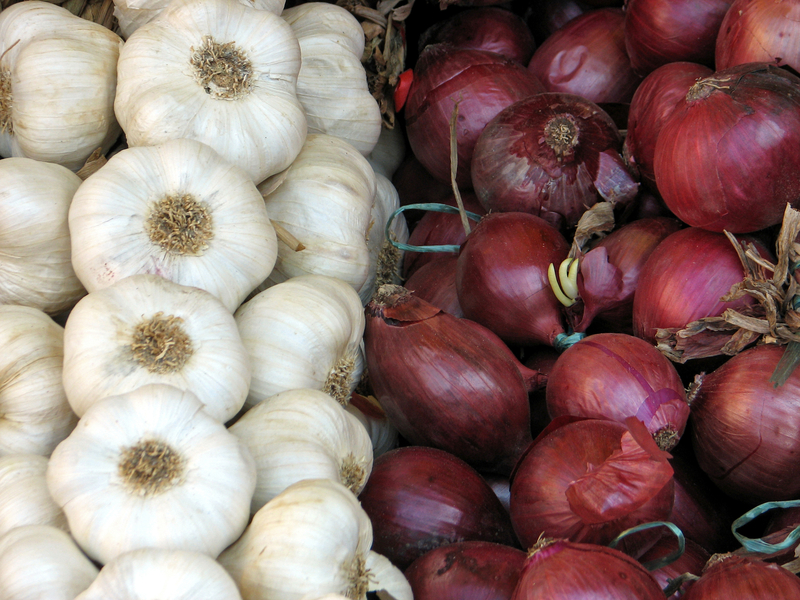
Exporting dehydrated onion and garlic products requires strict process control from raw bulb intake to final packing. Fresh onions typically contain 85% to 88% moisture, whereas fresh garlic holds 60% to 68% moisture. Without controlled handling, uneven drying quickly ruins color, pungency, aroma, and shelf life. Furthermore, buyers in North America, Europe, the Middle East, and Asia enforce strict quality limits. Specifically, they carefully inspect moisture levels, foreign matter, mesh size, and microbial counts. Therefore, building a reliable industrial processing line is essential for consistent export shipments.
Moreover, industrial buyers judge suppliers by batch-to-batch repeatability rather than one-off samples. Accordingly, your process flow must stabilize raw material prep, dehydration temperatures, cooling, milling, sieving, and barrier packaging. When every stage runs smoothly, shipments meet destination standards reliably. In addition, value-added options like flakes, granules, essential oils, and extracts boost overall plant yield. Consequently, this guide explains how a modern industrial onion and garlic line operates and which dryer fits each product.
Why Export-Grade Dehydration Matters for Onion & Garlic Processors
Fresh bulbs are heavy to transport, prone to sprouting, and sensitive to seasonal price swings. In contrast, dehydrated onion and garlic offer a shelf life of 12 to 24 months. Furthermore, proper storage keeps temperatures below 25°C and relative humidity under 65%. Removing excess water cuts freight weight dramatically per usable kilogram. Additionally, standardized powder and flake grades eliminate peeling and chopping labor inside food factories. As a result, soup plants, seasoning blenders, sauce makers, and snack lines rely on these ready-to-blend ingredients year-round.
However, cutting corners during dehydration creates immediate export rejections. If drying air runs too hot, natural sugars and amino acids brown prematurely. As a result, white onion or cream garlic powder turns dark and bitter. Meanwhile, volatile sulfur and aromatic compounds escape rapidly under excessive heat. Consequently, this leaves a flat flavor profile that fails buyer sensory panels. Even worse, leaving final moisture above 5% to 6% causes caking and mold growth during ocean transit. Therefore, precision thermal control and hygienic stainless steel design are mandatory for export success.
| Export Specification Parameter | Typical Onion Powder Target | Typical Garlic Powder Target | Why Exporters Track It |
| Final Moisture Content | 4% to 5% (up to 6% max) | 4% to 6% (typically under 6%) | Prevents caking, browning, and mold in transit |
| Typical Powder Mesh Size | 80 to 100 mesh (up to 120 mesh) | 40 to 100 mesh (commonly 80 to 100 mesh) | Controls dispersion speed and blend uniformity |
| Total Ash Content | Around 5% to 6% maximum | Typically under 5% to 6% | Indicates soil carryover or cleaning efficiency |
| Foreign Matter | Nil / zero tolerance | Under 0.5% to nil per buyer spec | Prevents customs holds and buyer rejections |
| Storage Shelf Life | 12 to 24 months in sealed liners | 12 to 24 months in sealed liners | Protects aroma and color across global supply chains |
| Common Packaging Format | 20 kg to 25 kg lined bags/cartons | 20 kg to 25 kg lined bags/cartons | Shields dry powder from ambient humidity |
Complete Onion Processing Line: From Raw Bulbs to Powder & Extracts
Raw Onion Sorting, Washing, Peeling & Slicing
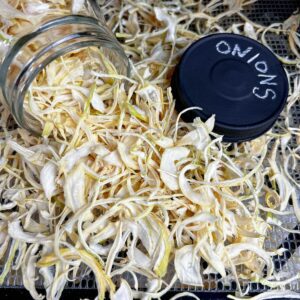
First, an industrial onion line begins with careful raw material selection and sorting. White onions are widely favored for light cream-colored powder and mild sweetness in Western markets. Conversely, red and pink onions deliver sharper pungency and distinct color for regional formulations. Initially, vibrating screens, air classifiers, and inspection conveyors separate sprouted or rotten bulbs. Furthermore, they remove stones, mud clods, and loose skins effectively. Next, bubble washers and spray rinsers scrub away field soil without bruising the bulbs.
After washing, automatic peeling and trimming units remove outer dry layers and cut roots cleanly. However, manual peeling slows throughput and raises contamination risks at commercial scale. Therefore, automated peeling lines improve hygiene and keep labor costs predictable. Once peeled and inspected, industrial slicers and dicers cut onions into uniform slices, rings, or dices. Indeed, uniform thickness is vital for predictable drying rates. Similarly, even pieces prevent scorched edges or damp centers inside the dryer.
Multi-Stage Dehydration, Cooling, Milling & Sieving
Next comes dehydration, which forms the heart of the processing line. Depending on capacity and quality goals, processors choose continuous mesh belt dryers or multi-stage band dryers. Additionally, combination dryers and low-temperature drying systems are used for specific grades. Consequently, operators stage airflow velocity, zone temperatures, and residence times carefully. As a result, moisture drops steadily without caramelizing natural sugars. After drying, cooling zones lower product temperature near ambient levels before downstream handling. Thus, this step prevents condensation inside hoppers or grinders.
Finally, dried onion flakes move into controlled milling, sieving, and blending equipment. Specifically, mills and pulverizers grind crisp onion into fine powder with minimal friction heat. Limiting heat protects natural aroma and prevents clumping. Thereafter, vibratory sifters classify powder into exact grades such as 80 mesh or 100 mesh. Meanwhile, oversized particles return to the mill or move to granule streams. Subsequently, ribbon or paddle blenders homogenize batches before automatic weighing, metal detection, and barrier bagging.
Value-Added Onion Oil & Quercetin Extraction
Beyond standard flakes and powder, modern onion lines often integrate value-added extraction modules. For instance, a steam distillation unit crushes onion material and passes steam through a distillation vessel. Condensers and separators then collect volatile onion oil for flavoring, seasoning, cosmetic, or nutraceutical buyers. Likewise, a quercetin extraction line mills selected onion material and performs solvent extraction. Afterwards, filtration, concentration, and solvent recovery systems produce high-purity quercetin for supplements and functional foods.
Complete Garlic Processing Line: From Bulbs to Flakes, Powder & Oil
Bulb Breaking, Peeling, Washing & Slicing
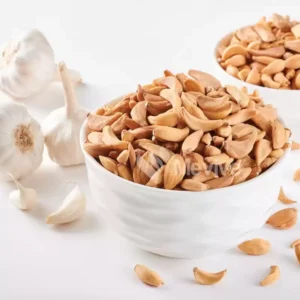
Garlic processing shares similarities with onion dehydration; however, it requires distinct mechanical handling. First, raw garlic bulbs are received, weighed, and pre-cleaned to remove loose husks and soil. Because garlic grows as tight cloves inside papery wrappers, a bulb breaker separates cloves gently. In turn, this avoids crushing the flesh prematurely. Following clove separation, dedicated garlic peeling machines strip papery skins cleanly. Depending on line design, these peelers use dry air friction or gentle mist-assisted action for high yield.
Once peeled, cloves pass over inspection tables where workers remove discolored or damaged pieces. Next, garlic cloves undergo washing and controlled slicing into uniform flakes or chips. Additionally, optional blanching is applied in specific lines to stabilize color and reduce enzymatic activity. Ultimately, keeping slice thickness uniform ensures moisture exits evenly across the entire dryer bed.
Garlic Dehydration, Cooling, Pulverizing & Packing
Dehydration of sliced garlic requires careful control to hit export moisture targets. Specifically, flakes and granules typically dry to 5% to 7% moisture, whereas fine powder requires even lower levels. Therefore, processors select continuous band dryers, mesh belt dryers, fluid bed dryers, or vacuum dryers. Moreover, the right choice depends on throughput, heat sensitivity, and target aroma profile. Immediately after drying, cooling conveyors lower product temperature so slices stay crisp and brittle for milling.
In the powder section, cooled garlic flakes enter a hammer mill, pin mill, or pulverizer. Furthermore, each mill pairs with an enclosed dust collection system. Because garlic powder is fine and pungent, enclosed chutes and odor-control units keep the plant clean. Next, vibro sifters separate fine powder into target sizes, commonly 40 to 100 mesh. Blending then ensures uniform pungency and color across every batch. Finally, powder is packed into food-grade inner liners inside multi-wall bags or cartons for cool, dry storage.
Garlic Oil & Oleoresin Extraction Systems
For exporters seeking higher margins, a garlic oil and oleoresin section can run alongside primary dehydration. Typically, garlic is crushed or milled and extracted via steam distillation or food-grade solvents. Afterward, oil-water separators and filters clarify the extract before storage in sealed stainless steel tanks. Consequently, this setup allows processors to serve seasoning blenders, sauce makers, pharmaceutical firms, and nutraceutical brands.
| Processing Stage | Primary Function in Onion & Garlic Lines | Key Export Quality Impact |
| Cleaning & Sorting | Removes soil, stones, culls, and defective bulbs/cloves | Lowers ash and prevents foreign matter rejections |
| Peeling & Trimming | Strips skins/husks and trims roots or stems hygienically | Raises usable yield and reduces microbial load |
| Slicing / Dicing | Produces uniform slices, chips, or pieces | Ensures even drying and consistent flake appearance |
| Dehydration & Cooling | Reduces moisture to target levels and cools product | Locks in color, aroma, shelf life, and crispness |
| Milling, Sieving & Packing | Grinds to exact mesh size, blends, and seals in liners | Delivers free-flowing powder with long shelf life |
Which Dryer Is Best for Which Product? (Practical Selection Guide)
Selecting the right dryer is one of the highest-impact decisions for an onion, garlic, or spice exporter. Notably, different products react differently to airflow velocity, bed depth, temperature, and drying time. For example, a dryer suited for sturdy root slices can scorch delicate herbs. Conversely, a gentle herb dryer may fail to dry dense chunks efficiently. Therefore, matching the dryer type to product form and thermal sensitivity protects both quality and energy costs.
Mesh Belt Dryers & Continuous Band / Apron Dryers
Continuous mesh belt dryers and multi-zone band dryers are workhorses for medium- to large-scale dehydration. Specifically, they handle sliced onions, garlic slices, turmeric fingers, ginger slices, and chilli peppers reliably. Product travels continuously across perforated belts through controlled temperature and airflow zones. Accordingly, operators apply higher moisture removal early when surface water is abundant. Later zones, however, use gentler heat as pieces dry. Furthermore, multi-zone designs prevent case-hardening and uneven browning across wide production runs.
Fluidised Bed Dryers & Vibratory Fluidised Bed Dryers
Fluidised bed dryers suspend particles in upward-moving conditioned air. Thus, this design suits granules, crushed spices, small diced pieces, and powder moisture stabilization. Similarly, vibratory fluidised bed dryers add controlled mechanical vibration to move material smoothly forward. Moreover, this gentle vibration prevents clumping and agglomeration. Consequently, for exporters finishing seasoning granules or conditioned powders, vibratory fluid beds deliver uniform moisture and free-flowing texture.
Heat Pump Dryers & Vacuum Dryers
Heat pump dryers recover and recycle thermal energy while operating at lower temperatures. Consequently, they are ideal for heat-sensitive herbs, medicinal spices, and premium export grades. In addition, low temperatures preserve delicate volatile oils and natural color. Meanwhile, vacuum dryers operate under reduced pressure to enable low-temperature drying. As a result, this protects sensitive aromatic compounds in specialized applications. Ultimately, both options suit processors prioritizing gentle thermal treatment over sheer bulk throughput.
Refractance Window Dryers & Other Specialized Dryers
Refractance window dryers transfer thermal energy through a specialized film using warm water. Specifically, they dry purees, pastes, sensitive powders, and botanical extracts quickly with minimal thermal stress. As a result, ingredients retain vibrant color, nutrients, and volatile flavor notes. Meanwhile, broader industrial lines also deploy rotary drum dryers, spray dryers, or combination dryers. Indeed, these systems handle liquid concentrates, slurries, or multi-stage drying profiles across food and ingredient plants.
| Product / Material Form | Best-Fit Dryer Option(s) | Why This Dryer Fits the Product |
| Sliced Onion & Garlic Flakes (Medium/High Volume) | Mesh Belt Dryer or Band / Apron Dryer | Continuous throughput with multi-zone temperature and airflow control |
| Garlic / Onion Granules & Seasoning Particles | Fluidised Bed Dryer or Vibratory Fluidised Bed Dryer | Even air-solid contact and controlled motion prevent clumping |
| Spice & Seasoning Powders (Moisture Conditioning) | Vibratory Fluidised Bed Dryer | Gentle agitation maintains uniform moisture without caking |
| Aroma-Sensitive Herbs & Export-Grade Spices | Heat Pump Dryer | Low-temperature drying preserves volatile oils, aroma, and color |
| Heat-Sensitive Extracts, Pastes & Botanicals | Refractance Window Dryer or Vacuum Dryer | Gentle thermal exposure protects color, flavor, and sensitive actives |
| Whole Spices (Turmeric Fingers, Chillies, Pepper) | Mesh Belt Dryer or Multi-Zone Belt System | Gradual moisture removal suited to denser whole pieces |
Plant Capacity Planning, Hygiene & Export Compliance
Scaling Throughput & Utility Requirements
Designing a profitable export plant starts with realistic capacity and utility planning. Typically, small and medium plants start around 500 kg/day or compact modular units. In practice, this scale helps validate regional raw material supply and early buyer contracts. Conversely, larger export facilities scale up to multi-ton daily raw input lines. Engineers therefore size equipment around raw moisture, target final moisture, and product mix. Additionally, they evaluate available heat and power utilities before finalizing layouts.
Sanitary Construction, Dust Control & Automation
Food safety and hygiene must be built into every joint, weld, and transfer point. Consequently, export-grade plants rely on SS304 and SS316 food-grade stainless steel contact surfaces. Smooth sanitary finishes eliminate dead pockets where residue could collect. Furthermore, easy-clean access doors and controlled air filtration protect product purity. Dust collection and odor management are equally critical in onion, garlic, and spice facilities. Specifically, proper extraction keeps airborne particles from settling overhead or causing cross-contamination.
Automation and quality control tie the entire operation together. For instance, PLC and SCADA control options let operators monitor zone temperatures, airflow, and belt speeds across shifts. As a result, automated tracking reduces manual errors and keeps drying consistent. Finally, pairing reliable plant operation with clear batch records and Certificates of Analysis builds buyer trust. Checking moisture right before packing and maintaining cool storage ensures containers arrive in top condition.
Conclusion: Building a Reliable Export-Ready Line
Ultimately, success in dehydrated onion, garlic, and spice exports requires disciplined engineering from intake to packing. Washing, peeling, slicing, drying, cooling, milling, and sieving must work together seamlessly. When every stage stays balanced, exporters achieve lower moisture variability and brighter natural color. Consequently, strong aroma retention and fewer shipment claims naturally follow. Furthermore, choosing the right dryer for each product form protects margins as global demand grows. Adding oil or extract recovery modules also creates even greater revenue potential from raw bulbs.
If you are planning an onion flakes and powder line, a garlic processing plant, or a spice drying system, GENEX Tech Industries LLP can help. Specifically, our engineering team supports process flow design, plant layout, capacity planning, dryer selection, and turnkey installation. Reach out today to discuss your raw material throughput, target specifications, and project timeline.
Contact & Engineering Consultation
Head Office Address:
GENEX Tech Industries LLP
10C, Sir William Jones Sarani (Middleton Row), Park Street,
Kolkata – 700071, West Bengal, India
Direct Phone / WhatsApp Contact:
+91-97489 06968 | +91-93300 77417
Official Business Email:
mktg@foodtechprojects.com | sales@foodtechprojects.com
Official Company Websites: