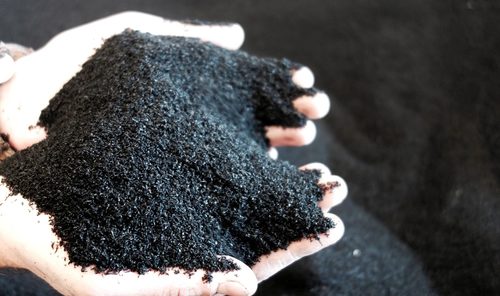
The global synthetic rubber industry relies on thermal drying. As a result, moisture removal ensures long-term product stability. Furthermore, it improves vulcanization performance during downstream processing.
However, trapped moisture causes severe defects like internal porosity. Consequently, it leads to uneven curing and reduced tensile strength. Therefore, choosing the right dryer is critical for rubber processing.
Basically, dryer selection depends on several key parameters. For instance, engineers must evaluate material form and thermal sensitivity. Additionally, initial moisture levels and final targets dictate machine choice.
Why Moisture Control Matters in Rubber and Elastomer Processing
In synthetic rubber manufacturing, water exists in two main forms. Specifically, it appears as surface moisture or bound internal moisture. Consequently, uncontrolled water causes major operational challenges during compounding:
-
Compounding Defects: During mixing, excess moisture causes steam expansion. As a result, void formation and surface blistering occur.
-
Vulcanization Interference: Furthermore, excess water alters sulfur reaction kinetics. Consequently, cross-linking density becomes inconsistent.
-
Agglomeration and Caking: Similarly, powdered chemicals absorb atmospheric moisture. Because of this, powders cake during storage and clog conveying lines.
-
Degraded Hydrolytic Stability: In addition, ester-based elastomers undergo thermal hydrolysis. Therefore, thorough pre-drying is strictly required.
Typically, target moisture levels range between 0.05% and 0.5%. However, precise requirements depend on your specific compound.
Key Dryer Technologies for Rubber & Synthetic Chemical Processing
Different material forms require distinct drying strategies. Below is a concise breakdown of primary equipment selections:
Rubber Crumb
-
Primary Dryer Choice: Single/Multi-Pass Mesh Belt Dryer
-
Target Moisture Range: 30% – 50% down to 0.2% – 0.5%
Continuous Sheet
-
Primary Dryer Choice: Vacuum Shelf / Tray Dryer
-
Target Moisture Range: 5% – 10% down to 0.05% – 0.1%
Slurry / Latex
-
Primary Dryer Choice: Spray / Rotary Drum Dryer
-
Target Moisture Range: 50% – 80% down to 0.3% – 0.8%
Wet Cake / Paste
-
Primary Dryer Choice: Flash / Spin Flash Dryer
-
Target Moisture Range: 20% – 60% down to 0.1% – 0.3%
Pellets / Granules
-
Primary Dryer Choice: Vibratory Fluidised Bed Dryer
-
Target Moisture Range: 5% – 15% down to 0.05% – 0.2%
1. Single and Multi-Pass Industrial Mesh Belt Dryers
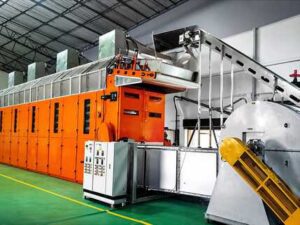
Industrial band dryers utilize continuous perforated metal belts. Meanwhile, the bed carries wet polymer through heated zones.
Working Principle & Features
-
Controlled Airflows: Heated air flows vertically through the belt. Typically, air speeds range from 1.0 to 2.5 meters per second.
-
Zoned Temperature Control: Furthermore, modern dryers feature independent heating zones. Initially, inlet zones run at 100°C to 140°C. Later, cooling zones drop to 60°C to 80°C.
-
Gentle Handling: In addition, static bed movement protects delicate crumbs. Thus, mechanical degradation is completely avoided.
Recommended Applications
-
Best For: Synthetic rubber crumbs, styrene-butadiene rubber (SBR) wet crumb, and heavy granules.
2. Fluidized Bed Dryers (Static & Vibratory Fluidised Bed Dryer)
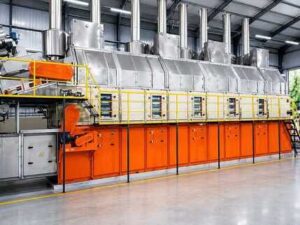
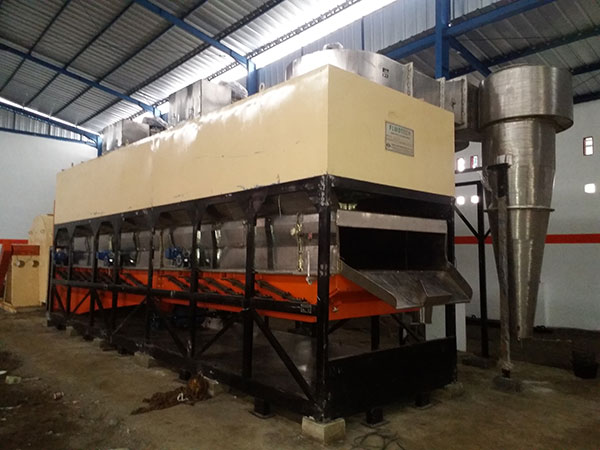
Fluidized bed drying passes heated gas through wet particles. Consequently, solids become suspended in a dynamic, fluid-like state.
Static vs. Vibratory Fluid Bed
-
Static Fluid Bed Dryers: First, static models suit free-flowing, non-tacky granules.
-
Vibratory Fluidised Bed Dryer: On the other hand, vibratory units handle sticky materials. Indeed, mechanical vibration prevents particle agglomeration.
Technical Performance
-
Drying Temperature: Temperatures are maintained between 60°C and 110°C. Therefore, polymers do not reach their softening point.
-
High Efficiency: Besides, direct gas contact drives rapid evaporation. As a result, moisture drops below 0.1% in minutes.
Recommended Applications
-
Best For: Synthetic granules, masterbatch pellets, vulcanization accelerators, and sulfur additives.
3. Flash Dryers & Spin Flash Dryers
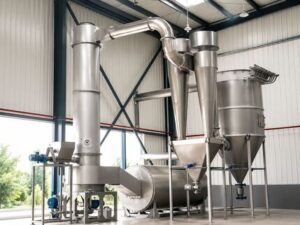
Flash dryers offer extremely short residence times of 1 to 5 seconds. Hence, they are ideal for heat-sensitive chemical powders.
Working Principle & Features
-
High-Velocity Air: Fast air streams convey disintegration feed vertically. Air speeds usually reach 20 to 40 meters per second.
-
Classification: Meanwhile, an internal classifier recycles wet particles. Conversely, dry powder passes into cyclone collectors.
-
Temperature Profile: High inlet temperatures (160°C to 280°C) evaporate water instantly. Thus, actual product temperatures remain low (50°C to 70°C).
Recommended Applications
-
Best For: Rubber chemical wet cakes, zinc oxide additives, and insoluble sulfur.
4. Industrial Spray & Rotary Drum Dryers
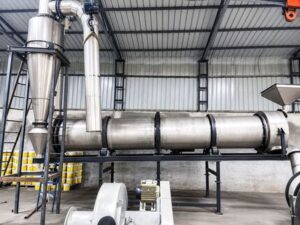
Processing liquid rubber slurries requires scalable liquid evaporation equipment like spray systems and continuous rotary drum dryers. These systems convert liquid emulsions into fine, usable powders in a single step.
Working Principle & Features
-
Atomization & Thin Film Drying: Atomizers spin at 10,000 to 25,000 RPM while drum surfaces form ultra-thin liquid layers for fast heat transfer.
-
Rapid Evaporation: Increased surface area enables complete moisture removal in just 5 to 30 seconds.
-
Controlled Thermal Profile: System inlet temperatures run between 150°C and 220°C, while outlet temperatures stay strictly between 70°C and 90°C.
Recommended Applications
-
Best For: Rubber latex derivatives, liquid additives, synthetic resins, and organic dispersion slurries.
5. Vacuum Shelf & Rotary Vacuum Dryers
Vacuum dryers evaporate liquid under reduced internal pressure. Consequently, water boils at significantly lower temperatures.
Working Principle & Features
-
Low-Temperature Operation: Operating under deep vacuum (10 to 50 mbar), water boils at 35°C to 50°C.
-
Solvent Recovery: Furthermore, closed condensers capture evaporated solvents. Therefore, atmospheric emissions are eliminated.
-
Inert Atmosphere: Additionally, oxygen exclusion prevents thermal degradation. As a result, product oxidation cannot occur.
Recommended Applications
-
Best For: Heat-sensitive additives, antioxidant masterbatches, fluoroelastomers, and peroxides.
Application Matrix: Matching Dryers to Materials
Selecting equipment requires matching feed properties with appropriate thermal technologies:
SBR Crumb / Synthetic Rubber Crumb
-
Best Suited Dryer: Multi-Pass Industrial Mesh Belt Dryer
-
Target Final Moisture: 0.2% – 0.5%
Rubber Granules & Masterbatches
-
Best Suited Dryer: Vibratory Fluidised Bed Dryer
-
Target Final Moisture: 0.05% – 0.1%
Latex Emulsions & Derivatives
-
Best Suited Dryer: Spray / Rotary Drum Dryer
-
Target Final Moisture: 0.3% – 0.5%
Chemical Additive Filter Cakes
-
Best Suited Dryer: Spin Flash Dryer
-
Target Final Moisture: 0.1% – 0.2%
Heat-Sensitive Antioxidants
-
Best Suited Dryer: Vacuum Shelf / Rotary Vacuum Dryer
-
Target Final Moisture: 0.05% – 0.1%
Sizing and Selecting Your Drying System
When sizing drying machinery, engineers must evaluate several critical parameters:
-
Initial vs. Final Moisture: First, high-moisture feeds require flash or band dryers. Conversely, low-moisture feeds benefit from fluid bed systems.
-
Thermal Thresholds: Second, determine maximum thermal limits before scorching occurs.
-
Explosion Protection: Third, fine organic powders require explosion venting and nitrogen inerting.
-
Energy Efficiency: Finally, modern plants install heat exchangers to reduce fuel consumption.
Conclusion & Equipment Selection
In conclusion, precise moisture control ensures consistent vulcanization and superior rubber quality. Therefore, selecting tailored drying systems is essential for successful polymer processing.
At GENEX Tech Industries LLP, we engineer custom industrial drying platforms. Ultimately, our machines optimize thermal efficiency while protecting heat-sensitive compounds.
Contact Our Engineering & Technical Sales Team
Contact our specialists today to discuss custom drying equipment for your plant:
-
Company Name: GENEX Tech Industries LLP
-
Head Office Address: 10C, Sir William Jones Sarani (Middleton Row), Park Street, Kolkata – 700071, West Bengal, India
-
Direct Phone / WhatsApp Contact: +91-97489 06968 | +91-93300 77417
-
Official Business Email: mktg@foodtechprojects.com | sales@foodtechprojects.com
-
Official Company Websites: www.foodtechprojects.com | www.gtidryers.com