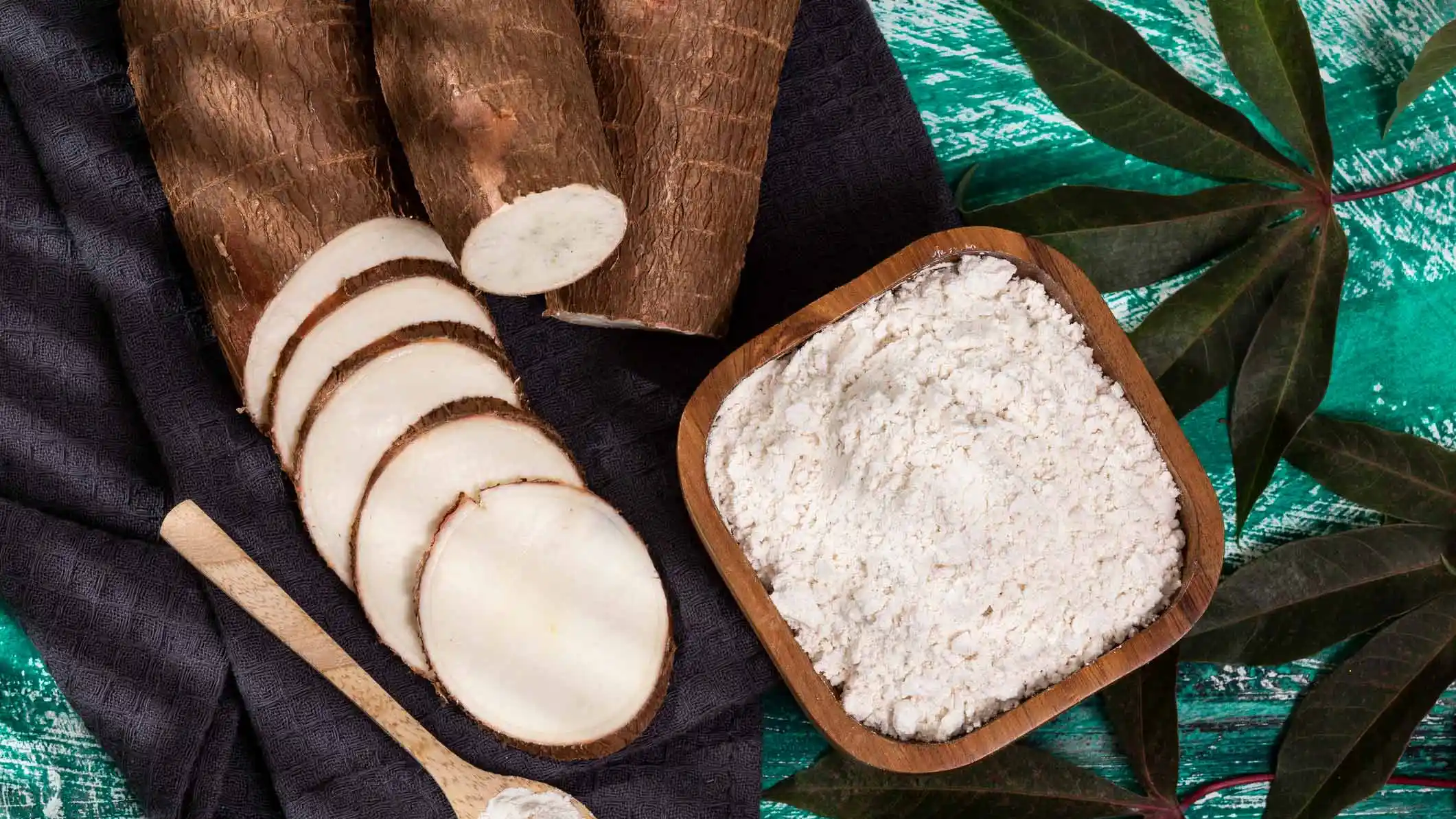
Selecting the right cassava starch processing plant is a major capital decision. Furthermore, global demand for native and modified tapioca starch is growing fast. However, fresh cassava roots spoil quickly. Specifically, deterioration starts within 24 to 48 hours after harvest. Meanwhile, enzymatic browning and microbial spoilage drive this decline. Consequently, your plant needs clockwork mechanical reliability. In addition, it requires high extraction efficiency and low thermal energy waste.
Moreover, investors often miss key technical links. In fact, raw material quality, metallurgy, water loops, and drying systems are tightly connected. For instance, an undersized rasper or weak dryer can cut starch recovery by 10% to 15%. As a result, that loss directly hurts profit margins over a 10-year lifecycle. Therefore, you must examine every technical and financial factor first.
In this guide, we cover essential engineering criteria and machinery specs. Additionally, we review capacity tiers, dryer choices, and cost drivers. Thus, you can build a profitable, export-grade starch plant. Furthermore, we compare dryers across multiple cassava products. Consequently, you can match each dryer to its best output.
Understanding Global Market Demand and Technical Standards for Cassava Starch
First, before picking machines, align your plant design with buyer standards. Notably, cassava starch—known globally as tapioca starch—earns strong prices. Specifically, it offers high paste clarity, neutral taste, low protein, and strong binding viscosity. In comparison, it often outperforms corn or potato starch in these traits. As a result, global buyers actively seek consistent suppliers.
Key Industrial Applications Driving Demand
-
Food and Beverage Manufacturing: Initially, food makers use native cassava starch as a clean-label thickener. Moreover, they use it as a stabilizer in sauces, soups, bakery fillings, and snacks. Consequently, food-grade demand remains steady year-round.
-
Paper and Corrugated Board: Meanwhile, paper mills buy huge volumes of industrial cassava starch. Specifically, they apply it for surface sizing, coating, and board bonding. Indeed, its strong film-forming trait makes it ideal here.
-
Textiles and Adhesives: Similarly, textile mills use cassava starch for warp sizing. In particular, it strengthens yarn during weaving. In addition, packaging firms make high-tack liquid adhesives from it.
-
Bioplastics and Pharmaceuticals: Increasingly, sustainable packagers turn cassava starch into biodegradable films. Meanwhile, drug makers use ultra-pure grades as tablet binders and disintegrants. Therefore, diverse industrial demand protects your revenue.
Export-Grade Quality Specifications
To win top prices, your line must hit strict lab targets. Specifically, buyers test every batch against key metrics:
| Quality Parameter | Premium Food-Grade Standard | Industrial-Grade Standard | Impact on Machinery Selection |
| Moisture Content | 12.0% to 13.0% maximum | 13.0% to 14.0% maximum | Needs precision flash dryer with automated exhaust control |
| Starch Purity (Dry Basis) | Minimum 85.0% to 88.0% | Minimum 82.0% to 85.0% | Needs multi-stage hydrocyclones and fine centrifugal sieves |
| Whiteness Index | Minimum 92.0% to 95.0% | Minimum 88.0% to 90.0% | Needs thorough washing, peeling, and SS304/SS316 contact parts |
| Ash Content | Maximum 0.15% to 0.20% | Maximum 0.30% to 0.50% | Needs sand removal cyclones and closed-loop water filtration |
| Protein and Fiber | Maximum 0.15% protein; 0.10% fiber | Maximum 0.30% protein; 0.25% fiber | Relies on high-speed rasping and multi-stage fiber screening |
| pH Value | 5.0 to 7.0 (Neutral range) | 4.5 to 7.0 | Needs fast wet processing (under 45 minutes) to avoid souring |
| Viscosity (Brabender Units) | 650 BU to 850 BU peak | 500 BU to 650 BU peak | Needs low-temperature drying to prevent early gelatinization |
Consequently, food or pharma buyers expect strict standards. Furthermore, cutting corners on stainless steel or hydrocyclones will block premium deals.
Step-by-Step Cassava Starch Extraction Workflow and Core Machinery
A modern cassava starch processing plant runs as a continuous wet-milling line. Ideally, fresh roots move to bagged starch in under 45 to 60 minutes. Notably, this speed stops souring and protects peak viscosity. Below is the step-by-step breakdown of each stage and its equipment.
1. Receiving, Dry Cleaning, and Multi-Stage Root Washing
First, fresh roots arrive with 3% to 8% soil, sand, stones, and stems. Therefore, early cleaning protects high-speed blades from severe wear. Moreover, it boosts starch whiteness right from the start.
-
Hopper and Belt Conveyor: Initially, trucks dump roots into a heavy hopper. Subsequently, a vibrating grizzly screen removes loose dirt and big stones.
-
Dry Sieve Drum: Next, an inclined rotating drum tumbles the roots. Meanwhile, slotted bars knock off 60% to 70% of dry soil before water enters.
-
Industrial Bubble Washer and Paddle Washer: Thereafter, roots enter a counter-current paddle washer. Specifically, it pairs with an industrial bubble washer for deep cleaning. Furthermore, air agitation and paddles scrub stubborn clay loose. As a result, light debris floats away easily. Usually, clean water flows opposite to the roots. Thus, the cleanest rinse hits roots right before exit.
2. Automated Peeling for Maximum Whiteness and Yield
Cassava roots have two outer layers. First is a thin, dark brown corky skin. Second is a thicker inner cortex rich in enzymes and cyanogenic glycosides. However, leftover skin darkens starch and raises ash content.
-
Mechanical Abrasive and Brush Peelers: Consequently, washed roots pass through automated peelers. Specifically, these use abrasive rollers or stiff nylon brushes.
-
Yield Balance: Crucially, good peelers strip 95% to 98% of dark outer skin. At the same time, they remove under 8% to 10% of starchy flesh. Otherwise, over-peeling cuts starch yield. Conversely, under-peeling hurts whiteness.
3. Chopping and High-Speed Rasping (Cell Rupture)
After peeling and rinsing, roots must become a fine slurry. Specifically, this step frees tiny starch granules trapped inside tough cell walls. Importantly, rasping drives overall starch recovery.
-
Rotary Drum Cutter / Chopper: First, a heavy cutter slices whole peeled roots. In turn, it makes uniform 20 mm to 30 mm chunks for steady rasper feeding.
-
High-Speed Rasper: Next, chunks enter a bidirectional high-speed rasper. Notably, it spins at 2,100 to 2,400 RPM. Furthermore, serrated sawtooth blades sit on a balanced stainless rotor. In one pass, it ruptures over 92% to 95% of plant cells. Meanwhile, process water sprays into the chamber to form a starch milk slurry.
4. Centrifugal Sieving and Fiber Separation
Now, the slurry holds free starch, proteins, sugars, fine pulp, and woody bits. Therefore, separating fine fiber without losing starch takes multi-stage screening.
-
Conical Centrifugal Sieves: Specifically, pumps send slurry through 3 to 5 conical centrifugal sieves. Moreover, they run in counter-current washing stages. Inside each sieve, a wedge-wire or micro-perforated stainless basket spins fast. Notably, screen openings range from 120 microns down to 75 microns.
-
Counter-Current Washing: Meanwhile, fresh or clarified recycled water sprays the fiber mat. Consequently, it washes free starch through the screen. Simultaneously, wet cassava pulp discharges at the exit. Usually, bound starch in discharged pulp stays below 10% to 12% on a dry basis.
5. Desanding and Hydrocyclone Starch Refining
After fiber removal, raw starch milk still contains fine sand, proteins, fruit water, and trace cyanogenic compounds. Thus, clearing these requires density separation.
-
Desanding Cyclone: Initially, a high-velocity desanding cyclone traps heavy grit. Specifically, it removes sand particles above 40 microns. Thus, downstream nozzles avoid fast erosion.
-
Multi-Stage Hydrocyclone Station: Thereafter, starch milk enters a 12-stage to 18-stage hydrocyclone refining unit. Notably, each housing holds dozens of small nylon or food-grade polymer cones. Typically, cone diameters run 10 mm to 15 mm. Because starch has a higher specific gravity (about 1.5) than water and protein, centrifugal force pushes starch to the cone wall. Consequently, pure starch exits the bottom underflow. Meanwhile, impurities exit the top overflow.
-
Counter-Current Dilution: Furthermore, fresh water enters the final stage and flows backward. In fact, this method removes 99.5% of soluble impurities. Moreover, it cuts fresh water use by up to 50%.
6. Mechanical Dewatering (Vacuum Filter vs. Peeler Centrifuge)
Before drying, refined starch milk (at 35% to 40% dry solids) becomes a moist cake. Notably, mechanical dewatering removes water roughly 15 to 20 times cheaper than heat.
-
Rotary Vacuum Drum Filter: Common in medium plants, a cloth-covered drum rotates in a starch trough. Subsequently, internal vacuum pulls water through the cloth. Then, a scraper knife lifts off starch cake at 38% to 42% moisture.
-
Horizontal Peeler Centrifuge: Conversely, large automated lines favor a centrifugal dewatering system spinning at high G-forces. Consequently, it discharges drier, fluffier cake at 34% to 36% moisture. In fact, lowering cake moisture from 40% to 35% cuts flash dryer fuel use by nearly 18%.
7. Pneumatic Flash Drying and Cooling
Wet cassava starch cake is sensitive to heat. Specifically, high heat on wet granules causes rapid gelatinization and hard lumps. Ultimately, that ruins starch performance.
-
Pneumatic Flash Dryer: Consequently, an industrial flash dryer is the top choice for cassava starch. First, a disintegrator feeder fluffs damp cake into a hot vertical duct. Meanwhile, hot air runs at 150 degrees Celsius to 180 degrees Celsius.
-
Instantaneous Evaporation: Next, water flashes off suspended particles in just 2 to 4 seconds. Furthermore, evaporative cooling keeps granule heat below 45 degrees Celsius to 50 degrees Celsius. Thus, it stays safely below cassava’s gelatinization point of 62 degrees Celsius to 68 degrees Celsius.
-
Cyclone Separation and Cooling: Finally, cyclone separators and bag dust collectors recover 99.8% of dry starch. Specifically, final moisture sits at 12.0% to 12.5%. Thereafter, a cooling duct lowers powder heat below 35 degrees Celsius before bagging.
8. Fine Sieving and Automated Packaging
However, minor lumps can still form during drying. Therefore, dried starch passes through a vibratory sifter (100 to 120 mesh). As a result, this ensures smooth, even powder. Finally, an automated bagging unit fills 25 kg, 50 kg, or 1,000 kg bags.
Comprehensive Dryer Selection Guide: Which Dryer Is Best for Which Cassava Product?
Many processors make multiple cassava products over the year. For example, they may switch between starch, flour, chips, garri, and animal feed as root prices shift. However, no single dryer suits every cassava product. Indeed, a poor dryer match causes scorching, case-hardening, gelatinization, or high fuel bills.
Below is a clear guide showing which dryer is best for each cassava product and why.
1. Pneumatic Flash Dryer — Best for Native Cassava Starch and Modified Starch
-
How It Works: First, moist starch cake (35% to 38% moisture) enters a fast hot-air duct. Subsequently, drying takes 2 to 4 seconds before cyclone capture.
-
Why It Is Best for Starch: Starch granules are tiny (5 to 35 microns), so surface moisture flashes off fast. Because exposure lasts mere seconds, granules stay below gelatinization (62 degrees Celsius to 68 degrees Celsius). Thus, whiteness and peak viscosity stay intact.
-
Operating Temperatures: Specifically, inlet air runs at 150 degrees Celsius to 180 degrees Celsius. Meanwhile, exhaust air runs at 55 degrees Celsius to 65 degrees Celsius.
-
Target Final Moisture: Consequently, output moisture stabilizes at 12.0% to 12.5%.
2. Vibratory Fluid Bed Dryer — Best for Granular Cassava Products, Gari Finishing, and Modified/Pregelatinized Starch
-
How It Works: Initially, a perforated bed vibrates gently while warm air blows upward. As a result, particles float in a fluid-like bed for even heat transfer.
-
Why It Is Best for Granular Forms: Granular cassava, pearl tapioca, and agglomerated starches need gentle movement. Moreover, they need longer drying (10 to 25 minutes) without breaking granules. Furthermore, a vibratory fluid bed dryer can add cooling zones right before discharge.
-
Operating Temperatures: Typically, heat sits at 80 degrees Celsius to 130 degrees Celsius, based on product heat limits.
-
Target Final Moisture: Therefore, finished granules reach 10.0% to 12.0% moisture.
3. Multi-Pass Mesh Belt Dryer (Band / Apron Dryer) — Best for Cassava Chips and High-Quality Cassava Flour (HQCF) Grits
-
How It Works: First, sliced chips or dewatered mash travel on perforated stainless mesh belts. Subsequently, they move slowly through multi-zone heat chambers.
-
Why It Is Best for Chips and HQCF: Cassava chips (5 mm to 10 mm thick) hold bound water deep inside. Consequently, moisture moves slowly to the surface. A mesh belt dryer or band dryer gives 45 to 90 minutes of gentle drying. Thus, chips do not shatter into dust. Likewise, drying HQCF mash on a belt dryer before milling avoids case-hardening and keeps white color.
-
Operating Temperatures: Specifically, Zone 1 runs at 90 degrees Celsius to 110 degrees Celsius. Next, Zone 2 runs at 75 degrees Celsius to 85 degrees Celsius. Finally, Zone 3 runs at 60 degrees Celsius to 70 degrees Celsius.
-
Target Final Moisture: As a result, moisture drops to 11.0% to 12.0%.
4. Rotary Drum Dryer and Paddle Dryer — Best for Cassava Pulp (Fiber By-Product) and Animal Feed Valorization
-
How It Works: Initially, a rotating cylinder with lifting flights tumbles wet pulp through hot air (rotary dryer). Alternatively, hollow heated paddles stir dense cake in a jacketed trough (paddle dryer).
-
Why It Is Best for Cassava Pulp: A 100-ton-per-day starch plant makes about 15 to 20 tons of wet fiber pulp daily (at 75% to 80% moisture). However, dumping wet pulp pollutes sites and wastes value. Both rotary drum dryers and indirect paddle dryers handle sticky fibrous waste without clogging. As a result, you can turn pulp into profitable animal feed or mushroom substrate.
-
Operating Temperatures: Specifically, rotary dryers run at 180 degrees Celsius to 250 degrees Celsius inlet air. Meanwhile, paddle dryers use 140 degrees Celsius to 170 degrees Celsius steam or thermal oil jackets.
-
Target Final Moisture: Consequently, dried fiber reaches 12.0% to 13.0% moisture.
5. Mechanical Garri Roaster (Trough / Drum Fryer-Dryer) — Best for Traditional West African Garri
-
How It Works: First, fermented, pressed cassava mash (42% to 45% moisture) enters a heated stainless trough or drum. Simultaneously, spring-loaded paddles stir and press granules against the hot surface.
-
Why It Is Best for Garri: Garri needs simultaneous partial gelatinization (garification) and drying. Specifically, this creates its crisp bite, tangy taste, and swelling power. However, flash or belt dryers cannot match that profile.
-
Operating Temperatures: Typically, pan surface heat sits at 110 degrees Celsius to 135 degrees Celsius.
-
Target Final Moisture: Therefore, garri dries to 8.0% to 10.0% for long shelf life.
6. Heat Pump Dryer — Best for Specialty Low-Temperature Cassava Derivatives and Small-Batch Premium Flour
-
How It Works: First, a closed-loop dehumidifier removes moisture at low heat (35 degrees Celsius to 55 degrees Celsius). Additionally, it recycles latent heat inside an insulated chamber.
-
Why It Is Best for Specialty Grades: Where electricity costs are low and specialty flours are made, a heat pump dryer avoids flue gases. Moreover, it protects aroma and color.
Master Comparison Matrix: Cassava Dryers by Application
| Dryer Type | Ideal Cassava Product | Input Moisture | Output Moisture | Residence Time | Primary Heat Source | Key Operational Advantage |
| Pneumatic Flash Dryer | Native & Modified Cassava Starch | 34% – 38% | 12.0% – 12.5% | 2 – 4 seconds | Steam coil, thermal oil, or hot air generator | Avoids gelatinization; keeps peak viscosity |
| Vibratory Fluid Bed Dryer | Pearl Tapioca, Granular Starch, Flakes | 25% – 35% | 10.0% – 12.0% | 10 – 25 minutes | Steam or indirect hot air | Gentle fluidization; low granule breakage |
| Mesh Belt / Band Dryer | Cassava Chips, HQCF Grits, Atieke | 45% – 65% | 11.0% – 12.0% | 45 – 90 minutes | Steam, biomass, gas, or thermal oil | Multi-zone heat stops case-hardening |
| Rotary Drum Dryer | Cassava Fiber Pulp, Animal Feed | 65% – 80% | 12.0% – 13.0% | 20 – 40 minutes | Biomass, coal, gas, or heavy fuel oil | Handles sticky high-moisture fiber waste |
| Hollow Paddle Dryer | High-Density Sludge, Wet Pulp | 60% – 78% | 12.0% – 14.0% | 30 – 60 minutes | Saturated steam or thermal oil | High thermal efficiency (up to 85%) |
| Mechanical Garri Roaster | West African Garri | 42% – 45% | 8.0% – 10.0% | 15 – 25 minutes | Gas, biomass furnace, or electric heaters | Gives controlled partial gelatinization |
Capacity Planning: Sizing Your Plant for Raw Root Supply and ROI
Many new investors size a cassava starch processing plant around wishful sales goals. Instead, size it around verified root supply within 50 kilometers. Because fresh roots hold 65% to 72% water, long hauls quickly eat up profit. Therefore, local farm proximity is vital.
Understanding Mass Balance and Extraction Yield
Fresh mature cassava roots typically hold 22% to 28% extractable starch. Specifically, variety, soil health, rain, and harvest age (ideally 10 to 14 months) shape this number. With modern machines hitting 92% to 95% recovery:
-
4.0 to 4.5 tons of fresh roots yield 1.0 ton of dry starch (at 12.5% moisture).
-
Therefore, processing 100 tons per day (TPD) of fresh roots yields about 22 to 25 tons per day of starch.
Standard Plant Capacity Tiers
1. Small-Scale / Pilot Commercial Plant (10 to 25 TPD Root Input | 2.5 to 6 TPD Starch Output)
-
Target Investor: Primarily, agro-cooperatives, local food makers, and early entrants testing root supply choose this tier.
-
Automation Level: Specifically, it uses semi-automatic operation with manual feeding, mechanical peeler, single rasper, rotary screens, settling tanks or compact 6-stage hydrocyclones, vacuum filter, and compact flash dryer.
-
Shift Schedule: Usually, it runs 10 to 16 hours daily during peak harvest.
2. Medium-Scale Industrial Plant (50 to 100 TPD Root Input | 11 to 25 TPD Starch Output)
-
Target Investor: Typically, commercial ingredient suppliers, regional distributors, and export growers select this size.
-
Automation Level: Moreover, it features a continuous automated line with bubble/paddle washing, bidirectional rasper, 4-stage centrifugal sieves, 14-stage hydrocyclones, peeler centrifuge, and PLC-controlled flash dryer.
-
Shift Schedule: Generally, it runs 20 to 24 hours daily (with 4 hours weekly for CIP cleaning).
3. Large-Scale Turnkey Industrial Complex (200 to 500+ TPD Root Input | 45 to 120+ TPD Starch Output)
-
Target Investor: Ultimately, global food ingredient firms, paper or textile groups, and starch-to-ethanol plants invest at this scale.
-
Automation Level: Furthermore, it includes full PLC and SCADA automation, dual rasper lines, 18-stage hydrocyclones with density sensors, high-speed peeler centrifuges, heat-recovery flash dryers, auto-bagging/palletizing, and anaerobic biogas digesters.
Utility Consumption Benchmarks per Ton of Dry Starch Produced
When planning operating costs (OPEX), check that suppliers guarantee these utility numbers:
-
Fresh Process Water: Specifically, expect 8 to 12 cubic meters per ton of dry starch (with closed-loop hydrocyclone recycling; whereas old open lines waste 25 to 35 cubic meters).
-
Electrical Power: Similarly, budget 160 kWh to 210 kWh per ton of dry starch.
-
Thermal Energy (Drying): Finally, plan for 0.65 to 0.85 tons of saturated steam (or equal biomass/gas heat) per ton of dry starch.
Critical Engineering and Metallurgy Factors to Evaluate Before Buying
Two 100 TPD starch plants can differ by 30% to 40% in price. However, looking closely at build quality prevents early breakdowns and batch rejects.
1. Food-Grade Stainless Steel Metallurgy (SS304 vs. SS316)
Cassava fruit water contains natural organic acids and trace cyanogenic compounds. Consequently, these corrode mild steel fast. Moreover, rust spots ruin starch whiteness and fail food audits.
-
Mandatory Contact Surfaces: Therefore, insist that 100% of product-contact parts use SS304 (or SS316 for acidic or sulfur-treated streams). Specifically, this includes paddles, rasper bodies, sieve baskets, tanks, hydrocyclone manifolds, centrifuge bowls, flash ducts, and cyclones.
-
Structural Frames: Meanwhile, support frames can use epoxy-coated mild steel to save cost. Still, drip trays must keep product away from structural steel.
2. Rasper Blade Geometry and Rotor Balance
A rasper spins above 2,100 RPM under heavy load. Therefore, rotor balancing to ISO G2.5 is vital. In addition, choose quick-change sawtooth blade cassettes. Consequently, operators can swap worn blades in under 30 minutes instead of losing a whole shift.
3. Hydrocyclone Design and Nozzle Wear Resistance
Next, check the hydrocyclone cones carefully. Cheap polyoxymethylene cones warp in warm water or wear down from fine silt. As a result, that causes starch loss in the overflow. Conversely, high-grade nylon-6 or reinforced food-grade polymer cones with quick-clamp manifolds keep separation sharp for years.
4. Hygienic Clean-In-Place (CIP) Accessibility
Finally, starch slurry builds up in dead-legs, sharp bends, and flat tank corners. Consequently, heat-loving bacteria grow and cut starch viscosity. Thus, demand sanitary tri-clamp fittings, smooth ground or orbital welds, sloped tank bottoms, and CIP spray balls across the wet section.
Cost Considerations: Capital Expenditure (CAPEX) and Operational Expenditure (OPEX)
A solid budget separates machine cost from civil work, utilities, and working capital. Below are realistic cost shares for a modern cassava starch plant.
Primary Capital Expenditure (CAPEX) Components
-
Core Processing Machinery (45% – 55% of Total Project Cost): First, this covers receiving, washing, peeling, rasping, centrifugal sieving, hydrocyclones, dewatering, flash drying, sifting, and bagging.
-
Utility & Auxiliary Systems (15% – 20%): Second, this covers steam boiler or hot air generator (biomass, wood pellets, coal, gas, or diesel), water treatment (sand/carbon filters and softener), air compressors, cooling towers, and MCC/PLC panels.
-
Civil Works & Pre-Engineered Building (15% – 20%): Third, this covers root yards, sloped drains with epoxy floors, steel factory sheds, raw and finished storage, and QC lab space.
-
Wastewater Treatment & Biogas Recovery (8% – 12%): Fourth, starch wastewater carries high organic load. Consequently, covered anaerobic lagoons or UASB reactors turn it into biogas. Firing the flash dryer with biogas can then cut thermal fuel costs by 40% to 60%.
-
Engineering, Shipping, Installation & Commissioning (5% – 8%): Fifth, this covers freight, site erection, cabling, operator training, and test runs.
Ongoing Operational Expenditure (OPEX) Breakdown
-
Raw Cassava Roots (65% – 75% of Production Cost): Primarily, fresh roots are by far your biggest recurring cost. Therefore, contract farming and weighbridge bonuses for roots above 25% starch help protect margins.
-
Thermal & Electrical Energy (10% – 15%): Meanwhile, better dewatering before drying cuts fuel use. Furthermore, using farm waste like wood chips, palm kernel shells, rice husks, or dried peels lowers fuel cost per ton.
-
Labor, Maintenance & Consumables (8% – 12%): Finally, this includes rasper blades, sieve screens, filter cloths, bags, lab supplies, and skilled shift staff.
How to Vet and Select the Right Cassava Machinery Manufacturer
Picking a machinery partner starts a long-term relationship. Therefore, before signing a turnkey deal, check suppliers against these five points:
-
In-House Manufacturing vs. Trading Brokers: First, confirm the vendor runs its own plant with CNC laser cutting, rotor balancing, and TIG stainless welding. Thus, you avoid middlemen relying on scattered small shops.
-
Proven Multi-Product Engineering Capability: Second, working with an experienced maker of starch, flour, chips, garri, and ethanol lines helps you expand later. Consequently, you can add modified starch or syrup lines more smoothly.
-
Complete Process Flow & Mass-Balance Guarantee: Third, ask for Process Flow Diagrams (PFDs), water/energy balances, and written guarantees. Specifically, look for at least 92% starch recovery, 12.5% max moisture, and clear utility limits.
-
Global Certifications & Food Safety Compliance: Fourth, check for ISO 9001:2015, CE, and US FDA food-contact compliance. Notably, these support smoother permits and export buyer trust.
-
After-Sales Commissioning & Spare Parts Availability: Fifth, verify on-site erection help, hands-on staff training, and a 2-year critical spares kit. Specifically, spares should cover rasper blades, sieve baskets, bearings, seals, and hydrocyclone cones.
Additional Operational Strategies to Maximize Plant Profitability
Beyond core machinery selection, daily plant management shapes your net profit margin. Therefore, successful operators implement strict operational controls from day one.
Implementing Raw Material Quality Grading at the Weighbridge
Not all cassava roots deliver equal starch yield. For instance, roots harvested at 8 months may contain only 18% starch, whereas mature 12-month roots often exceed 26% starch. Consequently, paying a flat rate per ton penalizes your factory. Instead, install a rapid specific-gravity starch balance at the receiving weighbridge. Thus, you can reward farmers delivering high-starch roots while discounting waterlogged or immature deliveries.
Optimizing Harvest Scheduling and Root Inventory Rotation
As noted earlier, cassava roots deteriorate rapidly once uprooted. Furthermore, stale roots develop dark vascular streaking that lowers starch whiteness and clogs fine sieve screens. Therefore, enforce a strict “First-In, First-Out” (FIFO) yard management protocol. Specifically, schedule farm harvests daily so roots enter the washer within 12 to 24 hours of leaving the soil.
Preventing Downtime Through Preventive Maintenance Schedules
Unplanned shutdowns during peak harvest season cause costly root spoilage in the holding yard. Consequently, maintenance teams must inspect critical wear parts every week. Specifically, check rasper blade sharpness, V-belt tension, centrifuge bearing temperatures, and hydrocyclone pressure gauges daily. As a result, minor adjustments prevent major mechanical failures.
Valorizing Co-Products for Secondary Revenue Streams
Modern cassava processing aims for zero waste. Initially, peeled outer skins can be composted or fed into anaerobic digesters. Meanwhile, dewatered fibrous pulp serves as a nutritious base for cattle and poultry feed once dried in a rotary drum dryer or paddle dryer. Furthermore, nutrient-rich wastewater treated through biogas reactors yields clean methane fuel plus liquid organic fertilizer for local farmers. Ultimately, these co-products can boost overall plant profitability by 12% to 18%.
Conclusion
Building a profitable, export-ready cassava starch processing plant takes more than buying single machines. Instead, it needs a unified engineering plan. Specifically, that plan protects root freshness, frees more starch, recycles water, and dries granules gently. Furthermore, sizing capacity to local root supply keeps transport costs in check. Meanwhile, insisting on SS304/SS316 steel protects purity and food safety. Similarly, pairing high-G dewatering with a pneumatic flash dryer saves fuel and preserves viscosity. Finally, turning pulp and wastewater biogas into value adds extra revenue streams.
Whether you start with a 25 TPD regional plant or build a 300 TPD export complex, the right turnkey partner reduces risk. Moreover, it speeds up your return on investment.
Start Planning Your Cassava Starch Processing Plant Today
Ready to turn your cassava project into a high-yield commercial plant? The engineering team at GENEX Tech Industries LLP designs, builds, and commissions complete turnkey cassava starch, flour, chips, garri, atieke, and ethanol lines across Asia, Africa, and global markets.
Reach out to our agro-processing team today for process flow design, plant layout, capacity planning, and a detailed technical quote matched to your root supply and budget:
Head Office Address: GENEX Tech Industries LLP 10C, Sir William Jones Sarani (Middleton Row), Park Street, Kolkata – 700071, West Bengal, India
Direct Phone / WhatsApp Contact: +91-97489 06968 | +91-93300 77417
Official Business Email: mktg@foodtechprojects.com | sales@foodtechprojects.com
Official Company Websites:www.foodtechprojects.com | www.gtidryers.com