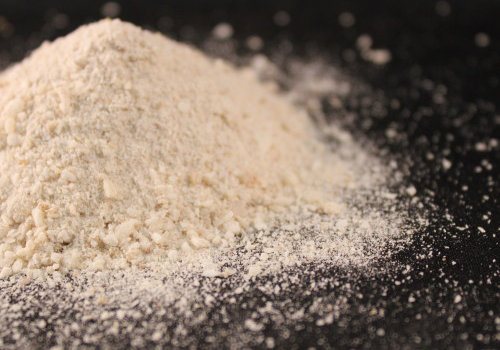
In general, the global agricultural economy relies heavily on chemical fertilizers. These inputs maintain high crop yields worldwide. Furthermore, they ensure food security for billions of people. Nitrogen, phosphorus, and potassium compounds serve as essential soil nutrients. In addition, single-nutrient fertilizers play a critical role. Specifically, these include urea, ammonium nitrate, and ammonium sulfate.
However, producing high-performance commercial fertilizers involves complex processing. The physical state of the final product dictates its storage stability. Furthermore, it controls transport efficiency, handling safety, and soil absorption.
The Role of Moisture Control in Granule Quality
Consequently, dryer manufacturers play a pivotal role in chemical production. Raw fertilizer slurry carries excessive moisture upon exiting reactors. Wet granules and crystallized salts also contain high water content. For instance, initial moisture ranges from 3.0% to 20.0% by weight. As a result, unmanaged moisture causes severe caking and lump formation. Moreover, it leads to granule breakdown, dust generation, and nutrient leaching.
In addition, excess water reduces the mechanical crushing strength of granules. Therefore, wet granules shatter during bulk storage in silos. Likewise, breakage occurs during transshipment in cargo ships and rail cars.
Industrial Drying Equipment & High-Capacity Operations
Accordingly, fertilizer plant engineering teams depend on industrial drying equipment. In fact, modern drying systems convert sticky chemical masses into free-flowing granules. Essentially, the process achieves tightly controlled residual moisture. This target is often below 0.2% to 1.0% by weight.
Specifically, large-scale rotary drum dryers serve as core industry machinery. Vibratory fluidized bed dryers are also vital operational units. Furthermore, pneumatic flash dryers, combination dryers, and chemical dryers play key roles.
Notably, modern world-scale fertilizer plants operate at massive production capacities. To illustrate, daily output ranges from 500 metric tons up to 3,500 metric tons. Thus, these industrial dryers must operate continuously 24 hours a day. At the same time, they require minimal thermal losses and optimal heat transfer. Overall, full integration with dust recovery and emission control systems is mandatory.
2. Chemical Characteristics & Moisture Control Challenges of Primary Fertilizers
In terms of processing, different fertilizer compounds exhibit distinct properties. Likewise, they display unique hygroscopic behaviors, thermal sensitivity limits, and crystallization patterns. Consequently, selecting the optimal dryer requires a detailed understanding of the substrate.
-
Urea Granules / Prills: Initial Moisture: 2.0% – 5.0%. Target Moisture: 0.1% – 0.3%. Thermal Limit: 110°C – 120°C.
-
Compound NPK Granules: Initial Moisture: 4.0% – 10.0%. Target Moisture: 0.5% – 1.0%. Thermal Limit: 80°C – 105°C.
-
Ammonium Nitrate (AN): Initial Moisture: 3.0% – 8.0%. Target Moisture: 0.1% – 0.2%. Thermal Limit: 70°C – 90°C.
-
Ammonium Sulfate (AS): Initial Moisture: 2.0% – 6.0%. Target Moisture: 0.1% – 0.2%. Thermal Limit: 120°C – 150°C.
A. Urea
Firstly, urea is synthesized from ammonia and carbon dioxide. This chemical reaction yields a concentrated melt. Subsequently, the melt is processed via prilling or granulation. Wet urea granules leaving the granulation loop carry 2.0% to 5.0% moisture.
However, urea is extremely hygroscopic in nature. In fact, it exhibits a critical relative humidity of approximately 75% at 30°C. Furthermore, urea exhibits a low melting point of 133°C. Moreover, it degrades into biuret when subjected to thermal stress above 120°C.
Consequently, urea drying requires rapid moisture removal down to less than 0.2%. At the same time, operators must maintain bed temperatures strictly below 110°C. In other words, careful temperature management preserves granule integrity and prevents biuret formation.
B. NPK Granular Fertilizers
Secondly, NPK formulations combine nitrogen, phosphorus, and potassium. Nitrogen sources include urea, ammonium nitrate, or ammonium phosphate. Phosphorus sources include monoammonium phosphate MAP, diammonium phosphate DAP, or single superphosphate SSP. Potassium sources include potassium chloride MOP or potassium sulfate SOP.
Wet NPK granules entering the dryer contain 4.0% to 10.0% moisture. Specifically, NPK mixtures are sensitive to temperature owing to low eutectic melting points. If the drying temperature exceeds 80°C to 105°C, granules become sticky. Consequently, they fuse together and line the interior walls of the dryer.
As a result, this sticking causes severe process interruptions. Therefore, NPK drying requires controlled, multi-stage temperature profiles. In summary, staged heating reduces internal moisture down to 0.5% to 1.0% safely.
C. Ammonium Nitrate (AN) & Calcium Ammonium Nitrate (CAN)
Thirdly, ammonium nitrate is a vital high-nitrogen fertilizer. However, it poses critical safety and processing challenges. This is due to its strong oxidizing characteristics and thermal decomposition behavior. In particular, AN undergoes multiple crystalline phase transitions as it heats and cools.
Specifically, these phase changes occur at 32.3°C and 84.2°C. In turn, these phase changes cause volumetric expansion and contraction. Consequently, granules shatter into fine dust if drying is executed unevenly.
To ensure stability during transportation, AN granules require ultra-low moisture content. That is to say, moisture must drop below 0.2%. Ultimately, plant managers achieve this using low-temperature air and precise residence times. In addition, gentle material handling avoids mechanical degradation and explosion risks.
D. Ammonium Sulfate (AS)
Finally, ammonium sulfate is widely produced as an industrial co-product. For example, it originates from caprolactam production and synthetic fiber manufacturing. It also comes from coke oven gas purification or direct acid neutralization. Wet ammonium sulfate crystals enter the drying plant with 2.0% to 6.0% moisture.
In contrast to urea, ammonium sulfate possesses higher thermal resistance. Thus, this property permits drying air inlet temperatures of 140°C to 180°C. Nevertheless, ammonium sulfate is highly abrasive and mildly acidic when wet.
Accordingly, the drying machinery must be built with corrosion-resistant alloys. In fact, erosion-resistant materials prevent premature equipment failure. Overall, the target final moisture for ammonium sulfate crystals is below 0.1% to 0.2%. Consequently, this low moisture level prevents caking during bulk packaging.
3. Breakdown of Dryer Technologies in Fertilizer Manufacturing
To handle massive throughput and strict drying specifications, plant engineering teams rely on five core drying technologies. Each system is designed for specific material characteristics and process stages.
-
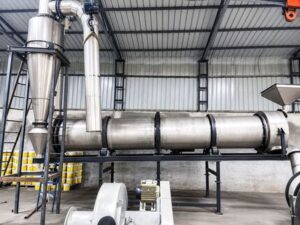
Industrial Rotary Drum Dryer: Heat Transfer: Direct / Indirect Convective. Application: Bulk NPK, DAP/MAP, High-Volume AS.
-
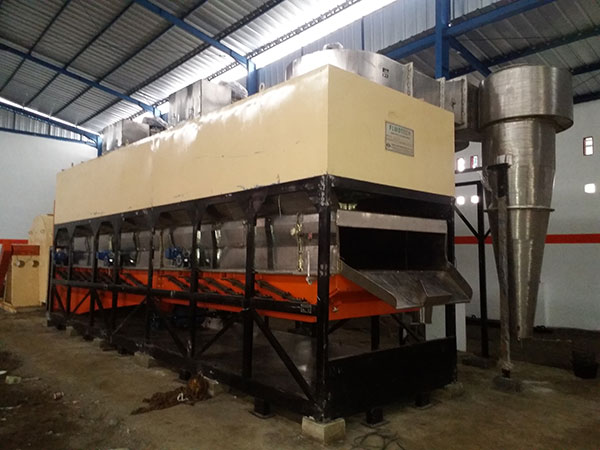
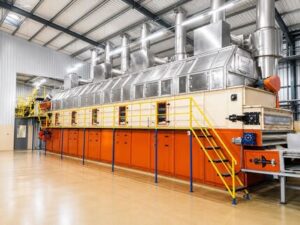
Vibratory Fluidized Bed Dryer: Heat Transfer: Fluidized Air + Mechanical. Application: Heat-Sensitive Urea, AN, CAN, AS.
-
Combination Tray + Fluid Bed Dryer: Heat Transfer: Staged Multi-Zone Convection. Application: Sticky Slurry NPK, Specialty Blends.
-
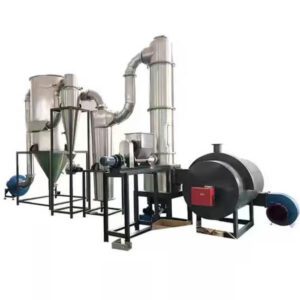
Pneumatic Flash Dryer: Heat Transfer: Ultra-Fast High-Velocity Air. Application: Fine Powder Feeds, Filter Cakes, AS.
-
Specialized Chemical Drying Systems: Heat Transfer: Customized Closed-Loop. Application: Hazardous AN, Specialty Micronutrients.
A. Industrial Rotary Drum Dryers
Operating Mechanism & Engineering Principles
In general, the industrial rotary drum dryer is the workhorse of the global bulk fertilizer industry. Essentially, it consists of a large, inclined, rotating cylindrical steel shell. Heavy-duty trunnion rollers and riding rings support the massive shell structure. Meanwhile, a girth gear and pinion drive unit rotates the drum. The shell is inclined at a slope of 1.5° to 4.0° relative to horizontal. Furthermore, it rotates at controlled speeds ranging from 2 to 8 RPM.
As wet fertilizer granules enter the upper end of the drum, internal flights scoop up material. Subsequently, these lifters shower the granules downward through a hot air stream. Notably, this repeated lifting and showering action is known as cascading. As a result, cascading creates a dense curtain of fertilizer particles suspended in gas. Thus, this maximizes gas-particle contact area and ensures rapid heat transfer.
Thermal & Mechanical Parameters
-
Inlet Air Temperature: 120°C to 350°C.
-
Outlet Product Temperature: 60°C to 90°C.
-
Granule Residence Time: 15 minutes to 45 minutes.
-
Volumetric Heat Transfer Coefficient: 100 to 300 W/(m³·K).
-
Drum Diameter Range: 1.5 meters to 4.5 meters.
-
Drum Length Range: 12.0 meters to 35.0 meters.
Advantages for Fertilizer Processing
-
Massive Throughput Capacity: Processes 10 TPD up to 150+ tons per hour.
-
High Tolerance for Feed Fluctuations: Handles variations in moisture and particle size distribution.
-
Rugged Mechanical Reliability: Heavy industrial build ensures 24/7 continuous operation without breakdown.
-
Polishing Effect: The rolling action within the drum rounds soft wet granules effectively. Consequently, this improves bulk density.
Limitations
-
On the other hand, rotary drums require a large installation footprint.
-
In addition, heavy drum assemblies increase electrical energy consumption.
-
Furthermore, continuous mechanical tumbling creates potential for particle attrition.
B. Vibratory Fluidized Bed Dryers (VFBD)
Operating Mechanism & Engineering Principles
Alternatively, a Vibratory Fluidized Bed Dryer processes wet granules using upward heated air. The hot air passes through a perforated distributor plate into the material bed. Simultaneously, the system applies mechanical vibration to the entire bed structure. Twin out-of-balance vibratory motors generate this mechanical vibration. In turn, these drive systems impart a linear oscillation to the drying deck. Frequencies typically range from 750 to 1,500 RPM.
As a result, upward air lift combined with mechanical vibration creates gentle fluidization. Notably, vibration lowers the minimum fluidization velocity required to suspend particles. Because of this lowered velocity, sticky or moist granules move smoothly along the bed. Furthermore, this prevents static dead zones, channeling, or agglomeration.
Thermal & Mechanical Parameters
-
Inlet Air Temperature: 60°C to 160°C.
-
Fluidization Velocity: 0.8 m/s to 2.2 m/s.
-
Vibration Amplitude: 1.0 mm to 4.5 mm.
-
Bed Depth: 50 mm to 250 mm.
-
Thermal Efficiency: 65% to 85%.
Advantages for Fertilizer Processing
-
Exceptional Temperature Control: Provides precise multi-zone temperature profiles. Hence, it prevents overheating of heat-sensitive compounds.
-
Gentle Particle Handling: The cushioned fluid bed minimizes mechanical shearing. Therefore, it virtually eliminates fines generation.
-
Superior Energy Efficiency: Requires less air volume than non-vibrating fluid beds. Consequently, this lowers fan power consumption.
-
Built-In Cooling Zones: Allows integrated drying and cooling within a single machine. Specifically, engineers partition the lower plenum into hot and cold sections.
Limitations
-
Conversely, unit throughput is lower compared to massive rotary drums.
-
Additionally, operators require precise control over feed particle sizing.
C. Combination Dryers (Tray + Fluid Bed Systems)
Operating Mechanism & Engineering Principles
In addition, Combination Dryers combine gentle tray drying with a high-velocity fluidized bed finishing section. This integrated machine is specifically engineered for wet or sticky fertilizer slurries. In fact, these pastes cannot enter a standard fluid bed directly without causing bed blinding.
In the initial stage, wet fertilizer slurry is spread onto moving perforated trays. There, medium-temperature hot air removes unbound surface moisture. As a result, this preliminary drying hardens the granule surface and eliminates stickiness. In the final stage, semi-dried granules drop onto a vibrating fluid bed deck. Subsequently, high-velocity air fluidizes the particles, stripping internal moisture down to strict residual limits.
Thermal & Mechanical Parameters
-
Stage 1 (Tray Zone) Air Temperature: 70°C to 110°C.
-
Stage 2 (Fluid Bed Zone) Air Temperature: 50°C to 90°C.
-
Overall Moisture Removal Range: Reduces moisture from 12.0% down to 0.3%.
-
Residence Time Distribution: 20 minutes to 60 minutes.
Advantages for Fertilizer Processing
-
Handles Highly Viscous Feeds: Solves bed agglomeration when drying complex NPK slurries.
-
Prevents Thermal Shock: Gradual temperature transition prevents case-hardening. Thus, moisture is not trapped inside the granule core.
-
Controlled Particle Density: Produces dense, non-porous granules with exceptional crush strength.
Limitations
-
However, internal tray drive mechanisms increase mechanical complexity.
-
Furthermore, capital investment cost is higher compared to single-stage rotary systems.
D. Pneumatic Flash Dryers
Operating Mechanism & Engineering Principles
Meanwhile, a pneumatic flash dryer is an ultra-fast, direct-convective drying system. It removes surface moisture from powders, small crystals, and fine cakes within 1 to 3 seconds. Specifically, wet material enters a high-velocity stream of hot air. This gas stream flows upward through a vertical drying duct column.
In fact, high air velocity ranging from 15 m/s to 30 m/s disintegrates fragile wet feed agglomerates. Due to the huge surface-area-to-volume ratio of dispersed particles, moisture evaporates almost instantly. Subsequently, airborne dry particles are separated from exhaust air using high-efficiency cyclones and secondary bag filters.
Thermal & Mechanical Parameters
-
Inlet Air Velocity: 15 m/s to 32 m/s.
-
Inlet Gas Temperature: 150°C to 350°C.
-
Residence Time: 0.5 seconds to 3.0 seconds.
-
Evaporation Rate: Extremely high volumetric evaporation capability.
Advantages for Fertilizer Processing
-
Instantaneous Moisture Removal: Short residence time prevents thermal degradation. Therefore, it is ideal for heat-sensitive fine crystals.
-
Compact Physical Footprint: Vertical column design minimizes floor space requirements.
-
No Internal Moving Parts: Extremely low maintenance requirement within the drying zone. Consequently, plant downtime is minimized.
Limitations
-
Nevertheless, flash dryers are unsuitable for large granules above 3 mm.
-
In addition, they are limited to surface moisture removal.
E. Specialized Chemical Drying Systems
Operating Mechanism & Engineering Principles
Finally, Specialized Chemical Drying Systems represent custom-engineered, fully enclosed drying circuits. These systems are used for volatile, reactive, or toxic fertilizer formulations and specialty micronutrients. For instance, they process zinc sulfate, manganese sulfate, and chelates safely.
Essentially, these systems combine indirect heating, continuous nitrogen circulation, condensation loops, and integrated dust filtration. As a result, they ensure absolute zero emissions and maximum process safety.
Thermal & Mechanical Parameters
-
Process Gas: Nitrogen, carbon dioxide, or dehumidified air.
-
Operating Pressure: Slightly negative or positive relative to atmospheric pressure.
-
Thermal Source: Indirect thermic fluid coils, steam jackets, or electrical heat exchangers.
-
Emission Standards: Zero VOC and zero dust leakage to ambient surroundings.
Advantages for Fertilizer Processing
-
Maximum Safety: Eliminates dust explosion hazards during high-nitrate or sulfur drying.
-
Precise Atmosphere Control: Prevents hydration or oxidation of sensitive micronutrients.
4. Selection Matrix: Which Dryer is Best for Which Fertilizer?
Matching the correct dryer type to chemical characteristics is essential for maximizing yield, energy efficiency, and product quality.
-
Urea Granules / Prills: Primary Choice: Vibratory Fluidized Bed Dryer. Secondary Choice: Combination Tray + Fluid Bed.
-
Compound NPK Granules: Primary Choice: Industrial Rotary Drum Dryer. Secondary Choice: Combination Tray + Fluid Bed.
-
Ammonium Nitrate (AN / CAN): Primary Choice: Vibratory Fluidized Bed Dryer. Secondary Choice: Closed Chemical Drying System.
-
Ammonium Sulfate (AS): Primary Choice: Vibratory Fluid Bed / Rotary Drum. Secondary Choice: Pneumatic Flash Dryer.
-
Micronutrients & Chelates: Primary Choice: Specialized Chemical Drying System. Secondary Choice: Pneumatic Flash Dryer.
A. Best Dryer for Urea Granules: Vibratory Fluidized Bed Dryer
In particular, urea requires low thermal exposure to avoid breaking down into biuret. The Vibratory Fluidized Bed Dryer allows tight control over air temperatures, keeping product below 110°C. Meanwhile, mechanical vibration maintains fluidization without crushing fragile urea prills.
B. Best Dryer for Compound NPK Granules: Industrial Rotary Drum Dryer
In comparison, NPK production generates massive hourly tonnages of wet, dense granules. The large rotating drum provides high thermal capacity and long residence times up to 45 minutes. Furthermore, continuous tumbling rounds the granules while evaporating moisture from 8.0% down to 0.5%.
C. Best Dryer for Ammonium Nitrate (AN/CAN): Vibratory Fluidized Bed Dryer
Similarly, AN undergoes dangerous phase changes if heated unevenly. In addition, it presents explosive dust risks. The uniform air distribution and cushioned bed of a Vibratory Fluidized Bed Dryer ensure controlled drying below 80°C. Consequently, this prevents explosive fines generation and thermal degradation.
D. Best Dryer for Ammonium Sulfate (AS): Vibratory Fluidized Bed / Flash Dryer
To illustrate, granular ammonium sulfate benefits from a Vibratory Fluidized Bed Dryer due to fast drying and integrated cooling. Conversely, for fine crystalline ammonium sulfate side-streams, the Pneumatic Flash Dryer is ideal. Specifically, it removes surface moisture in under 2 seconds at high inlet temperatures.
5. Engineering, Heat Transfer & Granulometry Data Analysis
Thermal Performance Metrics:
-
Rotary Drum Dryer: Heat Transfer: 100 – 300 W/m³·K. Efficiency: 45% – 60%. Residence: 15 – 45 min. Energy: 3,200 – 4,500 kJ/kg H2O. Fines: 2.5% – 6.0%.
-
Vibratory Fluid Bed: Heat Transfer: 1,500 – 4,000 W/m³·K. Efficiency: 65% – 85%. Residence: 3 – 15 min. Energy: 2,800 – 3,500 kJ/kg H2O. Fines: 0.1% – 0.5%.
-
Combination Dryer: Heat Transfer: 800 – 2,000 W/m³·K. Efficiency: 60% – 80%. Residence: 20 – 60 min. Energy: 3,000 – 3,800 kJ/kg H2O. Fines: 0.5% – 1.5%.
In terms of thermodynamics, efficiency depends directly on gas-particle surface contact, air velocity, temperature differentials, and residence time.
In a standard rotary drum dryer, the volumetric heat transfer coefficient ranges between 100 and 300 W/(m³·K). This lower rate is offset by the massive volume of the drum shell, allowing high total heat exchange. However, radiation losses from the large drum exterior reduce thermal efficiency to 45%–60%. As a result, the system requires 3,200 to 4,500 kJ per kilogram of water evaporated.
In contrast, Vibratory Fluidized Bed Dryers achieve significantly higher volumetric heat transfer coefficients, ranging from 1,500 to 4,000 W/(m³·K). Because hot air passes directly through a suspended bed of granules, gas-particle heat transfer is extremely fast. Consequently, this lowers thermal losses and improves overall thermal efficiency to 65%–85%. Thus, it requires only 2,800 to 3,500 kJ per kilogram of water evaporated.
With respect to particle size, target commercial fertilizer sizing requires a Size Guide Number SGN of 200 to 300. This corresponds to an average particle diameter of 2.0 mm to 3.0 mm, with a Uniformity Index UI greater than 50.
Notably, vibratory fluidized bed drying maintains this particle size distribution with minimal degradation, producing less than 0.5% fines. Conversely, rotary drum dryers generate 2.5% to 6.0% fines due to continuous tumbling and drop impacts. Therefore, rotary systems require downstream screening and recycle loops.
6. Industrial Plant Design, Environmental Controls & Operational Integration
In addition, modern fertilizer complexes must integrate drying units with auxiliary equipment. In fact, this integration maximizes energy recovery, ensures emissions compliance, and maintains continuous material handling.
Process Flow Sequence:
Wet Granules → Dosing Feeder → Dryer Chamber → Dry Granules → Fluid Bed Cooler → Screening & Sizing → Coated Final Product.
(Exhaust stream: Dust Laden Air → Cyclone Separator → Wet Scrubber / Bag Filter → Clean Exhaust Air).
A. Heat Recovery & Energy Integration
In general, drying consumes up to 70% of total thermal energy in a fertilizer granulation facility. To minimize operational costs, modern plants capture hot exhaust air from downstream coolers. Subsequently, they recirculate it into dryer air pre-heaters. Furthermore, using waste steam from ammonia or sulfuric acid production plants in indirect air heaters reduces fossil fuel usage significantly.
B. Dust Collection & Air Pollution Control
Additionally, dryer exhaust streams carry fine ammonium salt, NPK, or urea dust. Plant designs typically feature multi-stage particulate abatement systems:
-
Primary Cyclones: High-efficiency cyclones capture 90% to 95% of coarse dust particles above 10 microns. Consequently, they return them directly to the granulation recycle loop.
-
Secondary Baghouse Filters or Venturi Scrubbers: Pulse-jet fabric filters or wet scrubbers remove sub-micron dust particles. As a result, stack emissions remain well below strict regulatory limits, typically under 10 mg/Nm³.
7. Comparative Industry Analysis & Dryer Selection Guide
To assist engineering decision-makers and technical directors in selecting optimal drying machinery, the following decision flow outlines key operational parameters:
-
For Massive Capacity Bulk NPK & DAP Plants (> 50 TPH): Select an Industrial Rotary Drum Dryer owing to its structural ruggedness, high heat capacity, and ability to continuously process variable feeds.
-
For Temperature-Sensitive & Explosive Materials (Urea, AN, CAN): Select a Vibratory Fluidized Bed Dryer to ensure low-temperature drying, cushioned particle handling, uniform fluidization, and minimal fines generation.
-
For High-Moisture, Sticky Slurry Feeds: Select a Combination Dryer to leverage staged tray drying followed by fluid bed finishing. Hence, this avoids bed agglomeration and casing defects.
-
For Fine Crystalline By-Products (Ammonium Sulfate): Select a Pneumatic Flash Dryer for rapid surface moisture stripping, low footprint, and immediate particle processing.
8. Conclusion & Future Outlook
Ultimately, producing free-flowing, stable, and crush-resistant fertilizer granules is essential for modern bulk chemical and agricultural manufacturing. Specifically, controlling moisture levels—often bringing initial values of 4.0% to 10.0% down to ultra-low targets of 0.1% to 0.5%—is critical. In fact, precise moisture control prevents product caking, dust formation, and structural degradation during shipping and storage.
In conclusion, choosing the right industrial drying partner is key to optimizing thermal efficiency, maximizing yield, and guaranteeing 24/7 reliability. Whether deploying large-scale rotary drum dryers for bulk NPK operations, vibratory fluidized bed dryers for heat-sensitive urea and ammonium nitrate, combination dryers for sticky slurries, or flash dryers for fine crystals, industrial drying systems provide the precision heat transfer and physical control modern fertilizer plants require.
Technical Consultation & Plant Engineering Support
GENEX Tech Industries LLP (also operating as Food Tech Projects) is an ISO 9001:2015 certified, CE and US FDA compliant manufacturer of advanced industrial drying systems, continuous rotary dryers, vibratory fluidized bed dryers, combination dryers, and turnkey chemical processing lines.
With over 40 years of core engineering expertise, GENEX Tech Industries LLP designs and manufactures export-ready drying technology engineered for high energy efficiency, precise moisture control, and 24/7 continuous industrial operation.
Whether installing a turnkey fluid bed processor, an advanced API spray dryer, or a cGMP vacuum filter dryer, Genex Tech Industries LLP provides custom-engineered processing solutions tailored to your operational specifications.
-
Head Office: 10C, Sir William Jones Sarani (Middleton Row), Park Street, Kolkata – 700071, India
-
Factory: Jalan Industrial Complex, Howrah – 711411, West Bengal, India
-
Email:
mktg@gtidryers.com|sales@foodtechprojects.com -
Phone: +91-9330077417 / +91-8777475596
-
Websites: gtidryers.com | foodtechprojects.com