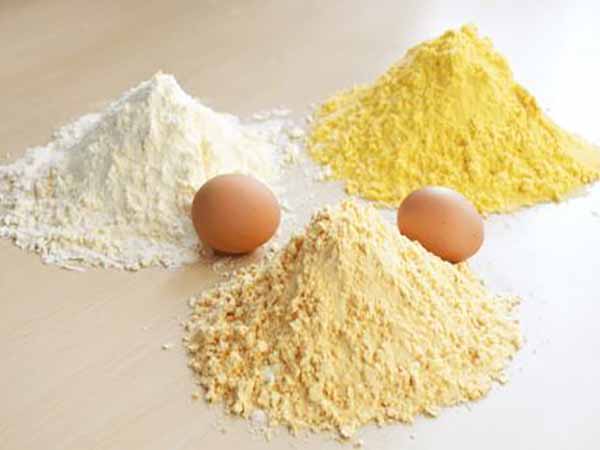
The global food ingredient sector relies heavily on industrial thermal dehydration to transform liquid shell eggs into shelf-stable powders. Converting raw liquid egg—which contains 75% to 88% water—into powder reduces bulk volume by up to 90%. Additionally, it extends shelf life to 18–24 months under ambient storage and effectively eliminates biological contamination risks. Consequently, selecting drying equipment across the US, European, and global markets requires evaluating thermal efficiency, airflow dynamics, protein preservation, and hygienic machine design.
Protein Sensitivity & Industrial Drying Dynamics
Industrial egg processing continuously balances heat application with delicate protein chemistry. Specifically, raw liquid egg contains thermolabile proteins such as ovalbumin, ovotransferrin, and vitellin. Exceeding thermal thresholds denatures these proteins rapidly. As a result, processors experience lost solubility, poor foaming power, low emulsion stability, and unwanted Maillard browning. To prevent these issues, food processors use automated dehydration systems to produce high-grade whole egg, egg white albumen, and egg yolk powders efficiently.
Technical Evaluation of Industrial Egg Dryer Machinery
Industrial Egg Powder Processing & Drying Flow
Processing liquid egg into shelf-stable powder follows a sequential multi-stage path:
-
Raw Liquid Egg Preparation: First, shell eggs undergo washing, automated breaking, precise separation into white and yolk fractions, fine centrifugal filtration, and HTST pasteurization to eliminate pathogens.
-
Primary Drying Selection: Next, processed liquid egg moves directly to a primary thermal system based on capacity and functional requirements:
-
Spray Dryer: Applied for high-volume continuous production targeting 2% to 4% moisture.
-
Refractance Window Dryer: Selected for gentle thin-film dehydration that preserves protein structure, gelling strength, and foaming power.
-
Vacuum Dryer: Used for low-temperature processing of heat-sensitive egg formulations, high-fat yolk concentrates, and lipophilic extractions.
-
-
Secondary Moisture Control & Powder Cooling: Subsequently, semi-dry powders pass through a Vibratory Fluid Bed Dryer or Continuous Band Dryer to reduce heat, stabilize fat content, and drop moisture to target levels.
-
Final Processing & Packaging: Finally, cooled egg powder passes through sanitary sieves to ensure uniform particle size before moving to automated, nitrogen-flushed packaging systems.
Detailed Technical Analysis of Primary Dryer Types
A. Industrial Spray Dryer Systems
Spray drying remains the global benchmark for large-scale egg powder manufacturing. In this process, atomizers spray liquid egg into micro-droplets inside a sealed drying chamber, where hot air streams evaporate moisture almost instantly.
Watch Demo: Click Here
-
Evaporation Capacity: Output scales from 50 LPH for pilot plants to over 5,000 LPH for major industrial installations.
-
Thermal Operating Range: Hot inlet air operates between 150°C and 220°C, while outlet air stays strictly between 70°C and 90°C. Meanwhile, rapid evaporative cooling keeps actual droplet temperatures below 60°C to 65°C, preventing thermal denaturation.
-
Final Moisture Output: As a result, it yields 2% to 4% residual moisture consistently.
-
Best Suited For: Designed for high-volume processing of Whole Egg Powder, commercial Egg Yolk Powder, and Standard Egg White Powder.
-
Key Functional Benefit: Therefore, it delivers high bulk density (0.35 g/cm³ to 0.55 g/cm³) along with fast rehydration speed for bakery applications.
B. Refractance Window (RWD) Dehydration Systems
On the other hand, Refractance Window drying provides a low-temperature method for continuous moisture removal. Specifically, operators apply liquid egg as a thin film onto a moving conveyor belt floating over circulating hot water. Thus, thermal energy transfers to the product via direct conduction and infrared radiation.
Watch Demo: Click Here
-
Thermal Operating Range: Circulating water stays at 75°C to 95°C, keeping the egg film under 60°C to 70°C.
-
Energy Savings: Notably, it consumes up to 50% less energy than freeze drying and conventional spray drying systems.
-
Drying Speed: Due to rapid surface film dehydration, it completes moisture evaporation in minutes rather than hours.
-
Best Suited For: Ideal for high-value Egg White Albumen Powder requiring high gel strength, superior whipping capacity, zero color degradation, and organic egg blends.
-
Key Functional Benefit: In summary, it retains native protein structure and natural color without thermal stress.
C. Continuous Band & Apron Dryers
In addition, continuous band dryers feature multi-zone conveyor belts running through insulated thermal tunnels. For this reason, heated air circulates through perforated stainless steel belts to dry semi-solid egg mass or granular particles uniformly.
-
Throughput Capacity: Scalable from 100 kg/hr to over 10 Tons Per Hour (TPH).
-
Multi-Zone Temperature Control: Through independent heating zones (e.g., Zone 1 at 110°C, Zone 2 at 85°C, Zone 3 at 60°C), it maintains a strict drying curve.
-
Airflow Engineering: Furthermore, reversible cross-draft airflow prevents hot spots and uneven moisture distribution.
-
Best Suited For: Pre-crystallized egg white flakes, granular egg albumen, secondary powder drying, and eggshell waste processing.
-
Key Functional Benefit: Thus, it operates reliably during continuous 24/7 industrial drying operations.
D. Vibratory Fluid Bed Dryers (VFBD)
Similarly, Vibratory Fluid Bed Dryers combine mechanical vibration with upward thermal air currents to fluidize wet or semi-dry egg particles, maximizing surface exposure to drying air.
-
Primary Application: Integrates directly below spray dryers for secondary moisture reduction and powder cooling.
-
Thermal Operating Range: Bed temperatures hold at 40°C to 80°C for secondary drying, followed by a cooling zone using chilled air at 15°C to 25°C.
-
Best Suited For: Instantized whole egg powders, agglomerated non-dusting blends, and conditioning high-fat egg yolk powder.
-
Key Functional Benefit: Ultimately, it reduces moisture by an additional 1% to 2% and cools powder below fat-crystallization temperature (30°C) to prevent caking.
E. Vacuum Dryers & Pneumatic Flash Dryers
-
Vacuum Drying Systems: These systems evaporate moisture under negative pressure (10 mbar to 100 mbar) at low temperatures (35°C to 55°C). For instance, they suit high-fat egg yolk extracts, lecithin separation, and active biopharmaceutical egg derivatives prone to oxidation.
-
Pneumatic Flash Dryers: In contrast, rapid pneumatic transport systems remove surface moisture in 1 to 3 seconds. Therefore, they process byproducts, co-dried protein-starch formulations, and eggshell meal effectively.
Technical Comparison Matrix: Dryer Selection by Product
| Dryer Type | Primary Mechanism | Thermal Range | Target Moisture | Best Suited Product | Key Functional Benefit |
| Spray Dryer | High-velocity hot air atomization |
Inlet: 150°C–220°C Outlet: 70°C–90°C |
2.0% – 4.0% | Whole Egg Powder, Commercial Yolk | High capacity, continuous flow, rapid solubility |
| Refractance Window (RWD) | Conductive & IR water-bath transfer |
Water: 75°C–95°C Product: <65°C |
2.5% – 4.5% | High-Gel Albumen, Organic Egg White | Maximum protein retention, 50% energy savings |
| Vibratory Fluid Bed | Fluidized hot/cool air suspension |
Bed: 40°C–80°C Cooling: 15°C–25°C |
1.5% – 2.5% | Agglomerated Egg Powder, Instant Mixes | Prevents caking, improves powder flowability |
| Continuous Band Dryer | Conveyorized multi-zone airflow | Zone Controlled: 50°C–120°C | 3.0% – 5.0% | Flake Albumen, Eggshell Dehydration | High throughput, handles semi-solids & granules |
| Vacuum Dryer | Reduced pressure low-temp boiling | Chamber: 35°C–55°C (Negative Pressure) | 1.0% – 3.0% | High-Fat Yolk, Lecithin Extracts | Zero thermal oxidation, protects lipid integrity |
| Pneumatic Flash Dryer | High-speed pneumatic air transport |
Inlet: 140°C–180°C Residence: 1–3 sec |
3.0% – 6.0% | Co-Dried Formulations, Eggshell Meal | Ultra-fast drying, minimal floor space requirement |
Market Overview: USA vs. Europe
Stringent food safety standards, ambitious decarbonization goals, and high operational automation drive the market for egg processing and powder drying machinery across North America and Western Europe.
Regional Market Drivers & Standards
United States Market Focus:
-
Regulatory Compliance: First, operations follow USDA-FSIS hygienic mandates and 3-A Sanitary Standards strictly.
-
Automation Requirements: Second, processors demand high-capacity line automation operating 24/7 with minimal manual intervention.
-
Core Technologies: In addition, multi-stage spray drying towers coupled with secondary fluid bed coolers operate across major egg-producing hubs in the American Midwest.
-
Plant Safety & Operations: Furthermore, plants utilize automated Clean-In-Place (CIP) sanitation, SCADA system integration, NFPA-compliant explosion suppression for dust handling, and low-emission gas-fired air heaters.
European Market Focus:
-
Regulatory Compliance: On the other hand, European plants follow EFSA regulations, EHEDG hygienic design principles, and strict CE environmental directives.
-
Energy & Sustainability: Accordingly, European food processors prioritize thermal efficiency, waste-heat recovery loops, and reduced carbon footprints. As a result, exhaust air heat exchangers preheat incoming process air.
-
Specialty Products: Besides, growing consumer demand for cage-free, pasture-raised, and organic egg products increases interest in gentle drying technologies—such as Refractance Window Dryers and Low-Temperature Fluidized Beds—that preserve functional whipping and gelling properties.
End-to-End Plant Engineering & Processing Architecture
A complete industrial egg powder manufacturing facility operates through ten sequential mechanical and thermal stages:
-
Egg Receiving & Washing: Operators inspect, sanitize, and feed raw shell eggs into high-speed processing lines.
-
Automatic Breaking & Yolk/White Separation: Next, mechanical breakers separate liquid yolk and white cleanly to prevent yolk lipids from contaminating albumen streams.
-
Centrifugal Filtration: Then, high-precision stainless steel filters remove chalazae and micro shell fragments.
-
Standardization & Enzymatic Desugaring: Afterward, standardization tanks adjust total dry solids. Meanwhile, raw egg white naturally contains 0.4% glucose. Technicians add glucose oxidase enzymes in storage tanks to convert glucose into gluconic acid prior to spray drying. This process prevents Maillard browning, discoloration, and off-flavors.
-
HTST Pasteurization: Subsequently, High-Temperature Short-Time pasteurizers eliminate pathogens such as Salmonella without denaturing proteins.
-
High-Pressure Homogenization: Following this, high-pressure homogenizers (150 bar to 250 bar) stabilize yolk fat emulsions for uniform powder consistency.
-
Thermal Spray or Refractance Window Dehydration: Later, primary moisture removal converts liquid streams into fine powder or thin flakes.
-
Fluid Bed Powder Cooling: Systems then cool hot powder below fat-crystallization temperatures (30°C) to preserve flowability.
-
Sanitary Powder Sieving: In addition, vibrating screens ensure uniform particle size distribution and eliminate agglomerated lumps.
-
Automated Nitrogen-Flushed Packaging: Finally, systems pack powder into sanitary barrier containers under inert gas to prevent lipid oxidation.
Energy Efficiency, CIP, and Automation Controls
-
Heat Recovery Systems: Specifically, recovery systems capture exhaust air heat (75°C to 85°C) from spray towers to preheat ambient intake air. This reduces total plant fuel consumption by 15% to 25%.
-
Sanitary Materials: Regarding construction, fabricators build equipment using food-grade SS304 or SS316 stainless steel with internal surface finishes polished to Ra < 0.8 µm.
-
CIP Integration: Moreover, automated CIP loops circulate caustic, acid, and sanitizing solutions through spray nozzles, tanks, and pipework without requiring manual disassembly.
Industry Leadership: GENEX Tech Industries LLP
When expanding or constructing an egg powder processing facility in the USA, Europe, or emerging markets, partnering with an experienced equipment manufacturer is essential.
GENEX Tech Industries LLP (operating via Food Tech Projects and GTI Dryers) manufactures turnkey egg processing plants and industrial drying systems globally.
Accreditations, Standards & Turnkey Capabilities
-
Accreditations & Compliance: Specifically, the company holds ISO 9001:2015 Accreditation, CE Certification, US FDA Compliance, and Indian Railways Approved Vendor status.
-
Core Turnkey Capabilities:
-
Fully automated egg breaking and precision separation lines.
-
HTST pasteurization and high-pressure homogenization systems.
-
Custom energy-efficient spray drying towers (50 LPH to 5,000+ LPH).
-
Refractance Window (RWD) systems designed specifically for high-gel albumen powder.
-
Secondary vibratory fluid bed coolers and powder agglomeration units.
-
Integrated SS304/SS316 multi-stage Clean-In-Place (CIP) sanitation systems.
-
-
Yield Optimization: Furthermore, integrated membrane ultrafiltration systems recover liquid egg-water streams. This increases product yield, lowers effluent load, and boosts total ROI.
Conclusion & Next Steps
In conclusion, establishing an efficient egg powder production line requires selecting drying equipment that balances thermal efficiency, hygienic compliance, energy consumption, and protein retention. Ultimately, matching raw material characteristics with the correct dryer design ensures consistent product quality and long-term operational profitability when producing high-solubility whole egg powder or high-gel albumen powder.
Technical Consultation & Contact Details
For plant layout planning, machinery proposals, thermal efficiency audits, or equipment upgrades, contact the GENEX engineering team:
-
Head Office Address:
GENEX Tech Industries LLP
10C, Sir William Jones Sarani (Middleton Row), Park Street,
Kolkata – 700071, West Bengal, India
-
Direct Phone / WhatsApp Contact:
+91-97489 06968 | +91-93300 77417
-
Official Business Email:
mktg@foodtechprojects.com | sales@foodtechprojects.com
-
Official Company Websites: