
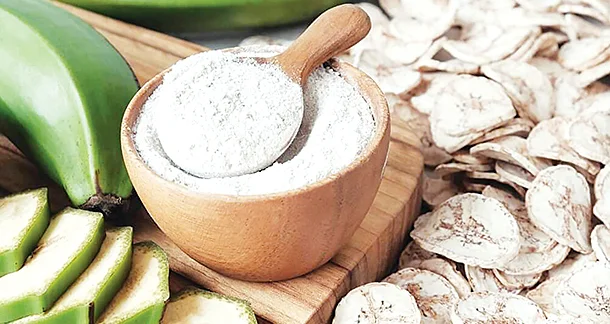
The global banana processing industry represents one of the fastest-growing segments in modern agro-industrial food manufacturing. Furthermore, bananas rank among the most widely cultivated tropical fruits worldwide. In fact, annual global production now exceeds 125 million metric tons. However, fresh bananas are highly perishable climacteric fruits. As a result, post-harvest losses frequently reach 25 percent to 35 percent in major producing regions. Specifically, rapid ripening, enzymatic browning, mechanical bruising, and fungal spoilage drive these heavy losses. Consequently, food processors and agribusiness investors are increasingly adopting automated Banana Processing Machines. Moreover, by installing high-efficiency Banana Chips Dryers and specialized Banana Powder Machines, manufacturers convert perishable harvests into shelf-stable commercial ingredients.
Additionally, industrial dehydration transforms a low-margin crop with a 10-day shelf life into high-value products. Indeed, these finished ingredients easily last 12 to 24 months under ambient storage. Meanwhile, modern thermal engineering preserves natural flavor, golden color, resistant starch, potassium, and vitamin B6. Importantly, processors achieve this stability without adding artificial preservatives. Therefore, selecting the right industrial dryer is the single most critical decision when launching a commercial banana processing plant.
In this technical guide, we explore the complete engineering framework behind banana value addition. First, we examine raw material science, pre-processing equipment, thermal dehydration mechanics, and dryer-to-product selection matrices. Second, we detail operating temperature benchmarks, energy metrics, hygienic design standards, and turnkey plant setup protocols.
Global Market Dynamics and the Economics of Industrial Banana Value Addition
Overcoming Post-Harvest Price Volatility
To begin with, understanding industrial banana dehydration requires analyzing raw material economics alongside global buyer demand. For instance, in major producing nations like India, Ecuador, the Philippines, Brazil, and Costa Rica, farm-gate prices fluctuate wildly. During peak harvest seasons, fresh supply frequently exceeds cold-chain storage capacity. Consequently, farmers and aggregators suffer severe financial losses from distressed sales.
However, deploying an integrated Banana Processing Machine line stabilizes raw material procurement. Specifically, processors can buy surplus harvests at competitive rates and convert them into non-perishable stock. Thus, manufacturers unlock access to lucrative domestic and export B2B markets year-round.
Five High-Growth Industrial End Markets
Specifically, dehydrated banana derivatives serve five major global food and nutrition sectors:
-
Bakery and Confectionery Manufacturing: First, industrial bakeries use ripe banana powder and flakes as natural sweeteners. Furthermore, these ingredients act as moisture retainers and clean-label flavorings in muffins, biscuits, cakes, and energy bars.
-
Infant Nutrition and Baby Food Formulations: Second, green banana flour and drum-dried banana flakes serve as hypoallergenic carbohydrate bases. Consequently, baby food brands rely on them for easily digestible infant cereals.
-
Nutraceuticals and Functional Health Foods: Third, unripe green banana powder contains 45 percent to 65 percent resistant starch. Specifically, this Type 2 resistant starch acts as a prebiotic fiber supporting gut health and glycemic control.
-
Healthy Snack and Ready-to-Eat Retail: Fourth, hot-air dried and heat-pump dehydrated banana chips dominate the clean-label snack aisle. Therefore, health-conscious consumers actively choose them over traditional deep-fried potato chips.
-
Beverage, Dairy, and Ice Cream Industries: Fifth, spray-dried and refractance-window banana powders dissolve rapidly in liquid bases. Hence, manufacturers blend them smoothly into milkshakes, yogurts, protein powders, and plant-based milks.
Economic Value Multiplication and Profit Margins
Furthermore, the financial return generated through industrial dehydration is substantial. Initially, fresh culinary or Cavendish bananas typically trade at farm-gate prices between $0.15 and $0.30 per kilogram. In contrast, export-grade green banana flour commands $3.50 to $5.50 per kilogram. Similarly, ripe refractance-window or spray-dried banana powder sells for $6.00 to $9.50 per kilogram. Meanwhile, seasoned dehydrated banana chips retail between $5.00 and $8.00 per kilogram. Thus, even after accounting for a 5:1 raw-to-finished weight ratio, dehydration delivers gross margin expansions exceeding 200 percent to 350 percent.
Raw Material Science: Cultivar Selection, Ripeness Stages, and Moisture Dynamics
Before configuring a Banana Chips Dryer or Banana Powder Machine, engineers must evaluate raw fruit chemistry. Specifically, fresh bananas contain roughly 72 percent to 78 percent moisture by weight. Additionally, they contain 20 percent to 25 percent carbohydrates, 1.2 percent protein, 0.3 percent lipids, and 1.0 percent minerals. However, the internal ratio between native starch and soluble sugars shifts dramatically across seven ripening stages.
Stage 1 to Stage 2: Unripe Green Bananas (Starch-Dominant Matrix)
At the mature green stage, carbohydrates exist almost entirely as native starch. Specifically, starch accounts for 70 percent to 80 percent of dry matter, while total sugars stay below 2 percent. Because the pulp is firm and non-sticky, green bananas are mandatory for green banana flour and savory banana chips. Furthermore, low sugar prevents caramelization and thermoplastic stickiness inside hot-air dryers and hammer mills.
Stage 3 to Stage 5: Firm-Ripe to Yellow Bananas (Balanced Sugar-Starch Matrix)
During mid-ripening, natural amylase enzymes convert native starch into sucrose, glucose, and fructose. Consequently, starch drops to 25 percent to 40 percent, while soluble sugars climb to 10 percent to 15 percent. At this stage, the pulp remains firm enough for clean mechanical slicing while offering pleasant sweetness. Therefore, Stage 4 and Stage 5 bananas work best for sweet banana coins and heat-pump-dried snacks.
Stage 6 to Stage 7: Fully Ripe to Sugar-Spotted Bananas (Sugar-Dominant Matrix)
At full ripeness, soluble sugars exceed 18 percent to 22 percent of fresh weight. Meanwhile, native starch falls below 3 percent. Additionally, pectin breakdown softens cell walls, yielding an aromatic puree upon crushing. However, high sugar concentrations create a low glass transition temperature between 35 degrees Celsius and 45 degrees Celsius. Consequently, standard hot-air drying melts the sugars into sticky, burnt deposits. Thus, fully ripe bananas require Refractance Window Dryers, Vacuum Drum Dryers, or Spray Dryers to produce free-flowing ripe banana powder.
Key Banana Cultivars in Industrial Processing
-
Cavendish (Grand Naine / Dwarf Cavendish): First, this variety is the global standard for ripe banana puree, spray-dried powder, and green banana flour. Moreover, growers favor it for high farm yields and a uniform 60 percent pulp-to-peel ratio.
-
Nendran (Plantain Variety): Second, processors across South India rely on Nendran for premium golden banana chips. Specifically, its dense flesh and lower moisture content (68 percent to 72 percent) guarantee superior crunch.
-
Poovan, Robusta, and Monthan: Third, regional processors frequently utilize these varieties for blended bakery flours and institutional banana granules.
Complete End-to-End Banana Processing Line Architecture
An industrial banana dehydration plant is never just a standalone dryer. Rather, it is a synchronized processing line where upstream preparation governs final product quality. Specifically, a turnkey Banana Processing Machine line comprises seven sequential unit operations.
1. Receiving, Sorting, and Automated Fruit Washing System
Initially, harvested banana hands arrive at the plant and undergo manual or optical sorting. Here, operators remove moldy, over-bruised, or undersized fingers immediately. Next, the fruit enters a two-stage Bubble and Spray Fruit Washing Machine built from AISI 304 stainless steel. In the first tank, air blowers create turbulent water agitation to remove field dirt and latex sap. Subsequently, a sanitized fresh-water spray rinse reduces surface bacteria by over 99 percent before peeling.
2. Controlled Ripening Chambers (For Ripe Powder Lines)
Facilities producing sweet banana powder or ripe flakes require uniform fruit maturity. Therefore, processors load green bananas into insulated, ethylene-controlled Ripening Chambers. Specifically, operators maintain chamber temperatures between 16 degrees Celsius and 18 degrees Celsius with 85 percent to 90 percent relative humidity. Finally, by injecting 100 to 150 parts per million of ethylene gas for 24 to 48 hours, the entire batch ripens evenly.
3. Industrial Banana Peeling and Trimming Station
Removing the fibrous outer peel represents a critical labor and throughput step. Notably, peels account for 35 percent to 42 percent of gross banana weight. For instance, unripe green bananas possess tight, latex-rich skins that require longitudinal slitters or abrasive peelers. Conversely, ripe bananas pass smoothly through rotary roller-type peeling units. Furthermore, screw conveyors route discarded peels to a byproduct recovery line. Thereafter, a Rotary Drum Dryer converts wet peels into cattle feed pellets or pectin feedstock.
4. Enzymatic Browning Prevention (Blanching and Anti-Browning Dip)
Immediately after peeling, exposed banana pulp reacts with oxygen via the enzyme polyphenol oxidase. Indeed, within minutes, untreated pulp turns dark brown. Thus, to preserve a bright ivory or golden hue, peeled bananas undergo immediate stabilization:
-
Steam or Hot-Water Blanching: First, peeled bananas pass through a continuous Steam Blancher at 85 degrees Celsius to 95 degrees Celsius for 2 to 4 minutes. Consequently, this heat step permanently deactivates browning enzymes and reduces surface microbes.
-
Food-Grade Antioxidant Immersion: Second, for raw-profile nutraceutical powders, processors avoid high blanching temperatures. Instead, slices soak in a chilled bath containing 0.5 percent citric acid and 0.3 percent ascorbic acid for 3 minutes.
5. Precision Slicing or Pulping Unit (Product-Specific Path)
Next, the processing line splits into two distinct mechanical paths based on the finished product:
-
Path A — Solid Slices and Chips (For Mesh Belt and Heat Pump Dryers): First, peeled bananas enter a high-speed Rotary Banana Slicing Machine fitted with hardened stainless steel blades. Importantly, thickness control is vital here. Specifically, slices cut to 1.5 millimeters to 2.0 millimeters produce crispy banana chips. Conversely, slices cut to 3.0 millimeters to 5.0 millimeters yield chewy banana coins. Therefore, maintaining thickness within plus or minus 0.15 millimeters ensures uniform drying across the entire batch.
-
Path B — Homogeneous Puree (For Refractance Window, Drum, and Spray Dryers): Second, peeled ripe bananas feed into a Fruit Crusher and Turbo Pulper Finisher. Equipped with 0.5-millimeter micro-screens, the pulper removes seeds and coarse fibers. Consequently, it outputs a smooth puree at 20 degrees Brix to 24 degrees Brix. Subsequently, for spray drying, a colloid mill further homogenizes and dilutes this puree to 14 degrees Brix.
6. Thermal Dehydration (Core Drying Stage)
Following preparation, the slices or puree enter the primary industrial dryer. Depending on product specifications, moisture drops from 75 percent down to 2.5 percent–5.0 percent for powders and chips. Meanwhile, soft chewy snacks dry to a final moisture range of 8.0 percent to 12.0 percent.
7. Cooling, Milling, Sieving, and Nitrogen-Flushed Packaging
Finally, hot dehydrated banana slices or flakes exit the dryer in a slightly pliable state. Therefore, they travel across a Dehumidified Cooling Conveyor until product temperature drops below 28 degrees Celsius. Notably, cooling allows natural sugars to harden into a crisp, brittle structure. Similarly, for powder lines, dried flakes enter a water-cooled Pin Mill or Hammer Mill Pulverizer. Afterward, a Vibro-Sifter (80 to 120 mesh) guarantees consistent fine particle sizing. Lastly, automated Vertical Form Fill Seal (VFFS) machines pack the product with nitrogen flushing. Thus, keeping residual oxygen below 2 percent ensures a 12-to-24-month shelf life.
Which Dryer Is Best for Which Banana Product? Comprehensive Technology Selection Guide
Selecting the wrong dryer causes scorched sugars, excessive energy bills, and frequent plant shutdowns. Because green slices, chewy coins, and sticky ripe purees behave differently under heat, each product requires a dedicated drying machine. Therefore, the comparison matrix below outlines the optimal dryer for every commercial banana product.
| Target Banana Product | Raw Material State | Optimal Industrial Dryer | Operating Temperature Range | Target Final Moisture | Key Product Quality Advantage |
| Crispy Dehydrated Banana Chips | Unripe or firm-ripe slices (1.5–2.0 mm) | Multi-Stage Mesh Belt Dryer | 55°C to 75°C (zoned) | 2.5% to 3.5% | Continuous high output, golden color, zero oil absorption |
| Premium Chewy Banana Coins & Strips | Firm-ripe slices (3.0–5.0 mm) | Closed-Loop Heat Pump Dryer | 40°C to 55°C | 8.0% to 12.0% | Maximum aroma retention, soft bite, 60% lower energy use |
| Green Banana Resistant Starch Flour | Unripe green slices or coarse grits | Mesh Belt Dryer or Fluidised Bed Dryer | 50°C to 60°C | 4.0% to 6.0% | Protects Type 2 resistant starch without gelatinization |
| Premium Ripe Banana Powder & Flakes | Fully ripe banana puree (20–24° Brix) | Refractance Window Dryer | 65°C to 80°C (water) / <65°C product | 2.5% to 4.0% | Preserves fresh aroma, bright color, and vitamins; carrier-free |
| Instant Beverage & Infant Cereal Flakes | Ripe banana puree / starch blend | Vacuum / Atmospheric Drum Dryer | 110°C to 135°C (drum surface) | 3.0% to 4.5% | Instant cold-water solubility and smooth functional viscosity |
| Fine Instant Juice & Flavoring Powder | Clarified/homogenized banana liquid | Centrifugal Spray Dryer | 150°C–175°C inlet / 75°C–85°C outlet | 2.5% to 3.5% | Ultra-fine free-flowing micro-spheres (50–100 microns) |
| Batch Specialty & Organic Banana Slices | Sliced green or ripe bananas | Dehumidified Tray Dryer | 50°C to 65°C | 3.0% to 5.0% | Low capital investment, ideal for small artisanal batches |
| Dried Banana Peel (Animal Feed / Pectin) | Chopped raw banana peels (82% moisture) | Rotary Drum Dryer or Band Dryer | 90°C to 130°C | 8.0% to 10.0% | High-capacity waste recovery with low thermal cost |
Deep-Dive Engineering Analysis of Industrial Banana Dryers
To help plant owners evaluate machinery specifications, let us examine how each industrial dryer operates. Indeed, understanding these thermal mechanisms ensures you invest in the right technology for your target product.
1. Continuous Mesh Belt Dryer (Best for Banana Chips and Green Banana Flour)
For commercial plants processing 500 kilograms to over 5,000 kilograms of bananas per hour, the Multi-Stage Continuous Mesh Belt Dryer is the industry standard. Specifically, it excels at producing crispy dehydrated banana chips and green banana flour feedstocks.
Working Principle and Thermal Architecture
In a Mesh Belt Dryer, blanched banana slices spread evenly onto a perforated AISI 304 stainless steel conveyor belt. Here, operators maintain a uniform bed depth between 25 millimeters and 45 millimeters. As the belt moves slowly through an insulated tunnel, conditioned air flows alternatingly upward and downward through the slices.
Crucially, the drying tunnel features 3 to 5 independent temperature-and-airflow zones:
-
Zone 1 (High-Evaporation Zone): First, this zone operates at 70 degrees Celsius to 75 degrees Celsius with high airflow velocity. Importantly, rapid surface evaporation keeps the actual banana slice temperature below 48 degrees Celsius. Thus, Zone 1 removes 50 percent of total moisture without cooking the fruit.
-
Zone 2 (Intermediate Diffusion Zone): Second, the temperature drops to 60 degrees Celsius to 65 degrees Celsius. Here, internal moisture migrates steadily from the center of each slice to the outer surface.
-
Zone 3 (Final Crispness Zone): Third, this stage operates at 50 degrees Celsius to 55 degrees Celsius with relative humidity below 12 percent. Consequently, moisture drops smoothly to 2.5 percent–3.5 percent without scorching natural sugars.
-
Zone 4 (Integrated Cooling Zone): Finally, this section blows filtered ambient air across the finished chips, locking in crispness before discharge.
Why Mesh Belt Dryers Excel for Banana Chips
First, gentle belt transport eliminates tumbling, preventing fragile 1.5-millimeter banana slices from breaking into crumbs. Second, multi-zone temperature control stops case hardening, where a dry outer crust traps moisture inside the chip. Third, built-in Clean-in-Place (CIP) nozzles simplify washdowns between production shifts.
2. Refractance Window Dryer (Best for Ripe Banana Powder and Flakes)
Previously, drying fully ripe banana puree without adding 40 percent maltodextrin carrier was nearly impossible. Specifically, high fructose and glucose levels caused ripe puree to melt into sticky, burnt tar on hot-air belts. Today, however, Refractance Window Drying (RWD) solves this problem completely.
Working Principle: Conductive, Radiative, and Evaporative Synergy
A Refractance Window Dryer circulates hot water at 65 degrees Celsius to 85 degrees Celsius inside shallow insulated troughs. Above this hot water floats a continuous, food-grade Mylar (polyethylene terephthalate) infrared-transparent belt.
Initially, operators spread wet ripe banana puree onto the Mylar belt in a thin layer of 0.5 millimeters to 1.2 millimeters. Because the puree contains 78 percent water, it creates an optical “window” in the Mylar film. Consequently, infrared radiation passes directly from the hot water into the banana puree alongside conductive heat. Thus, moisture evaporates within 3 to 6 minutes, while evaporative cooling keeps the banana puree below 62 degrees Celsius.
Furthermore, as the puree dries below 10 percent moisture, its refractive index shifts. Notably, this change automatically closes the infrared window and blocks further radiative heat transfer. Therefore, the dried banana sheet cannot overheat or scorch even at 2.5 percent final moisture. Finally, the belt passes over a chilled water section at 18 degrees Celsius, and a doctor blade scrapes off crisp golden flakes.
Key Advantages for Ripe Banana Powder
-
Zero Maltodextrin Required: First, manufacturers produce 100 percent pure, clean-label banana powder that commands a 50 percent price premium.
-
Superior Aroma and Nutrient Retention: Second, low product temperatures preserve over 90 percent of natural banana esters, potassium, and vitamins.
-
High Thermal Efficiency: Third, closed-loop water heating achieves 55 percent to 70 percent thermal efficiency, nearly double that of spray dryers.
3. Closed-Loop Heat Pump Dryer (Best for Premium Chewy Banana Coins and High-Aroma Slices)
For brands targeting gourmet retail snacks or regions with high electricity costs, the Closed-Loop Heat Pump Banana Dryer delivers exceptional quality and energy savings.
Working Principle and Dehumidification Cycle
Traditional hot-air dryers continuously vent warm, humid exhaust air outdoors, wasting huge amounts of heat. In contrast, a Heat Pump Dryer operates inside a sealed, closed-loop chamber. Initially, warm, humid air exiting the banana trays passes over the cold evaporator coil of an integrated heat pump. As the air cools below its dew point, water vapor condenses into liquid and drains away cleanly.
Next, the dry air passes over the hot condenser coil. There, it recovers all the latent heat of condensation and reheats to 40 degrees Celsius to 55 degrees Celsius. Consequently, with relative humidity dropping to 8 percent–15 percent, this dry air recirculates back over the banana slices.
Operational and Quality Benefits
-
Massive Energy Savings: First, heat pump dryers consume 50 percent to 65 percent less energy than electric or diesel hot-air dryers.
-
Weather Independence: Second, because the chamber is sealed, monsoon humidity, dust, and insects never disrupt drying times.
-
Bright Color and Soft Chewiness: Third, drying at 45 degrees Celsius prevents browning, yielding golden banana coins with intense natural aroma.
4. Centrifugal Spray Dryer (Best for Instant Beverage Banana Powders)
When beverage brands require an ultra-fine, instant-dissolving powder (50 to 100 microns) for smoothies or dairy mixes, a Centrifugal Spray Dryer is the ideal solution.
Engineering Requirements for Spray Drying Bananas
First, processors treat banana puree with food-grade pectinase and amylase enzymes to break down thick fibers. Next, high-pressure homogenization reduces liquid viscosity below 150 centipoise. Furthermore, processors typically blend 20 percent to 35 percent maltodextrin (DE 10–15) into the liquid feed. Importantly, this carrier raises the glass transition temperature and prevents sticky powder buildup inside the drying tower.
Inside the stainless steel chamber, a rotary atomizer spinning at 15,000 revolutions per minute sprays the liquid into microscopic droplets. Meanwhile, co-current hot air enters at 150 degrees Celsius to 175 degrees Celsius and exits at 75 degrees Celsius to 85 degrees Celsius. Consequently, droplets dry into free-flowing powder within 5 to 10 seconds, and a cyclone separator collects the finished product.
5. Vacuum and Atmospheric Drum Dryers (Best for Instant Banana Flakes and Baby Food)
Drum Dryers are conductive machines widely used by infant cereal and breakfast food manufacturers. Specifically, in a Double Drum Dryer, two steam-heated, chrome-plated cylinders rotate toward each other with a tight gap of 0.3 millimeters.
Initially, ripe banana puree—often blended with rice or oat flour—feeds into the valley between the heated drums (surface temperature 120 degrees Celsius). Within a single 20-second rotation, the puree dries into a porous sheet. Subsequently, oscillating doctor blades shave the sheet into instant cold-water-soluble flakes. Moreover, adding a vacuum enclosure (Vacuum Drum Dryer) lowers the boiling point to 70 degrees Celsius, further protecting delicate flavors.
6. Fluidised Bed Dryer (Best for Green Banana Grits and Powder Conditioning)
While a Fluidised Bed Dryer (FBD) cannot dry sticky wet banana slices directly, it performs two essential functions in banana flour plants:
-
Drying Pre-Granulated Green Banana Grits: First, unripe green bananas are shredded into 3-millimeter granules and fluidized on a perforated plate using 60-degree-Celsius air. Consequently, intense air-to-particle contact achieves uniform drying within 40 minutes.
-
Post-Drying Moisture Conditioning: Second, processors place an FBD downstream of belt or drum dryers to standardize final powder moisture to exactly 4.0 percent before packaging.
Critical Process Parameters: Temperature, Moisture, Yield, and Energy Benchmarks
Operating a profitable Banana Processing Machine facility requires strict monitoring of mass balance and energy metrics. Therefore, below are verified engineering benchmarks for commercial banana plants.
Mass Balance and Yield Ratios (Per 1,000 Kilograms of Fresh Raw Bananas)
-
Gross Raw Fruit Input: First, 1,000 kilograms of fresh bananas enter the line at 75 percent average pulp moisture.
-
Peel and Crown Separation (38 percent to 40 percent): Next, 380 to 400 kilograms of wet peel are removed.
-
Net Peeled Banana Pulp (60 percent to 62 percent): Consequently, 600 to 620 kilograms enter the slicing or pulping stage.
-
Trimming and Blanching Loss (2 percent to 3 percent): Thereafter, 12 to 18 kilograms are lost during trimming and washing.
-
Net Wet Material Entering Dryer: Roughly 590 kilograms enter the dryer, containing 442 kilograms of water and 148 kilograms of dry solids.
-
Complete Banana Chips or Pure Powder (at 3.0 percent moisture): Ultimately, this yields 152 to 156 kilograms (a 6.4:1 fresh-to-dry ratio).
-
Finished Green Banana Flour (at 5.0 percent moisture from lower-moisture green fruit): Similarly, unripe fruit yields 175 to 190 kilograms (a 5.3:1 fresh-to-dry ratio).
-
Finished Chewy Banana Coins (at 10.0 percent moisture):Complete Finally, semi-moist snacks yield 165 to 170 kilograms.
Specific Moisture Evaporation and Thermal Energy Requirements
To produce 155 kilograms of dried banana chips from 590 kilograms of wet slices, the dryer must evaporate 435 kilograms of water. Notably, energy consumption varies noticeably across dryer types:
-
Multi-Stage Mesh Belt Dryer (Steam or Gas Heated): First, this system consumes 1.1 to 1.4 kilowatt-hours of thermal energy per kilogram of evaporated water.
-
Refractance Window Dryer (Closed Hot-Water Loop): Second, this unit consumes 0.85 to 1.05 kilowatt-hours of thermal energy per kilogram of evaporated water.
-
Closed-Loop Heat Pump Dryer (Electric): Third, this machine consumes just 0.35 to 0.48 kilowatt-hours of electrical energy per kilogram of evaporated water.
Hygienic Engineering, Food Safety, and Regulatory Compliance Standards
Global food buyers demand strict compliance with HACCP, ISO 22000, FSSC 22000, FSSAI, US FDA, and EU regulations. Therefore, every Banana Processing Machine must incorporate certified sanitary engineering features:
-
Food-Grade Stainless Steel Construction: First, all product-contact components—including washers, slicer blades, pulper screens, mesh belts, and cyclones—must use certified AISI 304 or AISI 316L stainless steel. Moreover, smooth surface finishes (Ra below 0.8 micrometers) prevent bacterial harborage and fruit acid corrosion.
-
Sanitary Piping and Tri-Clamp Fittings: Second, puree transfer lines require orbital TIG welds and quick-release tri-clamp joints with food-grade EPDM gaskets. Consequently, operators can sanitize pipelines rapidly without dead zones.
-
HEPA Process Air Filtration: Third, drying air intake systems must incorporate H13/H14 HEPA filters that capture 99.95 percent of airborne particulates down to 0.3 microns. Thus, clean air prevents mold spores from contaminating sticky fruit surfaces.
-
Automated PLC-SCADA Traceability: Fourth, modern dryers feature Siemens or Allen-Bradley PLC controllers with touchscreen HMIs. Specifically, these systems automatically log zone temperatures, belt speeds, and humidity curves for export audits.
-
Microbiological Quality Specifications for Export Banana Powder: Finally, finished export powders must satisfy strict lab limits:
-
Total Plate Count (TPC): Below 10,000 CFU per gram
-
Yeast and Mold: Below 100 CFU per gram
-
Coliforms: Below 10 CFU per gram
-
Escherichia coli and Salmonella: Absent in 25 grams
-
Water Activity (aw): Strictly below 0.35 (preventing microbial growth at room temperature).
-
Plant Capacity Sizing and Turnkey Setup Roadmap
Investors typically scale commercial banana dehydration plants across three standard production capacities. Accordingly, each tier requires tailored machinery configurations.
Small-to-Medium Commercial Plant (250 to 500 kg/hr Raw Input)
-
Finished Output: Roughly 40 to 80 kg/hr of dried banana chips or green banana flour.
-
Core Equipment: Specifically, this line includes a semi-automatic washer and blancher, rotary slicer, Closed-Loop Heat Pump Dryer or compact 3-Zone Mesh Belt Dryer, pin mill, and nitrogen pouch sealer.
-
Best Suited For: Therefore, this setup fits Farmer Producer Organizations (FPOs), regional snack startups, and organic specialty brands.
Medium-Scale Industrial Plant (1,000 to 2,000 kg/hr Raw Input)
-
Finished Output: Roughly 155 to 320 kg/hr of dried banana chips or ripe banana powder.
-
Core Equipment: Specifically, this facility uses an automated bubble washer, continuous steam blancher, precision slicer, turbo pulper, 5-Zone Continuous Mesh Belt Dryer or Refractance Window Dryer, cooling tunnel, water-cooled hammer mill, vibro-sifter, and automated VFFS packaging line.
-
Best Suited For: Consequently, this scale serves commercial food ingredient processors, B2B bakery suppliers, and contract exporters.
Large-Scale Agro-Industrial Complex (3,000 to 5,000+ kg/hr Raw Input)
-
Finished Output: Roughly 470 to 800+ kg/hr of diversified banana ingredients plus dried banana peel cattle feed.
-
Core Equipment: Specifically, this complex integrates ethylene ripening rooms, continuous peeling and pulping lines, parallel Mesh Belt Dryers and Refractance Window / Spray Dryers, a central steam boiler plant, and a Rotary Drum Dryer converting 1,500+ kg/hr of wet banana peels into dry animal feed pellets.
-
Best Suited For: Ultimately, this architecture suits large agro-industrial corporations building zero-waste, export-oriented food parks.
Conclusion: Engineering Profitability Through Precision Banana Dehydration
Ultimately, converting fresh bananas into crispy dehydrated chips, resistant-starch green banana flour, and pure ripe banana powder offers exceptional commercial returns. However, long-term plant profitability depends on matching the fruit’s ripeness chemistry with the right thermal drying technology. While Multi-Stage Mesh Belt Dryers and Closed-Loop Heat Pump Dryers deliver unmatched crispness, color, and energy efficiency for sliced banana chips and green banana flour, Refractance Window Dryers and Spray Dryers master high-sugar ripe banana purees without scorching.
Therefore, by investing in hygienically engineered, automated Banana Processing Machines, food manufacturers eliminate post-harvest agricultural waste. Even better, they build a resilient, export-ready ingredient business serving global snack, bakery, beverage, and nutraceutical markets year-round.
Consult Our Food Process Engineering Team for Turnkey Banana Drying Solutions
Are you planning to establish a commercial Banana Chips Dryer, Green Banana Flour Line, or Ripe Banana Powder Manufacturing Plant? At GENEX Tech Industries LLP, our food process engineers bring over four decades of thermal engineering experience to design, manufacture, and commission customized, export-grade industrial drying plants tailored to your raw material and production goals.
Specifically, we provide comprehensive turnkey project support, including:
-
Raw Material Drying Trials and Pilot Lab Testing
-
Custom Dryer Selection (Mesh Belt, Refractance Window, Heat Pump, Spray, and Drum Dryers)
-
Complete Turnkey Plant Layout, Mass Balance, and Utility Sizing
-
Food-Grade AISI 304/316L Machinery Fabrication, Installation, and Commissioning
Contact Our Engineering & Technical Sales Desk Today:
Head Office Address: GENEX Tech Industries LLP 10C, Sir William Jones Sarani (Middleton Row), Park Street, Kolkata – 700071, West Bengal, India
Direct Phone / WhatsApp Contact: +91-97489 06968 | +91-93300 77417
Official Business Email: mktg@foodtechprojects.com | sales@foodtechprojects.com
Official Company Websites:www.foodtechprojects.com | www.gtidryers.com