
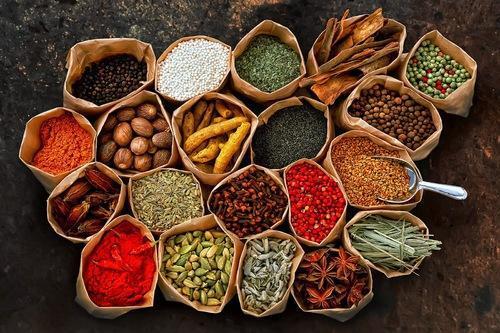
Introduction: The Global Spice Trade and Industrial Engineering
Global spice consumption has entered a new era of strict rules. Indeed, international food brands no longer accept spices dried on open yards. Instead, they demand clean, hygienic, and traceable ingredients.
Setting up an export spice processing plant requires smart engineering. Specifically, you cannot simply buy random machines and connect them together. Rather, you must build an integrated food-grade line tailored to each crop.
Global Export Market Snapshot
India exported 17.34 lakh tonnes of spices valued at US$ 4,430.90 million during 2025–26. Within this trade, red chilli held 27% of total export value. Meanwhile, turmeric accounted for 7%, and ginger added 3% alongside an 11% volume jump.
Top global buyers enforce strict import rules. For instance, key markets include the United States (14% share), China (12% share), and the UAE (9% share). Additionally, Bangladesh (8% share) and the European Union inspect every shipment closely.
Consequently, these buyers test for moisture, microbes, pesticide residues, and mycotoxins. Furthermore, they measure volatile oil levels and natural color scores before clearing cargo.
Why One Generic Line Fails for All Three Spices
Many new processors assume one standard line can handle every spice. In reality, ginger, turmeric, and red chilli behave differently at every step.
-
Fresh Ginger: First, ginger arrives with 80% to 85% moisture. However, its delicate essential oils evaporate quickly under high heat.
-
Fresh Turmeric: Next, turmeric enters as a dense rhizome with 75% to 80% moisture. Therefore, it needs hot steam curing to lock in its golden color before drying.
-
Fresh Red Chilli: Finally, chilli arrives as a hollow, waxy pod at 65% to 80% moisture. Moreover, its seeds and outer skin dry at different speeds, while high heat ruins its bright red color.
Choosing the Right Engineering Strategy
Therefore, a profitable export plant must respect these biological differences. Specifically, each spice needs dedicated settings for cleaning, pre-treatment, drying, grinding, and packing.
Moreover, choosing the right industrial dryer shapes your entire business. In fact, your dryer controls energy costs, volatile oil retention, and final shelf life.
Thus, this guide compares ginger, turmeric, and chilli lines side by side. Below, you will find practical process data, temperature limits, moisture targets, and dryer recommendations.
Export Market Benchmarks and Quality Standards
Every exporter must align factory machines with international buyer standards. Specifically, groups like ASTA, ESA, ISO, US FDA, and the Spices Board of India set strict limits.
However, missing even one target causes serious financial losses. For example, leaving 13% moisture in chilli pods invites mold during sea transit. Consequently, port authorities will reject the entire container.
Key Export Specifications Compared
| Quality Parameter | Dried Ginger (Whole / Slices / Powder) | Cured Turmeric (Fingers / Bulbs / Powder) | Dried Red Chilli (Whole Pods / Flakes / Powder) |
| Incoming Fresh Moisture | 80% to 85% | 75% to 80% | 65% to 80% |
| Target Export Moisture | 8.0% to 10.0% maximum | 8.0% to 10.0% (fingers); 6.0% to 8.0% (powder) | 8.0% to 10.0% (pods); 6.0% to 8.0% (powder) |
| Dry Recovery Yield | 16% to 22% of fresh weight | 18% to 24% of fresh weight | 22% to 28% of fresh weight |
| Primary Active Compound | Gingerols + 1.5% to 3.0% volatile oil | Curcuminoids: 2.0% to 3.5% standard; 5% to 12% premium | Capsaicinoids (heat) + natural red pigments |
| Color / Visual Benchmark | Creamy pale-yellow interior; zero scorching | 100 to 150 ASTA standard; 150 to 200+ ASTA premium | 80 to 160+ ASTA color units; bright glossy red |
| Total Ash Limit | Maximum 6.0% to 8.0% | Maximum 8.0% to 9.0% | Maximum 8.0% |
| Acid-Insoluble Ash | Maximum 1.0% to 1.5% | Maximum 1.0% to 1.5% | Maximum 1.0% to 1.25% |
| Extraneous Matter | Maximum 1.0% to 2.0% | Maximum 1.0% to 2.0% | Maximum 1.0% (stalks, calyx, foreign matter) |
| Microbial & Toxin Focus | Zero Salmonella; strict aflatoxin limits | Zero Salmonella; strict heavy metal & pesticide limits | Zero Salmonella; ultra-strict aflatoxin B1 limits |
Understanding Water Evaporation Loads
Notably, these moisture numbers reveal a vital engineering rule. Processing 1,000 kg of raw ginger requires evaporating up to 840 kg of water. As a result, you yield only 160 kg to 220 kg of dried slices.
Similarly, 1,000 kg of fresh turmeric requires removing up to 820 kg of water. Likewise, fresh red chilli requires removing 720 kg to 780 kg of water per tonne.
Therefore, thermal evaporation load must govern your dryer sizing. Accordingly, never size your thermal equipment based only on raw intake weight.
Line 1: Export Ginger Processing Line — Step-by-Step Engineering
Ginger is the most heat-sensitive crop among these three flagship spices. Indeed, its export value relies on pale color, sharp pungency, and high essential oil content.
Traditionally, sun drying takes 7 to 14 days outdoors. During this time, humidity triggers mold, dust settles on slices, and enzymes turn the flesh brown. Consequently, modern export plants replace open yards with enclosed stainless-steel lines.
Stage 1: Receiving, Soaking, and Multi-Stage Washing
First, raw ginger arrives from farms covered in sticky clay and soil clods. However, simple water sprays cannot clean the tight crevices between ginger fingers.
Instead, the line begins with an air-bubble soaking tank. Here, rhizomes soak for 15 to 20 minutes to loosen caked mud.
Next, a rotary drum washer scrubs the ginger gently. Specifically, high-pressure water jets (3 to 5 bar) and soft nylon brushes strip away dirt without bruising the flesh. As a result, acid-insoluble ash stays well below the 1.0% export limit.
Stage 2: Peeling and Precision Slicing
Next, buyer specifications determine whether you peel the ginger. For example, buyers in North America and Europe often request peeled slices for teas and pale powders.
Accordingly, an abrasive roller peeler removes the thin outer skin cleanly. Moreover, controlled friction keeps peeling loss low, typically between 5% and 8%. Conversely, oleoresin extractors prefer unpeeled ginger because the outer layer holds rich essential oils.
Afterward, uniform slicing ensures predictable drying. Specifically, a precision slicer cuts rhizomes into 2 mm to 4 mm thick slices. Thus, keeping slice thickness within ±0.3 mm ensures every piece dries evenly.
Stage 3: Enzymatic Blanching
Freshly sliced ginger turns brown quickly when exposed to air. Specifically, natural enzymes react with oxygen and darken the surface.
Therefore, lines use brief steam or hot-water blanching to prevent browning without sulfite chemicals. Accordingly, slices pass through 80°C to 85°C heat for 60 to 90 seconds.
Immediately afterward, clean air or chilled water cools the slices before dewatering. Consequently, this step stops browning, lowers surface microbes, and speeds up moisture removal.
Stage 4: Controlled Multi-Zone Dehydration
Dewatered ginger slices now enter the drying chamber. Because ginger oils evaporate quickly above 60°C, operators must stage temperatures carefully:
-
1 (Surface Drying): First, 55°C to 60°C with strong airflow removes free surface water rapidly.
-
2 (Internal Diffusion): Next, 50°C to 55°C with moderate airflow draws internal moisture outward without hardening the crust.
-
3 (Final Conditioning): Finally, 45°C to 50°C lowers moisture uniformly to 8.0% to 9.5%.
Overall, total drying takes just 4 to 6 hours. In contrast, sun drying requires more than ten days.
Stage 5: Grading, Cold Milling, and Packaging
Once dry, crisp slices pass over an aspirator to remove tiny fines. However, tough vascular fibers pose a serious milling challenge when producing ginger powder.
Specifically, standard hammer mills generate frictional heat above 75°C. Consequently, this heat clogs screens with fibers and drives off fresh aroma.
Instead, export plants use a Pin Mill or Air Classifier Mill with cooling jackets. Thus, keeping chamber temperatures below 35°C to 40°C yields free-flowing 60 to 100 mesh powder.
Finally, the powder passes through a Vibro Sifter, Magnetic Trap, and Metal Detector. Afterward, automated fillers pack the spice into nitrogen-flushed barrier bags.
Line 2: Export Turmeric Processing Line — Step-by-Step Engineering
While ginger needs gentle low heat, turmeric requires a firm thermal sequence. Specifically, controlled cooking and drying unlock its deep golden pigment and harden its core.
Currently, India supplies most of the world’s turmeric from hubs like Erode, Salem, Nizamabad, Sangli, and Lakadong. Furthermore, export buyers grade shipments by curcumin percentage (2.5% to 12%) and ASTA color scores.
Stage 1: Rhizome Separation, Destoning, and Washing
First, harvested turmeric arrives as thick central bulbs attached to slender lateral fingers. Because bulbs and fingers differ in size, they need separate cooking and drying times.
Therefore, a Rhizome Separator and Vibratory Grader splits fingers from bulbs. Next, a dry Destoner removes field stones and loose dirt.
Subsequently, a High-Pressure Rotary Drum Washer cleans the rhizomes thoroughly. Specifically, spiral flights and spray nozzles wash away all clinging soil.
Stage 2: Hydrothermal Curing (Steam Cooking)
Notably, raw turmeric cannot be dried straight from the field for whole finger exports. Instead, it must undergo curing—a controlled boiling or steaming step.
Indeed, curing gelatinizes starch, spreads curcumin pigment evenly, and removes raw earthy smells. Furthermore, it cuts subsequent drying time by up to 35%.
Therefore, modern export plants use enclosed Stainless-Steel Steam Cookers instead of open firewood pans:
-
Operating Temperature: Specifically, cookers run at 95°C to 100°C using clean saturated steam.
-
Cooking Duration: Meanwhile, cooking lasts 30 to 45 minutes for fingers and 45 to 60 minutes for thicker bulbs.
-
Quality Result: Consequently, proper curing prevents chalky white cores and guarantees bright golden color throughout.
Stage 3: Optional Slicing and Multi-Zone Dehydration
Afterward, hot cured rhizomes move onto a cooling and dewatering conveyor. Often, processors serving extraction plants slice cured turmeric into 3 mm to 5 mm chips. As a result, slicing cuts drying time in half.
Meanwhile, processors selling whole fingers send intact rhizomes straight into the dryer. Although turmeric handles slightly higher heat than ginger, temperatures above 65°C still dull its golden color:
-
Whole Cured Fingers: First, fingers dry at 60°C to 65°C in Zone 1, 55°C to 60°C in Zone 2, and 50°C to 55°C in Zone 3. Overall, total drying spans 8 to 12 hours to reach 8.0% to 10.0% moisture.
-
Sliced Cured Turmeric: Conversely, slices dry under the same temperature profile in 3.5 to 5 hours, reaching 7.0% to 8.5% moisture.
Stage 4: Drum Polishing and Optical Sorting
Notably, dried whole fingers have a rough, dark-brown outer skin. Therefore, exporters must remove this scaly layer before shipping.
Accordingly, fingers enter a Rotary Polishing Drum built from perforated SS304 metal. As the drum turns at 25 to 35 RPM, gentle friction rubs off the outer skin.
Specifically, export polishing removes 4% to 6% of outer skin weight. However, over-polishing wastes valuable yield and breaks fingers. Afterward, an Optical Color Sorter ejects dark or defective pieces automatically.
Stage 5: Two-Stage Pulverizing and Packing
Cured turmeric is extremely hard and woody. Therefore, grinding it into 80 to 200 mesh export powder requires a two-stage milling setup.
First, a Coarse Pre-Breaker crushes whole fingers into 3 mm to 5 mm grits. Second, a Water-Cooled Impact Pulverizer grinds those grits into ultra-fine powder.
Meanwhile, chilled-water jackets keep milling temperatures below 45°C. Consequently, the powder keeps its bright 150+ ASTA golden color without scorching. Finally, sifters, metal detectors, and auger fillers complete the packing line.
Line 3: Export Red Chilli Processing Line — Step-by-Step Engineering
Red chilli is India’s top spice export by both volume and value. Specifically, famous varieties include fiery Guntur Teja and deep-red Byadgi and Kashmiri chillies.
However, chilli processing creates three unique engineering challenges. First, airborne capsaicin irritates workers. Second, slow drying causes aflatoxin mold. Third, high heat bleaches red pigments.
Stage 1: Dry Pre-Cleaning and Destalking
Unlike ginger and turmeric, fresh chillies are never washed with water for dry export. Indeed, washing hollow pods traps water inside the seed cavity and triggers mold.
Instead, the line begins with a Vibratory Pre-Cleaner and Aspirator. Here, controlled airflow removes sand, dust, leaves, and light chaff cleanly.
Next, pods enter a Mechanical Chilli Destalker if buyers request stemless grades. Specifically, rotating precision blades snip off stalks cleanly without tearing the pod walls.
Stage 2: Controlled Pod Dehydration
Fresh red chillies arrive at 65% to 80% moisture. Therefore, factories must start drying them within 12 to 24 hours of harvest to prevent aflatoxin growth.
However, chilli pods have a waxy skin that slows moisture escape. Furthermore, heat above 60°C destroys natural red pigments, turning bright pods dull brown.
Consequently, multi-zone dryers solve both problems through staged temperatures:
-
1 (Cuticle Conditioning): First, 55°C to 58°C warms pods gently without blistering the skin.
-
2 (Main Evaporation): Next, 52°C to 55°C with strong crossflow air removes bulk moisture steadily.
-
3 (Seed & Skin Equalization): Finally, 48°C to 50°C balances moisture between inner seeds and outer flesh down to 8.5% to 10.0%.
Thus, a continuous dryer finishes whole chillies in 8 to 14 hours. In contrast, sun drying takes 5 to 10 days and risks rain and bird contamination.
Stage 3: Optical Sorting and Product Splitting
After drying, chillies pass through a Vibro-Aspirator to separate loose seeds. Next, an Optical Color Sorter uses RGB and infrared cameras to eject bleached or black pods with over 99.5% accuracy.
From here, the line splits into three export product streams:
-
Whole Export Pods: First, a Hydraulic Baling Press compresses whole pods into 25 kg or 50 kg export bales.
-
Crushed Chilli Flakes: Second, a Roller Flaking Mill and Seed-to-Flake Separator customize flake heat and appearance.
-
Export Chilli Powder: Third, a Dust-Tight Pin Mill or Pulverizer fitted with Pulse-Jet Bag Filters grinds powder cleanly. Consequently, zero capsaicin dust escapes onto the plant floor.
Side-by-Side Comparison of the Three Processing Lines
Below, the table compares every operational stage across ginger, turmeric, and red chilli lines.
| Process Stage / Parameter | Ginger Export Line | Turmeric Export Line | Red Chilli Export Line |
| Raw Material Form | Fresh irregular rhizomes (high soil load) | Fresh mother bulbs + lateral fingers | Fresh whole hollow pods with stalks |
| Primary Cleaning Method | Wet: Air-bubble soaking + rotary drum washer | Wet: Rhizome separation + destoner + drum washer | Dry: Vibro-aspirator + air classifier (no washing) |
| Pre-Treatment Step | Optional peeling + slicing (2–4 mm) + 80°C–85°C blanching | Steam curing at 95°C–100°C for 30–60 min; optional slicing | Mechanical destalking for stemless export grades |
| Optimal Drying Temp | 45°C to 60°C (low-to-moderate heat) | 50°C to 65°C (moderate staged heat) | 48°C to 58°C (color-protective heat) |
| Drying Duration | 4 to 6 hours (sliced) | 8 to 12 hours (whole); 3.5 to 5 hours (sliced) | 8 to 14 hours (whole pods) |
| Target Final Moisture | 8.0% to 10.0% | 8.0% to 10.0% (whole); 6.0% to 8.0% (powder) | 8.5% to 10.0% (whole); 6.0% to 7.5% (powder) |
| Post-Drying Finishing | Aspiration and size grading | Perforated drum polishing (4%–6% skin) + color sorting | Optical color sorting + seed/flake separation |
| Main Milling Challenge | Tough fibers clogging screens + oil loss | Extreme hardness causing heat spikes | Capsaicin dust irritation + sticky seed oil |
| Recommended Grinder | Pin Mill or Chilled Air Classifier Mill (<40°C) | Pre-Breaker + Water-Cooled Pulverizer (<45°C) | Dust-Tight Pulverizer with Pulse-Jet Filter |
| Target Fineness | 60 to 100 mesh | 80 to 200 mesh | 40 to 80 mesh (or 3–6 mm flakes) |
| Equipment Sharing | Shares washing & drying with turmeric | Shares washing & drying with ginger/chilli | Needs dedicated dry cleaning & isolated grinding |
Which Industrial Dryer Is Best for Which Product?
Notably, drying consumes 60% to 75% of a spice plant’s thermal energy. Therefore, choosing the right dryer protects color, preserves volatile oils, and lowers operating costs.
Below is an engineering match between specific dryers—such as those built by GTI Dryers / Genex Tech Industries LLP—and each spice product.
1. Continuous Multi-Zone Mesh Belt Dryer (Band Dryer)
-
Best For: High-tonnage sliced ginger, cured whole or sliced turmeric, and whole red chilli pods (500 to 3,000+ kg/hr input).
-
How It Works: First, product spreads evenly onto a food-grade SS304 wire mesh belt moving through multiple heating zones. Meanwhile, each zone uses independent fans, heat exchangers, and exhaust controls.
-
Key Benefits:
-
Zero Breakage: Specifically, spices rest gently on the moving belt without tumbling damage.
-
Zone Temperature Control: For example, Zone 1 runs at 60°C for fast surface drying, while Zone 3 drops to 48°C for gentle finishing.
-
24/7 Operation: Consequently, this dryer handles 5 to 30+ tonnes of fresh raw material daily with ease.
-
2. Industrial Heat Pump Dryer (Closed-Loop Low-Temperature Dryer)
-
Best For: Premium export ginger slices, organic or high-curcumin turmeric (like Lakadong), and high-ASTA Byadgi chilli.
-
How It Works: Essentially, a closed-loop heat pump dehumidifies air over a cold coil and reheats it over a condenser coil. Thus, it operates cleanly at 35°C to 55°C with ultra-low humidity (10% to 20% RH).
-
Key Benefits:
-
Peak Oil & Aroma Retention: Specifically, drying at 42°C to 48°C retains 20% to 30% more volatile oil than standard hot-air dryers.
-
50% to 60% Energy Savings: Furthermore, internal heat recovery slashes electricity costs per kilogram of evaporated water.
-
Monsoon-Proof Performance: Accordingly, it runs reliably even when outdoor humidity exceeds 85% to 90%.
-
3. Vibratory Fluid Bed Dryer (VFBD)
-
Best For: Crushed chilli flakes, granulated ginger or turmeric grits, and post-sterilization spice powders.
-
How It Works: Here, filtered warm air blows upward through a vibrating perforated deck. Consequently, airflow and vibration suspend particles gently in a warm air cushion.
-
Key Benefits:
-
Rapid Uniform Drying: Specifically, it drops moisture from 14% to 7% in just 10 to 25 minutes with zero hot spots.
-
Ideal Conditioning Stage: Moreover, it cools and stabilizes powder moisture right before packaging.
-
Limitation: However, it is not suitable for heavy wet ginger slices or whole turmeric fingers.
-
4. Refractance Window Dryer (RWD)
-
Best For: Ginger puree powders, turmeric extract concentrates, and liquid chilli emulsions.
-
How It Works: First, a thin liquid film spreads onto a transparent belt floating over hot water at 85°C to 95°C. Then, heat transfers rapidly until the film dries, automatically blocking excess heat afterward.
-
Key Benefits:
-
Superior Quality: Consequently, product stays below 65°C to 70°C for only 3 to 5 minutes, preserving fresh aroma and bright color for instant mixes.
-
Dryer Selection Matrix Summary
| Dryer Technology | Best Matched Spice & Form | Optimal Temp Range | Typical Drying Time | Primary Export Advantage |
| Multi-Zone Mesh Belt Dryer | Whole/sliced turmeric, sliced ginger, whole chilli pods | 48°C to 65°C | 4 to 14 hours | High continuous capacity, gentle handling, multi-zone control |
| Closed-Loop Heat Pump Dryer | Export ginger slices, organic turmeric, high-ASTA chilli | 35°C to 55°C | 6 to 16 hours | Maximum volatile oil retention, 50%–60% energy savings |
| Vibratory Fluid Bed Dryer (VFBD) | Chilli flakes, spice grits, post-sterilization powders | 50°C to 70°C | 10 to 30 minutes | Fast moisture stabilization, zero clumping, compact size |
| Refractance Window Dryer (RWD) | Ginger puree powder, turmeric extracts, chilli paste flakes | 60°C to 70°C (product) | 3 to 5 minutes | Turns liquid extracts into vibrant powders without heat damage |
Downstream Processing: Milling, Sterilization, and Packaging
Notably, over 40% of international border rejections happen after drying. Specifically, common causes include Salmonella, high bacterial counts, aflatoxins, and metal fragments.
Low-Temperature Milling Architecture
Standard hammer mills convert up to 85% of motor energy into heat. Consequently, chamber temperatures often exceed 75°C to 90°C, causing three major problems:
-
Aroma Loss: First, ginger loses up to 25% of its volatile oils.
-
Color Fading: Second, chilli powder loses 15 to 25 ASTA color units rapidly.
-
Screen Clogging: Third, chilli seed oils melt and block grinder screens every two hours.
Therefore, export plants solve this using Water-Jacketed Pulverizers or Air Classifier Mills. Keeping discharge temperatures below 40°C to 45°C preserves color and boosts output by 20% to 35%.
Validated Steam Sterilization
Buyers in the US, Europe, and Japan demand strict microbial limits. Typically, Total Plate Count must stay below 10,000 to 50,000 CFU/g, with zero Salmonella.
Because ethylene oxide gas is banned in Europe, modern plants install Continuous Steam Sterilizers. Specifically, spices pass through dry saturated steam at 105°C to 120°C for 15 to 45 seconds.
Immediately afterward, vacuum cooling and a Vibratory Fluid Bed Dryer remove surface moisture. As a result, pathogens die off while volatile oil loss stays under 3%.
Hygiene Zoning and Barrier Packaging
Finally, export factories separate Raw Dirty Zones from High-Care Clean Zones:
-
Dust Containment: First, chilli grinding rooms use negative-pressure hoods and pulse-jet bag filters to trap capsaicin dust.
-
Stainless Construction: Second, all product-contact parts use SS304 or SS316L stainless steel.
-
Moisture-Barrier Packing: Third, dried spice powders absorb moisture fast in humid weather. Therefore, automated auger fillers pack directly into 25 kg multi-wall kraft bags with heat-sealed inner liners, passing every bag through a Checkweigher and Metal Detector.
Capacity Planning, Plant Layout, and Financial Sizing
Investors must size machinery around peak seasonal harvest arrivals. Specifically, turmeric and red chilli arrive in short 3-to-4-month windows. Consequently, undersized dryers force raw crops to sit in storage, causing rot and profit loss.
Indicative Plant Configurations for Export Processors
| Plant Scale Tier | Fresh Raw Input | Finished Dry Output | Primary Dryer | Core Equipment Included | Target Business Model |
| Pilot / Boutique Unit | 2 to 3 TPD (100–150 kg/hr) | 400 to 650 kg / Day | Modular Heat Pump or Compact Belt Dryer | Washer, slicer, small curer, dryer, pin mill, sifter, semi-auto sealer | Organic Lakadong turmeric, specialty ginger slices, FPOs |
| Mid-Scale Export Plant | 10 to 15 TPD (500–750 kg/hr) | 2.0 to 3.5 Tonnes / Day | Multi-Zone Continuous Mesh Belt Dryer | Wet/dry cleaners, steam curer, belt dryer, polisher, cooled pulverizer, color sorter, auto packing | Regional exporters supplying US, EU, and Middle East buyers |
| Industrial Multi-Spice Hub | 30 to 50+ TPD (1,500–2,500+ kg/hr) | 6.0 to 12.0+ Tonnes / Day | Heavy Multi-Zone Belt Dryer + VFBD | Dual intake lines, auto curing & polishing, steam sterilizer, ACM cold grinding, PLC/SCADA | Large agro-exporters and global ingredient suppliers |
Essential Utility and Layout Tips
-
Fuel Flexibility: First, multi-zone belt dryers run on steam, thermic fluid, gas, or biomass hot-air generators. Notably, biomass heaters cut fuel costs by 35% to 50% compared to diesel.
-
Linear Flow: Second, place raw receiving at one end of the factory and finished storage at the opposite end. Moreover, keep clean packing rooms under positive air pressure.
-
Fast Changeover Cleaning: Finally, quick-release clamps and air blowdown lines let teams purge chilli or turmeric residue within 45 to 60 minutes between batches.
Conclusion: Building Your Competitive Edge in Global Exports
Exporting ginger, turmeric, and red chilli requires strict process discipline. Indeed, each spice follows its own engineering blueprint:
-
Ginger: First, ginger needs thorough washing, uniform 2–4 mm slicing, gentle drying at 45°C to 60°C, and cold milling.
-
Turmeric: Second, turmeric requires rhizome separation, steam curing at 95°C to 100°C, staged drying at 50°C to 65°C, drum polishing, and cooled grinding.
-
Red Chilli: Third, chilli relies on dry aspiration, destalking, drying at 48°C to 58°C to prevent aflatoxins, optical sorting, and dust-tight pulverizing.
Furthermore, pairing each crop with the right industrial dryer—whether a Mesh Belt Dryer, Heat Pump Dryer, Vibratory Fluid Bed Dryer, or Refractance Window Dryer—protects volatile oils and color values. Ultimately, integrated stainless-steel plants prevent port rejections, lower energy bills, and unlock high-margin global contracts.
Ready to Build or Upgrade Your Export Spice Processing Plant?
Whether you are planning a dedicated ginger line, a turmeric curing plant, a dust-tight chilli facility, or a multi-spice export hub, GENEX Tech Industries LLP (Food Tech Projects & GTI Dryers) delivers turnkey engineering solutions. Specifically, with ISO 9001:2015, CE, and US FDA-compliant designs, in-house fabrication, and pilot testing facilities, our team custom-builds every line to match your exact capacity and export standards.
Request a Custom Plant Layout, Drying Trial, or Turnkey Quotation Today: Therefore, share your target spices, daily raw intake capacity, preferred fuel source, and destination markets with our engineers for a tailored proposal.
Head Office Address: GENEX Tech Industries LLP 10C, Sir William Jones Sarani (Middleton Row), Park Street, Kolkata – 700071, West Bengal, India
Direct Phone / WhatsApp Contact: +91-97489 06968 | +91-93300 77417
Official Business Email: mktg@foodtechprojects.com | sales@foodtechprojects.com
Official Company Websites:www.foodtechprojects.com | www.gtidryers.com
Ginger Dryer Machine | Dehydrated Ginger Drying System | Food Dryer Manufacturer