
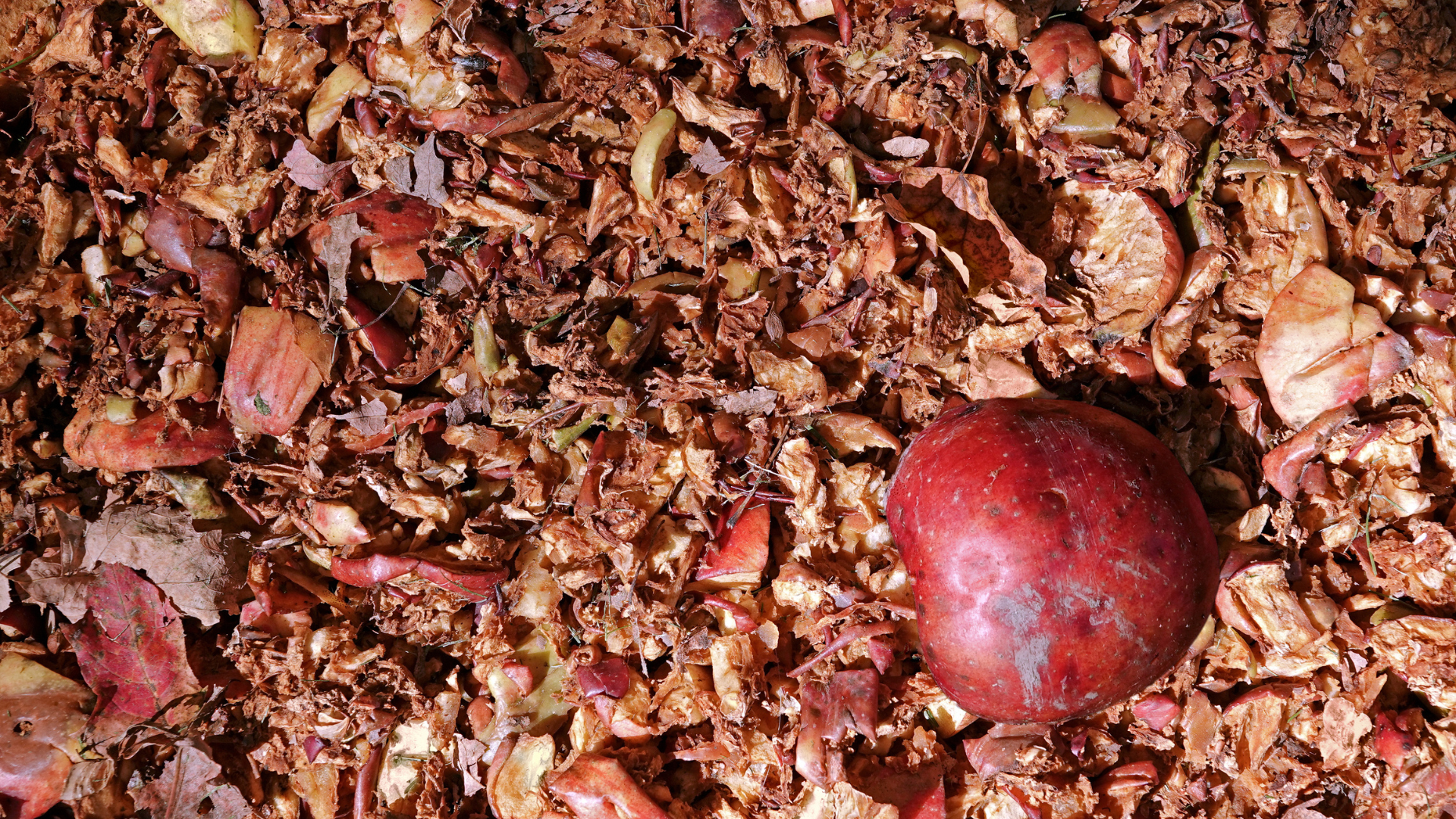
Every time an apple juice press runs at full capacity, a large stream of solid residue leaves the line. Specifically, roughly 25% to 30% of incoming fresh apple weight exits as wet apple pomace. This leftover biomass contains peel, core tissue, seeds, stems, residual juice, soluble sugars, dietary fibers, and pectin. However, fresh pomace usually starts with a moisture content between 70% and 85%. Consequently, it spoils rapidly, ferments within hours, and creates strong odors. Furthermore, wet pomace generates costly hauling and disposal burdens for fruit processors.
On the other hand, dried apple pomace is a valuable commercial raw material. For instance, processors use it for pectin extraction, dietary fiber ingredients, bakery inclusions, and livestock feed. Turning this wet byproduct into a stable commodity requires drying it down to 6% to 10% moisture. Therefore, plant operators need thermal processing equipment built specifically for sticky, fibrous, sugar- and pectin-rich biomass.
When engineers search for a wet apple pomace dryer manufacturer, standard grain or mineral dryers often fail. In fact, apple pomace behaves very differently from free-flowing seeds or dry sand. As moisture drops during heating, dissolved sugars and native pectins become sticky. As a result, particles bind together into dense clumps or stick to hot metal surfaces. Moreover, a tight surface crust can form and block internal moisture from escaping. Additionally, prolonged exposure to high heat can darken the product and scorch sugar-rich zones. Consequently, selecting the right dryer depends on feed moisture, target end-use product, capacity, footprint limits, and quality goals.
Why Wet Apple Pomace Is Challenging to Dry in Industrial Operations
Before choosing a drying system, it helps to examine why wet apple pomace resists conventional thermal dehydration. First, high initial moisture means a massive share of the feed mass is water. Usually, wet pomace enters at 70% to 80% moisture. Therefore, reducing moisture down to 8% to 10% requires removing roughly three-quarters of the starting weight. Second, soluble sugars and pectins create phase-change stickiness as water evaporates. Specifically, when surface moisture drops while sugars remain warm, the biomass turns adhesive. Thus, operators often face lump formation, bridging in feed chutes, and buildup on dryer walls.
Third, fibrous entanglement makes drying even harder. Apple skin, pulp fibers, and seed fragments mat together into tight balls when tumbled aggressively. Similarly, deep static beds compress these fibers and block airflow. As a result, outer layers may over-dry or brown while inner cores stay wet. Fourth, rapid microbial growth and enzymatic changes begin right after pressing. Because fresh pomace has high water activity and rich sugars, slow batch cycles cause fermentation and off-odors. Accordingly, industrial drying lines must run continuously right next to the press line with controlled heat zones.
Key Process Parameters and Performance Benchmarks
In commercial dehydration projects, engineers evaluate dryer performance using practical operating numbers rather than complex equations. Typically, wet apple pomace enters the system between 70% and 85% moisture. However, mechanical pre-dewatering can lower incoming feed moisture to roughly 65% to 75%. Next, the dryer removes moisture until the final product reaches 6% to 10% moisture. At this level, the dried pomace resists mold growth and stores safely for months.
Temperature control is equally vital for product quality. For example, sensitive food and ingredient lines usually operate between 50°C and 80°C. In contrast, high-throughput feed systems may use higher inlet air temperatures. Nevertheless, residence time and material movement must prevent scorching in every case. Furthermore, throughput capacity often ranges from 0.5 tons per hour up to 10 tons per hour or more.
Beyond moisture and temperature, engineers also track several other metrics. Specifically, they monitor final particle uniformity, color retention, pectin stability, and thermal energy efficiency. Because pomace varies by apple variety, press type, and seasonal ripeness, pilot testing is essential. Therefore, testing real plant samples reveals exact clumping tendencies, air resistance, drying rates, and final powder quality before full-scale sizing.
Which Dryer Is Best for Which Apple Pomace Product?
There is no single dryer design that fits every apple pomace application. Indeed, end-use specifications vary sharply across food, nutraceutical, and feed markets. For instance, a dryer that produces low-cost cattle feed may not preserve bright color or clean flavor. Conversely, a gentle low-temperature dryer suited to bakery flour may require more floor space. Accordingly, matching the dryer design to your target product is the smartest way to protect product quality and operating margins.
1. Band and Apron Dryers (Continuous Belt Drying)
Continuous Band or Apron Dryers spread wet or pre-conditioned pomace in a uniform layer across a moving perforated belt. Because the material moves steadily without violent tumbling, these dryers prevent high-shear crushing and fiber matting. Therefore, band dryers are ideal for food-grade apple fiber, high-fiber bakery flour feedstock, snack inclusions, and pectin-rich pomace.
Moreover, multi-zone air circulation gives operators precise control over each drying stage. Specifically, early zones remove surface moisture gently, while later zones equalize internal moisture. Consequently, band dryers minimize localized overheating, preserve natural color, and reduce clumping when bed depth is properly controlled.
2. Rotary Drum Dryers (With Anti-Clumping Configurations)
Rotary Dryers are proven workhorses for high-volume continuous processing where throughput is large. When adapted for sticky biomass, special internal flights and dispersing paddles break up clumps continuously. Furthermore, controlled feed conditioning prevents heavy buildup along the rotating drum wall.
As a result, rotary dryers are best suited for high-volume livestock feed ingredients, bulk dried pomace, and large-scale industrial lines. Additionally, they offer strong fuel flexibility, working easily with biomass burners, natural gas, or thermal fluid heaters. However, operators must manage air temperatures carefully so sugar-rich pomace does not scorch or darken excessively.
3. Fluid Bed Dryers (Vibratory and Hybrid Systems)
Fluid Bed Dryers—including vibratory fluid beds and multi-stage hybrid lines—deliver fast, uniform heat transfer. In these units, upward airflow suspends and moves particles smoothly across a perforated deck. However, raw wet pomace can form heavy lumps that resist fluidization at the start. Therefore, fluid bed dryers work best after initial pre-drying or mechanical granulation.
In commercial plants, fluid bed systems excel at finishing moisture down to exact percentages, drying pre-sized granules, and producing free-flowing particles. Consequently, they are widely chosen for nutraceutical powders, functional food ingredients, and specialized dry blends where tight moisture consistency is mandatory.
4. Flash and Pneumatic Dryers (For Dispersed Fine Streams)
Flash Dryers suspend fine, dispersed particles inside a high-velocity hot air stream for just a few seconds. Because contact time is extremely brief, flash drying protects heat-sensitive particles from prolonged thermal stress. Nevertheless, wet raw apple pomace is too stringy and sticky for direct flash drying alone.
Instead, flash dryers perform best when the pomace is already disintegrated, pre-dried, or blended with dry recycle material. Accordingly, they serve well in fine-particle ingredient lines and two-stage hybrid drying systems where rapid surface moisture removal is needed.
5. Specialized Low-Temperature Systems (Refractance and Freeze Drying)
For premium niche markets, processors sometimes evaluate low-temperature drying systems such as Refractance Window or freeze drying. Specifically, these methods suit high-value nutraceutical extracts, bright-colored fruit powders, and delicate R&D formulations. Because operating temperatures remain very low, they preserve heat-sensitive polyphenols, natural aroma, and rehydration capacity.
On the other hand, low-temperature specialty systems carry higher capital and energy costs per kilogram. Thus, continuous band, rotary, and fluid bed dryers remain the primary choices for commercial multi-ton pomace processing.
Comparison Matrix: Matching Dryer Types to Pomace Products
| Dryer Type | Best-Suited Pomace Products | Key Strengths for Pomace | Key Limitations and Watch-Outs |
| Band / Apron Dryer | Food-grade apple fiber, bakery flour base, pectin feedstock, snack inclusions | Gentle transport, multi-zone temperature control, strong color retention, continuous duty | Larger floor footprint; needs uniform feeding and controlled bed thickness |
| Rotary Dryer (Anti-Stick) | High-volume cattle and livestock feed, bulk dried pomace, high-tonnage plants | High throughput, rugged design, flexible heat sources, active clump breaking | Risk of wall buildup if unconditioned; higher thermal impact on delicate food grades |
| Vibratory / Hybrid Fluid Bed | Uniform granules, moisture polishing, functional food and nutraceutical fractions | Fast, uniform heat transfer, tight final moisture control, compact finishing | Raw sticky lumps fluidize poorly without pre-conditioning or staged pre-drying |
| Flash Dryer | Disintegrated, pre-conditioned, or fine pomace fractions in staged lines | Ultra-short residence time; rapid moisture removal on dispersed fine particles | Prone to duct buildup if feed is overly wet, stringy, or unconditioned |
| Low-Temp Niche Systems | Specialty nutraceuticals, premium color-sensitive powders, R&D batches | Minimal thermal stress; high retention of bioactives and natural color | High unit processing cost and lower bulk tonnage capacity |
Pre-Treatment, Feeding, and Clumping Control Best Practices
Even the finest dryer design performs much better when upstream handling prevents severe clumping. First, speed matters right after juice extraction. Because wet apple pomace starts fermenting within hours, drying should begin within the same shift. Consequently, immediate processing protects sugar quality, fresh aroma, and light color.
Second, mechanical pre-dewatering can boost overall line efficiency. For instance, using a secondary screw press can lower moisture from 80% down to roughly 68% or 70%. As a result, the thermal dryer consumes significantly less fuel per ton of finished product.
Third, proper particle dispersion prevents dense wet pockets inside the dryer. Specifically, shredders or lump breakers loosen compressed press cakes into airy strands before feeding. Additionally, metering feeders deliver a steady, even flow without sudden surges.
Fourth, temperature staging and post-dryer cooling protect final shelf life. During drying, keeping product temperatures within 50°C to 80°C in food lines prevents caramelization and sticky sugar glazing. Afterward, cooling the dried pomace to near ambient temperature before bagging prevents moisture migration and caking in storage.
Downstream Processing: From Dried Pomace to Marketable Products
Once wet apple pomace reaches 6% to 10% moisture, it transforms from a perishable burden into a versatile commodity. Moreover, removing water cuts shipping weight dramatically, making regional and export distribution economical. Depending on buyer specifications, processors can convert dried pomace into several profitable lines:
-
High-Fiber Apple Flour: Milling and sifting dried pomace creates fine, clean-label dietary fiber for breads, cookies, pasta, and extruded snacks.
-
Pectin Extraction Feedstock: Dried, light-colored pomace provides a stable year-round raw material for commercial pectin producers.
-
Nutraceutical and Functional Blends: Gently dried pomace retains natural polyphenols and antioxidants for wellness supplements and beverage mixes.
-
Pelletized Animal Feed: Blending and pelletizing dried pomace creates energy-rich, palatable rations for dairy cattle, horses, and poultry.
Working With GENEX Tech Industries LLP for Pomace Drying Systems
Selecting a reliable wet apple pomace dryer manufacturer means partnering with engineers who understand sticky biomass behavior. GENEX Tech Industries LLP, with engineering roots dating back to 1985, designs and builds industrial drying systems for food, agro, and nutraceutical processors. Furthermore, the company operates under ISO 9001:2015 (NABCB accredited), CE, and US FDA compliant quality standards.
Specifically, their product range includes Continuous Band and Apron Dryers, Vibratory and Combination Fluid Bed Dryers, Flash Dryers, and customized thermal dehydration plants. Because every juice plant has unique press moisture, apple varieties, and space limits, their engineering team tailors airflow, heat sources, and feeding systems to exact project needs. Consequently, processors gain predictable moisture control, lower energy waste, and dependable daily uptime.
Conclusion
Wet apple pomace no longer needs to be an expensive disposal headache for fruit processors. Although its high moisture, fibrous texture, and sugar- and pectin-driven stickiness create real drying challenges, modern engineering solves them cleanly. By matching the right system to your end product—such as a Band Dryer for food-grade apple fiber, a Rotary Dryer for high-volume livestock feed, or a Fluid Bed or Flash system for specialized granules—you can turn waste into steady revenue. Ultimately, investing in a purpose-built pomace drying line protects product quality, lowers hauling costs, and unlocks year-round commercial value.
Get in Touch for Wet Apple Pomace Drying Solutions
Planning a new pomace drying line or upgrading an existing fruit processing plant? Contact GENEX Tech Industries LLP today for expert engineering consultation, capacity sizing, and custom equipment proposals:
-
Head Office Address: GENEX Tech Industries LLP 10C, Sir William Jones Sarani (Middleton Row), Park Street, Kolkata – 700071, West Bengal, India
-
Direct Phone / WhatsApp Contact: +91-97489 06968 | +91-93300 77417
-
Official Business Email: mktg@foodtechprojects.com | sales@foodtechprojects.com
-
Official Company Websites:www.foodtechprojects.com | www.gtidryers.com