In modern industrial manufacturing, thermal dehydration is a critical unit operation. Whether a facility processes crops, specialty chemicals, pharmaceutical granules, or recycled polymers, moisture removal drives business success. Specifically, efficient dehydration determines product shelf life, structural integrity, shipping costs, and profit margins. Consequently, partnering with a reliable Continuous Conveyor Dryer Machine Manufacturer is not merely a routine purchase. Instead, it is a vital engineering investment that protects plant uptime for decades.
Specifically, GENEX Tech Industries LLP (GTI Industrial Dryers) brings over 40 years of engineering expertise to global industries. Furthermore, the company designs, fabricates, and commissions custom continuous thermal equipment. By combining multi-zone airflow dynamics with precision automation, modern continuous conveyor systems have transformed production floors. In fact, they have rapidly replaced outdated batch tray dryers across high-throughput facilities. In this comprehensive technical guide, we will examine operational mechanics, engineering data, and thermal parameters. Additionally, we will cover industry-specific selection criteria for Industrial Band Dryers and Mesh Belt Dryers.
1. Understanding Continuous Conveyor Drying Technology
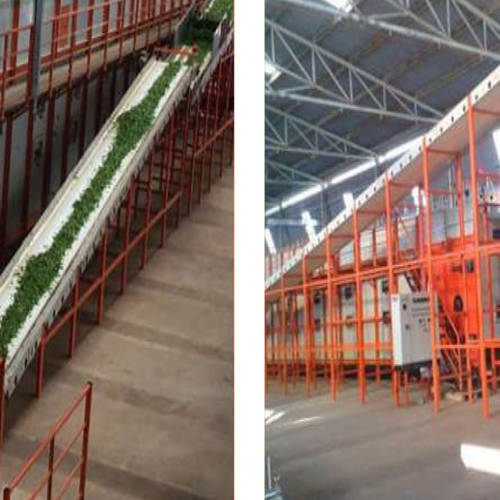
At its core, a continuous conveyor dryer is a closed, thermally insulated chamber. Industry engineers also call it a belt dryer or an apron dryer. Inside this tunnel, wet material travels on a horizontal moving belt. Simultaneously, heated air passes directly through or across the product bed. Unlike batch dryers, operators do not need to load trays manually or wait hours for unloading. Instead, a continuous conveyor dryer operates 24 hours a day, 7 days a week without interruption.
How Convective Thermal Transfer Works on a Moving Belt
To understand why continuous conveyor dryers achieve superior uniformity, we must examine convective air movement. Initially, wet feed material enters the dryer through a specialized feeding mechanism. This device spreads the product to a uniform bed depth, typically between 25 millimeters and 150 millimeters. Subsequently, the conveyor moves through distinct thermal zones. Inside each zone, centrifugal circulation blowers force conditioned hot air through the perforated or woven belt surface.
Moreover, the product remains completely stationary relative to the moving belt surface. As a result, there is virtually zero mechanical attrition, breakage, or dust generation caused by tumbling. Therefore, delicate food slices and fragile botanical leaves retain their exact geometric shape. Similarly, extruded snack pellets and coated pharmaceutical granules preserve their visual appeal. At the same time, dedicated exhaust fans continuously extract moisture-laden air. Consequently, the vapor pressure inside the drying chamber never reaches saturation.
Key Operational Advantages Over Batch Drying Systems
Transitioning from traditional cabinet ovens to an automated continuous conveyor system yields measurable gains. Specifically, plant managers observe dramatic improvements across every key performance indicator:
-
Dramatic Labor Reduction: Traditional batch facilities often require 6 to 10 operators per shift to handle trays. Conversely, an automated continuous conveyor dryer requires only 1 operator per shift to monitor the PLC interface. Thus, direct labor expenses drop by 70% to 85%.
-
Consistent Final Moisture Content: Batch dryers notoriously suffer from “edge-to-center” moisture variance of 4% to 6%. By contrast, multi-zone continuous conveyor dryers maintain final moisture tolerances within ±0.5% to ±1.0%.
-
Superior Thermal Efficiency: Modern continuous belt dryers use multi-stage air recirculation and heat recovery. Consequently, they achieve thermal efficiencies between 65% and 80%. Meanwhile, conventional single-pass batch ovens only reach 35% to 45% efficiency.
-
Scalable 24×7 Throughput: GENEX engineers build these systems for heavy-duty industrial duty cycles. Specifically, capacities start at 100 kg/hr for pilot lines and reach 10 tons per hour (10,000 kg/hr) for bulk plants.
To see these continuous thermal systems operating under real industrial conditions, watch these operational demonstrations:
-
Industrial Continuous Dryer Demonstration 1: Watch on YouTube
-
Industrial Continuous Dryer Demonstration 2: Watch on YouTube
2. Core Architectures: Industrial Band Dryer vs. Mesh Belt Dryer
People often use the terms “band dryer” and “mesh belt dryer” interchangeably in casual conversation. However, an experienced Continuous Conveyor Dryer Machine Manufacturer designs each architecture with distinct structural features. Specifically, engineers tailor each machine to handle specific material behaviors. Understanding these engineering differences is essential before specifying equipment for a new processing line.
Industrial Band Dryer (Apron & Heavy-Duty Conveyor Systems)
An Industrial Band Dryer is built for heavy-duty, high-capacity continuous drying. In these applications, mechanical load-bearing strength and structural rigidity are paramount. Instead of relying solely on flexible wire mesh, industrial band dryers use interlocking perforated metal apron plates. Alternatively, they utilize heavy-duty slat conveyors or reinforced composite bands driven by heavy-duty chains.
Because of this robust mechanical construction, a band dryer excels when processing dense, heavy, or sticky materials. Such heavy loads would quickly cause standard wire mesh to sag or deform. Furthermore, band dryers feature modular, multi-zone insulated chambers. Each zone maintains independent temperature, humidity, and airflow velocity controls. Consequently, an operator can apply high-temperature air (110°C to 140°C) in Zone 1 to flash off surface moisture. Next, the system steps down to moderate temperatures (80°C to 95°C) in Zone 2 for internal diffusion. Finally, the product enters a cooling zone (25°C to 35°C) prior to packaging.
Mesh Belt Dryer (Precision Air-Through Dehydration Systems)
In contrast, a Mesh Belt Dryer uses a finely woven stainless-steel wire mesh belt. Manufacturers typically fabricate these belts from food-grade SS304 or corrosion-resistant SS316. This belt transports lightweight, granular, sliced, or fibrous products smoothly. The defining feature of a mesh belt dryer is its high open-area percentage. Because of this open weave, conditioned hot air passes unobstructed directly through the entire product bed. Airflow moves efficiently from bottom to top (up-draft) or top to bottom (down-draft).
Additionally, stainless-steel wire mesh possesses low thermal mass and smooth surface geometry. Therefore, it heats up and cools down rapidly. This prevents scorching or caramelization on the underside of heat-sensitive food ingredients. Moreover, mesh belt systems easily accommodate integrated clean-in-place (CIP) washing headers. Engineers also add rotary brush cleaners and air knives at the discharge end. As a result, mesh belt dryers are the gold standard for hygienic food, spice, herbal, and pharmaceutical plants.
Technical Comparison: Band Dryer vs. Mesh Belt Dryer
| Engineering Parameter | Industrial Band Dryer | Mesh Belt Dryer |
| Belt / Conveyor Construction | Perforated metal apron plates, heavy slats, or reinforced bands | Woven stainless-steel wire mesh (SS304 / SS316) |
| Typical Production Capacity | 100 kg/hr up to 10,000 kg/hr (10 TPH) | 100 kg/hr up to 5,000 kg/hr (5 TPH) |
| Airflow Pattern | Cross-flow and staged through-bed circulation | High-permeability vertical through-bed airflow |
| Load-Bearing Capacity | Very High (ideal for dense cakes, sludges, heavy ores) | Moderate (optimized for light-to-medium bulk densities) |
| Operating Temperature Range | 50°C to 250°C (depends on heating source) | 45°C to 180°C (optimized for gentle dehydration) |
| Sanitation & Cleanability | High (accessible side doors and washdown drains) | Ultra-High (supports continuous CIP spray bars and brushes) |
| Ideal Material Geometry | Extrudates, filter cakes, dense granules, wood chips, rubber crumb | Fruit slices, vegetable flakes, leafy herbs, tea, nuts, fragile pellets |
3. Anatomy of a High-Efficiency Continuous Conveyor Dryer
A world-class continuous conveyor dryer is far more than a heated tunnel with a moving belt. Rather, it is an integrated thermodynamic system. Specifically, it comprises eight precision-engineered subsystems that must work in complete synchronization.
1. Uniform Product Feeding and Oscillating Spreaders
In continuous drying, uneven feeding is the single greatest cause of moisture inconsistency. Suppose wet material piles up to 100 millimeters on the left side of the belt. Meanwhile, the right side holds only 30 millimeters. Naturally, hot air will take the path of least resistance through the thinner layer. Consequently, the thicker side remains wet at the discharge outlet. Therefore, GENEX engineers integrate specialized feeding systems. These include oscillating belt spreaders, rotary drum feeders, and wiper-blade levelers. Ultimately, these devices guarantee a flat, uniform product bed across 100% of the conveyor width.
2. Multi-Zone Insulated Drying Chamber
Builders construct the drying housing from modular, double-walled insulated panels. Inside these walls, high-density mineral wool or rockwool insulation (100 to 150 millimeters thick) traps thermal energy. As a result, external wall temperatures remain completely safe for plant operators. Furthermore, conductive heat loss to the factory floor stays below 3% to 5%. Inside the chamber, internal partition baffles separate the tunnel into 2 to 8 distinct thermal zones. Thus, humid exhaust air from Zone 1 cannot contaminate the dry finishing zones.
3. Conveyor Drive and Tensioning Assembly
Smooth, jam-free operation requires robust mechanical power transmission. Accordingly, the conveyor drive system uses variable frequency drives (VFDs) paired with heavy-duty helical bevel gearboxes. This setup allows operators to adjust belt speed smoothly. Consequently, total residence time can shift from 10 minutes to over 4 hours. Simultaneously, automatic pneumatic or spring-loaded take-up assemblies maintain constant belt tension. Therefore, the belt compensates automatically for thermal expansion when chamber temperatures rise from 25°C to 150°C.
4. Flexible Thermal Heating Systems
Manufacturing facilities vary widely in their available utility infrastructures and local fuel costs. Accordingly, a versatile Continuous Conveyor Dryer Machine Manufacturer builds heat exchangers for multiple energy sources:
-
Steam Heating Coils: This option suits plants with existing steam boilers. Finned stainless-steel or copper-aluminum exchangers operate at 4 to 10 bar pressure. As a result, they deliver clean, indirect heating up to 160°C.
-
Thermic Fluid (Thermal Oil) Radiators: Thermal oil systems achieve higher drying temperatures (150°C to 250°C). Moreover, they operate without requiring high-pressure steam piping.
-
Indirect / Direct Hot Air Generators (HAG): Operators can fire these units with natural gas, LPG, diesel, or solid biomass fuels. For example, wood pellets, briquettes, and coconut shells drastically lower fuel expenses in agro-industrial regions.
-
Electric Heating Banks: Cleanroom pharmaceutical plants and pilot facilities frequently prefer electric heaters. Furthermore, they pair well with solar electricity and hold temperatures within ±0.5°C.
5. High-Efficiency Air Circulation Blowers
Within each drying zone, dynamically balanced centrifugal or axial fans move large volumes of air. Specifically, they force heated air through the heat exchangers and across the product bed. Engineers often reverse airflow direction between consecutive zones. For instance, air blows upward in Zone 1 and downward in Zone 2. Consequently, this alternating flow eliminates top-to-bottom moisture gradients in thick beds without mechanical turning.
6. Exhaust Air and Humidity Control Dampers
As water evaporates from the product, the relative humidity of the circulating air rises steadily. Therefore, automated exhaust dampers work alongside inline humidity sensors to balance chamber moisture. Specifically, the dampers bleed off 15% to 30% of moisture-saturated air while drawing in fresh makeup air. Meanwhile, the system recirculates the remaining 70% to 85% of warm air back over the heating coils. As a result, the plant preserves massive amounts of thermal energy.
7. Integrated Cooling Zone
Many agricultural, food, and chemical products exit the final heating zone at 65°C to 90°C. If workers pack these hot items immediately into moisture-barrier bags, residual heat causes internal condensation. This “sweating” quickly leads to clumping and microbial spoilage. Therefore, modern continuous conveyor dryers include an integrated ambient or chilled-air cooling zone at the discharge end. Consequently, product temperatures drop to within 5°C to 8°C of ambient room temperature before packaging.
8. Dust Collection and PLC / SCADA Automation
Fine granular or flaky materials often release small particles into the air stream. Accordingly, inline cyclone separators or pulse-jet bag filters capture airborne fines from the exhaust. This ensures strict compliance with environmental emission norms while recovering valuable product yield. Furthermore, an intuitive PLC with a touchscreen HMI monitors the entire machine. Operators can also link it to plant SCADA systems to log temperatures, fan speeds, and batch recipes in real time.
4. Crucial Process Parameters & Engineering Data
Optimizing a continuous conveyor dryer requires balancing five interdependent process variables. Even minor adjustments to one parameter directly affect drying rates, energy use, and final product quality.
Key Operational Benchmarks and Data Ranges
| Process Parameter | Typical Industrial Range | Operational Impact on Drying Performance |
| Initial Feed Moisture | 20% to 85% (wet basis) | Determines total evaporative water load (kg/hr) and required thermal energy input. |
| Target Final Moisture | 1% to 12% (wet basis) | Dictates residence time in the falling-rate drying zone and final zone humidity limits. |
| Product Bed Depth | 20 mm to 150 mm | Deeper beds increase throughput per square meter but require higher static fan pressure. |
| Airflow Velocity | 0.8 m/s to 2.5 m/s | Higher velocities strip the boundary moisture layer faster; excessive speed lifts light flakes. |
| Residence Time | 10 minutes to 240 minutes | Controlled via VFD belt speed; governs internal moisture diffusion in dense particles. |
| Specific Thermal Energy | 850 to 1,250 kcal per kg water evaporated | Measures overall dryer thermal efficiency; improved via air recirculation and heat recovery. |
The Three Stages of Continuous Belt Drying
When wet material enters a multi-zone continuous conveyor dryer, it undergoes three distinct thermodynamic phases:
-
Warm-Up Phase (First 10% to 15% of Belt Length): Cold, wet feed absorbs sensible heat rapidly. Soon, its surface temperature reaches the wet-bulb temperature of the surrounding air stream.
-
Constant-Rate Drying Phase (Middle 40% to 50% of Belt Length): Unbound free moisture on the product surface evaporates at a steady pace. During this stage, evaporative cooling keeps the actual product temperature well below the surrounding air temperature. Consequently, operators can safely apply 110°C air to heat-sensitive foods without causing thermal damage.
-
Falling-Rate Drying Phase (Final 35% to 45% of Belt Length): Once surface water disappears, moisture must migrate slowly from the particle core to the outer surface. This movement occurs via capillary action and internal diffusion. Therefore, operators must lower air temperatures (60°C to 75°C) and extend residence time. Ultimately, this gentle finish prevents case-hardening, surface cracking, or discoloration.
5. Industry-by-Industry Guide: Which Dryer Is Best for Which Product?
Choosing between an Industrial Band Dryer and a Mesh Belt Dryer depends entirely on your raw material. Specifically, engineers evaluate physical geometry, moisture binding traits, and thermal sensitivity. Below is a detailed breakdown matching specific products to their ideal dryer configuration.
1. Fruit and Vegetable Dehydration
-
Best Dryer Choice: Multi-Zone Stainless-Steel Mesh Belt Dryer (SS304 / SS316)
-
Why It Is Best: Sliced or diced produce—such as onion flakes, garlic, ginger, carrots, potatoes, apple rings, and mango slices—contains 75% to 88% moisture. Furthermore, these items have delicate cellular walls. A mesh belt dryer passes gentle upward and downward airflow directly through the slices without mechanical agitation. As a result, the produce preserves its natural color, volatile essential oils, and rehydration capacity.
-
Recommended Operating Conditions: Temperatures start at 85°C to 95°C in Zone 1 and step down to 65°C to 70°C in Zone 2. Finally, Zone 3 finishes at 50°C to 55°C to reach a shelf-stable moisture of 4% to 6%.
2. Coconut Products (Desiccated Coconut, Coconut Chips, and Coir)
-
Best Dryer Choice: Mesh Belt Dryer for Desiccated Coconut & Chips; Heavy-Duty Industrial Band Dryer for Coir Pith & Fiber
-
Why It Is Best: Desiccated coconut and toasted coconut chips require immaculate food-grade hygiene using SS316 contact parts. Additionally, temperatures must stay below 85°C to prevent oil oxidation, yellowing, or rancidity. Therefore, a multi-zone mesh belt dryer is ideal. Conversely, fibrous coconut coir pith and husk chips possess high bulk volume and abrasive textures. Consequently, they require the heavy-duty mechanical durability of an apron-style industrial band dryer.
-
Recommended Operating Conditions: Operators typically dry desiccated coconut from 50% moisture down to under 2.5% moisture. This process takes 20 to 30 minutes at 75°C to 85°C.
3. Spices, Herbs, Botanicals, and Tea Leaves
-
Best Dryer Choice: Low-Temperature Mesh Belt Dryer with Dehumidification Integration
-
Why It Is Best: Medicinal herbs, moringa leaves, stevia, turmeric, chili peppers, and green tea leaves are highly heat-sensitive. Excessive heat quickly destroys their active phytochemicals, aroma, and vibrant natural pigmentation. Fortunately, a fine-aperture mesh belt dryer prevents small leaf fragments from falling through the belt. Simultaneously, it operates at gentle low temperatures (45°C to 65°C) with high airflow volumes.
-
Recommended Operating Conditions: Operating at 45°C to 60°C with controlled exhaust humidity reduces moisture from 70% down to 6% to 8%. Meanwhile, the dried herbs retain over 90% of their volatile essential oils.
4. Extruded Snack Pellets, Cereals, and Noodles
-
Best Dryer Choice: Multi-Pass / Multi-Tier Mesh Belt Dryer
-
Why It Is Best: Extruded 2D and 3D snack pellets, breakfast cereals, and instant noodles require tightly controlled moisture equilibration. Uniform moisture ensures they expand evenly during subsequent frying or puffing. Multi-tier mesh belt dryers stack 3 to 5 conveyor passes vertically inside one insulated enclosure. Consequently, they maximize residence time (45 to 120 minutes) within a compact factory floor footprint.
-
Recommended Operating Conditions: Moderate temperatures (60°C to 80°C) pair with regulated relative humidity (40% to 55% RH). Thus, the pellets avoid surface cracking and stress fractures while moisture drops from 32% to 10.5%.
5. Pharmaceutical Granules, APIs, and Nutraceuticals
-
Best Dryer Choice: cGMP-Compliant SS316L Mesh Belt Dryer with HEPA Filtration
-
Why It Is Best: Wet-granulated pharmaceutical excipients, herbal extracts, and protein granules demand strict regulatory validation and zero cross-contamination. Furthermore, gentle drying prevents fragile agglomerates from fracturing into fine dust. Stainless-steel SS316L mesh belt dryers feature inlet HEPA filters (99.97% efficiency at 0.3 microns) and crevice-free internal welds. In addition, integrated CIP washdown systems satisfy stringent sanitary standards.
-
Recommended Operating Conditions: Precision electric or clean-steam heating operates at 50°C to 75°C alongside SCADA 21 CFR Part 11 data logging.
6. Chemical Resins, Pigments, Catalysts, and Industrial Salts
-
Best Dryer Choice: Perforated Apron Industrial Band Dryer
-
Why It Is Best: Filter cakes, polymer pellets, synthetic rubbers, catalysts, and pigment pastes are dense, cohesive, and often corrosive. A heavy-duty Industrial Band Dryer uses overlapping perforated SS316 apron plates to support heavy bed loads without sagging. Moreover, this robust metal construction allows high-temperature thermal processing up to 220°C.
-
Recommended Operating Conditions: Multi-zone thermal profiling runs between 110°C and 200°C. Consequently, feed moisture drops from 45% filter-cake consistency down to less than 0.5% free-flowing granules.
7. Biomass, Wood Chips, Sawdust, and Recycled Plastics
-
Best Dryer Choice: Heavy-Duty High-Capacity Industrial Band Dryer
-
Why It Is Best: Before pelletizing wood sawdust, agricultural residues, or Refuse-Derived Fuel (RDF), plants must reduce moisture from 50% down to 10% to 12%. Biomass facilities process massive tonnages (3 TPH to 10 TPH) daily. High-temperature rotary drums often create serious fire hazards with these dry materials. By contrast, low-temperature continuous band dryers utilize waste heat safely. Furthermore, they deliver remarkably low operating costs.
-
Recommended Operating Conditions: Low-to-moderate drying temperatures (80°C to 120°C) work alongside spark-detection sensors and automated fire-suppression deluge nozzles.
Quick-Reference Product-to-Dryer Selection Matrix
| Product Category | Recommended Dryer Type | Belt / Surface Type | Typical Drying Temp | Target Final Moisture |
| Onion, Garlic & Vegetable Flakes | Multi-Zone Mesh Belt Dryer | SS304 Woven Wire Mesh | 60°C – 90°C | 4.0% – 5.5% |
| Sliced Tropical Fruits (Mango, Apple) | Gentle-Airflow Mesh Belt Dryer | SS304 Fine Mesh | 55°C – 75°C | 5.0% – 8.0% |
| Desiccated Coconut & Chips | Hygienic Mesh Belt Dryer | SS316 Food-Grade Mesh | 75°C – 85°C | 2.0% – 2.5% |
| Medicinal Herbs & Leafy Botanicals | Low-Temp Dehumidified Mesh Dryer | Fine-Aperture SS304 Mesh | 45°C – 60°C | 6.0% – 8.0% |
| Extruded Snack Pellets & Pasta | Multi-Tier Mesh Belt Dryer | Multi-Pass SS304 Mesh | 60°C – 80°C | 10.0% – 11.5% |
| Pharmaceutical Granules & Extracts | cGMP Sanitary Mesh Belt Dryer | Mirror-Polished SS316L Mesh | 50°C – 75°C | 1.5% – 3.0% |
| Chemical Filter Cakes & Catalysts | Perforated Apron Band Dryer | Overlapping SS316 Apron | 110°C – 200°C | 0.2% – 1.0% |
| Wood Chips, Sawdust & Biomass | Heavy-Duty Industrial Band Dryer | Perforated Carbon/SS Plate | 85°C – 120°C | 10.0% – 12.0% |
| Washed Plastic Flakes & Rubber Crumb | Continuous Conveyor Band Dryer | Perforated Stainless Apron | 80°C – 110°C | 0.5% – 1.0% |
6. Energy Efficiency, Heat Recovery, and Sustainability Engineering
In modern manufacturing plants, thermal energy represents roughly 60% to 75% of total dryer lifecycle costs. Consequently, plant directors must carefully evaluate energy-saving features when selecting a Continuous Conveyor Dryer Machine Manufacturer. Specifically, buyers should examine how each system minimizes fuel and electricity per kilogram of evaporated water.
Air-to-Air Heat Exchangers and Exhaust Recirculation
During continuous operation, warm exhaust air exits the dryer carrying substantial sensible and latent heat. Engineers can capture this energy by installing cross-flow plate heat exchangers or heat-pipe recovery units on the exhaust stack. Consequently, incoming ambient air at 25°C preheats to 55°C or 65°C before reaching the primary heating coils. In practice, this single engineering upgrade reduces primary boiler fuel consumption by 15% to 22%.
Variable Frequency Drives (VFDs) and Static Pressure Optimization
Furthermore, equipping all circulation fans and exhaust blowers with VFDs allows dynamic speed control. Specifically, the PLC modulates fan speed automatically based on real-time product load. When running lighter bed depths or drier feed batches, reducing fan speed by just 15% cuts electrical motor power draw by nearly 38%. As a result, plants enjoy immediate monthly electricity savings.
Waste Heat Integration
Additionally, continuous band and mesh belt dryers operate effectively at relatively low air temperatures (75°C to 115°C). By comparison, flash or rotary dryers often require extreme temperatures between 300°C and 600°C. Because of this lower thermal threshold, continuous conveyor dryers can run directly on low-grade waste heat. For example, facilities recover exhaust heat from cogeneration gas engines, turbines, or industrial kilns. Ultimately, this turns zero-cost waste energy into profitable drying capacity.
7. How to Evaluate and Select a Continuous Conveyor Dryer Machine Manufacturer
Choosing the right equipment partner requires looking well beyond initial capital expenditure (CAPEX). Instead, buyers must evaluate long-term mechanical reliability, process engineering depth, and after-sales support. Before finalizing a purchase order, technical procurement teams should verify five critical criteria:
-
Pilot Testing and Lab Validation Capabilities: Never purchase an industrial dryer based purely on theoretical calculations. Rather, a reputable manufacturer conducts physical drying trials using your actual raw material. During testing, engineers measure exact drying curves, shrinkage ratios, bulk density changes, and airflow pressure drops. Consequently, they size the commercial machine with mathematical certainty.
-
Custom Mechanical & Metallurgical Engineering: Standard “off-the-shelf” dimensions rarely fit existing factory buildings or specialized product recipes. Therefore, verify that your manufacturer custom-engineers belt widths (600 mm to 3,000 mm) and tunnel lengths (6 meters to 40 meters). Additionally, ensure they offer suitable metallurgy (MS, SS304, SS316, or SS316L) to match your sanitary environment.
-
Airflow Distribution Uniformity: Ask the manufacturer how they balance airflow across the entire belt width. Precision perforated plenum plates, adjustable air-turning vanes, and dual-side air injection are vital features. Together, they ensure product along the outer edges dries at the exact same rate as product in the center.
-
Ease of Maintenance and Cleaning: Unplanned downtime for cleaning or belt replacement directly erodes plant profitability. Accordingly, look for full-height insulated hinged access doors along both sides of the drying tunnel. Furthermore, verify the inclusion of removable floor drain pans, external bearing housings, and modular belt-tracking systems.
-
Turnkey Integration Capability: A dryer performs best when seamlessly integrated into the broader production line. Specifically, it should connect smoothly with upstream washing, blanching, slicing, or dewatering units. Likewise, it must feed downstream cooling, sieving, and automated packaging lines. Partnering with a turnkey provider eliminates interface bottlenecks and ensures single-point accountability.
8. Step-by-Step Commissioning and Preventive Maintenance Protocol
Proper commissioning and routine maintenance ensure that a continuous conveyor dryer delivers peak efficiency for 20 to 30 years. Therefore, plant engineering teams should follow a structured operational protocol from day one.
Pre-Startup and Commissioning Checklist
-
Mechanical Alignment Verification: First, inspect all drive sprockets, tensioning rollers, and belt-tracking guides before applying heat. Even a 2-millimeter misalignment can cause premature edge wear on stainless-steel mesh belts.
-
Thermal Expansion Calibration: Next, gradually heat the empty drying chamber to its maximum operating temperature over 3 hours. During this warm-up, verify that pneumatic tensioners compensate smoothly for metal expansion.
-
Airflow Balancing: Subsequently, use digital anemometers across each drying zone to confirm uniform air velocity. Adjust internal damper louvers until airflow variance across the belt width stays below 5%.
-
Safety Interlock Testing: Finally, test all emergency stop cords, high-temperature limit switches, spark detectors, and fan-failure alarms before introducing wet product.
Routine Preventive Maintenance Schedule
-
Daily Inspections: Operators should check belt tracking alignment, clear lint or fines from exhaust screens, and verify differential pressure gauges across air filters.
-
Weekly Maintenance: Technicians must inspect CIP spray nozzles for blockages, lubricate external drive bearings with high-temperature grease, and check pneumatic cylinder pressures.
-
Monthly Audits: Maintenance teams should inspect door silicone gaskets for heat degradation, verify VFD motor amperage draws, and calibrate inline temperature and humidity sensors.
-
Annual Overhaul: Once per year, engineers should inspect internal heat exchanger fins for fouling, check gearbox oil viscosity, and test insulation integrity across all chamber panels.
9. Why Global Industries Partner with GENEX Tech Industries LLP (GTI Industrial Dryers)
With more than four decades of specialized thermal engineering experience, GENEX Tech Industries LLP (GTI Industrial Dryers) stands as a premier Continuous Conveyor Dryer Machine Manufacturer. Today, the company serves domestic and international processing plants across Asia, the Middle East, Africa, Europe, and the Americas.
From initial laboratory moisture profiling and 3D plant layout engineering to precision fabrication, GENEX manages every project phase. Furthermore, experienced field engineers handle on-site erection, commissioning, and comprehensive operator training. Whether your facility requires a heavy-duty Industrial Band Dryer for bulk agro-industrial or chemical processing, or a sanitary Mesh Belt Dryer for delicate foods and pharmaceuticals, GENEX delivers custom-built reliability. Ultimately, every unit is engineered for maximum thermal efficiency, minimal maintenance, and uninterrupted 24×7 operation.
To observe GENEX continuous drying systems in action, review these technical demonstrations:
Conclusion
Continuous conveyor drying technology represents the cornerstone of modern, scalable industrial dehydration. By replacing labor-intensive batch ovens with precision-controlled Industrial Band Dryers and Mesh Belt Dryers, manufacturers achieve remarkable operational gains. Specifically, plants maintain moisture tolerances within ±0.5%, cut thermal energy consumption by up to 30%, and protect delicate product structures from mechanical damage. Ultimately, matching the exact conveyor architecture, airflow direction, and heating source to your product’s thermal profile ensures superior quality and rapid return on investment.
Ready to Optimize Your Industrial Drying Line? Request a Custom Engineering Consultation
Are you planning a new dehydration plant, upgrading an existing batch facility, or scaling up production capacity? Let the thermal engineering specialists at GENEX Tech Industries LLP analyze your material specifications and conduct physical drying trials. Subsequently, our team will design a custom-engineered continuous conveyor drying system tailored to your exact capacity and energy targets.
Contact our engineering and technical sales team today for a customized quotation, detailed technical specifications, and plant layout support:
-
Head Office Address: GENEX Tech Industries LLP 10C, Sir William Jones Sarani (Middleton Row), Park Street, Kolkata – 700071, West Bengal, India
-
Direct Phone / WhatsApp Contact: +91-97489 06968 | +91-93300 77417
-
Official Business Email: mktg@foodtechprojects.com | sales@foodtechprojects.com
-
Official Company Websites:www.foodtechprojects.com | www.gtidryers.com