
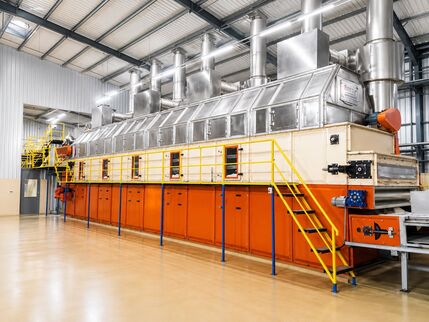
Modern coconut processing requires precision engineering. Additionally, it demands strict hygiene standards and exceptional thermal efficiency. As global demand for high-grade coconut derivatives scales upward, industrial processors must transition away from rudimentary thermal treatment methods. Traditional drying equipment often induces scorching. Furthermore, it creates irregular moisture distribution and causes severe loss of natural volatile aromatic compounds. To overcome these limitations, advanced industrial manufacturers rely heavily on the Combination Fluid Bed Dryer. Engineering teams design this continuous thermal processing system specifically for large-scale coconut manufacturing facilities.
Genex Tech Industries LLP engineers these specialized industrial drying systems to merge multi-stage fluidization with continuous tray movement. As a result, processors achieve unparalleled moisture control. Meanwhile, they preserve the natural oil profiles, pristine whiteness, and distinct nutritional integrity of coconut meat derivatives. This comprehensive technical guide explores the operational mechanics of these systems. Furthermore, it details multi-stage processing layouts, module classifications, and quantitative performance metrics of combination fluid bed dryers. Therefore, it provides industrial investors and plant engineers with the detailed data required to optimize modern coconut production lines effectively.
1. Technological Foundations of Fluidization in Coconut Processing
The core operational principle governing industrial coconut drying is fluidization. Specifically, high-pressure blowers force a controlled volume of heated air upward through a perforated distributor plate carrying wet coconut meat. Consequently, the solid particles experience a physical shift. Once the upward drag force matches the gravitational weight of the particles, the bed expands dramatically. Subsequently, the solid particles begin to behave much like a boiling liquid.
This hydrodynamic behavior offers distinct operational advantages over static tray drying or traditional rotary drum systems:
-
Aggressive Interfacial Area: First, the drying air fully suspends every individual coconut particle. Therefore, the system maximizes the gas-solid contact area. As a result, heat transfer rates soar, which accelerates moisture vaporization significantly.
-
Isothermal Conditions: Second, intense mixing action within the fluid bed prevents localized hot spots. Coconut products show high sensitivity to thermal degradation and browning. This sensitivity is especially high in high-fat matrices like desiccated coconut. However, fluidization ensures that every particle experiences uniform thermal exposure throughout the process.
-
Continuous Mass Flow: Third, unlike batch operations that suffer from thermal downtime during loading and unloading, combination systems permit continuous feeding and discharging. Therefore, operators feed raw wet material continuously at one end. Subsequently, the material moves through successive processing zones. Finally, it exits as a standardized, cooled product.
Furthermore, integrating a continuous conveyor or tray arrangement directly beneath or alongside fluidization zones creates a hybrid combination system. Consequently, this setup resolves handling challenges unique to high-fat and low-fat coconut flakes, chips, and fine powders. Otherwise, these products might channel or agglomerate under aggressive airflow streams.
2. Structural Anatomy and Mechanical Components of Combination Dryers
An industrial-grade Combination Fluid Bed Dryer is a heavy-duty assembly. Naturally, fabricators construct it from food-grade stainless steel to withstand continuous operational cycles. Understanding the major sub-assemblies clarifies how these machines maintain extreme hygiene and reliability over time:
Feed Conveyor and Metering System
First, uniform drying begins with uniform feeding. Therefore, the system utilizes variable-speed screw or belt conveyors to meter wet coconut material into the primary drying chamber. Consequently, it maintains a constant mass flow rate. Furthermore, preventing initial surges ensures that bed depth remains stable across the entire distributor plate.
Fluidization Chamber and Perforated Bed Plates
Second, constructed from heavy-gauge stainless steel, the main housing encloses the drying and cooling zones completely. Additionally, precision-engineered perforated plates or coned distributor grids form the chamber floor. Engineers meticulously calculate the hole pattern, pitch, and open-area percentage. As a result, this prevents the weeping of fine coconut particles into the air plenum while maintaining balanced drying air distribution.
Air Handling and Heating Skids
Third, the thermal energy skid utilizes high-efficiency steam heat exchangers, thermal fluid coils, or direct/indirect gas burners. Next, blowers drive ambient air through micron-grade particulate filters. Then, the air passes across the heating matrix and enters the under-bed air plenum. Meanwhile, automated modulating dampers regulate static pressure and volumetric flow rates in real time.
Integrated Cooling Zones
Fourth, drying alone does not prepare coconut products for immediate packaging. Indeed, exiting the drying zone at elevated temperatures causes residual internal moisture to migrate outward. Alternatively, high heat triggers fat sweating during bagging. Therefore, combination dryers incorporate dedicated cooling modules at the discharge end. Consequently, these modules sweep ambient or chilled air through final bed stages to drop product temperatures down to safe storage thresholds before packaging.
Dust Collection and Exhaust Scrubbing
Fifth, fine coconut particles can elutriate during aggressive fluidization. Therefore, design teams integrate high-efficiency cyclone separators and baghouse filter assemblies directly into the exhaust loop. As a result, this system captures fine particulates efficiently. Furthermore, it prevents product loss, maintains plant cleanliness, and ensures full compliance with environmental emission guidelines.
3. Comprehensive Analysis of Dryer Models and Output Capacities
Industrial coconut processing plants vary dramatically in scale. Indeed, they range from mid-sized regional processors to massive export complexes. To address diverse throughput requirements, Genex Tech Industries LLP manufactures a comprehensive array of modular combination dryers. Furthermore, engineers size each model for specific hourly output volumes when processing standard dried desiccated coconut (DC) powder.
The following data table outlines the complete series of industrial combination fluid bed dryer models currently available:
| Model Designation | Output Capacity Range | Target Processing Material | Primary Application Scope |
| 4 Module | 300 – 375 Kgs/Hr | Dried DC Powder / Granules | Small to mid-scale continuous production lines |
| 5 Module | 400 – 460 Kgs/Hr | Dried DC Powder / Flakes | Mid-capacity commercial processing plants |
| 6 Module | 500 – 550 Kgs/Hr | Dried DC Powder / Granules | Standard industrial commercial operations |
| 7 Module | 575 – 625 Kgs/Hr | Dried DC Powder / Flakes | High-efficiency medium-to-large facilities |
| 8 Module | 675 – 725 Kgs/Hr | Dried DC Powder / Granules | Large-scale continuous export production |
| 9 Module | 750 – 800 Kgs/Hr | Dried DC Powder / Flakes | High-throughput industrial installations |
| 10 Module | 840 – 890 Kgs/Hr | Dried DC Powder / Granules | Heavy industrial turnkey coconut plants |
| 12 Module | 980 – 1025 Kgs/Hr | Dried DC Powder / Flakes | Mega-scale industrial processing complexes |
| 14 Module | 1100 – 1200 Kgs/Hr | Dried DC Powder / Granules | Ultra-high capacity global manufacturing plants |
Furthermore, each module represents a distinct thermal zone. In these zones, operators independently adjust temperature, air velocity, and residence time. Consequently, this modular architecture allows plant operators to fine-tune the drying curve accurately. Therefore, it prevents surface case-hardening while driving internal moisture out effectively.
4. Processing High-Fat vs. Low-Fat Desiccated Coconut Powder
A critical technical distinction in coconut processing is managing fat content. Broadly speaking, processors categorize desiccated coconut into High Fat Desiccated Coconut (HFDC) and Low Fat Desiccated Coconut (LFDC). Naturally, each variant interacts with thermal drying systems differently:
High Fat Desiccated Coconut (HFDC)
Typically, HFDC retains natural fat levels ranging from 60% to 68%. Because coconut fat melts at low temperatures (around 24°C to 27°C), exposing HFDC to excessive heat causes fats to soften quickly. Subsequently, fats migrate to the surface and form a sticky barrier. As a result, this halts internal moisture migration and causes yellowing or scorching.
-
Best Dryer Match: Specifically, the 6 Module, 7 Module, 8 Module, 9 Module, and 10 Module Combination Fluid Bed Dryers perform best during HFDC processing.
-
Operational Strategy: These models utilize lower inlet air temperatures (maintained strictly between 70°C and 90°C) coupled with high air volumes. Additionally, the multi-stage design allows gradual moisture removal across initial modules. Subsequently, dedicated final modules immediately cool the product to solidify fats before discharge.
Low Fat Desiccated Coconut (LFDC)
In contrast, operators produce LFDC after extracting coconut milk or oil. This leaves a protein-rich and fiber-rich residue with fat levels dropping below 45% or even under 10% for defatted flour. Because the lubricating fat barrier is largely absent, moisture escapes much faster. However, dry fibrous material is prone to dusting and static accumulation.
-
Best Dryer Match: Consequently, the 4 Module, 5 Module, 6 Module, and 7 Module configurations excel at handling LFDC.
-
Operational Strategy: Furthermore, LFDC tolerates slightly higher inlet air temperatures (up to 110°C) because reduced oil content lowers thermal degradation risks. Nevertheless, operators must maintain precise airflow control to prevent excessive fines generation and product elutriation.
5. Visualizing Modern Industrial Thermal Processing
To better understand how continuous multi-stage drying integrates into a factory environment, reviewing live plant installations provides valuable context. Furthermore, the video linked below showcases industrial combination drying technology in action within modern food processing facilities:
Watch Industrial Combination Fluid Bed Dryer Operation on YouTube
Specifically, this footage highlights the smooth flow of coconut particles across perforated distributor decks. Consequently, it demonstrates the seamless transition from wet feed introduction to fully dried, free-flowing discharged powder.
6. Critical Operational Parameters for Optimal Moisture Control
Achieving consistent quality requires strict monitoring and automated control over several interdependent physical parameters. Therefore, plant engineers supervising combination fluid bed dryers must continuously track key variables:
-
Inlet Air Temperature: First, control systems maintain this parameter precisely based on product type. For instance, it varies from 70°C for delicate high-fat flakes up to 120°C for robust industrial fiber streams.
-
Air Velocity and Static Pressure: Second, variable frequency drives (VFDs) attached to supply blowers regulate these parameters continuously. Consequently, proper velocity ensures complete fluidization without blowing product out of designated zones.
-
Bed Depth: Third, adjustable weir gates at module transitions control the material depth. Therefore, a consistent bed depth ensures uniform residence time across all particles.
-
Input and Output Moisture Content: Fourth, raw coconut meat entering the dryer typically contains 35% to 50% moisture following extraction. Subsequently, the combination dryer reduces final output moisture down to strict commercial thresholds of 2.5% to 3.0%. As a result, this prevents microbial spoilage during storage.
-
Residence Time: Fifth, this ranges from 15 to 45 minutes depending on total module count and feed rate. Consequently, it ensures complete equilibrium moisture release.
7. Comparative Analysis with Alternative Drying Technologies
When designing a new coconut processing plant, engineers frequently evaluate combination fluid bed dryers against older thermal technologies. For example, they compare them against traditional rotary dryers and static tray ovens.
Combination Fluid Bed Dryers vs. Rotary Drum Dryers
Rotary dryers rely on tumbling wet material inside a rotating horizontal cylinder. However, while effective for minerals or coarse grains, rotary dryers fail to meet the delicate needs of high-grade food products like desiccated coconut:
-
Mechanical Shear: First, continuous tumbling breaks delicate coconut flakes into unwanted fines and powder.
-
Uneven Residence Time: Second, particles near drum walls experience higher thermal contact than those in the core. As a result, this causes scorching and inconsistent moisture content.
-
Sanitation Challenges: Third, rotary drums feature complex internal flights that present cleaning difficulties. Consequently, this creates severe contamination risks in food-grade environments.
In contrast, combination fluid bed dryers utilize gentle upward airflow suspension. Therefore, they operate with zero harsh mechanical agitation, preserving flake integrity while ensuring complete sanitary access.
Combination Fluid Bed Dryers vs. Static Tray Ovens
Batch tray ovens require operators to spread wet coconut manually on trays. Next, workers load them onto trolleys, roll them into a hot room, and wait hours before unloading. Consequently, this method wastes labor, consumes excessive energy, and introduces human error:
-
Labor Costs: High labor requirements for manual loading and unloading create frequent operational bottlenecks.
-
Energy Waste: Furthermore, workers cause significant heat loss every time they open heavy oven doors.
-
Product Inconsistency: Additionally, trays nearest heating elements dry faster than those in the center, causing significant batch variations.
Meanwhile, combination fluid bed dryers automate the entire sequence from end to end. As a result, they cut labor requirements, slash thermal energy waste by up to 35%, and guarantee absolute batch-to-batch uniformity.
8. Detailed Walkthrough of Module Selection by Plant Capacity
To select the ideal machinery, processors must map their daily fresh coconut intake directly to dryer capacities. Below is a detailed evaluation of each dryer model variant:
Mid-Scale Operational Segment
-
4 Module (300 – 375 Kgs/Hr): First, small commercial plants processing roughly 15,000 to 20,000 coconuts daily select this optimal unit. It provides smooth drying for LFDC powder and smaller granules.
-
5 Module (400 – 460 Kgs/Hr): Second, this model serves expanding facilities. It handles moderate production surges comfortably while maintaining low energy consumption.
-
6 Module (500 – 550 Kgs/Hr): Third, this unit serves as the standard entry point for commercial HFDC production. It features balanced drying and cooling zones to preserve fat profiles.
Commercial Export Segment
-
7 Module (575 – 625 Kgs/Hr): Fourth, this variant offers an ideal balance of footprint and output. Consequently, medium-scale coconut exporters frequently install this unit.
-
8 Module (675 – 725 Kgs/Hr): Fifth, engineered for continuous duty, this dryer processes large volumes of high-fat medium granules with high efficiency.
-
9 Module (750 – 800 Kgs/Hr): Sixth, this heavy-duty unit handles high-moisture input variations without losing temperature stability.
Heavy Industrial Segment
-
10 Module (840 – 890 Kgs/Hr): Seventh, engineering teams build this model for continuous plant lines. It incorporates extended cooling zones to ensure instant packaging readiness.
-
12 Module (980 – 1025 Kgs/Hr): Eighth, designed for mega-processing complexes, this unit delivers high thermal recovery and high output.
-
14 Module (1100 – 1200 Kgs/Hr): Ninth, as the largest standard model, this system handles massive throughput. Therefore, global coconut processing complexes select this dryer for multi-ton operations.
9. Comprehensive Step-by-Step Processing Workflow
Understanding the complete journey of coconut material through the combination dryer helps plant managers optimize daily workflows. Below is the systematic sequence:
Step 1: Raw Material Preparation and Feeding
First, processing teams de-shell, pare, wash, and blanch the raw coconut meat. Next, shredders or disintegrator mills reduce the meat to the desired particle size. Subsequently, workers transfer the wet coconut material (containing 35% to 50% moisture) onto the metering feed conveyor.
Step 2: Primary Moisture Removal (Modules 1 to 3)
Second, the wet material enters the initial drying modules. Here, high-velocity hot air (80°C to 100°C depending on fat content) fluidizes the wet bed immediately. Consequently, surface moisture evaporates rapidly without elevating the internal core temperature of the particles.
Step 3: Secondary Deep Drying (Intermediate Modules)
Third, as the continuous vibrating bed or tray mechanism moves material forward, it passes through intermediate heating zones. In these zones, control systems precisely modulate air temperature (70°C to 85°C). As a result, bound internal moisture migrates smoothly to the surface and evaporates without causing surface case-hardening or oil extraction.
Step 4: Controlled Stabilization and Cooling (Final Modules)
Fourth, fully dried coconut particles enter the dedicated cooling modules. Ambient or refrigerated air sweeps through the fluidized bed. Consequently, this lowers product temperature rapidly from around 70°C down to 28°C–32°C. This step solidifies natural fats, preserves crisp texture, and prevents condensation inside packaging bags.
Step 5: Sifting, Grading, and Packaging
Fifth, cooled desiccated coconut exits through the discharge weir gate directly onto a multi-deck gyratory screen or sifter. Finally, screens grade the product by mesh size (Fine, Medium, Coarse) before automated equipment packages it hygienically.
10. Hygiene, Maintenance, and Global Compliance Standards
Exporting coconut derivatives to international markets requires strict adherence to food safety standards, including ISO 9001, CE directives, and US FDA regulations. Engineers design combination fluid bed dryers from the ground up to meet these benchmarks:
-
Sanitary Grade Material: All product-contact surfaces utilize premium AISI 304 or 316L stainless steel, polished to a crevice-free mirror finish. Consequently, this prevents bacterial harborages.
-
Clean-In-Place (CIP) Compatibility: Featuring internal washdown nozzles, sloped drainage channels, and easily removable access panels, this system allows sanitation crews to complete deep cleaning cycles quickly.
-
Gasket and Seal Integrity: Furthermore, food-grade silicone and PTFE gasketing prevent lubricant migration from mechanical drives into the processing chamber completely.
11. Conclusion and Strategic Plant Planning
Investing in the right thermal drying infrastructure determines long-term profitability, product quality, and market reputation. Combination fluid bed dryers represent modern drying engineering at its best. Specifically, they combine high throughput, gentle fluidization, precise multi-stage temperature control, and exceptional energy efficiency. Therefore, whether processing high-fat desiccated coconut powder or low-fat variants, matching the correct module count to production targets guarantees operational success.
For plant design consultations, capacity modeling, and turnkey project execution, connect directly with industry experts:
Head Office Address:
GENEX Tech Industries LLP
10C, Sir William Jones Sarani (Middleton Row), Park Street,
Kolkata – 700071, West Bengal, India
Direct Phone / WhatsApp Contact:
+91-97489 06968 | +91-93300 77417
Official Business Email:
mktg@foodtechprojects.com | sales@foodtechprojects.com
Official Company Websites: