
1. Introduction & Executive Summary
The Global Shift Toward Clean Energy
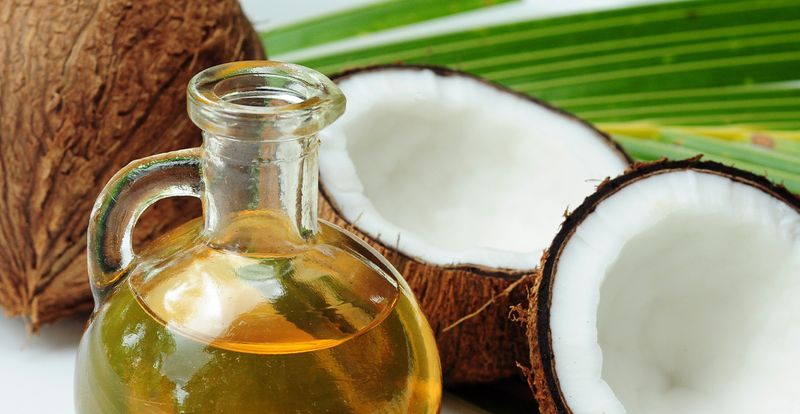
The global transition toward clean, renewable energy sources elevates biofuels into a critical component of international energy strategy. Therefore, among the diverse bioenergy feedstocks available, coconut oil stands out as an exceptionally premium raw material for high-grade biodiesel production. Furthermore, coastal regions, tropical island nations, and agricultural economies rich in coconut farming present an ideal environment for establishing modern bio-refineries. Consequently, deploying a turnkey Coconut Biodiesel Processing Plant allows process industries to convert raw coconut oil, refined coconut oil, or used cooking oil into a high-performance diesel alternative.
Thermal Processing & Drying Integration
Moreover, industrial coconut processing requires sophisticated thermal processing and moisture removal units. Therefore, thermal drying technology plays a foundational role when process engineers convert raw agricultural coconut yield into stabilized coconut products and pure biofuel feedstock. In this comprehensive technical guide, we explore every dimension of turnkey coconut biodiesel production, examine the complete 13-stage plant architecture, review precise engineering data, and analyze key industrial dryers to determine which dryer fits each coconut derivative best.
Decarbonization & Superior Fuel Performance
Energy markets across the world experience a profound structural shift toward decarbonization. As a result, petroleum diesel consumption generates considerable carbon dioxide emissions, sulfur compounds, and particulate matter, which accelerate global warming and compromise urban air quality. However, coconut biodiesel offers a completely sustainable, carbon-neutral alternative that integrates seamlessly into existing diesel engine infrastructure.
Coconut oil possesses a unique fatty acid profile dominated by medium-chain saturated fatty acids. Therefore, when chemical reactions transform coconut oil into fatty acid methyl esters, the resulting fuel exhibits exceptional physical and chemical characteristics. Furthermore, coconut biodiesel delivers an impressive cetane rating of 65 to 70, which significantly surpasses standard petroleum diesel ratings of 45 to 55. Consequently, this high cetane number enhances engine combustion efficiency, reduces engine noise, and improves cold-start performance substantially.
Advantages of Integrated Turnkey Execution
Additionally, setting up a turnkey plant ensures that energy investors, coconut processors, and municipal clean-energy initiatives receive a fully integrated, operational system. Rather than sourcing individual components from disparate vendors, turnkey execution delivers end-to-end design, civil planning, equipment manufacturing, automation, installation, and commissioning under a single engineering standard.
As a result, engineering teams streamline project timelines, minimize installation risks, and maximize long-term operational reliability. Furthermore, because manufacturers customize turnkey projects to match local raw material availability, facilities seamlessly scale processing capacities based on regional market demands. Indeed, this flexibility allows plant owners to expand their processing throughput as local supply chains grow stronger. In addition, integrated systems drastically reduce energy consumption during continuous operation, thereby boosting total profitability across long production campaigns.
2. Understanding the Transesterification Process Without Chemical Formulas
To begin with, to understand how industrial reactors convert coconut oil into high-quality biodiesel, it is helpful to examine the transesterification process in simple operational terms. Rather than using complex chemical formulas, we describe the conversion through its mechanical and operational stages.
Transesterification is a chemical exchange process where plant operators break down heavy, viscous coconut triglycerides into lighter, fluid ester molecules. Raw coconut oil naturally possesses high viscosity, which prevents direct use in modern high-pressure fuel injection engines. Therefore, the oil must react with an alcohol under controlled temperature and agitation in the presence of a catalyst.
The Detailed Conversion Stages Explained:
-
Pre-Heating & Alcohol Addition: First, heating systems pre-heat the oil to optimal reaction temperatures. Subsequently, dosing pumps introduce methanol or ethanol into the pre-treated coconut oil stream. In industrial practice, operators maintain a 6:1 molar ratio of alcohol to oil to drive the reaction to completion smoothly. Meanwhile, this precise alcohol volume prevents unreacted oil residues from remaining in the finished fuel stream.
-
Catalytic Activation: Meanwhile, mixing tanks completely dissolve sodium hydroxide or potassium hydroxide into the alcohol stream before the mixture enters the main reactor, thereby serving as the reaction catalyst. Consequently, the reaction rate increases rapidly upon contact. Furthermore, mixing the catalyst thoroughly in alcohol prior to injection eliminates localized side reactions inside the vessel.
-
Thermal Processing & Agitation: Next, thermal jackets heat the reaction mixture continuously within an operating temperature range of 50°C to 60°C under heavy mechanical agitation. In fact, maintaining this specific temperature range ensures high reaction rates while keeping system temperatures safely below the boiling point of the alcohol. As a result, operators minimize alcohol evaporation during the core processing phase.
-
Phase Separation: Following reaction completion, the mixture settles quietly in dedicated separation tanks or high-speed centrifuges. As a direct result of density differences, the process yields two distinct phases: top-layer fatty acid methyl esters (pure coconut biodiesel) and bottom-layer heavy glycerin. In addition, this density differential allows rapid gravity decanting without requiring complex mechanical intervention.
-
Efficiency Benchmark: Ultimately, under optimized operational conditions, modern industrial plants achieve an overall conversion efficiency of up to 98%. Thus, the facility successfully transforms virtually all input oil into commercially valuable biofuel and pure glycerin.
3. The 13-Stage Integrated Plant Architecture
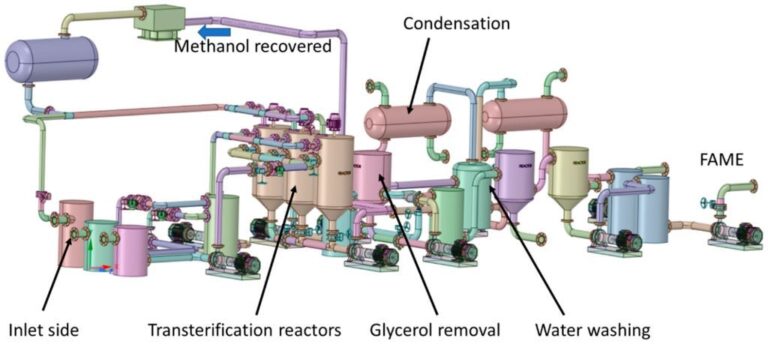
A modern turnkey Coconut Biodiesel Processing Plant operates as a continuous, automated unit. Because each stage plays a vital role, maintaining a strict operational sequence guarantees consistent fuel quality, maximum yield, and total operational safety.
Stage 1: Feedstock Storage Tanks
Initially, storage systems receive raw feedstock in large-capacity storage vessels constructed from high-grade stainless steel or protected carbon steel. Specifically, these tanks hold incoming crude coconut oil, refined coconut oil, or collected used cooking oil. Furthermore, internal heating coils maintain oil fluidity in cooler ambient climates. Accordingly, transfer pumps maintain optimal efficiency regardless of seasonal weather fluctuations.
Stage 2: Pre-treatment System (Filtration & Heating)
Subsequently, transfer lines feed incoming oil to the pre-treatment module, because raw oil often contains free fatty acids, trace moisture, and mechanical impurities. Indeed, heating elements treat the oil to 80°C–90°C while passing it through multi-stage filtration units. Consequently, filtration reduces moisture levels below 0.1% to prevent soap formation during the main reaction. In this way, operators effectively eliminate potential yield losses before chemical conversion begins.
Stage 3: Transesterification Reactor System
Thereafter, clean oil flows into the core reaction unit, which comprises jacketed, agitator-driven pressure vessels designed for high mixing efficiency. In practice, thermal controls maintain a precise internal temperature of 50°C to 60°C, thereby ensuring uniform contact between oil, methanol, and catalyst. Moreover, specialized internal baffles create turbulent flow conditions that accelerate the chemical exchange.
Stage 4: Methanol Dosing System
Simultaneously, automated mass flow meters measure precise volumes of methanol entering the system. As a result, high-precision dosing pumps maintain the target 6:1 alcohol-to-oil proportion continuously, thus preventing excess alcohol waste. Furthermore, closed-loop feedback controls dynamically adjust pump speeds based on real-time feedstock flow rates.
Stage 5: Catalyst Mixing Tank
In addition, dedicated mixing vessels equipped with high-shear impellers dissolve solid catalyst pellets (sodium hydroxide or potassium hydroxide) into the methanol stream before injecting the mixture into the main reactor. Consequently, complete dissolution protects downstream pumps from abrasive particulate wear.
Stage 6: Settling and Separation Tanks
Following reaction completion, the mixture enters conical-bottom settling tanks or continuous disk-stack centrifuges. Because glycerin has a higher density than biodiesel, rapid phase separation occurs, thereby allowing clean gravity decanting. In contrast, using automated centrifuges accelerates this phase separation from hours down to minutes.
Stage 7: Glycerin Collection System
Accordingly, operator systems draw off the heavy phase containing crude glycerin, unreacted catalyst, and trace alcohol from the bottom of the separator. Then, pumps route the collected glycerin to a recovery unit for purification, thereby converting a waste stream into a commercially valuable byproduct. Indeed, selling purified glycerin creates an additional, lucrative revenue stream for the plant operator.
Stage 8: Biodiesel Washing System
Meanwhile, the raw biodiesel phase contains minor remnants of catalyst, soap, and methanol. Therefore, a gentle warm-water washing system or dry-washing resin column removes these trace impurities, thereby ensuring the fuel meets strict purity standards. Additionally, washing stabilizes the fuel pH before final thermal processing.
Stage 9: Vacuum Drying Unit / Flash Dryer
Next, because water-washed biodiesel contains residual entrained moisture, the fuel must undergo thorough thermal drying. Specifically, the biodiesel passes through a vacuum flash drying vessel operating under negative pressure at 90°C to 105°C, thereby reducing moisture content to less than 0.05%. As a result, thermal drying vastly enhances fuel storage stability.
Stage 10: Polishing Filtration System
Furthermore, before final storage, the dried biodiesel passes through sub-micron polishing filters. As a result, this stage removes micro-particulates and guarantees absolute clarity and fuel stability. Consequently, the resulting fuel easily satisfies strict engine injection equipment criteria.
Stage 11: Final Storage Tanks
Eventually, transfer systems pump purified, ASTM-compliant coconut biodiesel into insulated product storage tanks equipped with nitrogen blanketing. Consequently, nitrogen blanketing prevents oxidation during extended storage periods. Moreover, bulk transfer pumps facilitate fast loading into commercial road tankers or export vessels.
Stage 12: Pumping and Piping System
Throughout the facility, industrial-grade stainless steel piping networks equipped with anti-corrosive seals, check valves, and positive displacement transfer pumps connect all plant modules seamlessly. Thus, robust piping design effectively prevents chemical leaks and pressure drops across the entire installation.
Stage 13: PLC-Based Control Panel (Automation)
Finally, a centralized Programmable Logic Controller (PLC) interface featuring Supervisory Control and Data Acquisition (SCADA) graphics monitors and controls the entire bio-refinery. Thus, operators monitor flow rates, vessel temperatures, tank levels, and valve positions in real time without manual intervention. In summary, high automation reduces human error while maximizing total operational safety.
4. Technical Specifications & Engineering Data
To assist plant managers and project engineers during initial planning, the following table details standard technical parameters for industrial turnkey plants:
| Parameter | Technical Specification |
| Plant Production Capacity | 500 Liters Per Day (LPD) to 100,000+ LPD |
| Primary Process Method | Continuous / Batch Transesterification |
| Acceptable Feedstocks | Crude Coconut Oil, Refined (RBD) Oil, Used Cooking Oil |
| Construction Materials | Stainless Steel SS304, SS316, or Heavy-Duty Carbon Steel |
| Chemical Conversion Efficiency | Up to 98% Total Yield |
| Reaction Temperature Range | 50°C to 60°C |
| Alcohol-to-Oil Ratio | 6:1 Molar Proportion |
| Thermal Heating Sources | Electric Heaters, Steam Boilers, or Thermic Fluid Systems |
| Automation Level | Semi-Automatic Control or Fully Automatic PLC / SCADA |
| Primary By-Product | Technical-Grade Crude Glycerin |
| Quality Compliance Standards | ASTM D6751 / EN 14214 Standards |
| Fuel Cetane Rating | 65 to 70 |
| Sulfur Emission Profile | 0.0% (Virtually Sulfur-Free Fuel) |
5. Comprehensive Analysis of Industrial Dryers in Coconut Processing
While transesterification converts coconut oil into biodiesel, producing high-grade coconut oil requires specialized drying equipment. Because fresh coconut meat naturally contains roughly 50% moisture, processors must reduce moisture below 6% to extract oil effectively. Therefore, deploying the correct thermal drying machinery remains essential for overall plant profitability.
A. Band Dryer (Multi-Pass Conveyor Dryer)
A Band Dryer consists of a continuous stainless steel perforated mesh belt that conveys wet coconut material through controlled heating zones. As the belt moves, heated air passes vertically through the bed of material, thereby ensuring uniform moisture removal.
-
Operating Mechanism: Multi-stage temperature zoning (80°C down to 50°C) with recirculating airflow.
-
Best Suited For: High-volume processing of shredded coconut, desiccated coconut flakes, raw copra granules, and paring cake.
-
Key Advantage: Preserves natural white color and prevents heat damage effectively by controlling temperature dynamically across each band.
B. Combination Fluid Bed Dryer
A Combination Fluid Bed Dryer merges direct thermal conduction with fluidization. Specifically, high-pressure blowers force warm air upward through a perforated distributor plate, lifting and suspending solid coconut particles in a fluid-like state.
-
Operating Mechanism: Combined convective hot air and internal heat-exchanger tubes embedded in the bed.
-
Best Suited For: Semi-dried coconut granules, high-moisture copra meal, and dense coconut coir dust.
-
Key Advantage: Delivers high thermal efficiency, thereby reducing overall energy consumption by up to 25% when compared to conventional static bed units.
C. Spray Dryer
A Spray Dryer transforms liquid feed into fine dry powder instantaneously. First, high-speed atomizers spray liquid coconut milk or processed extracts into a fine mist inside a tall drying chamber. Then, hot air rapidly evaporates moisture as particles fall toward the cone bottom.
-
Operating Mechanism: High-speed centrifugal disk or pressure nozzle atomization with co-current hot air flow (160°C–200°C inlet).
-
Best Suited For: Coconut milk powder, virgin coconut oil (VCO) powder, coconut water powder, and mineral extracts.
-
Key Advantage: Rapid drying preserves heat-sensitive vitamins, proteins, and natural flavors remarkably well due to short thermal exposure times.
D. Vibratory Fluid Bed Dryer (VFBD)
A Vibratory Fluid Bed Dryer adds mechanical vibration to hot-air fluidization. Consequently, this gentle agitation prevents sticky or unevenly sized particles from agglomerating during drying.
-
Operating Mechanism: Twin eccentric vibration motors combined with low-velocity directional hot airflow.
-
Best Suited For: Sweetened coconut flakes, toasted coconut chips, sticky coconut residues, and fragile coconut products.
-
Key Advantage: Prevents particle breakage while ensuring uniform moisture removal across delicate materials without crushing product structures.
6. Dryer Selection Matrix: Matching Dryers to Products
To simplify machinery selection, the following matrix identifies the optimal dryer for each coconut product line:
| Coconut Product / Derivative | Optimal Drying Equipment | Moisture Reduction Target | Primary Technical Justification |
| Desiccated Coconut Powder | Band Dryer (Multi-Pass) | 50% reduced down to 2.5% | Continuous handling preserves whiteness and fat structure. |
| Virgin Coconut Oil Powder | Advanced Spray Dryer | Liquid slurry converted to < 3% | Fast drying protects natural fats and proteins. |
| Coconut Milk Powder | Advanced Spray Dryer | Liquid emulsion converted to < 2.5% | High-temperature short-time drying preserves flavor. |
| Coconut Water Powder | Advanced Spray Dryer | Liquid concentrate converted to < 3% | Instant moisture flash preserves electrolytes. |
| Copra & Coconut Husk Fibre | Combination Fluid Bed Dryer | 40% reduced down to 10% | High airflow handles uneven particle sizes efficiently. |
| Toasted / Sweetened Chips | Vibratory Fluid Bed Dryer | 18% reduced down to 3% | Gentle vibration prevents breakage of fragile flakes. |
7. Comparative Analysis: Petroleum Diesel vs. Coconut Biodiesel
Evaluating fuel performance parameters highlights why coconut biodiesel serves as a superior alternative to conventional fossil fuels:
-
Cetane Index: Whereas petroleum diesel exhibits a cetane index of 45 to 55, coconut biodiesel delivers an impressive cetane rating of 65 to 70. Consequently, coconut biodiesel ensures faster ignition and smoother combustion.
-
Sulfur Content: While standard petroleum diesel contains between 50 to 500 ppm of sulfur, coconut biodiesel contains virtually 0.0% sulfur. Therefore, using coconut biodiesel eliminates harmful sulfur dioxide emissions entirely.
-
Lubricity & Engine Wear: Coconut biodiesel offers superior natural lubricity when compared to standard fossil fuels. As a result, this high lubricity reduces fuel injection pump wear significantly over long operational hours.
-
Flash Point Safety: In contrast to petroleum diesel, which has a relatively low flash point of 52°C to 66°C, coconut biodiesel features a high flash point exceeding 130°C. Thus, higher flash points drastically reduce fire hazards during transport and storage.
8. Environmental, Economic, and Regional Value Impact
Establishing a Coconut Biodiesel Processing Plant generates multi-layered benefits across industrial, environmental, and regional economies:
-
Agricultural Value Addition: First, farmers sell whole coconuts and raw copra at stable industrial prices, thereby protecting rural farming communities from raw commodity market volatility.
-
Carbon Footprint Reduction: Second, substituting fossil fuels with coconut biodiesel reduces greenhouse gas emissions by up to 78% across the total fuel lifecycle.
-
Byproduct Monetization: Third, the transesterification process yields technical-grade glycerin, which chemical facilities can purify and sell to pharmaceutical, cosmetics, and chemical industries.
-
Energy Independence: Fourth, island nations and coastal regions reduce expensive petroleum imports by leveraging local coconut resources for power generation and marine fuel.
9. Comprehensive Turnkey Project Execution Workflow
Executing a successful bio-refinery project requires a disciplined, multi-phase implementation roadmap:
-
Phase 1 (Feasibility Study): First, engineers conduct comprehensive feedstock analysis, utility assessment, and economic modeling. In this way, feasibility studies establish project viability before capital deployment.
-
Phase 2 (Process Design): Subsequently, design teams create detailed process flow diagrams, piping layouts, and structural engineering plans. As a result, early modeling identifies and eliminates construction bottlenecks.
-
Phase 3 (Manufacturing): Next, production units fabricate high-precision stainless steel equipment, pressure vessels, and drying units. Furthermore, quality teams perform rigorous factory acceptance testing prior to dispatch.
-
Phase 4 (Installation): Thereafter, installation crews complete civil works, mechanical positioning, electrical wiring, and piping integration on site. Meanwhile, site engineers supervise structural alignment continuously.
-
Phase 5 (Automation): Meanwhile, software engineers program and test control software on PLC and SCADA interfaces. Thus, precise system calibration takes place before live chemical introduction.
-
Phase 6 (Commissioning): Then, commissioning engineers perform cold water trials and hot chemical commissioning under live operational supervision. Consequently, live trials validate full production capacity safely.
-
Phase 7 (Operator Training): Finally, master technicians train plant operators extensively in operational procedures and safety protocols before commercial hand-over. In summary, hands-on training ensures complete operational autonomy.
10. Conclusion & Strategic Call to Action
In conclusion, investing in a turnkey Coconut Biodiesel Processing Plant presents a transformative commercial opportunity for agribusinesses, fuel distributors, and industrial processing organizations. By pairing high-efficiency transesterification reactors with advanced pre-treatment, washing, and vacuum drying stages, operators achieve a 98% conversion efficiency while meeting rigorous ASTM and EN biofuel standards.
Furthermore, integrating specialized industrial dryers—such as multi-pass Band Dryers, Spray Dryers, Combination Fluid Bed Dryers, and Vibratory Fluid Bed Dryers—ensures maximum yield and quality across every stage of the coconut processing chain. Ultimately, working with an experienced engineering partner streamlines project execution from initial feasibility through commercial production. Therefore, taking action today positions your company at the forefront of the clean energy transition.
Contact Information & Consultation
To discuss project planning, request custom equipment design, or receive a turnkey cost proposal, contact our engineering team directly:
Head Office Address:
GENEX Tech Industries LLP
10C, Sir William Jones Sarani (Middleton Row), Park Street,
Kolkata – 700071, West Bengal, India
Direct Phone / WhatsApp Contact:
-
Mobile / WhatsApp: +91-97489 06968
-
Mobile / WhatsApp: +91-93300 77417
Official Business Email:
-
mktg@foodtechprojects.com -
sales@foodtechprojects.com