
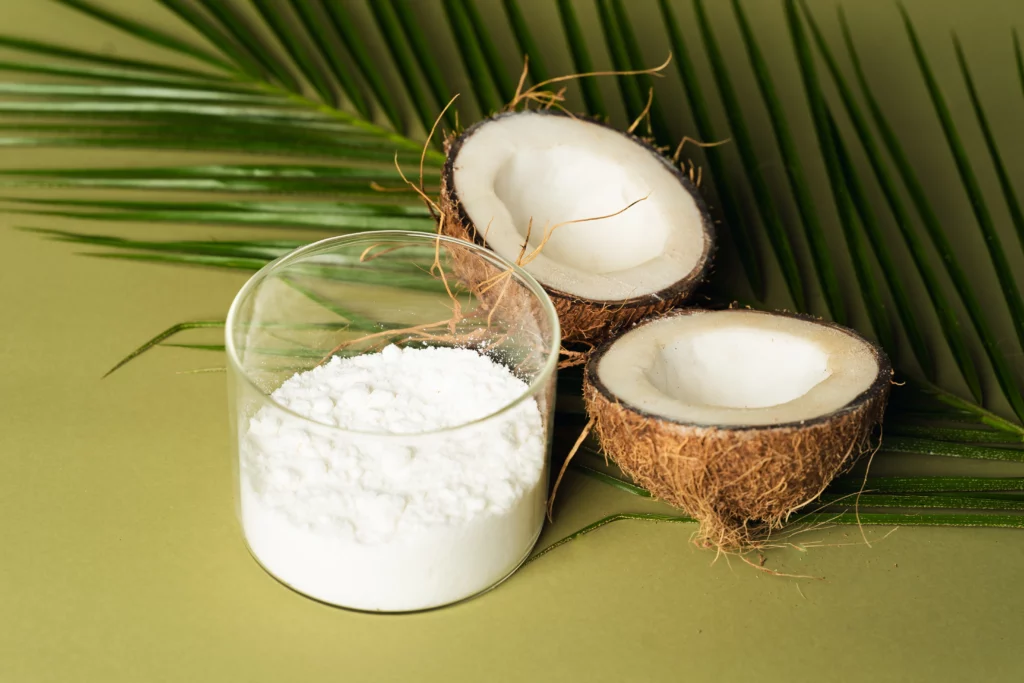
Demand for plant-based dairy alternatives, ready-to-eat formulations, nutraceuticals, and instant beverage mixes has surged globally. Furthermore, among tropical coconut derivatives, coconut milk powder stands out as a commercially lucrative, shelf-stable, and versatile ingredient. Consequently, producing premium-grade, free-flowing, and instantly soluble coconut milk powder requires sophisticated food engineering, thermal dehydration, fluid dynamics, and fat encapsulation.
Throughout this manual, we explore every dimension of a modern plant. Specifically, we detail raw material preparation, extraction, homogenization, standardization, spray drying, and packaging phases. In addition, we analyze primary industrial dryer technologies—including Band Dryers, Combination Fluid Bed Dryers, Spray Dryers, and Vibratory Fluid Bed Dryers (VFBD)—outlining their engineering principles, operational parameters, and exact suitability for specific coconut and food products.
1. Industry Overview and Market Dynamics
First and foremost, transitioning from liquid coconut milk to dehydrated powder addresses major commercial challenges in tropical supply chains. Indeed, fresh coconut milk degrades within hours at room temperature. This rapid decay occurs due to microbial growth and oxidation.
As a result, raw milk consists of 65% to 75% water. Therefore, transporting liquid milk involves paying primarily for water freight alongside expensive cold-chain refrigeration. However, industrial dehydration converts liquid milk into a stable powder form. Consequently, standard spray-dried coconut milk powder possesses an extended shelf life ranging from 18 to 24 months in moisture-barrier packaging.
Meanwhile, achieving high-quality powder requires precise thermal management during drying. In fact, fresh coconut milk contains high fat levels—typically 24% to 35% in raw milk and up to 65% on a dry-basis weight. Thus, without proper carrier matrices and specialized spray drying parameters, free fats melt and migrate to particle surfaces. Eventually, this causes lump formation, rapid oxidation, and persistent sticking inside the drying chamber.
2. Complete Step-by-Step Process Flow of Coconut Milk Powder Production
In general, transforming harvested coconuts into a fine powder requires a multi-stage continuous processing line.
Phase 1: Raw Material Preparation, Paring, and Washing
Initially, whole nuts undergo de-husking to remove the outer fibrous cover. Next, workers or automated systems perform de-shelling to strip away the hard shell.
Subsequently, operators route the isolated kernel through a paring process to shave off the thin brown skin or testa. Importantly, removing this skin ensures that the final powder maintains an ivory-white color without dark speckles. Simultaneously, plant operators divert paring waste directly for paring oil extraction.
Thereafter, automated machinery subjects the white meat to rigorous washing using ozonated or chlorinated water baths to eliminate surface microflora.
Phase 2: Grating, Extraction, and Multi-Stage Filtration
Once sanitized, heavy-duty continuous grinders shred the kernels into a fine, uniform pulp. Then, operators feed this pulp into heavy-duty stainless steel screw presses.
In addition, introducing warm water at a controlled ratio maximizes milk extraction yield. This step effectively separates liquid extract from defatted fibrous residue, commonly known as desiccated cake.
Afterwards, raw coconut milk passes through multi-stage dynamic vibro-sifters and micro-duplex strainers. This process removes suspended grit and fine particles completely.
Phase 3: Standardization, Homogenization, and Pasteurization
Following filtration, milk enters the standardization and mixing phase. Because natural coconut milk contains high fat levels and low native protein content, engineers add food-grade carrier agents such as maltodextrin and soluble starches alongside emulsifiers. Thus, these encapsulation agents form a protective matrix around fat droplets.
Next, a two-stage high-pressure homogenizer processes the standardized mixture. Specifically, the first stage operates between 150 bar and 200 bar, whereas the second stage operates between 30 bar and 50 bar. Accordingly, this treatment breaks down fat globules and prevents fat re-coalescence.
Subsequently, an inline system subjects the emulsion to High-Temperature Short-Time pasteurization at 85°C to 92°C for 15 to 30 seconds. This stage eliminates pathogens and inactivates enzymes.
Phase 4: Atomization, Fluidized Cooling, and Packaging
Thereafter, high-pressure pumps deliver pasteurized liquid feed to the top of the spray drying tower for atomization and thermal dehydration. Inside the drying chamber, co-current hot air evaporates moisture instantaneously.
As a consequence, resulting powder drops to the conical bottom of the chamber. Immediately afterwards, a fluidized bed cooling and sieving system lowers powder temperature below 28°C and removes agglomerates. Finally, automatic packaging machines handle nitrogen-purged sealing in moisture-proof aluminum foil pouches.
3. Detailed Technical Analysis of Industrial Dryers
Undoubtedly, thermal dehydration serves as the central engineering process in coconut processing. Hence, engineers deploy different drying technologies across the value chain. Selection relies on raw material viscosity, moisture content, fat content, particle structure, and target final specifications.
Dryer Type 1: Spray Dryer (Primary Dryer for Coconut Milk Powder)
Engineering Principles and Mechanics
Fundamentally, a Spray Dryer transforms liquid feed into dried particulates in a single continuous operation. Specifically, the process atomizes liquid feed into a fine spray of droplets and contacts them with a hot gas stream inside a large chamber.
For instance, high-speed rotary wheel atomizers (10,000 RPM to 25,000 RPM) or high-pressure nozzles (100 bar to 250 bar) achieve fine atomization. Consequently, rapid expansion of surface area causes instant mass transfer. In turn, moisture evaporates rapidly under constant-rate drying conditions. This keeps droplet surfaces wet and maintains temperature close to the wet-bulb temperature. Thus, rapid evaporation protects heat-sensitive coconut fats and proteins from thermal degradation.
Key Technical Specifications and Parameters
-
Inlet Air Temperature: 160°C to 210°C
-
Outlet Air Temperature: 75°C to 95°C
-
Feed Total Solids Content: 35% to 50%
-
Evaporation Capacity Range: 50 kg/hr up to 5,000+ kg/hr of water removal
-
Atomization Speed: 12,000 RPM to 22,000 RPM for rotary disc atomizers
-
Chamber Design: Tall-form cylindrical body with a conical bottom, equipped with air sweep systems and pneumatic hammers to eliminate wall deposition
-
Powder Recovery System: Multi-cyclone collectors paired with reverse-pulse jet bag filters achieving high powder recovery efficiency
Process Advantages
-
Instantaneous Drying: Indeed, residence time inside the drying chamber remains short (10 to 30 seconds). This short exposure preserves natural coconut flavor, color, and nutritional profile.
-
Consistent Particle Morphology: Furthermore, it produces spherical, free-flowing, homogenous powder particles with excellent bulk density and instant reconstitution characteristics.
-
Scalability and Automation: Additionally, it delivers continuous operation capable of integration with advanced PLC and SCADA automated control systems.
Process Limitations
-
High Capital Investment: However, it requires substantial initial equipment footprint and capital expenditure.
-
Sensitivity to Stickiness: Besides, feeds with unencapsulated fats or high sugar contents require precise temperature controls, air sweeping, and carrier addition to prevent wall deposition.
Best Suited Products
-
Primary Application: Coconut Milk Powder, Coconut Cream Powder, Coconut Water Powder.
-
Secondary Applications: Virgin Coconut Oil (VCO) Powder, Medium Chain Triglyceride (MCT) Oil Powder, Dairy Powders, Malt Extracts, Herbal Extracts, and Fruit Juice Powders.
Dryer Type 2: Band Dryer (Conveyor Belt Dryer)
Engineering Principles and Mechanics
Alternatively, a Band Dryer passes moist solid material across perforated stainless steel conveyor belts inside an insulated drying tunnel.
Meanwhile, heating fans circulate hot air through the material bed in an up-draft or down-draft flow pattern. This air stream evaporates moisture progressively as material moves from inlet feed zone to discharge section.
Moreover, band dryers frequently feature multi-pass configurations, such as 3-pass or 5-pass systems. In these setups, material falls from the end of an upper belt onto a lower belt moving in the opposite direction. Consequently, this gentle tumbling action exposes product surfaces to the hot air stream. This process ensures uniform moisture distribution throughout the material bed.
Key Technical Specifications and Parameters
-
Operating Temperature Range: 60°C to 140°C utilizing multi-zone temperature control
-
Bed Depth: 25 mm to 150 mm, regulated by an oscillating distributor feed assembly
-
Belt Speed: Variable frequency drive regulated from 0.1 m/min to 5.0 m/min
-
Air Velocity: 0.8 m/s to 2.5 m/s through the product bed
-
Drying Time: 20 minutes to 180 minutes depending on material thickness and initial moisture
-
Construction Material: Food-grade SS304 or SS316 stainless steel perforated belts and internal chambers
Process Advantages
-
Gentle Mechanical Handling: Above all, it applies minimal physical stress or shear forces to the product, preserving structural integrity.
-
Zoned Thermal Control: In addition, independent temperature and humidity control across different drying zones enables precise control over drying curves.
-
High Bulk Capacity: Thus, it excels at continuous, high-volume processing of solid particulates and shreds.
Process Limitations
-
Unsuitable for Liquids: Conversely, it cannot process liquid feeds like coconut milk directly without prior conversion to solid or semi-solid forms.
-
Cleaning Requirements: Furthermore, perforated belts require automated clean-in-place or high-pressure water washing systems to clear clogged perforations.
Best Suited Products
-
Primary Application: Desiccated Coconut High-Fat and Low-Fat Shreds and Flakes, Toasted Coconut Chips.
-
Secondary Applications: Dehydrated Fruit Slices, Vegetables, Granulated Spices, Extruded Animal Feeds, and Chemical Pellets.
Dryer Type 3: Vibratory Fluid Bed Dryer (VFBD)
Engineering Principles and Mechanics
In comparison, a Vibratory Fluid Bed Dryer combines mechanical vibration with thermodynamic fluidization to dry granular solids.
Structurally, equipment consists of a perforated stainless steel distributor deck housed within a processing chamber supported by isolation springs. Simultaneously, unbalance vibratory motors impart gentle directional vibration to the entire bed assembly.
Meanwhile, forced draft blowers push conditioned drying air upward through the perforated deck. As a result, the combination of upward aerodynamic drag and mechanical vibration causes solid particles to behave like a boiling fluid. This interaction creates a state known as fluidization. Consequently, this state ensures intimate contact between individual particles and drying gas, enabling rapid heat and mass transfer while preventing agglomeration.
Key Technical Specifications and Parameters
-
Fluidization Velocity: 0.5 m/s to 1.8 m/s
-
Vibration Frequency: 10 Hz to 25 Hz, equivalent to 600 RPM to 1500 RPM
-
Vibration Amplitude: 2 mm to 6 mm
-
Inlet Air Temperature: 50°C to 130°C
-
Product Bed Depth: 30 mm to 100 mm
-
Residence Time: 2 minutes to 30 minutes, continuously adjustable via vibration angle and weir plate height
Process Advantages
-
Fluidization of Irregular Granules: Notably, vibratory assistance enables fluidization of materials with wide particle size distributions. It also handles sticky surface characteristics that would otherwise channel or consolidate in static fluid beds.
-
Low Degradation: Furthermore, gentle vibration prevents particle breakage, friability, or dust generation.
-
Integrated Cooling: Besides, modern units frequently feature a dual-zone deck. An initial hot zone performs drying, followed immediately by a cool, dehumidified zone for product stabilization before discharge.
Process Limitations
-
Particle Size Constraints: However, it works optimally for particles between 50 microns and 5 mm, whereas it is ineffective for un-formulated pure liquid feeds.
-
Mechanical Wear: In addition, it demands robust structural supports and routine maintenance on vibratory drives and isolation springs.
Best Suited Products
-
Primary Application: Agglomerated Coconut Milk Powder during the instantizing phase, secondary cooling and drying of spray-dried powders, and Desiccated Coconut Granules.
-
Secondary Applications: Instant Tea and Coffee Granules, Milk Powders, Crystal Sugar, Salt, Tableting Granules, and Cereal Grains.
Dryer Type 4: Combination Fluid Bed Dryer
Engineering Principles and Mechanics
On the other hand, a Combination Fluid Bed Dryer integrates two distinct drying principles within a single continuous processing system.
Typically, it combines a stationary high-velocity fluid bed section with an integrated vibratory deck or internal heat exchanger. Alternatively, it pairs an initial flash drying pneumatics stage with a fluidized bed chamber.
In practice, engineers integrate combination fluid bed dryers directly beneath the cone of a primary spray dryer in a multi-stage drying configuration. Consequently, partially dried powder containing 6% to 12% moisture falls directly from the primary spray chamber into the integrated fluid bed base. Here, drying finishes at lower temperatures while controlled agglomeration occurs, followed by secondary cooling.
Key Technical Specifications and Parameters
-
Integrated Stage 1 Inlet Temperature: 80°C to 120°C
-
Integrated Stage 2 Cooling Temperature: 15°C to 25°C
-
Evaporative Efficiency Increase: Achieves 15% to 30% higher overall plant energy efficiency compared to single-stage spray dryers
-
Final Powder Moisture Achieved: 1.5% to 3.0%
-
Particle Size Range: 150 microns to 450 microns in agglomerated form
Process Advantages
-
Thermal Efficiency: Indeed, completing final drying in a fluidized bed allows the main spray dryer to operate at higher temperature drops. This setup significantly reduces fuel and energy consumption per kilogram of evaporated water.
-
Instant Powder Production: Moreover, it facilitates controlled particle agglomeration, creating porous, dust-free, non-caking powder structures with rapid wettability in cold water.
-
Reduced Heat Stress: Therefore, it protects heat-sensitive fat and protein molecules by performing final moisture removal at lower drying temperatures.
Process Limitations
-
System Complexity: However, it requires complex ductwork, multiple fan systems, air filtration units, and multi-point temperature instrumentation.
-
Higher Capital Investment: Accordingly, it demands higher initial investment compared to single-stage systems.
Best Suited Products
-
Primary Application: Premium instant solubility coconut milk powders, high-fat coconut cream powders, and fatty emulsion powders.
-
Secondary Applications: Infant formula, hydrolyzed whey proteins, fat-filled milk powders, and instant cocoa blends.
4. Comparative Technical Analysis Matrix of Dryer Technologies
To summarize, the following table synthesizes operational, physical, and thermodynamic characteristics of the four industrial dryer systems across key performance indicators:
| Technical Parameter | Spray Dryer | Band Dryer | Vibratory Fluid Bed Dryer (VFBD) | Combination Fluid Bed Dryer |
| Primary Feed State | Free-flowing liquid emulsions, slurries, solutions | Solid shreds, flakes, chunks, cakes | Moist granules, coarse powders, extrudates | Semi-dried particulates, agglomerated powders |
| Operating Temperature Range | 160°C to 210°C inlet temperature | 60°C to 140°C | 50°C to 130°C | 15°C to 120°C multi-stage range |
| Residence Time | 10 to 30 seconds | 20 to 180 minutes | 2 to 30 minutes | 5 to 45 minutes |
| Final Moisture Range | 2.0% to 4.0% | 2.5% to 4.5% | 1.5% to 3.5% | 1.5% to 2.5% |
| Thermal Efficiency | Moderate (45% to 60%) | High (60% to 75%) | High (65% to 80%) | Very High (70% to 85%) |
| Particle Size Outcome | Fine spheres measuring 30 to 120 µm | Retains input size from millimeters to centimeters | Medium granules measuring 100 to 2000 µm | Agglomerates measuring 150 to 500 µm |
| Fat Preservation Index | High when utilizing encapsulation | Excellent | High | Superior |
| Best Coconut Product | Coconut Milk Powder and VCO Powder | Desiccated Coconut and Toasted Chips | Secondary Powder Cooling and Desiccated Granules | Instant Coconut Milk Powder |
5. Industrial Video Insight: Equipment Demonstration
For visual clarity, to understand operational principles, atomization mechanics, powder recovery, and continuous material movement within advanced processing plants, watch the following engineering video demonstration:
-
Watch the Equipment Demonstration Video: Coconut Processing Machinery & Dryer Operational Guide
Specifically, this video illustrates structural fabrication, stainless steel finishing, high-speed atomization testing, and automated control interfaces employed in modern industrial plant installations.
6. Detailed Technical Specifications for a 1000 kg/hr Coconut Milk Powder Plant
For instance, for project managers, engineers, and corporate investors planning to commission a commercial-scale processing facility, below are comprehensive plant balance specifications and utility consumption metrics for a standardized 1000 kg/hr coconut milk powder production plant.
Plant Mass Balance and Operational Yield
First, processing whole nuts requires an input of approximately 10,000 kg/hr of whole coconuts. This means, this volume translates to roughly 30,000 to 35,000 nuts per hour.
In turn, this volume yields approximately 3,200 kg/hr to 3,500 kg/hr of pared white meat. This recovery represents 32% to 35% of total nut weight.
Next, from this meat, screw pressing extracts approximately 2,500 kg/hr of raw coconut milk at roughly 30% total solids content.
Thereafter, adding food-grade carriers at a rate of 300 kg/hr results in a total formulated liquid feed to the dryer of approximately 2,800 kg/hr at 40% total solids concentration.
Finally, within the spray dryer, approximately 1,800 kg/hr of water evaporates. Consequently, this yields a final packaged powder output capacity of 1,000 kg/hr at 2.0% to 2.5% residual moisture content.
Utility Demands and Connected Load
Regarding power, electrical connected load ranges from 350 kW to 480 kW across a 3-phase, 415V, 50 Hz/60 Hz supply.
Similarly, steam requirements for air heaters and the pasteurizer range from 2.8 tons/hr to 3.5 tons/hr at 10 bar working pressure. Alternatively, operators utilize a 1.5 million kcal/hr thermic fluid boiler if steam is unavailable.
In addition, compressed air requirements demand 3.5 cubic meters per minute at 7 bar dry, oil-free instrument-grade air. This air supply operates pulse-jet bag filters and pneumatic actuators.
Furthermore, chilled water requirements total 45 cubic meters per hour at 7°C flow and 12°C return for secondary powder cooling decks and feed holding jackets. Likewise, clean-in-place wash water requirements total 15 cubic meters per hour at 3 bar pressure.
Construction Materials and Automation Interface
Crucially, all product contact zones—including pipes, tanks, pumps, homogenizers, atomizers, spray chambers, ducts, cyclones, and sifter screens—utilize food-grade AISI SS316L stainless steel, mirror polished to a roughness average below 0.4 microns.
Meanwhile, non-contact structural framework utilizes AISI SS304 stainless steel or heavy-duty epoxy-coated carbon steel.
In addition, gaskets and seals feature FDA-compliant food-grade viton, PTFE, or EPDM materials.
Finally, the automation interface integrates a centralized PLC platform with 19-inch color SCADA touchscreen panels. This system provides multi-level user security, real-time trend logging, automated CIP sequencing, and Industry 4.0 Ethernet connectivity.
7. Interactive Plant Capacity & Mass Balance Estimator
To further assist planners, to help engineers, project planners, and investors evaluate custom production metrics, the interactive calculator below allows you to adjust key plant parameters—such as target powder output, feed total solids, carrier ratio, and operational hours—to instantly project raw material requirements, water evaporation loads, utility demands, and annual output.
<GenerateWidget type="inline_visualization" height="680px">
<skills>chart</skills>

**Idea:** Allow users to adjust plant capacity and operational parameters to calculate real-time mass balance, raw coconut requirements, evaporation rate, power/steam utilities, and annual yield for a Coconut Milk Powder Processing Plant.
**Visual type:** Parametric calculator with interactive sliders, summary metric cards, and a dual mass-balance bar/breakdown chart.
**Data specification:**
- **Data structure:**
  - Input parameters: Target Powder Output (kg/hr), Feed Total Solids (%), Carrier Percentage in Powder (%), Operating Hours/Day.
  - Derived outputs: Raw Coconut Kernel Required (kg/hr), Water Evaporation Load (kg/hr), Steam Required (tons/hr), Connected Power (kW), Annual Powder Production (Metric Tons).
- **Initial values:**
  - Target Powder Output = 1000 kg/hr
  - Feed Total Solids = 40%
  - Carrier Ratio = 30%
  - Operating Hours/Day = 20 hours
- **Mapping:** Sliders map directly to mathematical mass balance equations; output cards and dynamic stacked bar chart update instantly to show liquid input vs. water evaporated vs. dry powder yield.
**User controls:**
 1: Target Powder Output Capacity (200 kg/hr to 2500 kg/hr)
 2: Feed Liquid Total Solids % (30% to 50%)
 3: Carrier Addition Ratio % (15% to 40%)
 4: Plant Operating Hours per Day (8 to 24 hours)
**Interactivity:** Dragging any slider dynamically recalculates mass balance, steam/power metrics, and updates output cards and visual charts.
**Animation:** Smooth transition on bar chart heights and metric values upon slider adjustment.
</GenerateWidget>
8. Essential Quality Controls, Compliance, and Troubleshooting
Evidently, operating a high-capacity coconut milk powder facility requires strict adherence to international food safety management systems, including ISO 22000, HACCP, US FDA, and GMP guidelines.
Specifically, Critical Control Points (CCPs) in production include CCP 1 for kernel sanitization, where active chlorine or ozone levels in white-meat washing baths require continuous monitoring between 10 ppm and 20 ppm to prevent microbial contamination.
Next, CCP 2 governs pasteurization, demanding a minimum thermal retention of 85°C for 15 seconds to achieve a 5-log reduction in pathogens.
Lastly, CCP 3 covers metal detection and magnetic separation, utilizing dual-stage rare-earth magnetic traps rated at 10,000 Gauss alongside inline digital metal detectors installed prior to automatic powder packaging.
Regarding operational issues, chamber wall sticking and caramelization stem from free fat on particle surfaces or high inlet air temperatures.
Therefore, increasing homogenization pressure to fully encapsulate fat droplets, adjusting maltodextrin ratios, and installing air sweep cooling rings on spray chamber walls resolve this issue effectively.
Similarly, inadequate emulsifier ratios or large oil globule sizes cause poor reconstitution and cold-water solubility. Technicians correct this issue by optimizing two-stage high-pressure homogenization and incorporating lecithin emulsifiers.
Finally, operators prevent caking and lumping during storage by passing powder through a secondary vibratory fluid bed cooler to lower discharge temperature below 28°C. They then pack the product in 3-ply aluminum foil laminate bags under dry nitrogen flushing.
9. Strategic Conclusions and Investment Outlook
In conclusion, establishing a state-of-the-art Coconut Milk Powder Processing Plant represents a significant, highly strategic entry into the global food ingredient sector.
Ultimately, success depends heavily on selecting proper process equipment, ensuring hygienic engineering design, and matching thermal drying technologies to specific product characteristics.
As outlined, spray dryers remain the primary workhorse for converting liquid coconut milk emulsions into fine, high-solubility milk and cream powders.
In addition, combination fluid bed dryers elevate powder quality to premium instant grade status while dramatically increasing overall plant energy efficiency.
Furthermore, band dryers excel in processing solid coconut derivatives like desiccated flakes and chips.
Meanwhile, vibratory fluid bed dryers provide essential secondary cooling, gentle drying, and precise moisture conditioning across all particulate streams.
Thus, partnering with experienced machinery manufacturers who offer complete end-to-end turnkey engineering—from raw nut handling to automated powder packaging—ensures high product yields, strict FDA compliance, optimized utility consumption, and superior long-term profitability.
Contact Information & Consultation
If you plan to establish a new Coconut Milk Powder Processing Plant, upgrade an existing facility, or consult on specialized industrial drying equipment, reach out directly to the technical team at GENEX Tech Industries LLP:
-
Head Office Address:
GENEX Tech Industries LLP
10C, Sir William Jones Sarani (Middleton Row), Park Street,
Kolkata – 700071, West Bengal, India
-
Direct Phone / WhatsApp Contact:
+91-97489 06968 | +91-93300 77417
-
Official Business Email:
mktg@foodtechprojects.com | sales@foodtechprojects.com
-
Official Company Websites: