
Introduction
The global market for dehydrated fruits and vegetables has experienced an unprecedented surge over the past decade. Consequently, commercial food processing in India has transitioned rapidly from localized batch processing to industrial-scale continuous operations. This shift occurs primarily because rising urban populations demand ready-to-eat foods with exceptionally long shelf lives. Furthermore, zero-waste agricultural mandates push processors to eliminate post-harvest waste proactively. Indeed, modern consumer trends strongly favor nutritious, conveniently packaged dehydrated produce over fresh alternatives that spoil quickly. As a direct result, commercial dehydrators continue to invest heavily in advanced processing technology across all agricultural zones. Ultimately, this technological evolution enhances supply chain efficiency while dramatically reducing seasonal financial losses.
India ranks proudly as the second-largest producer of fruits and vegetables worldwide. However, local processors still face significant post-harvest losses, which often range between 15% and 30%. These losses happen primarily because perishable supply chain bottlenecks limit rapid distribution across nationwide networks. Fortunately, converting fresh horticultural produce into shelf-stable dehydrated flakes, powders, dices, and slices offers an immensely lucrative industrial opportunity. Therefore, modern dehydration technology serves as an essential bridge between farm yields and commercial profitability. In addition, adopting automated dehydration machinery enables Indian processors to compete aggressively in international export markets.
The Complexity of Industrial Dehydration
Industrial fruit and vegetable dehydration is definitely not a simple one-size-fits-all heating process. On the contrary, horticultural matrices present complex thermodynamic challenges during processing. Fresh produce contains remarkably high moisture levels, which typically range from 75% to 95% wet basis. In addition, delicate cellular structures hold water alongside natural sugars, organic acids, heat-sensitive volatile aromatic compounds, and essential vitamins like L-ascorbic acid. Consequently, applying uncalibrated heat can destroy delicate flavors and biological nutrients within minutes.
Therefore, choosing an incorrect industrial dryer degrades product quality rapidly. Specifically, mismanaging drying air parameters causes severe physical and chemical issues over time. These issues include case hardening, sugar caramelization, severe shrinkage, structural collapse, color loss, and complete nutrient destruction. Thus, processors must select equipment carefully to ensure optimal heat distribution while maintaining strict process control. Furthermore, understanding the precise thermodynamic behavior of each raw crop ensures maximum economic yield and minimal energy waste.
Engineering High-Efficiency Dehydration Lines
Engineering high-efficiency processing lines requires a deep understanding of drying kinetics and mass balances. Similarly, engineers must master heat transfer mechanics and material handling systems to prevent operational bottlenecks. Modern manufacturers in India, such as Genex Tech Industries LLP, design custom-built continuous belt dryers and multi-stage band dryers. Furthermore, they build energy-efficient heat pump dryers, hygienic refractance window systems, and rapid spray dryers. Because each agricultural product exhibits unique cellular characteristics, custom equipment engineering becomes an absolute necessity.
These specialized machines target specific physical product structures precisely. As a direct consequence, processors achieve uniform drying performance while preserving essential nutritional values. Moreover, integrating automated control systems minimizes human intervention, thereby reducing operational overhead significantly. Ultimately, this comprehensive technical guide analyzes key technological parameters, moisture removal mechanics, process pathways, and equipment design considerations to ensure complete operational excellence across commercial processing facilities.
Technical Fundamentals of Fruit & Vegetable Dehydration
Moisture Content Mechanics: Dry Basis vs. Wet Basis
In industrial food dehydration engineering, tracking moisture content accurately is absolutely vital. Consequently, engineers track these specific metrics to calculate thermal energy loads, drying times, blower sizes, and overall product yields. Processors generally express moisture content in two primary ways: Wet Basis and Dry Basis. While both metrics measure water content, their mathematical application in plant design differs substantially.
Wet Basis moisture content represents the mass of water relative to the total mass of the wet material. To calculate this percentage, divide the mass of water by the total mass of wet material and multiply the result by 100. Dry Basis moisture content expresses the mass of water relative strictly to the constant mass of dry solids. Therefore, you calculate dry basis moisture by dividing the mass of water by the mass of completely dry solid matter.
Commercial trade relies almost exclusively on wet basis percentages as standard metrics across sales contracts. Conversely, engineers use dry basis calculations for process design and equipment sizing. Because total mass decreases continuously as water evaporates, wet basis moisture exhibits a non-linear decay curve during drying. On the other hand, dry basis moisture changes linearly as water leaves the product. Thus, dry basis calculations simplify mass balance tracking across multi-zone drying chambers significantly.
Commercial Moisture Baseline Metrics
Fresh raw produce enters dehydration plants with high wet basis moisture levels. Therefore, processing machinery systematically reduces this bound water to achieve long-term shelf stability. For instance, sliced onions enter processing with an initial wet basis moisture content ranging from 85% to 88%. Next, the drying line reduces this moisture down to a target final range of 4.0% to 5.0%. As a consequence, the resulting dehydrated onion flakes resist microbial growth and brown discoloration during long-term storage.
Similarly, liquid tomato puree serves as feed for spray drying towers at an initial moisture content between 90% and 94% wet basis. Subsequently, rapid thermal evaporation converts the liquid into a dry powder with 3.0% to 4.0% final moisture. As a result, the finished tomato powder flows freely without clumping during packaging. Furthermore, maintaining this ultra-low moisture level prevents caking in industrial food formulations.
Fruits follow similar moisture reduction pathways during commercial thermal processing. Ripe mango slices start with an initial moisture content of 80% to 85% wet basis. Afterwards, controlled thermal air streams reduce the moisture down to a target range of 8.0% to 12.0%. This specific moisture range ensures a soft, pliable texture without risking mold development.
Likewise, blanched green peas enter drying tunnels at 78% to 82% wet basis moisture and exit at a final shelf-stable level of 5.0% to 6.0%. Finally, dehydrated garlic flakes begin processing with an initial moisture content between 65% and 70% wet basis before dropping smoothly to a final moisture level of 4.5% to 5.5%. Consequently, the dried garlic retains its potent aromatic profile for culinary applications.
Dehydration Kinetics & Water Activity
Dehydration functions fundamentally as a simultaneous heat and mass transfer process. Heat energy moves continuously from the surrounding environment into the food matrix via convection, conduction, or radiation. Consequently, this supplied heat provides the latent heat of vaporization needed to turn liquid water into vapor. As heat penetrates the cellular structure, water molecules gain kinetic energy and escape into the air stream.
Simultaneously, water vapor diffuses from the interior of the food product across the boundary layer into the circulating air stream. In this process, heat drives internal moisture migration continuously. As a result, capillary action pushes water from the food matrix core outward toward the surface, where circulating air sweeps it away efficiently. Therefore, maintaining optimal face velocity across the product bed prevents local moisture accumulation.
The drying rate curve of food products exhibits two primary operating phases during thermal processing:
-
Constant Rate Period: Moisture removal occurs from a fully saturated product surface. Atmospheric conditions, such as air temperature, relative humidity, air velocity, and surface area, govern evaporation completely. Meanwhile, evaporative cooling keeps the product surface temperature close to the wet-bulb temperature of the drying air.
-
Falling Rate Period: Surface moisture depletes over time. Consequently, internal moisture diffusion through cell walls becomes slower than surface evaporation. The evaporation plane recedes deeper into the interior of the material. As a result, the surface temperature rises toward the dry-bulb temperature of the heated air, which lowers thermal efficiency. Fruit and vegetable dehydration occurs predominantly within this falling rate period.
Understanding Water Activity Thresholds
Water activity measures the chemical energy state of water within a food matrix. Specifically, it represents the ratio of the vapor pressure of water in the food to the vapor pressure of pure water at the same temperature. Total moisture content measures total water mass, but water activity determines biological stability. Thus, water activity values control microbial growth, enzymatic action, and chemical degradation directly.
Microorganisms respond to specific water activity thresholds predictably:
-
Bacteria growth stops completely below a water activity of 0.91.
-
Yeasts stop growing reliably below a water activity of 0.88.
-
Molds stop growing effectively below a water activity of 0.80.
-
Maillard browning reaches maximum rates around water activity values of 0.65 to 0.75, dropping significantly below 0.30.
-
Enzymatic degradation stops almost entirely below a water activity of 0.30.
Commercial dehydration plants design processing systems to reduce water activity reliably below 0.60. Typically, target values range between 0.20 and 0.50. Consequently, this low water activity guarantees complete shelf stability for 12 to 24 months without chemical preservatives. Furthermore, maintaining consistent water activity levels prevents unwanted textural changes during ambient transportation.
Deep Dive into Core Industrial Dryer Technologies
Selecting appropriate drying equipment depends heavily on the physical form of the raw feed. For example, processors evaluate whether the material is a liquid, puree, thick paste, slice, dice, or intact particulate. In addition, engineers must account for thermal tolerance to avoid heat damage. Below is a detailed breakdown of core industrial dehydration technologies manufactured in India, including high-efficiency Mesh Belt Dryer systems, hybrid Combination Fluid Bed Dryer units, Vibratory Fluidised Bed Dryer machinery, advanced Industrial Dryers catalog options, high-capacity Spray Dryer towers, and energy-saving Heat Pump Dryer systems.
1. Continuous Mesh Belt Dryer
Working Principle & Thermal Dynamics
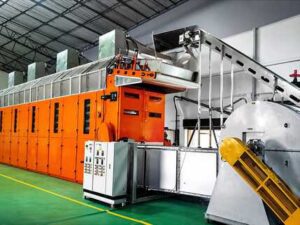
A Continuous Mesh Belt Dryer processes materials via a continuous perforated stainless steel mesh conveyor belt. This belt carries wet agricultural produce smoothly through insulated drying tunnels. Heated air passes through the product bed in updraft or downdraft airflow configurations. Furthermore, variable speed drives allow operators to adjust retention times dynamically based on incoming crop moisture.
Specifically, wet material enters via a feed chute onto the stainless steel belt moving inside an insulated tunnel. Blowers supply heated air through the moving bed to remove moisture continuously. Meanwhile, top vents exhaust or recirculate humid air before the dried product reaches the discharge outlet. Because the product bed remains undisturbed on the belt surface, this system eliminates mechanical damage. Therefore, belt dryers suit delicate sliced or diced produce exceptionally well.
Construction Specifications
-
Mesh Belt: High-tensile SS304 or SS316 stainless steel wire mesh featuring balance-weave or rod-reinforced construction. Edge-chain drives prevent belt tracking misalignment during continuous operation.
-
Chamber Enclosure: Modular 50 mm to 100 mm thick high-density rockwool insulated panels. These panels sit between stainless steel inner skirts and rigid outer skins to prevent thermal losses.
-
Air Delivery: Direct-drive centrifugal or axial blowers paired with air distribution plenum chambers. Perforated diffuser plates guarantee uniform face velocity across the entire belt width.
Multi-Zone Airflow Management
Modern industrial belt dryers feature distinct, independently controlled heating zones. In Zone 1, hot air at 85 degrees Celsius to 95 degrees Celsius rapidly evaporates surface moisture using high airflow velocity. Consequently, this rapid initial moisture reduction maximizes plant throughput while preventing case hardening.
As the product moves into Zone 2 and Zone 3, air temperatures drop to 60 degrees Celsius to 70 degrees Celsius. In addition, variable drives extend retention time. Consequently, this lower temperature prevents surface scorching and sugar caramelization during the falling rate period. Ultimately, multi-zone control yields exceptional product color and uniform final moisture.
Applications & Ideal Materials
-
Onion flakes and dices
-
Garlic flakes
-
Potato cubes and strips
-
Dehydrated carrot dices
-
Sliced mushrooms
2. Multi-Stage Continuous Band & Combination Fluid Bed Dryer
Working Principle & Mechanical Design
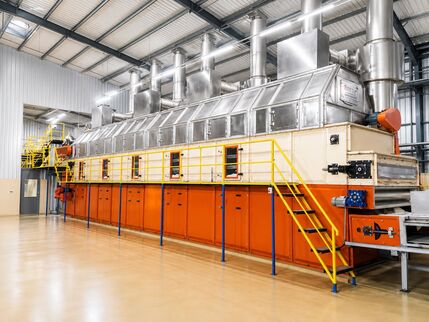
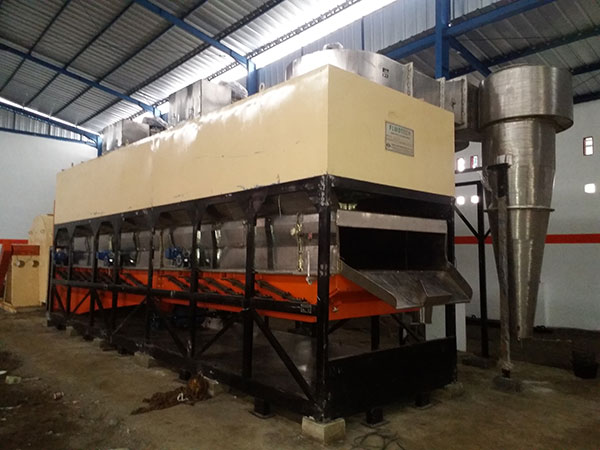
Multi-Stage Band Dryers feature multiple conveyor bands stacked vertically inside a single insulated enclosure. Processors often call these units Multi-Pass or Multi-Tier Band Dryers. This vertical arrangement maximizes total drying surface area while minimizing factory floor footprint. For specialty products requiring complete moisture uniformity, installing a hybrid Combination Fluid Bed Dryer or secondary Vibratory Fluidised Bed Dryer ensures no wet pockets remain in the product core.
In a typical three-tier layout, raw material enters through a feed hopper onto the top band. As the product moves forward, it reaches the end of the top stage and tumbles gently onto the counter-rotating middle band directly beneath it. Afterwards, the material continues its journey along the middle tier before dropping to the lower section.
Finally, the product drops onto the bottom band for final drying and conditioning before exiting through the discharge outlet. This gentle tumbling action breaks up agglomerated product clumps effectively. Furthermore, it exposes unexposed surfaces to heat and flips product orientation to ensure uniform moisture removal across all layers.
Tier Dynamics & Airflow Options
-
3-Stage / 5-Stage Configurations: The top stage functions as a fast-evaporation zone operating at higher temperatures with a deeper bed height. Middle stages operate at intermediate temperatures for internal moisture diffusion. Finally, the bottom stage serves as a conditioning and cooling zone.
-
Reversible & Variable Speed Drives: Variable Frequency Drives control the speed of each individual tier independently. Consequently, operators can increase bed depth easily as the material shrinks and loses volume.
Energy Recovery Integration
Exhaust air recirculation optimizes overall energy performance significantly. Fans redirect hot, partially saturated exhaust air from final conditioning stages back to the primary heating stage air intake. As a result, the system reclaims significant thermal energy that would otherwise escape into the atmosphere.
In addition, heat recovery exchangers capture sensible heat from the final exhaust stream to preheat incoming fresh ambient air. As a result, this integrated system reduces overall thermal energy consumption by 20% to 35%. Consequently, factory owners lower their daily operational fuel expenses substantially.
Applications & Ideal Materials
-
Dehydrated cabbage shreds
-
Sliced green and red bell peppers
-
Dehydrated blanched green peas
-
High-volume cassava and potato flakes
-
Chopped leafy greens
3. Industrial Heat Pump Dryer
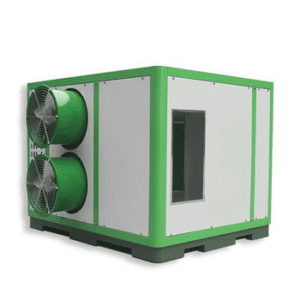
Thermodynamic Cycle & Energy Efficiency
An industrial Heat Pump Dryer operates using a closed-loop refrigeration cycle combined with dehumidification mechanics. Inside the closed drying chamber, moist air from the product trays or conveyor passes through the heat pump evaporator coil. Because the system recycles internal air, it remains completely independent of external ambient weather conditions.
The coil cools the air below its dew point, causing moisture to condense rapidly as liquid water. Next, the cold, dry air passes through the heat pump condenser coil. The condenser reheats the air before circulating it back into the drying chamber as warm, ultra-low humidity air. Consequently, this continuous dehumidification process strips moisture efficiently without subjecting produce to high temperatures.
Low-Temperature Drying Capabilities
Heat pump dryers operate efficiently at low temperatures between 35 degrees Celsius and 55 degrees Celsius. Consequently, they eliminate thermal degradation entirely. This feature makes heat pumps particularly suited for valuable horticultural crops with delicate aromatic profiles.
This low-temperature operating profile preserves sensitive nutrients like Vitamin C remarkably well. Furthermore, it prevents volatile aromatic compounds from evaporating and maintains vivid natural chlorophyll, carotenoid, and anthocyanin pigments. Therefore, finished dried products retain their farm-fresh visual appeal and natural flavor intensity.
Energy Performance & COP Calculations
The Coefficient of Performance of an industrial heat pump dryer represents the ratio of thermal energy delivered to the electrical energy consumed by the compressor. To calculate this value, divide the heat delivered to the drying air by the electrical energy input.
Conventional electric resistance air heaters exhibit an equivalent Coefficient of Performance of 1.0, where 1 kilowatt-hour of electricity yields 1 kilowatt-hour of heat. Conversely, industrial heat pump systems achieve Coefficient of Performance ratings between 3.5 and 5.0. Therefore, this efficiency delivers electrical energy savings of 60% to 75% compared to conventional direct-electric thermal dryers.
Applications & Ideal Materials
-
Premium fruit slices (apple, banana, mango, papaya)
-
Sensitive berries (strawberries, blueberries)
-
High-value medicinal herbs and leafy greens
-
Citrus peels and slices
-
Delicate mushrooms
4. Industrial Tray Dryer
Batch Operation & Air Circulation
Industrial Tray Dryers feature insulated cabinets loaded with removable stainless steel or food-grade composite trays. Internal motor-driven axial blowers force heated air across the surface of the product trays in a cross-flow pattern. Furthermore, adjustable dampers allow precise regulation of fresh air intake and exhaust ratios.
Inside the cabinet, blowers drive air past heating elements and through adjustable baffles. These baffles channel hot air evenly across stacked product trays. Meanwhile, air return ducts recirculate warm air back to the heater assembly for efficient batch drying. Consequently, this cross-flow circulation ensures consistent drying rates across every shelf in the cabinet.
Cabinet Construction & Specifications
-
Capacity Variations: Standard industrial designs accommodate 24, 48, 96, and 192 trays. Total surface areas scale from 10 to 80 square meters.
-
Tray Design: Manufacturers build trays using food-grade SS304 or SS316 stainless steel. Trays feature solid bottoms for liquid pastes or micro-perforated mesh surfaces for solid diced produce.
-
Thermal Insulation: High-density polyurethane foam or mineral rockwool insulation minimizes radiant casing losses. Thus, outer skin temperatures remain close to ambient levels.
Operational Trade-Offs
-
Advantages: Low capital cost, simple operation, high operational flexibility across small batch sizes, and easy validation for multi-product facilities.
-
Limitations: High labor demands for tray loading and cleaning, greater potential for batch-to-batch variation, and higher energy consumption per kilogram of water evaporated compared to continuous systems.
Applications & Ideal Materials
-
Small-scale specialty fruit leathers
-
Low-volume herbal and botanical drying
-
Pilot plant R&D testing
-
Specialty spiced vegetable powders
5. Refractance Window Dryer
Conductive, Convective, and Radiative Mechanics
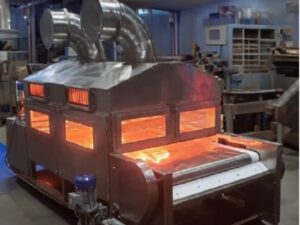
Refractance Window Drying functions as a continuous, low-temperature drying technology designed specifically for liquid feeds, purees, slurries, and pastes. Explore our complete range of specialized Industrial Dryers to learn more about continuous thin-film thermal processing options.
In a Refractance Window Dryer, an applicator spreads liquid puree as an ultra-thin film onto a moving polyolefin belt. This belt floats directly on a circulating hot water trough maintained at 85 degrees Celsius to 95 degrees Celsius.
The hot water transfers heat rapidly to evaporate moisture from the product. Meanwhile, an exhaust hood sweeps away water vapor before a doctor blade scrapes dry flakes off the belt at the discharge end. Consequently, the material transforms from a liquid slurry to a dry flake within minutes.
Thermal energy transfer occurs through three synchronized mechanisms:
-
Conduction: Rapid heat conduction moves from the circulating hot water directly through the ultra-thin plastic film into the wet product layer.
-
Radiation: Infra-red radiation emitted by the hot water passes through the film. This radiation matches the absorption spectrum of liquid water perfectly. When liquid water is present, it absorbs this radiative energy efficiently, opening the refractance window. As the product dries, its refractive index changes, which closes the thermal window and prevents overheating.
-
Convection: Cross-flow exhaust air flowing above the product bed sweeps away evaporated water vapor continuously.
Retaining Bio-Active Compounds and Color
The Refractance Window drying process is exceptionally rapid, taking only 3 to 5 minutes to dry thin films completely. Furthermore, evaporative cooling keeps the actual product temperature well below 65 degrees Celsius.
Consequently, heat-induced degradation remains minimal. Refractance Window Drying preserves sensitive functional compounds, such as Vitamin C, betalains, carotenoids, and natural aromatics, matching freeze-drying quality at a fraction of the operating cost. Furthermore, finished flakes exhibit instant solubility upon rehydration in water.
Applications & Ideal Materials
-
Tomato paste drying for tomato powder
-
Fruit purees (mango, banana, papaya, apple)
-
Beetroot and carrot juice concentrates
-
Spinach and leafy green purees
-
Algae and spirulina slurries
6. Industrial Spray Dryer
Atomization Mechanics
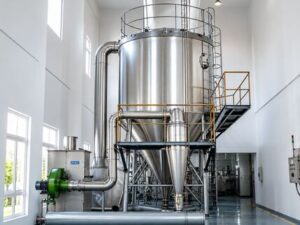
Industrial Spray Dryer systems convert pumpable liquid feeds, emulsions, and slurries into fine, free-flowing powders in a single continuous step. This rapid transformation occurs inside a tall cylindrical drying chamber designed for sanitary operation.
A feed pump transfers liquid to an atomizer nozzle or rotary wheel located at the top of a tall drying tower. Hot inlet air contacts atomized droplets immediately, evaporating moisture instantaneously. Finally, the dried powder settles into the lower cone, where high-efficiency cyclone separators collect it cleanly.
Engineers achieve atomization using two main methods:
-
Rotary Wheel Atomizers: High-speed rotating discs operating between 10,000 and 25,000 RPM create fine droplet sprays suitable for high-viscosity feeds.
-
Two-Fluid or Pressure Nozzles: High-pressure hydraulic nozzles break liquid feeds into fine droplet clouds with controlled particle size distributions, typically ranging from 20 to 150 microns.
Flash Evaporation Dynamics
The atomized droplet cloud enters a high-velocity stream of hot air at inlet temperatures ranging from 150 degrees Celsius to 220 degrees Celsius. Because tiny droplets offer a vast surface-area-to-volume ratio, moisture evaporates instantaneously within seconds.
Simultaneously, evaporative cooling keeps the core temperature of individual powder particles substantially lower than the hot inlet air temperature. Thus, this process protects functional nutrients before the powder falls to the collection cone. Consequently, spray dryers produce uniform, free-flowing powders suitable for instant beverage mixes and industrial seasonings.
Applications & Ideal Materials
-
Instant vegetable powders (tomato, garlic, onion)
-
Fruit juice powders (citrus, pineapple, passionfruit)
-
Plant protein isolates and hydrolysates
-
Maltodextrin-encapsulated flavor powders
-
Herbal and botanical extracts
Comprehensive Dehydration Analysis: Fruits
Processing Mangoes (Mangifera indica)
Raw Material Preparation
Operators wash ripe, firm mangoes, such as Alphonso, Totapuri, or Kesar varieties, in sanitized water baths containing 100 parts per million active chlorine to eliminate surface pathogens. Next, technicians mechanically peel, de-stone, and slice the mangoes into uniform strips measuring 5 mm to 8 mm thick. Alternatively, high-speed pulpers process the fruit into smooth, unpasteurized puree.
Dehydration Parameters
Processors dry sliced mangoes in industrial Heat Pump Dryer units or Multi-Zone Continuous Mesh Belt Dryer systems. Air temperatures remain at 55 degrees Celsius to 65 degrees Celsius for 10 to 14 hours. This process reduces moisture content from an initial 80% to 85% down to a shelf-stable 8.0% to 12.0%. Consequently, the resulting mango slices maintain a desirable chewy texture without becoming excessively brittle.
On the other hand, technicians dehydrate mango puree via Refractance Window Dryers at a 70 degrees Celsius water temperature for 4 minutes. Alternatively, they spray-dry puree using an industrial Spray Dryer with maltodextrin carriers at 10% to 15% concentration by weight with an inlet air temperature of 170 degrees Celsius. As a result, this process yields instant mango powder suitable for confectionery formulations.
Pre-Treatments & Dryer Selection
To preserve vibrant natural orange-yellow colors and prevent browning, mango slices undergo immersion blanching or dipping in a 0.5% potassium metabisulfite or 1.0% citric acid solution for 3 to 5 minutes prior to dryer loading.
Heat Pump Dryers are ideal for high-value mango slices due to superior color and flavor retention. Conversely, Refractance Window Dryers excel at producing 100% pure mango flakes and powders continuously without carrier additives.
Processing Bananas (Musa acuminata)
Raw Material Preparation
Commercial processors harvest bananas at full maturity at the green stage for banana flour or starch production. Alternatively, they harvest fruit at stage 5 to 6 ripening, featuring yellow skin with green tips, for banana chips and sweet fruit slices. Operators peel the bananas, slice them into 3 mm to 5 mm discs, and treat them immediately to prevent surface oxidation.
Dehydration Parameters
Technicians dry ripe slices in Multi-Stage Band Dryers at 60 degrees Celsius to 70 degrees Celsius for 8 to 10 hours. This step reduces initial moisture from 74% to 78% down to 6.0% to 8.0%. Consequently, the dried banana slices achieve an extended shelf life while maintaining natural sweetness.
Meanwhile, processors run green banana starch through continuous flash dryers or belt dryers at 75 degrees Celsius. Consequently, this yields low-moisture starch powders containing less than 10% moisture. As a result, green banana flour serves as a valuable gluten-free ingredient for the bakery sector.
Anti-Browning Protocols & Dryer Selection
Untreated banana slices undergo rapid enzymatic browning catalyzed by polyphenol oxidase enzymes. Therefore, workers immerse slices in an anti-browning solution containing 1.5% ascorbic acid and 1.0% citric acid. Alternatively, they steam-blanch slices at 95 degrees Celsius for 90 seconds to denature browning enzymes prior to drying.
Multi-Stage Band Dryers provide high-throughput continuous processing for commercial banana chips. Meanwhile, Heat Pump Dryers work best for premium, non-browned soft-chew banana slices.
Processing Pineapples (Ananas comosus)
Raw Material Preparation
Workers core, trim, peel, and slice fresh pineapples into rings measuring 8 mm thick or segment dices measuring 10 mm by 10 mm. Pineapples contain high initial sugar levels of 12 to 16 degrees Brix alongside high organic acid levels. Therefore, processing requires precise thermal management to prevent sugar melting and burning.
Dehydration Parameters
Processors dry pineapple rings and dices in Multi-Zone Belt Dryers or Industrial Heat Pump Dryer equipment at 50 degrees Celsius to 60 degrees Celsius for 12 to 16 hours. Consequently, initial moisture of 84% to 88% drops to a target level of 8.0% to 10.0%. Furthermore, careful humidity control prevents caramelization along ring edges.
Alternatively, technicians process pineapple juice concentrate in an industrial Spray Dryer using maltodextrin carriers. They set the inlet temperature to 160 degrees Celsius and outlet temperature to 80 degrees Celsius to yield free-flowing juice powder. As a result, the juice powder retains its characteristic tropical acidity and aroma.
Managing Hygroscopicity & Dryer Selection
High natural fructose and glucose levels lower the glass transition temperature of dried pineapple, making it highly hygroscopic. Therefore, processing rooms must maintain low relative humidity under 35% at 20 degrees Celsius to prevent powder caking and surface stickiness during discharge and packaging.
Heat Pump Dryers are superior for pineapple rings and dices because they prevent browning and retain natural tangy aromatics. Meanwhile, Spray Dryers with Fluidized Bed Coolers serve as the industry standard for instant pineapple juice powders.
Processing Papayas (Carica papaya)
Raw Material Preparation
Technicians select semi-ripe papayas with firm flesh, peeling, deseeding, and cutting them into 6 mm to 10 mm cubes or elongated strips. In addition, factories process raw green papaya extensively for raw papain enzyme recovery and dehydrated vegetable applications.
Dehydration Parameters
Processors dehydrate papaya dices in Continuous Mesh Belt Dryer processing lines starting at 65 degrees Celsius in Zone 1 and stepping down to 50 degrees Celsius in Zone 2. Over an 8 to 12-hour cycle, initial moisture of 88% to 92% drops down to 9.0% to 11.0%. Consequently, the diced papaya maintains uniform shape and vibrant orange coloration.
Conversely, green papaya strips dry faster at 70 degrees Celsius down to 6.0% moisture. As a result, dehydrated green papaya serves as a durable raw material for industrial pectin extraction and culinary ingredients.
Preservation Techniques & Dryer Selection
Immersing papaya pieces in a 0.5% calcium chloride solution for 10 minutes strengthens the pectin matrix in cell walls. As a result, this treatment prevents structural collapse and mushy textures during dehydration.
Continuous Mesh Belt Dryers provide optimal volumetric throughput for diced papaya. Meanwhile, Heat Pump Dryers are preferred for high-value sweet papaya strips intended for trail mix applications.
Processing Apples (Malus domestica)
Raw Material Preparation
Operators wash, core, peel, and slice firm apples, such as Granny Smith, Fuji, or Himachal Delicious varieties, into 4 mm rings or 6 mm dices. Rapid mechanical processing minimizes ambient exposure to oxygen, preventing surface discoloration.
Dehydration Parameters
Technicians process apple rings through Continuous Band Dryers at 65 degrees Celsius to 75 degrees Celsius for 4 to 6 hours. High airflow velocities of 1.5 to 2.5 meters per second accelerate moisture loss during the constant rate drying period. Consequently, initial moisture falls from 83% to 86% down to 5.0% to 7.0%, producing a crisp texture.
Enzymatic Control & Dryer Selection
Apple tissue suffers from rapid polyphenol oxidase enzymatic action when cut. Therefore, workers convey slices immediately through a dip tank containing 1.0% salt, 1.0% citric acid, and 0.2% ascorbic acid. Alternatively, they subject slices to short steam blanching at 98 degrees Celsius for 60 seconds.
Continuous Multi-Pass Band Dryers are ideal for large-scale production of dried apple rings and snack dices due to consistent air distribution and continuous volume handling.
Processing Citrus Fruits (Citrus sinensis, Citrus limon)
Raw Material Preparation
Factories process oranges, lemons, and limes into distinct product fractions: whole ring slices, peel strips, or extracted liquid juices. Technicians cut ring slices uniformly to 3 mm to 5 mm thickness.
Dehydration Parameters
Processors dehydrate citrus slices and peels in a low-temperature Heat Pump Dryer at 40 degrees Celsius to 50 degrees Celsius for 14 to 18 hours. This low heat preserves volatile essential oils like d-limonene while dropping initial moisture from 86% to 90% down to 4.0% to 6.0%. Consequently, the dried peels retain high commercial value for beverage infusions and flavor extraction.
Alternatively, technicians spray-dry citrus juices using a high-efficiency Spray Dryer with carrier matrices at inlet temperatures of 150 degrees Celsius to 165 degrees Celsius, yielding instant soluble powders with 3.0% to 5.0% moisture. As a result, beverage manufacturers utilize these powders as stable natural flavor bases.
Preserving Volatiles & Dryer Selection
Temperatures above 65 degrees Celsius cause rapid volatilization of essential oils and thermal degradation of citrus flavonoids, resulting in off-flavors and bitter taste profiles. Therefore, low-temperature dehumidified drying is critical.
Heat Pump Dryers are essential for whole citrus slices and peels to protect natural aromatics. Meanwhile, Spray Dryers are required for continuous processing of soluble citrus juice powders.
Processing Berries (Strawberries, Blueberries, Mulberries)
Raw Material Preparation
Workers sort whole fresh berries to remove damaged fruit, washing them gently in sanitized water. They leave blueberries and mulberries whole, but cut strawberries into halves or discs. Whole berries featuring waxy skin cuticles undergo physical micro-perforation or thermal skin-checking to improve moisture permeability.
Dehydration Parameters
Technicians process berries in Industrial Heat Pump Dryer systems operating between 35 degrees Celsius and 50 degrees Celsius for 18 to 24 hours. Alternatively, they convert berries into fruit purees for Refractance Window Drying at 65 degrees Celsius for 5 minutes. Consequently, initial moisture of 85% to 89% falls down to 8.0% to 10.0%.
Color Preservation & Dryer Selection
Anthocyanin pigments responsible for vibrant red and blue hues degrade rapidly at elevated temperatures. Low-temperature heat pump drying or rapid Refractance Window conductive drying retains anthocyanin levels above 90% while maintaining structural integrity. Furthermore, these drying methods prevent flavor loss and shrinkage.
Heat Pump Dryers are optimal for whole and sliced berries. Meanwhile, Refractance Window Dryers excel at producing berry powders and flakes from high-moisture purees.
Comprehensive Dehydration Analysis: Vegetables
Processing Onions (Allium cepa)
Raw Material Preparation
Operators select white or red onion cultivars containing high total soluble solids above 15 degrees Brix. Workers root-trim, mechanically peel, and slice the onions into uniform flakes measuring 3 mm to 5 mm thick or dice them into 6 mm cubes.
Dehydration Parameters
Technicians process onion flakes through 3-Stage Continuous Band Dryers using distinct temperature zones:
-
1: 80 degrees Celsius to 85 degrees Celsius for rapid surface evaporation.
-
2: 65 degrees Celsius to 70 degrees Celsius for internal moisture diffusion.
-
3: 55 degrees Celsius for final conditioning down to a target moisture of 4.0% to 5.0% from an initial 85% to 88%.
Consequently, this stepped thermal approach minimizes fuel consumption while ensuring pristine white or pink flake coloration.
Quality Control & Dryer Selection
Onion flavor depends on the enzymatic conversion of alliin precursors to volatile organosulfur compounds by the alliinase enzyme. Temperatures above 90 degrees Celsius denature alliinase, reducing flavor pungency. Furthermore, maintaining dry-bulb temperatures below 60 degrees Celsius during final drying prevents pink discoloration.
Multi-Stage Continuous Band Dryers represent the industry standard for high-tonnage onion dehydration plants due to their continuous volume output and zoned temperature control.
Processing Garlic (Allium sativum)
Raw Material Preparation
Machinery cracks garlic bulbs into individual cloves. Next, air aspirators remove papery skins before workers root-trim and slice the cloves into 2 mm to 3 mm thick flakes or process them into granules and powders.
Dehydration Parameters
Technicians dry garlic slices in a Continuous Mesh Belt Dryer operating at 50 degrees Celsius to 70 degrees Celsius for 6 to 8 hours. Consequently, this step reduces initial moisture from 65% to 70% down to 4.5% to 5.5%. As a result, the dehydrated garlic flakes maintain high pungent oil concentrations suitable for seasoning blends.
Allicin Retention & Dryer Selection
Allicin serves as the primary active flavor compound in garlic. Because allicin is heat-labile, maintaining processing temperatures below 65 degrees Celsius preserves alliinase activity, ensuring high allicin yield upon rehydration.
Continuous Mesh Belt Dryers built with SS316 stainless steel contact surfaces are optimal for preventing flavor cross-contamination and preserving essential garlic oils.
Processing Tomatoes (Solanum lycopersicum)
Raw Material Preparation
Factories process ripe red tomatoes into two distinct product streams: solid halved or diced tomatoes, or concentrated tomato paste at 28 to 30 degrees Brix for powder production.
Dehydration Parameters
Technicians process diced tomatoes in Multi-Zone Belt Dryers at 65 degrees Celsius to 75 degrees Celsius for 10 to 14 hours down to 5.0% moisture from an initial 93% to 95%. Consequently, diced tomatoes retain their deep red color and firm structural integrity.
Conversely, operators dry concentrated tomato paste via an industrial Spray Dryer at inlet temperatures of 160 degrees Celsius to 180 degrees Celsius and outlet temperatures of 80 degrees Celsius. Alternatively, they use Refractance Window Dryers at hot water temperatures of 85 degrees Celsius, producing 100% pure tomato powder with 3.0% to 5.0% final moisture.
Lycopene Protection & Dryer Selection
Lycopene, the principal carotenoid pigment in tomatoes, suffers from oxidative degradation and thermal damage at high heat. Low-oxygen environments or rapid Refractance Window processing retains lycopene concentration above 85%.
Refractance Window Dryers excel at producing pure, additive-free tomato powder directly from paste. Meanwhile, Spray Dryers are preferred for high-volume commercial tomato powder lines utilizing carrier bases.
Processing Potatoes (Solanum tuberosum)
Raw Material Preparation
Workers wash, steam-peel, and inspect potatoes for green spots before cutting them into 10 mm cubes, 3 mm french fry strips, or thin slices.
Dehydration Parameters
Technicians process potato dices through Multi-Pass Continuous Band Dryers. Initial drying occurs at 85 degrees Celsius in Zone 1, stepping down to 60 degrees Celsius in Zone 2. This temperature step drops initial moisture from 78% to 82% down to 6.0% to 8.0% over 4 to 6 hours. As a result, the finished potato dices rehydrate rapidly in instant soup formulations.
Starch Control & Dryer Selection
Workers steam-blanch potatoes at 90 degrees Celsius to 95 degrees Celsius for 3 to 5 minutes prior to drying. Blanching gelatinizes surface starches, inactivates polyphenol oxidase enzymes, and flushes out excess reducing sugars that cause Maillard browning and dark discoloration.
Multi-Pass Continuous Band Dryers provide the high throughput and structural agitation required for industrial potato dice and chip processing lines.
Processing Carrots (Daucus carota)
Raw Material Preparation
Operators wash, mechanically peel, and trim fresh orange carrots before cutting them into 6 mm or 10 mm dices, shreds, or cross-cut coins.
Dehydration Parameters
Technicians dehydrate carrot pieces in a Continuous Mesh Belt Dryer at 60 degrees Celsius to 75 degrees Celsius for 6 to 8 hours. Consequently, initial moisture of 87% to 90% drops down to 5.0% to 6.5%. As a result, dehydrated carrot dices retain high concentrations of naturally occurring beta-carotene.
Carotenoid Retention & Dryer Selection
Carrots contain high levels of alpha and beta-carotene. Therefore, workers steam-blanch slices at 95 degrees Celsius for 2 minutes and dip them in a 0.2% sodium metabisulfite solution to inhibit carotenoid oxidation during thermal processing.
Continuous Mesh Belt Dryers provide consistent heat transfer and uniform moisture reduction across diced carrot beds.
Processing Green Peas (Pisum sativum)
Raw Material Preparation
Machines vine, clean, size-grade, and density-sort sweet green peas to remove damaged or over-mature pods.
Dehydration Parameters
Technicians dry green peas in Multi-Stage Band Dryers at 60 degrees Celsius to 80 degrees Celsius for 5 to 7 hours, lowering initial moisture from 78% to 82% down to 5.0% to 6.0%. Consequently, the dried peas exhibit superior rehydration properties when soaked in warm water.
Pricking Mechanics & Dryer Selection
Peas possess a tough outer seed coat that acts as a barrier to moisture vapor transfer, leading to skin rupture during drying. Therefore, peas pass through needle-pricking rollers to create microscopic skin punctures. Next, workers steam-blanch them at 98 degrees Celsius with 0.1% sodium bicarbonate added to preserve green chlorophyll.
Multi-Stage Band Dryers are ideal because gentle tumbling between tiers exposes puncture sites to circulating air, ensuring high rehydration ratios.
Processing Cabbage (Brassica oleracea)
Raw Material Preparation
Workers core fresh green cabbage heads, remove outer damaged leaves, and mechanically shred the heads into 3 mm to 5 mm wide shreds.
Dehydration Parameters
Technicians dry cabbage shreds in Multi-Pass Band Dryers operating at 55 degrees Celsius to 70 degrees Celsius for 5 to 7 hours. Consequently, initial moisture of 91% to 93% drops down to 4.0% to 5.0%. As a result, dehydrated cabbage shreds retain clean, light-green visuals without scorching.
Scorching Prevention & Dryer Selection
Due to the low bulk density and thin geometry of cabbage shreds, high air velocities can blow light particles onto heating coils, causing scorching. Therefore, operators throttle air velocities to 1.0 to 1.2 meters per second and maintain bed depth above 50 mm.
Multi-Pass Continuous Band Dryers provide uniform airflow distribution, preventing localized hot spots and product scorching.
Processing Beetroot (Beta vulgaris)
Raw Material Preparation
Workers wash and steam-peel deep red beetroots before cutting them into 6 mm dices, 3 mm shreds, or pressing them for concentrated juice powder production.
Dehydration Parameters
Technicians process beetroot dices and shreds in a Mesh Belt Dryer at 55 degrees Celsius to 75 degrees Celsius for 6 to 8 hours down to 4.5% to 5.5% moisture from an initial 86% to 89%.
Conversely, operators dry beetroot juice in Refractance Window Dryers at 75 degrees Celsius water temperature, or an industrial Spray Dryer at 160 degrees Celsius inlet temperature, yielding red colorant powders with 3.0% to 5.0% moisture. Consequently, food manufacturers utilize these powders as clean-label natural red colorants.
Pigment Stability & Dryer Selection
Betanin pigments decompose rapidly when exposed to temperatures above 75 degrees Celsius in high-moisture environments. Therefore, strict temperature limits preserve deep natural red hues.
Refractance Window Dryers are best for 100% natural red beetroot colorant powders. Meanwhile, Continuous Mesh Belt Dryers are preferred for diced beetroot.
Processing Leafy Vegetables (Spinach, Moringa, Fenugreek, Coriander)
Raw Material Preparation
Workers harvest, destem, and wash leafy greens in multi-stage bubble washers to remove silt and field debris before draining them via centrifugal air-knives.
Dehydration Parameters
Technicians process leafy greens in an Industrial Heat Pump Dryer at low temperatures from 40 degrees Celsius to 55 degrees Celsius for 8 to 12 hours. Alternatively, they use a Continuous Mesh Belt Dryer at 55 degrees Celsius for 3 to 4 hours, bringing initial moisture from 90% to 94% down to 4.0% to 5.0%. Consequently, the resulting dried leaves crumble easily into fine powders or remain intact as whole dried herbs.
Chlorophyll Preservation & Dryer Selection
Chlorophyll molecules convert to dull brown pheophytin when exposed to heat and acid. Therefore, low-temperature dehumidified drying preserves intact chlorophyll matrices, keeping dried greens bright and fresh.
Industrial Heat Pump Dryers are superior for retaining bright green colors, delicate leaf structures, and volatile herbal aromas.
Turnkey Dehydration Plant Engineering & Ancillary Systems
Building a commercial fruit and vegetable dehydration plant requires integrated material handling and pre-processing systems upstream, alongside environmental controls downstream. Explore our full catalog of Industrial Dryers to learn how auxiliary equipment pairs with primary drying chambers. Without properly matched ancillary machinery, overall plant efficiency drops significantly.
Processing starts at raw receiving, moving through bubble washing, peeling and trimming, precision slicing or dicing, steam blanching, and de-watering air knives before entering the main industrial dryer. Following dehydration, products move through cooling conveyors, optical sorting, and automated cleanroom packaging lines.
Upstream Pre-Processing Equipment
-
Bubble & Drum Washers: Multi-stage hydraulic washing tanks utilizing high-pressure air agitation bubbles and rotary drums to remove field soil, pesticide residues, and surface debris.
-
Mechanical Peelers & Cutters: Precision abrasive or steam peelers paired with high-speed rotary slicers, dicers, and shredders designed for uniform dimensional tolerances within a 1.0 mm variance, ensuring predictable drying rates.
-
Blanching Systems: Continuous steam or hot-water blanching tunnels equipped with variable-speed screw or belt conveyors, water chemistry dosing pumps, and temperature controllers with a precision tolerance of 0.5 degrees Celsius.
-
De-watering Air Knives: High-velocity air knives positioned over perforated vibratory screens to sweep surface water droplets off blanched produce prior to dryer entry, reducing thermal loads on the drying chamber.
Downstream Conditioning & Packaging
-
Cooling Conveyors: Ambient or chilled air cooling belts that reduce product temperatures below 30 degrees Celsius immediately upon dryer discharge, preventing moisture migration and condensation inside collection hoppers.
-
Optical Sorting & Sifting: Multi-camera color sorters and gyratory sifters that detect and eject discolored pieces, burnt edges, clumped particles, and off-spec fines.
-
HVAC Cleanroom & Packaging: Secondary conditioning rooms maintained at 20 degrees Celsius and under 30% Relative Humidity. Moisture-proof packaging machinery seals finished products into nitrogen-flushed multi-layer aluminum foil pouches or barrier drums.
Interactive Equipment Selection & Operating Cost Calculator
Use the interactive calculator below to model daily processing capacities, moisture evaporation requirements, heating fuel options, and estimated thermal operating costs for commercial fruit and vegetable dehydration lines.
Conclusion & Call-to-Action
Commercial fruit and vegetable dehydration represents a profitable sector in India’s modern food processing landscape. However, transitioning from raw agricultural produce to export-grade dehydrated flakes, dices, and powders requires precise thermal engineering. Matching raw material characteristics with appropriate equipment—whether continuous mesh belt dryers, multi-stage band systems, low-temperature heat pump units, rapid spray dryers, or hygienic refractance window installations—is essential to guarantee high product quality, maximum nutrient retention, low energy consumption, and high profitability.
Genex Tech Industries LLP stands at the forefront of industrial dehydration engineering in India. Backed by over four decades of process expertise, ISO 9001:2015 accreditation, and advanced manufacturing capabilities, we engineer turnkey dehydration plants tailored to your specific product requirements and production targets. From initial laboratory trial testing and pilot plant verification to full-scale fabrication, installation, and commissioning, our engineering team provides complete support across your project lifecycle.
Partner with India’s Premier Dehydration Engineering Experts
Contact our technical sales team today to schedule a comprehensive process consultation, request equipment pricing, or arrange pilot-scale product drying trials at our facility.