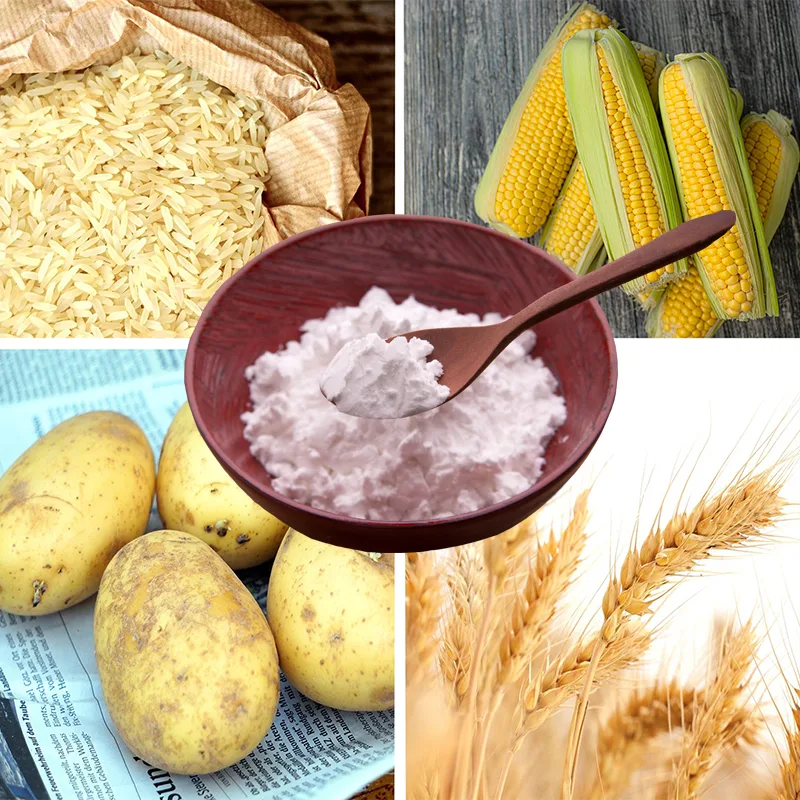
Processing native and modified starches into shelf-stable, high-purity industrial powders represents one of the most critical thermal engineering operations in modern process manufacturing. Native starches extracted from corn, potato, cassava, and rice, alongside complex chemically and physically modified starch derivatives, require precise thermal treatment. Operators must eliminate moisture without compromising molecular structure, viscosity, or binding characteristics.
Consequently, industrial processing facilities must carefully evaluate thermal dehydration technologies to select the exact drying system suited for each starch variant. Because different starch formulations exhibit distinct gelatinization temperatures, particle dimensions, fiber counts, and moisture binding behaviors, operators cannot run a single drying setup across all formulations. Selecting between pneumatic Flash Dryers, Vibratory Fluidised Bed Dryers, Mesh Belt Dryers, Rotary Drum Dryers, and Combination Fluid Bed Dryers directly impacts final powder purity, solubility, bulk density, operational energy consumption, and thermal efficiency. Furthermore, establishing seamless transitions between processing phases ensures maximum operational stability across the entire manufacturing line. Additionally, aligning equipment parameters with specific starch rheology eliminates downtime during continuous industrial production.
Technical Dehydration Profiles: Native, Modified, Food-Grade, and Industrial Starches
To engineer an optimized thermal dehydration layout, process operators must first evaluate the physical, structural, and moisture properties of specific starch feedstocks. Furthermore, understanding how moisture behaves within different botanical matrices enables plant managers to implement precise heat and airflow adjustments across every processing stage. In addition, analyzing these baseline parameters ensures that operators keep thermal exposure strictly within safe operational boundaries. Furthermore, evaluating these properties prevents unexpected phase changes during thermal treatment. Subsequently, mapping these baseline metrics allows engineers to establish ideal operational windows. Consequently, plant teams optimize thermal efficiency while fully preserving product integrity.
Starch Feedstock Classification
-
Native Starches: Includes Corn Starch, Potato Starch, Cassava or Tapioca Starch, and Rice Starch.
-
Modified Starches: Includes Cross-linked starches, Hydroxypropylated starches, Pre-gelatinized formulations, and Acid-thinned starches.
-
Specialty Formulations: Includes Food-Grade Formulations and Industrial-Grade Powders.
1. Corn Starch Processing
Wet milling extracts corn starch, yielding an aqueous slurry or dewatered filter cake with an initial moisture content ranging from 35% to 45%. Corn starch granules are relatively uniform, measuring between 5 and 25 microns in diameter, with a gelatinization onset temperature of approximately 62°C to 72°C. Fast moisture removal prevents heat-induced swelling and premature gelatinization. Thermal processing typically targets a final moisture content between 10% and 12%, ensuring long-term microbial stability and preventing caking during bulk packaging.
Furthermore, maintaining consistent feeder speed ensures an uninterrupted stream into the drying chamber. Meanwhile, continuous air temperature monitoring prevents localized thermal degradation during sudden throughput changes. Additionally, controlling upstream feed consistency stabilizes internal chamber pressures. Subsequently, uniform heat distribution minimizes variation in final moisture content across batches. As a result, product quality remains consistently high throughout continuous operations.
2. Potato Starch Dehydration
Potato starch features large granule sizes, ranging from 15 to 100 microns, resulting in a high water-binding capacity. Extracted wet potato starch cakes contain 38% to 48% moisture. Furthermore, potato starch possesses a lower gelatinization temperature threshold, starting around 58°C to 65°C, making it exceptionally heat-sensitive. Thermal processing must gently lower moisture levels down to 16% to 18% without fracturing large granules or triggering paste formation, which would degrade its unique viscosity and gel-strength characteristics.
Consequently, operators must run low-shear mechanical transport throughout the dewatering and feed stages. In addition, modulating processing air temperatures protects delicate outer cell walls from surface cracking. Moreover, maintaining gentle air velocities reduces physical friction within pneumatic conveying pipes. Thereafter, uniform bed fluidization prevents localized hot spots from forming in the drying chamber. Therefore, operators effectively preserve the structural integrity of large potato starch granules.
3. Tapioca and Cassava Starch Dehydration
Derived from cassava roots, tapioca starch slurry typically enters the drying phase as a dewatered cake with 35% to 42% moisture content. Featuring granule sizes from 5 to 35 microns and a gelatinization temperature range of 60°C to 70°C, tapioca starch requires uniform heat transfer to produce a free-flowing, bright-white powder. Thermal dehydration must reduce total moisture to 10% to 13%, optimizing flowability and preventing powder agglomeration during storage.
In addition, effective thermal distribution prevents localized scorching in high-throughput operations. As a result, maintaining tight differential pressure controls across ductwork ensures consistent powder movement. Furthermore, precise air dispersion prevents fine particles from settling in stagnant zones. Consequently, operators fully maintain product whiteness and brightness across high-volume production runs. Subsequently, exhaust air filtration systems recover fine particles with minimal energy loss.
4. Rice Starch Processing
Rice starch features exceptionally small granule sizes, ranging between 2 and 8 microns, creating a vast total surface area per unit mass. Dewatered rice starch slurry enters the drying system at 35% to 40% moisture content. Because of its microscopic particle scale, handling rice starch requires precise airflow velocities and dust containment systems. Final drying targets a residual moisture level of 10% to 12%, producing ultrafine, smooth-textured powders suitable for pharmaceutical, cosmetic, and specialty food applications.
Therefore, facilities must install specialized filtration systems to recover ultra-fine particles from exhaust streams. Likewise, precise static pressure management prevents dust buildup along internal chamber walls. Additionally, implementing high-efficiency cyclone separators optimizes product recovery rates. Furthermore, adjusting exhaust fan dampers ensures stable bed fluidization despite ultra-light particle weights. As a consequence, plant teams maximize overall yield while maintaining pristine operating environments.
5. Modified Starch Handling
Modified starches undergo physical, enzymatic, or chemical alterations to enhance performance under high-shear, acidic, or freeze-thaw conditions. Initial moisture contents vary widely from 30% up to 60%, depending on whether processing involves pre-gelatinized cold-water soluble starches or esterified formulations. Modified starches often exhibit high viscosity, sticky surface properties, and lower gelatinization thresholds.
Consequently, drying systems must offer multi-zone temperature adjustments and controlled residence times to achieve final moisture levels of 6% to 10% without scorching or degradation. As a result, continuous thermal monitoring is critical during multi-stage processing. Moreover, incorporating anti-caking agitators prevents feed lumps from blocking entry chutes. Furthermore, pre-drying zones lower surface stickiness before final moisture removal occurs. Thereafter, secondary fluidization zones complete moisture extraction without causing agglomeration. Hence, operators reliably process difficult-to-dry modified starches without downtime.
6. Food-Grade Starch Specifications
Food-grade starches demand pristine hygienic processing, low microbial counts, consistent particle size distribution, and zero thermal degradation or browning. Moisture targets strictly range between 9% and 13% to extend shelf life and maintain consistent functional properties across food formulations. Manufacturers construct thermal drying equipment using high-grade stainless steel with polished product contact zones, preventing bacterial growth and enabling rapid clean-in-place (CIP) sanitation.
On the other hand, non-food applications prioritize volumetric throughput over polished surface finishes. Consequently, plant designers must separate hygienic processing loops from heavy industrial sectors. Additionally, continuous sanitary monitoring ensures compliance with global food safety standards. Furthermore, automated CIP cycles minimize cleaning downtime between product switches. In turn, operators completely eliminate cross-contamination risks during high-volume production.
7. Industrial-Grade Starch Processing
Industrial starches serve non-food applications such as corrugated board adhesives, paper sizing, textile stiffeners, oil drilling fluids, and bio-plastics. starch feeds often carry higher initial moisture levels (40% to 50%) and may include inorganic additives or recycled process water. Industrial drying systems emphasize high throughput, high thermal efficiency, and continuous round-the-clock performance, reducing moisture to target levels between 8% and 12%.
Moving forward, optimizing dryer selections according to these feed profiles maximizes long-term return on investment. Furthermore, evaluating energy recovery systems helps offset high daily thermal loads. Additionally, integrating waste heat exchangers reduces overall boiler fuel consumption. Subsequently, operating costs per ton of processed starch decrease significantly. Therefore, heavy industrial processing lines achieve long-term economic sustainability.
Thermal Dehydration Technologies for Industrial Starch
Selecting the correct industrial dryer is paramount to achieving target product specifications, maximizing energy efficiency, and preventing quality degradation. Furthermore, evaluating operational parameters side-by-side helps identify the ideal match for specific production goals. Additionally, analyzing mechanical dynamics allows process engineers to streamline material handling between upstream dewatering and downstream packaging.
Furthermore, assessing air movement dynamics ensures proper heat transfer throughout the drying envelope. Subsequently, aligning mechanical feed mechanisms with thermal capacity avoids equipment blockages. In conclusion, matching technology features with starch characteristics guarantees high operational availability.
Overview of Industrial Dryer Technologies
-
Pneumatic Flash Dryer: Operates using high-velocity hot air with a 1 to 3 second contact time. Best suited for powders and filter cakes.
-
Vibratory Fluid Bed Dryer: Operates with a perforated deck and gentle mechanical vibration. Best suited for granules and crystalline starches.
-
Mesh Belt Dryer: Features a multi-stage conveyor system with a long residence time. Best suited for extruded noodles, pellets, and coarse products.
-
Rotary Drum Dryer: Uses a rotating drum with cascading flights for robust heavy-duty processing. Best suited for pre-gelatinized starches and high-moisture industrial slurries.
-
Combination Fluid Bed Dryer: Combines tray pre-drying with a fluidized bed finishing zone to eliminate wet pockets. Best suited for sticky, high-moisture modified formulations.
1. Pneumatic Flash Dryer
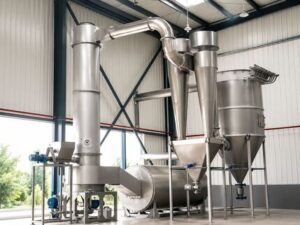
Pneumatic Flash Dryers represent the industry standard for high-volume, rapid moisture removal from native starch filter cakes and wet powders. The system operates on high-velocity thermal convection, dispersing wet starch directly into a hot air stream where instantaneous moisture evaporation takes place.
Process Flow of Pneumatic Flash Drying:
First, the process begins when operators introduce raw starch feed into a high-speed disperser. Next, the dispersed particles enter the pneumatic flash duct where they contact a high-temperature air stream (150°C to 250°C). Over a brief residence time of 1 to 3 seconds, moisture evaporates rapidly as the particles travel upward. Subsequently, the mixture enters a cyclone separator, where ductwork directs exhaust air and vapor to a bag filter. Finally, the plant collects the dried starch powder (10% to 12% moisture) at the base.
Working Principle
A high-speed mechanical disperser at the base of the drying duct receives dewatered starch filter cake (typically 35% to 45% moisture). Simultaneously, the disperser breaks up the cake into micro-particles, expanding the total surface area exposed to the high-velocity hot air stream (18 to 28 meters per second). As the suspended starch particles travel upward through the pneumatic riser, surface moisture evaporates almost instantaneously within 1 to 3 seconds.
Additionally, high-efficiency cyclone collectors and pulse-jet bag filters separate the suspended dry powder from the humid exhaust air stream. In this manner, rapid moisture release occurs without elevating core product temperatures. Furthermore, maintaining high air velocity prevents particle settling along the riser column. Consequently, the system sustains uniform suspension throughout the brief exposure window. Thereafter, immediate powder separation avoids moisture re-absorption in the collection phase.
Key Engineering Features
-
Ultra-Fast Contact Time: Residence times of 1 to 3 seconds prevent starch particles from reaching harmful internal temperatures, eliminating the risk of thermal gelatinization.
-
High Thermal Efficiency: Direct contact between high-velocity hot air and dispersed micro-particles maximizes heat transfer efficiency.
-
Compact Operational Footprint: Vertical pneumatic riser designs minimize floor space requirements while maintaining high production capacities.
-
Sanitary Stainless Steel Construction: Polished SS304 or SS316 food-grade contact surfaces ensure compliance with food safety standards.
Performance & Energy Metrics
-
Inlet Air Temperature Range: 150°C to 250°C
-
Outlet Air Temperature Range: 55°C to 75°C
-
Evaporative Energy Efficiency: 3,100 to 3,600 kilojoules per kilogram of evaporated water
-
Target Final Moisture Content: 10% to 12%
-
System Pressure Drop: 3.5 to 6.5 kilopascals
2. Vibratory Fluidised Bed Dryer (VFBD)
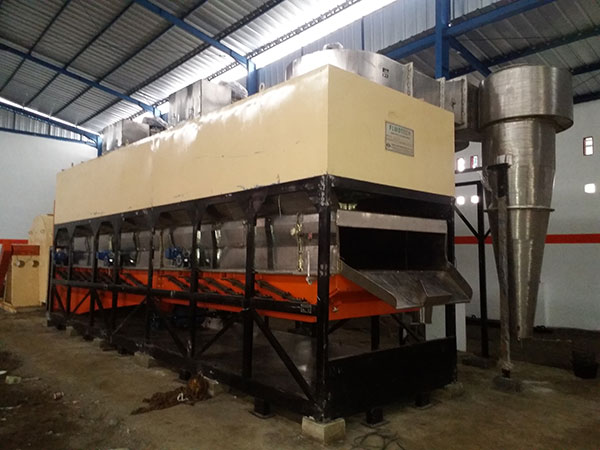
In contrast to flash systems, the Vibratory Fluidised Bed Dryer combines upward thermal airflow with controlled mechanical vibration. This dual-action design ensures smooth fluidization of delicate starch granules, preventing particle attrition while providing precise moisture control.
Process Flow of Vibratory Fluidised Bed Drying:
Initially, operators feed wet starch granules or powders onto a vibratory fluid bed decking equipped with a perforated stainless steel distribution plate. Meanwhile, a mechanical vibration drive moves the bed forward while a heated air plenum delivers hot process air (70°C to 140°C) from beneath the deck. Ultimately, the fluidization and continuous vibration result in controlled moisture reduction, discharging uniform dry powder containing 8% to 10% moisture.
Working Principle
Wet starch granules enter a perforated bed deck driven by eccentric vibration motors. Consequently, the mechanical vibration moves the starch forward across the deck in a uniform, shallow bed. Simultaneously, heated process air passes upward through the perforated plate at velocities optimized for fluidization.
As a result, the combined mechanical and pneumatic forces suspend the starch particles, creating a fluid-like state. Ultimately, this interaction delivers uniform thermal exposure across the entire bed, gently eliminating internal moisture without causing particle breakdown. Furthermore, adjusting vibration frequency allows operators to fine-tune bed retention times dynamically. Additionally, balancing mechanical motion with airflow prevents channeling through wet feed zones. Subsequently, the system releases moisture evenly across the entire surface area. In summary, the design completely minimizes powder degradation throughout processing.
Key Engineering Features
-
Gentle Mechanical Fluidization: Vibration assists fluidization, allowing lower air velocities that protect fragile starch granules from friction and degradation.
-
Multi-Zone Thermal Control: Features customizable heating and cooling zones within a single continuous deck to lock in target moisture levels and cool powder prior to packaging.
-
Uniform Residence Time Distribution: Eliminates short-circuiting or stagnant zones, delivering consistent final moisture levels across every batch.
-
Reduced Dust Entrainment: Lower air velocities reduce fine particle carryover into exhaust filtration systems.
Performance & Energy Metrics
-
Inlet Air Temperature Range: 70°C to 140°C
-
Fluidization Air Velocity: 0.8 to 1.8 meters per second
-
Bed Depth Control Range: 50 to 150 millimeters
-
Target Final Moisture Content: 8% to 11%
-
Vibration Frequency Range: 12 to 24 Hertz
3. Mesh Belt Dryer (Conveyor Dryer)
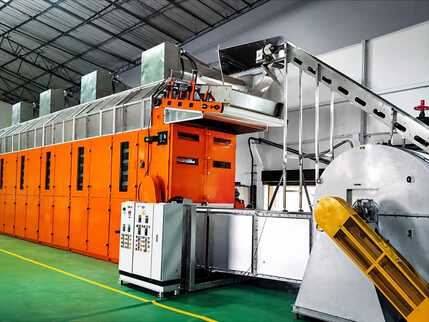
Alternatively, Mesh Belt Dryers are continuous multi-stage thermal systems designed for drying extruded starches, pre-gelatinized starch pellets, and coarse starch noodles that require extended drying times under gentle, controlled conditions.
Process Flow of Multi-Stage Mesh Belt Drying:
Initially, feeding mechanisms distribute wet extruded or pelleted starch evenly onto the Stage 1 Upper Mesh Belt, which serves as a high-temperature primary moisture removal zone. Following this initial stage, the material transfers via a cascading action down to the Stage 2 Middle Mesh Belt, where controlled intermediate drying occurs. Eventually, the product cascades onto the Stage 3 Lower Mesh Belt, which operates as a cooling and moisture equalization zone, discharging dried starch pellets at the end of the belt.
Working Principle
An oscillating feeder distributes wet starch feed evenly across a woven stainless steel mesh belt. Subsequently, the belt carries the material through insulated drying chambers featuring independent temperature and humidity controls. As the belt advances, fans force heated air through the product bed in alternating up-draft and down-draft patterns.
In addition, multi-deck configurations cascade the material from an upper belt down to lower levels, gently tumbling the starch pellets to expose all surfaces to the warm airflow. Consequently, the system achieves uniform moisture removal across the entire depth of the product bed. Furthermore, adjusting belt speed enables precise control over total thermal exposure. Thereafter, gentle material handling preserves granule structure without producing fine dust. As a result, operators achieve uniform drying even for thick product beds.
Key Engineering Features
-
Controlled Multi-Zone Heating: Independent thermal zones allow custom temperature profiles, preventing surface hardening or structural cracking.
-
Variable Belt Speed Control: Adjustable belt drives allow operators to tune residence times from 15 to 90 minutes based on product requirements.
-
Low Dust Generation: Static bed drying minimizes particle friction, making it ideal for friable extruded products.
-
Energy-Efficient Heat Recovery: Recirculating air systems capture residual thermal energy, reducing overall fuel consumption.
Performance & Energy Metrics
-
Inlet Air Temperature Range: 60°C to 120°C
-
Residence Time Range: 15 to 90 minutes
-
Bed Thickness Range: 25 to 100 millimeters
-
Thermal Efficiency Index: 3,300 to 3,800 kilojoules per kilogram of evaporated water
-
Target Final Moisture Content: 9% to 12%
4. Rotary Drum Dryer
On the other hand, Rotary Drum Dryers are robust, high-capacity systems engineered to process high-moisture industrial starch slurries, modified starch pastes, and pre-gelatinized formulations that prove too sticky for standard fluid bed systems.
Process Flow of Rotary Drum Drying:
To begin with, pumps feed high-moisture starch slurry directly into a rotating inclined cylindrical shell fitted with internal lifting flights. Direct or indirect hot air passes through the drum as it rotates, creating a cascading shower of starch particles that continuously exposes fresh surface areas to the heat. Step-by-step, the material moves along the length of the drum until it discharges as a dried industrial starch powder.
Working Principle
The system consists of a large, inclined rotating drum fitted with internal lifting flights. Initially, feed pumps introduce wet starch paste or slurry into the upper drum inlet. As the drum rotates, the internal flights lift the material and cascade it downward through a direct or indirect stream of hot gas.
Consequently, this tumbling action continuously exposes fresh material surfaces, breaking up sticky agglomerates and driving off moisture as the starch travels toward the discharge outlet. In this way, the process transforms heavy viscous feeds into uniform dry granules. Furthermore, continuous tumbling prevents wet material from adhering to internal drum walls. Consequently, heat transfer rates remain high throughout long production runs. Afterwards, integrated scraper blades ensure clean discharge without material buildup.
Key Engineering Features
-
Heavy-Duty Processing: Handles feed materials with varying moisture levels (40% to 60%) and high viscosity without clogging.
-
High Operational Capacity: Built for continuous, high-volume production in demanding industrial environments.
-
Adjustable Drum Speed & Inclination: Variable drive systems allow operators to fine-tune retention times and material transport speeds.
-
Flexible Fuel Options: Operates using direct-fired gas burners, steam heat exchangers, or indirect thermic fluid loops.
Performance & Energy Metrics
-
Inlet Air Temperature Range: 160°C to 350°C
-
Drum Rotation Speed: 2 to 8 revolutions per minute
-
Residence Time Range: 10 to 40 minutes
-
Target Final Moisture Content: 8% to 12%
-
Volumetric Heat Transfer Coefficient: 120 to 250 Watts per cubic meter Kelvin
5. Combination Fluid Bed Dryer
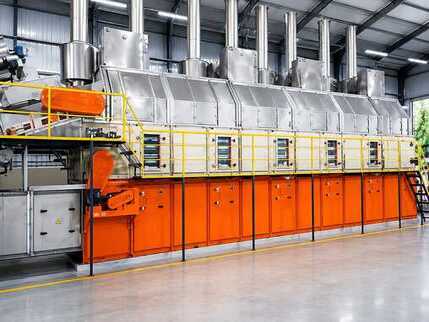
Finally, the Combination Fluid Bed Dryer integrates moving tray pre-drying circuits with a final fluid bed finishing zone. Engineers specifically designed this hybrid configuration for high-moisture, sticky, or modified starches that require staged moisture removal to prevent clumping.
Process Flow of Combination Fluid Bed Drying:
In the first phase, feeding systems introduce high-moisture sticky starch cake into Stages 1 and 2, which consist of moving circuit pre-drying trays. Here, gentle moisture reduction takes place to prevent surface crusting or clumping. Once the material is semi-dry, it drops into Stage 3, the fluidized bed finishing zone. Ultimately, high-velocity air suspends the granules to achieve final moisture lock, yielding a uniform, free-flowing starch powder.
Working Principle
Operators initially load wet starch feed onto continuous moving trays within the upper drying chamber. During this pre-drying stage, gentle hot airflow lowers surface moisture, transforming sticky pastes into semi-dry granules without causing thermal damage or surface crusting.
Thereafter, the material transfers into a lower fluid bed zone, where high-velocity air suspends the particles to eliminate remaining internal moisture and deliver a uniform, free-flowing powder. Furthermore, integrating multi-zone heating prevents surface hardening during sensitive phase transitions. Additionally, staged temperature reduction protects sensitive starch bonds from thermal breaking. Consequently, the system preserves final powder solubility and functional viscosity. In conclusion, hybrid drying configurations provide unmatched flexibility for difficult starch formulations.
Key Engineering Features
-
Staged Moisture Reduction: Separating pre-drying from final fluidization prevents equipment fouling and sticky starch agglomeration.
-
Superior Quality & Density Control: Preserves starch functional properties, bulk density, and instant-dissolution characteristics.
-
Advanced Multi-Zone Automation: Independent temperature control across each stage optimizes energy usage and product quality.
-
Integrated Dust Collection: Features built-in cyclone separators and baghouses for effective fine powder recovery.
Performance & Energy Metrics
-
Tray Zone Temperature Range: 60°C to 100°C
-
Fluid Bed Zone Temperature Range: 80°C to 130°C
-
Total Residence Time Range: 8 to 25 minutes
-
Target Final Moisture Content: 6% to 10%
-
Overall Thermal Efficiency: 3,000 to 3,400 kilojoules per kilogram of evaporated water
Equipment Selection Matrix: Matching Dryers to Starch Applications
Selecting the correct dryer for a specific starch formulation is critical to optimizing yield, quality, and processing efficiency. Furthermore, evaluating feed characteristics alongside dryer mechanics prevents operational bottlenecks. Additionally, cross-referencing material rheology with thermal transfer rates guarantees high throughput without risk of thermal degradation.
Furthermore, analyzing operational variables ensures long-term mechanical reliability across continuous shifts. Consequently, matching equipment capabilities with specific material behaviors minimizes unscheduled maintenance. The matrix below outlines the ideal drying equipment for each starch application.
| Starch Variety | Primary Applications | Recommended Dryer System | Secondary Option | Key Operational Rationale |
| Corn Starch | Bakery, Confectionery, Paper Adhesives | Pneumatic Flash Dryer | Vibratory Fluidised Bed Dryer | Rapid 1 to 3 second flash drying prevents thermal gelatinization and delivers high-volume production. |
| Potato Starch | Food Thickeners, Processed Meats, Snacks | Vibratory Fluidised Bed Dryer | Pneumatic Flash Dryer | Low-velocity fluidization protects large starch granules from fracturing under heat and shear. |
| Tapioca / Cassava Starch | Textiles, Sweeteners, Gluten-Free Foods | Pneumatic Flash Dryer | Vibratory Fluidised Bed Dryer | Delivers high evaporative efficiency and bright white powder quality for medium-sized granules. |
| Rice Starch | Infant Foods, Cosmetics, Pharmaceuticals | Vibratory Fluidised Bed Dryer | Pneumatic Flash Dryer | Gently fluidizes ultra-small granules (2 to 8 microns), controlling dust entrainment and preserving powder texture. |
| Modified Starch (Pre-Gelatinized) | Instant Soups, Cold Dressings, Drilling Mud | Rotary Drum Dryer | Combination Fluid Bed Dryer | Rotary drums effectively handle viscous, sticky feeds without clogging internal components. |
| Modified Starch (Cross-Linked) | Retort Foods, High-Shear Sauces | Combination Fluid Bed Dryer | Pneumatic Flash Dryer | Staged pre-drying prevents surface crusting and ensures precise moisture equalizing. |
| Food-Grade Starch Formulations | Dairy, Bakery, Confectionery Formulations | Pneumatic Flash Dryer (Sanitary) | Vibratory Fluidised Bed Dryer | Polished SS304/SS316 sanitary designs ensure compliance with food safety standards. |
| Industrial Starch | Corrugated Board, Paper Sizing, Textiles | Rotary Drum Dryer | Pneumatic Flash Dryer | Heavy-duty systems handle variable feed moistures and high throughputs continuously. |
Engineering Parameters and Process Dynamics
Optimizing an industrial starch drying installation requires precise control over several core thermal and mechanical parameters. In addition, understanding process dynamics across every operating phase ensures consistent thermal stability. Furthermore, adjusting operational variables in response to feedstock variations preserves end-product quality.
Additionally, automating key process parameters prevents human error during complex shift changes. Subsequently, real-time data tracking enables predictive maintenance and energy optimization. Therefore, plant managers maintain total control over both production quality and operational cost.
Core Control Categories
-
Thermal Delta-T Management: Drives evaporation through high temperature differentials while keeping air temperatures within safe limits to prevent premature gelatinization.
-
Granule Mechanics: Focuses on protecting particles from shear damage, containing dust entrainment, and maintaining target bulk density.
-
Residence Time Control: Provides short 1 to 3 second contact for flash systems, extending up to 15 to 90 minutes for belt systems using multi-zone thermal profiling.
1. Thermal Delta-T Management
The temperature difference between inlet and exhaust air drives moisture evaporation. Operating at higher inlet temperatures increases thermal efficiency; however, control systems must strictly regulate air temperature based on the starch’s gelatinization threshold and moisture content. As moisture evaporates, evaporative cooling keeps particle temperatures lower than the surrounding air.
Furthermore, once surface moisture depletes, particle temperatures rise rapidly. Consequently, process controls must balance heat input to prevent thermal degradation during the final drying phase. In addition, automated thermal sensors continuously adjust burner firing rates to match incoming moisture loads. Furthermore, feed-forward control loops anticipate moisture surges before they affect outlet air temperatures. Thereafter, controllers dynamically modulate energy output to maintain stable operating parameters. As a result, operators completely avoid thermal stress on starch molecules.
2. Particle Suspension Mechanics
For Flash Dryers and Vibratory Fluidised Bed Dryers, maintaining proper gas-velocity distribution is critical. Air velocities must exceed the terminal velocity of agglomerated wet feed to ensure complete suspension, while staying low enough to minimize fine particle carryover into exhaust filtration systems.
As a result, maintaining a fluidization margin between 1.8 and 3.2 (calculated as operational air velocity divided by minimum fluidization velocity) provides stable bed suspension without excessive powder carryover. Meanwhile, variable speed blower drives allow real-time adjustments as particle densities change. Furthermore, monitoring differential pressures across distribution plates prevents localized channeling. Subsequently, uniform air delivery guarantees consistent drying across the entire bed width. In short, suspension stability guarantees high powder uniformity.
3. Residence Time Distribution
Controlling residence time ensures uniform moisture removal across all particles. Flash dryers feature short residence times (1 to 3 seconds), making them ideal for surface moisture removal. Conversely, Mesh Belt and Combination Fluid Bed Dryers provide longer residence times (up to 90 minutes), allowing deep internal moisture to diffuse outward without causing surface hardening or particle cracking.
In short, matching residence time to bound moisture release rate maximizes operational efficiency. Furthermore, precise retention time control prevents over-drying and thermal scorching. Additionally, adjusting internal baffle positions customizes material flow paths inside fluid beds. Consequently, the system completely eliminates short-circuiting of wet particles. As a result, every starch granule achieves its target moisture specification reliably.
Technical Specifications Comparison Table
The following technical comparison outlines performance metrics across all five industrial drying technologies. In addition, comparing thermal requirements helps plant engineers calculate utility requirements accurately. Furthermore, evaluating maintenance demands supports long-term operational planning.
Additionally, reviewing footprint constraints simplifies plant layout design and structural integration. Subsequently, comparing utility needs aids in selecting cost-effective energy sources. In conclusion, thorough technical evaluation reduces installation risks.
| Technical Parameter | Pneumatic Flash Dryer | Vibratory Fluidised Bed Dryer | Mesh Belt Dryer | Rotary Drum Dryer | Combination Fluid Bed Dryer |
| Direct Product Link | Flash Dryer | VFBD System | Mesh Belt Dryer | Rotary Drum Dryer | Combination Dryer |
| Primary Material State | Dewatered Filter Cake / Powder | Wet Powder / Granules | Extruded Pellets / Coarse Noodles | High-Moisture Slurry / Sticky Paste | Highly Viscous / Sticky Agglomerates |
| Inlet Air Temperature Range | 150°C to 250°C | 70°C to 140°C | 60°C to 120°C | 160°C to 350°C | 60°C to 130°C |
| Outlet Air Temperature Range | 55°C to 75°C | 45°C to 65°C | 40°C to 60°C | 70°C to 110°C | 50°C to 70°C |
| Average Residence Time | 1 to 3 Seconds | 3 to 15 Minutes | 15 to 90 Minutes | 10 to 40 Minutes | 8 to 25 Minutes |
| Target Moisture Content | 10% to 12% | 8% to 11% | 9% to 12% | 8% to 12% | 6% to 10% |
| Thermal Energy Efficiency | 3,100 – 3,600 kJ/kg | 3,200 – 3,700 kJ/kg | 3,300 – 3,800 kJ/kg | 3,600 – 4,200 kJ/kg | 3,000 – 3,400 kJ/kg |
| Mechanical Maintenance Level | Very Low | Low to Moderate | Moderate | Moderate to High | Low to Moderate |
| Floor Space Footprint | Compact Vertical | Moderate Horizontal | Large Horizontal | Large Horizontal | Compact Hybrid |
| Construction Material Options | SS304 / SS316 / MS | SS304 / SS316 | SS304 / SS316 | Heavy Duty MS / SS304 | SS304 / SS316 |
Step-by-Step Sequence for Dryer Integration
Successfully integrating an industrial starch drying installation into an active process line requires careful execution across engineering, installation, and commissioning phases. Furthermore, adhering strictly to sequential commissioning stages mitigates operational risks during plant startup. Additionally, clear milestone execution ensures project delivery aligns with budgeted timelines.
Furthermore, establishing rigorous testing protocols at each phase guarantees seamless component integration. Subsequently, safety checks ensure full compliance with plant operating standards. Therefore, system commissioning transitions smoothly into commercial manufacturing.
Dryer Integration Timeline
-
Step 1: Feed Material & Rheology Characterization
-
Step 2: Thermal Balance & Evaporative Capacity Modeling
-
Step 3: Material & Sanitary Construction Selection
-
Step 4: Installation & Ducting Layout Integration
-
Step 5: Process Control & Automation Calibration
-
Step 6: Thermal Commissioning & Performance Validation
Industrial Application Case Examples
To further demonstrate operational mechanics in real-world environments, examining actual facility deployments provides valuable performance benchmarks. In addition, analyzing empirical results highlights the direct impact of proper dryer selection on overall processing margins. Furthermore, case studies confirm how tailored thermal engineering optimizes daily operational utility costs.
Additionally, reviewing real-world performance metrics helps validate theoretical thermal models under actual production conditions. Subsequently, operational data guides future facility expansions and equipment upgrades. As a result, plant engineers make data-driven decisions that lower overall capital risk.
Case Study A: Native Tapioca Starch Dehydration Facility
-
Processing Facility Context: High-capacity cassava starch extraction plant in Southeast Asia targeting food-grade export markets.
-
Equipment Deployment: High-Efficiency Pneumatic Flash Dryer with integrated twin-cyclone separation and sanitary CIP design.
-
Inlet Moisture Level: 38% wet cake from centrifugal dewatering decanters.
-
Target Output Moisture: 11.5% free-flowing white powder.
-
Operational Results: Achieved an evaporative capacity of 4,500 kilograms of water per hour with thermal consumption measured at 3,250 kilojoules per kilogram of evaporated water. Exhaust dust carryover remained below 10 milligrams per normal cubic meter, fully complying with international environmental standards.
Performance Summary for Case Study A:
First, centrifugal decanters introduced incoming wet cake at 38% moisture into the main duct. Subsequently, the system reduced moisture to a final powder of 11.5% moisture over a brief contact duration of just 1.8 seconds. Ultimately, the installation operated at an energy efficiency of 3,250 kJ per kg of water evaporated. Meanwhile, twin-cyclone collectors effectively captured dust emissions.
Furthermore, continuous system operation exceeded initial production targets by 12%. Consequently, overall facility throughput increased while reducing energy consumption per ton. In conclusion, pneumatic flash drying proved highly successful for large-scale native tapioca processing.
Case Study B: Pre-Gelatinized Modified Industrial Starch Facility
-
Processing Facility Context: Industrial paper sizing and adhesive manufacturing plant requiring continuous production of cold-water-soluble starches.
-
Equipment Deployment: Multi-Stage Combination Fluid Bed Dryer featuring an upper moving tray pre-drying circuit and a lower fluid bed finishing deck.
-
Inlet Moisture Level: 52% sticky viscous starch paste.
-
Target Output Moisture: 7.5% free-flowing instant powder.
-
Operational Results: Pre-drying on moving trays lowered surface moisture to 28% without scorching or clogging, allowing smooth transfer into the fluid bed finishing zone. The hybrid system reduced overall energy consumption by 18% compared to traditional single-drum installations.
Performance Summary for Case Study B:
To begin with, initial paste at 52% moisture underwent Stage 1 pre-drying on moving trays to reach 28% moisture. Next, the semi-dry material moved into Stage 2 fluidized finishing to reach a final output of 7.5% moisture. Consequently, the multi-stage system achieved an 18% overall reduction in energy consumption.
In addition, continuous tray movement prevented feed cake agglomeration. Furthermore, operators extended maintenance intervals due to reduced internal equipment fouling. Thereafter, annual operational savings significantly reduced the total payback period. Ultimately, combination fluid bed drying demonstrated superior performance for difficult-to-handle modified starches.
Strategic Conclusion & Plant Optimisation
Selecting the right industrial drying system is essential for optimizing starch processing operations. Pneumatic Flash Dryers provide rapid, high-volume moisture removal for native starches like corn and tapioca, while Vibratory Fluidised Bed Dryers offer the gentle handling required for heat-sensitive potato and rice starches. For sticky, high-viscosity modified starches, Rotary Drum Dryers and Combination Fluid Bed Dryers deliver reliable, multi-stage drying performance without risking equipment fouling or thermal degradation.
Collaborating with experienced thermal engineering partners allows process operators to custom-configure drying systems to their exact material rheology, target moisture levels, and energy targets. Tailored equipment design ensures long-term operational efficiency, consistent product purity, and maximum return on investment. Furthermore, implementing automated control loops maintains system stability over long continuous production runs.
In conclusion, combining proper dryer selection with precise process automation maximizes operational profitability. Furthermore, continuous process monitoring allows predictive maintenance that prevents unexpected production stops. Subsequently, plant managers extend long-term asset life while lowering overall total cost of ownership. Therefore, modern starch facilities achieve long-term competitive advantages in global markets.
Contact Information & Engineering Support
For technical consultations, custom equipment sizing, pilot testing, or quotation requests regarding industrial drying installations, contact our engineering team directly through the following channels: