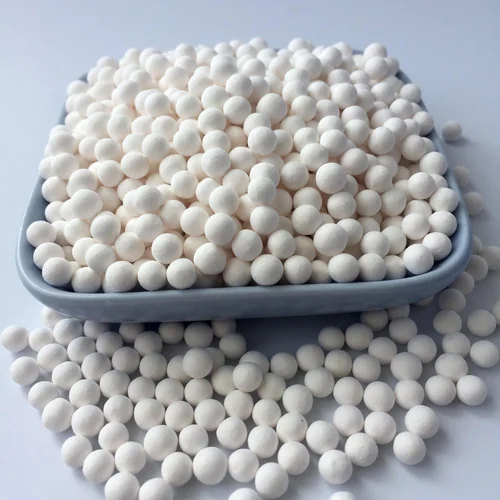
Industrial chemical processing relies heavily on high-performance catalysts and adsorbents. Modern petroleum refining, petrochemical synthesis, environmental emission control, and gas purification cannot function effectively without specialized contact materials. However, the operational success of these porous solids depends directly on thermal processing during manufacturing. As a result, precise moisture control is critical for activity and performance.
When manufacturing catalysts and adsorbents, drying is not merely a basic dewatering step. On the contrary, it represents a critical chemical engineering operation that directly dictates pore structure, total surface area, mechanical crush strength, and active site distribution. Consequently, selecting appropriate thermal equipment requires a deep understanding of transport phenomena, structural integrity, and thermal kinetics. Furthermore, leading equipment engineering firms must carefully balance operational cost reductions with exact thermal parameter control. For detailed custom solutions, explore our dedicated Catalyst Drying Systems.
This comprehensive engineering guide thoroughly analyzes industrial drying systems for catalysts and adsorbents. Specifically, we will cover various metal oxides, supported catalysts, zeolite-based structures, activated carbon, molecular sieves, silica gel, and related functional materials.
1. Fundamental Science of Catalyst and Adsorbent Drying
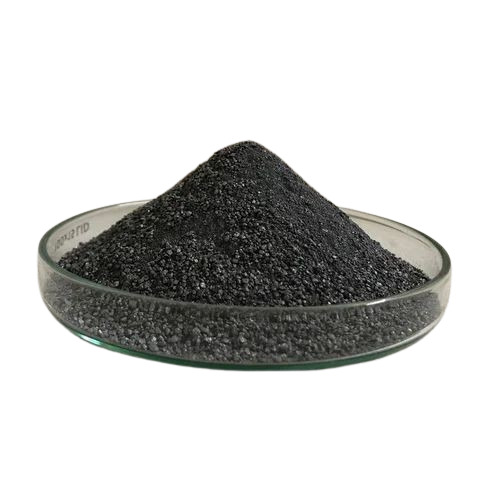
Moisture Transport Mechanisms in Porous Solids
Catalysts and adsorbents typically possess complex internal pore networks with remarkably high surface areas ranging from 100 to over 1000 square meters per gram. Therefore, moisture exists in multiple distinct physical states within these materials:
-
Free Surface Moisture: Unbound liquid residing on external particle surfaces, which evaporates rapidly during initial constant-rate drying phases.
-
Capillary Bound Moisture: Liquid held inside internal pore channels, governed primarily by capillary forces and pore diameter distributions.
-
Chemisorbed Moisture: Water molecules directly bound to active chemical sites, hydroxyl groups, or metal oxide networks, thereby requiring specific activation energy to remove.
During drying operations, capillary forces continuously drive liquid outward toward external surface boundaries. However, if the surface evaporation rate exceeds the internal diffusion rate, localized drying fronts collapse fragile internal pore walls. Therefore, drying profiles must maintain precise thermal gradients in order to prevent structural collapse and fully retain internal surface area.
Thermal Degradation, Calcination Interactions, and Pore Structure Preservation
Exceeding thermal thresholds during early drying stages frequently triggers premature hydrothermal sintering. In particular, when liquid water remains trapped inside micropores above 120 degree Celsius, localized steam pressure shatters surrounding solid matrix walls. Furthermore, rapid moisture migration carries dissolved active precursors toward particle exteriors. Because of this, a phenomenon known as crusting or active phase migration occurs, which significantly reduces internal catalytic efficiency.
Consequently, carefully engineered thermal drying profiles establish stable precursor distributions prior to high-temperature calcination. Therefore, controlling relative humidity, drying rates, and material temperatures effectively prevents uneven shrinkage, while reducing internal mechanical stress, and ultimately maximizing catalytic activity.
2. Key Catalyst & Adsorbent Materials and Thermal Requirements
| Material Type | Primary Application | Key Physical Characteristics | Target Final Moisture (%) | Optimal Drying Temperature (degree C) | Recommended Drying Technology |
| Metal Oxides (Alumina, Titania, Silica) | Catalyst Supports, DeNOx, Hydroprocessing | High surface area, fragile pore networks | 0.5% – 2.0% | 110 – 150 degree C | Fluid-Bed Dryer / Rotary Dryer |
| Supported Metal Catalysts (Pt, Pd, Ni on Supports) | Hydrogenation, Reforming | Temperature sensitive active sites, prone to precursor migration | 0.1% – 0.5% | 80 – 120 degree C | Vacuum Dryer / Spray Dryer |
| Zeolite-Based Catalysts (FCC, Hydrocracking) | Petrochemical Cracking, Isomerization | Micro-porous crystalline structure, heat sensitive | 1.0% – 3.0% | 120 – 200 degree C | Spray Dryer / Flash Dryer |
| Activated Carbon | Gas Purification, Water Treatment, Catalyst Support | High carbon density, dust explosive, highly porous | 1.0% – 5.0% | 100 – 160 degree C | Indirect Rotary Dryer / Paddle Dryer |
| Molecular Sieves (3A, 4A, 5A, 13X) | Dehydration, Gas Separation | Uniform crystalline pore diameters, sensitive to hydrothermal damage | 0.2% – 0.5% | 150 – 250 degree C | Vibratory Fluidised Bed Dryer |
| Silica Gel | Desiccants, Chromatography, Catalyst Support | High affinity for water, fracture prone under thermal shock | 0.5% – 1.0% | 100 – 140 degree C | Continuous Band / Fluid-Bed Dryer |
Metal Oxide Catalysts (Alumina, Titania, Silica-Alumina)
Metal oxide extrudates and spheres require exceptionally uniform heat distribution so that internal stress cracking can be avoided. For instance, gamma-alumina carriers typically hold initial moisture levels between 45% and 60%. Subsequently, drying processes must reduce this value below 2% prior to high-temperature calcination. As a result, multi-stage temperature profiles are essential. First, temperatures generally start at 80 degree Celsius to remove surface moisture. Next, they increase gradually to 140 degree Celsius to evaporate capillary-bound water without damaging internal pore structures.
Supported Catalysts (Noble Metals on Inorganic Carriers)
Supported catalysts contain expensive active metals like platinum, palladium, or nickel dispersed across carrier surfaces. However, rapid or uncontrolled drying causes internal liquid currents that sweep active metal salts toward outer edges, thereby creating an undesirable shell structure. Therefore, precise low-temperature drying between 70 degree Celsius and 105 degree Celsius under controlled humidity is necessary so as to freeze metal salt profiles in place before thermal fixation occurs.
Zeolite-Based Catalysts
Zeolites feature uniform micropores under 2 nanometers wide. Thus, exposing wet zeolites to high temperatures prematurely causes severe hydrothermal degradation that permanently breaks down their crystalline lattice. In addition, zeolite slurries require rapid moisture removal in order to lock in particle morphology. For example, utilizing an advanced Spray Dryer for slurry feeds at inlet temperatures between 300 degree Celsius and 400 degree Celsius, paired with outlet temperatures between 120 degree Celsius and 140 degree Celsius, successfully forms spherical microspheres without damaging crystalline frameworks.
Activated Carbon
Activated carbon processing presents significant fire and explosion risks due to fine carbon dust and elevated operating temperatures. Consequently, drying systems must utilize inert gas loops, such as continuous nitrogen recirculation, when processing solvent-laden or dry carbon powders. Furthermore, indirect heating systems like an indirect Rotary Drum Dryer prevent direct flame contact, thereby reducing combustion risks while keeping residual moisture consistently under 3%.
Molecular Sieves
Molecular sieves require deep dehydration in order to fully unlock their functional adsorption capacity. In addition, these materials are notably sensitive to thermal shock, which can crack extrudates and generate excess fines. Therefore, gentle fluidization using a specialized Vibratory Fluidised Bed Dryer combined with stepped heating up to 220 degree Celsius smoothly removes tightly bound moisture, and as a result, successfully achieves final moisture levels below 0.3%.
Silica Gel
Silica gel beads fracture easily when subjected to sudden internal vapor expansion. Because of this, thermal drying must maintain a steady, controlled mass transfer rate throughout processing. Specifically, air velocities and temperature zones must be calibrated carefully to remove surface liquid smoothly, thereby maintaining structural integrity and preventing particle degradation.
3. Comprehensive Breakdown of Industrial Drying Technologies
1. Fluid-Bed Dryers (Static, Vibratory, and Continuous)
Fluid-bed drying suspends solid particles in an upward airflow, thereby creating a dynamic fluid-like state that optimizes overall heat and mass transfer. Learn more about our specialized Combination Fluid Bed Dryer Technology.
       [ Wet Feed Inlet ]
              │
              ▼
┌───────────────────────────┐
│   Fluidization Chamber    │◄─── Hot Clean Air / Inert Gas (Inlet)
│   (Suspended Particles)   │
└─────────────┬─────────────┘
              │
              ├───► [ Cyclone / Baghouse ] ───► [ Exhaust Gas ]
              ▼
      [ Dry Product Outlet ]
Operating Principles and Thermodynamic Dynamics
Hot air enters through a perforated distribution plate situated beneath the material bed. Next, when air velocity exceeds the minimum fluidization threshold, drag forces lift and separate individual particles. Consequently, this maximizes surface exposure, thus yielding impressive heat transfer rates up to 500 Watts per square meter Kelvin.
System Variations
-
Static Fluid-Bed Dryers: Ideal for uniform, free-flowing spherical beads or sturdy extrudates that fluidize easily without mechanical assistance.
-
Vibratory Fluid-Bed Dryers (VFBD): Integrate mechanical vibration in order to process cohesive, sticky, or fragile extrudates smoothly. Check our engineering details on the Vibratory Fluidised Bed Dryer. As a result, vibration lowers the required air velocity, thereby significantly minimizing particle attrition.
-
Continuous Multi-Zone Fluid-Bed Dryers: Feature separate thermal zones along the bed length, which allows precise temperature control across consecutive drying stages.
Operating Parameters & Technical Specifications
-
Inlet Gas Temperature: 100 degree Celsius to 280 degree Celsius.
-
Bed Velocity: 0.5 to 2.2 meters per second.
-
Thermal Efficiency: 65% to 82%.
-
Evaporation Capacity: 20 to 150 kilograms of water per square meter per hour.
Technical Advantages
-
Outstanding heat transfer rates drastically shorten total drying times.
-
In addition, precise temperature control effectively prevents localized overheating.
-
Furthermore, multi-zone configurations enable custom, stepped drying profiles.
Potential Limitations
-
However, they are unsuitable for highly cohesive slurries or extremely sticky pastes.
-
Moreover, high gas velocities can cause particle attrition in fragile extrudates.
Best Material Applications
-
Best Product Match: Molecular sieve beads, alumina extrudates, silica gel spheres, and zeolite granules.
2. Spray Dryers (Rotary Atomizer and Nozzle Configurations)
Spray drying transforms pumpable slurries, solutions, or suspensions into dry, spherical powder particles in a single continuous operation. Explore our complete Industrial Spray Dryer Solutions.
Atomization Mechanics and Particle Formation
First, the feed slurry is pumped to an atomizer—either a high-speed rotating disc or a pressure nozzle—located at the top of a drying chamber. Then, atomization breaks the liquid stream into millions of micro-droplets, thereby vastly increasing surface area. Consequently, hot drying gas rapidly evaporates surface liquid, thus forming hollow or solid microspheres within seconds.
Engineering Configurations
-
Co-Current Flow: Liquid droplets and hot drying gas enter at the top and flow downward together. As a result, this keeps heat-sensitive active sites cool, since rapid evaporation lowers ambient temperatures instantly.
-
Counter-Current Flow: Droplets fall against an ascending hot air stream. Consequently, this maximizes thermal efficiency, while working best for heat-tolerant materials requiring low final moisture.
-
Mixed-Flow Systems: Combine nozzle elevation with complex airflow paths so as to extend residence time and produce larger particle sizes.
Operating Parameters & Technical Specifications
-
Inlet Air Temperature: 250 degree Celsius to 550 degree Celsius.
-
Outlet Air Temperature: 105 degree Celsius to 150 degree Celsius.
-
Atomization Pressure: 100 to 350 bar (for pressure nozzles); 10,000 to 25,000 RPM (for rotary discs).
-
Final Moisture Content: 0.5% to 2.0%.
Technical Advantages
-
Instantaneous drying preserves delicate chemical stability.
-
Furthermore, it produces consistent, free-flowing spherical powders with predictable bulk densities.
-
Additionally, fully continuous, automated operation requires minimal manual intervention.
Potential Limitations
-
On the other hand, high capital investment and a large spatial footprint are required.
-
Besides this, lower overall thermal efficiency occurs compared to direct contact dryers if waste heat is unrecovered.
Best Material Applications
-
Best Product Match: Zeolite catalyst precursors, fluid catalytic cracking (FCC) microspheres, and synthetic silica suspensions.
3. Flash Dryers (Pneumatic Transport Dryers)
Flash dryers transport wet material through a high-velocity hot air duct, thereby rapidly removing surface moisture during pneumatic conveyance.
High-Velocity Dispersion Mechanics
Initially, wet cake or damp powder enters a turbulent hot gas stream moving at 15 to 35 meters per second. Simultaneously, a high-shear disintegrator or de-agglomerator breaks up wet feed lumps, so that maximum surface area is exposed to the hot air. Consequently, moisture evaporates almost instantly during the brief 1- to 4-second residence time.
Operating Parameters & Technical Specifications
-
Gas Inlet Temperature: 200 degree Celsius to 600 degree Celsius.
-
Gas Velocity: 18 to 30 meters per second.
-
Residence Time: 0.5 to 3.0 seconds.
-
Evaporative Efficiency: Up to 75%.
Technical Advantages
-
Compact footprint with minimal floor space requirements.
-
In addition, an extremely short contact time prevents thermal damage to heat-sensitive materials.
-
Also, a simple mechanical design with few moving parts reduces maintenance downtime.
Potential Limitations
-
However, it is restricted primarily to surface moisture removal, and therefore, it is incapable of removing deep capillary bound moisture.
-
In addition, high power consumption is required for gas blowers and pneumatic transport.
Best Material Applications
-
Best Product Match: Titanium dioxide cake, synthetic silica powder, washed zeolite filter cakes, and metal oxide powders.
4. Rotary Dryers (Direct and Indirect Fired)
Rotary dryers consist of an inclined rotating cylindrical shell that continuously tumbles material through a heating zone. View specifications for our heavy-duty Rotary Drum Dryer Systems.
Flight Designs and Thermal Transfer
Internal lifters or flights scoop material as the drum rotates, thereby cascading it through a hot gas stream (direct rotary) or against externally heated shell walls (indirect rotary). Consequently, this tumbling action ensures continuous particle movement and uniform heat exposure throughout processing.
Direct vs. Indirect Heating Dynamics
-
Direct Rotary Dryers: Hot combustion gas directly contacts tumbling solids, thus delivering high evaporative capacity for non-dusting, heat-tolerant materials.
-
Indirect Rotary Dryers: The rotating cylinder is enclosed in a furnace shell heated by combustion burners or electric elements. Because of its sealed construction, gas contamination is prevented, which allows safe operation under inert gas blankets.
Operating Parameters & Technical Specifications
-
Drum Rotation Speed: 2 to 8 RPM.
-
Shell Slope: 2% to 5% inclination.
-
Operating Temperature: Up to 800 degree Celsius for indirect calcination-drying units.
-
Residence Time: 15 to 90 minutes.
Technical Advantages
-
Effortlessly handles wide variations in feed moisture, particle size, and viscosity.
-
Moreover, a heavy-duty design provides exceptionally long operational lifespans under continuous use.
-
In addition, indirect designs securely contain toxic or dust-explosive compounds.
Potential Limitations
-
Conversely, tumbling action causes particle abrasion and mechanical attrition.
-
Additionally, high thermal mass results in long startup and shutdown cycles.
Best Material Applications
-
Best Product Match: Extruded alumina carriers, activated carbon reactivation, robust metal oxide spheres, and mineral adsorbents.
5. Vacuum Dryers (Shelf, Rotary, and Double Cone)
Vacuum drying operates at sub-atmospheric pressures, thereby lowering the boiling point of liquids to enable rapid low-temperature moisture removal.
Sub-Atmospheric Mass Transfer Science
Lowering system pressure from 1013 millibar to below 20 millibar drops the boiling point of water from 100 degree Celsius to under 18 degree Celsius. Consequently, heat transfers conductively from heated shelves, jacketed vessels, or rotating agitation shafts. As a result, this vaporizes solvent at low temperatures without exposing active sites to thermal stress.
Core Configuration Types
-
Vacuum Shelf Dryers: Static batch systems where wet trays rest on heated metal shelves, which makes them ideal for delicate, low-volume materials.
-
Rotary Vacuum Dryers: Agitated cylindrical vessels that slowly tumble material against jacketed heating walls, thereby speeding up overall drying times.
-
Double Cone Vacuum Dryers: Rotating conical vessels that offer gentle tumbling action without internal agitator blades, thus minimizing particle attrition.
Operating Parameters & Technical Specifications
-
Operating Pressure: 1 to 50 millibar absolute vacuum.
-
Heating Medium Temperature: 40 degree Celsius to 130 degree Celsius.
-
Thermal Efficiency: Exceeds 85% due to reduced radiation losses.
-
Final Residual Moisture: Below 0.1%.
Technical Advantages
-
Protects heat-sensitive active metal catalytic precursors from oxidation and thermal damage.
-
Furthermore, complete solvent recovery is achieved via closed condenser loops.
-
In addition, dust-free batch processing prevents product cross-contamination.
Potential Limitations
-
However, batch operation limits overall production throughput.
-
Also, higher equipment costs per kilogram of processed material are incurred.
Best Material Applications
-
Best Product Match: Noble metal-supported catalysts, solvent-wet specialized adsorbents, and high-value chemical catalysts.
6. Belt / Band Dryers (Multi-Stage Conveyor Systems)
Belt dryers continuously transport wet material through enclosed drying tunnels on perforated conveyor belts.
Continuous Conveying and Zonal Air Conditioning
Material is spread evenly across a porous wire mesh belt moving through isolated drying modules. Meanwhile, air handling units in each module circulate heated air vertically through the product bed. Furthermore, independent temperature and air velocity settings across zones create controlled drying curves tailored precisely to product requirements.
Operating Parameters & Technical Specifications
-
Bed Depth: 25 to 150 millimeters.
-
Conveyor Speed: Variable drive from 0.1 to 1.5 meters per minute.
-
Zonal Temperatures: 60 degree Celsius to 180 degree Celsius.
-
Air Velocity: 0.8 to 2.0 meters per second.
Technical Advantages
-
Zero mechanical agitation protects fragile extrudates completely from breaking or dusting.
-
In addition, precise zonal control prevents crusting and preserves uniform internal pore structures.
-
Furthermore, continuous operation integrates cleanly into automated production lines.
Potential Limitations
-
On the other hand, it requires a substantial floor space footprint.
-
Besides this, a risk of uneven airflow distribution exists if material is spread inconsistently across the belt.
Best Material Applications
-
Best Product Match: Freshly formed alumina extrudates, silica gel beads, titania honeycombs, and delicate pre-calcined catalyst carriers.
7. Indirect Agitated Paddle Dryers
Paddle dryers feature intermeshing hollow paddles mounted on dual rotating shafts inside a jacketed trough. Discover the details on our indirect conductive Paddle Dryer Equipment.
Conductive Heat Transfer Dynamics
A thermal fluid—such as steam, hot water, or thermal oil—circulates through the jacketed vessel and hollow paddle shafts. Simultaneously, rotating paddles wedge into wet cake, thereby pushing material continuously against heated surfaces to maximize conductive contact while moving product smoothly toward the discharge outlet.
Operating Parameters & Technical Specifications
-
Heat Transfer Area: Up to 350 square meters.
-
Paddle Shaft Speed: 5 to 25 RPM.
-
Heat Transfer Coefficient: 100 to 250 Watts per square meter Kelvin.
-
Thermal Efficiency: 80% to 90%.
Technical Advantages
-
Exceptional energy efficiency with minimal sweep gas requirements.
-
Furthermore, a compact footprint is achieved along with high heat transfer area density.
-
Additionally, it handles sticky pastes, filter cakes, and viscous wet feeds effectively.
Potential Limitations
-
However, shearing forces from rotating paddles can break delicate extrudates.
-
In addition, it requires heavy-duty gearboxes and seals to withstand high torque loads.
Best Material Applications
-
Best Product Match: Moist activated carbon sludge, silica cake, washed adsorbent pastes, and chemical by-product recovery streams.
4. Key Process Engineering & Selection Criteria
                        [ Material Feed Selection ]
                                     │
                 ┌───────────────────┴───────────────────┐
                 ▼                                       ▼
        [ Slurry / Liquid ]                     [ Solid / Wet Cake ]
                 │                                       │
                 ▼                                       ▼
       (Is material sensitive                 (Is material friable /
         to high heat?)                        fragile extrudates?)
         │           │                           │             │
        YES          NO                         YES            NO
         │           │                           │             │
         ▼           ▼                           ▼             ▼
   [ Vacuum Dryer ] [ Spray Dryer ]     [ Belt Dryer ]  [ Fluid-Bed Dryer ]
                                                       [ Rotary Dryer ]
Material Physical Form Analysis
Choosing the ideal industrial dryer starts with evaluating the inlet material’s physical state:
-
High-Viscosity Slurries & Liquid Suspensions: Best suited for Spray Dryers or drum dryers in order to achieve rapid liquid-to-solid phase transformations.
-
Wet Filter Cakes & Heavy Pastes: Require high-shear flash dryers or indirect Paddle Dryers so that agglomerates break up efficiently.
-
Pre-Formed Extrudates, Pellets, & Spheres: Demand gentle processing in belt dryers or Vibratory Fluidised Bed Dryers so as to prevent particle degradation and dust generation.
Mechanical Fragility and Attrition Risks
Mechanical attrition breaks granules and extrudates into fine dust, thereby leading to severe pressure drops in fixed-bed catalytic reactors. Consequently, equipment selection must balance agitation needs against particle strength:
-
High-Attrition Risk Systems: Rotary Dryers and pneumatic flash dryers cause significant particle impact and mechanical attrition.
-
Low-Attrition Systems: Belt dryers keep materials completely stationary, whereas vibratory fluid beds use gentle low-amplitude motion in order to protect particle integrity.
Energy Consumption Metrics and Operational Economics
Operating costs depend heavily on thermal efficiency and specific energy consumption per kilogram of evaporated water:
-
Direct Air Systems (Spray/Flash): Consume 3,200 to 5,500 Kilojoules per kilogram of water evaporated because of heat lost in exhaust gas streams.
-
Indirect Conductive Systems (Paddle/Vacuum): Consume 2,800 to 3,600 Kilojoules per kilogram of water evaporated by eliminating high-volume air streams.
5. Industrial Application Matching Matrix
| Product Category | Primary Dryer Selection | Secondary Dryer Selection | Key Operating Parameter | Critical Quality Metric |
| Alumina Catalyst Extrudates | Continuous Belt Dryer | Vibratory Fluidised Bed | Zone temperatures below 130 degree C | Crush strength greater than 15 N/mm |
| FCC Catalyst Microspheres | Co-Current Spray Dryer | Pneumatic Flash Dryer | Atomizer speed at 18,000 RPM | Particle size distribution (40-120 microns) |
| Noble Metal Supported Catalysts | Rotary Vacuum Dryer | Vacuum Shelf Dryer | Chamber pressure under 15 millibar | Metal dispersion uniformity |
| Zeolite Powder Filter Cake | Flash Dryer with Disintegrator | Fluid-Bed Dryer | Gas inlet temp at 350 degree C | Preserve crystalline framework structure |
| Granulated Activated Carbon | Indirect Rotary Dryer | Fluid-Bed Dryer | Inert nitrogen gas recirculation | Iodine adsorption number preservation |
| Extruded Molecular Sieves | Vibratory Fluidised Bed Dryer | Continuous Belt Dryer | Multi-stage heating up to 220 degree C | Moisture content under 0.3% |
| Silica Gel Desiccant Beads | Static Fluid-Bed Dryer | Belt Dryer | Temperature ramp below 2 degree C/min | Zero internal micro-cracking |
6. Manufacturing Standards, Safety, and System Integration
Material Selection and Corrosion Prevention
Catalyst slurries and adsorbent bases often contain acidic trace salts, nitrates, chlorides, or organic solvents that attack standard carbon steels. Consequently, equipment design requires high-grade alloys:
-
316L Stainless Steel: Standard material for non-corrosive aqueous catalyst suspensions.
-
Duplex Stainless Steels (2205/2507): Applied in high-chloride, elevated-stress drying environments so that stress-corrosion cracking is prevented.
-
Hastelloy Alloys (C-22/C-276): Essential for highly acidic metal salt drying applications where standard stainless steels fail.
Dust Explosion Protection (ATEX Compliance)
Dry activated carbon, organic catalyst bases, and metal oxide powders generate flammable dust clouds during high-velocity fluidization. Therefore, systems operating in these environments must incorporate strict ATEX explosion protection measures:
-
Explosion relief venting panels routed directly to safe exterior areas.
-
In addition, automated nitrogen gas purging loops to maintain oxygen concentrations below 8%.
-
Furthermore, explosion suppression systems that inject specialized suppressant powders within milliseconds of spark detection.
Emission Controls and VOC Recovery Systems
Thermal drying releases fine particulates, residual volatile organic compounds (VOCs), and acid vapors into exhaust streams. Consequently, modern installations use integrated gas cleaning systems:
-
High-efficiency cyclone separators for primary particulate recovery.
-
Next, pulse-jet fabric baghouses fitted with PTFE membranes to catch fine dust down to 0.5 microns.
-
Finally, wet scrubber systems and chilled condensing units for full VOC recovery prior to exhaust release.
7. Advanced Process Automation and Control Systems
Precision Moisture Sensor Technology
Maintaining uniform target moisture levels requires real-time feedback loop integration:
-
Near-Infrared (NIR) Optical Sensors: Positioned above discharge belts in order to continuously measure surface moisture without physical contact.
-
Microwave Absorption Probes: Installed in fluid beds and chute feeds so as to deliver volumetric moisture readings independent of surface conditions.
PLC-Based Closed-Loop Control Architecture
Modern industrial drying installations feature advanced PLC systems paired with SCADA interfaces. Consequently, these systems automatically adjust heat input, blower speeds, exhaust dampers, and feed rates in response to inlet moisture fluctuations. As a result, plants achieve steady discharge moisture levels within a narrow +/-0.1% tolerance margin.
Transition & Process Optimization Strategies
Enhancing Heat and Mass Transfer Efficiency
In addition to basic system selection, optimizing drying performance requires careful tuning of internal air movement and thermal dynamics. Furthermore, because thermal energy represents a major operational expense, plant operators must implement aggressive heat integration schemes. For example, recycling exhaust air streams through indirect heat exchangers significantly reduces fuel consumption. Moreover, combining pre-drying stages with secondary finishing beds ensures that high evaporative loads are handled rapidly, whereas delicate residual moisture removal occurs under gentle thermal conditions.
Mitigating Dust Attrition and Product Losses
Meanwhile, preventing product degradation during pneumatic conveying or mechanical agitation remains a top operational priority. Because friable materials break easily under turbulent conditions, engineers must minimize sharp elbow turns in ductwork. Moreover, installing gentle vibratory feeding chutes ensures smooth material transfer into the drying zone, thereby preventing physical crushing before thermal processing even begins.
Scalability and Pilot Testing Protocols
Furthermore, transitioning from lab-scale catalyst synthesis to commercial manufacturing presents major engineering challenges. Consequently, pilot plant testing is indispensable for verifying fluidization velocities, evaporation rates, and structural retention limits. By running pilot trials under representative operational conditions, manufacturers can fine-tune thermal ramp rates and airflow dynamics before investing in full-scale production hardware.
Conclusion & Engineering Strategic Guidance
Drying catalysts and adsorbents requires balancing thermal dynamics, chemical stability, and structural preservation. Therefore, modern processing plants must carefully align material characteristics with equipment capabilities. Ultimately, selecting the right system—whether a gentle Vibratory Fluidised Bed Dryer, a high-throughput Spray Dryer, or a secure indirect Paddle Dryer—directly drives long-term product performance, operational efficiency, and profitability.
Partnering with an experienced thermal equipment manufacturer ensures your installation meets strict process tolerances, while protecting delicate material structures and delivering reliable long-term performance. Explore our complete range of Catalyst Drying Solutions to get started.
Partner with Industrial Drying Excellence
GENEX Tech Industries LLP designs and manufactures advanced thermal drying systems for the global chemical, catalyst, food, and environmental processing industries. Specifically, our engineering teams build customized industrial dryers engineered for high efficiency, operational reliability, and precise moisture control.
Whether you need to scale up a high-purity catalyst production line or optimize drying for specialized adsorbents, our test facility and process engineering teams are ready to support your project.
Contact Our Engineering Team
-
Head Office Address:
GENEX Tech Industries LLP
10C, Sir William Jones Sarani (Middleton Row), Park Street,
Kolkata – 700071, West Bengal, India
-
Direct Phone / WhatsApp Contact:
+91-97489 06968 | +91-93300 77417
-
Official Business Email:
mktg@foodtechprojects.com | sales@foodtechprojects.com
-
Official Company Websites: