Agrochemical & Specialty Powder Drying Systems
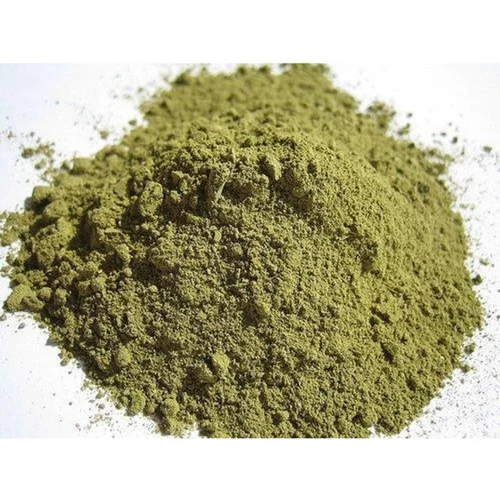
Crop protection depends heavily on modern formulation chemistry. As farming becomes more precise, growers actively demand formulations with superior dispersion, low dusting, high biological efficacy, and extended shelf life. Consequently, chemical processing companies must utilize specialized thermal drying equipment to convert liquid active ingredients into stable, dry powders.
Bulk inorganic fertilizers process dozens of tons per hour in massive rotary kilns. In contrast, active crop protection agents—such as pesticides, herbicides, fungicides, and biopesticides—typically operate on smaller, highly controlled batch scales. Moreover, active chemical ingredients are often heat-sensitive, toxic, or prone to dust explosion hazards. Therefore, selecting the right dryer directly maintains active stability, controls particle shape, and protects plant operators. Furthermore, because different active compounds exhibit distinct drying behaviors, custom engineering becomes necessary to optimize production yields.
This guide thoroughly reviews the primary thermal drying systems used for agrochemicals: Spray Dryers, Combination Dryers, and Vibratory Fluidised Bed Dryers. Additionally, it matches each drying technology to specific formulations like Wettable Powders (WP), Water Dispersible Granules (WDG), and active technical intermediates.
1. Agrochemical Processing Dynamics and Requirements
Agrochemical formulation differs fundamentally from general heavy chemical processing in several key operational ways:
-
Smaller Capacities: Bulk mineral plants evaporate over 20 to 50 tons of water per hour. Conversely, agrochemical lines operate between 50 kg/hr and 3,000 kg/hr. Furthermore, plants prioritize high yield optimization over sheer volume.
-
Thermal Sensitivity: Active ingredients often melt at low temperatures (50°C to 120°C) or decompose under prolonged heat. Therefore, dryers must provide fast evaporation rates alongside precise temperature control.
-
Containment Control: Pesticide dusts pose health risks and environmental hazards. Consequently, drying circuits run under negative pressure using multi-stage containment like cyclones, bag filters, and wet scrubbers.
-
Powder Engineering: Wettable powders and granules must disintegrate rapidly in farm spray tanks. Specifically, achieving high suspendability (above 80% to 90%) requires exact control over particle size, density, and residual moisture (below 0.5% to 1.5%). As a result, maintaining tight control over thermal parameters is critical during every stage of drying.
2. Spray Drying Technology
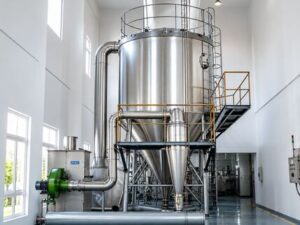
Spray drying converts pumpable liquids, slurries, and active emulsions into uniform dry powders in a single continuous step.
Working Principle
First, a feed pump delivers liquid formulation through an atomizer into the main drying chamber. Meanwhile, filtered hot air enters from the top via a gas disperser. Next, atomization breaks the liquid into millions of micro-droplets, creating a massive surface area.
When micro-droplets contact hot air, surface moisture evaporates instantly. Additionally, latent heat absorption keeps actual droplet temperatures well below inlet air levels, protecting heat-sensitive active ingredients. Ultimately, the dry powder drops to the chamber bottom or moves into secondary cyclone collectors. In fact, this rapid conversion process minimizes thermal exposure time significantly.
Technical Characteristics
-
Inlet Air Temperature: 140°C to 220°C, depending on active ingredient thermal limits.
-
Outlet Air Temperature: 65°C to 95°C to balance moisture removal and product stability.
-
Atomizer Options: Rotary disks for abrasive slurries (tip speeds of 100 to 180 m/s), pressure nozzles for coarser particles, or two-fluid nozzles for fine sprays.
-
Moisture Control: Reduces feed moisture from 45%–65% down to final levels of 0.5%–2.0%.
Best Applications
-
Wettable Powders (WP): Direct conversion of milled active slurries and inert clays into fine powders.
-
Water Soluble Powders (SP): Solutions of active salts dried into fast-dissolving micro-powders.
-
Technical Intermediates: Synthesized intermediate salts requiring rapid moisture removal before final blending.
-
Microencapsulated Pesticides (CS): Polymeric microcapsules gently dried into stable flowable formulations.
3. Combination Drying Systems (Tray + Fluid Bed)
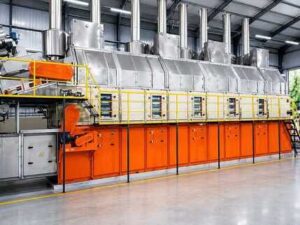
Extruded wet formulations, pastes, or heavy filter cakes cannot pass through atomizers. Similarly, single-stage dryers can cause surface hardening or thermal damage. A Combination Dryer solves this by pairing tray drying with a fluidised bed finishing stage.
Working Principle
-
Stage 1 – Gentle Tray Drying: Wet cakes or pastes are spread on upper stainless steel trays. Controlled hot air removes surface moisture gradually, preventing surface crusting (“case hardening”).
-
Stage 2 – Intermediate Conditioning: As trays circulate through internal zones, temperatures adjust dynamically. Moisture diffuses to the surface without exposing active chemicals to high thermal stress.
-
Stage 3 – Fluidised Bed Finishing: Material drops into a lower fluidised bed section. High-velocity air passes through a perforated plate, fluidising particles to equalize final moisture and improve flowability.
Technical Characteristics
-
Multi-Zone Temperature Control: Upper tray zones run cooler (50°C to 75°C) to protect wet compounds. Furthermore, the finishing bed operates at 60°C to 85°C for rapid final drying.
-
Mechanical Design: Built with double-walled insulated chambers, SS304/SS316 trays, and sealed drive systems to prevent contamination.
-
Thermal Efficiency: Recirculating air dampers recover 40% to 60% of heated air, significantly reducing fuel consumption.
-
Flexible Residence Time: Variable speed drives adjust exposure times from 20 to 120 minutes.
Best Applications
-
Extruded Water Dispersible Granules (WDG): Wet extruded granules requiring gentle initial drying to maintain structure.
-
Moist Technical Filter Cakes: Milled active cakes (25% to 45% initial moisture) that are too sticky for direct fluidization.
-
Bio-Pesticides and Botanicals: Heat-sensitive bio-fungicides and neem extracts needing low-temperature drying.
4. Vibratory Fluidised Bed Dryers (VFBD)
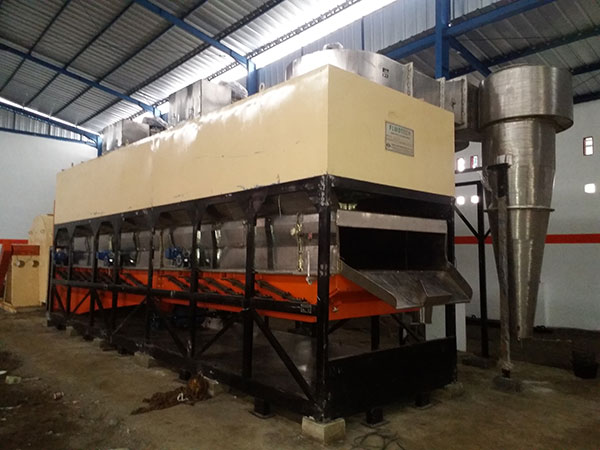
For pre-formed granules, active crystals, and durable particulate mixtures, the Vibratory Fluidised Bed Dryer delivers efficient heat transfer with low particle degradation.
Working Principle
Standard fluid bed dryers require high upward air velocity to fluidise materials. However, sticky active formulations can cause channel formation or local agglomeration.
Instead, a Vibratory Fluidised Bed Dryer combines mechanical vibration with upward airflow. Dual eccentric motors vibrate the perforated bed at 750 RPM to 1500 RPM with 2 mm to 6 mm strokes. Consequently, this vibration breaks up sticky clusters and drives material forward uniformly. Furthermore, air velocity can be reduced by 20% to 30%, noticeably lowering dust carryover into filter bags. Thus, this dual-action drying mechanism improves overall energy efficiency while preserving product structural integrity.
Technical Characteristics
-
Lower Air Velocity: Reduces dust entrainment compared to static fluid beds.
-
Plug-Flow Movement: Ensures uniform residence time so every particle receives equal drying.
-
Integrated Cooling: Final bed sections blow cool air to bring granules below 35°C before packaging, successfully preventing caking inside drums.
Best Applications
-
Granular Water Dispersible Granules (WDG): Uniform drying of spherical granules without damaging delicate structures.
-
Crystalline Active Ingredients: Direct drying of technical active crystals, lowering moisture from 10% to under 0.2%.
-
Micro-Granular Soil Pesticides: Coated sand or clay carriers loaded with active ingredients requiring gentle drying.
5. Transition Analysis & Dryer Selection Comparison
When deciding on equipment, engineers must carefully evaluate feed characteristics alongside thermal requirements. For instance, pumpable slurries react best to instant spray drying, whereas extruded pastes require staged tray conditioning to avoid particle structural collapse. Moreover, crystalline products benefit most from mechanical vibration, which prevents bed channeling. In comparison, delicate biological compounds require strictly controlled, low-temperature processing environments. Furthermore, since active ingredients differ in viscosity, moisture retention, and heat tolerance, selecting the appropriate drying mechanism becomes essential for preserving molecular stability.
Consequently, processing facilities often evaluate equipment based on moisture reduction efficiency, particle integrity, and overall operational safety. In addition, factors such as cleaning convenience between production batches play a critical role during system design. To clarify these differences, the comparative breakdown below highlights these core operational metrics:
| Feature | Spray Dryer | Combination Dryer | Vibratory Fluidised Bed Dryer |
| Feed Form | Pumpable liquids, slurries | Extruded granules, pastes | Granules, crystals, wet solids |
| Output Form | Fine powders, micro-granules | Intact granules, dried cakes | Intact uniform granules, crystals |
| Feed Moisture | 40% to 80% | 20% to 50% | 5% to 25% |
| Final Moisture | 0.5% to 2.0% | 0.2% to 1.5% | 0.1% to 0.5% |
| Drying Time | 5 to 30 seconds | 30 to 120 minutes | 5 to 30 minutes |
| Best For | WP, SP, CS microcapsules | Extruded WDG, bio-pesticides | Granular WDG, active crystals |
6. Safety, Containment, and Operations
-
Explosion Protection: Organic active dusts can create explosive atmospheres. Therefore, plants require explosion vent panels, spark suppression, or nitrogen closed-loop systems for solvent feeds.
-
Emissions Containment: Systems run under negative static pressure (-50 Pa to -200 Pa) to prevent chemical leaks. Additionally, exhaust air passes through cyclones, reverse-pulse bag filters, and wet scrubbers.
-
Energy Savings: Heat recovery loops capture exhaust air heat, effectively preheating intake air and cutting energy costs by 15% to 30%.
-
Cleanability: Smooth SS304/SS316 construction with Clean-In-Place (CIP) nozzles ensures rapid washing and prevents cross-contamination between batches. In turn, this minimizes operational downtime between product changes.
7. Turnkey Engineering & Equipment Supply
Selecting the correct dryer ensures active ingredient stability, high dispersion rates, and consistent powder quality. Ultimately, equipment selection directly impacts yield, safety, and operating costs. As a result, partnering with experienced process engineers significantly reduces operational downtime and optimizes thermal performance across every production stage. Furthermore, turnkey system design simplifies installation, testing, and regulatory compliance.
At GENEX Tech Industries LLP, we offer over 40 years of expertise in industrial process engineering:
-
Custom Spray Dryers: Rotary or nozzle atomization with precise controls and efficient powder recovery.
-
Combination Dryers: Multi-stage systems for gentle drying of pastes, filter cakes, and extruded formulations.
-
Vibratory Fluidised Bed Dryers: Efficient drying and integrated cooling for granules and active crystals.
We assist at every step, offering feasibility studies, process design, pilot testing, manufacturing, and full plant installation.
Contact Information
For technical consultations, custom plant design, or trial requests, contact our team:
-
Company Name: GENEX Tech Industries LLP
-
Head Office Address: 10C, Sir William Jones Sarani (Middleton Row), Park Street, Kolkata – 700071, West Bengal, India
-
Direct Phone / WhatsApp Contact: +91-97489 06968 | +91-93300 77417
-
Official Business Email: mktg@foodtechprojects.com | sales@foodtechprojects.com
-
Official Company Websites: www.foodtechprojects.com | www.gtidryers.com