
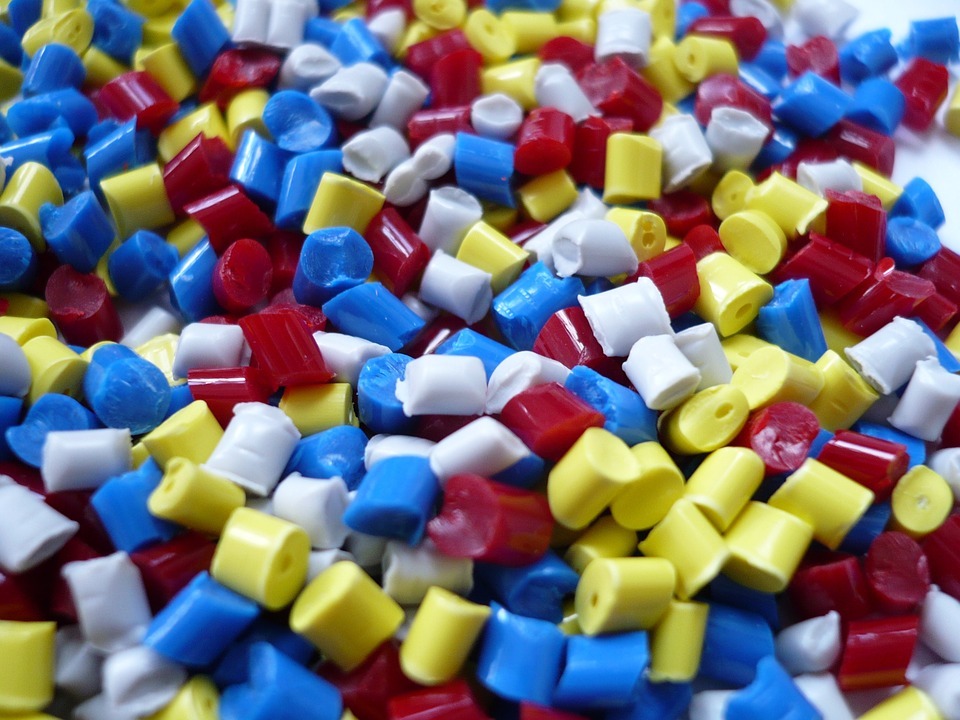
1. Executive Introduction to Industrial Polymer Drying
In modern plastic manufacturing, moisture control is critical. It directly determines structural integrity and optical clarity. It also governs mechanical performance. Consequently, polymer producers must deploy specialized dehydration systems.
Raw synthetic polymers emerge from reactors with moisture. They often carry solvent residues or trapped bound water. Therefore, processing damp feeds into extruders leads to failures. As a result, selecting correct drying machinery is mandatory.
The Impact of Moisture on Thermoplastic Processing
Uncontrolled water in melt feeds triggers severe chemical degradation. For example, water at elevated temperatures causes rapid hydrolysis in hygroscopic polymers. Hydrolysis systematically severs polymer chain backbones. Consequently, molecular weight plummets rapidly.
Furthermore, this micro-structural cleavage causes brittle fracture behavior. It also causes severe loss of tensile strength. Additionally, it creates cosmetic splay marks and silver streaking. It even causes internal voids and bubble formation.
In contrast, surface moisture vaporizes inside extruder barrels when processing non-hygroscopic polymers. Thus, steam pockets induce process surging. They also cause erratic melt pressure fluctuations and nozzle drool. Ultimately, achieving precise moisture levels down to 50 ppm is mandatory.
Engineering Challenges in Polymer Feed Handling
Meanwhile, the physical state of the polymer feed adds engineering complexity. Indeed, manufacturers handle diverse physical forms. These range from fine powders to uniform cylindrical pellets.
Each physical form exhibits unique bulk densities and thermal sensitivities. They also show different fluidization behavior and moisture retention profiles. Therefore, no single drying technology serves every processing line.
Accordingly, leading manufacturers like Genex Tech Industries LLP engineer specialized machinery. Their line includes Fluid-Bed Dryers and Rotary Drum Dryers. They also manufacture Desiccant Dehumidifiers, Spray Dryers, and Combination Dryers. Finally, they offer Vibratory Fluidised Bed Dryers (VFBD).
Strategic System Evaluation and Optimization
To assist plant managers, this publication integrates concrete operational data. It also provides precise thermal processing ranges. Furthermore, it includes quantitative selection frameworks.
Essentially, process engineers must balance hot dry air and residence time. They must also evaluate vibration dynamics and dew-point suppression. Understanding this interplay allows facilities to maximize operational throughput. Simultaneously, facilities can drastically curtail specific energy consumption per kilogram.
2. Fundamental Classification of Polymers & Moisture Behavior
To implement an effective dehydration system, engineers must categorize raw polymers. Specifically, they classify materials by their physical affinity for water. Broadly speaking, plastics fall into two primary classifications: Non-Hygroscopic and Hygroscopic.
Clearly, understanding this division is essential. It reveals why certain materials require simple hot air evaporation. Conversely, it shows why others demand deeply dry air streams from desiccant dehumidifiers.
2.1 Non-Hygroscopic Polymers
First, Non-Hygroscopic Polymers possess non-polar molecular structures. These structures naturally repel water molecules. Consequently, water cannot penetrate inside the solid core.
Instead, moisture exists exclusively on the external surface. It appears as surface wetness or condensation. Typically, non-hygroscopic plastics include Polyethylene (PE) and Polypropylene (PP). Certain unplasticized Polyvinyl Chloride (PVC) blends also belong to this group.
Furthermore, because moisture remains on the outer surface, drying relies on convective heat transfer. Specifically, passing ambient hot air over the material provides sufficient thermal energy. This thermal energy easily overcomes the latent heat of vaporization.
Subsequently, the moving air stream sweeps away vaporized water. Therefore, non-hygroscopic polymers do not require low dew-point air. Instead, high-throughput systems like Fluid-Bed Dryers or VFBDs use heated ambient air. They efficiently reduce moisture from 15% down to 0.05% within short residence times.
2.2 Hygroscopic Polymers
In sharp contrast, Hygroscopic Polymers contain polar molecular groups. These include hydroxyl, carbonyl, ester, or amide groups. As a result, these groups exert strong chemical attraction forces on water molecules.
Accordingly, ambient moisture actively migrates into the solid core through molecular diffusion. This absorbed water becomes trapped internally as bound moisture. It establishes a chemical vapor pressure equilibrium with the surrounding humidity.
For example, primary instances include Polyethylene Terephthalate (PET) and Polyamides (Nylon). Polycarbonate (PC), Polyurethane (PU), and Polymethyl Methacrylate (PMMA) are also hygroscopic.
Consequently, removing bound moisture requires a complex two-step thermodynamic process. First, thermal energy must transfer into the pellet core to mobilize trapped water. Second, operators must maintain a high concentration gradient in the surrounding air. This gradient forces internal moisture to diffuse outward.
However, if surrounding air is humid, internal moisture diffusion stops completely. Therefore, drying hygroscopic polymers mandates specialized Desiccant Dehumidifying Dryers. These systems supply process air with extremely low dew points (-40°C to -50°C). Ultimately, this dry environment forces internal moisture to migrate outward. It safely reduces internal moisture below 50 ppm prior to extrusion.
Key Processing Insight: Moisture Limits & Degradation Effects
Crucially, processing hygroscopic resins above 0.005% moisture results in instant hydrolytic degradation. This occurs inside the extruder barrel at temperatures above 260°C. Indeed, hydrolysis breaks polymer chains. This causes reduced Intrinsic Viscosity (IV) and severe impact resistance drops. It also creates haziness in clear blow-molded bottles.
3. Deep Dive into Polymer Dehydration Dryer Technologies
Undoubtedly, selecting optimal drying equipment requires detailed engineering analysis. Engineers must evaluate working principles, structural configurations, and thermal dynamics. Below, we systematically examine primary industrial dryer types.
3.1 Fluid-Bed Dryers (Static & Vibratory)
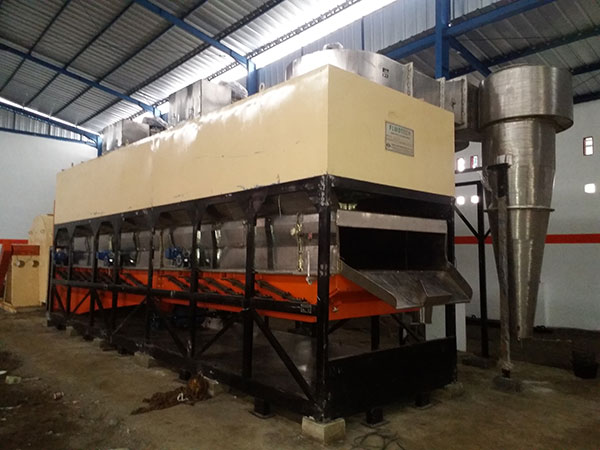
Generally, Fluid-Bed Dryers direct heated gas upward through a perforated distributor plate. This plate supports a bed of wet polymer particles. When gas velocity reaches minimum fluidization velocity, drag balances gravitational force. Consequently, the solid bed expands into a dynamic, fluid state. In this state, particles behave much like a boiling liquid.
Importantly, this fluid state provides exceptional gas-solid contact area. It creates extremely high convective heat and mass transfer rates. As a direct result, thermal energy transfers into wet surfaces within seconds.
For instance, with fine powders and granular PVC, static fluid-bed dryers offer continuous high-volume drying. They also deliver high thermal efficiency. However, static beds suffer when handling irregular shapes or sticky surfaces. In those cases, they can suffer from air channeling, localized overheating, or agglomeration.
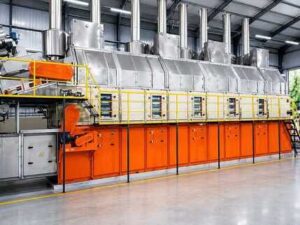
To overcome these limitations, Vibratory Fluidised Bed Dryers (VFBD) integrate mechanical vibration. Specifically, dual vibratory motors impart a directional vibration vector to the deck.
Thus, mechanical energy assists in fluidizing sticky particles at lower gas velocities. Furthermore, VFBD systems prevent particle agglomeration. They maintain uniform plug-flow transport and minimize dust elutriation. Consequently, they dramatically cut fan electrical power consumption.
3.2 Rotary Drum Dryers
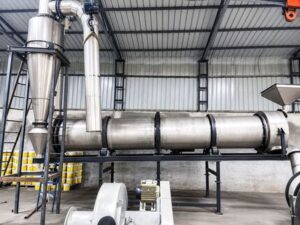
Meanwhile, Rotary Drum Dryers consist of a massive, inclined cylindrical shell. The shell mounts on trunnion bearings and rotates via a ring gear. As the drum rotates at low speeds (2 to 12 RPM), internal flighting blades pick up wet granules. Subsequently, they shower them through a stream of hot drying air. This continuous cascading action directly exposes every particle to heated air. Thus, it effectively drives off surface moisture and volatile solvents.
Consequently, Rotary Drum Dryers excel in heavy-duty industrial applications. They handle massive continuous throughputs up to 50 tons per hour. Moreover, continuous tumbling allows rotary dryers to process sticky polymer slurries effortlessly. They also handle recycled plastic flakes, filled granules, and HDPE pellets.
Furthermore, indirect steam-tube rotary dryers feature internal tubes carrying high-pressure steam. As a result, thermal energy transfers via direct conduction. This avoids introducing large volumes of air to sensitive or explosive solvent vapors.
3.3 Desiccant Dehumidifying Dryers
In comparison, Desiccant Dehumidifying Dryers represent the pinnacle of technology for hygroscopic resins. They process sensitive materials like PET, PC, and Polyamides. Instead of merely heating ambient air, a desiccant dryer operates in a closed loop. Specifically, it utilizes dual desiccant beds or a rotating honeycomb wheel. These components contain molecular sieve synthetic zeolites. Hence, they absorb water vapor, delivering process air with dew points from -40°C to -60°C.
During operation, hot, dry process air enters the base of an insulated drying hopper. As dry air ascends through the bed, it heats the pellets. Simultaneously, it absorbs internal moisture diffusing outward from the core.
Subsequently, moisture-laden air exits the hopper top and passes through a dust filter. It then flows through a heat exchanger into the active desiccant tower. There, the molecular sieve matrix adsorbs moisture.
Simultaneously, the second desiccant tower undergoes high-temperature thermal regeneration (200°C to 280°C). This drives off trapped moisture before switching back into service. Therefore, this closed-loop configuration maintains a constant low relative humidity. It ensures continuous deep drying regardless of seasonal humidity fluctuations.
3.4 Spray Dryers for Polymer & Resin Suspensions
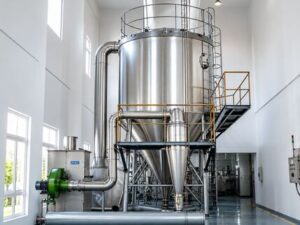
Alternatively, Spray Dryers occupy a vital role in initial production phases. They process emulsion PVC (E-PVC), acrylic resins, dispersions, and latexes. Unlike pellet dryers, spray dryers accept pumpable liquid feeds or solvent-borne slurries. First, high-speed rotary atomizers transform liquid feed into millions of micro-droplets. They operate at 10,000 to 25,000 RPM.
Consequently, atomization creates an immense surface-area-to-volume ratio. Surface moisture or solvent flash evaporates almost instantly inside the chamber. As a result, solid polymer micro-spheres form within milliseconds.
Because rapid surface evaporation keeps droplet temperatures low, thermal degradation is completely avoided. Finally, operators collect dry powder continuously at the chamber cone. High-efficiency cyclone separators and pulse-jet bag filters separate the final product.
3.5 Combination Dryers (Multi-Stage Systems)
In addition, Combination Dryers integrate two or more distinct drying principles. This multi-stage setup maximizes energy efficiency and process control. For example, a typical system couples a multi-pass tray zone with a final VFBD finishing stage. Initially, wet feeds containing up to 25% moisture pass through preliminary drying stages. This gently drives off high surface moisture without inducing thermal shock or particle sticking.
Subsequently, semi-dried polymer transitions directly into a fluidised bed finishing zone. There, high-velocity air fluidizes particles to equalize moisture levels. It achieves precise target moisture thresholds down to 0.02%. Thus, combination dryers are ideal for bio-polymers, post-consumer flake, and heat-sensitive masterbatches. Staged temperature profiling preserves color and optimizes heat recovery.
4. Detailed Analysis by Polymer Type
Naturally, every industrial polymer exhibits distinct chemical properties and melting points. They also exhibit unique glass transition temperatures and moisture retention behaviors. Therefore, manufacturers must tailor thermal drying equipment to each polymer family. Below is a detailed breakdown across major industrial plastics.
4.1 Polyvinyl Chloride (PVC – Suspension & Emulsion)
To begin with, Polyvinyl Chloride (PVC) manufacturing represents a massive industrial drying application. Generally, manufacturers produce PVC via two distinct routes: Suspension PVC (S-PVC) and Emulsion PVC (E-PVC). Each route requires radically different drying equipment.
For Suspension PVC (S-PVC), reactor slurry undergoes mechanical dewatering in centrifuges. This produces a damp cake containing 8% to 15% surface moisture. Notably, S-PVC grains are porous and non-hygroscopic.
Consequently, systems must remove surface water efficiently without exceeding thermal degradation thresholds. Thus, continuous Fluid-Bed Dryers and VFBDs serve as industry standards.
Heated air at 90°C to 110°C fluidizes PVC grains. It safely reduces moisture content below 0.05% within short residence times. Alternatively, large Rotary Drum Dryers with internal steam tubes are deployed in mega-plants.
In contrast, Emulsion PVC (E-PVC) is produced as a liquid latex emulsion. Fine polymer particles remain suspended in water. However, centrifuges cannot mechanically dewater fine emulsion drops.
Therefore, plants must process E-PVC directly using Industrial Spray Dryers. High-speed rotary atomizers transform latex into fine mist inside large drying chambers. Operating inlet air temperatures range from 160°C to 200°C. As a result, rapid flash evaporation yields free-flowing E-PVC paste resin powders. Residual moisture remains strictly under 0.1%.
4.2 Polyethylene (PE – HDPE, LDPE, LLDPE) & Polypropylene (PP)
Meanwhile, Polyolefins—comprising HDPE, LDPE, LLDPE, and PP—represent the highest volume thermoplastics globally. Fundamentally, polyolefins are strictly non-hygroscopic. Hence, water cannot penetrate the hydrophobic polymer core.
However, during polymerization, slurry washing, or recycling, polyolefins carry surface water. Surface moisture levels typically range from 3% to 20%.
For polyolefin powders and reactor fluff, continuous Static Fluid-Bed Dryers and VFBDs provide ideal processing. Process air heated to 70°C–105°C rapidly vaporizes surface moisture. Air temperatures are kept safely below the softening point of low-density grades. This process drives moisture levels below 0.02%.
Additionally, during pelletizing operations, underwater strand pelletizers drop hot pellets into water flumes. High-speed centrifugal dewatering units combined with fluid-bed air knives efficiently strip surface water. This prepares pellets for immediate silo storage or bulk bagging.
4.3 Polyethylene Terephthalate (PET) & Hygroscopic Engineering Resins
Furthermore, Polyethylene Terephthalate (PET) represents a demanding hygroscopic polymer. Widely used for bottle preforms and synthetic fibers, PET readily absorbs atmospheric moisture. Water enters directly into its amorphous or semi-crystalline matrix.
Consequently, if extruders process PET pellets with moisture exceeding 50 ppm, rapid hydrolysis occurs. Hydrolysis takes place at melt temperatures between 260°C and 300°C. Indeed, it cleaves ester linkages, causing severe drops in Intrinsic Viscosity (IV). It also causes brittle mechanical failure and optical hazing.
Therefore, PET drying requires advanced Desiccant Dehumidifying Dryers operating in a closed loop. Process air streams must maintain continuous dew points of -40°C to -50°C. Additionally, PET pellets must undergo thermal crystallization before deep drying if supplied in an amorphous state. Amorphous PET pellets soften and become sticky above their glass transition temperature ($T_g \sim 78^\circ\text{C}$).
To prevent agglomeration, amorphous PET passes through a dynamic agitated crystallizer at 120°C to 160°C. This forms a non-sticky semi-crystalline shell. Afterwards, it enters the primary desiccant drying hopper operating at 160°C to 180°C for 4 to 6 hours. Ultimately, this process guarantees IV preservation in final preforms.
4.4 Specialty Resins (Polyamides/Nylon, PC, ABS, PMMA, Polyurethanes)
Similarly, specialty engineering resins exhibit high hygroscopicity. Key examples include Polyamides (Nylon 6, Nylon 6,6), Polycarbonate (PC), ABS, PMMA, and TPUs. For example, Polyamides contain amide linkage groups that form strong hydrogen bonds with water. They absorb up to 2.5% moisture under ambient atmospheric conditions.
Consequently, processing these specialty resins requires closed-loop Desiccant Dehumidifying Dryers. Systems must deliver air dew points strictly below -40°C. Operating drying temperatures range from 80°C for TPUs up to 120°C for PC and Nylon. Typical residence times range between 2 and 5 hours. Thus, maintaining moisture below 100 ppm prevents splay, void formation, and structural embrittlement.
5. Technical Data & Performance Metrics
5.1 Comparative Technical Specifications of Industrial Dryer Types
| Dryer Type | Primary Material Form | Operating Temp Range (°C) | Typical Dew Point (°C) | Thermal Efficiency (%) | Continuous Capacity Range | Typical Residence Time |
| Fluid-Bed Dryer (Static) | Free-flowing powders, PVC granules, PE/PP fluff | 50°C – 140°C | Ambient (0°C to +15°C) | 60% – 75% | 500 kg/hr – 15 Tons/hr | 5 – 30 Minutes |
| Vibratory Fluid Bed (VFBD) | Sticky flakes, wide particle sizes, masterbatches | 40°C – 130°C | Ambient (0°C to +15°C) | 65% – 82% | 200 kg/hr – 10 Tons/hr | 3 – 20 Minutes |
| Rotary Drum Dryer | Heavy slurries, washed flake, high-volatility solids | 60°C – 220°C | Ambient / Exhaust Gas | 50% – 68% | 1 Ton/hr – 50 Tons/hr | 15 – 60 Minutes |
| Desiccant Dehumidifier | Hygroscopic pellets (PET, Nylon, PC, ABS) | 70°C – 180°C | -40°C to -60°C | 70% – 85% | 20 kg/hr – 3 Tons/hr | 2 – 6 Hours |
| Industrial Spray Dryer | Liquid latex, polymer emulsions, resin solutions | 140°C – 280°C | Exhaust Moisture Control | 55% – 70% | 50 kg/hr – 8 Tons/hr (Evap) | 2 – 15 Seconds |
| Combination Dryer | High-moisture flake, bio-polymers, specialty resins | 50°C – 150°C | Adjustable / Closed-Loop | 72% – 88% | 300 kg/hr – 8 Tons/hr | 10 – 45 Minutes |
5.2 Polymer-Specific Moisture Limits & Dryer Selection Matrix
| Polymer Material | Hygroscopic Status | Initial Moisture Range (%) | Target Moisture Limit (%) | Recommended Dryer Type | Processing Drying Temp (°C) |
| Suspension PVC (S-PVC) | Non-Hygroscopic | 8.0% – 15.0% | < 0.05% (500 ppm) | Fluid-Bed / VFBD / Steam-Tube Rotary | 85°C – 105°C |
| Emulsion PVC (E-PVC) | Liquid Feed (Latex) | 40.0% – 60.0% | < 0.10% (1000 ppm) | Industrial Spray Dryer | 160°C – 200°C (Inlet) |
| HDPE / LDPE / LLDPE | Non-Hygroscopic | 3.0% – 10.0% | < 0.02% (200 ppm) | VFBD / Continuous Fluid Bed | 70°C – 95°C |
| Polypropylene (PP) | Non-Hygroscopic | 2.0% – 8.0% | < 0.02% (200 ppm) | Fluid-Bed / VFBD | 80°C – 110°C |
| PET (Virgin / Recycled) | Highly Hygroscopic | 0.15% – 0.50% | < 0.005% (50 ppm) | Desiccant Dehumidifying Dryer | 160°C – 180°C |
| Polyamide (Nylon 6 / 6,6) | Highly Hygroscopic | 0.20% – 1.20% | < 0.010% (100 ppm) | Desiccant Dehumidifying Dryer | 80°C – 105°C |
| Polycarbonate (PC) | Hygroscopic | 0.10% – 0.40% | < 0.010% (100 ppm) | Desiccant Dehumidifying Dryer | 115°C – 130°C |
| ABS / SAN Resins | Hygroscopic | 0.20% – 0.80% | < 0.030% (300 ppm) | Desiccant Dryer / Hot Air Hopper | 80°C – 95°C |
| Washed Post-Consumer Flake | Variable (Mixed) | 10.0% – 25.0% | < 0.05% (500 ppm) | Combination Dryer (Tray + VFBD) | 90°C – 120°C |
6. Key Design Factors & Equipment Selection Framework
6.1 Residence Time & Kinetics of Dehydration
Fundamentally, drying time depends on moisture removal kinetics. Engineers must determine if external evaporation or internal diffusion controls the process. For non-hygroscopic materials (PE, PP, S-PVC), moisture resides on the particle surface.
Consequently, heat transfer into the liquid surface occurs rapidly. Evaporation kinetics are fast. As a result, residence times inside fluid-bed or VFBD systems are short (3 to 15 minutes).
In contrast, moisture removal in hygroscopic resins follows Fickian diffusion kinetics. Water must diffuse through the solid polymer matrix. Because the diffusion coefficient of water through plastic is low, heat must penetrate deep into the pellet core.
Therefore, rapid heating cannot force moisture out faster than the physical diffusion rate permits. Consequently, hygroscopic resins require long residence times inside insulated tall hoppers. They typically need 2 to 6 hours of exposure to low dew-point dry air.
6.2 Particle Size Distribution, Bulk Density, and Air Flow Dynamics
Meanwhile, the physical geometry of the polymer feed dictates fluidization behavior. It also governs air velocity requirements. For instance, fine powders with low bulk density easily entrain in air streams. Thus, static fluid beds processing fine powders require lower air velocities (0.1 to 0.4 m/s). Additionally, they need spacious expansion zones and bag filters to capture carryover particles.
Conversely, dense polymer pellets or irregular rigid flakes possess higher terminal falling velocities. As a result, static fluidizing air streams require high air volumes to lift the bed. This leads to excessive energy usage or air channeling.
In these demanding scenarios, Vibratory Fluidised Bed Dryers (VFBD) prove superior. Specifically, the mechanical vibration vector moves heavy particles along the deck plate. Consequently, this design allows uniform contact at lower air velocities (0.5 to 1.2 m/s). It effectively reduces fan power requirements by up to 40%.
6.3 Materials of Construction & Surface Hygiene
In addition, industrial polymer dryers must feature high-grade construction materials. High-grade alloys prevent product contamination and withstand corrosive additives. They also endure continuous thermal cycling. Specifically, for engineering plastics and optical resins, all contact surfaces must feature Stainless Steel SS304 or SS316L. Furthermore, workers must grind internal welds smooth and mirror-polish them ($R_a < 0.4\ \mu\text{m}$). This prevents polymer fines from hanging up, degrading, and contaminating subsequent batches.
Similarly, heavy-wear zones require extra protection when processing abrasive compounds containing high filler loadings. These include 30% glass fiber reinforced nylon or calcium carbonate filled polypropylene. Consequently, wear zones inside rotary drum flights, spray atomizers, and distributor decks feature hardened alloys. They also utilize tungsten carbide coatings or replaceable wear liners to ensure long operational lifetimes.
6.4 Automation, Process Control, and Energy Integration
Furthermore, modern polymer processing plants demand continuous real-time process monitoring. Monitoring guarantees product quality and minimizes energy consumption. Therefore, advanced dryer installations feature fully automated PLC and SCADA control architectures. Indeed, these setups integrate multi-point temperature sensors, digital air flow meters, and continuous inline moisture analyzers.
For example, with desiccant dehumidifiers, continuous dew-point sensors monitor air quality at the drying hopper inlet. If the dew point degrades above -35°C, the SCADA controller automatically triggers a tower switchover. Alternatively, it adjusts regeneration heater duty.
Moreover, modern drying plants integrate waste heat recovery systems (WHRS). These systems capture heat from exhaust air streams via heat exchangers. They use this captured thermal energy to preheat incoming fresh air. Ultimately, this heat recovery loop boosts thermal efficiency by 15% to 25%. It drastically reduces overall operating costs per ton of processed polymer.
6.5 Environmental Compliance, Solvent Recovery, and Explosion Safety (ATEX)
Specifically, advanced safety systems are required when dehydrating resins synthesized in organic solvent media. Safety systems are also mandatory when resins contain volatile monomer residues. Key examples include residual styrene monomer in ABS or residual vinyl chloride monomer in PVC. Consequently, closed-circuit drying loops operating under nitrogen inertization are mandated. Inert gas prevents volatile solvent vapors from reaching lower explosive limits (LEL).
Furthermore, Spray Dryers and Fluid-Bed Dryers processing solvent-borne resins incorporate solvent condensation recovery units. As a result, systems chill, condense, and recycle vaporized solvents back into the reactor loop. They achieve over 99.5% solvent recovery efficiency.
Similarly, equipment designs incorporate certified explosion relief vent panels for combustible polymer dusts. These safety measures protect facilities handling fine PE fluff or polyacrylate micro-powders. Designs also feature flameless venting systems, fast-acting isolation valves, and pressure-shock-resistant vessel construction complying strictly with ATEX guidelines. Thus, this guarantees total operational safety alongside environmental compliance.
6.6 Life-Cycle Cost Analysis & Total Cost of Ownership (TCO)
Finally, process engineers must evaluate the Total Cost of Ownership (TCO) over a typical 20-year operational lifecycle. Engineers must look beyond initial capital expenditure (CAPEX). Because thermal dehydration is energy-intensive, utility consumption accounts for approximately 70% to 85% of lifecycle costs. Meanwhile, capital investment represents only 10% to 15%.
Consequently, selecting high-efficiency equipment configurations yields massive cumulative cost savings. Recommended options include Vibratory Fluidised Bed Dryers (VFBD) or Desiccant Dryers with closed-loop heat recovery. For instance, replacing a static hot-air dryer with a modern VFBD reduces thermal energy consumption by 25%. Equipping the VFBD with variable frequency drives (VFD) and heat recirculation also reduces electric motor power by 35%. As a direct result, facilities achieve initial capital payback in under 14 to 18 months.
7. Strategic Machinery Selection and Conclusion
In summary, moisture management is a fundamental engineering pillar in modern polymer production. It is equally critical in resin synthesis, plastic compounding, and converting operations. As demonstrated, raw plastic feedstocks exhibit widely diverse physical forms. They also display unique thermodynamic moisture retention behaviors.
Specifically, non-hygroscopic polymers such as PE, PP, and S-PVC carry surface moisture. Operators can rapidly and economically remove surface wetness using convective Fluid-Bed Dryers. They can also deploy Vibratory Fluidised Bed Dryers (VFBD) or heavy-duty Rotary Drum Dryers. Meanwhile, liquid polymer latexes and resin emulsions such as E-PVC require instant flash evaporation. High-speed Industrial Spray Dryers evaporate liquid feeds rapidly to yield uniform micro-powders.
Conversely, hygroscopic engineering resins retain internal bound water within their molecular backbones. Key examples include PET, Polyamides, Polycarbonate, and specialty copolymers. Therefore, processing these sensitive resins mandates continuous closed-loop Desiccant Dehumidifying Dryers. These systems deliver ultra-low air dew points down to -40°C or -60°C. Ultimately, maintaining strict moisture thresholds below 50 ppm is vital. It prevents hydrolytic degradation, loss of molecular weight, and structural defect formation during extrusion.
Additionally, Combination Dryers offer tailored multi-stage thermal profiles. They combine multi-pass tray zones with fluidised bed finishing stages. These systems are ideal for high-moisture recycled flakes, bio-polymers, and masterbatches. Thus, combination dryers maximize energy efficiency while protecting heat-sensitive materials.
Ultimately, selecting optimal dryer configurations requires balancing polymer chemistry and initial moisture levels. Engineers must also evaluate particle geometry, throughput targets, and energy integration goals.
Genex Tech Industries LLP stands as a premier global leader in industrial drying engineering. With decades of expertise, Genex Tech Industries LLP custom-engineers complete, turnkey drying plants. Their custom solutions meet the exact operational requirements of polymer producers, chemical processors, and compounding facilities worldwide.
Engineered Drying Solutions & Technical Consultation
If your facility is planning a new polymer drying installation, our engineering team is ready to assist you. We can also help if you are upgrading an existing dehydration line. Whether optimizing moisture control for PVC, Polyolefins, PET, Engineering Resins, or Recycled Flakes, we provide expert support. Our team offers comprehensive drying trials, capacity calculations, and turnkey plant designs.