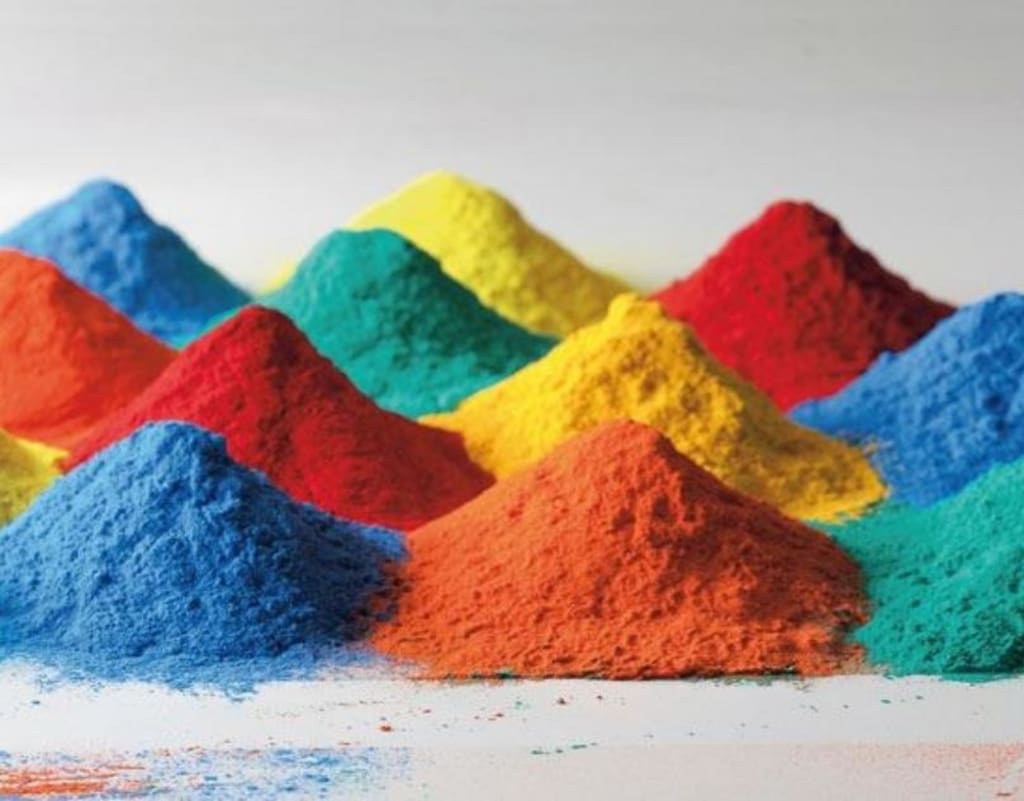
The specialty organic and inorganic chemical industries rely heavily on advanced thermal dehydration technologies to process critical compounds. Consequently, leading dryer manufacturers play a vital role in processing wet filter cakes, dense slurries, and thick sticky pastes. Furthermore, these systems convert difficult feeds into dry, free-flowing powders with tightly controlled physical properties. In addition, selecting the correct drying equipment directly dictates overall operational efficiency, thermal balance, and final product quality across modern chemical synthesis facilities.
Therefore, understanding the underlying thermal dynamics remains essential for plant operators. In fact, improper drying equipment leads to severe bottlenecks. As a result, thermal efficiency drops, while production costs escalate rapidly. To prevent these operational hurdles, process engineers evaluate equipment based on specific material behavior. Ultimately, choosing the right system ensures continuous, trouble-free plant operation.
Throughout the production of pigments, synthetic dyes, titanium dioxide, and specialty silica powders, moisture removal goes far beyond basic dewatering. Indeed, it serves as a crucial product-engineering phase. This step determines bulk density, dispersibility, particle size distribution, color intensity, and long-term chemical stability. As a result of these strict quality standards, chemical plants utilize three primary continuous drying technologies:
-
Spray Drying Systems: Specifically engineered for pumpable liquid feedstocks, low-viscosity slurries, and thixotropic suspensions.
-
Spin-Flash Drying Systems (Combination Dryers): Engineered explicitly for heavy filter cakes, cohesive pastes, and high-viscosity chemical solids.
-
Vibratory Fluidised Bed Dryer Systems: Designed for crystalline particles, damp granules, heat-sensitive compounds, and fragile porous materials.
This detailed guide examines the mechanical principles, operational data, thermal parameters, and application criteria that dictate industrial dryer selection across modern chemical processing facilities.
The Physics and Chemistry of Thermal Dehydration in Specialty Chemicals
Following initial chemical synthesis, precipitation, washing, and mechanical filtration, target chemical compounds remain highly saturated. Filtration typically relies on chamber filter presses, membrane filter presses, or rotary vacuum filters. As a direct result of this processing history, moisture exists in three distinct physical states:
-
Free Surface Moisture: Unbound liquid held on the external surface of individual particles.
-
Capillary Moisture: Liquid trapped within the microscopic pores, voids, and channels of particle agglomerates.
-
Bound Hygroscopic Moisture: Water molecules absorbed directly into the internal molecular structure or held by strong surface tension forces.
Moisture Processing Sequence
-
Wet Chemical Feedstock Input: To begin with, wet feedstock enters the system continuously. Filter cake typically contains 35% to 65% water. Meanwhile, slurry contains 50% to 80% water, and paste contains 30% to 50% water.
-
Thermal Process Chamber Transfer: Subsequently, the material moves into the primary thermal chamber. There, it undergoes rapid convective heat transfer via high-velocity air flow.
-
Primary Technology Execution: Furthermore, the specific processing mechanism depends entirely on the chosen dryer configuration:
-
Spray Drying: Atomized droplets convert liquid feedstock directly into dry powder within seconds.
-
Spin-Flash Drying: Mechanical shear breaks down heavy filter cake into fine, dry particles.
-
Fluid-Bed Drying: Air fluidization enables gentle, uniform drying of granules without structural damage.
-
-
Dry Powder Output: Ultimately, the final product achieves residual moisture content levels between 0.1% and 2.0% with strictly controlled mesh sizes.
Removing this moisture requires precise heat input. The system must overcome the latent heat of vaporization, which measures approximately 2,260 kilojoules per kilogram of water evaporated. Furthermore, chemical engineers must maintain strict control over thermal exposure at every stage. Organic dyes, complex intermediates, and surface-treated pigments are inherently vulnerable to thermal degradation. Therefore, improper temperature profiles can cause irreversible color shifting, surface oxidation, and severe particle agglomeration.
Spray Drying Technology for Chemical Slurries and Solutions
Spray Drying is a continuous, single-step unit operation. It transforms liquid feeds directly into dry powders. As a result of its high speed and continuous efficiency, it stands as the dominant drying technology for pumpable slurries, dissolved dyes, and fine organic pigment suspensions.
Working Principle and Mechanics
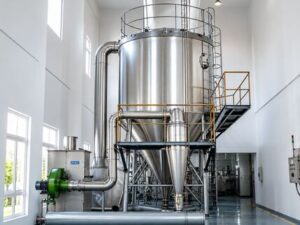
The process begins when holding tanks transfer liquid chemical feed to a high-pressure feeding pump. Next, the liquid enters an atomization mechanism located at the top of a tall, cylindrical drying chamber. The atomizer performs the critical function of breaking the continuous liquid stream into millions of microscopic droplets. Consequently, this action dramatically increases the surface-area-to-volume ratio.
Immediately after atomization, the droplet cloud encounters a controlled flow of heated air. Systems utilize a cocurrent, countercurrent, or mixed flow pattern. Water rapidly evaporates from the surface of each droplet, forming a solid crust or shell around the perimeter. In addition, continued internal vapor pressure drives remaining moisture outward. This leaves behind a perfectly dry, spherical particle.
Because this transfer happens almost instantaneously, thermal damage is minimized. Moreover, the constant evaporative cooling keeps the internal core protected. Afterwards, the newly formed particles settle toward the lower cone section. Hence, the system achieves rapid separation of dry powder from moisture-laden air.
Spray Drying Process Flow
-
Slurry Feed: First, the liquid chemical slurry enters through dedicated high-pressure supply lines.
-
Atomization: Second, high-pressure atomizer nozzles or rotary disks transform the continuous liquid stream into fine droplets.
-
Rapid Evaporative Cooling: Third, hot inlet air contacts the droplet cloud. This contact causes instant surface water vaporization.
-
Powder Formation: Fourth, spherical particles dry rapidly while maintaining a low internal temperature due to latent heat absorption.
-
Collection: Finally, dry powder is efficiently recovered using high-efficiency cyclone separators or bag filter collectors.
Atomization Technologies in Chemical Spray Dryers
| Atomizer Type | Operating Mechanism | Particle Size Produced | Typical Chemical Applications |
| Rotary Atomizer | High-speed wheel rotation (10,000 to 25,000 RPM) using centrifugal force | Fine to Medium (20 to 80 microns) | Abrasive pigment slurries, inorganic colorants, high-viscosity suspensions |
| Pressure Nozzle | High-pressure liquid discharge (100 to 350 bar) through orifice | Coarse to Medium (100 to 300 microns) | Free-flowing organic dyes, granulating dye concentrates |
| Two-Fluid Nozzle | Compressed air mixing with liquid feed at moderate pressure | Ultra-Fine (5 to 30 microns) | Specialty pharmaceutical dyes, laboratory-scale pigment testing |
Key Operating Parameters for Spray Dryers
-
Inlet Air Temperature: 160°C to 320°C.
-
Outlet Air Temperature: 75°C to 110°C.
-
Evaporation Residence Time: 5 to 30 seconds inside the drying chamber.
-
Feed Moisture Level: 40% to 75% water by weight.
-
Final Product Moisture: 0.5% to 2.5% residual moisture.
Advantages and Product Characteristics
-
Creates highly uniform, hollow, or solid spherical particles with exceptional dispersibility.
-
Rapid evaporative cooling protects heat-sensitive organic compounds from thermal degradation. Specifically, the wet bulb temperature of the particle stays low throughout the critical drying stage.
-
Ensures a highly automated, continuous operation with minimal manual labor requirements.
Spin-Flash Drying Technology (Combination Dryers) for Filter Cakes and Pastes
Spin-Flash Drying (Combination Drying) is the premier technology for processing high-density materials. It handles highly cohesive, thixotropic filter cakes and thick chemical pastes directly from filtration units without requiring water dilution.
Working Principle and Internal Mechanics
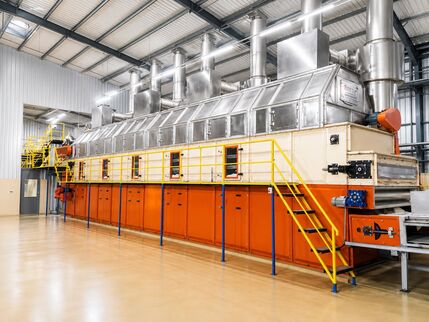
The spin-flash dryer consists of a vertical, cylindrical drying chamber. It features a specialized rotor at its base and a narrow outlet classifier ring at its top.
-
Feeding Phase: To begin the cycle, a variable-speed, heavy-duty feed screw meters heavy filter cake continuously into the lower mixing zone.
-
Mechanical Disintegration: Meanwhile, a high-speed agitator rotating at 300 to 1,500 RPM mechanically tears, shears, and disperses the cohesive cake into small fragments.
-
Thermal Fluidization: Simultaneously, high-velocity heated air enters tangentially into the bottom distribution plenum. This creates a powerful swirling vortex. Consequently, this vortex lifts the disintegrated particles into the active drying zone.
-
Classification: As particles dry, they become lighter and rise toward the top of the chamber. However, the classifier ring restricts dense, wet particles from exiting. It forces them back down into the agitator for further attrition until they reach target parameters. Finally, fine dry powder exits through the top classifier ring toward the exhaust collection system.
Undoubtedly, this continuous shearing prevents product buildup along the interior walls. Thus, plant operators experience far fewer shutdowns for manual cleaning. Additionally, the integrated classifier eliminates the need for separate milling equipment downstream. In short, the system combines disintegration, drying, and classification into a single footprint.
Technical Data and Operational Profiles
-
Inlet Air Temperature: 200°C to 450°C (utilizing high inlet temperatures due to rapid moisture absorption).
-
Outlet Air Temperature: 80°C to 120°C.
-
System Thermal Efficiency: 60% to 78% (exhibiting higher efficiency than spray dryers due to compact volume and high solids loading).
-
Residence Time: 1 to 5 seconds inside the agitated chamber.
-
Feed Material Moisture: 30% to 65% moisture by weight.
-
Final Moisture Output: Less than 0.2% to 0.5%.
Fluid-Bed Drying Technology for Granules and Crystalline Solids
Fluid-bed dryers excel at gentle thermal processing. They deliver highly uniform drying for damp powders, crystalline compounds, granules, and porous inorganic materials.
Fluidization Dynamics
In a fluid-bed system, heated air passes upward through a perforated air distribution plate supporting a layer of wet material. The bed expands and enters a fluidized state when upward air velocity matches the gravitational force of the particles. As a consequence, solid particles move freely within the gas stream, behaving like a boiling liquid. Moisture-laden exhaust air exits through the upper expansion chamber while dry solids flow out continuously.
To ensure uniform processing, air distribution plates are engineered with precise hole geometries. Otherwise, uneven air flow creates localized hot spots or dead zones. Furthermore, proper gas velocity prevents excessive dust elutriation from the fluid bed. Ultimately, balanced air dynamics result in consistent moisture levels across the entire bed length.
Vibratory Fluidised Bed Dryer Systems
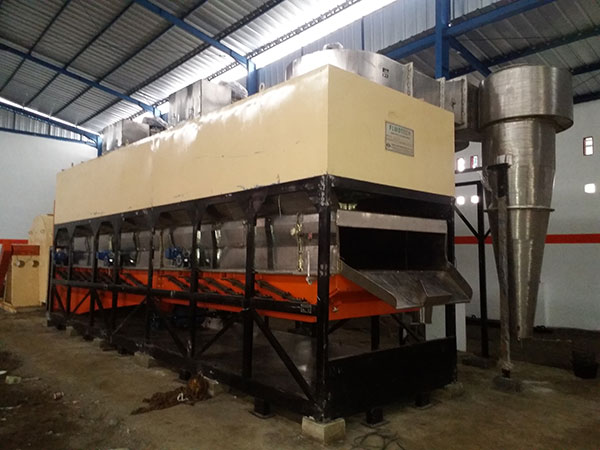
Standard static fluid beds often struggle when processing cohesive, sticky, or polydisperse chemical powders. These difficult feeds frequently cause bed channeling or defluidization. To solve this operational challenge, manufacturers utilize Vibratory Fluidised Bed Dryers.
VFBD systems integrate dual out-of-balance vibration motors. These motors impart linear or elliptical vibrations to the entire drying deck. As a direct result, this mechanical motion carries several distinct advantages:
-
Assists aerodynamic lift, thereby significantly reducing the minimum fluidization velocity required.
-
Effectively prevents agglomeration, particle clumping, and stagnant dead zones on the distribution plate.
-
Precisely controls product residence time via adjustable vibration angle and frequency settings.
-
Allows processing of delicate, fragile granules without causing physical attrition or particle degradation.
In addition, the mechanical vibration encourages plug-flow solids movement throughout the bed length. Consequently, every particle receives identical thermal exposure from inlet to discharge. Furthermore, this uniform treatment prevents over-drying of fine particles while ensuring complete moisture removal from larger granules. Therefore, product consistency remains exceptionally high across all production batches.
Technical Parameters for Fluid-Bed Dryers
-
Operating Air Velocity: 0.3 to 2.2 meters per second.
-
Inlet Temperature Range: 80°C to 220°C.
-
Heat Transfer Coefficient: 100 to 300 Watts per square meter Kelvin (delivering an extremely high energy transfer rate).
-
Typical Applications: Secondary finishing dryer after a spray dryer, drying synthetic resin powders, and drying crystallized inorganic salts.
Material-Specific Dryer Selection Matrix
Selecting the proper industrial dryer depends heavily on the physical state of the incoming raw material, thermal sensitivity, and required final powder parameters:
| Product Class | Material Physical State | Recommended Dryer System | Primary Technical Rationale |
| Organic Dyes (Direct, Reactive, Acid Dyes) | Liquid slurry, solution, or diluted wet paste | Spray Dryer | Prevents thermal degradation due to low particle temperature; yields hollow spherical particles for rapid dissolution in dye baths. |
| Titanium Dioxide (TiO₂) | Heavy, sticky filter cake directly from press | Spin-Flash Dryer (Combination Dryer) | Mechanically disintegrates dense cake without dilution; withstands high inlet air temperatures; produces ultra-fine, unagglomerated white powder. |
| Specialty Silica Powders (Precipitated Silica) | Saturated wet cake or heavy slurry | Spin-Flash Dryer OR Vibratory Fluidised Bed Dryer | Preserves delicate microscopic pore structures and high surface area; yields narrow particle size distribution for flow additives and rubber reinforcement. |
| Azo Pigments & Phthalocyanines | Press cake / high-viscosity paste | Spin-Flash Dryer (Combination Dryer) | Eliminates manual tray handling; replaces slow batch tray drying and pulverizing with a single continuous process. |
| Dye Intermediates (H-Acid, Gamma Acid, K-Acid) | Concentrated chemical slurry or damp cake | Spray Dryer or Spin-Flash Dryer | Handles corrosive or hazardous compounds in enclosed systems, reducing employee exposure to chemical dust. |
| Granular Inorganics (Chromate salts, Iron Oxides) | Damp crystals or coarse granules | Vibratory Fluidised Bed Dryer | Gentle fluidization prevents particle breakage while achieving uniform final moisture removal down to 0.1%. |
Thermal Efficiency, Environmental Controls, and Process Safety
In today’s competitive market, modern chemical plants demand sustainable, safe, and highly efficient dryer designs.
Energy Recovery and Optimization
Drying is often the most energy-intensive unit operation in a chemical manufacturing plant. Therefore, dryer manufacturers integrate advanced energy recovery technologies to optimize utility consumption:
-
Closed-Loop Heat Exchangers: Captures waste heat from high-temperature exhaust air streams to preheat incoming fresh ambient air. Consequently, this increases overall thermal efficiency by 12% to 20%.
-
Inert Gas Loop (Nitrogen Re-circulation): Utilized when processing solvent-based slurries or flammable organic powders. Specifically, the system operates under nitrogen gas pressure with continuous solvent condensation. This setup effectively eliminates fire and explosion risks.
Moreover, variable frequency drives are installed on main exhaust fans to reduce power draw during partial-load conditions. In fact, optimizing fan speed based on system pressure drop cuts electrical energy consumption noticeably. Likewise, high-performance insulation jacket systems are wrapped around processing vessels. Thus, radiant heat losses to the surrounding factory floor are reduced to minimal levels.
Dust Collection and Environmental Emissions
To comply strictly with global environmental standards and prevent valuable product loss, continuous dryers utilize multi-stage air cleaning systems:
-
Cyclone Separator (Primary Separation): Receives output directly from the drying chamber. It removes 95% to 98% of coarse powder particles via centrifugal action.
-
Reverse-Pulse Dust Collector (Micro-Filtration): Captures fine airborne particulates using high-efficiency filter bags. This stage brings particulate emissions down to less than 5 mg/Nm³.
-
Wet Scrubbing Unit (Gaseous Scrubbing): Scrubs the gas stream to neutralize trace acid or alkali vapors. Afterwards, clean air exhausts safely to the atmosphere.
As a result of this comprehensive filtration strategy, chemical facilities recover maximum product yield. Furthermore, plant environments remain fully compliant with strict local air quality regulations. In turn, operating costs associated with raw material loss decrease significantly over time.
Explosion Safety Engineering
Finely divided organic dye dust suspended in dry air creates a flammable environment. Because of this danger, industrial dryers processing these materials feature robust safety engineering:
-
Explosion Relief Vent Panels: Certified burst discs designed to vent overpressure safely away from operating areas.
-
Explosion Suppression Systems: Ultra-fast sensors detect pressure waves within milliseconds. They instantly inject chemical suppressants like sodium bicarbonate or monoammonium phosphate.
-
Heavy-Duty Pressure Shock Resistant Construction: Chambers constructed to withstand internal pressure surges up to 10 bar without structural failure.
Naturally, regular safety audits ensure these protective systems remain fully operational. Additionally, static grounding connections are monitored continuously during processing runs. Thereby, spark generation within dry powder zones is reliably prevented before hazards arise.
Complete Turnkey Engineering and Technical Support
Selecting, engineering, and commissioning an industrial drying plant requires expert process analysis and customized equipment design. GENEX Tech Industries LLP provides complete engineering solutions for the specialty chemical, dye, pigment, food, and mineral processing industries.
Our dedicated engineering team assists clients through every project phase:
-
Pilot-Plant Testing and Laboratory Feasibility Trials: Conducting comprehensive material testing to analyze drying curves, evaporation rates, and particle behavior under real-world conditions.
-
Custom Plant Design and Layout Integration: Engineering complete processing lines tailored to specific site constraints, throughput targets, and footprint requirements.
-
Turnkey Equipment Manufacturing: Fabricating systems using high-grade stainless steel (SS304, SS316, SS316L) and specialized nickel alloys under strict ISO quality standards.
-
On-Site Installation, Commissioning, and Process Optimization: Ensuring seamless integration with existing plant utilities, upstream filtration equipment, and downstream packaging lines.
By providing end-to-end project management, technical risks are effectively minimized at every stage. Furthermore, tailored engineering solutions guarantee that performance guarantees are met consistently during production trials. Ultimately, chemical manufacturers achieve higher operating margins and reliable equipment uptime for years to come.
Contact Information and Turnkey Consultation
To request detailed technical specifications, schedule pilot-scale drying trials, or obtain quotations for custom industrial drying equipment, contact our engineering sales department directly:
-
Head Office: 10C, Sir William Jones Sarani (Middleton Row), Park Street, Kolkata – 700071, India
-
Factory: Jalan Industrial Complex, Howrah – 711411, West Bengal, India
-
Email:
mktg@gtidryers.com|sales@foodtechprojects.com -
Phone: +91-9330077417 / +91-8777475596
-
Websites: gtidryers.com | foodtechprojects.com