
The industrial corridor across East India represents a fast-growing manufacturing hub. Consequently, regions expand rapidly in pharmaceuticals, heavy chemicals, coal-biomass processing, tea processing, and mineral refining. Therefore, these plants require reliable thermal processing and moisture removal infrastructure consistently. As a matter of fact, industrial scalability heavily relies on this thermal backbone.
Because moisture control directly governs product stability, bulk density, and shelf life, processors simply cannot rely on standard off-the-shelf equipment. Instead, custom systems engineered by pioneers like GENEX Tech Industries LLP provide precise thermodynamic control. Specifically, they operate through specialized divisions like Food Tech Projects and GTI Dryers. Furthermore, these continuous lines deliver high energy efficiency, maximum yield, and export compliance simultaneously. In addition to this, continuous automation greatly reduces labor overhead.
1. Thermodynamic Fundamentals & Industrial Applications
Thermal dehydration relies primarily on heat and mass transfer to strip water.
Moisture Classification in Drying Theory
In drying theory, however, moisture falls into two main categories:
-
Unbound Moisture: Water that exerts full vapor pressure. As a result, it evaporates freely from saturated material surfaces continuously. Hence, initial drying rates stay high consistently.
-
Bound Moisture: Water trapped inside cell walls or capillary lattices. Thus, it requires high thermal energy to drive internal diffusion effectively. Consequently, heat input must be managed carefully.
Constant-Rate vs. Falling-Rate Kinetics
During the initial constant-rate period, surface water evaporates freely. Meanwhile, ambient temperature, air velocity, and surface area govern this rate entirely. In contrast, liquid movement inside the solid plays a secondary role initially.
As surface moisture depletes, the system subsequently enters the falling-rate period. At this stage, internal diffusion to the surface ultimately becomes the primary limiting factor. Therefore, processors must use elevated thermal gradients or mechanical fluidization. In turn, this effectively prevents internal structural damage, scorching, or case hardening. Accordingly, precise control loops are vital here.
Regional Industrial Applications Across East India
Across East Indian production hubs, indeed, distinct industrial sectors require specialized thermal engineering strategies accordingly:
-
Fine Chemicals, Pigments & Synthetics (Kolkata & Haldia): Systems require cGMP compliance and mirror-polished SS316L stainless steel. As a result, this design eliminates moisture safely without denaturing delicate chemical or pharmaceutical structures prematurely. Moreover, it prevents cross-contamination completely.
-
Agro-Commodities, Tea & Bio-Resources (Assam, North Bengal & Bihar): Plants require continuous dryers to lower high initial moisture levels substantially. In particular, systems drop moisture from 60% down to 2%. Consequently, this preserves natural bioactive content, color, and structural integrity persistently. Besides, total processing time is reduced dramatically.
-
Heavy Minerals, Coal Sludge & Effluent (Odisha & Jharkhand): High-tonnage machinery strips water from industrial sludge, coal tailings, and mining slurries efficiently. In addition, this process slashes disposal costs and thereby supports waste-to-value conversion seamlessly. To that end, plants meet strict environmental norms easily.
2. Main Industrial Drying Technologies & Operating Principles
Refractance Window Dryer (RWD) Systems
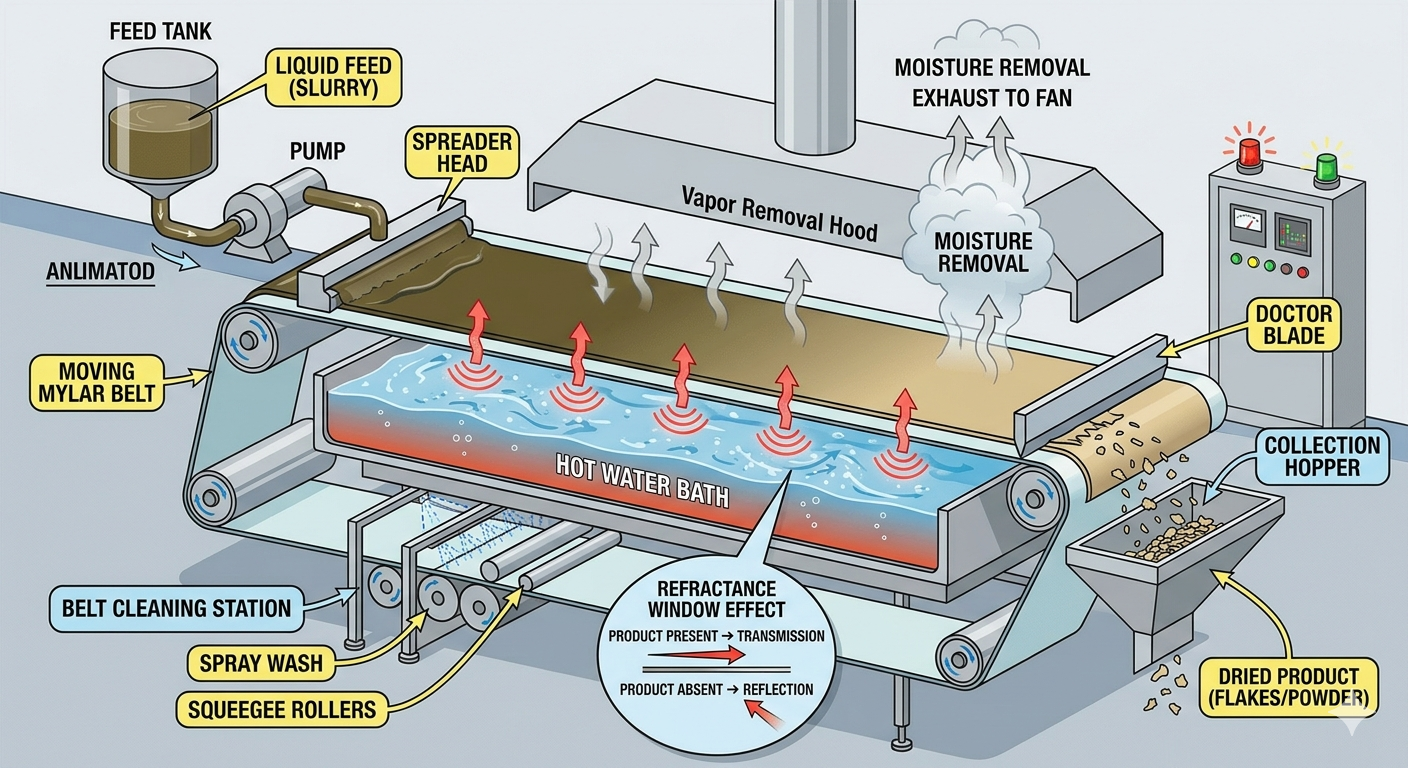
The Refractance Window Dryer enables continuous low-temperature dehydration. For instance, it handles liquid feeds, fruit purees, herbal extracts, tea polyphenols, and sensitive bio-compounds effortlessly. In comparison, traditional tray dryers lag behind significantly.
Processing Sequence for RWD Technology:
-
First: Liquid slurry enters via an automated sanitary positive displacement pump gradually.
-
Next: The spreader distributes liquid evenly onto a specialized heat-transparent belt. Meanwhile, film thickness stays strictly between 0.5 mm and 1.5 mm.
-
Then: The belt floats continuously over a shallow trough of hot water. At the same time, the water stays just below boiling point, specifically between 90°C and 95°C.
-
Subsequently: Thermal energy transfers conductively from hot water through the belt into the wet film directly. In essence, heat refracts straight into the material.
-
Afterward: Rapid evaporation releases water vapor into a top-mounted exhaust hood under gentle negative pressure.
-
Following this: Material passes over an integrated cooling zone near the discharge end. Therefore, this drops film temperature rapidly below its glass transition point.
-
Finally: The chilled film becomes brittle and accordingly fractures against a doctor blade. Thus, it discharges clean, uniform flakes for packaging or milling instantly. Ultimately, product output quality remains uncompromised throughout.
Detailed Operating Principles:
-
Thin-Layer Application: A continuous feed spreader distributes slurries into a micro-thin layer onto a moving belt smoothly. In turn, thermal resistance is minimized substantially.
-
Conductive Heat Transfer: Thermal energy transfers conductively through the floating belt into the wet product layer thoroughly. Owing to this, energy losses are minimized greatly.
-
Latent Heat Protection: Rapid surface evaporation creates a natural cooling effect automatically. Furthermore, the product stays cooler than the heating water. As a result, this permanently protects sensitive bioactive molecules, vitamins, and pigments. Likewise, flavor and aroma remain intact completely.
-
Flake Discharge: Material passes over an integrated chill zone orderly. Consequently, the cooled film fractures cleanly against an automated doctor blade above all. In short, clean harvesting is achieved flawlessly.
Vibratory Fluid Bed Dryer (VFBD) Systems
The Vibratory Fluid Bed Dryer (or Vibratory Fluidised Bed Dryer) combines controlled vibration with positive pneumatic fluidization. In addition, it dries granular, crystalline, or shredded materials without particle degradation whatsoever. Not to mention, energy efficiency remains high consistently.
Processing Sequence for VFBD Systems:
-
To begin with: Wet granular material enters through a rotary airlock or volumetric feeder uniformly.
-
Simultaneously: Twin out-of-balance motors oscillate the frame while conditioned hot air enters the supply duct continuously.
-
Thereafter: Hot air passes upward through a perforated distributor plate. Consequently, it lifts wet particles and breaks inter-particle liquid bridges completely. In turn, sticky agglomerates break down promptly.
-
During this stage: Suspended particles undergo rapid heat and mass transfer. Furthermore, they float smoothly along the drying chamber in a fluid-like state.
-
Meanwhile: High-moisture air exits through the top exhaust duct toward dust recovery cyclones and bag filters systematically.
-
In conclusion: Dried granules exit through the discharge outlet at target moisture levels. In addition, integrated cooling zones drop product temperature prior to packaging reliably. Above all, dust emission stays low permanently.
Detailed Operating Principles:
-
Pneumatic Fluidization: Hot air passes upward through a perforated distributor deck. Consequently, it suspends wet particles in a buoyant, fluid-like state dynamically. Thus, static bed resistance drops drastically.
-
Vibratory Conveying: Twin out-of-balance vibratory motors impart controlled directional motion. Thus, they move the fluidized bed forward smoothly regardless of feed variations predictably. By extension, residence time stays uniform always.
-
Homogeneous Mass Transfer: Direct contact between heated air and suspended particles ensures uniform heat transfer entirely. Therefore, it lowers moisture content down to 2% in continuous production loops dependably. Summing up, thermal efficiency stays maximized throughout.
Standard VFBD Machine Configurations:
-
Junior VFBD: Processing capacity ranges from 250 kg/hr to 300 kg/hr finished output.
-
Standard VFBD: Processing capacity ranges from 500 kg/hr to 550 kg/hr finished output.
-
Jumbo VFBD: Processing capacity ranges from 700 kg/hr to 800 kg/hr finished output.
-
Super Jumbo VFBD: Processing capacity ranges from 850 kg/hr to 1,000 kg/hr finished output.
Continuous Industrial Spray Drying Systems
Spray Dryer systems turn liquid solutions, emulsions, and suspensions into uniform powders. Moreover, this happens within a single continuous process step flawlessly. In this regard, it simplifies processing workflows significantly.
Processing Sequence for Spray Dryer Systems:
-
First: High-pressure feed pumps push liquid solutions directly to the top atomizer unit consistently.
-
Second: Rotary disks spinning at up to 25,000 RPM break liquid into millions of fine micro-droplets instantly. Meanwhile, droplet sizes range precisely from 20 to 150 microns.
-
Third: Atomized droplets mix instantly with conditioned hot air inside the primary drying tower. At length, rapid evaporation takes place spontaneously.
-
Fourth: Water evaporates in milliseconds as droplets fall through the drying chamber. Because of evaporative cooling, droplet temperatures stay low naturally.
-
Finally: High-efficiency cyclones separate dry powder from the air stream. Subsequently, exhaust air passes through scrubbers while dry powder harvests at the base continuously. In the end, operational yields remain maximum consistently.
Key Process Benefits:
-
Precision Atomization: Rotary disks or pressure nozzles transform liquid feed into fine micro-droplets inside the tower accurately. As a consequence, particle size distribution stays tight always.
-
Instantaneous Vaporization: High surface area allows hot air to flash-evaporate moisture within milliseconds spontaneously. Without doubt, thermal stress is minimized greatly.
-
Powder Harvesting: Cyclones and sanitary bag filters harvest fine powder cleanly. In addition, scrubbed air discharges safely into the atmosphere environmentally. In brief, environmental safety is assured totally.
Rotary Drum Dryer Systems
The Rotary Drum Dryer (or Drum Dryer Manufacturer) provides heavy-duty drying for bulk solids, mineral ores, agricultural residues, and industrial sludge effectively. By comparison, it handles sticky feeds much better generally.
Processing Sequence for Rotary Drum Dryers:
-
Initially: Heavy bulk solids enter through a feed chute or screw conveyor into the rotating cylinder steadily.
-
Concurrently: High-velocity hot gas enters co-currently or counter-currently based on material heat limits.
-
Meanwhile: The heavy steel shell rotates continuously on trunnion rollers driven by a girth gear and pinion.
-
As a result: Internal steel flights lift wet material and shower it through the hot air stream in a continuous curtain repetitively. In doing so, contact area increases exponentially.
-
Afterward: Moisture-laden gas travels to external cyclones, multiclones, and wet scrubbers orderly.
-
Eventually: Conditioned low-moisture bulk material discharges continuously at the lower inclined end smoothly. On the whole, large-scale continuous runs proceed uninterrupted.
Detailed Operating Principles:
Inside an inclined rotating cylinder, custom steel flights lift wet material. Furthermore, they shower it continuously through high-velocity hot gas. Consequently, this cascading curtain maximizes surface area exposure to drive rapid moisture loss during high-tonnage runs substantially. In short, throughput remains unsurpassed industry-wide.
3. Specialized Thermal Dehydration Systems
Specialized thermal designs handle unique material parameters, viscosities, and heat sensitivities across diverse manufacturing lines adaptively:
-
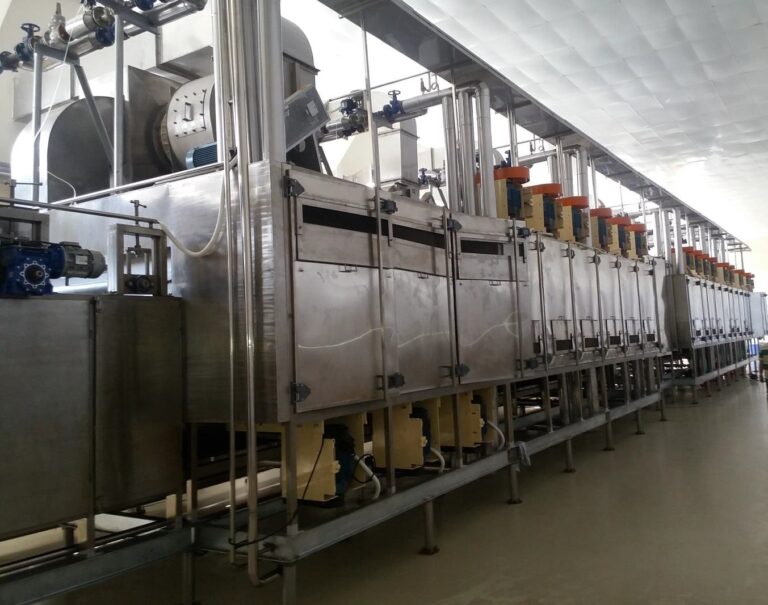
Apron Band / Mesh Belt Dryer: Multi-pass perforated Band Dryer and Mesh Belt Dryer for tea, dehydrated vegetables, spices, and biomass pellets. In addition, it offers multi-stage thermal zoning at capacities up to 1,600 kg/hr. In view of this, material degradation is avoided entirely.
-
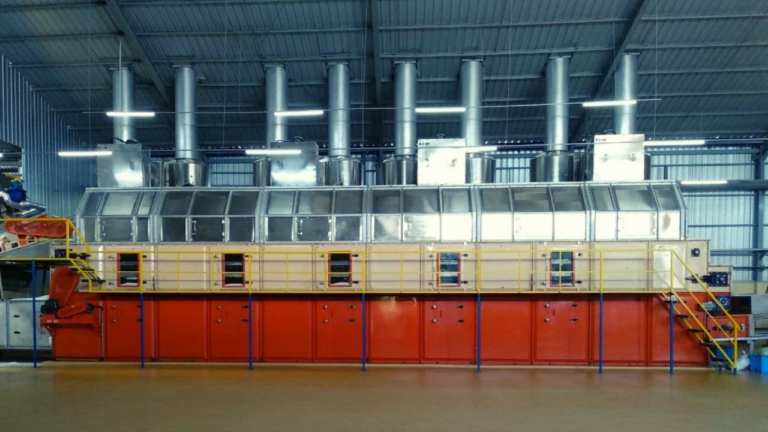
Combination Fluid Bed Dryer: Incorporates a Combination Dryer or Combination Fluid Bed Dryer stage. As a result, it manages complex drying curves for sticky or heat-sensitive compounds effectively. In fact, it bridges the gap between different drying modes flawlessly.
-
Continuous Thin Film Dryer: The Continuous Thin Film Dryer is engineered specifically for high-viscosity pastes and thermal-labile active compounds under precise vacuum conditions. In this way, thermal degradation is prevented completely.
-
Paddle Dryer: Operating via an industrial Paddle Dryer (or GTI Paddle Dryer), dual counter-rotating shafts feature hollow heated paddles. Thus, it delivers high indirect thermal efficiency for drying chemical sludges, filtration cakes, and hazardous wastes optimally. Besides, volatile solvent recovery is streamlined greatly.

-
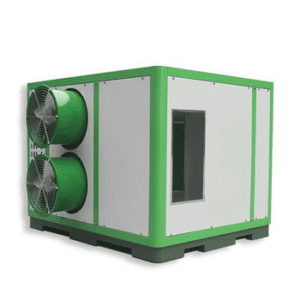
Heat Pump Dryer: Systems like the continuous Heat Pump Dryer use closed-loop dehumidification to capture and recycle latent heat. Therefore, it is ideal for high-value spices, nutraceuticals, and botanicals at low temperatures economically. In short, electricity consumption drops dramatically.
-
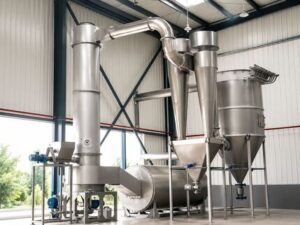
Flash Dryer: Utilizing rapid pneumatic conveying via a continuous Flash Dryer, moisture reduction in fine starches, mineral powders, biopolymers, and agro-residues occurs rapidly. Accordingly, footprint requirements stay minimal always.
-
Tube Bundle Dryer: Engineered for heavy agro-industrial and starch drying operations, the specialized Tube Bundle Dryer provides indirect steam heating with superior energy conservation.
4. Turnkey Agro-Industrial & Coconut Processing Plants
A prime example of turnkey engineering across East India and global markets is complete Turnkey Agro-Processing, Coconut Processing, and Botanical Extraction Plants.
Processing Sequence for Agro-Resource & Tea Waste Dehydration:
-
First step: Raw agro-residues or green botanicals are harvested, inspected, and elevated to processing lines carefully.
-
Next step: Mechanical washers clean the raw mass to strip surface dirt without damaging inner cellular structures excessively.
-
Third step: Cleaned leaves or stems pass through heavy-duty cutters or slicers to produce uniform particle sizes precisely.
-
Fourth step: Continuous steam blanchers or pasteurizers sanitize the wet feed. Thus, this eliminates pathogens while protecting bioactive compounds thoroughly. For this reason, active components remain stable consistently.
-
Fifth step: Material enters an Apron Band Dryer or Vibratory Fluid Bed Dryer. Consequently, systems drop moisture from 65% to 3% using multi-zone heating profiles gradually.
-
Final step: Multi-deck vibratory screens classify cooled dry particles before automated vacuum packaging into export containers securely. To summarize, end-to-end efficiency is ensured flawlessly.
Turnkey Coconut Processing Plants & Derivatives
Integrated facilities utilize specialized machinery across coconut value chains:
-
Desiccated Coconut: Desiccated Coconut Machinery Processing Plant units deliver hygienic drying and shredding.
-
Virgin Coconut Oil & Powder: Virgin Coconut Oil Machinery, Virgin Coconut Oil (VCO) Powder Processing Plant, and Medium Chain Triglyceride (MCT) Oil Processing Plant infrastructure.
-
Coconut Milk & Milk Powder: Dedicated Coconut Milk Machinery Processing Plant and Coconut Milk Powder Processing Plant systems.
-
Coconut Water & Bio-Energy: Coconut Water Extraction Machine, Coconut Water Powder Processing Plant, and Turnkey Coconut Biodiesel Plant setups.
-
Coir Fibre & Paring Oil: Specialized Coconut Fibre Machinery Coir Processing Plant and Coconut Paring Oil Processing Plant lines.
Beyond coconut lines, specialized processing drives other regional agro-chains:
-
Date Processing Plants: Turnkey Date Syrup, Date Paste & Date Powder Processing Plants process high-sugar commodities continuously.
-
Tea Waste & Tea Dust Drying Systems: Specialized continuous band and fluid bed dryers extract moisture from tea factory waste, thereby enabling eco-friendly polyphenol extraction and boiler fuel briquetting. In addition to this, factory emissions are minimized greatly.
-
Herbal & Botanical Processing Plants: Low-temperature refractance window and vacuum dryers convert fresh herbal extracts into instant, fully soluble powders effortlessly. In turn, extraction yields improve dramatically.
-
Biomass & Bio-Fertilizer Drying Systems: Biomass Drying and Biomass Renewable Energy Drying convert agricultural waste into export-grade bio-fertilizer granules sustainably. As a consequence, organic waste creates high economic value consistently.
5. Industrial Application Spectrum
Modern thermal drying systems adapt to specific material parameters across major industrial sectors versatilely:
Food, Dairy & Agro Processing
-
Food Ingredients & Vegetables: Specialized Food Drying Systems, Food Ingredient Dryers, Fruit Drying Systems, and Vegetable Dehydration Systems.
-
Dairy & Proteins: Industrial Dairy Protein Drying, Dairy Powder Drying, Dairy Ingredient Drying, Casein Drying Systems, Lactose Drying, Whey Powder Drying, and Protein Powder Drying Systems.
-
Spices & Starches: Dedicated Spice Drying Systems and continuous Starch Drying Systems.
Animal Feed & Agricultural Derivatives
-
Feed Processing: Advanced Animal Feed Agro Drying, Fish Feed Drying, Poultry Feed Drying, general Feed Drying Systems, and continuous Grain Dryers.
Chemical, Synthetics & Fine Materials
-
Chemical Dehydration: Dedicated Chemical Drying Systems, Fine Chemical Drying, Specialty Chemical Drying, and Catalyst Drying.
-
Polymers & Pigments: Advanced Pigment Dryers, Polymer Drying Systems, and Resin Drying Systems.
Minerals, Mining & Construction Materials
-
Mineral Drying: Heavy-duty Mineral Industrial Drying Systems, Mineral Powder Drying, Ore Drying Systems, and Rare Earth and Mineral Thermal Processing and Dehydration Systems.
-
Industrial Commodities: Specialty lines including Clay Drying, Gypsum Dryers, Metal Powder Drying, Salt Drying Systems, and continuous Sand Drying Systems.
Biomass, Wood & Bio-Fuel Energy
-
Renewable Fuels: Dedicated Biomass Fuel Drying, Pellet Drying, Sawdust Drying, and high-capacity Wood Chip Dryers.
Environmental & Waste Remediation
-
Sludge & Waste Management: Thermal volume reduction via Waste Environmental Drying, Industrial Sludge Drying, Paper Mill Sludge Dryer, Municipal Sludge Dryers, Sewage Sludge Drying, and continuous Organic Waste Drying.
6. Technical Equipment Comparison
| Dryer Type | Primary Feed Format | Heat Transfer Mechanism | Thermal Efficiency | Key Advantages | Typical Industrial Applications |
| Refractance Window Dryer | Purees, Slurries, Liquid Feeds, Thin Pastes | Conductive (Water film) + Convective | High (Recirculating hot water loop) | Superior color, nutrient, and flavor retention; gentle low-temperature drying | Fruit Purees, Tea Extracts, Herbal Actives, Algae |
| Vibratory Fluid Bed Dryer | Granules, Powders, Shreds, Crystals | Direct Convective (Hot air through bed) | Very High | Uniform final moisture, minimal physical attrition, smooth conveying | Tea Dust, Agro-Granules, Dairy Powders, Fine Chemicals, Salt |
| Spray Dryer | Pumpable Liquids, Solutions, Emulsions | Direct Convective (Atomized droplets in hot air) | Medium to High | Instantaneous drying, controlled particle size, free-flowing dry powders | Pharma APIs, Coffee, Herbal Extracts, Specialty Chemicals |
| Rotary Drum Dryer | Bulk Solids, Ores, Sludges, Coarse Chips | Direct Convective or Indirect Contact | High | Robust heavy-duty design, handles high-tonnage variable feeds | Minerals, Coal Tailings, Sawdust, Biomass, Industrial Sludge |
| Apron Band / Mesh Belt Dryer | Slices, Chips, Fibers, Extrusions, Pellets | Direct Convective (Multi-zone recirculating air) | High (Multi-zone thermal control) | Multi-stage temperature zoning, gentle handling of delicate shapes | Dehydrated Botanicals, Spices, Biomass Pellets |
| Paddle Dryer | Viscous Pastes, Sludges, Wet Cakes, Residues | Indirect Conductive (Hollow heated paddles) | Very High (Solvent recovery compatible) | High thermal efficiency, compact footprint, vacuum operation option | Environmental Sludge, Chemical Residues, Pharma Slurries |
7. Deep Engineering Selection Framework
Selecting the optimal thermal dehydration equipment requires evaluating core physical and chemical parameters during process design meticulously. Specifically, proper sizing prevents operational bottlenecks completely.
Logic Flow for System Selection
Engineering Selection Logic Flow:
Identify Physical Feed State:
 ├── If Liquid Feed / Slurry:
 │    ├── Heat-Sensitive Feed ──> Refractance Window Dryer (RWD)
 │    └── Standard Feed ───────> Continuous Spray Dryer
 ├── If Granules / Shreds / Crystals:
 │    ├── Gentle Handling Needed > Vibratory Fluid Bed Dryer (VFBD)
 │    └── High-Tonnage Bulk ────> Rotary Drum Dryer
 └── If Sludge / Paste / Wet Cake:
      ├── Solvent Recovery ─────> Paddle Dryer
      └── Rapid Moisture Drop ──> Flash Dryer
Critical Process Considerations
-
Thermal Sensitivity & Kinetics: Biological extracts, pharmaceuticals, and high-sugar purees require low-temperature, gentle heating profiles. Consequently, this prevents degradation, caramelization, or loss of volatile aromatic compounds. In summary, active ingredients stay preserved perfectly.
-
Moisture Profile & Drying Stages: High initial moisture levels often require multi-stage thermal processing. Specifically, processors use an Apron Band Dryer for primary moisture reduction followed by a Fluid Bed Dryer for final moisture stabilization sequentially. In this fashion, energy consumption is optimized greatly.
-
Energy Optimization & Environmental Hygiene: Modern installations incorporate exhaust heat exchangers, multi-stage cyclone dust collection, automated CIP systems, and closed-loop nitrogen systems to comply with modern environmental standards thoroughly. In addition, plant emissions stay within regulatory thresholds consistently.
8. Energy Efficiency, Waste Heat Recovery & Decarbonization
Energy efficiency is a primary design factor in modern thermal drying systems. Water vaporization requires significant energy (~2,260 kJ per kilogram of water evaporated). Therefore, optimizing thermal efficiency directly reduces operational overhead and carbon footprint substantially. In effect, long-term operational expenditure is controlled effectively.
Processing Sequence for Exhaust Waste Heat Recovery:
-
First: Warm, moisture-laden exhaust gas exits the primary drying tower continuously.
-
Next: High-efficiency cyclones filter out fine particulates and airborne dust effectively.
-
Then: The cleaned hot exhaust gas transfers residual thermal energy to an incoming stream of fresh ambient air directly. In doing so, wasted energy is reclaimed substantially.
-
Afterward: Scrubbed, cooled exhaust gas discharges safely through the plant stack cleanly.
-
Finally: Pre-heated fresh air enters the main burner. As a result, this cuts fuel consumption required to reach operational temperatures measurably. Overall, thermal efficiency rises dramatically.
Advanced Heat Recovery Strategies:
-
Air-to-Air Heat Exchangers: Systems extract energy from warm exhaust air to preheat fresh intake air. Consequently, this reduces fuel consumption by 15% to 25% consistently. In short, thermal payback is achieved rapidly.
-
Closed-Loop Dehumidification: Heat pumps capture latent heat from condensing water vapor. In turn, they reintroduce sensible heat directly back into the drying loop efficiently. Likewise, energy losses are contained thoroughly.
-
Variable Frequency Drives (VFDs): Dynamic motor speed controls on supply and exhaust fans match airflow to material loading. Thus, this prevents energy waste during partial-load conditions proactively. In this manner, power consumption matches actual load precisely.
-
Thermal Insulation Enclosures: High-density rockwool and ceramic fiber panels minimize heat loss through shell surfaces significantly. Hence, outer skin temperature stays safe always.
9. Regulatory Compliance, Hygiene & cGMP Standards
Processing plants in food, dairy, nutraceutical, and pharmaceutical sectors must meet stringent international hygienic standards. Therefore, engineering designs must eliminate dead zones, prevent microbial growth, and facilitate complete cleaning protocols rigorously. In view of this, sanitary design takes top priority always.
-
cGMP & US FDA Compliance: Contact surfaces constructed from mirror-polished SS316L stainless steel (Ra < 0.4 µm) prevent material buildup and cross-contamination permanently. In consequence, batch purity stays uncompromised throughout.
-
Automated CIP Systems: Integrated spray balls and sanitary distribution manifolds enable full automated washing, rinsing, and sanitization without dismantling equipment effortlessly. In addition to this, downtime during batch changeovers drops significantly.
-
Dust Control & Emission Limits: High-efficiency sanitary bag filters and multi-cyclones keep particulate emissions below strict local environmental limits (< 10 mg/Nm³) consistently. In plain terms, local compliance is guaranteed totally.
10. Operational Troubleshooting & Preventive Maintenance
Maintaining peak operational uptime requires proactive maintenance schedules and systematic troubleshooting routines periodically. For this reason, predictive diagnostics are implemented routinely.
| Symptom / Defect | Potential Root Cause | Recommended Corrective Action |
| High Final Moisture Content | Insufficient inlet air temperature; excessive feed rate; high ambient humidity | Reduce feed pump rate; increase air heating output; verify exhaust humidity sensors |
| Product Thermal Degradation | Extended residence time; excessive drying air temperature; uneven material bed depth | Lower inlet temperature; adjust vibratory frequency or belt speed to decrease residence time |
| Uneven Drying Across Material Bed | Poor air distribution; clogged distributor plate; non-uniform feed distribution | Clean distributor deck perforations; inspect feed spreader alignment; balance air plenum pressures |
| Excessive Fines in Exhaust Stream | Air velocity above fluidization threshold; material attrition due to harsh vibration | Reduce air velocity fan speed; decrease vibratory motor amplitude |
11. Custom System Design & Scalability
Every manufacturing operation presents unique challenges regarding floor space, utility access, raw material variations, and output targets. Therefore, partnering with a custom engineering manufacturer ensures that equipment design matches specific process needs accurately. In accordance with this, bespoke configurations are delivered reliably.
Turnkey Project Execution Sequence:
-
Step 1: Material samples undergo pilot scale testing to determine precise drying curves and thermal behavior empirically.
-
Step 2: Engineers model exact energy requirements, air volumes, and heat balances mathematically. In this step, scaling factors are computed precisely.
-
Step 3: CAD modeling creates tailored equipment layouts fitting exact plant dimensions precisely.
-
Step 4: Field engineers supervise mechanical installation, electrical integration, and final performance trials hands-on. In the final analysis, site commissioning completes smoothly.
Detailed Engineering Workflow:
-
Material Testing & Rheology Analysis: Pilot testing determines specific drying curves, thermal sensitivity thresholds, and equilibrium moisture content thoroughly. As a matter of fact, empirical data eliminates scale-up risks completely.
-
System Mass & Energy Balance: Engineers compute precise mass and heat balances to select the optimal heating medium (steam, thermal oil, hot water, or direct gas) optimally. Thus, energy utilization remains balanced perfectly.
-
Custom Fabrication: Equipment is built using certified food-grade stainless steel with specialized structural reinforcements durable. In consequence, structural integrity is guaranteed long-term.
-
Turnkey Site Installation: Complete mechanical, electrical, and control integration ensures seamless startup and commissioning efficiently. To sum up, plants reach commercial operation rapidly.
Conclusion & Partnering with Industry Experts
Optimizing thermal drying operations across food, pharmaceutical, chemical, and waste management sectors requires a partner who understands process engineering, thermal dynamics, and hygienic manufacturing standards. With over four decades of global engineering excellence, GENEX Tech Industries LLP designs, manufactures, and commissions custom industrial drying machines and turnkey plants built for long-term performance reliably. In truth, technical innovation remains our core strength always.
Whether launching a new processing line, upgrading existing dryers to reduce energy consumption, or expanding output capacity, our engineering team provides end-to-end technical support from pilot testing to final site commissioning comprehensively. In closing, custom thermal solutions guarantee maximum industrial ROI persistently.
Contact Our Process Engineering Experts Today
Get in touch with our team to discuss your specific material parameters, request process testing, or receive a customized project quote:
-
Email: mktg@foodtechprojects.com | sales@foodtechprojects.com
-
Phone / WhatsApp: +91-97489 06968 | +91-93300 77417
-
Websites: www.foodtechprojects.com | www.gtidryers.com
-
Head Office Address: GENEX Tech Industries LLP, 10C, Sir William Jones Sarani (Middleton Row), Park Street, Kolkata – 700071, West Bengal, India