At Genex Tech Industries LLP, we continuously engineer cutting-edge industrial drying systems. Consequently, these units deliver maximum thermal efficiency, superior quality retention, and long-term reliability. Furthermore, backed by decadal engineering expertise, we systematically provide tailored dehydration solutions. As a result, we successfully serve food, pharmaceutical, chemical, biofuel, and agro-processing industries worldwide.
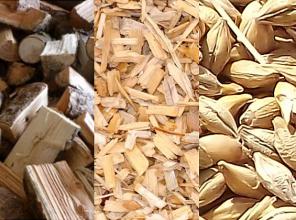
Finding a reliable biomass dryer machine manufacturer is undeniably a critical decision. Specifically, it directly impacts biomass pellet plants, briquette producers, CBG facilities, and power plants globally. In fact, raw biomass feedstocks inherently contain high moisture levels, typically ranging between 45% and 65%. For instance, common examples include green sawdust, wood chips, bagasse, rice husk, press mud, and digestate. However, downstream processes like pelletization strictly require moisture levels between 8% and 12%.
Consequently, processing raw bio-waste without prior thermal dehydration causes severe operational problems. Specifically, it leads to mechanical clogging, heavy power losses, rapid die wear, and weak pellets. Therefore, partnering with Genex Tech Industries LLP guarantees access to high-efficiency drying tech. Ultimately, our systems offer high throughput, strict ATEX compliance, and low operating costs.
Why Moisture Control Matters in Industrial Biomass Processing
Raw agricultural residues naturally retain both bound and unbound moisture within their cell structures. As a result, burning or compacting wet biomass directly is thermodynamically inefficient. In contrast, high-efficiency thermal drying effectively transforms raw bio-waste into a uniform, high-calorific feedstock. Ultimately, this dried product becomes ideal for global export and clean combustion.
Process Overview: Dehydration Workflow
RAW HIGH-MOISTURE BIOMASS FEEDSTOCK
(Sawdust, Bagasse, Wood Chips, Rice Husk, Mud, Digestate — Moisture Content: 45% to 65%)
THERMAL DEHYDRATION SYSTEM (GTI)
(Evaporates Unbound & Bound Surface/Internal Water)
DRIED UNIFORM BIOMASS PRODUCT
(Moisture Content: 8% to 12%)
DOWNSTREAM INDUSTRIAL PROCESS
(Pellet Mill, Briquette Press, Co-Gen Boiler, CBG Plant)
When wet biomass enters a thermal dryer, input heat energy quickly breaks the internal hydrogen bonds. Consequently, liquid moisture evaporates rapidly into the moving hot air stream. By lowering moisture from 50% down to 10%, the net calorific value (NCV) increases dramatically. Specifically, the NCV jumps from ~2,000 kcal/kg up to over 4,200 kcal/kg. Thus, this process ultimately enables efficient combustion and dense compaction.
1. Biomass Mesh Belt Dryer (Continuous Conveyor Dryer)
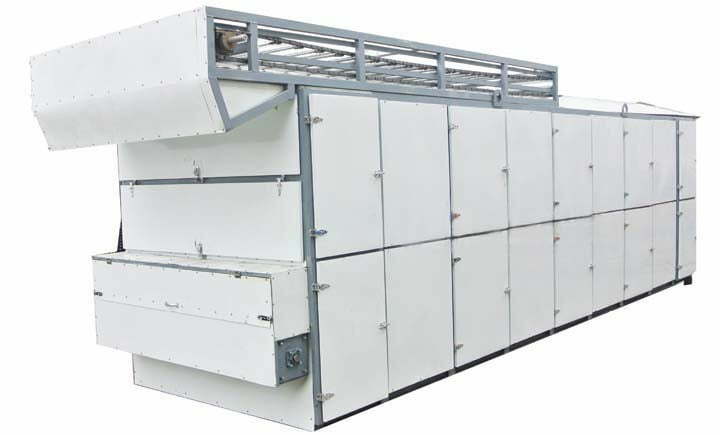
The mesh belt dryer is a highly effective industrial continuous system. Specifically, it provides low-shear, uniform dehydration for coarse or delicate agro-residues. As a leading manufacturer, Genex Tech Industries LLP builds multi-tier conveyor units. Moreover, these robust machines operate continuously 24×7 in demanding industrial environments.
Mesh Belt Flow:
Hot Air Inlet $\rightarrow$ Wet Biomass Feed on Multi-Tier Mesh Belt $\rightarrow$ Dried Biomass Output $\rightarrow$ Exhaust Air Recovery / Discharge
Working Principle & Thermal Dynamics
In a mesh belt dryer, wet material feeds continuously onto a wire mesh conveyor. Meanwhile, the heavy-duty belt utilizes high-grade stainless steel (SS304 or SS316). Subsequently, the belt moves slowly through multi-zone insulated chambers. Simultaneously, hot air flows upward or downward through the porous material bed.
Because the material remains static on the moving belt, zero mechanical friction occurs. Thus, dust generation and particle breakdown are prevented entirely. Furthermore, drying air temperatures typically range between 80°C and 160°C. As a result, delicate volatile compounds stay intact while moisture drops predictably down to 10%.
Technical Features & Operational Advantages
-
Multi-Zone Independent Control: Each chamber section features independent heat exchangers, blowers, and sensors. Therefore, operators can apply higher heat at the wet inlet and gentler heat at the dry outlet.
-
Variable Speed Drives (VFD Automation): Furthermore, belt speed adjusts dynamically via modern PLC controls. Consequently, this allows custom retention times from 20 to 120 minutes based on material properties.
-
Exceptional Energy Retention: Additionally, the outer shell uses double-walled heavy insulation with high-density mineral wool. Hence, this retains over 85% of thermal energy inside the chamber.
-
Low Power Consumption: In contrast to high-velocity pneumatic systems, mesh belt units use low-velocity static air pressure. As a result, this significantly reduces overall electrical power consumption.
Application Spectrum
Moreover, this system serves as an ideal continuous belt dryer for agro waste, wood chips, bark, Napier grass, coir pith, seeds, and digestate solids.
2. Industrial Biomass Rotary Drum Dryer
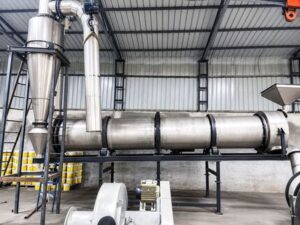
Rotary drum dryer technology remains the undisputed global standard for high-capacity bulk solids. Manufactured by GTI Dryers, our rotary dryers consistently deliver reliable, heavy-duty performance across demanding industrial applications.
Rotary Drum Flow:
Hot Air Generator + Wet Material Feed $\rightarrow$ Rotating Cylindrical Drum with Lifting Flights $\rightarrow$ Cyclone Separator / Dried Product Discharge
Working Principle & Internal Flight Mechanics
The system features a long, inclined rotating steel drum. Specifically, the cylinder mounts securely on heavy forged steel trunnion rollers. First, wet biomass enters the drum inlet alongside direct or indirect hot gas streams. Next, custom internal lifting flights pick up the material as the drum rotates at 3 to 12 RPM.
As a direct result, the biomass showers continuously through the high-velocity hot air stream. Consequently, this forms a dense, uniform curtain of falling particles. Indeed, direct contact with hot air drives rapid, continuous moisture extraction. Typically, operating temperatures range from 180°C to 350°C. Thus, this lowers moisture from 60% down to 10% in high-volume production lines.
Key Engineering Features
-
Co-Current & Counter-Current Airflow: Co-current flow protects heat-sensitive biomass by pairing the wettest feed with hot air. Conversely, counter-current setups maximize thermal efficiency for non-sensitive materials.
-
Heavy-Duty Drive Assembly: In addition, machined forged steel tires and girth gear drives reliably handle high mechanical torque.
-
Advanced Lifting Profiles: Furthermore, internal lifters feature specialized spiral or serrated profiles. Thus, these prevent material sticking and wall buildup.
-
Integrated Dust Collection: Additionally, systems pair with high-efficiency cyclones and wet scrubbers. Therefore, this keeps dust emissions strictly below 30 mg/Nm³.
Primary Applications
Hence, it is widely utilized as a wood chip dryer, bagasse dryer, press mud dryer, and agricultural residue dryer for high TPH pellet plants.
3. Biomass Pneumatic Flash Dryer
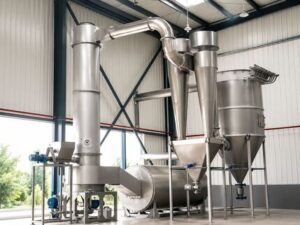
For fine bio-feedstocks, a pneumatic flash dryer inherently delivers the fastest drying rates in thermal processing. Specifically, a flash dryer dehydrates material almost instantaneously during vertical pneumatic transport.
Flash Dryer Flow:
Wet Feed + Disperser $\rightarrow$ High-Velocity Hot Air Column (15–28 m/s) $\rightarrow$ Primary Cyclone Collector $\rightarrow$ Dried Fine Powder Discharge
Working Principle & Instant Dehydration
High-velocity hot air (150°C to 280°C) is blown vertically into a drying column. Meanwhile, air speeds reach 15 m/s to 28 m/s. Subsequently, wet biomass is dosed directly into the air stream via a screw feeder or disintegrator.
Due to rapid dispersion, fine particles mix thoroughly into the turbulent hot air stream. Consequently, flash evaporation occurs within a brief 1 to 3 seconds. As a result, surface moisture drops instantly from 45% to 8%. However, internal particle temperatures remain low. Ultimately, this preserves organic integrity and prevents thermal scorching.
Core Technical Advantages
-
Ultra-Fast Processing: Because residence time is extremely short (1 to 3 seconds), the risk of internal combustion is completely eliminated.
-
Zero Internal Moving Parts: Moreover, the vertical column contains no internal gears or agitators. Thus, this minimizes mechanical maintenance downtime.
-
Simultaneous Transport: Furthermore, the vertical pipe acts as a pneumatic conveyor, elevating material directly to storage silos.
-
Compact Footprint: In contrast to horizontal drum dryers, this vertical system requires minimal floor space.
Ideal Materials
Thus, it is the premier choice for sawdust, rice husk, fine bagasse pith, coconut shell powder, and micro-algae residues.
4. Biomass Combination Fluid Bed Dryer (Tray + Fluidized Bed)
Sticky or irregular bio-wastes often suffer from uneven moisture distribution. As a result, single-stage systems can leave wet pockets inside particle cores. To solve this engineering challenge, Genex Tech Industries LLP engineered the Combination Fluid Bed Dryer. Specifically, this hybrid system combines multi-tier tray drying with a fluid bed finishing zone.
📺 Watch Product Video: Combination Tray Type Fluidised Bed Dryer Demonstration
Combination Flow:
Wet Biomass $\rightarrow$ Stage 1: Multi-Tier Moving Trays (Pre-Drying Phase) $\rightarrow$ Stage 2: Fluidized Bed Zone (Moisture Equalization) $\rightarrow$ Uniform Dried Product
Working Principle & Multi-Stage Thermal Process
This hybrid unit operates sequentially through three distinct thermal zones:
-
Pre-Drying Phase (Tray Circuit): First, wet biomass loads onto moving perforated trays. Meanwhile, heated air at 90°C to 130°C gently removes surface water.
-
Intermediate Conditioning Phase: Meanwhile, as trays move through lower tiers, heat penetrates deep into the particle core. Consequently, this drives internal moisture toward the exterior surface.
-
Fluidized Bed Finishing Phase: Finally, semi-dried material drops into a fluid bed chamber. Here, high-volume hot air levitates the particles. Consequently, this equalizes moisture across all particles down to 8%–10%.
Technical Features & Process Benefits
-
Complete Moisture Uniformity: Therefore, it completely eliminates wet centers and clumping in non-uniform feedstocks.
-
Superior Aerodynamic Distribution: In addition, specialized plenum chambers ensure equal static pressure distribution.
-
Exhaust Heat Recirculation: Furthermore, exhaust air from the fluid bed recirculates back to upper tray stages. Consequently, this boosts overall thermal efficiency past 85%.
Applications
Accordingly, it is perfect for digestate, spent brewery grains, herbal residues, sugar beet pulp, and citrus pomace.
5. Vibratory Fluidised Bed Dryer (VFBD)
The Vibratory Fluidised Bed Dryer (VFBD) by GTI Dryers ingeniously combines upward thermal airflow with directional mechanical vibration. As a result, heavy or sticky bio-solids move smoothly across the bed without channeling or dead zones.
📺 Watch Product Video: Vibratory Fluid Bed Dryer Operational Video
Vibratory Fluidized Flow:
Hot Air Plenum + Wet Input Feed $\rightarrow$ Directionally Vibrating Perforated Bed $\rightarrow$ Dried Uniform Granular Output
Working Principle & Mechanical Fluidization
The drying bed is securely mounted on heavy isolation springs. Simultaneously, dual eccentric motors generate controlled directional vibration. Meanwhile, hot air at 70°C to 150°C enters from beneath the bed plate.
Conventional fluid beds require high air velocities to lift wet biomass. However, the VFBD uses mechanical vibration to convey the material forward instead. Therefore, air velocity can be kept significantly lower. Consequently, moisture drops smoothly from 40% to 6% without excessive dust carryover.
Key Performance Advantages
-
Handles Broad Particle Sizes: Effectively fluidizes materials with mixed shapes and sizes that otherwise cause channeling in static beds.
-
Reduced Air Velocity & Power Savings: In addition, lower required airflow reduces total fan power and prevents dust carryover.
-
Precise Residence Control: Furthermore, adjusting motor frequency gives operators precise retention control from 5 to 45 minutes.
-
Self-Cleaning Floor: Moreover, continuous vibrating action prevents wet biomass from baking or building up on the floor plate.
Key Applications
Hence, it is widely used for biomass pellet pre-conditioning, agro-residues, bio-fertilizer granules, Napier grass, and green waste.
6. Biomass Heat Pump Dryer (Dehumidification System)
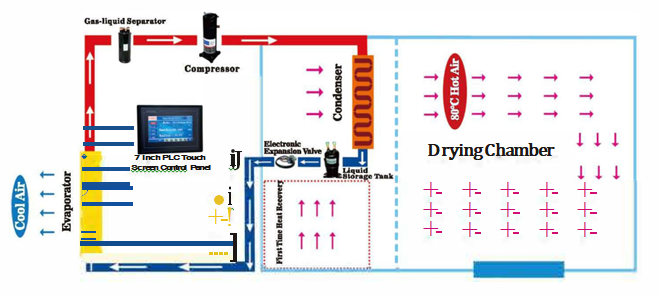
For heat-sensitive biomass, specialty crops, or zero-emission plants, the Heat Pump Dryer is undeniably the ultimate solution. Specifically, GTI Dryers manufactures closed-loop heat pump units that provide exceptional energy efficiency.
Closed-Loop Heat Pump Cycle:
Warm Dry Air $\rightarrow$ Biomass Material Bed $\rightarrow$ Humid Warm Air $\rightarrow$ Evaporator/Dehumidifier (Water Condenses Out) $\rightarrow$ Compressor Condenser (Air Re-heated) $\rightarrow$ Recirculated Warm Dry Air
Working Principle & Refrigeration Thermodynamics
Conventional dryers exhaust warm humid air into the atmosphere, thereby wasting substantial latent energy. In contrast, a heat pump dryer operates as a closed-loop dehumidification circuit. First, warm dry air passes over the wet biomass bed inside an insulated chamber.
Next, humid air enters the evaporator coil. Consequently, the air cools below its dew point, causing water vapor to condense and drain away. Then, the dry air passes through the condenser coil, warming back up to 40°C–65°C. Finally, this warm dry air recirculates to the drying chamber continuously.
Strategic Engineering Benefits
-
Unmatched Energy Efficiency: By efficiently recovering both sensible and latent heat, the Coefficient of Performance (COP) reaches 3.5 to 5.0. As a direct result, total energy consumption drops by 60% to 70%.
-
Zero Atmospheric Emissions: Furthermore, closed-loop operation completely prevents dust, odor, and emissions from escaping.
-
Low-Temperature Quality Preservation: In addition, gentle operating temperatures (40°C to 60°C) protect essential oils and volatile compounds.
-
Climate-Independent Operation: Because the system is isolated, drying performance remains consistent regardless of outdoor humidity.
Applications
Therefore, it is ideal for botanical residues, medicinal crops, micro-algae, CBG plant feedstock, and urban eco-parks.
Fire Safety, Dust Management, and ATEX Compliance
Industrial biomass drying naturally combines heat, fine dust, and oxygen. Consequently, this combination creates inherent fire and explosion risks if unmanaged. Therefore, Genex Tech Industries LLP proactively integrates advanced safety protocols into every installation:
Biomass Safety Protocols:
Infrared Spark & Flame Detection: Optical IR sensors immediately trigger high-pressure automated water mist suppression within milliseconds.
Explosion Relief Venting & Isolation: Certified ATEX explosion panels paired with rotary airlocks safely isolate pressure waves.
Oxygen & Thermal Monitoring: Continuous $O_2$ analyzers automatically initiate nitrogen purging if thermal limits are reached.
Technical Comparison Matrix of Industrial Biomass Dryers
| Feature / Technology | Mesh Belt Dryer | Rotary Drum Dryer | Pneumatic Flash Dryer | Combination Fluid Bed | Vibratory Fluid Bed | Heat Pump Dryer |
| Primary Mechanism | Multi-zone cross airflow through belt | Cascading lifting flights with hot air | High-velocity pneumatic suspension | Tray pre-drying + fluidization finishing | Directional vibration + upward airflow | Closed-loop heat pump condensation |
| Operating Temp | 80°C – 160°C | 180°C – 350°C | 150°C – 280°C | 90°C – 130°C | 70°C – 150°C | 40°C – 65°C |
| Typical Feed Moisture | 40% – 60% | 45% – 65% | 35% – 50% | 45% – 60% | 30% – 50% | 30% – 55% |
| Final Output Moisture | 8% – 12% | 8% – 12% | 6% – 10% | 8% – 10% | 6% – 10% | 8% – 12% |
| Residence Time | 20 – 120 minutes | 10 – 45 minutes | 1 – 3 seconds | 15 – 60 minutes | 5 – 45 minutes | 2 – 24 hours |
| Capacity Scalability | 1 TPH to 10+ TPH | 1 TPH to 20+ TPH | 0.5 TPH to 10+ TPH | 0.5 TPH to 5+ TPH | 0.5 TPH to 8 TPH | Batch to 3+ TPH |
| Particle Size | Coarse, fibrous, chips | Broad range (0.5mm – 50mm) | Fine powders (< 5mm) | Mixed granules & flakes | Small granules, pellets | Slices, herbs, bio-solids |
| Thermal Efficiency | High (80% – 85%) | Moderate-High (75% – 85%) | High (82% – 88%) | Very High (85% – 90%) | High (80% – 86%) | Highest (COP 3.5 – 5.0) |
Detailed Economic & Energy Balance Analysis
Thermal fuel costs typically represent roughly 70% of total lifetime operating expenses. Thus, evaluating fuel choices and thermal recovery options is absolutely essential:
-
Steam Heat Exchangers: Utilizing low-pressure waste steam (2 to 6 bar) from power plants reduces fuel costs to near zero.
-
Direct Biomass Combustion: Burning low-cost waste (bagasse, bark) directly in a hot air generator consistently delivers low cost per Gcal.
-
Flue Gas Heat Recovery: Furthermore, installing heat recovery exchangers in exhaust ducts reclaims sensible heat. Consequently, this lowers total fuel burn by 12% to 18%.
Strategic Selection Guide: How to Choose the Right Biomass Dryer
Selecting the optimal system strictly depends on key technical criteria:
-
Fine Powders (< 5mm, Sawdust, Husk): Pneumatic Flash Dryer
-
Bulk Solids / High TPH (Chips, Bark, Bagasse): Rotary Drum Dryer
-
Coarse Fibers / Low-Shear Need: Mesh Belt Dryer
-
Sticky / Uneven Moisture / Digestate: Combination Fluid Bed Dryer
-
Friable Granules / Mixed Size: Vibratory Fluidized Bed Dryer
-
Heat Sensitive / Zero Emissions: Closed-Loop Heat Pump Dryer
1. Feedstock Physical Form & Size Distribution
-
Fine Powders & Sawdust (< 5mm): A biomass flash dryer provides the most rapid, cost-effective drying.
-
Large Chips & Bark (10mm to 50mm): Meanwhile, an industrial rotary drum dryer is strongly recommended for its rugged cascading action.
-
Fibrous Crop Residues: On the other hand, a mesh belt dryer effectively prevents physical degradation during transport.
2. Capacity & Moisture Load
Thermal energy demands dominate operating expenses for 2 TPH to 10+ TPH installations. Consequently, integrating heat recovery or waste steam systems dramatically reduces ongoing fuel costs.
Why Partner with Genex Tech Industries LLP (GTI Dryers)?
As a globally recognized manufacturer in India, Genex Tech Industries LLP provides comprehensive turnkey engineering solutions for demanding industrial applications.
-
40+ Years of Engineering Excellence: Decades of proven experience in thermodynamics, mechanical design, and material handling.
-
Custom Engineering: Furthermore, every drying plant is specifically tailored to local ambient conditions, fuel sources, and target capacities.
-
Export-Grade Quality: Built strictly to ISO 9001:2015 standards with CE certification using SS304/SS316 or structural steel.
-
Turnkey Capability: In addition, we provide full support from lab testing and layout design to manufacturing and site commissioning. Explore our complete solutions on FoodTech Projects.
Frequently Asked Questions (FAQs)
What is the ideal biomass moisture level for pellet production?
The ideal moisture level for biomass pelletization is strictly between 8% and 12%. Indeed, processing biomass above 15% moisture causes die slippage and structural cracks. Conversely, moisture below 6% leads to high friction and excessive die wear.
How much energy does an industrial biomass dryer consume?
Energy consumption depends heavily on technology and heating sources. Typically, evaporating 1 kg of water requires 800 kcal to 1,200 kcal in conventional thermal dryers. However, closed-loop heat pump systems can reduce total energy consumption by up to 40%.
Can a single biomass dryer handle different agro-residues?
Yes. Multi-pass rotary dryers and variable-speed mesh belt dryers adapt easily to different feedstocks. Specifically, operators simply adjust drum speed, airflow, and temperatures via PLC controls.
How do industrial biomass dryers control dust and fire risks?
High-capacity biomass dryers feature optical spark detection, deluge sprays, ATEX explosion vents, airlocks, cyclones, and wet scrubbers. Therefore, these combined systems maintain safe conditions and prevent thermal runaway risks.
Get Custom Quotations & Technical Consultation
Looking for a reliable biomass dryer manufacturer or turnkey industrial drying system? Contact Genex Tech Industries LLP today for custom designs, pilot trials, and technical proposals.
-
Email: mktg@foodtechprojects.com | sales@foodtechprojects.com
-
Phone / WhatsApp: +91-97489 06968 | +91-9330077417
-
Websites: www.foodtechprojects.com | www.gtidryers.com
-
Head Office: 10C, Sir William Jones Sarani (Middleton Row), Park Street, Kolkata – 700071, India