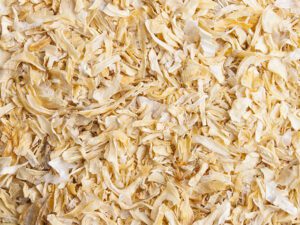
India is currently one of the largest producers of fresh onions worldwide. As a result, the country has emerged as a premier global engineering hub for high-efficiency thermal dehydration technology. Furthermore, as global demand for shelf-stable food ingredients, instant soup mixes, and seasoning blends expands, food processors actively turn to leading engineering firms like Genex Tech Industries LLP to power their industrial production lines.
Indeed, whether you intend to produce export-grade dehydrated onion flakes, fine powders, granules, or high-value bio-extracts, selecting the right industrial drying partner is paramount. Therefore, below is an in-depth technical guide to understanding why Indian onion dehydration machinery leads the international market, how specialized thermal drying stages work, and what engineering criteria you must evaluate before investing.
Why Global Buyers Source Onion Dryers from Genex Tech Industries LLP
First and foremost, Genex Tech Industries LLP excels at manufacturing heavy-duty, food-grade processing machinery at highly competitive capital expenditure (CapEx) costs. Because it is backed by decades of combined engineering heritage, Genex combines proven process know-how with state-of-the-art thermal technology to serve food and agro-processing clients worldwide. Specifically, buyers prefer Genex for several key reasons:
-
Cost-Effective Sanitary Engineering: To begin with, Genex fabricates all product-contact components using certified SS304 and SS316 food-grade stainless steel at a fraction of Western manufacturing costs.
-
Global Quality Compliance: In addition, all machinery meets rigorous international standards, including CE certification, US FDA guidelines, and ISO 9001:2015 quality management systems.
-
Controlled Thermal Preservation: For instance, advanced multi-zone dryers designed by Genex prioritize gentle, controlled heat distribution. Consequently, the natural pungency (pyruvic acid content), vibrant original color, and essential volatile oils of the onions remain intact.
-
Turnkey Support: Ultimately, Genex delivers single-window turnkey execution—from initial process flow design and plant layout to manufacturing, installation, commissioning, and operator training.
Mahuva, Gujarat: The Global Capital of Industrial Onion Drying
When it comes to commercial onion processing in India, one specific regional hub dominates the market: Mahuva, situated in the Bhavnagar district of Gujarat.
Known globally as the “Dehydrated Onion Capital of India,” Mahuva hosts over 120 large-scale industrial dehydration plants. Because the surrounding agricultural belt produces massive volumes of high-solids white and red onion varieties, Mahuva has naturally evolved into the world’s largest operating ground for industrial onion dryers.
Industry Benchmark: In fact, over 80% of India’s total dehydrated onion exports originate from processing facilities centered around Mahuva.
Since Mahuva’s plants operate continuous 24/7 schedules during peak harvest seasons, Genex Tech Industries LLP works closely with regional processors to refine, field-test, and optimize its machinery. Thus, when international buyers select equipment validated in Mahuva’s heavy processing lines, they are acquiring proven technology built for continuous industrial output.
Technical Overview: Core Industrial Onion Dryers by Genex
Commercial dehydration requires lowering the moisture content of raw onions from approximately 83–86% wet basis down to a stable 4–7%. However, achieving this efficiency without scorching or browning requires targeted equipment designs manufactured by Genex Tech Industries LLP.
+-----------------------------------------------------------------------------------------+
|                              RAW ONION (83-86% Moisture)                                |
+-----------------------------------------------------------------------------------------+
                                           |
                                           v
+-----------------------------------------------------------------------------------------+
|      STAGE A: CONTINUOUS MESH BELT DRYER (104°C to 82°C) -> Drops Moisture to ~25%     |
+-----------------------------------------------------------------------------------------+
                                           |
                                           v
+-----------------------------------------------------------------------------------------+
|      STAGE B: SECOND-STAGE CONVEYOR DRYER (70°C to 60°C) -> Drops Moisture to ~10%     |
+-----------------------------------------------------------------------------------------+
                                           |
                                           v
+-----------------------------------------------------------------------------------------+
| STAGE C/D: HEAT PUMP / DESICCANT DEHUMIDIFICATION (45°C to 35°C) -> Final 4-7% Moisture |
+-----------------------------------------------------------------------------------------+
| Dryer Technology | Primary Application | Key Operating Parameters | Core Technical Advantage |
| Mesh Belt Dryer | High-volume kibbles, slices, and flakes | 3–5 independent zones; Temps: 35°C to 104°C; Airflow: 5,000–30,000 m³/h | High throughput (5 to 50+ TPD); uniform cross-bed moisture removal |
| Vibratory Fluidised Bed Dryer | Chopped onions, granules, and minced bits | Operating frequency: 10–25 Hz; Rapid drying bed depth: 5–15 cm | Prevents product agglomeration; eliminates hot spots via fluidization |
| Energy-Saving Drying Machine | Heat-sensitive organic flakes & extracts | Closed-loop drying; Temps: 30°C to 50°C; High Energy Efficiency Ratio (EER) | Retains maximum volatile aromatic compounds; saves up to 40% power |
| Dehumidification & Airflow Systems | Precision moisture extraction & air control | Specialized airflow (Split, Top, Side Blowing & Dehumidifiers) | Eliminates condensation risk and preserves bio-compounds |
1. Multi-Stage Continuous Mesh Belt Dryers (The Commercial Workhorse)
Genex multi-pass apron and mesh belt dryers transport sliced onions through sequential, precisely controlled thermal zones:
-
Stage A (Flash Moisture Evaporation): First, high-velocity air at 82°C–104°C rapidly strips surface water, reducing moisture from 83% down to 25%. Meanwhile, this rapid drop prevents “pinking” (enzymatic discoloration).
-
Stage B (Internal Migration Zone): Next, as the product bed thickens (up to 30 cm), air temperatures drop to 60°C–70°C to gradually draw out internal water down to ~10%.
-
Stage C & D (Final Conditioning): Finally, dehumidified air at 35°C–45°C lowers final moisture to under 5% without caramelizing natural sugars.
2. Vibratory Fluid Bed Dryers (VFBD)
In addition, Genex vibratory fluidised bed dryers utilize mechanical vibration combined with upward forced air to suspend small onion particles in a fluidized state. Because every granule contacts the warm airflow directly, heat transfer rates spike dramatically. Hence, this system is ideal for uniformly processing chopped and minced particles.
3. Advanced Energy-Saving & Airflow Drying Systems
For instance, when processors prioritize low operating costs, Genex integrates specialized drying configurations:
-
Closed-Loop Heat Recovery: Specifically, utilizing an energy-saving drying machine design allows plants to recirculate warm air, retaining aroma while cutting power consumption significantly.
-
Airflow Optimization: Meanwhile, systems engineered with a top blowing drying system or a side blowing drying system ensure balanced cross-bed air velocity depending on bed depth.
-
Modular Integration: Additionally, installations utilizing a split type drying system allow flexible plant layouts, while adding a double high efficiency dehumidifier ensures final moisture conditioning remains stable even in highly humid ambient environments.
Step-by-Step Integrated Onion Processing Line
In order to achieve export-grade, low-bacteria dehydrated products, seamless automation is required along the entire processing chain.
Critical Engineering Parameters Offered by Genex Tech Industries LLP
When choosing an equipment partner for your processing facility, consider these engineering strengths provided by Genex Tech Industries LLP:
-
Flexible Heating Media: First, Genex hot-air generation systems integrate with multiple fuel sources—including steam coils, direct-fired natural gas (LPG/PNG), diesel, or biomass systems.
-
Advanced PLC/SCADA Automation: Second, fully automated control panels offer real-time temperature, belt-speed, and exhaust humidity monitoring across all drying zones.
-
Hygienic MOC Construction: Third, all contact parts feature certified SS304 or SS316 stainless steel with smooth sanitary welds, thereby facilitating rapid Cleaning-in-Place (CIP).
-
Value-Added Byproduct Recovery: Moreover, beyond dehydration lines, Genex provides integrated systems for downstream value addition—including steam distillation for onion oil extraction and solvent extraction units for quercetin recovery.
Conclusion
In summary, choosing the right thermal drying technology is the single most critical decision for any commercial onion processing venture. By combining robust SS304/SS316 food-grade construction, precise multi-zone thermal management, and full compliance with international standards, Genex Tech Industries LLP provides processors with a high-yield, energy-efficient competitive edge. Therefore, whether setting up a new facility in major agro-hubs like Mahuva or expanding processing capacity globally, investing in Genex turnkey onion dehydration lines ensures long-term operational reliability, superior flavor retention, and export-ready quality that meets the highest global standards.
Key Takeaway: Ultimately, partnering with Genex Tech Industries LLP provides global food processors with a field-tested combination of high throughput, low energy consumption, and complete turnkey engineering aligned with international standards.
Ready to Scale Your Industrial Dehydration Operations?
Whether you are setting up a greenfield commercial processing facility or upgrading your existing plant capacity, our senior engineering team at Genex Tech Industries LLP is here to assist with tailored process layout design, heat balance calculations, and technical quotations.
-
📧 Technical Inquiries: mktg@foodtechprojects.com
-
📞 Phone / WhatsApp Support: +91 93300 77417
-
🌐 Engineering Portals: Food Tech Projects | GTI Dryers